
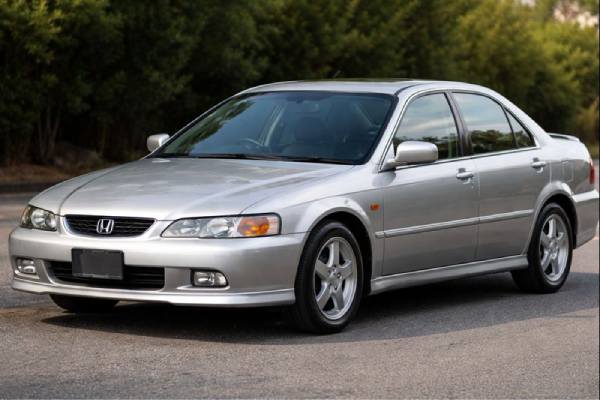
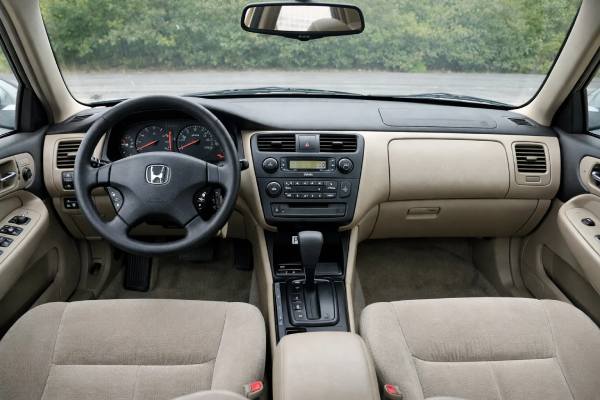
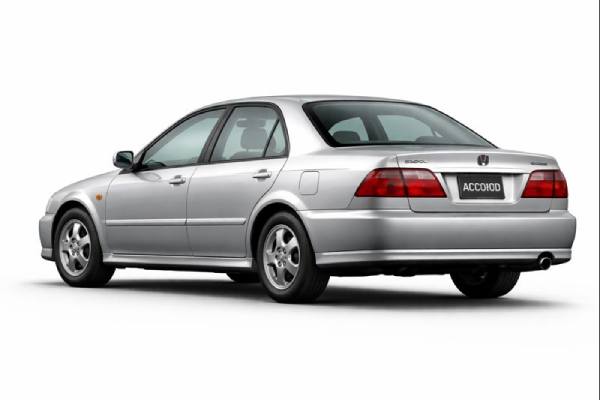
The Honda Accord (CL3) with the F23Z5 2.3-liter engine sits in a sweet spot for buyers who want an honest, long-lived midsize car without the complexity of later direct-injection or turbo setups. It’s a simple formula: a naturally aspirated four-cylinder with useful torque, a chassis tuned for stable motorway miles, and the kind of parts availability that keeps ownership practical even decades later. Where this Accord tends to shine is in “daily reality” engineering—predictable cooling behavior, straightforward belt-driven timing service, and a suspension layout that’s easy to refresh when age finally catches up.
At the same time, it’s an older design, so condition matters more than the badge. A well-kept CL3 can feel tight and refined; a neglected one will quickly show wear through tired bushings, small oil leaks, and deferred timing-belt work. This guide focuses on what actually matters for owners: the usable specs, how it drives, what breaks, and how to keep it reliable.
Owner Snapshot
- Smooth, torque-friendly 2.3 L character that suits commuting and long trips more than short bursts of speed.
- Straightforward mechanical layout that keeps most repairs and servicing predictable.
- Stable, confidence-first chassis tuning with good high-speed composure for its era.
- Timing-belt service is non-negotiable—buying one without proof can turn “cheap Accord” into a catch-up project.
- Plan engine-oil service about every 8,000–10,000 km (5,000–6,000 mi) or 6–12 months, depending on use.
Section overview
- CL3 Accord F23Z5 profile
- F23Z5 tables and specs
- Options, trims, and safety kit
- Problems, recalls, and fixes
- Maintenance schedule and buying checks
- Driving impressions and efficiency
- CL3 Accord versus alternatives
CL3 Accord F23Z5 profile
Think of the CL3 Accord as a “grown-up” midsize car from the era when Honda prioritized balanced road manners and mechanical longevity over headline tech. With the F23Z5 2.3-liter four-cylinder, it’s not trying to be a sport sedan in the modern sense—it’s built to be consistent: steady on the motorway, calm over broken pavement, and easy to live with in normal traffic. The engine’s main advantage is usable torque and smoothness rather than high-rpm drama. In practice, that means fewer downshifts in daily driving and less strain during loaded cruising, especially compared with smaller-displacement options.
From an ownership perspective, the most important trait is serviceability. This Accord’s powertrain and chassis are built around conventional solutions: a timing belt (planned replacement, not “lifetime”), port fuel injection, and a typical front-drive layout that most independent shops understand. When issues do show up, they’re usually familiar age-and-mileage patterns—rubber parts harden, sensors get lazy, cooling components fatigue, and suspension bushings lose crispness.
The CL3 is also a reminder that “good platform” does not override neglect. Many examples are now old enough that the car’s history matters more than the odometer number. A well-documented one can still feel solid, while a cheap example without records often needs immediate catch-up: timing belt and water pump, fresh fluids, and a suspension refresh to restore stability and braking feel.
Advantages that still hold up well today include predictable ergonomics, straightforward controls, and an overall driving feel that’s linear and confidence-inspiring. Where it shows its age is in crash-tech evolution (later cars add more airbags and smarter restraint systems), cabin noise compared with newer rivals, and the simple fact that corrosion and deferred maintenance can turn small jobs into bigger ones.
If you want an affordable, mechanically conventional midsize car—and you’re willing to buy based on condition and records rather than optimism—this Accord can still be a very rational choice.
F23Z5 tables and specs
Below are the most useful technical details for owners and shoppers. Exact figures can vary by market, body style (4-door vs 5-door), gearbox, and homologation standard, so treat “official” numbers as VIN- and region-dependent. When you’re buying parts or planning major service, always verify against the under-hood labels and your local service documentation.
Engine and performance (F23Z5 focus)
| Item | Specification |
|---|---|
| Engine code | F23Z5 |
| Layout | Inline-4, naturally aspirated |
| Valvetrain | SOHC VTEC, 16 valves (4 valves/cyl) |
| Displacement | 2.3 L (approx. 2,254 cc) |
| Fuel system | Port fuel injection (MPFI/PGM-FI style) |
| Max power | 154 hp (113 kW) @ ~5,700 rpm |
| Max torque | ~206 Nm (152 lb-ft) @ ~4,700 rpm |
| Timing drive | Belt (planned replacement item) |
| 0–100 km/h (0–62 mph) | ~9.8 s (typical published figure for the 2.3 ES configuration) |
| Top speed | Around 200+ km/h (varies by gearing and body) |
Transmission and driveline (typical configurations)
| Item | Specification |
|---|---|
| Drive type | FWD |
| Manual gearbox | 5-speed (market-dependent) |
| Automatic gearbox | 4-speed automatic (market-dependent) |
| Differential | Open (typical) |
Dimensions and capacities (owner-useful ranges)
Because published data differs between 4-door and 5-door bodies and across markets, the most honest presentation is a practical range:
| Item | Typical value (varies by body/market) |
|---|---|
| Length | ~4,580–4,650 mm (~180–183 in) |
| Width | ~1,750–1,780 mm (~69–70 in) |
| Height | ~1,420–1,450 mm (~56–57 in) |
| Wheelbase | ~2,660–2,670 mm (~105 in) |
| Fuel tank | commonly ~60–65 L (~16–17 US gal) |
| Kerb weight | typically ~1,300–1,450 kg (~2,870–3,200 lb), depending on body and gearbox |
Fluids and service capacities (planning guidance)
| Item | Practical guidance |
|---|---|
| Engine oil | Use the viscosity grade specified for your climate; many owners run quality 5W-30 or 10W-30 where appropriate (confirm per manual). |
| Coolant | Use a compatible long-life coolant; mix ratio and type must match Honda guidance for your market. |
| ATF (if automatic) | Use the correct Honda-spec ATF; wrong fluid often causes shift quality issues. |
| A/C refrigerant | Varies by year/market; verify under-hood label before servicing. |
Safety and assistance (era-appropriate)
| Item | Typical equipment (varies by year/trim) |
|---|---|
| Airbags | Front airbags common; side airbags may be trim- or market-dependent |
| ABS | Common on many trims; verify by VIN/trim |
| Stability control | Often not present on early-2000s midsize cars in many markets |
| ADAS | Generally not available in this generation (no modern AEB/ACC/LKA) |
If you want, you can use this section as a checklist when viewing a car: confirm engine code, gearbox type, ABS presence, airbag count, and tire size from the door-jamb placard.
Options, trims, and safety kit
Most CL3 shoppers run into confusion because “Accord” in this era can mean different body styles and trim naming depending on country. The best approach is to focus on functional differences rather than the badge on the boot lid.
Trims and options that change the ownership experience
Common trim patterns (names vary by market) usually separate into:
- Comfort-oriented grades: cloth seats, simpler audio, smaller wheels, fewer electrical extras. These can be the best long-term buys because there’s less equipment to age out, and replacement parts stay cheaper.
- Mid and upper grades (often “ES” or similar): more sound insulation, upgraded audio (sometimes branded), extra convenience features, and typically larger alloy wheels. Some markets paired the 2.3 engine with higher trim positioning, so you may see the F23Z5 more often with the “nicely equipped” packages.
Options that matter mechanically or financially:
- Wheel and tire packages: larger wheels look better but can increase tire cost and sharpen impact harshness. On older cars, they also amplify worn-bushing symptoms.
- Automatic vs manual: the manual usually feels more direct and is cheaper to maintain long-term; the automatic can be very good if serviced correctly, but neglect shows up as shift flare, harsh engagement, or delayed changes.
- Sunroof and heated seats: nice to have, but check drain condition (sunroof) and switch reliability (seats). Water leaks create electrical problems that are far more annoying than the original feature was enjoyable.
Quick identifiers when inspecting
If the seller is vague, use simple tells:
- ABS check: key on, confirm the ABS light illuminates and then goes out after start.
- Airbag count: look for “SRS” tags on seats/pillars (if equipped) and verify the dash light behavior.
- Audio tier: branded systems often have separate amps or speakers; verify all channels work and that the head unit isn’t hacked in a way that compromises wiring.
Safety ratings and what they mean here
This Accord generation earned a good reputation in period crash testing for its structure compared with many late-1990s competitors, but it’s still an early-2000s design. Even a strong rating from that era does not equal modern performance in small-overlap impacts, pedestrian protection standards, or advanced restraint strategies.
Practical safety advice for today:
- Prioritize tires, brakes, and suspension condition. A “safe” car with cheap tires and tired dampers stops and steers poorly.
- Confirm airbag system health (no warning lights) and avoid cars with “deleted” airbags after a dash swap.
- If you carry children, verify proper child-seat anchoring provisions for your market and install method.
In short, trim choice should be driven by your tolerance for aging electronics and your willingness to maintain the chassis—not by a marketing name.
Problems, recalls, and fixes
Aging Hondas usually don’t fail in dramatic ways; they accumulate small issues that become expensive only when ignored. The best way to understand the CL3 is to separate problems by prevalence and cost severity.
Common (expect to see) — low to medium cost
- Oil seepage and gasket leaks (low/medium)
Symptoms: oil smell, damp engine edges, drips after parking.
Likely causes: valve cover gasket aging, cam or crank seal seepage, hardened O-rings.
Remedy: reseal with quality gaskets, replace PCV valve, and clean the engine to confirm the source. - Idle instability (low/medium)
Symptoms: hunting idle, stalling when cold, sticky throttle response.
Likely causes: carbon on throttle body, idle air control valve contamination, vacuum leaks.
Remedy: clean throttle body correctly, smoke-test for leaks, service IACV per procedure. - Cooling system fatigue (medium)
Symptoms: slow coolant loss, temperature creeping in traffic, heater performance changes.
Likely causes: aging radiator, tired hoses, thermostat sticking, cap losing pressure.
Remedy: address as a system, not a single part swap; pressure-test and refresh preventively if history is unknown.
Occasional — medium cost or high annoyance
- Automatic transmission shift quality issues (medium/high depending on damage)
Symptoms: flare on upshift, harsh engagement, delayed reverse, shudder.
Likely causes: old ATF, wrong fluid, internal wear accelerated by heat.
Remedy: confirm correct Honda-spec ATF, service on schedule, and avoid “miracle flushes” on unknown units. If it already slips, plan for professional diagnosis. - Exhaust and emissions wear (medium)
Symptoms: check-engine light, poor economy, sulfur smell, rattling catalyst.
Likely causes: aging O2 sensors, catalyst efficiency decline, exhaust leaks.
Remedy: diagnose with live data rather than guessing; fix upstream leaks before condemning a catalyst.
Rare but expensive — high cost
- Neglected timing belt leading to severe engine damage (high)
Symptoms: no-start after sudden stall, uneven compression, mechanical noise.
Likely causes: belt past service life, seized idler/tensioner, water pump failure.
Remedy: replace timing belt system on schedule with tensioner and water pump; do not defer if records are missing.
Recalls, service actions, and how to verify
Recall coverage varies by country and VIN. The practical step is simple: run the VIN through an official recall checker and ask the seller for dealer documentation showing completion. If the car has a patchy history, assume it needs verification—even if the seller says “it was done years ago.”
Finally, treat modifications cautiously. Lowering springs, oversized wheels, or “performance” intakes often reduce real-world drivability on an older chassis and can hide problems during a short test drive.
Maintenance schedule and buying checks
If you maintain the CL3 like a schedule-driven machine instead of a “fix it when it breaks” car, it rewards you with predictable ownership. The keys are fluids, rubber parts, and proof of major belt service.
Practical maintenance schedule (use whichever comes first)
- Engine oil and filter: every 8,000–10,000 km (5,000–6,000 mi) or 6–12 months depending on driving style, climate, and oil grade. Short trips justify shorter intervals.
- Air filter (engine): inspect every service; replace about 20,000–30,000 km (12,000–18,000 mi) in dusty conditions.
- Cabin filter (if equipped): typically 15,000–25,000 km (9,000–15,000 mi) or yearly.
- Coolant: usually every 4–5 years with the correct long-life coolant, but verify what your market specified originally.
- Brake fluid: every 2 years, regardless of mileage.
- Spark plugs: commonly every 80,000–120,000 km (50,000–75,000 mi) depending on plug type and spec.
- Automatic transmission fluid (if automatic): service about 40,000–60,000 km (25,000–40,000 mi); more often for heat-heavy driving. Use the correct Honda-spec ATF.
- Manual gearbox fluid (if manual): often 60,000–100,000 km (40,000–60,000 mi) as a practical interval.
- Timing belt system (critical): replace at the manufacturer interval for your VIN/market (commonly in the 90,000–110,000 km range or 6–8 years). Replace the belt, tensioner, idlers, and water pump together.
Fluids and “decision-grade” specs
Instead of chasing internet arguments, aim for the correct standards:
- Use the exact coolant type compatible with Honda’s aluminum components.
- Avoid “universal ATF” unless you have documentation that it meets the Honda spec for your gearbox.
- Match engine-oil viscosity to climate and the owner’s manual guidance; older engines in hot climates may prefer a slightly heavier grade than cold climates.
Buyer’s guide: inspection checklist that saves money
- Timing belt proof: invoice with date, mileage, and parts list. No proof = assume it’s due.
- Cold start behavior: listen for belt-area noises, unstable idle, or heavy valvetrain ticking.
- Cooling system health: check for dried coolant traces, inconsistent heater output, and signs of overheating history.
- Transmission behavior: smooth engagement hot and cold; no flare under moderate throttle; no shudder on light cruise.
- Suspension and steering: clunks over small bumps often point to links and bushings; wandering suggests alignment or worn components.
- Brakes and tires: uneven wear can signal neglected suspension or accident repair.
- Corrosion hotspots: wheel arches, sills, subframe areas, and brake lines (market and climate dependent).
Best long-term value usually comes from the car with the best documentation, not the lowest price. If you have to “catch up” on belt service, tires, brakes, and suspension at once, you can easily spend more than the purchase price.
Driving impressions and efficiency
In daily use, the CL3 Accord’s personality is calm and steady. The chassis is tuned for predictable grip and straight-line stability, so it feels happiest on flowing roads and long motorway stretches. Steering is typically light-to-moderate in weight with a clear on-center feel, designed more for confidence than for sporty feedback. When the suspension is fresh—good dampers, tight bushings, and correct alignment—the car tracks cleanly and brakes with a stable, reassuring nose. When those wear items age out, the same car can feel floaty, noisy over sharp bumps, and slightly vague in lane changes, which is why chassis condition matters so much.
Powertrain character
The F23Z5’s biggest strength is how “normal” it feels in real traffic. It delivers usable pull without demanding high revs, and the torque peak is set up to make midrange acceleration easy. That’s why it tends to feel more relaxed than smaller engines when climbing grades or carrying passengers.
- Manual: typically offers the best sense of control and the most direct response to throttle changes.
- Automatic: should shift smoothly and predictably when healthy. If it hunts between gears or flares under load, treat that as a service-history red flag.
Real-world efficiency
Fuel consumption depends heavily on body style, gearing, and how much city driving you do. A well-maintained 2.3 Accord generally lands in “reasonable for a naturally aspirated midsize” territory rather than “economy car” numbers. Expect your worst results from cold starts, short trips, and heavy urban use. Highway cruising tends to be the sweet spot if tires, alignment, and thermostat operation are correct.
Efficiency tips that actually work on this generation:
- Keep tire pressures correct and align the car after suspension work.
- Fix lazy oxygen sensors and exhaust leaks early—small faults can cost real fuel.
- Maintain the cooling system so the engine reaches and holds proper operating temperature.
Useful performance metrics
Published figures for the 2.3 ES configuration commonly place it around 9.8 seconds to 100 km/h, which matches the “quick enough to be safe” feel rather than sporty urgency. Passing performance is more about midrange pull than top-end power, and the Accord generally rewards smooth throttle inputs.
If you want the car to drive like it did when new, budget for suspension and braking refresh work. On an older Accord, that investment often changes the driving experience more than any engine modification ever will.
CL3 Accord versus alternatives
Comparing the CL3 Accord to its early-2000s rivals is less about “which is fastest” and more about what kind of aging you’re willing to live with. Most competitors can be good cars; the deciding factor is how they behave at 20+ years old.
Where the CL3 Accord still competes well
- Mechanical straightforwardness: The naturally aspirated, port-injected layout is generally easier to diagnose and keep consistent than some rivals with more complicated emissions packaging or less accessible service items.
- Chassis balance: Even by modern standards, a sorted Accord tends to feel composed at speed. It’s an “easy car to drive well,” especially in wet conditions or on long journeys.
- Ownership predictability: When maintained, it usually fails in familiar, manageable ways—rubber parts, sensors, and wear items—rather than random electronic complexity.
Where some rivals may have an edge
- Toyota Avensis (similar era): often praised for appliance-like durability and low drama. The trade-off can be a less engaging chassis feel and, depending on engine, less “nice” midrange response.
- Ford Mondeo: frequently offers excellent steering and ride/handling tuning. However, condition varies widely, and neglect can show up in suspension and body issues.
- Volkswagen Passat: can feel more “solid” inside in some trims, but parts and labor can be pricier, and aging electrical or vacuum-related problems can be more time-consuming to chase.
- Mazda 626 / related models: often good value and pleasant to drive, but rust and parts availability (depending on market) can influence long-term ease.
The best choice depends on your priorities
Choose the CL3 Accord F23Z5 if you want:
- A midsize car that’s calm and stable at speed
- Straightforward service planning (especially if you can document timing-belt history)
- A platform that responds well to basic maintenance and suspension refreshes
Look harder at alternatives if you want:
- Newer safety technology (AEB, modern stability control calibration, more airbags)
- Better cabin quietness and infotainment integration without aftermarket work
- A car that hasn’t reached the “age where rubber and corrosion dominate the story”
The practical verdict: a CL3 Accord is often a smarter purchase than it looks—if you buy the right example. The wrong one (no belt history, tired transmission, corrosion) can erase the model’s reputation in a single ownership cycle.
References
- Geneva Motorshow 2001 2001 (Manufacturer Press Release)
- Recalls and Updates 2025 (Recall Database)
- 2000 Honda Accord 4-door sedan 2000 (Safety Rating)
- Gas Mileage of 2002 Honda Accord 2002 (Official Efficiency Data)
- 2000 Accord Sedan Online Reference Owner’s Manual 2000 (Owner’s Manual)
Disclaimer
This article is for informational purposes only and is not a substitute for professional inspection, diagnosis, or repair. Specifications, torque values, service intervals, procedures, and required fluids can vary by VIN, market, body style, and equipment; always verify details using your official service documentation and vehicle labels before ordering parts or performing work.
If this guide helped you, consider sharing it on Facebook, X/Twitter, or your favorite forum to support our work.