
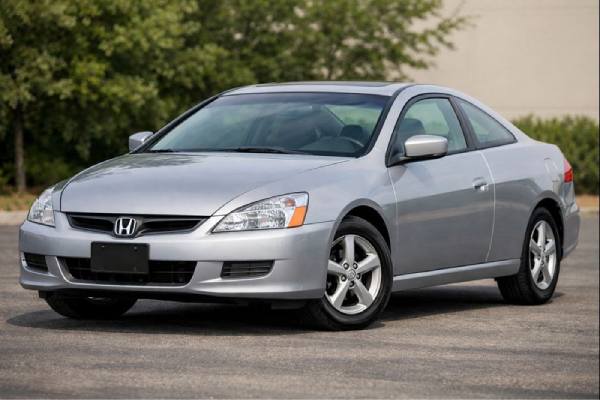
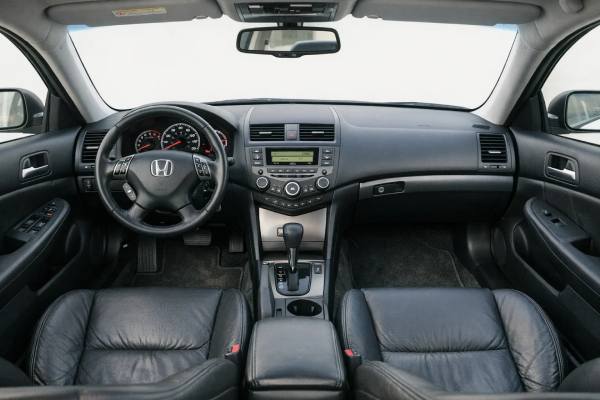
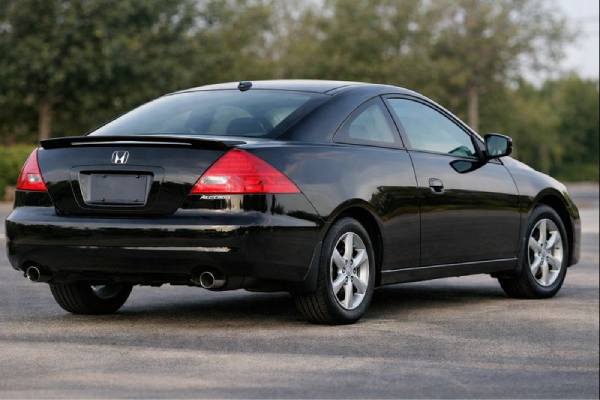
The 2005–2007 Honda Accord Coupe (CM8) with the J30A5 3.0-liter V6 is the version for drivers who want effortless pace without giving up day-to-day practicality. The V6’s strength is not just peak power; it is the smooth, immediate torque that makes the coupe feel relaxed at any speed. The platform is mature by these years, with stable highway manners and predictable handling that improves noticeably when tires, alignment, and suspension bushings are kept fresh.
Ownership is usually simple when you respect two realities: the J30A5 uses a timing belt (so the interval matters), and the automatic transmission is happiest with regular fluid drain-and-fills. Buy one with proof of those basics and the CM8 can feel surprisingly modern—quiet, quick enough for confident passing, and easy to maintain with widely available parts.
Essential Insights
- Strong, refined V6 torque makes highway merging and passing feel effortless
- Stable chassis and solid brakes when suspension bushings and tires are in good condition
- Timing belt service is a real cost if overdue—budget it immediately if history is unknown
- Automatic transmissions tend to last longer with fluid drain-and-fills, not “lifetime” fluid
- Typical timing belt interval is about 168,000 km (105,000 mi) or 7 years (verify for your VIN and market)
What’s inside
- What the CM8 V6 offers
- Spec tables for CM8 V6
- Options, airbags, and stability
- Weak points, TSBs, and fixes
- Service strategy and pre-buy checks
- Road manners and real mpg
- Rival coupes and sedans
What the CM8 V6 offers
The CM8 Accord Coupe is best described as a “fast daily coupe,” not a fragile weekend toy. The two-door shape adds style and a more personal feel, but underneath it stays true to the Accord formula: easy visibility, sensible controls, and a chassis tuned for stability rather than nervousness. What changes the experience is the J30A5 V6. In normal driving, you do not need high rpm to make progress. The car pulls cleanly from low speed, climbs grades without strain, and passes slower traffic with minimal planning. That relaxed power delivery is a real advantage on long trips because it reduces noise and effort.
From an engineering standpoint, the J30A5 is a compact aluminum V6 that fits neatly in a front-wheel-drive layout. It is smooth, generally tolerant of daily use, and parts supply is strong. The trade-off is that it uses a timing belt. That is not a problem by itself—belt service is routine on many V6 engines—but it is a decision point when shopping used. A CM8 that feels perfect on a test drive can still be the wrong buy if the belt interval is overdue and the seller has no proof of replacement.
The coupe body introduces its own ownership details. Longer doors can wear hinges, checks, and seals faster than a sedan, especially if the car has lived in tight parking spaces or has been repeatedly “caught” by wind. Window regulators and weatherstrips also do more work in a two-door. None of this is catastrophic, but it does mean you should pay attention to door alignment, wind noise, and water intrusion—small problems that can become annoying and costly if ignored.
Where the CM8 often surprises new owners is how much “tightness” depends on maintenance items that previous owners skip: suspension bushings, engine mounts, and brake hydraulic service. A neglected coupe can feel older than it is, but a well-chosen example with refreshed wear parts can feel composed and quiet even at modern highway speeds.
The main advantages are clear: smooth V6 performance, stable road behavior, and straightforward service access for most routine work. The main cautions are also clear: buy with maintenance proof, and assume you will do a baseline service catch-up unless the records are excellent.
Spec tables for CM8 V6
The tables below focus on the 2005–2007 Accord Coupe (CM8) with the J30A5 3.0L V6 rated at about 244 hp. Exact figures can vary by market, transmission, emissions certification, and wheel package. Use these as practical reference values, then confirm details for your VIN and equipment.
Engine and efficiency
| Item | Specification |
|---|---|
| Code | J30A5 |
| Engine layout and cylinders | V6 (60°), 6 cylinders, SOHC, 4 valves/cyl (24-valve) |
| Bore × stroke | 86.0 × 86.0 mm (3.39 × 3.39 in) |
| Displacement | 3.0 L (2,997 cc) |
| Induction | Naturally aspirated |
| Fuel system | Multi-point injection (MPFI) |
| Compression ratio | ~10.0:1 |
| Max power | 244 hp (182 kW) @ ~6,250 rpm |
| Max torque | ~286 Nm (211 lb-ft) @ ~5,000 rpm |
| Timing drive | Belt |
| Emissions and efficiency standard | Market dependent |
| Rated efficiency (typical) | 5AT: ~13.1 / 9.0 / 11.2 L/100 km (18 / 26 / 21 mpg US) city/hwy/comb; 6MT (where fitted): ~13.1 / 8.7 / 11.2 L/100 km (18 / 27 / 21 mpg US) |
| Real-world highway @ 120 km/h (75 mph) | Often ~9.0–10.5 L/100 km (22–26 mpg US) in good condition |
Transmission and driveline
| Item | Typical specification |
|---|---|
| Drive type | FWD |
| Transmission options | 5-speed automatic (common); 6-speed manual (market dependent) |
| Gear ratios (5AT, typical) | 1st 2.697 / 2nd 1.606 / 3rd 1.070 / 4th 0.766 / 5th 0.566 |
| Final drive (5AT, typical) | ~4.389 |
| Gear ratios (6MT, typical) | 1st 3.307 / 2nd 1.900 / 3rd 1.360 / 4th 1.034 / 5th 0.787 / 6th 0.625 |
| Final drive (6MT, typical) | ~4.764 |
| Differential | Open |
Chassis and dimensions
| Item | Typical specification (coupe) |
|---|---|
| Suspension (front / rear) | Double wishbone / multi-link (market dependent) |
| Steering | Power rack-and-pinion (often hydraulic on this generation) |
| Brakes | 4-wheel discs; front vented (diameters vary by trim) |
| Wheels and tires | Often 17 in on V6 coupes; common sizes include 215/50 R17 |
| Length / width / height | ~4,770–4,800 mm / ~1,815–1,820 mm / ~1,440–1,455 mm (188–189 in / ~71.5–72 in / ~56.7–57.3 in) |
| Wheelbase | ~2,740 mm (107.9 in) |
| Turning circle | ~10.8–11.2 m (35–37 ft), equipment dependent |
| Curb weight | ~1,520–1,600 kg (3,350–3,530 lb), equipment dependent |
| Fuel tank | ~65 L (17.2 US gal / 14.3 UK gal) |
| Cargo volume | Typically ~360–410 L (12.7–14.5 ft³), method dependent |
Performance and capability
| Metric | Typical range (stock) |
|---|---|
| 0–100 km/h (0–62 mph) | ~6.6–7.4 s (transmission and conditions dependent) |
| Top speed | ~210–225 km/h (130–140 mph), market/limiter dependent |
| Braking 100–0 km/h | Often ~37–41 m (121–135 ft), tire and brake condition dependent |
| Payload and towing | Market dependent; treat as light duty only and verify official ratings |
Fluids, service capacities, and key torque specs
| Item | Typical specification (verify for VIN) |
|---|---|
| Engine oil | Commonly 5W-20 in many markets; ~4.1–4.3 L (4.3–4.5 US qt) with filter |
| Coolant | Honda-compatible long-life coolant; total often ~7.5–8.5 L (7.9–9.0 US qt) |
| Automatic transmission fluid | Honda ATF; drain-and-fill quantity is less than total capacity |
| Manual transmission fluid | Honda MTF; capacity varies by gearbox |
| A/C refrigerant | R-134a; charge varies by equipment |
| Oil drain plug torque | ~39 Nm (29 lb-ft), typical |
| Wheel lug nuts | ~108 Nm (80 lb-ft), typical |
| Spark plugs | ~18 Nm (13 lb-ft), typical |
Electrical and safety notes
| Item | Typical notes |
|---|---|
| Alternator output | Often ~100–110 A (equipment dependent) |
| 12 V battery | Commonly ~50–60 Ah (CCA varies by market) |
| Crash ratings | Published testing is often sedan-focused for this generation; verify for your exact body and year |
| Driver assistance | No modern AEB/ACC/LKA; expect ABS and possibly stability control depending on trim and market |
Options, airbags, and stability
On the CM8 V6 coupe, “trim” is less about performance differences and more about safety equipment, wheel packages, and comfort electronics that can affect both ownership cost and daily satisfaction. Because trim names vary widely by region, it is smarter to shop by an equipment checklist than by a badge.
Trims and options that change the experience
Most V6 coupes were sold with a higher equipment level than four-cylinder coupes, but there is still meaningful variation:
- Transmission choice: The automatic is common and suits the V6’s smooth character. The manual (where available) can feel more engaging and can simplify long-term ownership if you prefer a clutch over automatic repair risk.
- Wheel package: V6 coupes frequently come with larger wheels. They improve turn-in and stance but can add road noise and increase tire costs. If you prioritize comfort, consider whether a smaller wheel option is available in your market or budget for premium touring tires.
- Audio and navigation: Premium audio amplifiers, older navigation screens, and steering wheel controls can fail with age. These are not dealbreakers, but they should work correctly at purchase because diagnosis can be time-consuming.
- Sunroof: Reliable when maintained, but clogged drains can cause wet carpets and electrical problems. Always check for water marks, damp padding under mats, and moisture in the trunk.
Quick identifiers when listings are vague
Use simple physical checks:
- Side airbags and curtain airbags are often confirmed by SRS tags on seat sides and labels in the headliner area.
- Stability control presence may be indicated by dash lights at key-on and by a console button (market dependent).
- Tire and wheel size is usually printed on the driver door label.
- Look for evidence of collision repair around door hinges, quarter panels, and trunk seams—coupe bodies are often repaired after parking mishaps.
Safety ratings: how to interpret them
For this era, safety is strongly influenced by equipment level and test type. Many published ratings focus on the sedan, and not every market produced separate coupe data. The practical takeaway is to focus on the things that move real-world outcomes:
- Airbag coverage: side torso and side curtain airbags are a high priority on a used car of this age.
- Head restraints and seat condition: whiplash protection depends on seat design and adjustment; worn seatbacks and missing head restraints matter.
- Active safety: since modern automatic emergency braking is not present, tires, brake condition, and correct alignment are your biggest safety “upgrades.”
Driver assistance and service implications
You are dealing with a pre-ADAS car: ABS, traction control, and sometimes stability control, plus conventional airbags. That simplicity can be an advantage because there are fewer sensors to calibrate after repairs. Still, do not ignore basics:
- Brake fluid age changes pedal feel and stopping consistency.
- Worn suspension parts increase stopping distance by reducing tire contact quality.
- Cheap tires can erase the chassis’ natural stability and make the coupe feel nervous.
In short, the safest CM8 is the one with complete airbag coverage, good tires, and a maintenance history you can verify.
Weak points, TSBs, and fixes
The CM8 V6 coupe can be very reliable, but it has predictable aging patterns. A good approach is to group issues by how often they appear and how expensive they usually are, then match that to the car’s mileage, climate, and maintenance record.
Common issues (usually low to medium cost)
- Oil leaks from gaskets (common, low/medium): valve cover gaskets and VTEC-related sealing surfaces can seep with age. Symptoms include oil smell after driving, wet engine surfaces, or oil in plug wells. Remedy is typically gasket replacement and a PCV (positive crankcase ventilation) check to prevent pressure from pushing oil past seals.
- Power steering pump seepage or noise (common, low/medium): groaning at low speed or damp fittings. Often corrected with seals or O-rings and the correct fluid. Long-term leaks can contaminate belts and mounts, so treat it early.
- Engine mounts softening (common, medium): vibration at idle and clunks on throttle transitions. Replacing mounts can restore the “smooth V6” feel more than many owners expect.
- Brake caliper slide sticking (common, low/medium): uneven pad wear, pull under braking, or overheating smell after a drive. Remedy is cleaning and lubricating slide pins and replacing seized hardware.
Occasional issues (medium to high cost)
- Automatic transmission shift behavior (occasional, medium/high): flare, delayed engagement, or harsh shifting that worsens when hot. Old fluid is a frequent contributor, so start with correct drain-and-fill service. If symptoms remain, diagnosis may involve solenoids, pressure switches, and internal wear.
- Cooling system aging (occasional, medium): radiators, hoses, and thermostats are wear items on a 15–20 year old car. Slow coolant loss or temperature creep in traffic should be treated as a system problem, not a single-part guess.
- A/C performance decline (occasional, medium): weak cooling can be a leak, clutch issue, or compressor wear. Proper leak testing and correct refrigerant charge matter.
High-stakes maintenance item: timing belt
The timing belt service is the most important V6 ownership checkpoint. If the belt history is unknown, treat it as due. A proper service typically includes belt, tensioner, idlers, and water pump, plus fresh coolant. This is not a “wait until it breaks” item—planning it is part of owning a belt-driven V6 responsibly.
Recalls, TSBs, and how to verify completion
Many vehicles from this era were subject to major safety campaigns in various markets, including airbag-related recalls. The correct process is consistent:
- Run an official VIN recall check.
- Ask for documentation showing the repair was completed.
- If paperwork is missing, confirm through dealer records.
If you cannot verify recall work, assume it still needs verification. This is especially important for safety campaigns that do not show obvious symptoms.
Service strategy and pre-buy checks
A CM8 V6 coupe is easiest to own when you run it like a scheduled-maintenance car, not a reactive one. The goal is to keep the engine, transmission, cooling system, and chassis in a “steady state” so small problems never become expensive cascades.
Practical maintenance schedule
Use this as an ownership framework, then confirm exact intervals for your VIN and market:
- Engine oil and filter: every 8,000–12,000 km (5,000–7,500 mi) or 6–12 months. If you do many short trips or live in a cold climate, stay near the shorter end.
- Engine air filter: inspect every 15,000 km (10,000 mi); replace around 30,000–45,000 km (20,000–30,000 mi) depending on dust conditions.
- Cabin air filter: replace about every 20,000–30,000 km (12,000–20,000 mi) or yearly if you drive in heavy dust or pollen.
- Coolant: replace on the official long-life interval, but reset the baseline if history is unknown. Also inspect radiator end tanks, hoses, and the thermostat area for seepage.
- Spark plugs: iridium plugs often run long intervals (commonly around 160,000 km / 100,000 mi), but replace earlier if misfires appear.
- Timing belt service: about 168,000 km (105,000 mi) or 7 years is a common interval; include water pump and tension components unless documented recently.
- Automatic transmission fluid: drain-and-fill every 40,000–60,000 km (25,000–40,000 mi). Avoid aggressive flushing on unknown-history transmissions; repeated drain-and-fills are often a safer approach.
- Brake fluid: every 3 years, regardless of mileage.
- Tires and alignment: rotate every 8,000–12,000 km (5,000–7,500 mi) and check alignment yearly or after suspension work.
- 12 V battery: test yearly after 3 years; replacement often lands around 4–6 years depending on climate.
Pre-purchase checklist that saves money
- Records first: look for timing belt documentation, ATF service history, and cooling system service proof.
- Cold start: listen for abnormal belt-area noises and check idle smoothness.
- Full warm test drive: confirm transmission shift quality, especially light-throttle shifts and kickdown response.
- Brake and tire check: uneven tire wear suggests alignment or suspension issues; a soft brake pedal suggests old fluid or air in the system.
- Water intrusion check: inspect carpets, trunk spare-tire well, and door seals for dampness; coupes are more sensitive to seal wear.
- Rust and corrosion hotspots: inspect brake lines, subframes, and suspension mounting points, especially in salted-road climates.
What to buy, what to avoid
Buy the car with evidence of preventive service, even if the price is higher.
Avoid the “cheap” coupe with unknown belt history, questionable temperature behavior, and transmission symptoms. Those three items can erase any purchase-price advantage quickly.
Road manners and real mpg
The CM8 V6 coupe’s personality is defined by smooth strength. It is quick without feeling busy, and that matters more than peak numbers once you live with the car.
Ride, handling, and cabin noise
In good condition, the coupe tracks straight at speed and feels planted in crosswinds. Steering is typically consistent rather than razor-sharp, but it is easy to place the car accurately. Where many owners lose the “nice Accord feel” is wear items: front compliance bushings, end links, dampers, and engine mounts. Refresh those and the chassis often feels tighter than buyers expect for its age.
Wheel and tire choice also changes the verdict. Many V6 coupes run 17-inch wheels, which can increase road noise and sharp-edge impact over broken pavement. Premium touring tires and correct tire pressures can transform refinement, while cheap tires can make the car feel loud and vague.
Powertrain character and transmission behavior
The J30A5 delivers immediate response with no turbo lag. Around town, it moves with light throttle. On the highway, it accelerates confidently from cruising speed, which is one reason owners like it for long trips.
- Automatic: best when maintained. If it hesitates, flares, or shifts harshly when hot, assume it needs fluid service and diagnosis before you trust it.
- Manual (where available): more engaging and can feel more direct, but clutch condition and synchro feel should be checked carefully on older cars.
Real-world fuel economy and highway consumption
Official figures vary by market, but real-world ownership usually looks like this:
- City: often 12.5–14.5 L/100 km (16–19 mpg US), strongly influenced by warm-up time and traffic
- Highway at 100–120 km/h: often 9.0–10.5 L/100 km (22–26 mpg US) when the car is in good tune and tires are reasonable
- Mixed: commonly 11.0–12.5 L/100 km (19–21 mpg US)
Cold weather and short trips have a noticeable penalty because the V6 takes longer to reach full operating efficiency.
Useful performance metrics
Performance numbers vary by test, tires, and conditions, but the CM8 V6 coupe typically lands in the low-7 second range for 0–100 km/h and feels strongest in midrange passing. Braking confidence depends heavily on maintenance: fresh fluid, good pads, and calipers that slide freely can make the car feel modern; neglected brakes make it feel old.
If you want a coupe that feels relaxed but never slow, this powertrain delivers. If you want maximum fuel economy or modern driver assistance, it is better to choose a newer four-cylinder sedan.
Rival coupes and sedans
A CM8 V6 coupe buyer usually wants three things: smooth power, comfortable long-distance behavior, and manageable ownership costs. The main alternatives from the same era tend to trade one of those goals for another.
Versus Toyota Camry Solara V6
The Solara often leans more toward comfort and a softer ride. The Accord coupe typically feels more composed in steering and body control, especially at highway speed. In used buying, condition matters more than brand: choose the one with better maintenance history, clean cooling system behavior, and a transmission that shifts correctly when hot.
Versus Nissan Altima or Maxima V6
Nissan’s V6 offerings can feel very quick and energetic, and some buyers prefer that stronger “push” feel. The Honda tends to win on predictability and how it ages when maintained. If you are shopping without perfect records, the Accord is often the safer bet. If you find a well-documented Nissan example in excellent condition, it can be a strong alternative.
Versus Acura TL (same era)
The Acura TL brings a more premium cabin and often stronger feature content, but it can also bring higher parts and diagnostic costs. The CM8 is usually the simpler long-term ownership pattern: less equipment complexity, easier routine service, and a broader supply of used and aftermarket parts.
Versus European V6 alternatives
Depending on your market, you might cross-shop V6 versions of cars like the Passat or other premium-leaning sedans. They can offer a richer cabin feel, but repair costs and parts lead times can rise quickly, especially when electronics age. The Accord’s advantage is that most repairs remain straightforward and affordable relative to the category.
Best-fit buyer profile
Choose the CM8 V6 coupe if you want:
- A naturally aspirated V6 for smoothness and midrange response
- A stable highway car that is still easy to live with daily
- A platform that rewards preventive service rather than constant troubleshooting
The key is buying correctly: prioritize timing belt proof, transmission fluid history, and overall chassis condition. Do that, and the CM8 can be one of the most satisfying “real-world fast” coupes of its era.
References
- 2006 Accord Coupe Online Reference Owner’s Manual 2006 (Owner’s Manual)
- Gas Mileage of 2006 Honda Accord 2006 (Official Fuel Economy)
- 2006 Honda Accord 2-door coupe 2006 (Safety Rating)
- Vehicle Detail Search – 2006 HONDA ACCORD | NHTSA 2006 (Recall Database and Ratings)
Disclaimer
This article is for informational purposes only and is not a substitute for professional diagnosis, inspection, or repair. Specifications, torque values, service intervals, and procedures vary by VIN, market, model year, and equipment. Always verify details using the official owner’s manual and service documentation for your exact vehicle.
If this guide was useful, please consider sharing it on Facebook, X (Twitter), or your preferred forum to support our work.