


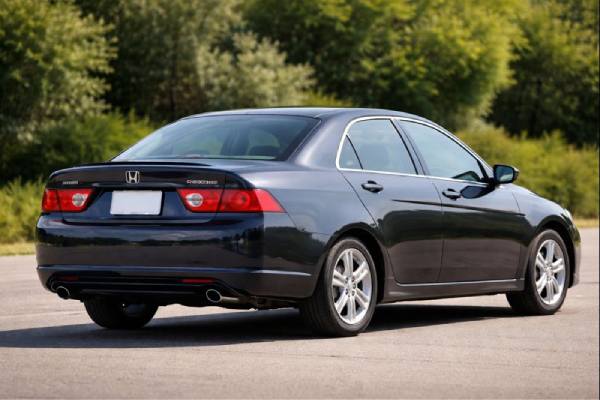
Honda’s 7th-generation European Accord diesel is best understood as two things at once: a practical family car, and a showcase for Honda’s first widely sold in-house common-rail turbodiesel. In CN1 form, the N22A1 2.2 i-CTDi brings a broad torque band that suits real traffic better than the headline horsepower suggests, especially with the typically paired 6-speed manual. It is also a car that rewards careful maintenance planning. When the intake and EGR (exhaust gas recirculation) system stay clean, the engine’s drivability and economy remain strong; when they do not, owners often chase smoke, hesitation, or boost faults that feel “bigger” than they are.
If you’re buying one today, your outcome depends less on the badge and more on evidence: correct oil, regular fuel filtration, cooling system health, and a clutch and flywheel that are still within their working window.
At a Glance
- Strong mid-range torque makes it relaxed at 80–130 km/h, even with passengers and luggage.
- No diesel particulate filter on many early i-CTDi setups can reduce short-trip headaches (market-dependent).
- Chassis tuning balances comfort and control well on imperfect roads.
- Expect EGR and intake soot maintenance as a normal ownership task, not a rare failure.
- Plan engine oil and filter service every 10,000–15,000 km or 12 months, depending on use and oil spec.
Contents and shortcuts
- Honda Accord CN1 diesel character
- N22A1 technical tables
- Equipment lines and crash results
- Reliability pitfalls and service actions
- Ownership schedule and inspection list
- Driving feel and diesel economy
- CN1 versus diesel competitors
Honda Accord CN1 diesel character
The CN1 diesel Accord sits in a sweet spot for many buyers who want a long-legged commuter that still feels engineered, not merely assembled. The chassis is typically European-Honda in flavor: stable on the motorway, predictable in corners, and comfortable enough over broken surfaces without turning floaty. Compared with many same-era diesels, the steering and pedal responses can feel unusually consistent, which makes the car easy to place and easy to drive smoothly.
The real story is the N22A1 2.2 i-CTDi. Even at modest output (around 140 hp), it delivers the kind of torque that changes how you drive day to day. You rarely need to chase revs; instead, you ride the mid-range, short-shifting through the 6-speed manual and letting the turbo do its work. That character also suits the Accord’s gearing: many cars are set up for relaxed cruising rather than punchy first-gear launches, so the car feels strongest once rolling.
Body style and trim matter. In many markets the diesel was available as a saloon (sedan) and Tourer (wagon/estate). The Tourer’s extra practicality can add weight, which slightly softens acceleration but often doesn’t hurt real-world pace because torque remains the dominant factor. Wheel and tyre packages also change the feel more than you might expect: 16-inch setups tend to ride quieter and absorb rough edges better, while 17-inch packages sharpen turn-in at the cost of some impact harshness and tyre expense.
Ownership today is about condition, not mythology. A well-kept i-CTDi can feel modern in its usability, but neglected examples often show the same pattern: soot buildup and vacuum/boost control issues that mimic expensive faults. The positive side is that many “big” symptoms are actually the result of small maintenance misses—wrong oil, overdue fuel filters, tired vacuum lines, sticky EGR valves, or split intercooler hoses. Treat it like a system, not a single part, and the Accord CN1 diesel is usually cooperative.
Where it still makes sense
- High-mileage commuters who want a calm, stable car at speed.
- Buyers who value mechanical feel and a straightforward manual drivetrain.
- Owners willing to do preventative cleaning and fluid discipline instead of waiting for warning lights.
N22A1 technical tables
Below are the core specifications that most affect service decisions, parts matching, and real-world expectations. Values can vary slightly by market, body style (saloon vs Tourer), and trim.
Engine and performance
| Item | Specification (typical CN1 i-CTDi) |
|---|---|
| Code | N22A1 |
| Engine layout and cylinders | Inline-4, DOHC, 4 valves/cyl |
| Displacement | 2.2 L (2204 cc) |
| Bore × stroke | 85.0 × 97.1 mm (3.35 × 3.82 in) |
| Induction | Turbocharged (often VGT) with intercooler |
| Fuel system | Common-rail direct injection |
| Compression ratio | ~16.7:1 |
| Max power | ~140 hp (103 kW) @ ~4000 rpm |
| Max torque | ~340 Nm (251 lb-ft) @ ~2000 rpm |
| Timing drive | Chain (inspect for noise/stretch symptoms) |
| Emissions standard | Typically Euro 3/Euro 4 (market/year dependent) |
| Rated efficiency (mixed) | Commonly ~5.5–6.2 L/100 km (approx. 46–51 mpg UK / 38–43 mpg US) |
| Real-world highway @ 120 km/h | Often ~6.0–6.7 L/100 km (approx. 42–47 mpg UK / 35–39 mpg US) |
Transmission and driveline
| Item | Specification (typical) |
|---|---|
| Transmission | 6-speed manual (market dependent) |
| Drive type | FWD |
| Differential | Open |
| Notes | Shift feel depends heavily on clutch/DMF health and correct gearbox fluid |
Chassis and dimensions
| Item | Saloon (typical) |
|---|---|
| Suspension (front/rear) | MacPherson strut / multi-link |
| Steering | Rack-and-pinion (commonly hydraulic assist) |
| Brakes (front/rear) | Disc / disc (sizes vary by trim) |
| Wheels/tyres | Common: 205/55 R16; sport: 225/45 R17 |
| Length / width / height | ~4665 / 1760 / 1445 mm (approx. 183.7 / 69.3 / 56.9 in) |
| Wheelbase | ~2670 mm (105.1 in) |
| Turning circle | ~11.8 m (38.7 ft) |
| Kerb weight | Often ~1460–1540 kg (3219–3395 lb), trim/body dependent |
| Fuel tank | ~65 L (17.2 US gal / 14.3 UK gal) |
| Cargo volume | Saloon typically ~450–460 L; Tourer higher and more usable |
Performance and capability
| Item | Typical real-world expectation |
|---|---|
| 0–100 km/h (0–62 mph) | ~9.5–10.5 s (body/tyres/condition dependent) |
| Top speed | ~205–215 km/h (127–134 mph) |
| Towing | Market-rated values vary widely; verify on the VIN plate and registration documents |
Fluids and service capacities (decision-grade)
| System | Typical guidance (verify for VIN/market) |
|---|---|
| Engine oil | Commonly 0W-30 or 5W-30 meeting the correct ACEA/Honda requirement |
| Engine oil capacity | Often ~5.7–6.0 L (6.0–6.3 US qt) with filter |
| Coolant | Long-life coolant, correct Honda-compatible type |
| Manual transmission | Honda MTF-type fluid (market spec), capacity varies by gearbox |
| Brake fluid | DOT 4 (change interval matters more than brand) |
| A/C refrigerant | R134a on most examples (charge amount varies) |
Key torque specs (common critical fasteners)
- Wheel nuts: typically ~108 Nm (80 lb-ft)
- Oil drain plug: typically ~35–40 Nm (26–30 lb-ft)
(Always confirm for your specific sump/plug design.)
Equipment lines and crash results
Trim naming differs by country, but the buying logic is consistent: focus on functional equipment that is expensive to retrofit, and be realistic about what “modern safety” means on a 2003–2008 platform.
Trims and options that matter
Most diesel Accords of this era were sold in a ladder that roughly maps to comfort vs sport:
- Comfort/SE-style trims: usually 16-inch wheels, softer ride, simpler audio, fewer body add-ons. Good choice for rough roads and quiet cruising.
- Sport/Executive-style trims: often 17-inch wheels, firmer suspension tuning, upgraded audio, more convenience features, and sometimes cosmetic kits.
Options worth prioritizing today:
- Climate control that works correctly (blend motors and compressors are age items).
- Heated seats and mirrors in cold climates.
- Xenon/HID headlamps if fitted in your market (better beam pattern, but check leveling and ballasts).
- Parking sensors or factory navigation if you value originality—though infotainment upgrades are easy now.
Quick identifiers during viewing:
- Wheel size and brake feel often hint at trim level.
- Interior wear on the driver’s bolster and steering wheel can reveal true usage despite odometer claims.
- Tourer cargo area plastics and tailgate struts tell you how hard the car has worked.
Safety ratings and what they mean
For this generation of Accord, published crash-test results typically highlight strong occupant protection for its time, with the usual caveat: older rating systems and protocols do not map perfectly to current star standards. Still, the core structure, restraint design, and stability systems gave the Accord a solid reputation in period testing.
When comparing safety “ratings,” be careful about:
- Test year and protocol (early-2000s tests emphasized different injuries and speeds).
- Trim equipment (side airbags and stability control were not always universal).
Safety systems and driver assistance
Typical safety hardware includes:
- Front airbags, often side airbags, and sometimes curtain airbags depending on trim/year.
- ABS with EBD (electronic brakeforce distribution).
- Stability control/traction control availability varies by market and year—verify on the dash switchgear and VIN equipment list.
ADAS (advanced driver assistance systems) is generally limited compared with modern cars. Don’t expect factory AEB or lane centering on most examples. Instead, evaluate the basics: brakes in good condition, tyres matched and not aged-out, and suspension geometry that keeps the car stable in emergency maneuvers.
Reliability pitfalls and service actions
A CN1 diesel Accord is rarely “unreliable” in a random way. When problems show up, they cluster around airflow management, boost control, and wear items that have a predictable life cycle. The most helpful way to think about it is prevalence and cost tier.
Common (high prevalence)
- EGR valve and intake soot buildup (low to medium cost)
Symptoms: hesitation, uneven pull, smoke under load, reduced economy.
Likely cause: soot and oil vapor deposits restricting airflow and EGR movement.
Remedy: EGR cleaning/replacement; intake cleaning; verify correct oil and crankcase ventilation condition. - Intercooler and boost hoses (low cost, high annoyance)
Symptoms: whooshing under boost, reduced power, oily mist near hose joints.
Likely cause: aged rubber, loose clamps, small splits that open under pressure.
Remedy: replace hoses/clamps; smoke-test boost tract if chasing intermittent faults. - Vacuum control aging (low cost)
Symptoms: inconsistent boost, limp mode, turbo actuator not behaving consistently.
Likely cause: brittle vacuum lines, sticky solenoids, weak vacuum supply.
Remedy: renew lines; test solenoids and vacuum pump output.
Occasional (medium prevalence)
- Dual-mass flywheel (DMF) and clutch wear (medium to high cost)
Symptoms: rattling at idle, vibration on take-up, slipping under torque in higher gears.
Likely cause: normal wear accelerated by city driving, towing, or poor technique.
Remedy: clutch kit and DMF as a set when required; inspect starter ring gear condition. - Alternator pulley and accessory drive issues (medium cost)
Symptoms: belt chirp, charging irregularities, vibration from the belt path.
Remedy: inspect pulleys, tensioner, and belt; address before belt failure strands you.
Rare but expensive
- High-pressure fuel system faults (high cost)
Symptoms: hard starting, poor rail pressure codes, rough running that does not respond to airflow work.
Likely cause: fuel contamination, long filter intervals, component wear.
Remedy: professional diagnostics; fuel quality control; keep filters on schedule.
Recalls, TSBs, and verification
Because these cars may have traveled across owners and even countries, your best practice is simple:
- Run an official VIN recall check in your country.
- Ask a dealer to confirm campaign completion history if possible.
- Treat any missing airbag/seatbelt documentation as a reason to check again, not as proof it’s fine.
Even when a recall is not diesel-specific, it still matters. Safety campaigns often involve airbags, belt pretensioners, and electrical routing—items you want correct regardless of engine type.
Ownership schedule and inspection list
A practical plan for this Accord is built around three priorities: clean oil, clean air, and clean fuel. Do those well and you reduce the probability of the “diesel mystery problems” that frustrate second or third owners.
Maintenance schedule (usable baseline)
Adjust intervals to driving style. Short trips, cold weather, and heavy city use justify the shorter end.
- Engine oil and filter: every 10,000–15,000 km or 12 months
Use the correct spec oil; a diesel that spends time on boost benefits from strong high-temperature protection. - Air filter: inspect every 15,000 km, replace around 30,000 km (earlier in dusty areas).
- Cabin filter: every 15,000–30,000 km (or yearly if you want consistent HVAC performance).
- Fuel filter: every 30,000–40,000 km (sooner if fuel quality is uncertain).
- Brake fluid: every 2 years (prevents internal corrosion and soft pedal feel).
- Coolant: typically 5 years then at the recommended interval for the coolant type (verify the specific coolant and market guidance).
- Manual transmission fluid: consider every 60,000–80,000 km if you want shift quality and synchro life.
- Glow plugs and starting system: test if cold starts degrade; replace as needed rather than on a fixed calendar.
Timing components
The N22A1 commonly uses a timing chain rather than a belt. That does not mean “ignore forever.” Chain systems wear by mileage, oil quality, and cold-start behavior.
- Inspect for symptoms: rattle at startup, persistent timing-related fault codes, or unusual metallic noise at the timing end.
- Replace components when wear is confirmed, not on a generic belt schedule.
Buyer’s inspection checklist (high yield)
Bring a flashlight, a basic OBD reader, and enough time to drive the car fully warm.
- Cold start: should fire cleanly without extended cranking; excessive smoke or hunting needs explanation.
- Boost behavior: steady pull in 3rd/4th from ~1800 rpm; surging suggests vacuum/boost control issues.
- EGR/intake clues: oily soot around joints, inconsistent idle, or “flat” response can point to deposit work.
- Clutch/DMF: listen for rattles at idle with clutch engaged/disengaged; feel for vibration on take-up.
- Cooling system: stable temperature, no unexplained pressure, no oily residue in coolant.
- Suspension wear: front control arm bushes and ball joints are typical age items—listen for knocks over broken roads.
- Corrosion hotspots: rear arches, underbody seams, subframe areas (varies by climate and storage).
Durability outlook
A cared-for CN1 diesel can be a long-distance tool. The most common reason they become “problem cars” is not a weak engine block—it’s deferred service layered on deferred service. If you buy a clean one and reset the baseline (fluids, filters, hoses, and intake health), you usually get a far calmer ownership experience.
Driving feel and diesel economy
On the road, the CN1 diesel Accord feels like it was designed for real transport rather than brochure numbers. The engine’s best work happens in the middle: think 1800–3200 rpm where torque is accessible and the turbo stays responsive. That makes the car easy to drive quickly without feeling like you’re stressing it.
Ride, handling, and NVH
- Ride: Most examples strike a good balance. On 16-inch wheels the car tends to absorb sharp edges better; on 17s it feels tighter but can thump on potholes.
- Handling: Neutral and predictable. It won’t rotate like a hot hatch, but it resists sloppy body motion and holds a line confidently.
- Steering: Typically accurate with decent weighting for the era, though worn bushes can make it feel vague.
- NVH (noise, vibration, harshness): A healthy i-CTDi is reasonably quiet at cruise, but tired engine mounts, DMF wear, and boost leaks can add vibration or booming.
Powertrain character
The manual gearbox usually suits the diesel well: you can short-shift and still make progress. Kickdown is your right foot and a downshift. If the clutch and flywheel are tired, you’ll feel it immediately because diesel torque amplifies drivetrain imperfections.
Driveability notes that matter in practice:
- Stronger passing response once rolling than standing-start drama.
- Long gearing helps motorway economy but can mask a slipping clutch until you test it in a high gear under load.
- Consistent boost depends on vacuum health; intermittent faults can feel like “random power loss.”
Real-world fuel use
Expect numbers that depend heavily on speed and temperature:
- City: often 6.5–7.5 L/100 km (43–36 mpg UK / 32–27 mpg US)
- Highway (100–120 km/h): often 5.5–6.7 L/100 km (51–42 mpg UK / 43–35 mpg US)
- Mixed: often 6.0–6.8 L/100 km (47–42 mpg UK / 39–35 mpg US)
Cold weather typically adds 0.5–1.0 L/100 km due to warm-up time, denser air, and higher accessory loads.
Selective metrics that change the verdict
- If the car does not pull cleanly from ~1800 rpm in higher gears, assume you are troubleshooting airflow/boost control or clutch slip.
- If braking feels inconsistent, budget for a full brake refresh and check tyre age—old tyres can make a “safe” car feel alarming.
CN1 versus diesel competitors
In the early-to-mid 2000s European diesel market, the Accord competed against a deep bench. The CN1’s strongest advantage is how cohesive it feels: engine, gearbox, and chassis tend to work together, and the cabin ergonomics are usually straightforward.
Versus Volkswagen Passat TDI (B5.5/B6)
- Accord advantages: often more consistent steering feel, and a simpler “driver’s car” character.
- Passat advantages: huge parts ecosystem, many drivetrain variants, and often better low-rpm shove depending on engine.
- Buyer note: choose based on service history quality. Both can be excellent; both can be punishing when neglected.
Versus Ford Mondeo TDCi (Mk3/Mk4 early)
- Accord advantages: typically stronger perceived build quality and long-distance calm.
- Mondeo advantages: often class-leading ride/handling balance and easy suspension tuning.
- Buyer note: the Mondeo can feel lighter and more playful; the Accord often feels more “finished.”
Versus Toyota Avensis D-4D
- Accord advantages: more engaging chassis, and the i-CTDi torque delivery feels eager once rolling.
- Avensis advantages: reputation for low-drama ownership when maintained, and often softer ride.
- Buyer note: if your priority is minimum involvement, the Toyota may suit; if you want a more connected drive, the Honda often wins.
Versus Mazda6 diesel (early generations)
- Accord advantages: typically better rust resistance in many markets (though still inspect), and strong highway stability.
- Mazda advantages: sharper turn-in and a “lighter on its feet” feel.
- Buyer note: rust inspection is non-negotiable on any early Mazda6; the Accord still needs checks, but the risk profile differs.
The CN1 sweet spot today
Choose the Accord CN1 diesel if you want:
- A manual diesel that is genuinely pleasant at speed.
- A car that responds well to baseline-reset maintenance.
- Practicality without giving up the sense that the car was engineered as a complete package.
Avoid it if:
- You need modern ADAS safety features.
- You mostly do cold, short trips and won’t keep up with intake/EGR cleanliness and fluid discipline.
- You are buying on price alone without budgeting for “catch-up” service.
References
- Honda Accord Achieves Top Euro NCAP Overall Safety Ranking 2008 (Safety Rating)
- Honda Accord: Press Kit 2008 (Technical Guide)
- Euro NCAP | Latest Safety Ratings 2025 (Safety Rating)
Disclaimer
This article is for informational purposes only and is not a substitute for professional inspection, diagnosis, or repair. Specifications, torque values, service intervals, fluids, and procedures can vary by VIN, market, model year, and equipment. Always verify details using official Honda service documentation for your exact vehicle and confirm recall status through official channels.
If you found this guide useful, please consider sharing it on Facebook, X (Twitter), or your favorite forum to support our work.