
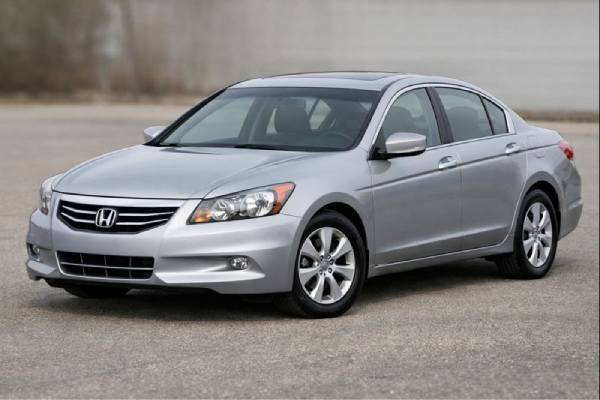
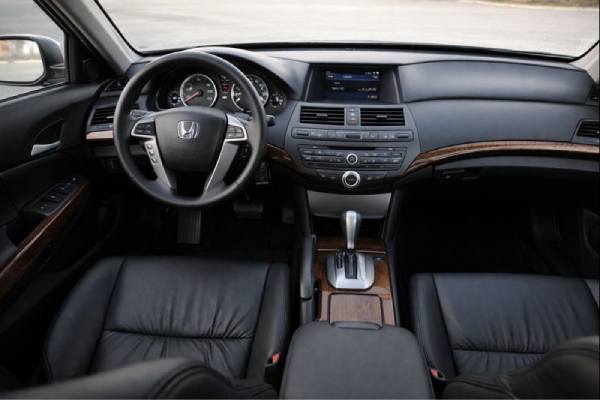
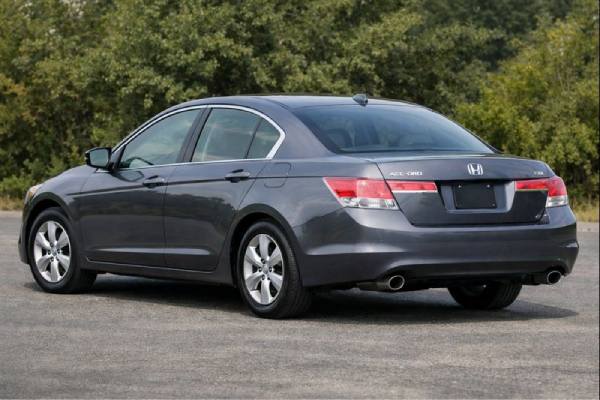
The Honda Accord CP2 coupe with the K24Z3 is the “driver’s” four-cylinder Accord of its era: a practical 2+3 seating layout wrapped around a high-revving 2.4-liter i-VTEC engine tuned for 190 hp. Compared with the lower-output sedan four-cylinder, the coupe’s K24Z3 feels more eager above midrange rpm and rewards a smoother, more deliberate driving style. It is still an Accord at heart—easy to live with, predictable to service, and generally durable when maintenance is kept up.
For buyers today, the appeal is simple: strong parts availability, a well-understood powertrain, and a chassis that remains stable and comfortable on long trips. The main ownership trade-off is age-related wear—rubber bushings, leaks, and electrical gremlins are now more common than major engine failures.
Quick Specs and Notes
- The K24Z3 likes revs; it feels strongest from about 4,000 rpm up to the 7,000 rpm power peak.
- Simple, naturally aspirated design means fewer expensive failure points than many modern turbo fours.
- Coupe packaging offers a sportier feel and cleaner styling, but rear access is tighter than the sedan.
- Budget for suspension and mount refreshes as the car ages; they change the driving feel dramatically.
- Plan engine oil and filter service about every 8,000–12,000 km (or 12 months), depending on use.
Explore the sections
- What makes the CP2 K24Z3 special
- K24Z3 specs, dimensions, and capacities
- Trims, packages, and safety equipment
- Reliability patterns and known faults
- Maintenance plan and smart buying tips
- How it drives and real-world performance
- Rivals and what to choose instead
What makes the CP2 K24Z3 special
“CP2” is most commonly used to describe the eighth-generation Accord coupe configuration sold in North America, and the K24Z3 is the higher-output 2.4-liter option in that coupe range. If you see model-year listings that start at 2007, treat that as a production overlap or registration quirk—this CP2-era coupe is typically a 2008–2012 model-year car, with late-2007 build dates appearing in some markets.
The engineering headline is the K24Z3 itself: an aluminum 2.4-liter inline-four with Honda’s i-VTEC strategy (variable valve timing and lift control) and a timing chain. In daily driving, it behaves like a “big” naturally aspirated four: smooth at low rpm, then progressively stronger as revs climb. Unlike many torque-heavy turbo engines, it does not deliver its best work at 2,000 rpm. Instead, it rewards drivers who let it breathe—merging and passing feel best when you downshift and keep it in the mid-to-upper rev band.
The CP2 coupe chassis complements that character. It’s not a pure sports coupe—there’s real sound insulation, long-distance comfort, and predictable stability—but it’s typically a little more “connected” feeling than the equivalent sedan. Some of that is weight distribution and body packaging; some of it is simply that many coupes were ordered with larger wheels and sport-leaning trims.
From an ownership perspective, the big advantage is maturity. The K24 family is widely serviced, diagnostics are straightforward, and parts availability is strong. The biggest risk is not exotic engine failure; it’s deferred maintenance plus normal aging. By now, most cars have seen multiple owners, varying oil-change habits, and mixed repair quality. A well-kept CP2 can still be a dependable daily, but a neglected one can feel tired—noisy mounts, worn control arm bushings, or a sticky caliper can make it drive far worse than it should.
If your goal is a reliable, engaging commuter with reasonable running costs and enough performance to feel lively, the K24Z3 coupe sits in a sweet spot. Just shop with your eyes open, prioritize condition over mileage alone, and assume you will do some “baseline” work shortly after purchase.
K24Z3 specs, dimensions, and capacities
Specs vary slightly by model year and trim (especially wheels/tires, curb weight, and final calibration). The tables below focus on the typical CP2 Accord coupe with the K24Z3 2.4-liter, 190 hp configuration.
Engine and performance
| Item | Spec |
|---|---|
| Code | K24Z3 |
| Engine layout and cylinders | Inline-4, DOHC, i-VTEC, 4 valves/cyl |
| Displacement | 2.4 L (2,354 cc) |
| Bore × stroke | 87.0 × 99.0 mm (3.43 × 3.90 in) |
| Induction | Naturally aspirated |
| Fuel system | Multi-point fuel injection (MPFI) |
| Compression ratio | ~10.5:1 (varies slightly by calibration) |
| Max power | 190 hp (142 kW) @ ~7,000 rpm |
| Max torque | 220 Nm (162 lb-ft) @ ~4,400 rpm |
| Timing drive | Chain |
| Fuel | Regular unleaded (typ. 87 AKI / 91 RON) |
| Rated efficiency (typ., EPA) | ~9.0–10.0 L/100 km combined (24–27 mpg US) |
| Real-world highway @ 120 km/h | ~7.5–8.8 L/100 km (27–31 mpg US), wind/tires matter |
Transmission and driveline
| Item | Spec |
|---|---|
| Drive type | FWD |
| Manual (common) | 5-speed manual |
| Automatic (common) | 5-speed automatic |
Typical 5-speed manual ratios (may vary by year):
| Gear | Ratio |
|---|---|
| 1st | 3.266 |
| 2nd | 1.857 |
| 3rd | 1.269 |
| 4th | 0.966 |
| 5th | 0.738 |
| Reverse | 3.583 |
| Final drive | 4.389 |
Typical 5-speed automatic ratios (may vary by year):
| Gear | Ratio |
|---|---|
| 1st | 2.697 |
| 2nd | 1.606 |
| 3rd | 1.071 |
| 4th | 0.766 |
| 5th | 0.566 |
| Reverse | 1.888 |
| Final drive | 4.438 |
Chassis and dimensions
| Item | Typical spec (approx.) |
|---|---|
| Front suspension | MacPherson strut independent |
| Rear suspension | Multi-link independent |
| Steering | Rack-and-pinion (assist type varies by year/market) |
| Brakes (front/rear) | Disc/disc; sizes vary by trim |
| Wheels/tires (common) | 215/60 R16 or 215/50 R17 |
| Length / width / height | ~4,750 / 1,845 / 1,440 mm (~187.0 / 72.6 / 56.7 in) |
| Wheelbase | ~2,725 mm (~107.3 in) |
| Turning circle | ~11.4 m (~37.4 ft) |
| Curb weight | ~1,450–1,560 kg (~3,200–3,440 lb), trim dependent |
| Fuel tank | ~70 L (18.5 US gal / 15.4 UK gal) |
| Cargo volume | ~400 L (~14 cu ft), trim dependent |
Performance and capability
| Item | Typical real-world range |
|---|---|
| 0–100 km/h (0–62 mph) | ~7.5–9.0 s (manual often quicker than auto) |
| 80–120 km/h passing | ~6.5–8.0 s depending on gear selection |
| Top speed | ~200–210 km/h (125–130 mph), often electronically limited |
| Towing capacity | Usually not rated or not recommended in many markets |
| Roof load | Verify by market; many coupes are conservative here |
Fluids and service capacities
| Fluid | Spec (typical) |
|---|---|
| Engine oil | 0W-20 or 5W-20 depending on market; ~4.0 L (4.2 US qt) with filter |
| Coolant | Honda Type 2 / long-life OAT; capacity varies (~5.5–6.5 L total) |
| Manual transmission | Honda MTF (or equivalent); ~1.7–2.0 L |
| Automatic transmission | Honda ATF (DW-1 later replacement spec in many regions); drain/fill commonly ~2.5–3.0 L (total higher) |
| Brake fluid | DOT 3 (or DOT 4 where specified) |
| Power steering (if hydraulic) | Honda PSF |
Key torque specs (common references; verify by VIN):
| Fastener | Torque |
|---|---|
| Engine oil drain bolt | 39 Nm (29 lb-ft) |
| Wheel lug nuts | ~108 Nm (~80 lb-ft) |
Electrical (typical)
| Item | Typical spec |
|---|---|
| 12V battery | Common group size varies; ~45–60 Ah typical |
| Spark plugs | Iridium long-life; replace interval often near 160,000 km (100,000 mi) |
Trims, packages, and safety equipment
The CP2 Accord coupe lineup varies by market, but most regions offered a “good/better/best” structure: an entry trim with solid basics, a mid-trim with comfort and convenience, and a top trim with leather and premium audio/navigation options. For the K24Z3 specifically, you’ll most often see it paired with sport-leaning coupe trims rather than the absolute base model.
Common trims and how to spot them
- Entry/sport base variants (often LX-S or similar naming): Usually cloth seats, simpler audio, smaller wheels, and fewer convenience features. These trims can be excellent buys because they often have fewer aging electronics to chase.
- Mid trims (often EX): Typically add a sunroof, upgraded wheels, better audio, steering-wheel controls, and more comfort equipment. This is often the “sweet spot” for features without maximum complexity.
- Upper trims (often EX-L): Usually leather seating, heated seats in many markets, premium audio, and optional navigation on some years. These are comfortable, but check every feature works—repairs can be more expensive simply because there’s more to fail.
Quick identifiers help when badges are missing or mismatched: wheel design/size, presence of sunroof, seat material, head unit type (navigation vs standard), and whether the car has factory fog lights or certain steering wheel controls. Always cross-check with the VIN build data if you can, because used cars frequently pick up swapped wheels or replacement bumpers over time.
Year-to-year equipment changes that matter
The 2007–2012 window includes mid-cycle updates for many markets. The most important practical changes tend to be:
- Infotainment evolution: Bluetooth, AUX/USB integration, and navigation systems changed over the years; older navigation units can feel dated and are not always easy to modernize.
- Wheel and tire packages: Some years shifted standard wheel sizes upward on sport trims. Larger wheels can sharpen steering response but can also increase road noise and shorten bushing life if roads are rough.
- Interior materials: Small changes in plastics, seat fabrics, and switchgear can affect wear and “feel” more than you might expect.
Safety ratings and what they mean for a coupe
Safety ratings can be tricky for this generation because many headline ratings you’ll see online focus on the 4-door sedan, not the 2-door coupe. The coupe shares a lot of engineering DNA, but ratings are test-configuration specific. Your best approach is:
- Use official rating bodies to check the exact year and body style where possible.
- Treat sedan ratings as “context,” not a guarantee for the coupe.
Safety systems and driver assistance (ADAS)
By modern standards, this CP2-era Accord is “safety-first, ADAS-light.” Expect:
- Core safety: Front airbags, side airbags, and side curtain airbags in most configurations; ABS and electronic stability control (VSA) were widely fitted.
- Child-seat provisions: ISOFIX/LATCH anchors are typically present; verify rear seat anchor access because coupe packaging can make installs more awkward.
- ADAS reality check: Advanced features like automatic emergency braking, adaptive cruise control, and lane-keep assist were generally not common in this era’s mainstream Accord trims. Some markets offered limited tech, but it is not a defining feature of the CP2.
If you are shopping primarily for modern active safety, the CP2 Accord coupe can still be safe in a structural sense, but it will not match newer cars for collision avoidance technology. For many owners, the better “upgrade” is simply fitting correct tires, maintaining brakes, and ensuring suspension and alignment are in spec—those steps meaningfully affect real-world safety.
Reliability patterns and known faults
The K24Z3 Accord coupe’s reliability story is usually positive: the engine and driveline are fundamentally robust, and most failures are incremental rather than catastrophic. That said, age has shifted the problem set from “design flaws” toward “wear, leaks, and old electronics.” A helpful way to think about it is prevalence (how often it shows up) and cost tier (how painful it is).
Common issues (high prevalence)
- Suspension bushings and ball joints (medium cost): Symptoms include clunks over bumps, vague steering on-center, and uneven tire wear. The front lower control arm bushings and rear multi-link bushings can age out, especially on larger wheels or rough roads.
- Engine mounts (medium cost): A tired mount set makes the car feel coarse at idle and during takeoff. You’ll notice vibration through the steering wheel or seat and a “thump” when shifting from Park to Drive.
- Brake caliper slide pin sticking (low-to-medium cost): Uneven pad wear, pulling, and hot brake smell after a drive. Often serviceable if caught early, but ignored pins can lead to rotor and caliper replacement.
- Door lock actuators and window switch issues (medium cost): Random lock/unlock failures or windows that hesitate. Not dangerous, but annoying and common on older Hondas.
Occasional issues (moderate prevalence)
- Cold start rattle from the cam phaser/VTC actuator area (medium cost): A brief rattle on startup can appear on some K-series engines. Occasional short rattle may be manageable, but a persistent or worsening noise warrants diagnosis because it can indicate timing system wear or actuator issues.
- Oil seepage (low-to-medium cost): Look for sweating around the timing cover, valve cover gasket, and oil pan area. Most are nuisance leaks until they become heavy.
- A/C performance decline (medium cost): Weak cooling, cycling, or compressor noise. Some fixes are simple (relay, clutch), while others (compressor replacement) cost more.
Rare but costly issues (low prevalence, higher risk)
- Transmission neglect consequences (medium-to-high cost): The automatic typically likes clean fluid. If shifts feel harsh, delayed, or inconsistent, verify service history. Manuals can develop synchro wear if abused, especially if the clutch was ridden or fluid ignored.
- Catalytic converter efficiency codes (high cost): Often triggered by aging sensors or engine running issues, but sometimes the catalyst itself is tired. Diagnose properly before replacing expensive parts.
- Corrosion (high cost in certain climates): If the car lived where roads are salted, inspect subframes, brake lines, and suspension mounting points. Rust can turn a “cheap coupe” into a parts car quickly.
Recalls, service bulletins, and how to verify
Many cars in this era were affected by large-scale safety campaigns (most notably airbag inflator recalls in the broader industry). The only safe assumption is: verify your exact VIN. Use official recall lookup tools and request dealer printouts if possible. When shopping, ask for:
- Proof of recall completion (invoices or dealer history printouts).
- Any documentation of ECU/driveability updates or technical service actions.
- A clear explanation of any warning lights that were “cleared” before sale.
Pre-purchase checks that pay off
- Cold start test: Listen for abnormal timing noises and confirm stable idle.
- Scan tool check: Look for stored history codes, not just current codes.
- Road test over rough pavement: Suspension noise is easier to hear at low speed.
- Brake feel and heat: A sticking caliper often reveals itself after a longer drive.
- Fluid condition: Oil, ATF/MTF, and coolant condition tell you a lot about ownership quality.
A CP2 with average mileage but excellent records is usually a better bet than a “low-mileage” car that sat, because sitting often accelerates seal hardening, corrosion in brakes, and electrical issues.
Maintenance plan and smart buying tips
Honda’s maintenance guidance in this era often uses a Maintenance Minder concept, but you can still plan service in clear distance/time blocks. The schedule below is a practical baseline for a used CP2 K24Z3—tight enough to protect the engine, but not so aggressive that it feels wasteful. Always adjust for climate and driving style.
Practical maintenance schedule (distance/time)
- Engine oil and filter: Every 8,000–12,000 km or 12 months. Short trips and cold weather push you toward the shorter interval. Use the correct viscosity and a quality filter.
- Air filter (engine): Inspect every 15,000 km; replace every 30,000–45,000 km (more often in dusty areas).
- Cabin air filter: Replace every 15,000–30,000 km, especially if HVAC airflow drops.
- Brake fluid: Every 2 years regardless of mileage. Moisture absorption is the enemy.
- Coolant (long-life): Often around 10 years/160,000 km for the first change, then roughly every 5 years/80,000 km after (market-dependent). Use the correct long-life coolant type.
- Spark plugs (iridium): Commonly around 160,000 km (100,000 mi). Misfires under load or poor economy can justify earlier replacement.
- Valve clearance: Inspect/adjust if noisy or if there are misfire/rough idle symptoms; many owners check around 160,000–200,000 km as a preventive measure.
- Automatic transmission fluid: Drain/fill every 40,000–60,000 km if you want long life, especially in city driving. Avoid “power flush” strategies unless you know the transmission’s condition.
- Manual transmission fluid: Every 60,000–100,000 km, sooner if shifting becomes notchy or you track/autocross.
- Serpentine belt and hoses: Inspect every oil change; replace at signs of cracking, glazing, or coolant seepage.
- Tires and alignment: Rotate every 8,000–10,000 km; align annually or anytime tires wear unevenly.
Fluid specs and capacities (decision-useful)
- Engine oil capacity (with filter): ~4.0 L (4.2 US qt).
- Oil drain bolt torque: 39 Nm (29 lb-ft).
- Wheel lug nuts torque: ~108 Nm (~80 lb-ft).
Those numbers help with DIY planning and shop verification. For other fluids (coolant, ATF total capacity), use VIN-specific service data because variations exist by year, transmission, and regional parts sourcing.
Buyer’s guide: what to look for first
Body and structure
- Inspect rocker panels, rear wheel arches, subframes, and suspension mounting points for rust.
- Check door alignment and paint consistency (prior collision work is common on coupes).
Engine bay
- Look for oil seepage around the valve cover and timing cover area.
- Confirm coolant is the correct type and not rusty or oily.
- Listen for accessory bearing noise (alternator, idler pulleys) at idle.
Driveline
- Automatic: smooth engagement, consistent upshifts and downshifts, no flare under light throttle.
- Manual: clean clutch takeup, no crunching into 2nd/3rd when cold, no chatter.
Chassis
- Clunks over bumps suggest bushings, links, or mounts.
- Uneven tire wear suggests alignment issues or worn arms/bushings.
Electronics
- Verify all windows, locks, HVAC modes, and steering-wheel controls.
- Confirm the airbag light stays off and the SRS system self-check behaves normally.
Recommended years and trims (practical take)
- Best all-rounders: Mid-trim coupes with sensible wheels (not the biggest option) and complete service history.
- Most comfortable: Leather/premium trims—great if everything works, but price in potential fixes.
- Approach with caution: Cars with unknown transmission service history, obvious suspension noise, or signs of repeated “check engine light resets.”
Long-term durability is strong when the car is kept “boringly maintained.” The most expensive ownership path is buying a cheap example and then paying retail labor to fix every deferred item. If you can, buy the best-kept one you can find and do a careful baseline service immediately.
How it drives and real-world performance
The CP2 K24Z3 coupe is at its best when you drive it like a naturally aspirated Honda: keep it in the right gear, use the upper half of the tachometer when you need speed, and let the chassis do its calm, predictable work. It is not a twitchy car, and it is not trying to be a track toy. Instead, it delivers an unusually balanced blend of daily comfort and “just enough” enthusiasm.
Ride, handling, and NVH
Ride quality is typically composed, with enough suspension travel to handle real roads. On 16-inch wheels, the car tends to feel smoother and quieter. On 17-inch packages, steering response sharpens, but impacts can feel more pronounced and road noise can rise—especially if owners fit cheaper tires.
Handling balance is safe and confidence-inspiring. The car tracks straight on the highway, resists crosswinds well, and feels stable in sweeping corners. Push harder and you’ll feel its front-drive nature: it prefers clean lines and progressive throttle, not mid-corner stomps. Good tires and fresh dampers make a bigger difference than most owners expect.
Steering feel is light-to-moderate and generally accurate. As these cars age, steering can feel “less crisp,” and the culprit is often not the rack—it’s worn bushings, tired ball joints, or misalignment.
Braking feel is consistent when the system is healthy. If the pedal feels soft, uneven, or the car pulls, prioritize brake fluid, caliper slide service, and pad/rotor condition before assuming something exotic is wrong.
Powertrain character
The K24Z3’s personality is a major reason to choose this model. Around town, it’s smooth and easy. For passing or merging, the engine responds best to a downshift, where it pulls with real intent above ~4,000 rpm. If you short-shift at 2,500 rpm, it will feel merely adequate; if you use the rev range, it feels lively.
Automatic behavior (5AT): The 5-speed automatic is tuned for comfort and economy. It can feel reluctant to kick down unless you give a clear throttle request. In rolling traffic, it’s usually smooth; in hilly terrain, it may “hunt” between gears more than modern multi-speed automatics.
Manual behavior (5MT): The manual version tends to make the engine feel sharper and more responsive. If your priority is driving satisfaction, the manual is usually the pick—just make sure the clutch, synchros, and shifting feel healthy.
Real-world efficiency
Owners typically see:
- City use: roughly 10–12 L/100 km (20–24 mpg US) depending on traffic and warm-up time.
- Highway 100–120 km/h: roughly 7.5–8.8 L/100 km (27–31 mpg US).
- Mixed driving: commonly around 9–10 L/100 km (24–27 mpg US).
Cold weather can raise consumption meaningfully because warm-up enrichment and winter tires both add load. Tire choice, alignment, and stuck brake calipers are “hidden” efficiency killers on older cars.
Metrics that matter in practice
The key number isn’t just 0–100 km/h; it’s passing response. A healthy K24Z3 in the right gear delivers confident overtakes without drama. If your test drive feels sluggish, confirm the basics: correct spark plugs, clean throttle body/MAF (as applicable), healthy O2 sensors, proper tire pressures, and a transmission that isn’t slipping or delayed.
In short: the CP2 K24Z3 coupe is enjoyable because it stays honest—no turbo surprises, no complicated hybrid transitions, and a chassis that feels predictable when you drive it briskly.
Rivals and what to choose instead
The CP2 Accord coupe sits in a niche that’s less common today: a mid-size, front-drive coupe with real practicality. When new, it competed against both “sporty coupes” and “two-door versions of family cars.” Today, your choice often comes down to what you value most: reliability, comfort, features, or performance.
Nissan Altima Coupe (2.5 and V6)
Why consider it: The Altima coupe offers sharp styling and, in some configurations, a punchier feel.
Why the Accord may be better: Long-term durability and drivetrain simplicity often favor the Accord, and the Honda’s cabin ergonomics and ride comfort tend to age better.
Choose Altima if: You find a clean, well-kept example and prefer its seating position and design.
Toyota Camry Solara
Why consider it: Comfort-first coupe with Toyota’s traditional reliability approach.
Why the Accord may be better: The Accord’s steering and chassis feel more modern and more engaging, and the K24Z3 invites spirited driving more than many Solara setups.
Choose Solara if: You want maximum comfort and a softer, more relaxed personality.
Acura TSX (four-door, but similar size and mission)
Why consider it: More premium feel, often better standard equipment, and a sportier tune.
Why the Accord may be better: Lower parts costs and a simpler ownership story. Also, the coupe body style is unique if you want two doors.
Choose TSX if: You want a more upscale interior and don’t mind paying a bit more for premium components.
Mazda6 (four-door)
Why consider it: Often the most “driver-focused” mainstream sedan chassis of the era.
Why the Accord may be better: The Accord’s powertrain durability and parts ecosystem can be easier, and the coupe body has its own appeal.
Choose Mazda6 if: You value steering feel and cornering more than engine simplicity.
Newer alternatives if you want modern safety tech
If your priority is modern ADAS (AEB, ACC, lane support), the most meaningful upgrade is usually a newer model year rather than a different 2007–2012-era rival. The CP2 is strong on fundamental safety engineering, but it simply predates the widespread adoption of collision-avoidance systems in this segment.
The quick verdict
- Choose the CP2 K24Z3 if you want a reliable, naturally aspirated coupe with good road manners and reasonable running costs.
- Choose a V6 variant (within the Accord family) if you want effortless low-end torque more than high-rpm character.
- Choose a newer car if your must-haves include modern active safety and up-to-date infotainment.
For most buyers shopping this class today, the best “rival” isn’t another badge—it’s a better example. A clean, well-maintained Accord coupe will usually outperform a neglected alternative, regardless of spec sheet bragging rights.
References
- 2011 Accord Coupe 2011 (Owner’s Manual)
- Fuel Economy of 2012 Honda Accord Coupe 2012 (Fuel Economy Data)
- Honda Accord 4-door sedan 2012 (Safety Rating)
- 2012 Honda Accord Coupe Technology Reference Guide 2012 (Owner Resource)
Disclaimer
This article is for informational purposes only and is not a substitute for professional diagnosis, repair, or safety inspection. Specifications, torque values, service intervals, and procedures can vary by VIN, market, model year, and installed equipment. Always verify details using your official Honda service information and the documentation specific to your vehicle.
If this guide helped, please consider sharing it on Facebook, X (Twitter), or your favorite forum to support our work.