
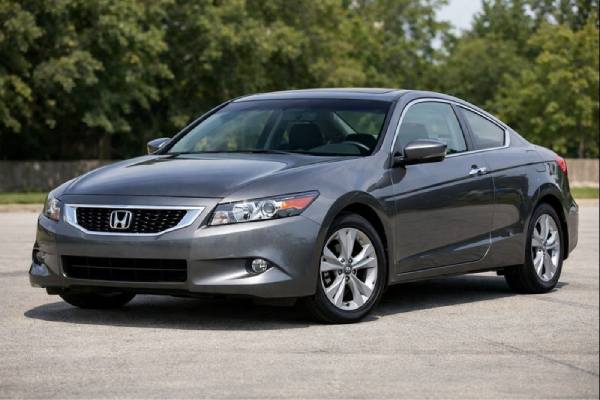
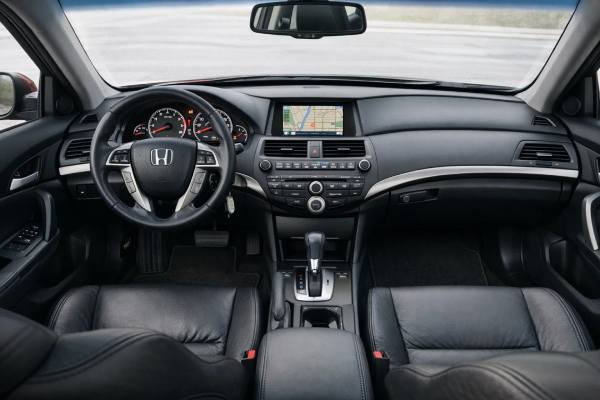
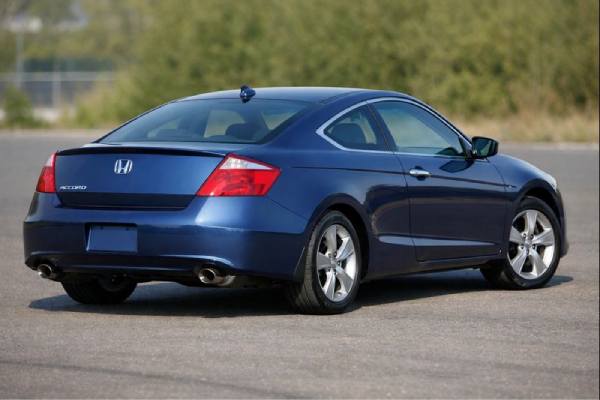
The CS2-generation Honda Accord Coupe with the J35Z3 3.5L V6 is one of those cars that looks straightforward on paper, yet has a few engineering details that shape ownership. The headline is the naturally aspirated V6: smooth, quick to rev, and strong enough to make the coupe feel genuinely fast without relying on turbo boost. Underneath, the Accord’s rigid structure and well-sorted suspension give it calm highway stability, predictable braking, and daily-driver comfort that still feels “Honda.”
Where it gets interesting is the overlap between performance and practicality. You can buy one, run it as a commuter, and still enjoy real passing power. But you also need to plan for the V6’s bigger consumables, stay disciplined about fluid service, and check carefully for deferred maintenance—especially if the car has been driven hard.
Quick Specs and Notes
- Strong, linear V6 power delivery that suits highway passing and daily driving.
- Stable chassis with predictable steering and braking feel for a midsize coupe.
- Good parts availability and straightforward service access for many common jobs.
- Watch for neglected transmission and mount wear on higher-mile examples.
- Plan oil changes around 5,000–8,000 miles (8,000–13,000 km) depending on driving style and oil life monitoring.
Navigate this guide
- Accord Coupe CS2 in depth
- J35Z3 specs and dimensions
- Accord Coupe trims and safety
- Known faults and fixes
- Maintenance plan and buying tips
- Road feel and real mpg
- Rivals against the V6 coupe
Accord Coupe CS2 in depth
If you’re shopping this Accord Coupe for the J35Z3, you’re usually chasing a specific mix: V6 smoothness, Honda ergonomics, and a coupe body that still has real midsize-car usability. The CS2 platform (V6 coupe) matters because it’s not just “a sedan with two doors.” The coupe’s proportions and roofline change visibility and cabin feel, and the longer doors and lower seating position give it a more personal, driver-focused vibe—without turning it into a cramped sports coupe.
From an ownership standpoint, the J35Z3 is the centerpiece. It’s a 3.5-liter Honda V6 that prioritizes clean response and broad torque. In normal driving it feels relaxed—low effort, few downshifts, and easy highway merges. Push harder and it still feels mechanically refined rather than edgy. That character is a big part of why these cars age well in day-to-day use: there’s less reliance on high boost, extreme heat management, or complex intake plumbing to deliver performance.
The chassis is tuned for real roads. You get a stable, planted feel at speed, good straight-line tracking, and braking that doesn’t feel overwhelmed by the car’s mass. It’s not a lightweight, and you can feel that in tight transitions, but the car generally responds cleanly to sensible tire choices and fresh suspension bushings.
Where buyers sometimes misread the CS2 is cost-to-keep versus “Honda reputation.” The car can be very dependable, but the V6 coupe uses larger tires, bigger brakes in many trims, and it tends to expose worn mounts, tired dampers, and neglected fluids sooner than the four-cylinder versions. The best examples are the ones owned by people who serviced them on schedule and didn’t treat “runs fine” as a maintenance plan.
J35Z3 specs and dimensions
Below are practical, ownership-relevant specs for the J35Z3-equipped Accord Coupe (CS2) in the 2007–2010 window. Note that exact ratings and some sub-specs can vary by model year, emissions certification, and transmission.
Engine and Performance (ICE)
| Item | Specification |
|---|---|
| Code | J35Z3 |
| Engine layout and cylinders | V6, 6 cylinders, SOHC i-VTEC (SOHC VTEC on some applications), 4 valves/cyl |
| Bore × stroke | 89.0 × 93.0 mm (3.50 × 3.66 in) |
| Displacement | 3.5 L (3,471 cc) |
| Induction | Naturally aspirated |
| Fuel system | Port fuel injection (PFI) |
| Compression ratio | 10.5:1 (automatic) / 10.0:1 (manual) |
| Max power | 268 hp (200 kW) @ ~6,200 rpm (commonly listed; some late years are re-rated slightly higher under updated testing) |
| Max torque | ~248 lb-ft (336 Nm) @ ~5,000 rpm (typical published figure) |
| Timing drive | Belt |
| Fuel required | Unleaded, 87 AKI (regular) or higher |
Rated efficiency (EPA-style figures commonly listed)
| Configuration | City | Highway | Combined |
|---|---|---|---|
| V6 5AT (typical) | 12.4 L/100 km (19 mpg US / 22.8 mpg UK) | 8.4 L/100 km (28 mpg US / 33.6 mpg UK) | 10.7 L/100 km (22 mpg US / 26.4 mpg UK) |
| V6 6MT (typical) | 13.8 L/100 km (17 mpg US / 20.4 mpg UK) | 9.4 L/100 km (25 mpg US / 30.0 mpg UK) | 11.8 L/100 km (20 mpg US / 24.0 mpg UK) |
Transmission and Driveline
| Item | Specification |
|---|---|
| Drive type | FWD |
| Transmission options | 6-speed manual (V6 coupe) or 5-speed automatic (market/trim dependent) |
| Differential | Open (factory LSD generally not offered) |
Gear ratios and final drive can vary by transmission code and year. If you need exact ratios, match the transmission code label and confirm with official service data for your VIN.
Chassis and Dimensions
| Item | Specification |
|---|---|
| Suspension (front / rear) | Independent front (strut-type layout) / independent rear (multi-link) |
| Brakes | 4-wheel disc (trim-dependent sizing) |
| Wheels and tires (common V6 coupe fitment) | P235/45R18 94V |
| Spare | T135/80D16 101M |
| Length / Width / Height | 4,849 / 1,848 / 1,432 mm (190.9 / 72.7 / 56.3 in) |
| Wheelbase | 2,740 mm (107.9 in) |
| Track (front/rear shown as combined in some documentation) | 1,580 mm (62.2 in) listed |
Fluids and Service Capacities (V6 models)
| Item | Specification |
|---|---|
| Fuel tank | 70.0 L (18.5 US gal) |
| Engine oil (change, incl. filter) | 4.3 L (4.5 US qt) |
| Engine oil (change, w/o filter) | 4.0 L (4.2 US qt) |
| Engine oil (total) | 5.0 L (5.3 US qt) |
| Engine coolant (total) | 8.6 L (2.27 US gal) |
| Manual trans fluid (change / total) | 2.1 L (2.2 US qt) / 2.5 L (2.6 US qt) |
| Automatic trans fluid (total) | 7.5 L (7.9 US qt) |
| Washer reservoir (U.S.) | 2.5 L (2.6 US qt) |
| A/C refrigerant | R-134a, ~400–450 g (14.1–15.9 oz) |
Electrical (selected)
| Item | Specification |
|---|---|
| 12V battery | 12V, 72 Ah/20HR (60 Ah/5HR shown in some listings) |
Safety and Driver Assistance (high-level)
- Core systems typically include ABS, stability control, traction control, and a full airbag set (front, side, and side curtains) depending on trim/year.
- For published crash-test results, the best-documented ratings for this generation are often tied to the closely related Accord sedan structure and test programs; use those as a baseline and verify year/trim specifics when shopping.
Accord Coupe trims and safety
Most buyers find the real trim decision on a CS2 V6 comes down to “how much comfort equipment do I want, and do I care about the transmission choice?” Depending on market, the V6 coupe commonly appears in EX/EX-L style grades, often with leather and upgraded audio available, and with a sportier wheel/tire package. The coupe body itself is usually the quickest visual identifier—long doors, sloping roofline, and a shorter overall length than the sedan while keeping a midsize footprint.
Trims and options that change ownership
- Wheel and tire packages: V6 coupes commonly run larger wheels (often 18-inch) and wider tires. That improves grip and steering response but increases tire cost and makes alignment condition more obvious. If the car pulls, feels nervous at highway speed, or shows uneven wear, budget for alignment and possibly control-arm bushings.
- Audio and infotainment tiers: Premium audio/nav options add comfort and resale appeal but can increase the risk of age-related issues (screen dimming, button wear, speaker distortion). These are usually fixable, but they can be annoying if you’re buying the car as a “simple commuter.”
- Interior and seating features: Leather, heated seats, and power seat functions are generally reliable, but check every switch. Slow seat motors and intermittent heated seats often trace back to wiring, switches, or prior spill damage.
- Transmission choice (when available): The manual option (where fitted) is often the enthusiast pick for engagement and long-term shift quality—assuming it hasn’t been abused. Automatics are easier in traffic, but they put more emphasis on regular fluid service and smooth shift behavior.
Quick identifiers when inspecting
- Tire placard and wheel size: The doorjamb placard and actual tire sidewall will tell you a lot about how the car was configured. Mismatched tire sizes across axles or bargain-brand tires on a V6 coupe can hint at a cost-cutting owner.
- VIN and build labels: Always match the VIN across dash, doorjamb, and title. Use it to confirm engine family, recall status, and correct parts for fluids, brakes, and sensors.
- Brake pedal feel and rotor condition: A pulsing pedal or steering shake under braking often indicates rotor issues or suspension compliance wear—both common “used car” problems that affect the driving experience more than people expect.
Safety ratings and safety systems
For this generation, widely referenced crash ratings come from established testing bodies (such as IIHS and NHTSA). Ratings can vary by year and test type, and not every body style is tested in every configuration. Practically, you should treat published results as a strong indicator of the platform’s safety engineering, then verify trim specifics: side-curtain coverage, seatbelt pretensioners, and stability control operation.
On the equipment side, check that:
- The airbag warning light illuminates at key-on and then goes out.
- ABS and stability control lights behave normally (no “always on” warning indicators).
- Child-seat anchors (LATCH/ISOFIX) are present and usable; coupes can be awkward here, so physically confirm access and buckle reach if you plan to carry kids.
Known faults and fixes
A well-kept J35Z3 Accord Coupe can be a low-drama car, but age, mileage, and maintenance gaps create predictable patterns. The most useful way to think about problems is by prevalence and by “cost tier,” because many issues are annoying rather than catastrophic—until they stack up.
Common (watch closely)
- Engine and transmission mounts (medium cost):
Symptoms: vibration at idle in gear, clunks on throttle tip-in, harshness over bumps.
Likely cause: aging rubber/hydraulic mounts, sometimes accelerated by aggressive driving.
Remedy: replace the worn mounts and re-check alignment/axles afterward. - Automatic transmission shift quality (medium to high cost if ignored):
Symptoms: flare between gears, delayed engagement, shudder under light throttle.
Likely cause: old ATF, overheated fluid history, internal wear.
Remedy: verify correct Honda-spec fluid, consider multiple drain-and-fills (not a power flush unless specifically advised), and test drive from cold through full warm-up. - Front suspension compliance wear (low to medium cost):
Symptoms: uneven tire wear, steering wander, clunks over sharp inputs.
Likely cause: worn bushings, ball joints, strut mounts, or tired dampers.
Remedy: inspect systematically—tires first, then alignment, then bushings/ball joints.
Occasional (depends on climate and use)
- A/C performance and leaks (medium cost):
Symptoms: weak cooling, cycling, oily residue around fittings.
Likely cause: age-related seal leakage, condenser damage, or compressor wear.
Remedy: leak test, repair the leak source, evacuate and recharge to spec. - Brake caliper slide and pad wear issues (low to medium cost):
Symptoms: pulling under braking, one wheel dustier than the other, overheating smell.
Likely cause: seized slide pins, uneven pad pressure.
Remedy: service slides, replace hardware, flush brake fluid if history is unknown. - Electrical convenience faults (low to medium cost):
Symptoms: intermittent locks/windows, flaky key fob response, random warning lights.
Likely cause: weak 12V battery, corroded grounds, aging actuators/switches.
Remedy: start with battery test and charging system check, then isolate circuits.
Rare (but expensive if it happens)
- Cooling-system neglect leading to overheating (high cost):
Symptoms: temperature spikes, coolant smell, bubbling reservoir.
Likely cause: old coolant, stuck thermostat, radiator aging, or leak.
Remedy: pressure test and repair immediately—overheating is what turns “fine engine” into “big bill.”
Recalls, TSBs, and service actions
This era of Honda ownership often overlaps with major industry-wide recall activity (especially airbag-related campaigns). Your best practice:
- Run a VIN recall check with both the manufacturer portal and the official U.S. recall database.
- Ask for dealer invoices showing completion.
- Treat “the previous owner said it was done” as unverified until proven.
Maintenance plan and buying tips
If you maintain the CS2 V6 like a performance-capable daily driver (not like an appliance), it tends to reward you with consistent drivability and fewer “mystery” issues. Use the schedule below as a practical baseline, then adjust for climate, trip length, and how hard the car is driven.
Practical maintenance schedule (distance/time)
- Engine oil and filter: every 5,000–8,000 miles (8,000–13,000 km) or 6–12 months, depending on oil life monitoring and driving conditions.
- Engine air filter: inspect every oil change; replace about 15,000–30,000 miles (24,000–48,000 km).
- Cabin air filter: 12 months or 15,000–20,000 miles (24,000–32,000 km), sooner in dusty areas.
- Coolant: replace around 5 years / 60,000–100,000 miles depending on coolant type and history; never mix random coolants without confirming compatibility.
- Spark plugs: typically ~100,000 miles (160,000 km), but inspect sooner if misfires appear.
- Brake fluid: every 2–3 years, regardless of mileage (moisture buildup matters).
- Transmission fluid:
- Automatic: consider service around 30,000–60,000 miles (48,000–96,000 km) depending on heat and driving.
- Manual: change around 30,000–60,000 miles (48,000–96,000 km), especially if shifting feels notchy.
- Timing belt service (critical): commonly planned around 105,000 miles (168,000 km) or 7 years; include tensioner and water pump if the service is due.
- Serpentine belt and hoses: inspect every oil change; replace at the first signs of cracking, glazing, or seepage.
Fluid specs and capacities you should actually know
- Fuel: regular unleaded (87 AKI or higher).
- Oil: 5W-20 API Premium-grade detergent oil is commonly specified for this era.
- ATF: use Honda-specified ATF for the transmission family.
- Manual transmission: Honda manual transmission fluid (or a clearly approved equivalent).
- Brake fluid: DOT 3 (DOT 4 as temporary replacement is sometimes permitted, but consistency matters—don’t mix casually).
Buyer’s checklist (what to inspect in person)
- Cold start behavior: listen for abnormal ticks, belt noise, or rough idle that clears only after warm-up.
- Transmission behavior: test in city driving and highway passing; look for flare, hesitation, or shudder.
- Cooling system health: check coolant condition, radiator fins, and signs of seepage near hoses and the water pump area.
- Tires and alignment: uneven wear often signals suspension work ahead.
- Brake feel: pulsation suggests rotor issues; pulling suggests caliper/slide problems.
- Electronics sweep: windows, locks, HVAC modes, radio, and all cluster lights.
Long-term durability outlook
Your best long-term outcome is usually a car with boring paperwork: consistent oil changes, documented belt service when due, and regular fluid attention. If those basics are met, the platform tends to stay solid even as miles add up. If they’re not met, you’ll spend your first year catching up—often with mounts, tires, brakes, and fluids arriving all at once.
Road feel and real mpg
The CS2 V6 coupe drives like a refined midsize car that happens to have strong power on tap. In normal use, it’s quiet enough for long trips, stable at speed, and comfortable over imperfect pavement. You don’t buy it for razor-sharp track behavior—you buy it because it feels composed when you’re doing the things most people actually do: commuting, merging, passing, and covering distance.
Ride, handling, and NVH
- Ride quality: generally firm-controlled rather than soft. Fresh dampers and good tires make the biggest difference.
- Steering: predictable and easy to place, with more emphasis on stability than feedback. If it feels vague, suspect alignment and front-end wear before blaming the steering system.
- Braking feel: strong and confidence-inspiring when the system is healthy. Pulsation is common on neglected cars and is usually fixable with proper brake service and addressing any sticking hardware.
- Cabin noise: wind and tire noise are more noticeable with worn door seals or aggressive tire tread. A quiet tire choice can make the car feel “one class newer.”
Powertrain character
The J35Z3’s defining trait is linear response. You get meaningful torque without waiting for boost, and passing maneuvers tend to require less planning than in the four-cylinder versions. The engine also stays smooth as revs climb, so it doesn’t feel strained when you use the top half of the tach.
- Automatic behavior: aims for comfort and smoothness; it should shift cleanly without flare or hesitation.
- Manual behavior (where equipped): can feel crisp and direct; clutch engagement should be consistent and not shudder. A very high bite point or slipping under load suggests clutch wear.
Real-world efficiency expectations
EPA-style numbers are a useful baseline, but owner experience depends heavily on speed and trip length:
- City-heavy use: expect noticeably higher consumption, especially with short trips and frequent stop-and-go.
- Highway cruising: the car can be reasonably efficient for a V6 if you keep speeds steady; aggressive cruising speeds raise fuel use quickly.
- Cold weather: short winter trips usually hit economy hardest because the engine spends more time warming up and the cabin heater load rises.
If you’re choosing between the V6 and a four-cylinder solely on fuel cost, the four-cylinder wins. If you value effortless power and don’t mind paying more for tires and fuel, the V6 coupe feels like the “right” version of the car.
Rivals against the V6 coupe
The CS2 Accord Coupe V6 sits in a niche that doesn’t exist the way it used to: a midsize, front-drive coupe with real comfort and near-sport-sedan acceleration. When you compare it to rivals, it helps to decide what you want most—straight-line pace, cabin quality, handling sharpness, or long-term running simplicity.
Nissan Altima Coupe V6
- Why consider it: strong V6 performance and a sportier feel in some trims.
- Why the Accord may win: Honda’s long-distance composure and generally straightforward ownership experience.
- Buyer note: prioritize service history either way; both cars suffer when maintenance is treated casually.
Infiniti G35/G37 Coupe (RWD)
- Why consider it: more athletic handling balance and stronger “sports coupe” identity.
- Why the Accord may win: lower complexity in daily ownership and often lower repair exposure as the cars age.
- Buyer note: the Infiniti can be a better enthusiast platform, but it tends to demand more budget discipline for tires, brakes, and suspension upkeep.
Hyundai Genesis Coupe V6 (RWD)
- Why consider it: sharper performance intent and rear-drive dynamics.
- Why the Accord may win: more practical rear-seat access and a calmer ride for commuting.
- Buyer note: the Genesis Coupe is often less “midsize comfort coupe” and more “affordable sport coupe.”
Acura TL (related engineering, sedan)
- Why consider it: similar Honda V6 philosophy with more premium interior features.
- Why the Accord may win: simpler packaging, often lower purchase cost, and the coupe body if that’s what you want.
- Buyer note: if you don’t need a coupe, a well-kept TL can be a strong alternative with a more upscale feel.
The practical verdict
If you want a coupe that behaves like a grown-up daily driver—quiet enough, stable, quick in real passing situations, and not overly complicated—the Accord Coupe V6 remains one of the most balanced picks of its era. Rivals can beat it in pure sportiness or premium feel, but few match its “fast enough, comfortable enough, sensible enough” blend.
References
- 2009 Accord Coupe Owner’s Manual (Unlinked) 2009 (Owner’s Manual)
- Gas Mileage of 2009 Honda Accord 2025 (Fuel Economy Data)
- 2008 Honda Accord 2025 (Safety Rating)
- Check for Recalls: Vehicle, Car Seat, Tire, Equipment | NHTSA 2025 (Recall Database)
- MyGarage 2025 (Recall Search)
Disclaimer
This article is for informational purposes only and is not a substitute for professional diagnosis, inspection, or repair. Specifications, torque values, service intervals, and procedures can vary by VIN, market, model year, and equipment; always verify details using your official owner’s manual and service documentation for your specific vehicle.
If you found this guide useful, please consider sharing it on Facebook, X (Twitter), or your favorite forum to help support our work.