
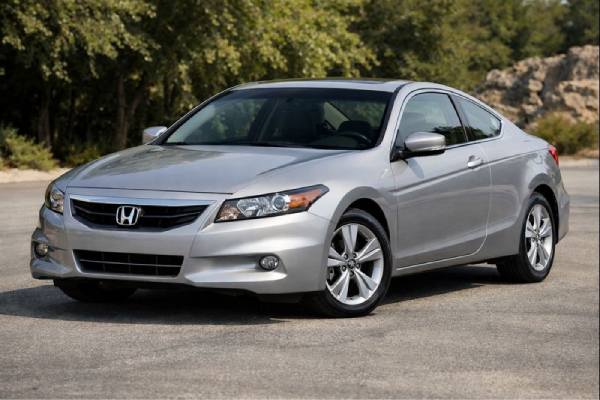
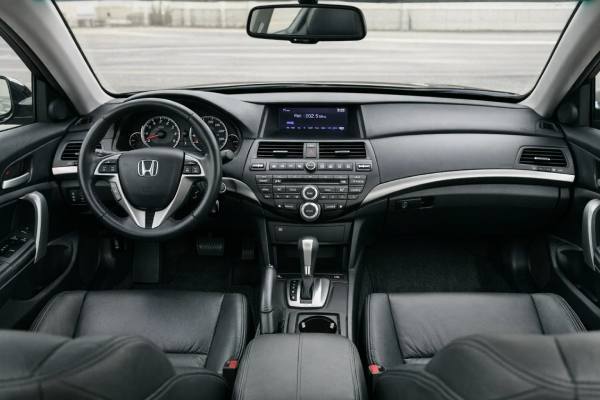
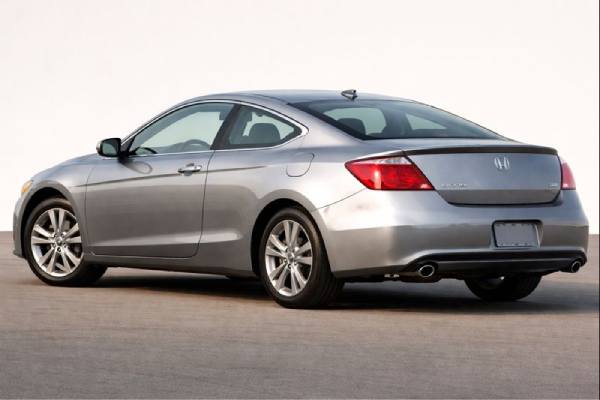
The 2011–2012 Honda Accord Coupe CS2 with the J35Z3 V6 is a rare “do-it-all” two-door: quick enough to feel special, civil enough to commute in daily, and engineered with the long-life priorities Honda was known for in this era. The headline is the naturally aspirated 3.5-liter V6 paired with a 6-speed manual—an increasingly uncommon layout that delivers strong midrange pull without turbo lag, plus a direct, mechanical feel through the shifter. Underneath, the Accord’s midsize chassis gives you a planted highway ride and predictable handling rather than edgy sports-coupe behavior. Ownership tends to be straightforward when service records are strong: this engine family rewards consistent oil changes and on-time timing-belt work, while the coupe body and V6 powertrain bring a few extra wear points to watch closely.
Quick Specs and Notes
- Strong, smooth V6 power with a genuine 6-speed manual option that’s getting harder to find in modern coupes.
- Stable, comfortable long-distance ride with a wide, usable cabin for a two-door.
- Parts availability is generally good, and many repairs are approachable for independent shops.
- Budget for timing belt service if it isn’t documented; treat it as a must-do baseline.
- Change engine oil at least every 12 months (even if mileage is low) to limit varnish and seal aging.
What’s inside
- 2011–2012 V6 coupe profile
- Technical specs and capacities
- Equipment, trims, and crash tests
- Reliability patterns and recalls
- Service schedule and buyer checks
- Performance and fuel economy
- Competitors and best alternatives
2011–2012 V6 coupe profile
Think of the CS2 Accord Coupe V6 as a “grand touring” Honda: it’s built around calm speed, stability, and low-effort daily use—not razor-sharp track reflexes. The J35Z3 is a 3.5-liter SOHC V6 that makes its power without forced induction, so the throttle response feels immediate and predictable. In real driving, it’s the midrange that stands out: passing at highway speeds takes a small pedal squeeze rather than a downshift-and-wait routine.
For 2011, the coupe received updates that matter to owners: the cabin materials and feature packaging improved, and the car generally feels more modern day-to-day than earlier CS2 examples. For 2012, small usability upgrades (like broader USB integration on many trims) reduced the need for aftermarket solutions.
The big ownership appeal is the rare pairing: V6 plus 6-speed manual. When it’s healthy, the drivetrain is engaging without being exhausting. You get a tall sixth gear that keeps the engine relaxed on motorway runs, plus the manual’s simpler long-term service story compared with high-mileage automatics. The tradeoff is that a manual coupe often lived a harder life—more spirited driving, more clutch cycles, and sometimes more modifications.
Advantages that age well:
- Engine character: smooth, strong, and durable when serviced properly.
- Chassis tuning: secure at speed and forgiving over poor pavement.
- Practical coupe packaging: wide doors and a decent trunk make it more usable than many two-doors.
Where expectations should be realistic:
- It’s a large coupe, so it won’t feel as light or tossable as smaller sport coupes.
- It’s a timing-belt engine, so “cheap to own” depends heavily on documented maintenance.
- It predates modern ADAS, so you’re relying on fundamentals (structure, airbags, brakes, visibility) more than electronics.
Technical specs and capacities
Below are practical, ownership-focused specs for the 2011–2012 Accord Coupe CS2 with the J35Z3 V6 and 6-speed manual (FWD). Markets and VIN equipment can vary, so treat this as a strong baseline and verify details on the vehicle label and in official service information.
Engine and performance (ICE)
| Item | Spec |
|---|---|
| Code | J35Z3 |
| Layout | V6, 6 cylinders |
| Valvetrain | SOHC i-VTEC, 4 valves/cyl (24V total) |
| Displacement | 3.5 L (3471 cc) |
| Induction | Naturally aspirated |
| Fuel system | Port fuel injection (PFI) |
| Compression ratio | ~10.0:1 (varies by calibration/market) |
| Max power | 271 hp (202 kW) @ ~6200 rpm |
| Max torque | ~340 Nm (251 lb-ft) @ ~5000 rpm (manual calibration) |
| Timing drive | Belt |
Transmission and driveline
| Item | Spec |
|---|---|
| Drive type | FWD |
| Transmission | 6-speed manual |
| Differential | Open (traction control via brake-based system) |
Rated efficiency (EPA-style figures commonly quoted for North America)
| Configuration | City | Highway | Combined |
|---|---|---|---|
| 3.5 V6 6MT (typical) | 18 mpg US (13.1 L/100 km) | 26 mpg US (9.0 L/100 km) | 21 mpg US (11.2 L/100 km) |
Real-world highway at 120 km/h (75 mph)
Most owners see a range depending on wind, tires, alignment, terrain, and traffic flow:
- ~8.8–10.3 L/100 km (27–23 mpg US) at steady 120 km/h in mild temperatures.
Chassis and dimensions (typical CS2 coupe)
| Item | Spec |
|---|---|
| Suspension (front) | MacPherson strut |
| Suspension (rear) | Multi-link |
| Steering | Hydraulic power steering (typical for this generation) |
| Brakes | 4-wheel discs (ABS, EBD, stability control) |
| Wheels/tires (common V6 coupe fitment) | 235/45 R18 |
| Length | ~4806 mm (189.2 in) |
| Width | ~1849 mm (72.8 in) |
| Height | ~1436 mm (56.5 in) |
| Wheelbase | ~2725 mm (107.3 in) |
| Turning circle | ~11.8 m (38.7 ft) |
| Curb weight | ~1550–1600 kg (3417–3527 lb) |
| Fuel tank | ~70 L (18.5 US gal / 15.4 UK gal) |
| Cargo volume | ~355 L (~12.5 ft³), seats up (varies by method) |
Performance and capability (typical healthy stock car)
| Metric | Typical result |
|---|---|
| 0–100 km/h (0–62 mph) | ~6.5–7.0 s (traction and shift quality matter) |
| 60–100 mph passing | Strong for the class; depends on gear choice |
| Top speed | ~210–230 km/h (130–143 mph), market-limited |
| Towing | Generally not emphasized for this platform; verify local rating |
Fluids and service capacities (decision-grade baselines)
| System | Spec and typical fill |
|---|---|
| Engine oil | 5W-20 (common factory spec); ~4.3 L (~4.5 US qt) with filter |
| Coolant | Honda Type 2 / equivalent; 50/50 mix (capacity varies by drain method) |
| Manual transmission fluid | Honda MTF (or approved equivalent); ~2.2 L (~2.3 US qt) typical drain/fill |
| Brake fluid | DOT 3 / DOT 4 as specified by market; replace on time schedule |
| A/C refrigerant | R-134a (charge varies by label) |
Electrical
| Item | Spec |
|---|---|
| 12V battery | Group size varies by market; test annually after ~4 years |
| Spark plugs | Long-life iridium type (gap per spec); replace at major interval |
Equipment, trims, and crash tests
Because the J35Z3/6MT pairing is typically tied to higher trims, most examples you’ll see are well equipped for their age. The key is to separate “nice-to-have” comfort options from equipment that changes running costs or long-term reliability.
Trims and options that matter (typical North American pattern)
Most V6 manual coupes were positioned near the top of the range (often EX-L–type equipment). Expect many of these features depending on exact build:
- 18-inch wheels and sportier suspension tuning compared with base coupes (impacts tire cost and road noise).
- Leather seating and heated front seats on higher trims.
- Upgraded audio and available navigation (older systems can feel dated, but usually remain functional).
- Sunroof is common on upper trims (check drains and seals for leaks).
- Xenon/HID or projector-style headlamps may appear by trim/market; confirm replacement cost before buying.
Quick identifiers for the “right” car:
- 6-speed manual is the big one—verify by VIN build data, shifter pattern, and road test.
- Look for V6 badging and the matching tire size on the door placard (often 235/45R18 on V6 coupes).
- Confirm the engine code through documentation or a professional scan/build lookup when possible.
Safety systems (what you get, and what you don’t)
Standard safety fundamentals are strong for the era:
- Front airbags, front seat-mounted side airbags, and side curtain airbags (equipment varies by market/year).
- ABS with electronic brake distribution, plus stability and traction control.
What’s typically missing versus newer cars:
- Automatic emergency braking, lane centering, and adaptive cruise control were generally not part of this generation’s mainstream offering. That means your safety experience depends more on tires, brakes, visibility, and driver attention.
Crash ratings (how to interpret them)
Safety ratings can be confusing because testing bodies often rate the sedan more comprehensively than the coupe. IIHS results for the 2008–2012 Accord sedan show strong performance in the tests they published for this generation, including good outcomes in moderate overlap frontal testing and strong side protection on later-model tests. Treat this as an indicator of platform competence rather than a coupe-specific guarantee.
Practical advice:
- If crash performance is a top priority, verify the exact body style and year in the rating database, and don’t assume a sedan rating transfers perfectly to a coupe.
- Also check headlight performance on your specific trim—older “good crash ratings” don’t always mean excellent night visibility.
Reliability patterns and recalls
A well-kept J35Z3 Accord Coupe can be a long-distance workhorse, but reliability depends heavily on maintenance history and how the car was driven. Below is a practical map of what tends to show up, when it shows up, and how expensive it gets.
Common (likely) issues
1) Timing belt service overdue (high cost if ignored)
- Symptoms: no immediate symptoms; the risk is failure with age/mileage.
- Root cause: belt-driven cam timing on the J35 family.
- Remedy: timing belt kit service (belt, tensioner, idlers; commonly water pump while you’re there). Treat missing proof as “due now.”
2) Oil seepage from gaskets and seals (low to medium cost)
- Symptoms: oil smell, wet valve covers, drops after parking.
- Likely sources: valve cover gaskets, front/rear main seepage, VTEC-related seals on some setups.
- Remedy: reseal the specific leak point; avoid over-tightening fasteners.
3) Accessory wear (medium cost over time)
- Symptoms: charging warnings, slow cranking, belt noise.
- Root cause: alternator/starter aging, serpentine belt and tensioner wear.
- Remedy: test, replace as needed; avoid “parts cannon” repairs.
Occasional (depends on use and climate)
Clutch and hydraulics wear (manual-specific, medium cost)
- Symptoms: clutch slip under load, high engagement point, pedal feel changes, difficult shifting.
- Root cause: normal wear, aggressive launches, or aging slave/master cylinder seals.
- Remedy: clutch kit as needed; inspect flywheel condition; flush clutch fluid where applicable.
Manual gearbox synchro wear (medium to high, if present)
- Symptoms: grind or reluctance into a specific gear (often during fast shifts), notchiness when cold.
- Root cause: high-RPM shifting, old fluid, wear over mileage.
- Remedy: correct fluid, shift technique, and diagnosis; internal repairs only if truly necessary.
Suspension bushing fatigue (medium cost)
- Symptoms: clunks over bumps, wandering, uneven tire wear.
- Root cause: front compliance bushings and rear control arm bushings aging.
- Remedy: replace worn bushings/arms; align afterward.
Rare (but expensive when it happens)
A/C compressor failure or system leaks (high cost)
- Symptoms: warm air, cycling, metal debris risk in worst cases.
- Remedy: diagnose carefully before replacing major components.
Recalls, TSBs, and service actions (what to do)
Your best move is to treat recalls as a verification task, not an assumption. Check the car’s recall status using an official VIN lookup and ask for dealer completion records. If the car is missing proof, negotiate accordingly—because “free recall work” can still cost you time and inconvenience.
Service schedule and buyer checks
Honda designed many cars of this era around the Maintenance Minder philosophy (service based on oil life and operating conditions), but buyers still need concrete intervals to plan budgets. Use the schedule below as an ownership framework, then confirm specifics for your VIN, climate, and driving profile.
Practical maintenance schedule (distance or time, whichever comes first)
- Engine oil and filter: follow the oil-life system; if uncertain, default to 8,000–12,000 km (5,000–7,500 mi) or 12 months. Short trips and cold starts justify the shorter end.
- Engine air filter: inspect at each oil service; commonly replace every 24,000–40,000 km (15,000–25,000 mi) depending on dust.
- Cabin filter: typically every 24,000 km (15,000 mi) or yearly if you notice airflow drop or odors.
- Spark plugs: commonly ~168,000 km (105,000 mi) on long-life iridium plugs (verify by service data).
- Timing belt: commonly ~168,000 km (105,000 mi) or 7 years (treat unknown history as due).
- Coolant: often first change is longer, then shorter intervals afterward; verify what’s in the system and when it was last replaced.
- Manual transmission fluid: consider ~50,000–100,000 km (30,000–60,000 mi) depending on driving intensity; shift quality often improves with fresh correct fluid.
- Brake fluid: every 3 years is a strong safety practice regardless of mileage.
- Brake pads and rotors: inspect every service; V6 coupes can be harder on fronts if driven enthusiastically.
- Tires: rotate every 8,000–12,000 km (5,000–7,500 mi); align annually or when you install new tires.
- 12V battery: test annually after year 4; replace proactively if winter starting becomes slow.
Essential “buyer’s guide” checks (do these before money changes hands)
Documentation and history
- Proof of timing belt service (invoice with mileage and parts listed).
- Evidence of regular oil changes (not just “I changed it sometimes”).
- Recall completion printout or dealer verification.
Mechanical inspection
- Cold start listen: any abnormal rattles, belt chirps, or exhaust leaks.
- Clutch test: full-throttle pull in a higher gear—watch for rpm flare (slip).
- Shifter feel: check for gear resistance when cold and after warmup.
- Steering and suspension: clunks over speed bumps, vague straight-line tracking, uneven tire wear.
Body and chassis
- Look for uneven panel gaps, overspray, or mismatched headlights—common crash repair tells.
- Inspect underbody for corrosion on brake lines, subframe areas, and suspension arms (salt climates).
Reconditioning costs to budget
- Tires in 235/45R18 can be pricier than base sizes.
- Front brakes and suspension bushings are common “first-year of ownership” expenses if neglected.
Long-term outlook: If the car has a clean body, healthy clutch/gearbox behavior, and documented belt service, this is one of the more sensible ways to own a strong V6 coupe without luxury-brand repair pricing.
Performance and fuel economy
The J35Z3 V6 gives the Accord Coupe its defining personality: effortless speed delivered in a smooth, refined way. Around town, the engine feels strong without needing high rpm, and on the highway it excels at passing—especially if you downshift to keep the engine in its torque band. The 6-speed manual is a major part of the experience: it adds involvement and lets you choose whether the car feels relaxed (short-shift, use higher gears) or urgent (hold gears and use the upper rev range).
Ride, handling, and NVH (noise, vibration, harshness)
- Ride: tuned for stability and comfort more than sharp impact absorption. Over broken pavement, the coupe can feel firm on 18-inch tires, but it remains composed at speed.
- Handling: predictable and confidence-inspiring. It prefers smooth inputs and rewards clean lines rather than aggressive mid-corner corrections.
- Steering feel: typically well-weighted for the class; feedback is “Honda practical” rather than sports-car chatty.
- Cabin noise: expect more road noise than newer midsize cars, especially on worn or performance-oriented tires.
Powertrain character
- Throttle response: crisp for a naturally aspirated engine; no turbo delay.
- Manual gearing: sixth gear makes motorway cruising calmer; lower gears deliver strong acceleration when you want it.
- Heat management: generally solid in stock form, but repeated hard pulls on hot days make cooling-system health and fresh fluids more important.
Real-world economy (what owners actually see)
For the V6 manual coupe, fuel economy is strongly influenced by speed and gear choice:
- City: roughly 12.0–14.5 L/100 km (19–16 mpg US) depending on traffic and warmup time.
- Highway (100–120 km/h): roughly 8.8–10.3 L/100 km (27–23 mpg US).
- Mixed: often 10.5–12.5 L/100 km (22–19 mpg US).
Cold weather notes: Short trips in winter can move the car toward the higher consumption end because the engine spends more time warming up, and winter tires add rolling resistance.
Key performance metrics (what changes the verdict)
- A healthy example feels legitimately quick in the real world, but traction becomes the limiting factor from a stop—tires matter.
- Braking performance depends heavily on pad/rotor quality and tire grip; this is one area where “cheap parts” can noticeably degrade confidence.
If you want a coupe that’s fast without feeling fragile, and you value a manual gearbox, this Accord’s performance still holds up surprisingly well.
Competitors and best alternatives
The 2011–2012 Accord Coupe V6 sits in an unusual middle ground: bigger and more practical than compact coupes, less flashy than premium sport coupes, and generally cheaper to keep on the road than many RWD performance options. Choosing the right rival depends on what you value most.
If you want a more “sports coupe” feel
Hyundai Genesis Coupe V6 (3.8)
- Pros: RWD balance, stronger “performance car” identity, more playful handling.
- Cons: visibility and daily comfort can be less friendly; long-term ownership experience varies by condition and service history.
- Verdict: better if you prioritize chassis dynamics over practicality.
Infiniti G37 Coupe
- Pros: strong power, premium feel, RWD/AWD availability (by model), sharper performance edge.
- Cons: higher operating costs (fuel, tires, brakes), more complex aging electronics, and “premium brand” repair pricing.
- Verdict: choose it when you want luxury and performance and accept higher upkeep.
If you want a similar “big coupe” experience
Nissan Altima Coupe V6
- Pros: similar mission: comfortable speed, strong V6, coupe styling.
- Cons: the ownership story depends heavily on transmission and maintenance; trim features vary widely.
- Verdict: competitive on paper, but the Accord often wins for drivetrain feel and long-term confidence—especially in manual form.
If you actually need a coupe-like feel but with maximum dependability
Four-cylinder Accord Coupe (same generation)
- Pros: lower running costs, simpler ownership, often less abused.
- Cons: not the same effortless acceleration; less “special” as a weekend car.
- Verdict: smart if you want the coupe shape more than the V6 punch.
Why the Accord Coupe V6 manual still makes sense
If your priorities are (1) smooth, naturally aspirated power, (2) a real manual gearbox, (3) everyday usability, and (4) a long service life when maintained, the CS2 J35Z3 combination remains one of the most balanced options of its era. Its biggest weakness is not the core engineering—it’s finding an example that hasn’t been neglected or heavily modified. Buy the best-documented car you can, and it tends to reward you.
References
- Gas Mileage of 2012 Honda Accord 2012 (Fuel Economy Data)
- 2012 Honda Accord 4-door sedan 2012 (Safety Rating)
- Check for Recalls: Vehicle, Car Seat, Tire, Equipment 2025 (Recall Database)
- Microsoft Word – S20 Accord Passenger SCAB Customer Letter NHTSA APPROVED.doc 2012 (Recall Notice)
- ATG_NEW STYLE 2011 (Technology Reference Guide)
Disclaimer
This article is for informational purposes only and is not a substitute for professional diagnosis, inspection, or repair. Specifications, torque values, service intervals, and procedures can vary by VIN, market, production date, and installed equipment. Always verify details using official Honda service documentation for your exact vehicle, and consult a qualified technician when safety-critical systems are involved.
If you found this guide helpful, please consider sharing it on Facebook, X (Twitter), or your favorite forum—your support helps us keep producing detailed, practical ownership content.