
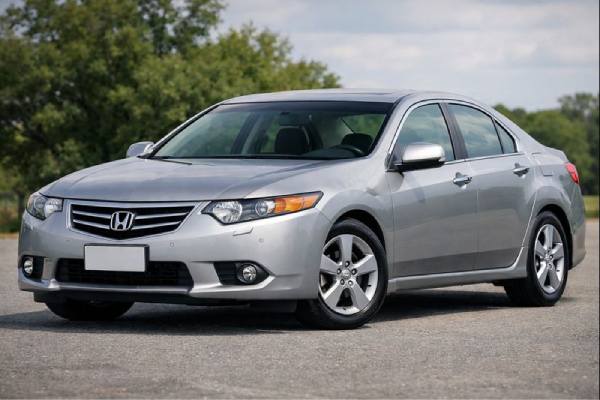
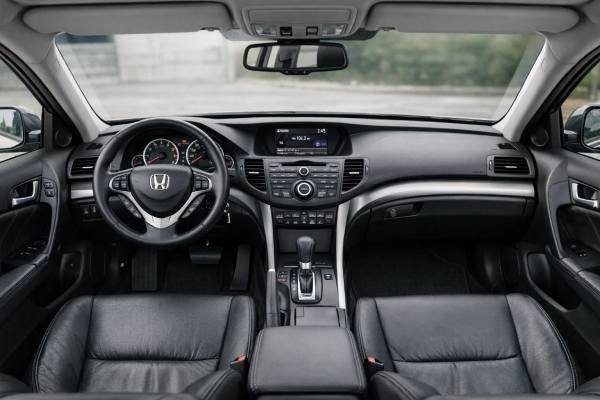
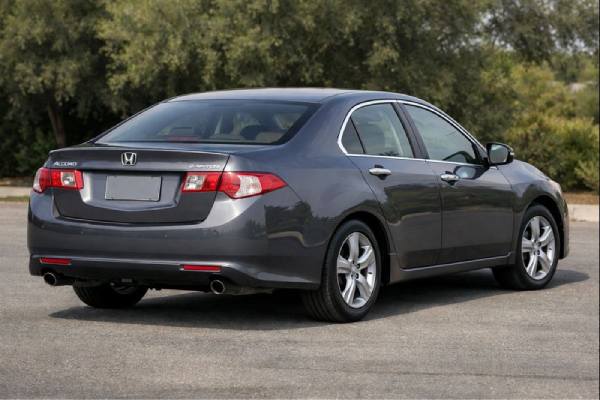
Honda’s CU1-generation Accord with the R20A3 2.0 i-VTEC is the “long-game” choice in the midsize segment: not the quickest, but engineered for steady, low-drama ownership. The 2.0-litre petrol focuses on smooth torque delivery, predictable fuel use, and a driveline that tolerates real-world commuting better than many downsized turbo rivals of the era. The chassis is also a highlight. With a long wheelbase, multi-link rear suspension, and careful steering tuning, the CU1 feels composed at motorway speeds and unflustered on rougher roads.
For buyers today, the story is mainly condition and maintenance. A well-serviced Accord 2.0 rewards you with strong build quality, good safety fundamentals, and a cabin that ages gracefully. The key is to verify service history, keep fluids fresh, and confirm recalls and updates are complete.
Owner Snapshot
- A durable, naturally aspirated 2.0-litre that prefers regular oil changes over extended intervals.
- Stable high-speed ride and confident chassis balance for a family saloon or tourer.
- Strong safety basics for its era, with advanced driver-assist features available on higher trims.
- Most “issues” are age-related (suspension wear, A/C leaks, battery and charging), not engine failures.
- Plan engine oil every 10,000–12,000 km (6,000–7,500 mi) or 12 months, whichever comes first.
Navigate this guide
- CU1 Accord 2 litre guide
- R20A3 specs and capacities
- Trim differences and safety kit
- Common faults on R20A3 Accord
- Maintenance plan and used buying
- How the 156 hp Accord drives
- Accord 2 litre versus rivals
CU1 Accord 2 litre guide
The CU1 Accord sits in an interesting space: large enough to feel “executive,” but engineered with Honda’s long-standing priorities of reliability, visibility, and control feel. In 2.0-litre R20A3 form, it is not a hot rod, yet it is rarely stressed. That matters because a lightly stressed naturally aspirated engine usually stays consistent as mileage climbs—provided the owner avoids neglected oil changes and cooling-system shortcuts.
In daily use, the 2.0 i-VTEC’s character is linear. Peak power arrives high in the rev range, but the engine is friendly at low rpm and typically smooth under load. The real win is predictability: throttle response is stable, there is no turbo surge, and there is less risk of carbon buildup issues associated with many direct-injection engines from later years. The Accord’s cabin is also a strong point. Materials and switchgear tend to hold up well, and the driving position suits tall and short drivers equally, which helps reduce fatigue on longer trips.
The chassis tune leans toward calm stability rather than sharp turn-in. The long wheelbase and multi-link rear suspension help the CU1 track straight at speed, while the steering stays consistent even on uneven tarmac. This is a car that encourages smooth driving: momentum management over point-and-squirt.
Ownership today comes down to three questions:
- Was it serviced on time? A stamped book matters less than invoices showing oil, filters, brake fluid, and transmission fluid at sensible intervals.
- Is it rust-free underneath? Surface corrosion is common in harsh climates, but subframe and brake-line condition are what you evaluate.
- Are recalls and updates complete? Safety campaigns (including airbag-related recalls in many markets) should be verified by VIN.
If those boxes are ticked, the Accord 2.0 is one of the more rational long-term buys in this class: comfortable, safe for its era, and typically cheaper to keep healthy than many premium-badged alternatives.
R20A3 specs and capacities
Below are practical, ownership-focused specifications for the CU1 Accord 2.0. Exact numbers can vary by body (saloon vs tourer), transmission, wheel size, and market calibration.
Engine and performance (ICE)
| Item | Specification |
|---|---|
| Code | R20A3 |
| Layout and cylinders | Inline-4, transverse |
| Valvetrain | SOHC i-VTEC, 4 valves per cylinder |
| Bore × stroke | 81.0 × 96.9 mm (3.19 × 3.82 in) |
| Displacement | 2.0 L (1,997 cc) |
| Induction | Naturally aspirated |
| Fuel system | Multi-point injection (PGM-FI style) |
| Compression ratio | Typically around 10.5–11.0:1 (market-dependent) |
| Max power | 156 hp (115 kW) @ 6,300 rpm (often listed as 156 PS in Europe) |
| Max torque | 192 Nm (142 lb-ft) @ about 4,100–5,000 rpm |
| Timing drive | Chain |
| Emissions standard | Euro 4 or Euro 5 depending on year and market |
| Rated efficiency (typical homologation) | About 6.9–7.3 L/100 km (39–41 mpg UK) combined for common trims |
| Real-world highway at 120 km/h (typical) | Around 7.5–8.5 L/100 km depending on tyres, load, wind, and transmission |
Transmission and driveline
| Item | Specification |
|---|---|
| Drive type | FWD |
| Manual transmission | 6-speed manual (availability varies by trim and market) |
| Automatic transmission | 5-speed torque-converter automatic |
| Differential | Open differential (traction control via braking) |
Gear ratios and final drive vary by gearbox code and year. If you need exact ratios for a specific car, match by VIN and transmission code on the build plate.
Chassis and dimensions (typical saloon)
| Item | Specification |
|---|---|
| Suspension (front) | Double wishbone / multi-link style front arrangement (market descriptions vary) |
| Suspension (rear) | Multi-link |
| Steering | Electric power steering, rack-and-pinion |
| Brakes (front/rear) | Disc / disc (diameters vary by trim and wheel size) |
| Wheels and tyres | Common: 205/60 R16; 225/50 R17 (trim-dependent) |
| Length | ~4,726 mm (186.1 in) |
| Width | ~1,840 mm (72.4 in) |
| Height | ~1,440 mm (56.7 in) |
| Wheelbase | ~2,705 mm (106.5 in) |
| Turning circle | Typically around 11.4–12.0 m (37–39 ft) depending on wheel and tyre |
| Kerb weight | Commonly ~1,450–1,550 kg (3,200–3,420 lb) depending on body and transmission |
| Fuel tank | ~70 L (18.5 US gal / 15.4 UK gal) |
| Cargo volume | Saloon typically ~460 L (16.2 ft³) seats up (method varies by market) |
Performance and capability (typical)
| Item | Typical figure |
|---|---|
| 0–100 km/h (0–62 mph) | ~9.4–10.5 s (setup-dependent) |
| Top speed | ~210–215 km/h (130–134 mph) |
| Braking 100–0 km/h | Commonly mid-to-high 30 m range with good tyres and brakes (varies widely) |
| Towing | Market-rated limits vary; verify the VIN plate and registration documents |
Fluids and service capacities (planning values)
| System | Specification (typical) |
|---|---|
| Engine oil | 0W-20 or 5W-30 (market-dependent); capacity typically ~4.0–4.5 L with filter |
| Coolant | Honda-type long-life coolant; capacity varies by radiator and heater spec |
| Manual transmission fluid | Honda MTF-type fluid; capacity varies by gearbox |
| Automatic transmission fluid | Honda ATF-spec fluid; drain-and-fill is less than total capacity |
| Brake fluid | DOT 4 (common across many EU markets; verify cap label) |
| A/C refrigerant | R134a on most markets and years; charge varies by body and system |
Electrical and ignition (typical)
| Item | Specification |
|---|---|
| 12 V battery | Capacity and CCA vary by market and climate package |
| Spark plugs | Long-life iridium type (gap and part number by VIN) |
Safety and driver assistance (equipment-dependent)
| Item | Notes |
|---|---|
| Airbags | Typically front, side, and curtain; count varies by market and year |
| Stability control | VSA/ESC standard on many markets and trims |
| Child seat mounts | ISOFIX/LATCH-style mounts depending on market |
| Advanced driver assistance | On higher trims and some option packs: adaptive cruise control, lane support, and collision-mitigation braking (availability varies) |
Trim differences and safety kit
Trim names vary by country, but the CU1 range usually follows a familiar ladder: comfort-focused mid trims, then higher grades with upgraded lighting, audio, and driver-assist features. The 2.0 petrol often sits in the middle of the range: a sensible engine paired with a good equipment baseline, while performance-oriented variants typically use the larger petrol or the diesel in some markets.
How to spot equipment quickly
- Wheels and brakes: 16-inch wheels usually indicate comfort-focused trims; 17-inch (or larger) wheels often come with sportier appearance packages and sometimes different brake hardware.
- Headlights: Halogen vs HID/bi-xenon is a strong trim clue. Higher trims may also add cornering light functions.
- Interior tells: Leather, powered seat controls, premium audio branding, and a larger infotainment display generally cluster on top grades.
- ADAS identifiers: Radar and camera hardware (often behind the grille emblem area and near the rear-view mirror) suggest adaptive cruise and collision-mitigation systems.
Options that matter mechanically
Most options are comfort or convenience, but a few influence ownership cost:
- Wheel and tyre packages: Larger wheels look good, yet they can increase tyre costs and reduce ride compliance on rough roads. If your local roads are imperfect, the smaller wheel package can be the better long-term choice.
- Automatic vs manual: The 5-speed automatic is smooth but becomes sensitive to fluid neglect. The manual is usually simpler long-term, though clutch replacement is a normal wear item.
- Tourer vs saloon: The tourer offers better load flexibility, but it may carry slightly more weight and can have different rear suspension wear patterns due to load use.
Safety ratings and what they mean
For its era, the Accord tested strongly in European crash programs. Beyond the headline star score, the practical safety wins come from the structure and restraint systems: strong passenger-cell integrity, effective front and side airbags, and good seat-belt geometry with pretensioners and load limiters.
Where you should be realistic is the technology gap versus modern cars:
- Many CU1 models do not have modern automatic emergency braking that performs well with pedestrians and cyclists in complex city scenarios.
- Lane support and adaptive cruise, where fitted, are earlier-generation systems. They can reduce fatigue, but they are not “hands-off” tools and may require calibration checks after windscreen replacement or front-end repairs.
Service implications for safety systems
- After collision repairs: If the car has had front-end work, confirm sensors (if equipped) were mounted correctly and the geometry is correct. Poor alignment can create odd steering-centre behavior and stability-control interventions.
- Battery health matters: Low voltage can trigger false warnings across stability, steering, and airbag systems. A weak 12 V battery is an easy problem that can look like a complex one.
If you want the best “safety-per-money” CU1 today, prioritize: a complete recall status, intact airbag system history, clean underbody structure, and tyres that match the car’s intended load and speed ratings.
Common faults on R20A3 Accord
The R20A3-powered Accord is generally robust, so most problems fall into predictable categories: fluids, rubber parts, electrical aging, and “normal wear multiplied by age.” Below is a practical map of issues by prevalence and cost tier.
Common and low-to-medium cost
- Front suspension wear (bushings and links):
Symptoms: clunks over small bumps, vague steering on turn-in, uneven tyre wear.
Likely cause: worn anti-roll-bar links, control-arm bushings, or ball joints.
Remedy: replace worn links and bushings in pairs; follow with alignment. - Brake slider corrosion or sticking calipers:
Symptoms: uneven pad wear, hot wheel, pulling under braking.
Likely cause: dry or corroded slider pins, old brake fluid.
Remedy: clean and lubricate sliders with correct high-temp grease; flush brake fluid on schedule. - A/C performance fade:
Symptoms: warm air at idle, slow cooling, oily residue near condenser.
Likely cause: condenser leaks, aged seals, or gradual refrigerant loss.
Remedy: leak test, replace leaking components, evacuate and recharge to spec.
Occasional and medium cost
- Automatic transmission shift quality changes (5-speed AT):
Symptoms: shudder on light throttle, delayed engagement, harsh shifts.
Likely cause: old ATF, adaptation drift, or torque-converter clutch wear.
Remedy: multiple drain-and-fill services with correct fluid; avoid power flushes unless the transmission is known healthy and the procedure is correct. - Engine mount aging:
Symptoms: vibration at idle in gear, thump on throttle on and off.
Likely cause: collapsed hydraulic mounts.
Remedy: replace the failed mount(s); confirm idle speed and misfire-free operation first. - Charging and battery issues:
Symptoms: intermittent warning lights, slow cranking, infotainment resets.
Likely cause: weak battery, poor terminals, or alternator wear at higher mileage.
Remedy: battery test under load; check grounds and charging voltage.
Rare but higher cost if ignored
- Cooling system neglect leading to overheating:
Symptoms: rising temperature under load, coolant loss, heater inconsistency.
Likely cause: aged radiator, thermostat sticking, leaks, or incorrect coolant.
Remedy: pressure test, repair leaks, use correct long-life coolant, and bleed properly. - Timing chain related noise (uncommon):
Symptoms: persistent rattle beyond brief cold-start noise, correlation faults, rough running.
Likely cause: tensioner wear, guide wear, or oil quality issues.
Remedy: diagnose carefully; address oiling and replace components if out of spec.
Recalls, campaigns, and how to verify
Even a reliable platform can have safety campaigns. For CU1-era cars, airbag-related recalls have affected many manufacturers and markets. The practical approach is simple:
- Verify by VIN on an official recall checker.
- Ask for paperwork showing completion.
- If the seller cannot prove it, assume you must schedule it—then budget time, not money, because safety recalls are usually completed free of charge.
A well-kept CU1 rarely surprises you. A neglected one can. Treat service records and a thorough pre-purchase inspection as part of the purchase price.
Maintenance plan and used buying
A maintenance plan for the Accord 2.0 should be built around longevity, not minimum-cost intervals. The engine is forgiving, but the rest of the car responds strongly to fresh fluids, good tyres, and proactive suspension work.
Practical maintenance schedule (distance or time)
| Item | Sensible interval for long-term ownership |
|---|---|
| Engine oil and filter | 10,000–12,000 km (6,000–7,500 mi) or 12 months |
| Cabin air filter | 15,000–30,000 km (9,000–18,000 mi) or yearly if dusty |
| Engine air filter | 20,000–40,000 km (12,000–25,000 mi) depending on conditions |
| Brake fluid | Every 2–3 years |
| Coolant | Follow the long-life schedule; shorten if history is unknown |
| Spark plugs (iridium) | Around 100,000 km (60,000+ mi) or 6 years (check manual) |
| Manual transmission fluid | 80,000–100,000 km (50,000–60,000 mi) |
| Automatic transmission fluid | 50,000–70,000 km (30,000–45,000 mi); more often in city heat |
| Serpentine belt and tensioner | Inspect each service; replace if cracked, noisy, or glazed |
| Tyre rotation | Every 10,000–12,000 km (6,000–7,500 mi) |
| Alignment check | Yearly or after any suspension work |
| 12 V battery test | Yearly; replace proactively around 4–6 years depending on climate |
Fluids, specs, and decision-useful notes
- Engine oil: Use the viscosity specified for your market and climate; the safer rule is “correct spec and changed often.”
- ATF and MTF: Use the correct Honda-spec fluid or an approved equivalent. Incorrect friction characteristics can create shift complaints that look like mechanical faults.
- Coolant: Stick to the correct long-life coolant type. Mixing types can reduce corrosion protection.
Essential torque values (planning references)
These are common Honda-type values and should be verified for your exact VIN and wheel hardware:
| Fastener | Typical torque |
|---|---|
| Wheel nuts | ~108 Nm (80 lb-ft) |
| Engine oil drain bolt | Commonly in the 30–40 Nm range |
| Spark plugs | Commonly in the high-teens Nm range (with correct plug type) |
Buyer’s guide: what to check in 30 minutes
- Cold start: listen for unusual rattles that persist, check for misfire shake, and confirm stable idle.
- Transmission behavior: smooth engagement D and R, no flare, no shudder on light throttle.
- Steering and suspension: drive over small bumps at low speed; note clunks or steering knock.
- Brakes: no pull, no pulsation, and equal pad wear on both sides.
- Cooling system: check for dried coolant stains, brittle hoses, and correct coolant level.
- Underside: inspect subframes, brake lines, and jacking points for serious corrosion.
- Electrics: test windows, central locking, A/C, charging voltage behavior, and all warning lights.
- Recall proof: confirm VIN status using an official recall checker.
Long-term outlook is excellent when maintenance is consistent. The Accord is not fragile; it just dislikes deferred servicing.
How the 156 hp Accord drives
In real-world driving, the Accord 2.0 wins with smoothness and stability rather than acceleration theatre. The engine’s power delivery is clean and progressive. Around town, it pulls without drama, and on the motorway it settles into a quiet rhythm—especially on smaller wheels with taller sidewalls.
Ride, handling, and NVH
- Straight-line stability: a strong point. The long wheelbase makes the car feel calm at speed, even in crosswinds.
- Cornering balance: neutral and predictable. It will not feel “light,” but it resists mid-corner bumps well when the suspension is healthy.
- Steering feel: EPS is consistent, but the best cars have fresh front-end bushings and correctly inflated tyres. Worn components quickly dull feedback.
- Cabin noise: typically low for its age class, though tyre choice matters more than many owners expect. Cheap tyres can add a constant roar.
Powertrain character: manual vs automatic
- 6-speed manual: best for drivers who want control and efficiency. The engine enjoys revs, so the manual helps you keep it in the sweet spot for overtakes.
- 5-speed automatic: smooth and comfortable, but it is more sensitive to old fluid. A healthy automatic behaves cleanly; a neglected one can feel hesitant or “busy” on hills.
Real-world efficiency
Expect results to vary with speed and temperature:
- Mixed commuting: commonly around 7.5–9.0 L/100 km (31–38 mpg UK).
- Motorway at 120 km/h: commonly around 7.5–8.5 L/100 km (33–38 mpg UK).
- Urban short trips: can push beyond 9.0–10.5 L/100 km (27–31 mpg UK), especially in winter.
Cold weather typically costs more than people expect because warm-up losses dominate short journeys.
Useful performance metrics for daily life
- The meaningful measure is passing response, not 0–100 km/h. The 2.0 will overtake safely, but it often wants a downshift—especially with passengers or a full boot.
- Braking performance depends heavily on tyre quality and brake maintenance. Fresh fluid and free-moving calipers make a bigger difference than “sport” pads for normal road use.
If you want a CU1 that feels genuinely premium today, prioritize suspension condition, tyre quality, and an A/C system that cools properly. The engine is usually the least of your concerns.
Accord 2 litre versus rivals
The CU1 Accord 2.0 competed in a crowded field: Toyota Avensis, Mazda6, Ford Mondeo, Volkswagen Passat, Opel/Vauxhall Insignia, and several others. Today, the comparison is less about new-car reviews and more about what survives well with age.
Where the Accord tends to beat rivals
- Powertrain simplicity: the naturally aspirated petrol avoids many turbo-era risks: high-pressure fuel pump failures, turbo wear, and some direct-injection deposit issues.
- Long-distance comfort: the Accord’s stability and seating comfort make it a strong motorway companion.
- Build quality aging: interiors often wear better than some European rivals of similar age, with fewer persistent trim rattles.
- Chassis predictability: it is rarely “fussy” at speed when aligned properly.
Where rivals may be stronger
- Low-end torque: turbo petrols and many diesels feel stronger below 2,000 rpm, which can make city driving easier.
- Modern infotainment and connectivity: some rivals had quicker updates in this era, though many systems from 2008–2015 feel dated now regardless of badge.
- Parts pricing in some regions: depending on where you live, mainstream European models may have cheaper suspension components due to higher local volume.
Rival-by-rival quick sense check
- Toyota Avensis 2.0 petrol: often dependable, but the driving feel can be less engaging. Great if you prioritize appliance-like transport.
- Mazda6 2.0 petrol: usually lighter-feeling and more playful; watch rust and suspension wear, and check service history carefully.
- Ford Mondeo 2.0 petrol: roomy and comfortable, strong dynamics; maintenance quality varies widely by owner.
- VW Passat petrols: refined but can bring higher complexity; condition and service evidence matter even more.
- Opel/Vauxhall Insignia: comfortable and often good value; some powertrains are more complex and can be costlier when problems stack up.
Who should choose the Accord 2.0 today
Choose it if you want a calm, durable midsize car and you prefer predictable running costs over peak performance. Skip it if you demand strong low-rpm acceleration, tow heavy loads frequently, or want modern driver-assistance behavior comparable to current vehicles.
A good CU1 Accord 2.0 is not the flashiest option in the classifieds, but it is one of the more rational ones—especially when you buy on condition, not on trim hype.
References
- Honda Accord Press Kit 2011 (Press Kit)
- Honda Accord Achieves Highest Overall Rating in EuroNCAP Crash Tests for Large Family Cars | Honda Global Corporate Website 2008 (Safety Rating)
- Honda Accord Euro | Safety Rating and Report | ANCAP 2008 (Safety Rating)
- Honda Owners | Recalls and Updates | Honda UK 2025 (Recall Database)
- Check if a vehicle, part or accessory has been recalled – GOV.UK 2025 (Recall Database)
Disclaimer
This article is for informational purposes only and is not a substitute for professional inspection, diagnosis, or repair. Specifications, torque values, service intervals, and procedures vary by VIN, market, model year, and equipment. Always confirm details using your vehicle’s official owner documentation and service information before performing maintenance or repairs.
If you found this guide useful, please consider sharing it on Facebook, X, or your favorite forum to help others find reliable ownership information.