
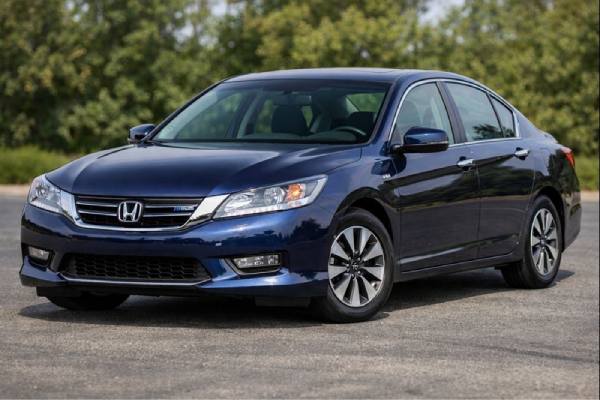
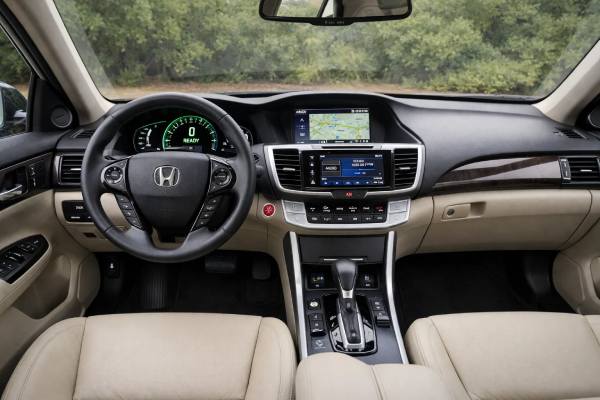
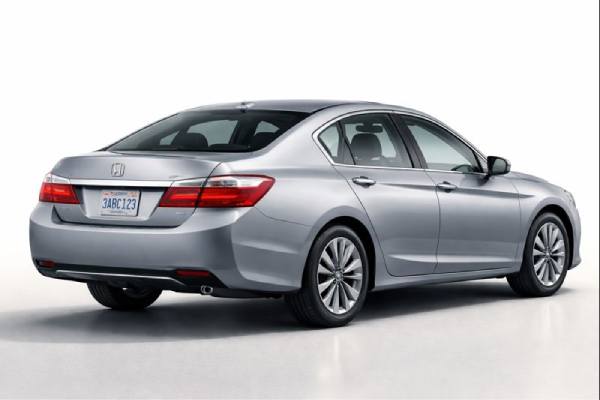
Honda’s Accord Hybrid (CR6) from 2014–2015 is a practical lesson in making electrification feel “normal.” Instead of chasing big battery range, it focuses on smooth torque, calm refinement, and real fuel savings in everyday driving. The LFA1 2.0-liter Atkinson-cycle engine works with Honda’s two-motor hybrid layout (i-MMD), where electric drive does most of the work at lower speeds and the gasoline engine supports efficiency or directly drives the wheels at higher speeds. The result is a sedan that feels quick off the line, stays quiet in traffic, and still cruises confidently on the motorway.
For ownership, the big wins are low running costs, less brake wear thanks to regeneration, and a simple driving routine—no plugging in. The key to long-term satisfaction is staying on top of cooling fluids (engine and hybrid electronics) and making sure recall software updates are completed.
Owner Snapshot
- Strong real-world fuel economy for a midsize sedan, especially in city driving.
- Smooth low-speed response because the electric motor provides instant torque.
- Calm, refined ride with less stop-start fatigue than a conventional automatic.
- Prioritize completed hybrid-software recalls and a healthy 12 V battery to avoid odd warning lights.
- Engine oil and filter typically every 10,000–12,000 km (6,000–7,500 mi) or 12 months, depending on use and the maintenance minder.
Section overview
- CR6 hybrid ownership profile
- LFA1-MF8 technical tables
- Equipment lines and safety systems
- Failure points, recalls, and updates
- Service schedule and buying checklist
- Hybrid driving character and economy
- Hybrid Accord vs competitors
CR6 hybrid ownership profile
The 2014–2015 Accord Hybrid (CR6) is best understood as an efficiency-focused Accord first, and a “tech car” second. It drives like a normal midsize sedan, but its hybrid system changes how it produces speed: the electric motor is often the primary source of propulsion in town, while the gasoline engine can act as a generator, a helper, or (at higher speeds) a direct driver through a clutch. You still get a familiar cabin, a large boot for the class (though smaller than a non-hybrid Accord due to the battery), and straightforward daily usability without charging routines.
From an engineering standpoint, Honda’s two-motor layout is a good fit for real traffic. Instead of shifting gears, the system blends electric drive and engine power smoothly, so stop-and-go can feel unusually relaxed. Because the battery is modest in capacity, it isn’t designed for long electric-only trips—think of it as a buffer that captures braking energy, supports acceleration, and lets the engine run in efficient operating zones. This also means battery aging tends to show up more as reduced EV “assist time” rather than a dramatic loss of range, but it still matters for refinement and consistency.
For buyers, the sweet spot is a car that has had recall work and software updates performed, with a complete service history showing coolant changes and regular oil services. Hybrids can be sensitive to neglected basics: a weak 12 V battery can create intermittent warning lights or strange electrical behavior, and overdue coolant can raise the long-term risk for the inverter and power electronics. The good news is that most routine maintenance is conventional, and brake pads often last longer because regeneration does part of the stopping.
This model is also a strong “one-car solution” for mixed usage. In urban use it can deliver standout fuel economy for a midsize sedan. On longer motorway trips it remains stable and quiet, though fuel economy narrows versus efficient diesels or modern turbo-petrols at sustained high speeds. Overall, the CR6 Accord Hybrid is a practical choice when you want lower fuel spend and a calmer commute without adopting plug-in habits.
LFA1-MF8 technical tables
Below are the most relevant specifications for the 2014–2015 Accord Hybrid (CR6) with the LFA1 engine and MF8 hybrid drive unit. Values can vary slightly by market, wheel size, and equipment, so treat capacities and weights as “typical” unless verified by VIN-specific documentation.
Engine and hybrid system (Powertrain and efficiency)
| Item | Specification |
|---|---|
| Code | LFA1 + MF8 (two-motor hybrid) |
| Engine layout and cylinders | Inline-4, DOHC, 16-valve |
| Displacement | 2.0 L (1,993 cc) |
| Induction | Naturally aspirated |
| Fuel system | PFI (port injection) |
| Timing drive | Chain |
| System max power | 196 hp (146 kW) |
| Hybrid battery | Lithium-ion, ~1.3 kWh, ~260 V |
| Drive motors | Front axle traction motor + generator motor |
| Rated efficiency (typical US) | ~5.0 L/100 km combined (47 mpg US) |
| Real-world highway at 120 km/h | Commonly ~5.8–6.6 L/100 km (36–41 mpg US), depending on weather and tyres |
Transmission and driveline
| Item | Specification |
|---|---|
| Transmission | e-CVT style operation (single-speed hybrid drive with clutch) |
| Drive type | FWD |
| Differential | Open |
Chassis and dimensions
| Item | Specification |
|---|---|
| Suspension (front/rear) | MacPherson strut / multi-link |
| Steering | Electric power steering |
| Brakes | Four-wheel discs (sizes vary by trim/market) |
| Common wheel and tyre sizes | 215/55 R17; 235/45 R18 (trim dependent) |
| Length | 4,910 mm (193.3 in) |
| Width | 1,850 mm (72.8 in) |
| Height | 1,465 mm (57.7 in) |
| Wheelbase | 2,776 mm (109.3 in) |
| Fuel tank (typical) | ~58 L (15.3 US gal / 12.8 UK gal) |
Performance and capability (typical)
| Item | Specification |
|---|---|
| 0–100 km/h (0–62 mph) | ~7.1–7.7 s (tyres and conditions matter) |
| Top speed | Typically limited around ~185 km/h (115 mph) |
| Towing capacity | Often not rated or very limited by market; verify before towing |
| Roof load | Market dependent; verify in owner documentation |
Fluids and service capacities (decision-useful, verify by VIN)
| Item | Specification |
|---|---|
| Engine oil | 0W-20; capacity typically ~4.0–4.5 L (4.2–4.8 US qt) |
| Coolant | Honda Type 2 premix (engine); inverter/electronics coolant loop also present |
| Transmission fluid | Honda-spec hybrid/e-CVT fluid (market dependent); drain-and-fill is commonly ~2–3 L |
| Brake fluid | DOT 3 or DOT 4 (market dependent) |
Electrical and safety basics
| Item | Specification |
|---|---|
| 12 V battery | Conventional 12 V under-hood battery (group/CCA varies) |
| Airbags (typical) | Front, side, and curtain airbags |
| Child seats | ISOFIX/LATCH anchors (market dependent positions) |
| Stability systems | ABS, stability control, traction control |
Equipment lines and safety systems
Trim structure varies by market, but the 2014–2015 Accord Hybrid generally came in a progression from a well-equipped base to more premium grades that added comfort, lighting upgrades, and driver-assistance features. In North America, you commonly see three main “rungs” (names vary): an entry hybrid grade, a leather-focused mid grade, and a top “Touring” style grade. The mechanical core—LFA1 engine, MF8 hybrid drive, and FWD layout—stays the same. Differences are mainly wheels, lighting, seat materials, audio/navigation packages, and safety tech availability.
Practical trim identifiers you can check quickly:
- Wheels and brakes: 17-inch wheels are common on lower grades, while higher grades often have 18-inch wheels. Larger wheels can sharpen steering response but may increase tyre cost and road noise.
- Lighting: Higher trims tend to add upgraded headlights (often LED elements) and more exterior detailing.
- Cabin tells: Leather seating, seat memory, upgraded audio, and navigation typically cluster in higher grades.
- Badging: “Hybrid” exterior marks are present, but small trim-level differences in grille, wheels, and headlamp shape are often more useful than badges.
Safety ratings depend on the testing body and the exact configuration. In the U.S., the Accord sedan family earned strong crashworthiness scores, and the availability of optional front crash prevention can affect award status. That matters in two ways: (1) you should confirm whether the specific car has the forward-facing camera/radar features if you want modern crash-avoidance help, and (2) windscreen replacement and front-end repairs can require calibration to keep systems functioning correctly.
Core safety hardware is strong for the era:
- Structure: Extensive use of high-strength steels and well-engineered crumple management.
- Restraints: Front airbags, side airbags, and curtain airbags are typical, with pretensioners up front.
- Braking and stability: ABS and stability control are standard expectations, with brake assist and electronic brake distribution common.
- Child-seat provisions: ISOFIX/LATCH is usually present; confirm anchor locations for your region.
If the car has lane departure warning or forward collision warning systems, plan your maintenance accordingly. Camera alignment, windscreen quality, and correct mounting matter more than many owners expect, especially after glass replacement or a front bumper repair.
Failure points, recalls, and updates
The 2014–2015 Accord Hybrid is generally durable, but it has a few hybrid-specific themes to understand. Below are common patterns, grouped by prevalence and cost impact. Exact rates vary by climate, mileage, and service quality.
Common (low to medium cost)
- 12 V battery weakness
Symptoms: Random warning lights, “check system” messages, slow starting behavior, odd infotainment resets.
Likely cause: Age and frequent short trips that keep the 12 V battery undercharged. Hybrids still rely heavily on the 12 V side for control electronics.
Remedy: Test battery health (load test), clean terminals, and replace with the correct capacity/CCA. - Brake feel changes over time
Symptoms: Slightly grabby low-speed braking, noise after rain, or inconsistent pedal feel.
Cause: Regenerative braking reduces friction-brake use, so rotors can develop surface corrosion if the car is driven gently.
Remedy: Periodic firm stops (when safe), rotor inspection, and standard brake service.
Occasional (medium cost)
- Cooling system maintenance sensitivity (engine and inverter loops)
Symptoms: Overheat warnings, reduced performance, cooling fan running frequently, or hybrid warnings in extreme cases.
Cause: Old coolant, air in the system after repairs, or a weak pump.
Remedy: Correct coolant type, proper bleeding procedures, and inspection of pumps and hoses. - Hybrid battery airflow and temperature management issues
Symptoms: Reduced electric assist, fan noise, warnings in hot weather.
Cause: Blocked intake vents (often by debris), dusty fan ducts, or heat stress from extreme use patterns.
Remedy: Keep battery cooling intake areas clear; inspect and clean ducts when servicing interior filters.
Rare but expensive (high cost)
- High-voltage component faults (inverter, power control, or battery internal issues)
Symptoms: Persistent hybrid warnings, reduced power, failsafe operation.
Cause: Component failure, water intrusion after improper repairs, or electrical issues.
Remedy: Proper diagnostic scan, insulation testing, and repair by a hybrid-capable technician.
Recalls, service bulletins, and software actions (important)
A key item to verify on this generation is the hybrid system software recall related to the vehicle entering a fail-safe mode under certain electrical noise conditions, potentially leading to a stall if the battery discharges. The fix is typically a software update performed by a dealer. When shopping, ask for printed documentation showing recall completion, or confirm via official recall lookup tools for your market.
Also check for general Accord-family campaigns that can overlap with hybrid models (airbags and other safety campaigns have affected many vehicles of this era). Because the hybrid has additional control modules, software updates can materially improve drivability and reduce nuisance warnings—so a car with dealer history is a meaningful advantage.
Service schedule and buying checklist
A well-maintained Accord Hybrid can be an unusually low-stress long-term car. The maintenance mindset is simple: keep fluids fresh, keep the cooling systems healthy, and do not ignore warning lights—even if the car still “drives fine.”
Practical maintenance schedule (typical guidance)
Use the maintenance minder and adapt to your use pattern, but the intervals below are a sensible planning baseline:
- Engine oil and filter: every 10,000–12,000 km (6,000–7,500 mi) or 12 months. Short trips and cold winters justify shorter intervals.
- Cabin air filter: every 15,000–30,000 km (10,000–20,000 mi) or yearly if dusty. Also helps hybrid battery cooling airflow indirectly (clean cabin air reduces interior dust load).
- Engine air filter: inspect every 20,000–30,000 km (12,000–18,000 mi); replace as needed.
- Coolant (engine): typically every 5 years, then every 3–5 years thereafter (market guidance varies). Use the correct premix type.
- Hybrid/inverter coolant loop: follow the same “time-based” discipline as engine coolant; treat it as critical, not optional.
- Spark plugs: often around 160,000 km (100,000 mi) on modern iridium plugs; earlier if misfire symptoms occur.
- Transmission (hybrid drive) fluid: plan a drain-and-fill around 50,000–80,000 km (30,000–50,000 mi) if you want conservative longevity, especially with heavy city use.
- Brake fluid: every 2 years.
- Brake inspection: at least yearly; hybrids can hide pad wear because regen changes pedal feel.
- Tyre rotation and alignment: rotate every 10,000–12,000 km; align if wear is uneven or after suspension work.
- 12 V battery test: yearly after year 4; replacement commonly needed around 5–7 years depending on climate.
Buyer checklist (what to inspect and request)
- Recall completion proof: especially hybrid-system software updates.
- Cooling system history: receipts showing coolant type and intervals.
- Scan for stored codes: even if no warning lights are on; intermittent hybrid codes matter.
- Brake and tyre condition: check for uneven wear (alignment) and rotor rust ridges (low friction-brake use).
- Test drive behavior: smooth transitions, no surging, no persistent warning messages.
- 12 V battery health: confirm charging voltage and battery load test.
Long-term outlook
This platform tends to reward owners who keep it “boringly correct.” If you treat coolant and software updates as essential maintenance—and you avoid cheap, incorrect fluids—the Accord Hybrid can deliver strong reliability with noticeably lower fuel spend than a conventional midsize sedan.
Hybrid driving character and economy
On the road, the 2014–2015 Accord Hybrid feels most impressive in the exact conditions that frustrate conventional automatics: slow traffic, frequent stops, and rolling urban speeds. The electric motor provides immediate response from a standstill, so the car moves decisively with light throttle. There’s no gear hunting because the system does not shift like a traditional automatic. Instead, you feel a smooth, continuous build of speed, with the engine starting and stopping as needed.
Ride, handling, and NVH
The suspension tuning is classic Accord: stable, predictable, and comfort-forward without feeling floaty. Steering is light to medium in effort, and the car tracks well on the motorway. Compared with some competitors, the Accord Hybrid often feels quieter at city speeds because it can run without the engine more often, and because the engine does not need to flare through gears. On coarse asphalt, wheel and tyre choice matters: 18-inch wheels typically look better and sharpen response, but 17-inch setups can be quieter and more forgiving.
Powertrain behavior you should expect
- Low speeds: Mostly electric drive, with the engine joining smoothly when needed.
- Moderate acceleration: The engine may run steadily at an efficient rpm while the motor provides the “push,” which can feel different from a geared car.
- Highway cruising: The system often uses the engine more directly. This is where the fuel-economy advantage over efficient diesels can narrow, especially above 120 km/h.
Real-world economy
In mixed use, many drivers see fuel consumption that aligns well with the official combined number when speeds are moderate and braking opportunities are frequent. In winter, expect a meaningful hit: the engine runs more to provide cabin heat, the battery is less efficient when cold, and rolling resistance rises with winter tyres. Short, cold trips can be the worst-case scenario for fuel economy.
A helpful ownership tip is to watch tyres and alignment. Hybrids are sensitive to rolling resistance, and a slightly out-of-spec alignment can cost more fuel than you’d expect. Also, learn the braking feel: smooth, predictable stops maximize regeneration and reduce brake wear, but you still want occasional firm braking to keep rotors clean.
If you want a midsize sedan that feels calm in traffic and consistently sips fuel without asking you to plug in, the CR6 Accord Hybrid is still a very satisfying drive.
Hybrid Accord vs competitors
The 2014–2015 Accord Hybrid competes best against other midsize hybrids of its era, plus efficient diesels in markets where diesels were popular. Its strengths are smoothness, efficiency in town, and Honda’s approach to blending electric drive with a familiar sedan feel.
Versus Toyota Camry Hybrid (similar era)
- Accord Hybrid advantages: Often feels more “electric” at low speeds, with strong initial response and a calm, linear power delivery. Steering and chassis balance can feel a touch more engaging.
- Camry Hybrid advantages: Typically a reputation for extremely consistent long-term hybrid durability, and a very predictable ownership experience.
- How to choose: Pick the Accord if you value driving feel and a quieter urban character; pick the Camry if you prioritize the most conservative hybrid ownership play.
Versus Ford Fusion Hybrid (similar era)
- Accord Hybrid advantages: Generally stronger efficiency and a more refined drivetrain feel under light-to-moderate use.
- Fusion Hybrid advantages: Comfortable ride and strong value in many used markets.
- How to choose: The Accord tends to win if you want fewer compromises and a more cohesive powertrain.
Versus diesel midsize wagons and sedans (Europe-focused comparison)
- Accord Hybrid advantages: Smoother in stop-start traffic, fewer diesel-specific issues (DPF clogging, EGR soot loading) for short-trip use, and strong city efficiency.
- Diesel advantages: Often better motorway fuel economy at sustained high speeds and stronger long-distance cruising efficiency, especially when loaded.
- How to choose: If your driving is mostly urban or mixed, the hybrid makes more sense. If you regularly do long, fast motorway trips, a good diesel can still be cheaper to run—provided it’s driven in a way that keeps emissions hardware healthy.
The bottom line
The CR6 Accord Hybrid is a smart “daily efficiency” car rather than a niche tech project. Its best rivals either match it on long-term reliability reputation (Camry) or compete mainly on price (Fusion). If you buy carefully—software updates done, cooling systems maintained, and no electrical oddities—it remains one of the most complete used hybrid sedans from the mid-2010s.
References
- Fuel Economy of the 2014 Honda Accord Hybrid 2014 (Official Fuel Economy Data)
- 2014 Honda Accord 2014 (Safety Rating)
- Part 573 Safety Recall Report 15V-602 2015 (Recall Document)
- Microsoft PowerPoint – 2014-2017 Accord Hybrid Emergency Repsonse Guide.SOURCE FILE.09.20.19.pptx 2019 (Emergency Response Guide)
Disclaimer
This article is for informational purposes only and is not a substitute for professional diagnosis, inspection, or repair. Specifications, torque values, fluid types, service intervals, and procedures can vary by VIN, market, and equipment. Always verify details using official Honda service information and the documentation specific to your vehicle.
If you found this guide useful, please consider sharing it on Facebook, X (Twitter), or your favorite forum to support our work.