

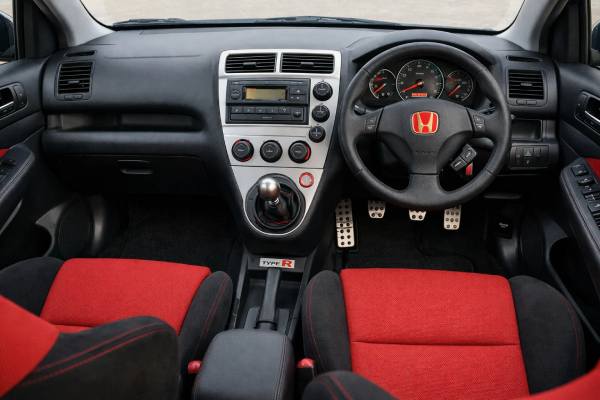
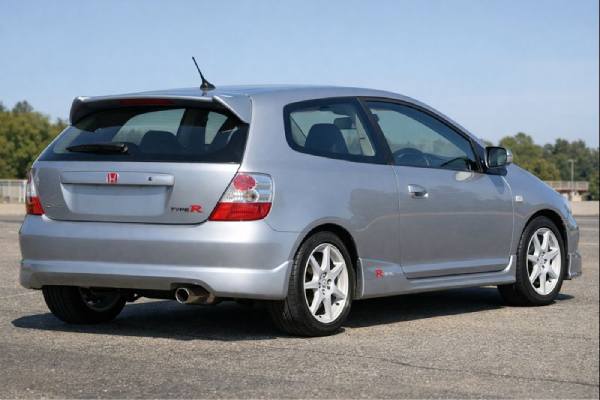
The EP3 Civic Type R is the early-2000s hot hatch that rewards committed driving without demanding exotic upkeep. Its K20A2 2.0-liter i-VTEC engine is built around strong airflow, a high compression ratio, and a willingness to live near redline—yet it remains durable when oil level and cooling health are treated as priorities. The 6-speed close-ratio manual transmission is a major part of the experience, keeping the engine in its power band and making the car feel lighter than its curb weight suggests.
Ownership tends to be defined by condition and history more than model year: many EP3s have seen track days, aggressive alignments, and hard shifting. Buy the right one and it’s a sharp, practical performance tool with parts availability and straightforward service access. Buy the wrong one and small issues can stack quickly.
Essential Insights
- High-rev K20A2 character rewards clean oil and warm-up discipline more than frequent major repairs.
- Close-ratio 6-speed and quick steering make it feel focused even at legal speeds.
- Brakes and tires are sized for spirited use, but suspension bushings age like any 20+ year hot hatch.
- Verify recall completion and crash-repair quality before chasing mods.
- Change engine oil every 10,000 km (6,000 mi) or 12 months (sooner for heavy use).
Navigate this guide
- EP3 Type R engineering snapshot
- K20A2 specs and service data
- Trims, identifiers, and safety equipment
- Reliability issues and known fixes
- Maintenance schedule and buying advice
- Real-world driving and performance
- EP3 Type R vs key rivals
EP3 Type R engineering snapshot
The EP3 Type R sits on the seventh-generation Civic hatchback platform, but its mission is different from regular trims. Honda’s priorities were response, repeatability, and driver involvement—achieved with a relatively simple recipe: a high-output naturally aspirated engine, a close-ratio manual gearbox, firm suspension tuning, and brakes sized for repeated hard stops.
What makes the K20A2 special
The K20A2 in the EP3 uses Honda’s i-VTEC system, combining VTEC (variable valve lift and duration) with VTC (variable cam timing). In practice, it means the engine can breathe efficiently at high rpm without being completely gutless at low rpm. It’s not a torque monster, but it stays eager and consistent when you keep it on cam. The payoff is a wide “usable” top end and an engine that tolerates sustained high rpm better than many period rivals—assuming oil level and temperature management are respected.
Chassis intent
The EP3 is front-wheel drive and, in many European-spec cars, uses an open differential rather than a factory limited-slip differential. That affects how you deploy power mid-corner: instead of relying on the diff to pull the nose in, the car asks for smooth throttle and good tire management. With the right alignment and tires, the front end remains accurate, but wheelspin and inside-wheel unloading can appear on poor surfaces.
Why condition matters so much
These cars respond strongly to modifications, which is both a benefit and a risk. Good mods—quality dampers, a proper alignment, fresh bushings, and conservative engine management—can improve the car. Poor mods—cheap coilovers, unknown tunes, neglected mounts, or mismatched tires—often create a pile of drivability and wear problems.
Advantages in today’s market
- Engaging performance without turbo complexity or direct-injection carbon concerns.
- Practical hatch packaging and straightforward mechanical access.
- Strong community knowledge for maintenance and parts sourcing.
The best EP3 Type R is usually the most “boring” one on paper: stock or lightly modified, with evidence of careful oil changes, gearbox care, and quality suspension work.
K20A2 specs and service data
Below are core specifications for the Honda Civic Type R (EP3) with the K20A2 2.0-liter i-VTEC and 6-speed manual. Values can vary slightly by market, model year, and right-hand drive vs left-hand drive equipment, so treat these as a strong baseline rather than a VIN-specific guarantee.
Powertrain and efficiency
| Item | Specification |
|---|---|
| Engine code | K20A2 |
| Layout and valvetrain | Inline-4, DOHC, 4 valves/cyl, i-VTEC |
| Bore × stroke | 86 × 86 mm (3.39 × 3.39 in) |
| Displacement | 2.0 L (1,998 cc) |
| Induction | Naturally aspirated |
| Fuel system | PFI (multi-port fuel injection) |
| Compression ratio | 11.0:1 |
| Max power | 197 hp (147 kW) @ 7,400 rpm |
| Max torque | 196 Nm (145 lb-ft) @ 5,900 rpm |
| Timing drive | Chain |
| Official fuel economy (EU cycle) | 8.9 L/100 km (26.4 mpg US / 31.7 mpg UK) combined |
| Real-world highway @ 120 km/h (75 mph) | ~7.8–9.0 L/100 km (30–26 mpg US) depending on tires, gearing, wind, and load |
| Aerodynamics | Cd/frontal area not consistently published for all EP3 variants |
Transmission and driveline
| Item | Specification |
|---|---|
| Transmission | 6-speed close-ratio manual |
| Drive type | FWD |
| Differential | Typically open (verify by market/special edition) |
Chassis, brakes, and tires
| Item | Specification |
|---|---|
| Suspension (front/rear) | MacPherson strut / torsion beam |
| Steering | Electric rack and pinion |
| Turns lock-to-lock | ~2.68 |
| Turning radius | ~5.7 m at wheel (diameter ~11.4 m); ~6.1 m at body (diameter ~12.2 m) |
| Brakes (front/rear) | 300 mm (11.81 in) ventilated disc / 260 mm (10.24 in) disc |
| Wheels and tires | 17 × 7J with 205/45 R17 |
Dimensions, weights, and capacities
| Item | Specification |
|---|---|
| Length / width / height | 4,140 / 1,695 / 1,440 mm (163.0 / 66.7 / 56.7 in) |
| Wheelbase | 2,575 mm (101.4 in) |
| Track (front/rear) | 1,472 / 1,490 mm (58.0 / 58.7 in) |
| Ground clearance | ~125 mm (4.92 in) |
| Cargo volume | ~315 L (11.1 ft³) VDA (seats up) |
| Curb weight | ~1,205–1,209 kg (2,657–2,665 lb) |
| GVWR (max permissible) | ~1,550 kg (3,417 lb) |
| Fuel tank | 50 L (13.2 US gal / 11.0 UK gal) |
Performance and safety baseline
| Item | Specification |
|---|---|
| 0–100 km/h (0–62 mph) | ~6.6 s |
| Top speed | ~235 km/h (146 mph) |
| Safety and driver assistance | ABS with EBD and Brake Assist; ADAS features (AEB/ACC/LKA) not typical for this era |
Trims, identifiers, and safety equipment
The EP3 Type R is simpler than modern performance trims: you’re mostly choosing condition, history, and market specification rather than trying to decode complex option packages. That said, there are still meaningful differences across years and regions that affect value and ownership.
Trims and options that actually matter
- Standard EP3 Type R: The core package—K20A2, 6-speed manual, sport seats, and the larger brakes and wheels. Equipment levels vary by market (climate control, head unit, and side airbags can differ).
- Model year updates (notably around 2004): Some markets received detail changes aimed at sharper response—often discussed as flywheel and response improvements—plus cosmetic tweaks (lighting, trim, and small interior revisions).
- Special editions: Some regions offered limited editions with specific colors, interior trims, and minor equipment changes. Treat these as “value multipliers” only if documentation is complete and the car remains unmodified or well restored.
Quick identifiers during an inspection
- Engine bay: K-series layout with chain-driven cams and a red-themed Type R presentation on many cars. Look for tidy wiring and clean fasteners—sloppy work often signals repeated part swapping.
- Brakes and wheels: Type R typically runs 17-inch wheels and larger front discs; mismatched calipers or odd pad wear can hint at accident repairs or poor maintenance.
- Interior tells: Strong bolsters and high pedal wear can reveal heavy use. Worn shifter feel often points to bushings or gearbox synchro wear rather than just cosmetics.
Safety ratings context
Crash ratings for early-2000s cars should be read in context: protocols and scoring evolved significantly, and older tests rarely reflect modern small-overlap or advanced restraint expectations. For the Civic of this era, Euro NCAP highlighted strong occupant results for its time and unusually high pedestrian-protection performance relative to peers, but that does not make it “modern-safe” by today’s standards.
Safety systems and ADAS
- Airbags: Typically front airbags; side airbags may be standard or market-dependent. Curtain airbags are not common for this generation.
- Child-seat provisions: ISOFIX/LATCH-style rear mounting points are common on many European cars; verify presence and condition of anchors.
- Braking and stability: ABS is typical; stability control (VSA/ESP) is not a universal EP3 Type R feature—confirm by build spec and dashboard indicators.
- ADAS: Features like automatic emergency braking, adaptive cruise control, and lane-keeping assistance are generally not present on EP3-era vehicles.
Reliability issues and known fixes
The EP3 Type R’s reputation for durability is largely deserved, but age, hard driving, and modification culture change the reliability picture. The best approach is to think in tiers: what commonly wears, what occasionally fails, and what becomes expensive if ignored.
Common and usually low-cost
- Engine mounts (especially the rear torque mount): Symptoms include wheel hop, clunks on shifts, and excessive drivetrain movement. Remedy is usually mount replacement with OEM-quality rubber if you want civility.
- Oil seepage from gaskets and seals: Look around the rocker cover, VTEC solenoid area, and timing cover edges. Small leaks are common; oil on belts or alternator wiring is not.
- Brake caliper slide issues: Uneven pad wear or a hot wheel after a drive suggests sticky sliders; service is straightforward if caught early.
Occasional and medium-cost
- Gearbox synchro wear (often 2nd/3rd): Crunching on fast shifts or reluctance when cold can indicate synchro wear. Fresh fluid may improve feel, but worn synchros usually require a rebuild.
- Clutch and hydraulic wear: High bite point, slipping under load, or chatter can mean clutch wear—sometimes accelerated by aggressive launches.
- Suspension bushings and ball joints: Wandering, knocking, or uneven tire wear often traces to tired compliance bushings. Replacing with quality parts restores the car’s precision more than most “power mods.”
Rare but higher impact
- Overheating events: The K20A2 tolerates track use when cooling is healthy, but a neglected radiator, weak fans, or trapped air after coolant work can cause head gasket risk over time. Inspect for stable temperatures and clean coolant.
- Poor tuning or intake/exhaust mismatch: Bad calibrations can create lean conditions, knock, or drivability issues that shorten engine life. If modified, insist on documentation and conservative tuning.
Recalls, TSBs, and verification
Recall relevance depends on market. The practical move is to run an official VIN check and cross-reference dealer records. If the seller cannot show recall completion, assume you need to verify it yourself before purchase.
Pre-purchase checks to request
- Full service history with oil-change frequency and oil grade noted.
- Gearbox behavior cold and hot, especially 2nd gear engagement under moderate throttle.
- Evidence of quality suspension work (alignment printout, reputable parts, no seized adjusters).
- Compression test or leak-down results if heavily modified or track-used.
Maintenance schedule and buying advice
A well-maintained EP3 Type R is usually cheaper to own than a neglected one, even if the purchase price is higher. Prioritize fluids, rubber, and cooling health first; then address handling and braking consistency.
Practical maintenance schedule
- Engine oil and filter: Every 10,000 km (6,000 mi) or 12 months; for frequent high-rpm use, reduce to 5,000–7,500 km (3,000–4,500 mi).
- Air filter (engine) and cabin filter: Inspect every 15,000 km; replace typically every 30,000 km (engine) and 20,000 km (cabin), sooner in dusty cities.
- Coolant: Replace every 5 years (or per coolant type) and bleed properly to avoid air pockets.
- Spark plugs: Often long-life iridium; replace around 100,000 km (60,000 mi) or earlier if misfire appears.
- Manual transmission fluid: Every 60,000–80,000 km (37,000–50,000 mi), sooner if shifts feel notchy.
- Brake fluid (and clutch fluid if shared): Every 2 years regardless of mileage.
- Brake pads/rotors: Inspect at every tire rotation; track use can shorten intervals dramatically.
- Serpentine belt and hoses: Inspect annually; replace at the first sign of cracking, glazing, or coolant softness.
Fluids, specs, and decision-making numbers
| Item | Typical spec (verify by market) |
|---|---|
| Engine oil | Honda-approved 5W-30 (or equivalent) meeting API/ACEA requirements |
| Engine oil capacity | ~4.5–4.7 L (4.8–5.0 US qt) with filter |
| Coolant | Honda-compatible long-life coolant; 50/50 mix unless climate requires otherwise |
| M/T fluid | Honda MTF (or equivalent) |
| M/T capacity | ~1.6–1.8 L (1.7–1.9 US qt) |
| Brake fluid | DOT 4 |
| A/C refrigerant | Varies by year/market; verify under-hood label |
Key torque specs
| Fastener | Typical torque (verify by service manual) |
|---|---|
| Wheel lug nuts | ~108 Nm (80 lb-ft) |
| Spark plugs | ~18 Nm (13 lb-ft) |
| Engine oil drain plug | ~39 Nm (29 lb-ft) |
Buyer’s guide: what to seek and what to avoid
Seek cars with: stock ECU, consistent oil-change documentation, quality tires, clean cooling system, and receipts for suspension refresh work. Be cautious with: unknown tunes, “freshly rebuilt” gearboxes without invoices, mismatched tire brands/sizes, and cars that overheat in traffic or smell of coolant after a test drive.
Long-term outlook is strong if you treat it like a precision machine: keep fluids fresh, fix small leaks early, and avoid repeated cold high-rpm pulls.
Real-world driving and performance
The EP3 Type R is less about effortless speed and more about how it delivers speed. It asks you to work the gearbox, build rpm, and carry momentum—then rewards that effort with clean responses and a strong sense of mechanical connection.
Ride, handling, and NVH
On a good road, the chassis feels keyed-in: quick turn-in, stable mid-corner attitude, and predictable lift-off behavior. The steering is light at low speeds (electric rack), but it becomes more informative as load builds, especially with good front tires and fresh suspension bushings. Ride quality is firm, and worn dampers make the car feel nervous over mid-corner bumps—one reason suspension condition matters so much. Cabin noise at highway speeds is typical for the era: noticeable tire roar on coarse surfaces and a constant engine presence, but not harsh if mounts and exhaust are stock.
Powertrain character and gearing
Below midrange, the K20A2 is smooth but not punchy. The car comes alive as revs rise, with the top end delivering its best work. The close ratios make it easy to keep the engine in the right zone, and the shifter feel is a large part of the appeal when healthy. If shifts are stiff only when cold, fluid and bushings may help; if it grinds under deliberate, warm shifts, plan for synchro work.
Real-world efficiency
Official combined consumption is around 8.9 L/100 km (26.4 mpg US / 31.7 mpg UK), but real-world results depend heavily on how often you use the upper rpm range. Expect higher fuel use in city driving and when running sticky tires or aggressive alignment. At steady highway cruising, many owners see mid-to-high 20s mpg US equivalents, but sustained high speeds push consumption up quickly.
Key metrics that change the verdict
- 0–100 km/h (0–62 mph): about 6.6 seconds in factory form.
- Top speed: about 235 km/h (146 mph).
- Braking consistency: strong with healthy calipers and good fluid; fade resistance depends more on pads and fluid than rotor size alone.
If you want an EP3, test drive it like you would actually use it: a gentle commute loop won’t reveal gearbox behavior, thermal stability, or how the front tires and brakes feel when loaded.
EP3 Type R vs key rivals
The EP3 Type R competed in the golden era of simple, driver-focused hot hatches. Today, it still makes sense—especially if you value response and mechanical feel more than low-end torque or modern tech.
Against turbo hot hatches
Compared with period turbo cars (and many modern ones), the EP3 lacks effortless midrange shove. A Mk4 Golf GTI or a supercharged MINI Cooper S can feel quicker in casual driving because they deliver torque earlier. The Honda counters with linearity, throttle accuracy, and a powertrain that stays consistent lap after lap when cooling and oil are managed. If you enjoy working for speed, the EP3 is often more satisfying.
Against high-rev naturally aspirated rivals
Cars like the Renaultsport Clio 172/182, Peugeot 306 GTi-6, or Ford Focus ST170 share the same “momentum” philosophy. The EP3 typically feels more grown-up in stability and braking capacity, with a stronger top-end engine and a more serious gearbox. Some rivals may offer more playful rotation at lower speeds due to lighter weight, but they often lack the EP3’s high-rpm durability and parts ecosystem.
Where the EP3 still wins
- Powertrain consistency: high-rev performance without turbo heat management.
- Daily usability: hatch practicality, good seating position, and decent visibility.
- Tuning ceiling (when done correctly): chassis refresh plus quality tires transforms the car more than chasing peak dyno numbers.
Where rivals can be the smarter buy
If you need modern safety tech, quiet cruising, or strong torque for relaxed driving, newer hot hatches are simply easier to live with. And if you drive in poor weather, a rival with factory stability control or a more forgiving differential setup can feel safer at the limit.
Ultimately, the EP3 Type R is best understood as a driver’s tool: honest, demanding in a good way, and at its best when maintained like the performance car it is.
References
- Civic 04 Specifications 2004 2004 (Technical Specifications)
- Civic range 2004 (Press Kit)
- Hondas Civic 5-Door Achieves Highest-Ever Rating For Pedestrian Safety In Latest Euro Ncap Tests 2001 (Safety Rating)
- Honda Owners | Recalls and Updates | Honda UK 2025 (Recall Information)
- Check if a vehicle, part or accessory has been recalled 2025 (Recall Database)
Disclaimer
This article is for informational purposes only and is not a substitute for professional inspection, diagnosis, or repair. Specifications, torque values, service intervals, and procedures can vary by VIN, market, model year, and installed equipment—always confirm details using the correct official service documentation for your vehicle.
If this guide helped, please consider sharing it on Facebook, X (Twitter), or your favorite forum to support our work.