
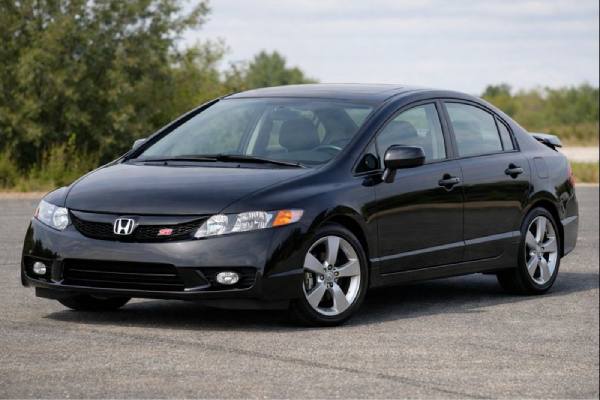
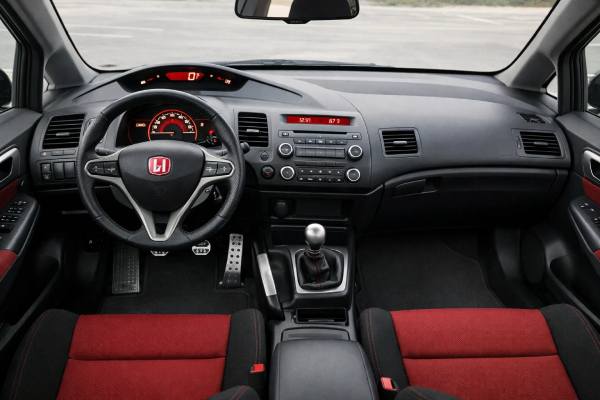
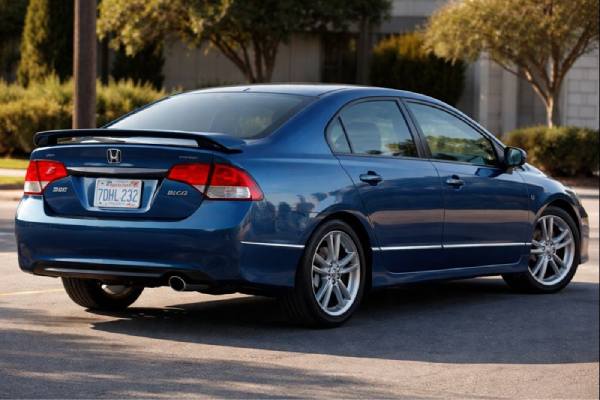
The 8th-gen Civic Si sedan (FA5) is one of the cleanest “daily-driver plus” formulas Honda ever sold: a high-revving K20Z3, a close-ratio 6-speed manual, and a factory helical limited-slip differential (LSD) driving the front wheels. It is quick enough to feel special, yet simple enough to maintain without exotic parts or complicated electronics. The chassis is tuned for response—firm spring and damper rates, quick steering, and strong brakes—so it rewards good tires and proper alignment more than power mods.
Most ownership outcomes come down to three things: maintenance discipline (fluids and cooling system), how the gearbox and clutch were treated, and whether the car lived an easy street life or a hard modified/track life. Get those right, and an FA5 can be a long-term, satisfying driver’s car.
What to Know
- High-rev K20Z3 character: happiest above 5,500 rpm, with strong top-end pull and a mechanical feel.
- Factory helical LSD helps real traction in corners and wet weather compared with open-diff rivals.
- Ride is firm and road noise is higher than a standard Civic; worn suspension mounts amplify it.
- Manual gearbox condition matters—budget for clutch and synchro work if shifts feel notchy or grind.
- Typical oil service: every 8,000–12,000 km (5,000–7,500 mi) or 12 months, depending on use.
What’s inside
- FA5 Civic Si identity
- K20Z3 specs and capacities
- Equipment, trims, and safety
- Reliability patterns and fixes
- Maintenance schedule and buyer checks
- Driving feel and real economy
- FA5 versus key rivals
FA5 Civic Si identity
The FA5 Civic Si is the sedan counterpart to the FG2 coupe. Both use the K20Z3 (2.0-liter i-VTEC), but the sedan’s slightly different weight distribution and rear structure can make it feel a touch calmer mid-corner, especially on imperfect roads. The main draw is how “Honda” the powertrain feels: it is responsive, smooth, and willing to spin to the top of the tach without drama. You do not buy an FA5 for effortless low-rpm torque; you buy it for a drivetrain that encourages precise throttle, deliberate shifting, and clean corner exits.
From the factory, Honda gave the Si the pieces enthusiasts usually add later: a 6-speed manual with close ratios, a helical LSD, larger brakes, sport seats, and stiffer suspension tuning than a standard Civic. The LSD is a big part of the car’s real-world speed. Instead of lighting up the inside tire, it transfers torque to the tire with grip, which makes the car more stable under power and less reliant on traction control intervention.
As an ownership platform, the FA5 is also relatively straightforward. There is no turbocharger, no high-pressure direct injection, and no complex adaptive suspension. Most “big problems” trace back to wear, deferred fluid changes, overheating episodes, or heavy modification. A stock or lightly modified Si with consistent maintenance tends to age well.
The flip side is that the Si’s strengths amplify neglect. If the engine has been run low on oil, overheated, or repeatedly bounced off the rev limiter on a tired clutch, it will show up as timing chain noise, oil consumption, misfires, or gearbox complaints. A good FA5 should feel tight: clean cold start, stable idle, crisp shifts, and no wandering on the highway. If it feels loose or noisy, assume you will spend money restoring the baseline before you spend anything on upgrades.
K20Z3 specs and capacities
Below are baseline specs for the 2007–2011 Civic Si sedan (FA5). Values can vary slightly by market, year, and equipment, so verify against the VIN-specific documentation for your car.
Powertrain and efficiency
| Item | Specification |
|---|---|
| Code | K20Z3 |
| Engine layout and cylinders | I-4, DOHC, 4 valves/cyl |
| Bore × stroke | 86.0 × 86.0 mm (3.39 × 3.39 in) |
| Displacement | 2.0 L (1,998 cc) |
| Induction | NA |
| Fuel system | PFI (port injection) |
| Compression ratio | ~11.0:1 |
| Max power | 197 hp (147 kW) @ 7,800 rpm |
| Max torque | 188 Nm (139 lb-ft) @ 6,100 rpm |
| Timing drive | Chain |
| Rated efficiency | ~9.8–10.7 L/100 km (22–24 mpg US / 26–29 mpg UK) depending on year and test cycle |
| Real-world highway @ 120 km/h (75 mph) | Often ~8.4–9.8 L/100 km (24–28 mpg US / 29–34 mpg UK) |
| Aerodynamics | Cd ~0.31 (varies); frontal area ~2.1–2.2 m² (23–24 ft²) |
Transmission and driveline
| Item | Specification |
|---|---|
| Transmission | 6-speed manual |
| Drive type | FWD |
| Differential | Helical LSD (factory) |
Chassis and dimensions
| Item | Specification |
|---|---|
| Suspension (front/rear) | MacPherson strut / multi-link |
| Steering | Electric power steering (EPS); quick ratio (varies by year) |
| Brakes | 4-wheel discs; ABS |
| Wheels/tyres | Commonly 215/45 R17 on 17-inch wheels (market/year dependent) |
| Length / width / height | ~4,500 / 1,750 / 1,430 mm (~177 / 69 / 56 in) |
| Wheelbase | ~2,700 mm (~106 in) |
| Turning circle | ~11.0 m (~36 ft) |
| Kerb weight | ~1,330–1,370 kg (~2,930–3,020 lb) depending on year/options |
| Fuel tank | ~50 L (13.2 US gal / 11.0 UK gal) |
| Cargo volume | ~340 L (~12 ft³) trunk (method differs by region) |
Performance and capability (typical)
| Item | Typical result |
|---|---|
| 0–100 km/h (0–62 mph) | ~6.5–7.0 s (traction, tires, and test method matter) |
| Top speed | ~215–225 km/h (134–140 mph) |
| Braking 100–0 km/h | Often in the ~36–40 m range on good tires |
| Towing capacity | Not typically rated for towing in many markets |
Fluids, service capacities, and key torque specs
| Item | Specification |
|---|---|
| Engine oil | API SN/SP equivalent; commonly 5W-20; ~4.0–4.3 L (4.2–4.5 US qt) with filter |
| Coolant | Honda Type 2 / equivalent long-life; mix is pre-diluted (check label) |
| Manual transmission | Honda MTF (or equivalent); capacity varies by service method (fill to level plug) |
| Brake fluid | DOT 3 (or equivalent) |
| A/C refrigerant | R-134a (charge varies by label) |
| Wheel lug nuts | ~108 Nm (80 lb-ft) |
| Oil drain plug | ~39 Nm (29 lb-ft) |
| Spark plugs | ~18 Nm (13 lb-ft) |
Electrical
| Item | Specification |
|---|---|
| 12 V battery | Group/size varies by market; test yearly after ~3 years |
| Spark plug type | Iridium (gap per spec label/manual) |
Safety and driver assistance (era-typical)
| Item | Notes |
|---|---|
| Crash ratings | Depends on body style/year/test protocol; check the exact year and body for official results |
| ADAS suite | Pre-AEB era: no factory AEB/ACC/LKA; focus is ABS and stability/traction systems |
Equipment, trims, and safety
For the FA5 generation, “Si” effectively is the trim: one core mechanical package with small year-to-year and market variations rather than a long ladder of engine choices. What matters for shoppers is identifying whether you are looking at a true Si sedan (K20Z3, 6MT, LSD) and whether it is stock, lightly modified, or heavily changed.
Quick identifiers that usually hold up
- 6-speed manual only (no factory automatic for Si in this generation).
- Si-specific front seats with stronger bolsters and a sportier driving position.
- 17-inch wheels and larger brakes than standard Civics (check rotor size and caliper condition).
- Factory LSD behavior: in a tight, low-speed turn with moderate throttle, the car should pull cleanly rather than spin the inside tire freely (tire condition can mask this).
Year-to-year changes that affect ownership
- 2009 refresh: updated exterior styling and interior details in many markets. It does not change the Si’s core drivetrain, but it can affect parts interchange (bumper covers, lighting, trim).
- Audio and convenience features vary: some years have different head units, steering wheel controls, and auxiliary inputs. If a car has electrical gremlins, the first suspect is often aftermarket wiring rather than OEM components.
Safety systems you should expect
- Front airbags and side airbags are common, but confirm presence and function (airbag light must illuminate at key-on and then go out).
- ABS is standard for the Si package in most markets; stability control availability can vary by year/region, so verify by dashboard indicators and build specification.
- LATCH/ISOFIX provisions are typical for rear seating positions; confirm anchor condition if you plan child-seat use.
Safety ratings: how to interpret them
This era sits in a transitional period: bodies can test well in frontal/side structures, but overall “best” awards often required stability control availability across the whole lineup and specific head restraint performance. Also, ratings usually apply to a body style (4-door sedan vs coupe) and a specific year. The practical takeaway is to look up the exact year and body and then compare it to your planned use:
- If you care about highway crash protection, prioritize the best-rated year/body configuration and keep tires and brakes in top shape.
- If you care about avoiding a crash, recognize the limitation: there is no modern automatic emergency braking. Your “driver assistance” is your visibility, tires, and braking system condition.
Finally, remember that modifications can affect safety. Lowered suspension can reduce bump compliance and stability on rough roads, and cheap tires can undo the benefits of good chassis tuning. If safety is a priority, treat the car like a system: tires, brakes, alignment, and shocks matter as much as airbags.
Reliability patterns and fixes
A well-maintained K-series Si is generally durable, but the FA5 has predictable pain points. The best way to think about them is by prevalence and severity/cost tier—and by whether the problem is “normal wear” or a sign of abuse.
Common (low to medium cost)
- Manual transmission notchiness or grind (often 2nd/3rd gear) → worn synchros, degraded fluid, or aggressive shifting habits → start with correct MTF service and linkage inspection; if grinding persists, plan for internal repair.
- Clutch wear or chatter → normal wear accelerated by stop-and-go driving, hard launches, or power mods → replace clutch kit and inspect flywheel; check for hydraulic issues if pedal feel is odd.
- Engine mounts (especially rear mount) → vibration at idle, clunk on throttle changes → replace mounts; avoid ultra-stiff aftermarket mounts for a daily driver.
- Front suspension wear (end links, strut mounts, bushings) → clunks over bumps, vague steering → refresh wear items and align to spec.
Occasional (medium cost)
- A/C performance issues → weak cooling, compressor noise, or condenser leaks → diagnose properly before “parts swapping”; A/C repairs can stack quickly.
- EPS quirks → intermittent heavy steering or warning light → check battery/charging health and scan for EPS codes before assuming rack failure.
Rare (higher cost, usually abuse-related)
- Timing chain/tensioner concerns → rattle at cold start, cam/crank correlation faults, rough running → verify oil level and change history; investigate early to avoid chain skip.
- Overheat aftermath → coolant loss history, head gasket concerns, persistent misfire → pressure test and check for combustion gases in coolant; walk away if evidence is strong and price doesn’t reflect risk.
Recalls, TSBs, and how to verify
Because many FA5 cars fall into broader Civic recall campaigns (especially airbags), you should treat recall verification as mandatory:
- Run an official VIN recall check.
- Ask the seller for documentation showing completion (dealer invoice or printout).
- Confirm the airbag warning light behavior on startup.
Pre-purchase checks to request
- Full service history and receipts (oil, coolant, plugs, clutch, transmission fluid).
- Evidence of proper cooling system care (no mismatched coolant types, no stop-leak).
- Compression test or leak-down test if the car shows misfire codes, oil consumption, or hard starting.
- A careful inspection for amateur wiring (aftermarket stereos, alarms, gauges), which can create persistent electrical faults.
A simple rule helps: a clean, mostly stock Si with boring maintenance receipts is usually a better bet than a heavily modified car with vague stories—even if the modified car feels faster on a test drive.
Maintenance schedule and buyer checks
Honda’s Maintenance Minder system can vary intervals based on driving conditions, but you can still follow a practical schedule that keeps the FA5 healthy. Use time-based limits if you drive low mileage.
Practical maintenance schedule (street-focused)
- Engine oil and filter: every 8,000–12,000 km (5,000–7,500 mi) or 12 months; shorten to ~5,000 km (3,000 mi) for frequent short trips, hot climates, or track days.
- Air filter (engine): inspect every 15,000 km (10,000 mi); replace as needed (often 30,000–45,000 km / 20,000–30,000 mi).
- Cabin filter: every 20,000–30,000 km (12,000–18,000 mi) or yearly if you live in dusty areas.
- Manual transmission fluid (MTF): every 50,000–80,000 km (30,000–50,000 mi); sooner if shifting gets notchy or the car sees autocross/track use.
- Coolant: follow the long-life interval (often ~10 years/160,000 km first, then ~5 years/80,000 km); never mix random coolants.
- Spark plugs (iridium): around 160,000 km (100,000 mi), or sooner if misfires occur.
- Brake fluid: every 3 years regardless of mileage (moisture control).
- Brake pads and rotors: inspect at every tire rotation; measure thickness rather than guessing.
- Tire rotation and alignment: rotate every 8,000–10,000 km (5,000–6,000 mi); align at least yearly or after suspension work.
- Valve clearance: adjust if noisy or if idle quality degrades; consider checking around 160,000–200,000 km (100,000–125,000 mi) on higher-mileage cars.
- 12 V battery: test yearly after year 3; typical replacement window is 3–5 years.
Fluids and decision-making notes
- Use the correct oil viscosity and quality level for your climate and usage; high-rev engines respond poorly to extended oil neglect.
- For the gearbox, prioritize the correct fluid first. Many “bad transmission” complaints improve after a proper MTF service—though it will not fix truly worn synchros.
- Keep the cooling system stock and healthy. Overheating is the fastest way to turn an otherwise durable K-series into an expensive project.
Buyer’s guide checklist (FA5-specific)
- Gearbox test: multiple 2nd→3rd upshifts at different RPM; any crunching is a red flag.
- Clutch test: full-throttle pull in a higher gear at low rpm; if revs rise without speed, plan for a clutch.
- Suspension feel: listen for front clunks; check for uneven tire wear (often signals worn bushings or poor alignment).
- Rust and corrosion: inspect rear arches, rocker seams, subframe areas, and brake lines (region dependent).
- Cooling system: inspect radiator and hoses; check for coolant smell, stains, or bubbling overflow.
- Modification quality: tidy, fused wiring and reputable parts are one thing; cut harnesses and mystery tunes are another.
Long-term outlook: a stock or lightly modified FA5 with consistent fluids, cooling care, and sensible driving can be a durable, enjoyable car well past 200,000 km (125,000 mi). The best examples are not the cheapest ones—they are the ones that were never allowed to fall behind.
Driving feel and real economy
In normal traffic, the FA5 feels like a sporty Civic first and a hot hatch rival second. Steering is quick, the chassis responds immediately to small inputs, and the car rotates predictably if you enter a corner with the right speed. The suspension is firm, especially on broken pavement, so tire choice and shock condition matter a lot. Worn dampers turn the car from “taut” into “busy,” and cheap tires can make it feel nervous.
Powertrain character
The K20Z3 is all about the upper half of the tach. Below ~3,000 rpm it is usable but not punchy; above ~5,500 rpm it wakes up and pulls hard to redline. The 6-speed gearing keeps the engine in its sweet spot, which is why the car feels lively even without big torque numbers. Throttle response is crisp for a naturally aspirated engine, and the car rewards smooth, deliberate pedal work more than aggressive stabbing.
Shifter feel is one of the FA5’s signature traits—when healthy. A good gearbox has short throws and a clean gate. If it feels rubbery, resists quick shifts, or grinds, assume it needs fluid service at minimum and possibly synchro work.
Ride, handling, and NVH
- Ride: firm and controlled; potholes can be sharp.
- Handling: front end bites well; LSD helps power out of corners without one-tire spin.
- Braking: strong for the class; consistent pedal feel depends on fluid condition and quality pads.
- NVH: more road noise than a base Civic; worn mounts and wheel bearings make it worse.
Real-world efficiency
On the highway at steady speed, the FA5 can be reasonably efficient for a high-rev performance trim—until you start chasing VTEC. Around-town economy depends heavily on how often you rev it out and how much stop-and-go you do. Expect a noticeable winter penalty in cold climates due to warm-up time and denser air, and an even bigger penalty on short trips.
Practical advice: if you want both performance and economy, keep tire pressures correct, avoid aggressive toe settings, and fix any dragging brakes or worn wheel bearings. Small mechanical drags show up quickly on a car that encourages spirited driving.
FA5 versus key rivals
The FA5 Civic Si sits in a specific niche: a naturally aspirated, high-rev, manual-only sport compact with an LSD and simple mechanicals. That combination is rarer than it sounds, and it shapes how the Si compares to its era’s alternatives.
Versus Volkswagen GTI (Mk5/Mk6)
A GTI usually feels quicker in normal traffic thanks to turbo torque and taller gearing. It is also quieter and more refined on the highway. The FA5 counters with lower running complexity (no turbo system), a more mechanical shift feel, and a more eager top-end. If you want effortless speed, the GTI wins; if you want a simpler, rev-happy drivetrain, the Si wins.
Versus Mazdaspeed3 and WRX
These offer straight-line pace the Si cannot match stock. They also bring more heat management concerns, more drivetrain stress, and often higher consumable costs when driven hard. The FA5’s advantage is balance: it is fast enough to be fun, but not so fast that every mistake becomes expensive. For many owners, that means more enjoyable miles per dollar.
Versus Mini Cooper S (R56 era)
The Mini delivers character and quick responses, but maintenance and reliability risk can be higher depending on engine and service history. The Si is generally easier to keep “right,” with more forgiving parts pricing and a bigger pool of OEM-equivalent options.
Versus Toyota’s sport compacts of the time
Many Toyota alternatives are dependable but often lack the same factory LSD + high-rev synergy in this price bracket. The Si’s “complete package” feel—engine, gearing, diff, and chassis working together—is its core advantage.
Bottom line
Choose the FA5 if you value:
- A high-rev engine with an engaging manual gearbox feel
- Factory LSD traction and predictable handling
- Straightforward ownership without turbo complexity
Consider rivals if you prioritize:
- Low-rpm torque and effortless passing
- A quieter, more refined ride
- Maximum straight-line speed per dollar
References
- 2011 CIVIC SEDAN Owner’s Manual (Unlinked) 2011 (Owner’s Manual) ([Honda Tech Info][1])
- 2008 Honda CIVIC si sedan 2008 (Specification Sheet) ([Honda Automobiles][2])
- Gas Mileage of 2011 Honda Civic 2011 (Fuel Economy Data) ([fueleconomy.gov][3])
- Recalls 2025 (Recall Database) ([NHTSA][4])
- 2010 TOP SAFETY PICKs 2010 (Safety Rating) ([IIHS Highway Safety][5])
Disclaimer
This article is for informational purposes only and is not a substitute for professional diagnosis, inspection, or repair. Specifications, torque values, service intervals, and procedures can vary by VIN, market, model year, and installed equipment; always confirm details using official Honda service documentation for your exact vehicle.
If you found this guide useful, please consider sharing it on Facebook or X/Twitter to support our work.