
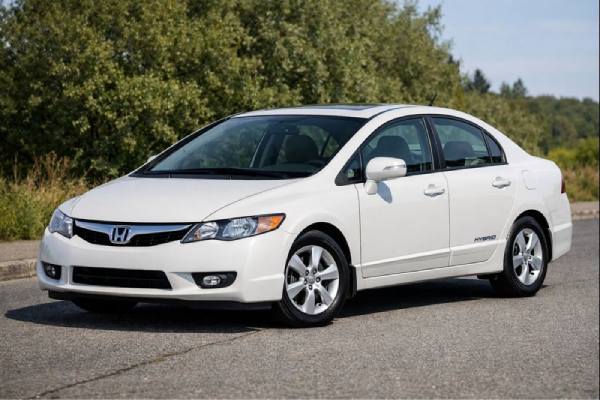
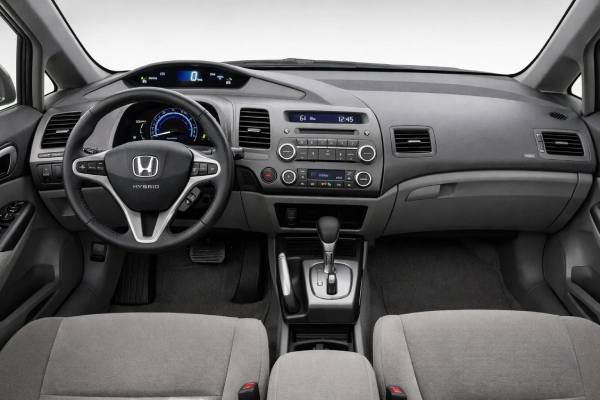
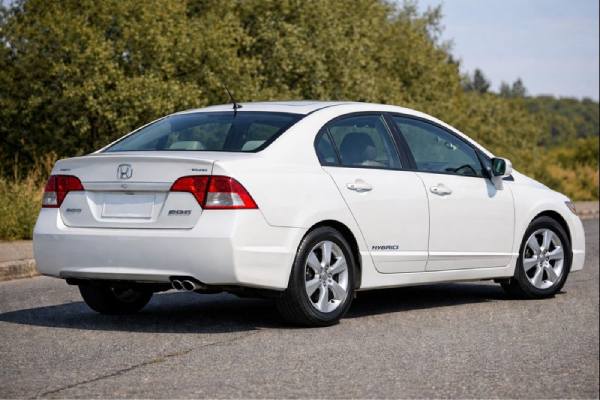
The Honda Civic Hybrid (FA3) is the “quietly clever” Civic of its era: a practical sedan that uses Honda’s IMA (Integrated Motor Assist) mild-hybrid system to cut fuel use without changing your routine. In day-to-day driving it behaves like a normal automatic Civic, but the electric motor fills in torque at low speed and recovers energy under braking. The result is smooth city performance and strong efficiency—especially in steady commuting.
As these cars age, ownership becomes less about the gasoline engine and more about hybrid-specific health: battery capacity, cooling, software behavior, and the way the CVT has been serviced. Get those fundamentals right and the FA3 can be a durable, low-running-cost car. Ignore them and you can end up chasing warning lights, weak assist, or drivability complaints that feel “mysterious” until you diagnose the hybrid system properly.
Owner Snapshot
- Strong real-world commuting economy when the hybrid battery is healthy and the tyres are low-rolling-resistance.
- Simple packaging: drives like a regular Civic, with predictable controls and easy cabin ergonomics.
- Generally robust 1.3-l engine when oil level and cooling system are kept in shape.
- Hybrid battery capacity loss and IMA warning lights are the big ownership variable on higher-mileage cars.
- Plan on CVT fluid service about every 40,000–60,000 km (25,000–37,000 mi) for best drivability and longevity.
Jump to sections
- FA3 Hybrid ownership and design
- LDA-MF5 specs and capacities
- FA3 trims, safety, and driver aids
- Hybrid reliability issues and fixes
- Maintenance plan and buying checklist
- Real-world driving and fuel use
- FA3 Hybrid versus similar cars
FA3 Hybrid ownership and design
The FA3 Civic Hybrid sits between two worlds. It is not a full hybrid like a Prius (which can move on electric power alone more often), and it is not a conventional Civic with only minor efficiency tweaks. Honda’s IMA design uses a thin electric motor mounted between the engine and transmission. That motor can add torque during acceleration and capture energy during deceleration, while the gasoline engine stays central to the driving experience. In practice, that means you get “normal car” behavior—no special driving technique required—yet the car rewards smooth throttle and predictable traffic flow.
The heart of the package is the LDA-series 1.3-l i-VTEC gasoline engine paired with the IMA motor and a CVT. The gasoline engine focuses on efficiency and clean combustion rather than performance. The motor fills in some of the low-speed torque that small-displacement engines often lack, so the car feels more responsive than its size suggests when you leave a stoplight, merge into traffic, or climb a mild grade. Because the motor assists the engine, the FA3 can use taller effective gearing (via the CVT) at cruise and keep engine rpm low.
From an engineering and ownership perspective, the “hybrid” parts that matter are less visible than you might expect:
- High-voltage battery pack (typically behind the rear seat) that stores energy for assist and regen.
- Battery cooling system (ducting and fan) that protects the pack from heat, dust, and restricted airflow.
- DC–DC converter that charges the 12 V system (many hybrids don’t use a traditional alternator in the usual way).
- Hybrid control software that decides when to assist, how aggressively to recharge, and how to manage battery temperature and state-of-charge.
The advantage of this layout is simplicity in daily use. You can hand the keys to someone who has never driven a hybrid and they will figure it out in minutes. The tradeoff is that long-term value hinges on hybrid-system condition more than on the engine’s basic mechanical health. Two otherwise similar cars can feel completely different if one has a strong battery and updated software while the other is “limping” with reduced assist.
If you are shopping today, treat the FA3 like a conventional Civic plus one major subsystem: the hybrid battery and its controls. When that subsystem is healthy, you get the hybrid’s core benefit—low fuel consumption without lifestyle changes. When it is not, you get a slow, noisy car that runs the gasoline engine harder to compensate.
LDA-MF5 specs and capacities
The exact numbers can vary by model year, market, and test standard, but the FA3 Civic Hybrid’s technical profile is consistent: a small gasoline engine, an assist motor, a CVT, and a curb weight that is slightly higher than a non-hybrid Civic sedan.
Powertrain and efficiency (typical FA3 Civic Hybrid)
| Item | Specification |
|---|---|
| Powertrain code | LDA-MF5 (hybrid IMA system) |
| Engine layout | Inline-4, i-VTEC, efficiency-focused calibration |
| Displacement | 1.3 l (≈1330 cc) |
| Induction | Naturally aspirated |
| System output | ~110 hp (combined, depending on standard) |
| Transmission | CVT (hybrid-specific programming) |
| Drive type | FWD |
| Rated efficiency | Often ~4.8–6.0 L/100 km (varies widely by cycle/market) |
| Real-world highway @ 120 km/h | Commonly ~6.0–7.2 L/100 km if battery is healthy and tyres are correct |
Why the numbers vary: older ratings may use different cycles (EPA updates, regional test methods), and the hybrid battery’s condition can significantly change real-world fuel use. A weak pack often forces more engine load, especially in stop-and-go traffic.
Chassis and dimensions (typical 8th-gen Civic sedan footprint)
| Item | Typical figure (range) |
|---|---|
| Length | ~4540–4555 mm |
| Width | ~1750–1755 mm |
| Height | ~1430–1450 mm |
| Wheelbase | ~2700 mm |
| Turning circle | ~10.6–11.0 m (kerb-to-kerb, depends on tyres/wheels) |
| Kerb weight | ~1320–1450 kg (trim dependent) |
| Fuel tank | ~50 L |
Performance (what owners usually experience)
| Metric | Typical result |
|---|---|
| 0–100 km/h (0–62 mph) | ~10.5–12.0 s |
| Top speed | ~180–190 km/h |
| Braking 100–0 km/h | commonly ~38–42 m (tyres and brake condition matter) |
Fluids and service capacities (common planning figures)
| System | Typical specification |
|---|---|
| Engine oil | 0W-20 or 5W-20 (market dependent); ~3.3–3.6 L with filter |
| Coolant | Honda long-life coolant; capacity varies with radiator/market |
| CVT fluid | Honda CVT fluid only (do not substitute ATF); capacity varies by drain/refill vs overhaul |
| Brake fluid | DOT 3 or DOT 4 (market dependent) |
Key torque specs (decision-grade, common Honda values)
- Wheel lug nuts: ~108 Nm (80 lb-ft)
- Spark plugs (if using the typical small Honda plug): often ~18 Nm (13 lb-ft)
- Oil drain bolt: commonly ~39 Nm (29 lb-ft)
Use these as planning figures, not a substitute for VIN-specific service data—especially if the car has had pan, plug, or wheel changes.
FA3 trims, safety, and driver aids
Most FA3 Civic Hybrids were sold in a small number of well-equipped trims rather than a wide ladder of base-to-luxury variants. The market matters: North American cars often bundle features differently than EU or JDM equivalents, and some regions use different naming. Still, the buying logic is similar everywhere: you are mainly choosing between condition, maintenance history, and equipment level rather than chasing rare mechanical packages.
Trims and options that affect ownership
Common equipment you may see across the range:
- Automatic climate control and a multi-information display showing assist/regen behavior.
- Alloy wheels (often paired with low-rolling-resistance tyres from the factory).
- Audio upgrades depending on year (steering wheel controls, premium audio in some trims).
Options and year-to-year changes that matter in real life:
- Stability control (often called VSA) may be standard on later years or higher trims but optional earlier. If you value winter stability and emergency handling, prioritize cars that have it.
- Side and curtain airbags were widely available, but always verify by looking for seat and pillar airbag tags and confirming via VIN build data where possible.
- Navigation and infotainment packages, if fitted, can be expensive to refresh because parts are older and screen failures or map media issues are common with age.
Quick identifiers when inspecting:
- Hybrid-specific cluster graphics and IMA indicators.
- Rear badging and, on some cars, a dedicated hybrid information screen.
- Under-hood orange high-voltage warning labels and hybrid service markings (do not touch HV components without proper training).
Safety ratings and what they mean today
Safety ratings for vehicles from this period can be tricky because test protocols evolved. A “good” result in one year may not be directly comparable with newer tests, and some organizations did not test every trim variant. When you research ratings, focus on:
- Whether the result is for the 4-door sedan body style (most relevant to the hybrid).
- Whether the car has side airbags and stability control, which can affect real-world crash outcomes even if the crash-test structure is the same.
Safety systems and driver assistance
Expect safety to be “traditional,” not modern ADAS:
- Airbags: typically front airbags, plus available side torso and side curtain airbags depending on trim/year.
- Braking and stability: ABS and electronic brake-force distribution are common; stability control may be optional or standard depending on year/market.
- Child seats: ISOFIX/LATCH anchorage is usually present; verify anchor condition and rear-seat fit because some hybrids have packaging differences near the battery area.
No FA3 Civic Hybrid from this era offers today’s mainstream driver assistance (AEB, adaptive cruise, lane centering). That makes tyre quality, brake condition, and visibility maintenance (good wiper arms, clear headlight lenses, correct aim) disproportionately important for safety.
Hybrid reliability issues and fixes
Think about FA3 reliability in two layers: the conventional Civic layer (suspension, brakes, bearings, seals) and the hybrid layer (battery, cooling, power electronics, software). Most expensive surprises come from the hybrid layer, while most frequent annoyances look like normal “older Honda” upkeep.
Common issues (high prevalence)
- Hybrid battery capacity loss (IMA battery aging)
Symptoms: IMA light, reduced assist, frequent recalibrations (state-of-charge swings), weaker acceleration, fuel economy drop.
Likely cause: normal battery degradation accelerated by heat, high mileage, and repeated deep cycling in stop-and-go traffic.
Remedy: proper diagnostic scan (hybrid codes, battery block behavior), check cooling fan operation and ducting, confirm software updates; battery repair/replacement decisions based on measured performance rather than guesswork. - Battery cooling airflow restrictions
Symptoms: battery overheating codes, reduced assist in hot weather, fan running loudly.
Cause: clogged intake grilles, dusty ducting, pet hair/lint, blocked trunk area around vents.
Remedy: clean airflow path, restore missing trim pieces, verify fan operation and control. - CVT drivability complaints (judder, flare, shudder)
Symptoms: shudder on light acceleration, inconsistent ratio changes, delayed engagement.
Cause: old or incorrect CVT fluid, neglected service intervals, internal wear.
Remedy: drain/refill with correct Honda CVT fluid, confirm the correct procedure for your unit, and assess whether the symptom improves; persistent judder can indicate deeper wear.
Occasional issues (medium prevalence)
- DC–DC converter / 12 V charging problems
Symptoms: weak 12 V battery, random warning lights, intermittent no-start, electrical glitches.
Cause: aging converter, poor grounds, or a tired 12 V battery that can no longer buffer voltage swings.
Remedy: load-test the 12 V battery first, then check charging behavior under different operating states. - Engine mounts and vibration
Symptoms: vibration at idle, clunks on takeoff.
Cause: mount wear plus the hybrid’s frequent engine start/stop behavior.
Remedy: inspect mounts as a set; cheap single-mount replacements often don’t fix the underlying feel.
Rare but costly (low prevalence, high impact)
- Power electronics failures (inverter-related faults, hybrid control module issues)
Symptoms: persistent IMA warnings, limp behavior, inability to charge/assist.
Remedy: specialist diagnosis is essential; avoid parts-swapping.
Recalls, TSBs, and software actions
Because hybrids rely on software behavior, updates can change drivability and battery management. If a seller says “it has a new battery” or “it was updated,” ask for documentation. When possible:
- Verify recall completion using official VIN tools.
- Ask a dealer to print recall history (even if you do your own repairs afterward).
- Treat undocumented claims as “not confirmed,” especially around airbags and hybrid battery actions.
Maintenance plan and buying checklist
A good FA3 maintenance plan prioritizes fluid quality, cooling health, and hybrid-system airflow. The goal is to keep the car in its “easy life” operating zone: stable temperatures, clean fluids, and predictable electrical behavior.
Practical maintenance schedule (distance/time)
Use this as a planning baseline; adjust for your climate, duty cycle, and the service schedule tied to your VIN:
- Engine oil and filter: every 8,000–10,000 km (5,000–6,000 mi) or 6–12 months. Short trips and cold weather justify the shorter interval.
- CVT fluid: every 40,000–60,000 km (25,000–37,000 mi); sooner if you feel shudder or the service history is unknown.
- Engine air filter: inspect every oil change; replace typically 20,000–30,000 km (dusty areas sooner).
- Cabin air filter: every 15,000–30,000 km or yearly if you drive in cities with heavy dust/pollen.
- Coolant: commonly 5 years/100,000 km, then 3 years/60,000 km (confirm exact spec for your market).
- Brake fluid: every 2–3 years regardless of mileage.
- Spark plugs: commonly 100,000–160,000 km depending on plug type and market; inspect if misfire occurs.
- Tyre rotation and alignment: rotate every 8,000–10,000 km; align if tyres feather or steering is off-center.
- 12 V battery test: annually after year 3; many last 4–6 years depending on climate.
Hybrid-specific care that pays off
- Keep the battery cooling intake unobstructed (avoid covering vents with luggage, seat covers, or debris).
- Clean interior air paths and confirm the fan can move air freely.
- If you live in hot climates, treat cabin filtration and rear-seat area cleanliness as part of hybrid maintenance.
Buyer’s inspection checklist (high value, low effort)
- Scan for hybrid codes (not just a generic engine-code read). Ask for a printout if possible.
- Watch the battery state-of-charge behavior on a test drive: rapid swings and frequent forced charging are red flags.
- Check CVT behavior at light throttle: judder under gentle acceleration often points to fluid neglect.
- Look for cooling airflow issues: blocked vents, missing trim, signs of heavy lint/pet hair.
- Inspect for corrosion at common Civic locations: subframe areas, brake lines (market dependent), and underbody seams.
- Confirm safety equipment: side airbags presence, stability control availability, and recall completion.
Long-term durability outlook
A well-cared-for FA3 can be a dependable commuter. The limiting factor is rarely the gasoline engine; it is more often the hybrid battery system’s cost-benefit equation. Buy the best-documented, best-driving example you can, even if it costs more upfront.
Real-world driving and fuel use
The FA3 Civic Hybrid feels like a Civic first and a hybrid second—until you pay attention to how it delivers power. The assist motor provides a gentle push at low rpm, smoothing out launches and helping the car feel less strained in city traffic. The CVT keeps the engine in an efficient operating band, which is good for fuel use but can make acceleration feel “flat” compared with a torqueier 1.8-l Civic.
Ride, handling, and NVH
- Ride: generally comfortable, with the same basic suspension character as other Civics of the generation. Worn dampers and tired bushings make a bigger difference than “hybrid vs non-hybrid.”
- Handling: stable and predictable. The hybrid’s extra weight is usually not dramatic, but you may feel it in quick transitions if tyres are low quality.
- NVH (noise, vibration, harshness): expect more engine sound under hard acceleration because the CVT holds rpm. At steady speed, the car can be pleasantly quiet if wheel bearings and tyres are in good shape.
Powertrain character (and how to drive it well)
- Throttle response: best when you roll into the throttle smoothly; stabbing the pedal often triggers a “rev and hold” CVT response that feels busy.
- Assist/regen behavior: you’ll see assist during gentle acceleration and regen during deceleration. Learn to anticipate stops and coast early—this is where the car earns its economy.
- Stop-start feel: depending on year and calibration, engine start/stop can be smooth when everything is healthy. Rough restarts can hint at mounts, 12 V weakness, or control issues.
Real-world efficiency (what owners usually see)
Fuel use depends heavily on battery health and speed:
- City commuting: often the best-case scenario for the FA3, because regen and assist can be used frequently. A healthy system can deliver notably lower consumption than a non-hybrid Civic.
- Highway at 100–120 km/h: the advantage narrows. The hybrid still helps, but aerodynamic drag dominates, and the battery contributes less.
- Cold weather: expect a noticeable penalty from longer warm-up time, cabin heat demand, and battery performance limits.
As a practical expectation, many owners see something like 5–6 L/100 km in mixed driving when the system is strong, and 6.5–8 L/100 km when the battery is weak or the car spends most of its life at higher speeds.
Traction and braking feel
Traction is “Civic normal”: front-wheel drive with predictable limits. Braking can feel slightly different because the car blends regen and friction braking. If the pedal feels inconsistent or the transition is rough, check brake service condition, tyre grip, and whether the hybrid system is throwing any related fault codes.
FA3 Hybrid versus similar cars
The FA3 Civic Hybrid competes best against cars that share its mission: efficient, compact, low-drama transportation. Its real rivals depend on what you value most—maximum fuel economy, lowest repair risk, or the most familiar driving feel.
Versus Toyota Prius (Gen 2 and early Gen 3)
Why the Prius often wins: It is a full hybrid with a system designed around electric operation and high-efficiency drive cycles. In city driving, it can outperform the Civic Hybrid in fuel economy and tends to show its hybrid “benefit” more consistently even when driven casually.
Why the FA3 can be the better choice: It feels more like a conventional sedan in steering, seating, and control logic. Some drivers prefer its straightforward behavior and typical Honda ergonomics. In some markets, purchase price and insurance may also favor the Civic.
Versus non-hybrid compact sedans (Civic 1.8, Corolla 1.8, Mazda3 2.0)
Where the FA3 shines: Fuel cost in commuting, especially when traffic is slow and the battery is healthy.
Where non-hybrids win: Predictability of long-term repair costs. A standard 1.8-l Civic or Corolla usually has fewer expensive “system” variables. If you do very high-speed highway mileage, the hybrid advantage shrinks.
Versus diesel compacts of the era (market dependent)
Some drivers cross-shop older diesels because highway economy can be excellent. The tradeoff is complexity (EGR, turbo plumbing, particulate filters in some years/markets) and higher parts cost in many regions. The FA3’s advantage is a simpler daily routine and typically cleaner urban operation, but it relies on the hybrid battery staying healthy.
Buying advice based on your use case
- Short urban commutes, steady traffic, moderate speeds: the FA3 is in its sweet spot.
- Mostly highway at 120–140 km/h: a conventional 1.8-l Civic or a diesel (where appropriate) may be a more consistent value.
- Keep-it-forever ownership: prioritize documentation and hybrid health over mileage alone. A higher-mileage car with a well-maintained hybrid system can be the smarter buy than a low-mileage car with unknown battery history.
The FA3 Civic Hybrid is a good choice when you want a familiar sedan experience with meaningful efficiency gains—provided you evaluate the hybrid system with the same seriousness you’d give to an engine or transmission on any other used car.
References
- RCLRPT-19V501-9728.PDF 2019 (Recall Database)
- Recalls 2025 (Recall Database)
- Find and Compare Cars 2025 (Official Fuel Economy Data)
- TOP SAFETY PICKs 2025 (Safety Rating)
Disclaimer
This article is for informational purposes only and is not a substitute for professional diagnosis, inspection, or repair. Specifications, torque values, service intervals, and procedures can vary by VIN, market, model year, and equipment; always verify details using official Honda service information and the documentation for your specific vehicle.
If you found this guide useful, please consider sharing it on Facebook, X (Twitter), or your favorite forum to help others find it.