
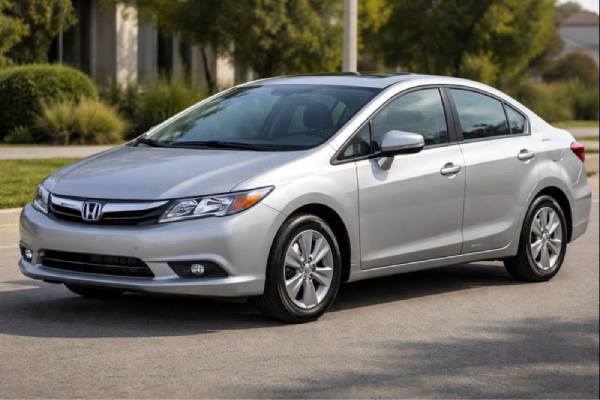
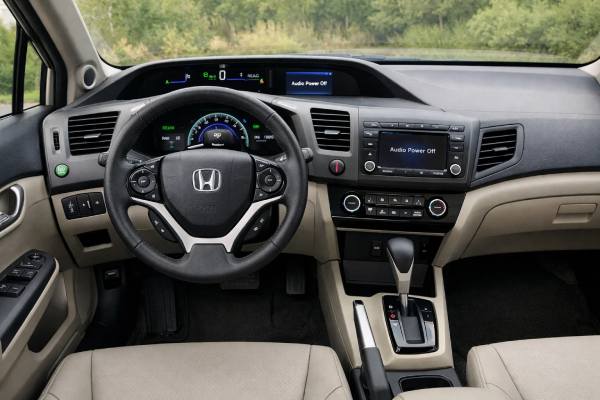
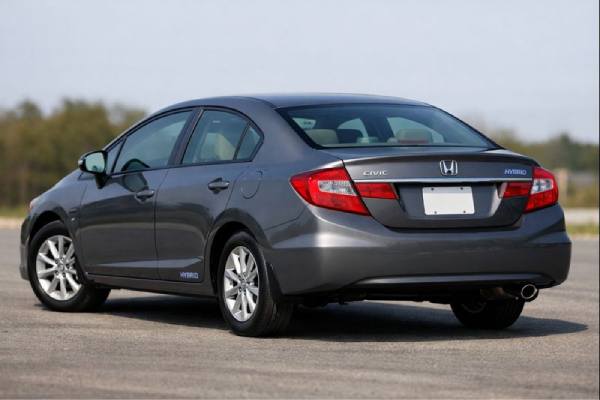
The Honda Civic Hybrid FB4, sold between 2011 and 2015, represents Honda’s transitional phase between conventional gasoline efficiency and modern hybrid systems. Built around the LEA-MF6 1.5-liter engine paired with Honda’s Integrated Motor Assist (IMA), this Civic Hybrid was designed to deliver meaningful fuel savings without fundamentally changing how a compact sedan feels to drive or maintain. Unlike later full hybrids, the FB4 relies on a simpler assist-style electric motor that supports the gasoline engine rather than replacing it at low speeds.
For owners, the appeal lies in predictable behavior and familiar service routines. The FB4 drives much like a standard Civic, with smooth steering, stable braking, and conservative chassis tuning. At the same time, it introduces hybrid-specific considerations such as battery health, regenerative braking behavior, and software calibration. When properly maintained and driven within its design limits, the Civic Hybrid FB4 can provide years of efficient, low-stress ownership with fewer surprises than early plug-in or full-hybrid alternatives.
This guide explains how the FB4 Hybrid works, how it performs in real use, where reliability risks exist, how to maintain it correctly, and how it compares to other compact hybrids of its era.
Quick Specs and Notes
- Simple IMA hybrid system prioritizes reliability and familiar driving feel.
- Strong fuel economy advantage in city and mixed driving.
- Hybrid battery health is the single most important long-term factor.
- Brake fluid replacement every 2–3 years helps protect regenerative braking components.
- Engine oil changes are recommended at least every 12 months.
Contents and shortcuts
- Detailed overview
- Specifications and technical data
- Trims, options, and safety
- Reliability and common issues
- Maintenance and buyer’s guide
- Driving and performance
- How it compares to rivals
Detailed overview
The Civic Hybrid FB4 is best understood as an evolution of the standard ninth-generation Civic rather than a radical redesign. Honda retained the familiar compact-sedan proportions, suspension geometry, and interior layout, then integrated the IMA hybrid system in a way that minimized disruption to everyday driving. The result is a car that feels conventional from behind the wheel while quietly reducing fuel consumption.
At the core is the LEA 1.5-liter inline-four engine paired with an electric motor sandwiched between the engine and transmission. This motor assists during acceleration and captures energy during braking, storing it in a compact battery pack mounted behind the rear seats. Unlike later hybrids, the FB4 cannot drive in full electric mode for extended distances, but it can briefly shut down the engine during deceleration and idle conditions.
This design choice has implications for ownership. On the positive side, the system is mechanically simpler than full hybrids, with fewer high-voltage components and no complex planetary gearset. On the downside, fuel savings are most noticeable in urban or mixed driving rather than sustained high-speed highway use.
From a durability perspective, the FB4 rewards steady, predictable driving. Aggressive acceleration and high thermal loads reduce the effectiveness of the hybrid assist and increase battery cycling. Owners who treat the Civic Hybrid as an efficiency-focused commuter rather than a performance sedan typically see the best long-term results.
Specifications and technical data
Powertrain and efficiency
| Item | Specification |
|---|---|
| Engine code | LEA |
| Engine layout | Inline-4 |
| Valvetrain | SOHC |
| Valves per cylinder | 4 |
| Bore × stroke | 73.0 × 89.4 mm |
| Displacement | 1.5 L (1,497 cc) |
| Induction | Naturally aspirated |
| Fuel system | Multi-point fuel injection |
| Compression ratio | 10.4:1 |
| Electric motor | IMA assist motor |
| Motor count and axle | Single motor, front |
| System voltage | ~100 V |
| Battery chemistry | Nickel-metal hydride |
| Combined output | ~110 hp (82 kW) |
| Timing drive | Chain |
| Rated efficiency | ~4.6 L/100 km (50 mpg US / 61 mpg UK) |
| Real-world highway @ 120 km/h | ~5.2–5.6 L/100 km |
| Aerodynamic drag | Cd ~0.26 |
Transmission and driveline
| Item | Specification |
|---|---|
| Transmission | CVT |
| Drive type | Front-wheel drive |
| Differential | Open |
Chassis and dimensions
| Item | Specification |
|---|---|
| Front suspension | MacPherson strut |
| Rear suspension | Multi-link |
| Steering | Electric power steering |
| Brakes | Disc front / disc rear |
| Length | ~4,500 mm |
| Width | ~1,750 mm |
| Height | ~1,435 mm |
| Wheelbase | 2,670 mm |
| Turning circle | ~10.8 m |
| Kerb weight | ~1,350 kg |
| Fuel tank | ~40 L |
| Cargo volume | ~310 L (VDA) |
Trims, options, and safety
The Civic Hybrid FB4 was typically offered in fewer trims than gasoline Civics, reflecting its niche positioning. Most markets focused on a single, well-equipped grade that bundled comfort and efficiency features as standard.
Interior equipment commonly includes automatic climate control, a hybrid-specific instrument cluster, and infotainment with energy-flow displays. Externally, aerodynamic wheels and low-rolling-resistance tyres are used to improve efficiency.
Safety equipment mirrors that of the standard Civic range. Multiple airbags, electronic stability control, and traction control are standard. Child-seat anchors are provided for rear seats. While advanced driver assistance features were limited by modern standards, the FB4 benefits from a strong body structure and effective braking systems.
Reliability and common issues
Reliability of the FB4 Hybrid depends more on usage patterns than mileage alone.
Common issues
- Hybrid battery capacity loss over time, especially in hot climates.
- Software calibration issues affecting state-of-charge behavior.
- Engine mount wear due to the start-stop characteristics of the hybrid system.
Occasional issues
- Regenerative braking inconsistency when brake fluid is old.
- Cooling fan or inverter cooling duct blockage.
Rare but serious
- Complete battery pack failure, typically age-related rather than mileage-driven.
Careful inspection of hybrid health indicators and service records is essential when buying used.
Maintenance and buyer’s guide
Key maintenance points
- Engine oil: Change annually or per maintenance minder.
- Hybrid battery: Monitor state-of-health during dealer diagnostics.
- Brake fluid: Replace every 2–3 years.
- Coolant: Separate engine and hybrid cooling loops must be serviced correctly.
- CVT fluid: Use only the specified Honda fluid.
Buyer checklist
- Confirm no hybrid warning lights.
- Verify battery performance under load.
- Check for smooth transitions between assist and regen.
- Review recall and software update history.
Driving and performance
The FB4 Civic Hybrid feels familiar to anyone who has driven a standard Civic. Steering is light and predictable, and suspension tuning favors comfort. Acceleration is modest, but the electric assist smooths initial takeoff and urban driving.
Fuel economy is strongest in stop-and-go conditions where regenerative braking and assist can operate frequently. At steady highway speeds, efficiency gains narrow compared with gasoline models.
Noise levels are moderate, with the engine often operating at steady rpm under load due to the CVT.
How it compares to rivals
Compared with competitors like the Toyota Prius or Ford Fusion Hybrid, the Civic Hybrid FB4 offers a more conventional driving experience but less aggressive fuel savings. Its simpler system can appeal to buyers wary of complex full hybrids, while those prioritizing maximum efficiency may prefer rivals.
References
- 2012 Honda Civic Hybrid Specifications and Features 2011 (Manufacturer Specifications)
- 2012 Honda Civic 4-door sedan 2012 (Safety Rating)
- 2012 Honda Civic Hybrid 2012 (Official Fuel Economy)
Disclaimer
This article is for informational purposes only and is not a substitute for professional diagnosis or repair. Specifications, service intervals, and procedures vary by VIN, market, and equipment. Always verify details using official Honda service documentation. If you found this guide useful, please consider sharing it on social platforms to support our work.