
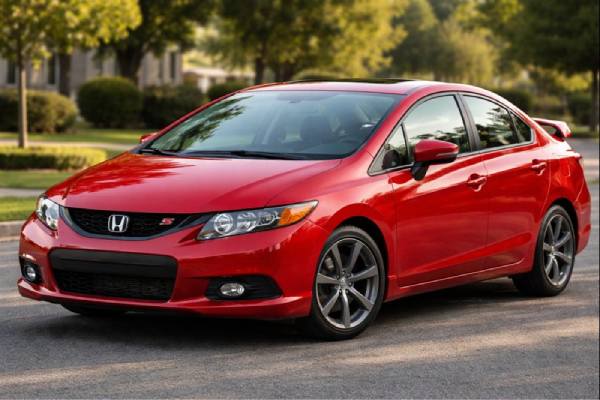
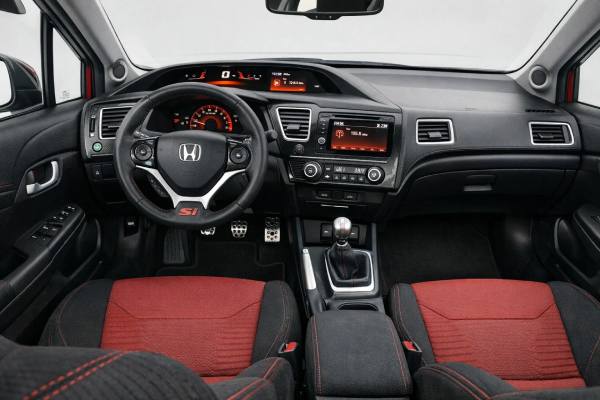
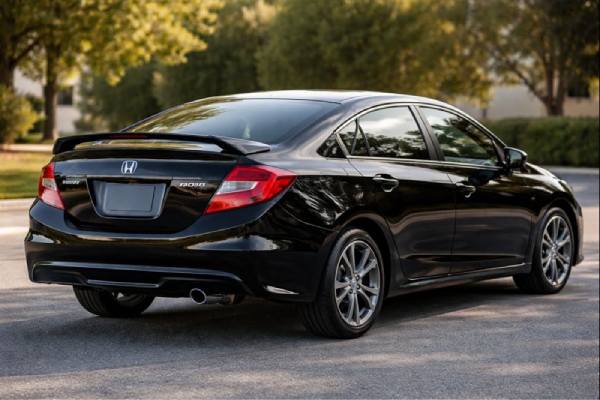
The Honda Civic Si FB6 coupe, produced for the 2012 and 2013 model years, represents one of the last naturally aspirated, manual-only sport compacts from Honda before turbocharging became the norm. Built on the ninth-generation Civic platform, the FB6 combines the lighter, two-door body style with the torque-rich K24Z7 2.4-liter engine and a chassis tuned specifically for enthusiastic driving. The result is a car that feels more focused than the Si sedan while retaining everyday practicality.
What defines the FB6 is accessibility. The engine’s broad torque curve reduces the need for constant high revs, making the car enjoyable on real roads rather than only on track. A standard helical limited-slip differential, sport-tuned suspension, and close-ratio six-speed manual transmission reinforce its driver-first character. Ownership, however, requires attention to maintenance, especially for drivers who push the car hard.
This article provides a complete, owner-oriented breakdown of the Civic Si FB6, covering its engineering, specifications, real-world performance, reliability record, maintenance needs, safety profile, and how it compares with key rivals from the same era.
Owner Snapshot
- Naturally aspirated K-series engine delivers strong midrange torque and high-rev character.
- Standard limited-slip differential improves traction during spirited driving.
- Coupe body is lighter and slightly more agile than the Si sedan.
- Clutch and transmission wear accelerate with aggressive driving.
- Manual transmission fluid service is recommended every 60,000 km (37,000 mi).
On this page
- Detailed overview
- Specifications and technical data
- Trims, options, and safety
- Reliability and common issues
- Maintenance and buyer’s guide
- Driving and performance
- How it compares to rivals
Detailed overview
The Civic Si FB6 is best described as a focused evolution of Honda’s long-running sport-compact formula. By the early 2010s, emissions regulations and buyer expectations were shifting, yet Honda chose to retain a naturally aspirated engine and a manual-only drivetrain for the Si. In the FB6 coupe, this decision results in a car that emphasizes mechanical engagement over outright numbers.
The K24Z7 engine defines the experience. With increased displacement over earlier Si engines, it produces more torque at lower engine speeds, making the car easier to drive briskly in daily conditions. This change sacrifices some of the ultra-high-rev drama of older K20-powered models, but it improves flexibility and real-world pace. Variable valve timing allows the engine to maintain a dual personality: calm and tractable at low rpm, then more aggressive as revs climb.
Chassis tuning distinguishes the Si from standard Civic coupes. Springs and dampers are firmer, anti-roll bars are thicker, and steering calibration is more direct. Combined with the coupe’s slightly lower weight, these changes give the FB6 a sharper turn-in and more immediate responses than the sedan variant. The helical limited-slip differential plays a critical role, helping the front wheels put power down cleanly when exiting corners.
From an ownership perspective, the FB6 appeals to drivers who value simplicity and durability. There are no turbochargers, adaptive dampers, or complex electronics to manage. However, this simplicity does not eliminate responsibility. The car rewards careful maintenance and punishes neglect, particularly when driven hard or modified without proper supporting upgrades.
Specifications and technical data
Powertrain and efficiency
| Item | Specification |
|---|---|
| Engine code | K24Z7 |
| Engine layout | Inline-4 |
| Valvetrain | DOHC i-VTEC |
| Valves per cylinder | 4 |
| Bore × stroke | 87.0 × 99.0 mm |
| Displacement | 2.4 L (2,354 cc) |
| Induction | Naturally aspirated |
| Fuel system | Multi-point fuel injection |
| Compression ratio | 11.0:1 |
| Max power | 201 hp (150 kW) @ ~7,000 rpm |
| Max torque | 234 Nm (173 lb-ft) @ ~4,400 rpm |
| Timing drive | Chain |
| Rated efficiency | ~8.8 L/100 km (27 mpg US / 32 mpg UK) |
| Real-world highway @ 120 km/h | ~7.9–8.3 L/100 km |
| Aerodynamics | Cd ~0.28 |
Transmission and driveline
| Item | Specification |
|---|---|
| Transmission | 6-speed manual |
| Drive type | Front-wheel drive |
| Differential | Helical limited-slip |
Chassis and dimensions
| Item | Specification |
|---|---|
| Front suspension | MacPherson strut |
| Rear suspension | Multi-link |
| Steering | Electric power assist |
| Brakes | Disc front / disc rear |
| Wheels and tyres | 215/45 R17 |
| Length | ~4,470 mm |
| Width | ~1,770 mm |
| Height | ~1,415 mm |
| Wheelbase | 2,670 mm |
| Turning circle | ~10.8 m |
| Kerb weight | ~1,300 kg |
| Fuel tank | ~50 L |
| Cargo volume | ~340 L (VDA) |
Performance and capability
| Metric | Value |
|---|---|
| 0–100 km/h | ~6.4 s |
| Top speed | ~235 km/h |
| Braking 100–0 km/h | ~36 m |
| Towing capacity | Not rated |
| Payload | ~400 kg |
Trims, options, and safety
The Civic Si FB6 was offered as a single, clearly defined trim level, simplifying both purchasing and ownership. Honda’s approach was to include all performance-critical hardware as standard equipment, ensuring that every FB6 delivered the same driving experience regardless of market.
Standard features include sport seats with pronounced bolstering, aluminum pedals, a leather-wrapped steering wheel, and Si-specific instrumentation with a higher redline. Exterior details such as unique alloy wheels, subtle aerodynamic aids, and Si badging distinguish the coupe from regular Civic models without excessive styling elements.
Safety equipment mirrors that of the broader ninth-generation Civic lineup. Multiple airbags, electronic stability control, traction control, and anti-lock braking systems are standard. Child-seat anchor points are fitted, although rear-seat access is more limited due to the coupe body style. Advanced driver-assistance systems were minimal during this period, but braking performance and structural rigidity remain strong by early-2010s standards.
There were no significant mechanical changes between the 2012 and 2013 model years. As a result, vehicle condition, mileage, and service history matter far more than production year when evaluating a used FB6.
Reliability and common issues
Overall reliability of the Civic Si FB6 is solid, but usage patterns heavily influence long-term outcomes.
Common issues
- Premature clutch wear in aggressively driven cars.
- Front suspension bushing and ball joint wear due to stiffer factory tuning.
Occasional issues
- Manual transmission synchro wear from repeated high-rpm shifts.
- Engine mount degradation leading to vibration at idle or during acceleration.
Rare issues
- Timing chain noise or stretch linked to extended oil change intervals.
The K24Z7 engine itself is robust and tolerant of spirited use when properly maintained. Most expensive repairs can be traced to oil neglect, overheating, or poorly executed aftermarket modifications rather than inherent design flaws.
Maintenance and buyer’s guide
Core maintenance schedule
- Engine oil: Full synthetic, every 8,000–10,000 km or annually.
- Transmission fluid: Replace every 60,000 km.
- Brake fluid: Every 2–3 years.
- Coolant: Replace per manufacturer interval; monitor closely if tracked.
- Valve clearance: Inspect around 160,000 km.
Buyer inspection checklist
- Assess clutch engagement and pedal feel.
- Check for transmission grinding during fast shifts.
- Inspect suspension for excessive play or noise.
- Review service records for oil change consistency.
Unmodified or lightly modified examples with documented maintenance are typically the most reliable long-term purchases.
Driving and performance
On the road, the Civic Si FB6 feels purposeful and cohesive. Steering response is quick, with good feedback for an electric system of this era. Body control is firm but not punishing, allowing the car to remain comfortable enough for daily commuting while excelling on winding roads.
The K24Z7 engine delivers its strongest appeal in the midrange, making passing and corner exits effortless. While it lacks the explosive top-end of turbocharged rivals, throttle response is immediate and predictable. The limited-slip differential significantly improves traction, especially in wet or uneven conditions.
Cabin noise levels are higher than in standard Civics, largely due to performance tyres and firmer suspension, but remain acceptable for long trips. Fuel economy is reasonable for a performance-oriented compact, though spirited driving quickly increases consumption.
How it compares to rivals
Compared with rivals such as the Volkswagen GTI, Subaru BRZ, and Hyundai Veloster Turbo, the Civic Si FB6 emphasizes mechanical simplicity and driver involvement. Turbocharged competitors offer stronger straight-line acceleration, but the Honda counters with reliability, predictable handling, and a more analog driving experience. For enthusiasts who value long-term ownership and a naturally aspirated character, the FB6 remains a compelling choice.
References
- 2012 Honda Civic Si Specifications and Features 2012 (Manufacturer Specifications)
- 2012 Honda Civic 2-door coupe 2012 (Safety Rating)
- 2013 Honda Civic 2013 (Official Fuel Economy)
Disclaimer
This article is for informational purposes only and does not replace professional diagnosis or repair. Specifications, torque values, service intervals, and procedures vary by VIN, market, and equipment. Always verify details using official Honda service documentation. If you found this guide helpful, please consider sharing it on your preferred social platforms to support our work.