
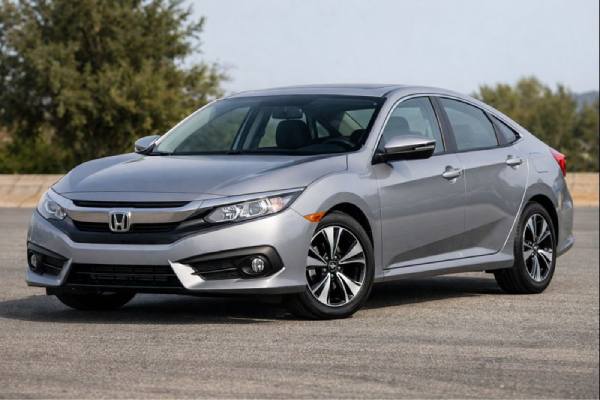
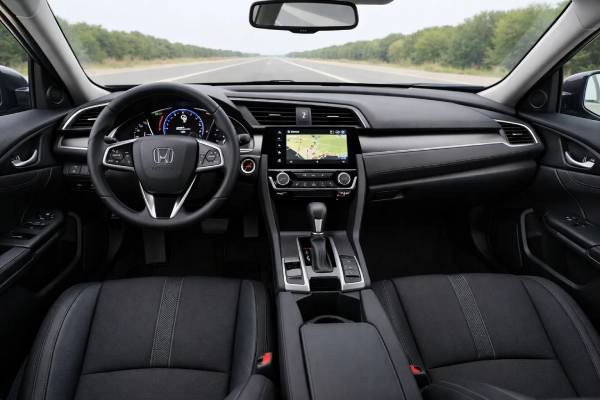
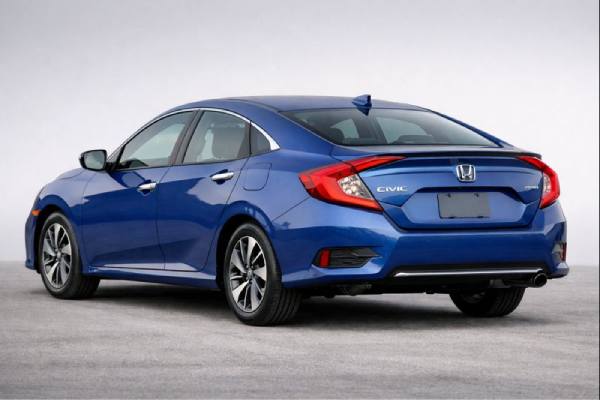
The 10th-gen Honda Civic FC1 with the L15B7 1.5-liter turbo is the “smart fast” choice in the Civic range: it delivers strong mid-range torque and easy highway pace without the running costs of a full performance model. This engine uses direct injection and a small turbocharger to make usable boost early, so the car feels responsive in normal driving even when you are not chasing high rpm. Just as important, the FC1 platform is light, rigid, and predictable, which helps ride quality and braking confidence even on basic trims.
Ownership is typically straightforward, but the details matter more than usual on this generation: service history, software updates, and climate (short trips in cold weather) can influence how cleanly the 1.5T runs over time. Choose well, maintain it consistently, and it can be an efficient long-term daily driver.
Quick Specs and Notes
- Strong low-to-mid rpm pull for its size, especially on highway merges and overtakes.
- Efficient at steady speeds; many owners see low-6 L/100 km range on open roads with a light foot.
- Comfortable chassis balance: stable at speed, with steering that stays consistent in corners.
- Watch for 1.5T oil-dilution history (software updates and oil-change habits matter most in short-trip use).
- Plan oil and filter service about every 10,000–12,000 km (6,000–7,500 mi) or 12 months, depending on driving conditions and the maintenance minder.
Navigate this guide
- FC1 1.5T design highlights
- L15B7 specs and dimensions
- Trims, options, and safety equipment
- Reliability issues and service actions
- Maintenance plan and buying tips
- Driving character and real economy
- How it stacks up against rivals
FC1 1.5T design highlights
The FC1 Civic 1.5T was designed around a simple idea: make a compact car feel “bigger” on the road without making it heavier or more expensive to run. The chassis is noticeably rigid for the class, which helps two things owners feel immediately—fewer squeaks and rattles over broken pavement, and a calm, planted response in quick lane changes. Honda also tuned the suspension for broad capability rather than a single “sport” personality. On smaller wheels and taller sidewalls, the car rides with a mature, controlled motion. On larger wheels, it looks sharper and turns in more crisply, but it becomes more sensitive to tire quality and alignment.
The L15B7 engine is a big part of the experience. It is a 1.5-liter inline-four with direct injection and a turbocharger. Instead of chasing peak horsepower, the calibration focuses on early torque. That means the Civic feels lively at everyday rpm, especially in the 2,000–4,500 rpm band where drivers spend most of their time. It also means gearing and transmission choice matter. Many FC1 cars were sold with a CVT (continuously variable transmission) for efficiency and smoothness, and some markets or trims offered a 6-speed manual. So if you have been seeing “manual only” writeups, that is not because the model cannot be automatic—it is because certain trims, regions, or enthusiast-focused versions are more commonly discussed. In normal passenger trims, automatic (CVT) availability is typical.
As an ownership proposition, the FC1 1.5T is at its best when it is treated like a modern turbo engine: quality oil, sensible warm-up behavior, and consistent maintenance. Do that, and you get a compact car that feels quick enough, quiet enough, and efficient enough to cover most real-world use cases with little drama.
L15B7 specs and dimensions
The figures below reflect the FC1 Civic 1.5T rated at 174 hp. Exact outputs and some dimensions can vary by market, body style (sedan vs hatch), wheel and brake package, and emissions calibration. Use the tables as a high-confidence baseline, then confirm the exact values by VIN where possible.
Powertrain and efficiency (L15B7 1.5T, 174 hp tune)
| Item | Specification |
|---|---|
| Code | L15B7 |
| Layout | Inline-4, DOHC, 16 valves (4/cyl) |
| Displacement | 1.5 L (1,498 cc) |
| Bore × stroke | 73.0 × 89.4 mm (2.87 × 3.52 in) |
| Induction | Turbocharged (intercooled), NA equivalent behavior at cruise |
| Fuel system | Direct injection (DI) |
| Compression ratio | ~10.3:1 (varies by calibration) |
| Max power | 174 hp (130 kW) @ ~6,000 rpm |
| Max torque | ~220 Nm (162 lb-ft) @ ~1,700–5,500 rpm |
| Timing drive | Chain |
| Rated efficiency (typical) | ~6.5–7.1 L/100 km combined (36–40 mpg US equivalent, market-dependent) |
| Real-world highway @ 120 km/h | Often ~5.8–6.6 L/100 km (36–41 mpg US) with steady throttle |
| Aerodynamics (typical) | Cd ~0.27–0.29 (trim and body-style dependent) |
Transmission and driveline
| Item | Specification |
|---|---|
| Transmission options | CVT (common) or 6-speed manual (market/trim dependent) |
| Drive type | FWD |
| Differential | Open (most trims), traction control via brakes |
Chassis and dimensions (typical FC1 sedan baseline)
| Item | Specification |
|---|---|
| Suspension (front / rear) | MacPherson strut / Multi-link |
| Steering | Electric power steering (EPS) |
| Brakes (front / rear) | 4-wheel discs (sizes vary by trim) |
| Wheels/tyres (common) | 215/55 R16, 215/50 R17, or similar |
| Length / width / height (typical) | ~4,630–4,660 / 1,800 / 1,415 mm (182–184 / 71 / 56 in) |
| Wheelbase | ~2,700 mm (106.3 in) |
| Turning circle (kerb-to-kerb) | ~11.0 m (36 ft) |
| Kerb weight (typical) | ~1,270–1,360 kg (2,800–3,000 lb) |
| Fuel tank | ~47 L (12.4 US gal / 10.3 UK gal) |
| Cargo volume (sedan, typical) | ~420–430 L (about 15 ft³), method varies |
Fluids and service capacities (typical; verify by VIN)
| Item | Specification |
|---|---|
| Engine oil | 0W-20 (GF-5/GF-6 type), ~3.7 L (3.9 US qt) with filter |
| Coolant | Honda Type 2 equivalent, 50/50 premix (capacity varies by system) |
| CVT fluid | Honda HCF-2 (capacity varies; drain and fill is less than dry fill) |
| Brake fluid | DOT 3 / DOT 4 equivalent (market dependent) |
| A/C refrigerant | R-1234yf on many late models; some markets use R-134a (verify under-hood label) |
Key point: the Civic’s spec sheet looks simple, but the real ownership differences come from transmission choice (CVT vs manual), wheel/tire package, and whether the car’s service history shows regular oil changes and completed updates.
Trims, options, and safety equipment
Because “FC1” gets used broadly in listings, the cleanest way to understand trims is to focus on functional differences: transmission availability, wheels/tires, brakes, headlights, and driver-assistance hardware.
Trims and options that change how the car drives
- Transmission: Many 1.5T Civics are paired with a CVT, tuned for low rpm cruising and smooth acceleration. A 6-speed manual exists in certain trims and markets, and it changes the experience—more engagement, clearer engine-braking control, and often slightly different gearing feel on hills. If your goal is commuting and efficiency, the CVT is usually the better match. If you prioritize driver control, the manual can feel more natural, especially in rolling terrain.
- Wheel and tire packages: Moving from 16-inch to 17- or 18-inch wheels usually brings sharper turn-in but higher sensitivity to tire quality, road noise, and alignment. For long-term comfort and fewer bent wheels, smaller diameters with quality tires are the safer choice.
- Headlights: Halogen vs LED matters for both visibility and (in some regions) safety-test equipment scoring. If you drive rural roads, prioritize the best headlight package available for your market.
- Infotainment: Early cars can have slower head units and more frequent connectivity complaints. Later updates and newer hardware generally improve stability, but verify function during the test drive (Bluetooth, USB, camera, and steering-wheel controls).
Safety ratings (what they mean in practice)
On safety, the FC1 generation generally tests well for structure and restraint performance, but ratings can depend on test year and equipment. Euro NCAP results for the Civic generation show a strong overall score with solid adult occupant protection and good crash structure behavior. IIHS scores also tend to be strong in core crashworthiness, while headlight performance can vary widely by trim, which matters for night-driving confidence as much as for ratings.
Safety systems and ADAS availability
- Core systems: ABS, stability control, and multiple airbags are standard in most markets on this generation.
- ADAS (driver assistance): Availability varies by year and trim. Common features include forward collision warning, automatic emergency braking, lane keeping assistance, and adaptive cruise control on better-equipped versions. If you want these features, confirm by checking the camera/radar hardware and the exact option list—do not assume “Civic” automatically means the same package across years.
- Calibration after repairs: Windshield replacement, front bumper work, and alignment can require camera/radar calibration on ADAS-equipped cars. Budget for correct calibration, because it affects safety features and warning lights.
Bottom line: in the FC1 1.5T, “trim” is less about cosmetics and more about transmission, headlights, and safety tech—things you will notice every day.
Reliability issues and service actions
The FC1 1.5T can be a reliable long-term car, but it has a few well-known patterns. Think of them in three buckets: common annoyances, occasional repair items, and rare but expensive outcomes.
Common (usually low to medium cost)
- Oil dilution concerns (short-trip, cold climate exposure):
Symptoms: rising oil level, fuel smell on dipstick, rougher cold starts.
Likely cause: repeated short trips where the engine does not fully warm, combined with direct-injection and enrichment strategy.
Remedy: confirm any applicable software updates were completed, shorten oil intervals for severe use, and prioritize longer warm runs when possible. If you buy used, check service history for frequent oil changes and correct oil grade. - A/C performance faults:
Symptoms: weak cooling, intermittent cold air, or loss of refrigerant over time.
Likely cause: system leaks or component wear (varies by year and market).
Remedy: proper leak detection and repair, then correct refrigerant type and charge by specification.
Occasional (medium cost, more likely with mileage)
- Direct injection deposits (intake valve carbon):
Symptoms: slightly rough idle, reduced response, or misfire codes at higher mileage.
Likely cause: DI does not wash intake valves with fuel.
Remedy: periodic induction cleaning if symptoms develop; avoid unnecessary “preventive” services if the engine runs cleanly. - CVT behavior complaints (if equipped):
Symptoms: droning under acceleration, shudder on take-off, or delayed response.
Likely cause: fluid condition, adaptation state, or wear patterns.
Remedy: correct CVT fluid service (use the specified fluid), ensure updates are applied where relevant, and test drive thoroughly from cold.
Rare (higher cost, usually tied to neglect or extreme use)
- Turbocharger and boost control faults:
Symptoms: persistent under-boost codes, rattling wastegate, or limp mode.
Likely cause: actuator wear, carbon, or component aging.
Remedy: diagnose boost control system properly—many “turbo” complaints are sensors, leaks, or control issues rather than a failed turbo.
Recalls, TSBs, and extended coverage
Because recall and service campaign coverage varies by country and model year, treat this as a required step rather than a nice-to-have: run a VIN check using official databases and confirm completion with dealer records. For used purchases, ask for printed proof of recall completion and any software updates that affect drivability, emissions readiness, or powertrain behavior.
Pre-purchase checks to request
- Full service history (oil intervals and correct oil grade matter on the 1.5T).
- Proof of completed recalls and software updates.
- Cold start test (listen for abnormal noises and watch idle stability).
- A/C function check (steady vent temperature, no cycling oddities).
- Transmission behavior check from cold (CVT smoothness or manual clutch take-up).
Maintenance plan and buying tips
A practical maintenance plan for the FC1 1.5T is about protecting three systems: the turbocharged engine (oil quality and temperature control), the transmission (especially CVT fluid condition), and the brakes and suspension (alignment and fluid condition). Always follow your market’s official schedule where available, but the outline below matches what works well in real ownership.
Routine schedule (distance or time, whichever comes first)
- Engine oil and filter: every 10,000–12,000 km (6,000–7,500 mi) or 12 months; shorten to 7,000–8,000 km (4,000–5,000 mi) for repeated short trips, cold climates, or heavy traffic.
- Tire rotation and inspection: every 10,000–12,000 km; check inner shoulder wear and keep alignment in spec.
- Cabin air filter: every 20,000–30,000 km (or yearly if you drive dusty roads).
- Engine air filter: typically 30,000–45,000 km, sooner in dust.
- Brake fluid: about every 3 years, regardless of mileage (moisture absorption is time-driven).
- Spark plugs: around 160,000 km (100,000 mi) on many schedules, but inspect earlier if you have misfire codes or modified boost targets.
- Coolant: often long-life (first change can be many years), but confirm your market interval; do not “guess and flush” without cause.
- CVT fluid (if equipped): service commonly lands in the 40,000–60,000 km range depending on use; earlier if you drive hills, heat, or heavy traffic.
- Manual transmission fluid (if equipped): consider service around 60,000–100,000 km, especially if shift feel degrades.
Timing components
The L15B7 uses a timing chain, not a belt. Chains are not “lifetime” in the real world, but they typically last a long time when oil is changed correctly. What to watch for is chain noise at cold start, correlation fault codes, or evidence of oil neglect.
Buyer’s guide: what to seek and what to avoid
- Seek: cars with documented oil changes, a clean recall history, and a calm cold start. A well-maintained CVT car can be an excellent commuter; a well-maintained manual car can be more engaging and simpler long term.
- Be cautious with: cars that lived on short trips in cold climates with long oil intervals, cars with unresolved A/C issues, or cars with a “tuned” powertrain but no proof of supporting maintenance.
- Inspection checklist:
- Look for oil level consistency and clean service records.
- Check for coolant staining, seepage, or sweet smells after a drive.
- Confirm all electronics work (camera, infotainment, sensors).
- Road test over rough pavement for suspension knocks or loose feel.
- Verify tire wear pattern and steering wheel centering (alignment tells a story).
Long-term durability outlook: the FC1 1.5T rewards consistent maintenance more than older naturally aspirated Civics, but it can still be a very sensible long-term car when bought carefully.
Driving character and real economy
From behind the wheel, the FC1 1.5T feels “torque-first.” You do not need to rev it hard to make progress. Around town, it steps off cleanly with light throttle, and on highway ramps it builds speed without the strained sound common to older small-displacement engines. The steering is light at parking speeds and gains weight naturally as speed rises; it is not an old-school hydraulic feel, but it is predictable and easy to place. Braking feel is generally consistent, with good stability in repeated stops when the brake hardware and tires are in good condition.
Ride, handling, and NVH (noise, vibration, harshness)
- Ride: controlled, with a firm edge on larger wheel packages. A good tire choice can noticeably reduce harshness and road noise.
- Handling: neutral and confidence-inspiring. The rear multi-link suspension helps stability mid-corner, especially in wet conditions.
- Highway noise: generally competitive for the class; wind noise is modest, while tire noise depends heavily on tire brand and tread pattern.
Powertrain character and transmission feel
- CVT: smooth and efficient. It can hold rpm under load (which some drivers interpret as “drone”), but it typically delivers strong real-world pace because the engine stays in its torque band. In daily use, it is easy to live with.
- 6-speed manual (where fitted): gives more direct control of boost and engine braking. It can feel more natural on hills or in spirited driving, and it removes the CVT’s load-holding sound. Clutch condition matters on used examples; test for smooth take-up and consistent engagement point.
Real-world efficiency
- City: often 7.5–9.0 L/100 km (26–31 mpg US) depending on traffic and warm-up cycles.
- Highway (100–120 km/h): frequently 5.8–6.6 L/100 km (36–41 mpg US) with steady throttle.
- Mixed: typically 6.5–7.5 L/100 km (31–36 mpg US) for many drivers.
Cold weather and short trips are the biggest swing factors. If you do repeated short runs where the engine never stabilizes at temperature, expect higher consumption and treat oil service as “severe use.”
Selective performance metrics (typical)
- 0–100 km/h (0–62 mph): commonly in the 7–8 second range depending on transmission, tires, and conditions.
- Passing response: strong for the segment because torque arrives early; the CVT helps by keeping the engine in the boost band.
Overall, the FC1 1.5T is less about headline numbers and more about how effortlessly it covers daily driving—quick enough to feel confident, efficient enough to justify, and refined enough to keep for years.
How it stacks up against rivals
The FC1 Civic 1.5T sits in a crowded field, so the best comparison is by “use case” rather than brand loyalty.
Versus Toyota Corolla (1.8 / 2.0, similar years)
- Civic advantage: stronger mid-range torque (especially at highway speeds), and a more “grown-up” chassis feel in fast transitions.
- Corolla advantage: typically simpler naturally aspirated powertrains in many trims, which can mean fewer turbo-specific concerns over very long ownership.
- Decision tip: choose Civic if you value passing power and a stable feel at speed; choose Corolla if your top priority is straightforward long-term simplicity.
Versus Mazda3 (2.0 / 2.5)
- Civic advantage: often better highway fuel economy in comparable real use, and more rear passenger space in many body styles.
- Mazda3 advantage: premium cabin feel and often stronger naturally aspirated response without turbo complexity (depending on engine).
- Decision tip: Civic for balanced practicality and efficiency; Mazda3 for interior feel and steering/cabin “premium” character.
Versus VW Jetta (1.4T / 1.5T)
- Civic advantage: typically sharper chassis response and strong safety-test performance with the right equipment.
- Jetta advantage: relaxed highway demeanor and strong torque in many trims; maintenance approach depends heavily on service discipline.
- Decision tip: pick the one with the clearest maintenance history—both reward correct fluids and proper service intervals.
Versus Hyundai Elantra (1.6T / 2.0, similar era)
- Civic advantage: platform polish and a powertrain that feels efficient and strong at real speeds.
- Elantra advantage: value and features per dollar can be compelling depending on market.
- Decision tip: compare specific trim equipment (headlights, safety tech, wheels) and prioritize the better-kept example.
In short, the FC1 Civic 1.5T wins when you want an efficient compact that still feels confident and quick in normal driving. It is less ideal if you want the absolute simplest powertrain possible and you know you will do lots of short, cold trips with long service intervals.
References
- Honda Civic 4-door sedan 2017 (Safety Rating)
- Honda Civic (reassessment) 2017 (Safety Rating)
- 2016 HONDA CIVIC 4 DR FWD 2016 (Recall Database and Ratings)
- Find and Compare Cars 2016 (Fuel Economy Data)
Disclaimer
This article is for informational purposes only and is not a substitute for professional diagnosis, inspection, or repair. Specifications, torque values, service intervals, and procedures can vary by VIN, market, model year, and equipment. Always verify details using official service information for your exact vehicle and follow the manufacturer’s maintenance guidance.
If this guide helped, please consider sharing it on Facebook, X (Twitter), or your favorite forum or group—sharing supports our work and helps other owners find reliable information.