
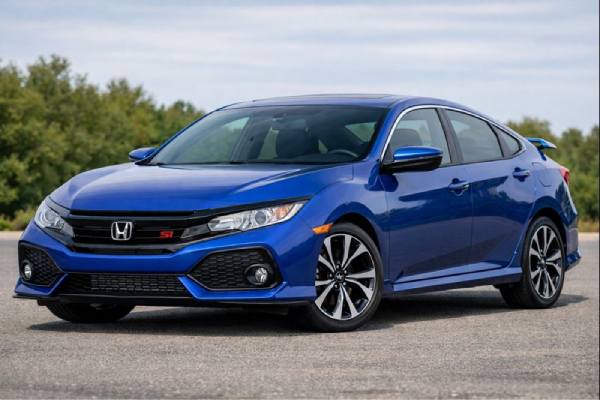
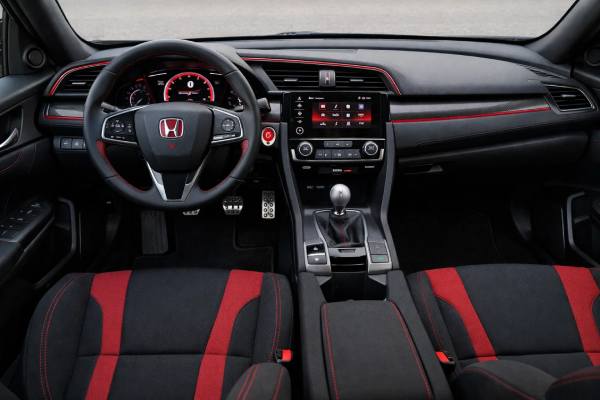
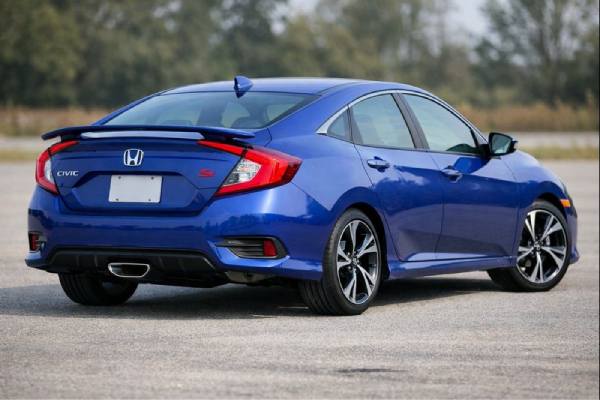
The 10th-gen Honda Civic Si (FC3) is one of the rare modern sport compacts that stays honest: light(ish), front-drive, and built around a driver-focused manual gearbox. Its L15B7 1.5-liter turbo four isn’t about big peak numbers as much as usable midrange torque, and the factory limited-slip differential (LSD) helps it put power down cleanly when the road gets bumpy or wet. Owners typically choose the Si for its balanced chassis, strong aftermarket support, and daily comfort that doesn’t punish you on long commutes.
The tradeoffs are equally clear. Because the Si is tuned and geared for engagement, consumables (tires, brakes, clutch) can wear faster if driven hard, and the turbocharged 1.5T family rewards disciplined oil and cooling-system care. If you’re wondering why so many writeups mention “manual speeds,” this model is a big reason: in most markets for these years, the Civic Si is manual-only.
Owner Snapshot
- Excellent balance and steering feel for the price, with a standard limited-slip differential that genuinely helps in corners.
- Strong real-world pull from low rpm for a 1.5T, making it easy to drive quickly without constant downshifts.
- Practical daily usability (visibility, cabin space, efficiency) compared with many hotter rivals.
- Plan for faster wear on front tires and clutch if the car was driven aggressively or tuned.
- Change engine oil at least every 12 months (or sooner with short trips), even if the maintenance minder hasn’t requested it.
Navigate this guide
- Civic Si FC3 in focus
- Specs and service data
- Si equipment and safety kit
- Common faults and recalls
- Maintenance schedule and buying tips
- How it drives day to day
- Civic Si FC3 against competitors
Civic Si FC3 in focus
Honda’s Civic Si has traditionally aimed for “fast where it matters” rather than headline horsepower. In 2017–2020 form, that philosophy shows up in three places: gearing, traction, and chassis tuning. The 1.5-liter turbo L15B7 makes its best impression in everyday driving—rolling from 2,000 rpm, building boost quickly, and staying flexible enough that you can leave it in a higher gear without the engine feeling asleep. It’s not a high-revving, naturally aspirated drama machine, but it is quick and composed in the real world.
Why the Si is manual-focused
If you’re comparing specs across Civics, you’ll notice a lot of “6-speed manual” references. That’s not because writers forgot automatics exist; it’s because the Si trim is typically sold as a manual-only package in these years. Honda designed the Si’s personality around the clutch pedal: shorter gearing, a precise shifter, and throttle mapping that makes heel-and-toe downshifts intuitive. That decision also simplifies the platform—no CVT programming, no torque converter heat management—and it’s part of why the Si still feels cohesive.
Key engineering highlights
- Standard limited-slip differential (LSD): This is a major difference versus regular Civics. It reduces inside-wheel spin exiting corners and improves stability under power on uneven pavement.
- Sport suspension tuning: Spring and damper rates are firmer than non-Si trims, but the car stays livable if the suspension is healthy and the tires aren’t overinflated.
- Turbo torque strategy: The engine is tuned for midrange response, so it feels “bigger than 1.5” at part throttle, especially in 3rd and 4th gear.
- Cooling and intake packaging: Like many modern turbo fours, it relies on good airflow and clean heat exchangers. A neglected radiator or intercooler can dull performance and raise long-term stress.
Ownership profile
A well-kept FC3 Si is usually a reliable daily with a sporty edge—provided it wasn’t treated like a track toy without track-grade maintenance. These cars are also popular targets for tunes, intakes, downpipes, and clutch upgrades. That isn’t automatically bad, but it does change what “normal wear” looks like. The best examples tend to be lightly modified (or stock), with consistent oil changes and evidence that the owner didn’t treat the drivetrain like an on/off switch.
If your intent is simple: a fun commuter that still feels special on an empty on-ramp, the FC3 Si is at its best when kept close to factory calibration and maintained like a turbo car—warm it up gently, let it cool down after hard runs, and treat oil quality as cheap insurance.
Specs and service data
Below is a practical spec sheet aimed at owners and shoppers. Values can vary by market, body style, wheel/tire package, and test standard—so treat them as a baseline and verify against the door-jamb sticker and official documentation for your VIN.
Powertrain and efficiency
| Item | Specification |
|---|---|
| Engine code | L15B7 |
| Layout | Inline-4, aluminum block/head |
| Valvetrain | DOHC, 16 valves (4 valves/cyl) |
| Induction | Turbocharged (single turbo) |
| Fuel system | Direct injection |
| Displacement | 1.5 L (1498 cc) |
| Bore × stroke | ~73.0 × 89.4 mm (~2.87 × 3.52 in) |
| Compression ratio | ~10.3:1 (varies by calibration/market) |
| Max power | 205 hp (153 kW) @ ~5,700 rpm (typical spec) |
| Max torque | ~260 Nm (~192 lb-ft) @ ~2,100–5,000 rpm (typical spec) |
| Timing drive | Chain |
| Rated efficiency | Typically ~6.9–7.8 L/100 km combined (varies by test standard) |
| Real-world highway @ 120 km/h | Commonly ~6.5–7.5 L/100 km if stock and aligned |
| Aerodynamics | Cd varies by body style/trim; confirm by model data sheet |
Transmission and driveline
| Item | Specification |
|---|---|
| Transmission | 6-speed manual |
| Drive type | FWD |
| Differential | Helical limited-slip differential (LSD) |
Chassis, brakes, wheels, and dimensions
| Item | Specification (typical) |
|---|---|
| Front suspension | MacPherson strut |
| Rear suspension | Multi-link |
| Steering | Electric power steering |
| Brakes | 4-wheel disc (sizes vary by market) |
| Wheels/tires | Often 235/40 R18 (market-dependent) |
| Ground clearance | Varies by market; typically ~130–140 mm class |
| Length / width / height | Varies by body style (sedan vs coupe) and market |
| Wheelbase | ~2,700 mm (~106.3 in) class (10th-gen Civic platform) |
| Turning circle | Typically ~11 m class (varies by tire and alignment) |
| Kerb weight | Often ~1,330–1,380 kg (2,930–3,040 lb) depending on body/market |
| Fuel tank | Typically ~46–47 L (12.2–12.4 US gal) |
Performance and capability
| Metric | Typical real-world range (stock) |
|---|---|
| 0–100 km/h (0–62 mph) | ~6.5–7.0 s (conditions and tires matter) |
| Top speed | ~215–225 km/h (~134–140 mph) depending on gearing/market |
| Braking 100–0 km/h | Commonly ~35–40 m on quality tires |
| Towing / payload | Usually not rated for towing in many markets; check local rating |
Fluids, service capacities, and key torque checks
Capacities and torque values vary by market and service procedure; use these as “what to ask for” when planning service.
| System | What to specify at service |
|---|---|
| Engine oil | Use the exact Honda spec for your market; many are 0W-20 class; turbo engines benefit from high-quality oil and correct interval discipline |
| Coolant | Honda long-life coolant spec; correct mix ratio per climate |
| Manual transmission fluid | Honda MTF spec (or approved equivalent); verify fill quantity by service manual |
| Brake fluid | DOT 3 / DOT 4 per market spec; prioritize regular flush intervals |
| A/C refrigerant | Type and charge depend on year/market (R-134a vs R-1234yf in some regions) |
| Critical torque checks | Wheel lug torque; brake caliper bracket bolts; suspension pinch bolts—verify exact values for your VIN |
Safety and driver assistance (high-level)
| Category | What to confirm on the car you’re viewing |
|---|---|
| Airbags | Front, side, and curtain airbags are typical; confirm count/placement by market |
| Stability systems | ABS, ESC, traction control are standard in most markets |
| ADAS | Availability varies widely; some markets/years offered Honda Sensing features more broadly than others |
Si equipment and safety kit
The Civic Si is less about “luxury trim” and more about functional hardware. When you’re shopping, the smartest approach is to treat the Si as a package of mechanical advantages first—LSD, brakes, wheels/tires, gearing—and then confirm the comfort and safety equipment that matters to you.
Trims and identifiers
Depending on region, the Si may be offered as a sedan (FC3) and, in some markets, a coupe variant with closely related equipment. Quick identifiers often include Si badging, larger wheels, sport seats, and a more aggressive exhaust outlet layout. Inside, look for a sport-oriented steering wheel, supportive front seats, and a factory shift knob that feels purposeful rather than decorative.
If you’re trying to confirm you’re looking at a true Si (and not an appearance package), prioritize these checks:
- LSD behavior: In a slow, tight turn on dry pavement, a proper LSD car tends to pull more cleanly with less inside-wheel flare.
- Brake hardware: Si trims typically have larger front brakes than base models.
- VIN/build data: A dealer or Honda parts catalog lookup by VIN is the cleanest verification method.
Options that actually change the experience
For an Si, “options” that matter tend to be about tires, wheels, and infotainment rather than drivetrain. Two cars with identical power can feel completely different if one is on tired all-seasons and the other is on fresh summer tires with correct alignment.
What to pay attention to:
- Tire type and age: Old or mismatched tires will make the car feel nervous, reduce braking performance, and hide the chassis’s real balance.
- Alignment history: Excessive toe-out or aggressive camber can cause inside-edge tire wear and tramlining.
- Brake pad choice: Track-oriented pads can squeal and dust heavily, while cheap pads can overheat and fade.
Safety ratings and what they mean in practice
Safety ratings depend on body style, test protocol, and year-specific equipment. A “good” rating in one test doesn’t mean the exact same protection in all crashes; it indicates performance in defined scenarios. For the Civic platform, structural integrity is generally a strong point, but headlight performance and driver-assistance availability can swing the real-world outcome at night or in poor weather.
ADAS and calibration considerations
If the Si you’re considering has forward-facing camera or radar-based systems (market dependent), know that:
- Windshield replacement can require camera recalibration.
- Front-end repairs can misalign sensors and trigger warning lights.
- Aftermarket suspension changes can alter the way the car behaves in stability-control interventions.
When you test drive, ensure there are no persistent warning lights, and verify that any lane/forward-collision systems (if fitted) initialize normally after startup.
Common faults and recalls
The FC3 Si’s core hardware is solid, but it sits in the real world—short trips, heat cycles, potholes, modified tunes—where patterns appear. Below is a practical map of issues by prevalence and cost tier.
Common (watch closely)
- A/C system problems (medium to high cost): Many 10th-gen Civics are known for A/C components that can fail earlier than expected. Symptoms include weak cooling, intermittent cooling, or oily residue at condenser/compressor connections. Remedy varies from seals to condenser or compressor replacement.
- Clutch wear and glazing (medium cost): The Si invites spirited driving, and some cars see early clutch wear—especially if tuned or repeatedly launched. Symptoms: rising engagement point, slip in higher gears under boost, or shudder. Remedy: clutch kit; consider flywheel condition at the same time.
- Front tire wear (low to medium cost): LSD + torque + enthusiastic driving = front tires do the work. Inside-edge wear often indicates alignment issues or worn bushings.
Occasional (depends on usage and maintenance)
- Carbon build-up and injector sensitivity (medium cost): Direct injection can accumulate deposits over time, especially with lots of short trips. Symptoms can include rough idle, misfires, or reduced response. Remedies include professional cleaning, injector service, and making sure PCV and intake plumbing are healthy.
- Turbo wastegate rattle / boost control quirks (low to medium cost): Some owners report rattles or inconsistent boost feel. Root causes vary—wastegate linkage play, actuator behavior, or calibration/tune interactions.
- Infotainment glitches (low to medium cost): Freezes, reboots, or Bluetooth issues can be annoying but are often solved by updates, resets, or component replacement in worst cases.
Rare but expensive (verify before buying)
- Overheating after modifications (high cost risk): Aggressive tunes, blocked intercoolers, or neglected cooling systems can push temps up. Evidence includes coolant smell, repeated fan roar, or heat-soaked performance that never recovers.
- Gear wear from abuse (high cost): Hard launches, repeated missed shifts, or poor clutch technique can damage synchros. Symptoms: grinding (often 2nd/3rd), pop-out, or difficult engagement when hot.
Recalls, service bulletins, and how to verify
Rather than guessing, do three checks before you buy:
- Run the VIN through an official recall database for your region.
- Ask for dealer printouts showing recall completion and warranty work.
- Scan for stored codes (even if the dash is clear) using a good OBD tool.
If the car has modifications, also ask what tune was used, whether it was returned to stock, and whether emissions readiness monitors are set properly.
Maintenance schedule and buying tips
Turbocharged daily drivers stay reliable when you treat fluids as first-class parts. The Si isn’t fragile, but it does punish “minimum effort” maintenance—especially with short trips, hot weather, or enthusiastic driving.
Practical maintenance schedule
Use this as an owner-friendly baseline; adjust for climate, driving style, and your market’s official schedule.
- Engine oil and filter: Follow the maintenance minder, but set a hard ceiling of 12 months. If you do short trips, lots of idling, or spirited driving, consider 5,000–8,000 km (3,000–5,000 mi) intervals for peace of mind.
- Engine air filter: Inspect every oil change; commonly replace every 20,000–30,000 km (12,000–18,000 mi) depending on dust.
- Cabin air filter: Replace every 12 months or sooner if airflow drops.
- Spark plugs: Often ~160,000 km (100,000 mi) class on paper, but turbo use and tuning can justify earlier replacement.
- Coolant: Typically long-life; commonly 5 years initial, then shorter intervals—verify for your market.
- Manual transmission fluid: A smart interval is 40,000–80,000 km (25,000–50,000 mi) depending on driving style. If shifts feel notchy when hot, earlier fluid service can help.
- Brake fluid: Every 3 years is a good universal rule unless your manual specifies otherwise.
- Brake pads/rotors: Inspect every tire rotation; replace based on thickness and vibration, not just mileage.
- Tires and alignment: Rotate every 8,000–10,000 km (5,000–6,000 mi). Align yearly if you drive on rough roads or see uneven wear.
- 12 V battery: Test annually after year 3; many last 4–6 years depending on climate.
- PCV and intake hoses: Inspect for oil residue and cracks at least yearly.
Fluids and “ask your shop this” checklist
When booking service, specify:
- Correct engine oil spec for your VIN and climate.
- Correct MTF spec (don’t accept “generic gear oil”).
- Brake fluid flush method (a full flush, not just a reservoir top-off).
- A/C diagnosis approach if cooling is weak (pressure test + leak check).
Buyer’s guide: what to inspect
Bring a flashlight and be systematic.
- Service history: Look for consistent oil changes and evidence of transmission fluid service.
- Tuning and mods: Ask directly. Check for aftermarket intake, downpipe, boost solenoids, or non-factory clamps and wiring.
- Clutch test: In a higher gear at low rpm, apply boost smoothly; slipping shows up as rpm rising faster than speed.
- Gear engagement: Fast 1–2 and 2–3 shifts when warm; any grind suggests synchro wear or clutch release issues.
- Cooling system: Fans should cycle normally; no dried coolant residue around the radiator end tanks.
- Suspension and steering: Listen for clunks over small bumps; check for uneven tire wear and inner-edge wear.
- Brakes: Feel for pulsation under medium braking; inspect rotor lips and pad thickness.
- Electronics: Test camera/sensors (if equipped), infotainment stability, and all windows/locks.
Long-term durability outlook
Stock and well-maintained, the FC3 Si can be a long-lived car. Most “bad stories” trace back to one of three roots: aggressive tuning without supporting maintenance, neglected fluids, or prior abuse that shows up later as clutch and gearbox complaints. Buy the cleanest history you can, and budget for preventive fluid services immediately after purchase if records are incomplete.
How it drives day to day
The Civic Si’s driving experience is defined less by raw acceleration and more by how confidently it carries speed. You feel it in the first two minutes: the steering is quick, the chassis is eager to rotate without being twitchy, and the powertrain responds with a smooth, torque-rich push rather than a peaky surge.
Ride, handling, and NVH
In daily commuting, the suspension is firm but generally controlled. On rough pavement, the car can thump if the tires are overinflated or if dampers/bushings are worn. On a smooth road, it feels planted and “one piece,” with good straight-line stability for a compact.
Noise levels depend heavily on tires. Worn or aggressive tread patterns can make the cabin sound much louder than it should. Wind noise is usually reasonable, but the sportier tire sizes and stiffer bushings mean you’ll hear more road texture than in a base Civic.
Powertrain character and shifting
The L15B7’s personality is boost-assisted flexibility. Around town, you can short-shift and ride the torque; on back roads, it rewards keeping the engine in the midrange where it feels strongest. Throttle response is quick, and turbo lag is modest in normal driving. The 6-speed manual is central to the Si’s appeal: the ratios encourage you to work the engine without feeling like you’re always hunting.
Clutch feel varies by wear and prior use. A healthy setup engages smoothly and predictably. A tired clutch can chatter or feel vague, and aftermarket clutches can add noise and heavier pedal effort.
Real-world efficiency
Driven gently, the Si can return impressive highway economy for a sporty trim, especially if it’s stock, aligned, and on reasonable tires. Efficiency drops noticeably with aggressive boost use, short trips in cold weather, or heavy stop-and-go traffic. If you want consistent results:
- Use steady throttle on the highway and avoid unnecessary boost.
- Keep tires properly inflated and align the car if it wanders.
- Don’t let oil change intervals stretch when most trips are short.
Traction and control
The LSD is a real advantage on imperfect roads. Instead of flaring the inside tire, the car tends to drive forward with less steering correction, especially when exiting slower corners. Stability control is generally well tuned for street use—present, but not constantly slamming the door on fun—though its behavior can change if the car is modified or on mismatched tires.
Civic Si FC3 against competitors
The FC3 Civic Si sits in a sweet spot: more engaging than a standard compact, but usually cheaper to run than higher-power turbo rivals. Your best comparison depends on what you value most—speed, refinement, traction, or long-term costs.
Volkswagen GTI (same era)
- GTI strengths: Often quicker in a straight line, more torque, and commonly available with an automatic option.
- Si strengths: Typically lower running costs, a more “mechanical” manual feel, and a chassis that stays playful without needing big power.
- Decision point: If you want effortless speed and a more upscale cabin, GTI wins; if you want value and driver involvement, Si shines.
Subaru WRX
- WRX strengths: AWD traction and stronger straight-line performance potential.
- Si strengths: Lighter feel, better fuel economy in many use cases, and usually cheaper consumables.
- Decision point: Snow traction and launches favor WRX; commuting efficiency and nimble handling often favor Si.
Hyundai Elantra Sport / early Elantra N line
- Hyundai strengths: Strong feature value and good torque; later N models raise the performance ceiling.
- Si strengths: Consistent balance, excellent shifter feel, and a long-established tuning/support ecosystem.
- Decision point: If you want features per dollar, Hyundai is compelling; if you want a “classic” sport-compact formula, Si remains a benchmark.
Mazda 3 (performance trims)
- Mazda strengths: Refinement, interior quality, and calm daily behavior.
- Si strengths: More trackable chassis behavior, lighter feel, and the LSD advantage when pushing.
- Decision point: For comfort and premium feel, Mazda; for active driving, Si.
The Si’s core advantage
The Civic Si’s edge is that it feels engineered as a system: manual gearbox, LSD, chassis tuning, and power delivery all point in the same direction. Even if some rivals match or beat it on paper, the Si often wins on “confidence per mile,” especially for drivers who value feedback and consistency more than peak horsepower.
References
- 2017 Honda Civic 4-door sedan 2017 (Safety Rating)
- Owner’s Manuals 2025 (Owner’s Manual)
- Recalls 2025 (Recall Database)
- FuelEconomy.gov 2025 (Official Fuel Economy Data)
Disclaimer
This article is for informational purposes only and is not a substitute for professional diagnosis, inspection, or repair. Specifications, torque values, service intervals, and procedures vary by VIN, market, and equipment; always verify details using official Honda service documentation for your exact vehicle and consult qualified technicians when needed.
If this guide helped you, please consider sharing it on Facebook, X (Twitter), or your favorite forum to support our work.