
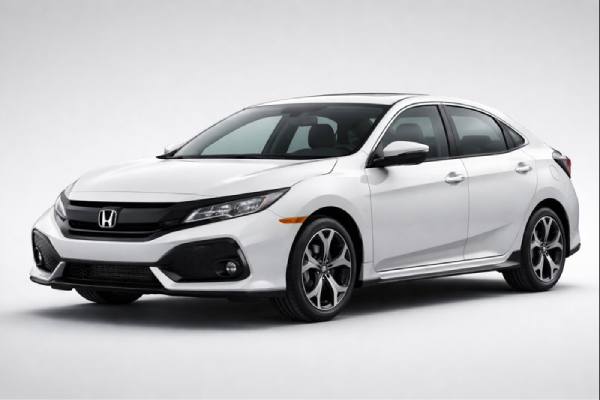
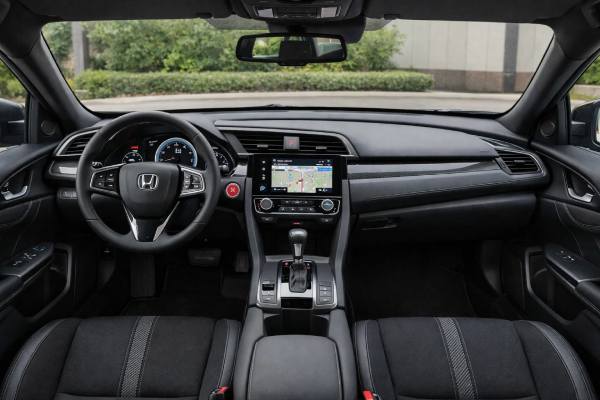
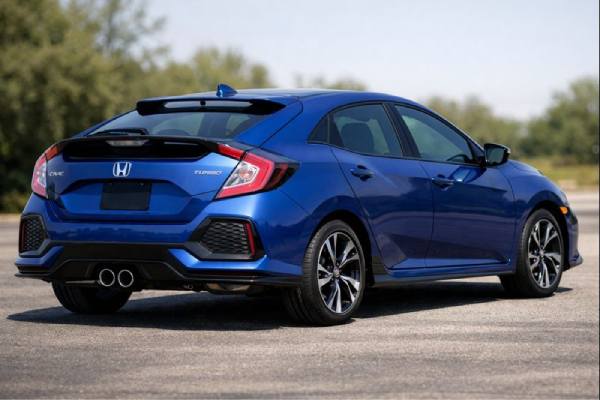
The Honda Civic FK5 with the R18Z1 1.8-liter petrol engine is the “keep it simple” choice in the 10th-gen Civic family. Instead of chasing turbo torque, it leans on a proven naturally aspirated layout with predictable throttle response, straightforward servicing, and fewer heat-related stresses than many small turbo engines. For many owners, that translates into calm daily drivability, decent real-world fuel economy, and long-term dependability—especially when the car is kept stock and maintained on schedule.
The key to buying (or keeping) one is understanding what it is and what it isn’t. It’s not quick in a straight line, and it won’t feel effortless when fully loaded or climbing steep grades. But as a commuter and family hatch/sedan, it can be an excellent value: spacious, stable at highway speeds, and typically easier to live with as mileage accumulates—provided common Civic-era weak spots (like A/C performance and wear items) are checked early.
Quick Specs and Notes
- Simple naturally aspirated 1.8 can be a durability advantage versus higher-stress small turbo engines.
- Smooth, predictable throttle response makes it easy to drive in traffic and on wet roads.
- Often lower long-term complexity: no turbo hardware, no boost control, fewer heat-soak concerns.
- Check A/C cooling performance and service history—repairs can be costly if neglected.
- Replace engine oil at least every 12 months (or sooner with short trips), even if mileage is low.
Section overview
- FK5 R18Z1 model overview
- R18Z1 specs, dimensions, and capacities
- Trims, options, and safety equipment
- Reliability issues and service actions
- Maintenance plan and buying checklist
- Driving feel, performance, and economy
- How the FK5 1.8 compares to rivals
FK5 R18Z1 model overview
The Civic FK5 R18Z1 sits at the practical end of the lineup: a roomy compact built for predictable ownership rather than excitement. Its 1.8-liter four-cylinder is typically a naturally aspirated, port-injected design (market-dependent details vary), which tends to age gracefully when serviced on time. Compared with small turbo engines, the R18-style approach usually brings two everyday benefits: linear throttle response and fewer “performance drops” caused by heat soak, knock control, or boost limits. You press the pedal and the power builds in a steady, familiar way—especially helpful in stop-and-go traffic or in low-grip conditions.
This version of the Civic is also a reminder that “fast” and “nice to live with” are different goals. With around 140 hp, the FK5 1.8 won’t feel punchy at low rpm, particularly with a full cabin or on long inclines. What it does offer is smoothness, good cabin space, and stable highway manners that suit long commutes. The chassis tuning of the 10th-gen Civic generally gives it a planted feel, and the steering is usually direct enough that the car doesn’t feel clumsy, even if acceleration is modest.
Manual vs automatic: why you may see “manual speeds” mentioned
Unlike trims such as the Civic Si or Type R (often manual-only), the FK5 1.8 is typically sold with both manual and automatic-style options depending on region—commonly a manual gearbox in some markets and a CVT in others. That’s why it’s worth separating the car from the writeups you’ve seen: when an article keeps referencing “manual speeds,” it’s often because that specific trim/engine combination was manual-only in that market, or the writer is covering the manual’s gear ratios as part of performance. For the FK5 R18Z1, assume availability varies by country and confirm by VIN and registration data.
Who this Civic best fits
- Drivers who want a Civic’s space, visibility, and road stability without the added complexity of a turbo engine.
- Owners who keep cars for many years and prefer predictable maintenance over peak performance.
- Buyers who value comfort, low fuss, and straightforward servicing more than quick acceleration.
What tends to matter most in ownership
With the R18Z1, reliability usually depends less on exotic failures and more on the basics: oil quality and interval discipline, cooling system health, clean airflow (filters and intake plumbing), and timely replacement of wear items like engine mounts, brakes, and suspension bushings. A well-cared-for example can feel “tight” for a long time; a neglected one usually broadcasts it through vibration, clunks, and uneven tire wear before anything truly dramatic happens.
R18Z1 specs, dimensions, and capacities
This section is designed to be practical: what you need for planning service, comparing trims, and setting expectations. Exact numbers can vary by market, body style (hatch/sedan), transmission, and emissions calibration—so treat these as a baseline and verify against your VIN-specific documentation.
Powertrain and efficiency
| Item | Specification (typical for R18 1.8 class) |
|---|---|
| Code | R18Z1 |
| Engine layout and cylinders | Inline-4, naturally aspirated |
| Valvetrain | Commonly SOHC i-VTEC, 16 valves (4 valves/cyl) |
| Bore × stroke | ~81.0 × 87.3 mm (~3.19 × 3.44 in) |
| Displacement | 1.8 L (1799 cc) |
| Induction | NA (no turbo/supercharger) |
| Fuel system | Typically PFI/MPFI (market dependent) |
| Compression ratio | ~10.5:1 to ~10.6:1 (market dependent) |
| Max power | 140 hp (103 kW) @ rpm (varies; often ~6,300–6,500) |
| Max torque | ~174 Nm (~128 lb-ft) @ rpm (often ~4,300) |
| Timing drive | Chain |
| Rated efficiency | Commonly ~6.0–7.2 L/100 km combined (test standard dependent) |
| Real-world highway @ 120 km/h | Often ~6.2–7.4 L/100 km if stock, aligned, and lightly loaded |
| Aerodynamics | Cd and frontal area vary by body and trim; verify by model sheet |
Transmission and driveline
| Item | What you’ll typically see |
|---|---|
| Transmission | Manual or CVT depending on market/trim |
| Drive type | FWD |
| Differential | Open (no LSD) |
Chassis, brakes, wheels, and dimensions
| Item | Typical 10th-gen Civic range (varies by body/market) |
|---|---|
| Suspension (front/rear) | MacPherson strut / Multi-link |
| Steering | Electric power steering |
| Brakes | 4-wheel disc common; exact diameters vary by market |
| Wheels/tyres | Often 16–17 in wheels; tire sizes vary widely |
| Ground clearance | Typically in the ~130–150 mm class |
| Length / width / height | Body-style dependent; hatch vs sedan differs |
| Wheelbase | ~2700 mm (~106.3 in) class |
| Turning circle | Often ~10.9–11.2 m class |
| Kerb weight | Commonly ~1,250–1,350 kg (2,755–2,976 lb) |
| Fuel tank | Often ~46–47 L (~12.2 US gal / ~10.1 UK gal) |
| Cargo volume | Depends strongly on hatch vs sedan and measurement method (VDA/SAE) |
Performance expectations
| Metric | Typical range (stock, conditions matter) |
|---|---|
| 0–100 km/h (0–62 mph) | ~9.0–10.5 s |
| Top speed | ~195–205 km/h (~121–127 mph) |
| Braking 100–0 km/h | ~36–42 m on quality tires |
| Towing / payload | Often limited or not rated for towing in many markets—check your registration/manual |
Fluids, service capacities, and key torque values
These are “what to ask for” values; confirm exact capacities and standards by VIN.
| Category | Typical guidance |
|---|---|
| Engine oil | Usually 0W-20 class in many markets (check manual); capacity often ~3.6–3.8 L with filter |
| Coolant | Honda long-life coolant type; capacity commonly ~4.5–5.5 L (varies by radiator and heater circuit) |
| Manual transmission fluid | Honda MTF spec; capacity typically ~1.5–2.0 L range |
| CVT fluid (if equipped) | Honda CVT/HCF-type fluid; drain/fill quantity varies—verify by service procedure |
| A/C refrigerant | Type and charge depend on year/market (R-134a vs R-1234yf in some regions) |
| Lug nuts | Commonly ~108 Nm (~80 lb-ft) |
| Oil drain plug | Commonly ~39 Nm (~29 lb-ft) |
| Spark plugs | Torque and gap depend on plug model; verify before service |
Trims, options, and safety equipment
On the FK5 1.8, trims and options matter less for power and more for comfort, tire/brake configuration, and safety technology. Two cars with the same engine can feel very different if one is on small wheels with compliant tires and the other is on larger wheels with stiff sidewalls. Likewise, driver-assistance availability can vary dramatically by market and year, even within the same model code.
Trims and options: what typically changes
Most markets group the 1.8 Civic into “value to mid” trims rather than performance trims. Differences often include:
- Wheel and tire package: 16–17 in wheels tend to ride better and cost less to replace. Larger wheels can sharpen steering response but increase road noise and pothole risk.
- Infotainment: screen size, smartphone integration, and speaker count vary. If you rely on navigation or Bluetooth stability, test it thoroughly.
- Climate control: single-zone vs dual-zone, plus seat heating in colder markets.
- Lighting: halogen vs LED headlights and fog light availability. This affects both night visibility and long-term bulb cost.
- Driver aids: parking sensors, rear camera quality, blind-spot monitoring, and forward-collision systems depend on trim and region.
Quick identifiers that help at purchase
Because equipment varies, focus on what you can verify quickly:
- Wheel size and tire spec printed on the sidewall.
- Headlight type (LED units look different internally than halogen reflectors).
- Presence of front camera/radar modules (for cars with more advanced ADAS).
- Door-jamb tire placard and VIN label for factory wheel/tire sizing.
Safety ratings: how to interpret them
The 10th-gen Civic platform is generally known for strong structural performance in mainstream crash testing, but your exact safety rating depends on body style, model year, and the test protocol used. In many markets, Civics of this generation achieved top-tier ratings (often 5-star class in Euro NCAP-type systems), but the details—especially pedestrian/VRU scoring and headlight performance—can differ.
If you’re shopping across years, consider these practical points:
- Headlights matter at night. Even if a car has a strong crash structure, poor headlights increase real-world risk.
- ADAS availability can change outcomes. AEB (automatic emergency braking) and lane support can reduce crash likelihood, but only if the system is present and functioning.
- Child-seat provisions: Look for ISOFIX/LATCH indicators, top tether anchors, and intact seat belt buckles.
ADAS and calibration after repairs
If your Civic has camera- or radar-based driver assistance, remember that some repairs can require calibration:
- Windshield replacement can affect camera alignment.
- Front bumper or grille repairs can affect radar position.
- Suspension height changes (springs) can influence sensor aim.
When test driving, verify there are no warning lights related to stability control, steering, or driver-assistance systems—and make sure the car completes its normal startup checks without persistent alerts.
Reliability issues and service actions
A naturally aspirated 1.8 can be a reliability-friendly configuration, but that doesn’t mean “maintenance-free.” The most common problems tend to be system-level issues—A/C performance, sensors, wear components, and age-related rubber parts—rather than catastrophic engine failures. Below is a practical map by prevalence and typical cost tier.
Common: frequent and worth checking first
- A/C cooling weakness (medium to high cost): Many Civics of this era are known for A/C complaints. Symptoms include warm air at idle, slow cooling, or intermittent cooling. Root causes vary (leaks, condenser issues, compressor performance), so a proper diagnosis matters before parts swapping.
- Engine mount wear (low to medium cost): A worn mount shows up as vibration at idle, thumps on gear changes, or a “buzz” through the cabin. It’s not dangerous, but it makes the car feel older than it is.
- Front suspension knocks (low to medium): Links and bushings can develop play, especially on rough roads. Listen over small bumps at low speed.
Occasional: depends on mileage and driving pattern
- Ignition coils or plugs aging (low to medium): Misfires under load, rough idle, or poor cold starts can point to ignition wear.
- Oil seepage at gaskets (low): Valve cover gasket seep or VTEC/solenoid area weeping can happen with age. Usually manageable if caught early.
- O2 sensor/catalyst efficiency codes (medium): Sometimes triggered by exhaust leaks, aging sensors, or a tired catalyst—diagnose carefully before replacing expensive parts.
Rare but expensive: confirm before buying
- CVT drivability issues (high, if equipped): If the car has a CVT, shuddering, delayed engagement, or consistent high rpm behavior under light throttle can indicate incorrect fluid history or mechanical wear. A CVT that has received correct fluid services typically behaves smoothly and consistently.
- Cooling system neglect (high risk): Overheating is usually preventable. Evidence of neglected coolant service, crusty residue, or repeated temperature warnings is a red flag.
Recalls, TSBs, and extended coverage
For any 2017–2021 Civic, assume there may be recalls or service actions depending on region and production date. The smart process is simple:
- Run the VIN in an official recall database for your country.
- Ask for proof of completion (dealer invoice or database printout).
- Confirm outstanding software updates (infotainment, engine control, safety systems) during a dealer inspection if possible.
Pre-purchase checks to request
- Full service history (oil, coolant, brake fluid, and—if equipped—CVT fluid).
- A/C performance test (vent temperature, pressure test if cooling is weak).
- OBD scan for stored and pending codes.
- Suspension and brake inspection report with measured pad/rotor thickness.
Maintenance plan and buying checklist
A good maintenance plan for the FK5 1.8 is less about rare procedures and more about consistency. If you do that well, this Civic can feel tight and dependable well into higher mileage.
Practical maintenance schedule
Use this as a conservative owner schedule; adjust for your climate and driving pattern.
- Engine oil and filter: Follow the maintenance minder where applicable, but set a hard limit of 12 months. If you do mostly short trips, consider 7,500–10,000 km (5,000–6,000 mi) intervals.
- Engine air filter: Inspect every oil change; replace around 20,000–30,000 km (12,000–18,000 mi) depending on dust.
- Cabin air filter: Replace every 12 months or sooner if airflow drops.
- Spark plugs: Often a long interval on paper, but a practical window is 100,000–160,000 km (60,000–100,000 mi) depending on plug type and usage.
- Coolant: Typically long-life; common practice is 5 years initial then shorter—verify the exact schedule for your market.
- Brake fluid: Every 3 years is a strong baseline.
- Manual transmission fluid: Consider 60,000–100,000 km (37,000–62,000 mi); earlier if shifting feels notchy.
- CVT fluid (if equipped): Don’t guess—follow the correct Honda procedure and fluid spec. Many owners choose 40,000–60,000 km (25,000–37,000 mi) as a conservative interval.
- Brake pads/rotors: Inspect at every tire rotation; replace based on measured thickness and braking feel.
- Tires and alignment: Rotate every 8,000–10,000 km (5,000–6,000 mi) and align when wear becomes uneven or after suspension work.
- 12 V battery: Test annually after year 3; replacement commonly falls in the 4–6 year window.
Fluid specifications: what to specify at service
When booking service, tell the shop:
- Use the exact engine oil viscosity and spec listed for your VIN (don’t rely on “close enough”).
- If CVT-equipped, use genuine-spec CVT fluid—avoid universal ATF.
- Brake fluid should be flushed, not just topped off.
- Coolant should match Honda long-life type; mixing coolants can cause issues over time.
Buyer’s checklist: the “fast but thorough” inspection
- Cold start: Listen for abnormal rattles; confirm idle is smooth without excessive vibration.
- A/C test: Confirm strong cooling at idle and during a short drive; weak A/C is a negotiation point at minimum.
- Transmission behavior: Manual should engage cleanly without grinding; CVT should feel smooth and consistent without shudder.
- Brakes: No pulsation, pulling, or grinding; confirm parking brake operation.
- Suspension: No clunks over small bumps; check for uneven tire wear that suggests alignment or bushing wear.
- Fluids: Oil should not smell strongly of fuel; coolant should be clean and at the correct level.
- Electronics: Test all windows, locks, camera, sensors, and infotainment connectivity.
Long-term durability outlook
The FK5 R18Z1 tends to reward owners who keep it stock and treat service intervals as a habit rather than a reaction. The best “insurance” items are simple: consistent oil changes, correct fluids, timely brake fluid flushes, and staying ahead of small problems (A/C performance, mounts, bushings) before they cascade into expensive repairs.
Driving feel, performance, and economy
In daily use, the Civic FK5 1.8 feels calm and predictable. Steering response is typically sharper than many rivals, and the chassis feels stable at highway speeds. You won’t get the punch of a turbo engine at 2,000 rpm, but you do get a smoother, more linear build of power that’s easy to meter in traffic and on wet roads.
Ride, handling, and NVH
Ride comfort depends heavily on wheel/tire size and tire brand. Smaller wheels with taller sidewalls generally ride better and reduce road noise—often a big win for family use. Larger wheels can sharpen turn-in but transmit more impacts and increase tire replacement cost.
NVH (noise, vibration, harshness) is usually well controlled for a compact, but a few items can change that:
- Worn engine mounts increase idle vibration and boom.
- Aggressive tires raise road noise dramatically.
- Misalignment can cause tramlining and a constant “busy” feeling on the highway.
Powertrain character
A naturally aspirated 1.8 asks you to use revs when you want brisk acceleration. Passing often requires a downshift (manual) or a deliberate throttle input (CVT). That’s not a flaw; it’s the tradeoff for simplicity and linear response.
If the car feels unusually sluggish, check the basics first: air filter condition, correct spark plugs, proper tire pressure, and whether the brakes are dragging. “Slow” cars are often made slower by maintenance neglect.
Real-world economy and what changes it
In mixed driving, the FK5 1.8 can be efficient, but results vary with speed and load. Highway economy worsens quickly above 120 km/h due to aerodynamic drag, and short cold trips can raise consumption significantly.
To keep economy consistent:
- Keep tires at the door-placard pressures.
- Maintain alignment; toe errors can waste fuel and tires.
- Avoid carrying unnecessary weight.
- Use smooth throttle inputs; aggressive acceleration costs more than steady cruising.
Selective performance metrics that matter
- 0–100 km/h: typically in the 9–10 second range, so plan passing with space.
- Braking performance: mostly tire-limited; quality tires can noticeably improve stopping distance and wet confidence.
- Turning circle: generally good for city use, but it depends on wheel/tire setup.
For most owners, the “verdict metric” isn’t 0–100—it’s how relaxed the car feels during an hour-long commute, and how stable it remains after years of potholes and heat cycles. On that score, a well-maintained FK5 1.8 often delivers.
How the FK5 1.8 compares to rivals
The FK5 1.8 competes in a crowded space where many rivals offer small turbo engines, hybrid options, or premium-leaning interiors. Your best alternative depends on whether you prioritize simplicity, economy, refinement, or performance.
Toyota Corolla 1.8 (similar era)
- Corolla strengths: strong reputation for low-fuss ownership and often very predictable running costs.
- Civic strengths: typically more spacious-feeling cabin and a more planted, confident highway demeanor.
- Decision point: choose Corolla for maximum “appliance reliability” vibe; choose Civic for a more engaging chassis and cabin room.
Mazda 3 (2.0 class)
- Mazda strengths: interior quality and refinement; often quieter on the highway.
- Civic strengths: rear space practicality and a generally efficient, stable platform.
- Decision point: pick Mazda if cabin feel and NVH matter most; pick Civic if passenger space and practicality win.
Volkswagen Golf (1.4/1.5 TSI class)
- Golf strengths: turbo torque makes it feel quicker at low rpm; often a more “solid” feel in some trims.
- Civic strengths: naturally aspirated simplicity and typically easier long-term service planning if you avoid turbo complexity.
- Decision point: Golf for effortless punch; Civic 1.8 for straightforward ownership and linear response.
Hyundai i30 / Kia Ceed (NA and small turbo variants)
- Korean strengths: strong feature value; some trims offer a lot of tech for the money.
- Civic strengths: proven chassis balance and often strong resale in many markets.
- Decision point: shop on condition and service history—both can be great; neglect hurts both.
Where the FK5 1.8 fits best
If you want the 10th-gen Civic’s space and road manners but prefer an engine concept that’s easier to keep happy over time, the R18Z1 variant can be a smart pick. You give up some effortless acceleration, but you gain a more straightforward powertrain, usually lower heat-related stress, and a driving experience that stays consistent as the years add up—especially if you keep up with fluids and wear items.
References
- Owner’s Manuals 2025 (Owner’s Manual)
- Recalls 2025 (Recall Database)
- Latest Safety Ratings 2025 (Safety Rating)
- Vehicle ratings 2025 (Safety Rating)
- FuelEconomy.gov 2025 (Official Fuel Economy Data)
Disclaimer
This article is for informational purposes only and is not a substitute for professional inspection, diagnosis, or repair. Specifications, torque values, fluid standards, service intervals, and procedures vary by VIN, market, and equipment. Always verify details using official Honda service information for your exact vehicle and consult qualified technicians for safety-critical work.
If you found this guide useful, please consider sharing it on Facebook, X (Twitter), or your favorite community to support our work.