
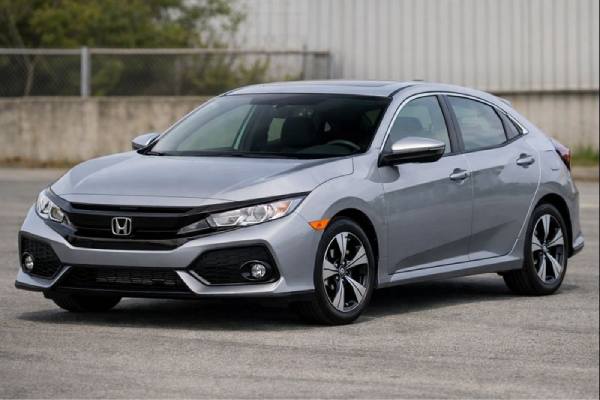
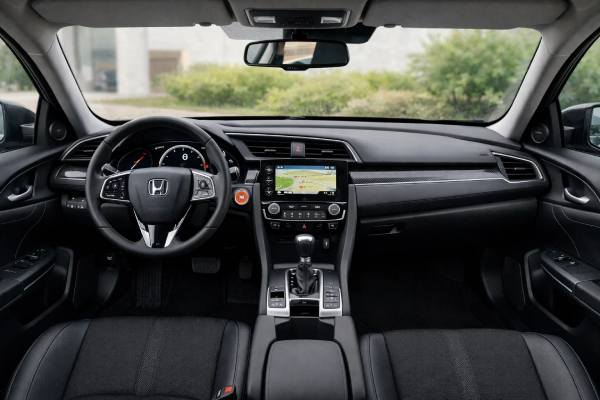
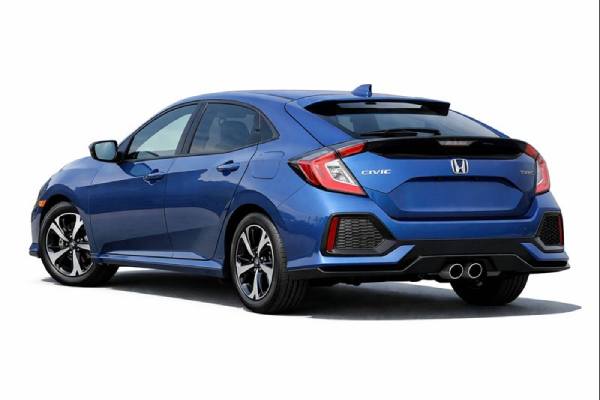
The 10th-generation Honda Civic hatchback is known for blending practical packaging with a chassis that feels more “engineered” than most mainstream compact cars. In FK6 form, the 1.0-liter P10A2 turbo three-cylinder targets low running costs without sacrificing everyday flexibility. Expect a light, responsive front end, stable highway manners, and a cabin layout that works well for commuting or family duty.
Ownership usually comes down to two things: keeping the direct-injection turbo engine happy (clean oil, good fuel habits, and heat management) and choosing the transmission that matches your driving. The manual is engaging and efficient, while the CVT (where offered) can be smoother in traffic but benefits from stricter fluid discipline. If you buy carefully, this is one of the more sensible ways into a modern Civic.
What to Know
- Strong space efficiency for a compact hatchback, with useful cargo volume and a wide rear opening.
- Balanced chassis: confident high-speed stability and predictable steering for daily driving.
- Turbo three-cylinder is economical in mixed use when driven gently, especially on longer runs.
- Direct-injection and turbo hardware reward shorter oil intervals and careful warm-up habits.
- Plan for an oil and filter service about every 10,000 km or 12 months (whichever comes first), sooner for short trips.
Quick navigation
- FK6 1.0 turbo ownership brief
- P10A2 specs and capacities
- Trims, tech, and ADAS
- Known faults and recalls
- Maintenance plan and buying tips
- Road feel and real economy
- FK6 vs key competitors
FK6 1.0 turbo ownership brief
The FK6 Civic hatchback with the 1.0 turbo is best understood as a “smart Civic,” not a warm hatch. You get the core benefits of the platform—rigid body structure, well-tuned suspension geometry, and a practical hatchback shape—paired with an engine designed to meet European-style efficiency expectations. Around town, the small turbo helps the car feel less flat than a naturally aspirated 1.0 might suggest, but it still drives like a compact engine: it prefers smooth throttle inputs and rewards staying within its torque band rather than chasing high rpm.
Where this model shines is usability. The cabin is roomy for the class, the driving position works for tall and short drivers, and the hatchback layout makes loading bulky items far easier than the sedan. Honda also gave the 10th-gen Civic a more “big car” stance—wide track, planted body control, and good straight-line confidence on motorways. In real ownership terms, that means less fatigue at speed and fewer compromises on longer trips than you might expect from a 1.0-liter badge.
The tradeoffs are mostly about heat and deposits. Turbo engines run hotter, and direct injection can leave intake valves without the cleaning effect of fuel wash. That does not mean “problem guaranteed,” but it does mean your habits matter. Short trips in cold weather, long idle sessions, and extended oil intervals are the combination that tends to create sludge, fuel dilution, and sticky PCV (positive crankcase ventilation) behavior in many modern small turbos. The simplest prevention is boring: use the correct oil grade, avoid stretching service intervals, and give the engine time to reach full temperature regularly.
As a used buy, focus on condition and history rather than chasing the newest year. A well-maintained early car is often a safer bet than a neglected later one. Prioritize service documentation, correct tires (they change the Civic’s feel dramatically), and evidence that software updates and recalls were handled by the dealer network.
P10A2 specs and capacities
Below is a focused technical snapshot for the FK6 hatchback with the P10A2 1.0 turbo. Some values vary by market, wheel size, and transmission, so treat them as a decision-making baseline and verify against your VIN-specific documentation.
Powertrain and efficiency (typical)
| Item | Spec |
|---|---|
| Code | P10A2 |
| Engine layout and cylinders | Inline-3, turbocharged, DOHC, 4 valves/cyl (12 valves total) |
| Displacement | 1.0 L (about 988 cc) |
| Induction | Turbo |
| Fuel system | Direct injection (DI) |
| Compression ratio | Varies by calibration/market (verify by VIN) |
| Max power | 129 hp (95 kW) @ rpm (market-dependent rpm) |
| Max torque | Often ~200 Nm (148 lb-ft) with 6MT; some CVT tunes lower (verify by VIN) |
| Timing drive | Verify by VIN/service data (chain or belt-in-oil listed in some references) |
| Rated efficiency | Typically ~5.0–6.0 L/100 km (mixed), depending on test cycle and wheels |
| Real-world highway @ 120 km/h | Commonly ~6.0–7.0 L/100 km (driving style, wind, and tires matter) |
| Aerodynamics | Cd varies by trim/aero pack; confirm by brochure or homologation |
Transmission and driveline
| Item | Spec |
|---|---|
| Transmission | 6-speed manual common; CVT available in some markets |
| Drive type | FWD |
| Differential | Open (traction control manages wheelspin) |
Chassis, dimensions, and weights (typical hatchback)
| Item | Spec |
|---|---|
| Suspension (front/rear) | MacPherson strut / multi-link |
| Steering | Electric power steering (EPS) |
| Brakes | 4-wheel discs (sizes vary by trim) |
| Wheels/tyres | Common: 215-width on 16–17 in rims (varies by trim) |
| Ground clearance | Market/trim-dependent (verify by VIN) |
| Length / Width / Height | About 4518 / 1799 / 1434 mm |
| Wheelbase | About 2697 mm |
| Turning circle | Typically ~11 m (check your market spec sheet) |
| Kerb (curb) weight | Commonly ~1275–1350 kg depending on trim/transmission |
| Fuel tank | Often ~46 L (verify by market) |
| Cargo volume | About 478 L seats up; ~1267 L seats down (method varies) |
Performance and capability (typical)
| Item | Spec |
|---|---|
| Acceleration 0–100 km/h | Often around ~10–12 s (trim/transmission dependent) |
| Top speed | Often around ~200 km/h (trim/transmission dependent) |
| Towing capacity | Frequently limited or market-restricted for small-engine trims (verify) |
| Payload / roof load | Market-specific; check the tire placard and handbook |
Fluids and service capacities (practical ownership values)
| System | Specification (typical) | Capacity (approx) |
|---|---|---|
| Engine oil | Usually 0W-20 (confirm ACEA/API spec by handbook) | ~3.3–3.7 L with filter |
| Coolant | Honda long-life coolant, typically 50/50 mix | Varies; verify by service manual |
| Manual transmission | Honda MTF (market-specific version) | Varies; verify |
| CVT | Honda CVT fluid (HCF-type by market) | Varies; verify |
| Brake fluid | DOT 4 typical | As needed (flush service) |
| A/C refrigerant | R-1234yf or R-134a by year/market | Charge varies; verify under-hood label |
Electrical (typical)
| Item | Spec |
|---|---|
| 12V battery | Commonly 45–60 Ah range depending on equipment |
| Spark plugs | Iridium type common; gap and part number vary by calibration |
Safety and driver assistance (headline)
| Category | Typical for this generation |
|---|---|
| Euro NCAP | 5-star rating for Civic, with strong adult protection scores (test protocol dependent) |
| IIHS | High ratings in many crash modes for Civic; headlight ratings depend on trim |
| ADAS suite | Honda Sensing availability varies by year/trim/market (AEB, ACC, lane support, etc.) |
If you want a single takeaway from the tables: the platform is “bigger than the engine.” The FK6 chassis, brakes, and cabin feel like a higher-class car; the 1.0 turbo is there to keep costs down, not to deliver sporty acceleration. Buy it for its balance and packaging, then maintain it like a modern DI turbo.
Trims, tech, and ADAS
Trim names vary a lot by country, but the equipment logic is consistent: base trims focus on value and wheels/tires that maximize comfort, mid trims add convenience and better lighting, and top trims stack infotainment and the most complete driver assistance package. When shopping used, it helps to think in terms of “functional packages” rather than badges.
Common trim patterns and what they change
- Wheels and tires: This matters more than most buyers expect. Smaller wheels (often 16-inch) usually ride better, are quieter, and cost less to replace. Larger wheels sharpen turn-in but can raise road noise and make pothole impacts harsher.
- Lighting: LED headlights (and the specific headlight performance rating, where tested) often separate “nice” from “excellent” night driving. If you do a lot of rural driving, prioritize lighting over cosmetics.
- Infotainment: Early cars can feel dated if they lack smartphone integration or have slower boot times. Later updates and higher trims typically improve usability.
- Climate and comfort: Dual-zone climate, heated seats, and better sound insulation are the features that tend to matter after the honeymoon phase.
Quick identifiers when viewing a car
- Headlights: Look closely at the headlamp internals—full LED housings are usually obvious compared with halogen reflector units.
- Wheels: Wheel size is an instant trim clue; verify tire size on the sidewall rather than guessing.
- Steering wheel controls: Adaptive cruise and lane buttons are a fast indicator of Honda Sensing presence.
- Windshield camera area: A visible forward camera housing near the mirror often suggests lane and braking assist equipment.
Safety ratings and what they really mean
Safety ratings are only comparable when you know the test version and equipment rules. A “5-star” Euro NCAP Civic is still excellent news, but the details matter: scores are broken into adult occupant, child occupant, vulnerable road user (pedestrian/cyclist), and safety assist. Meanwhile, IIHS results can vary by body style and headlight fitment—two cars that look identical in photos can score differently because the headlights or automatic emergency braking package differs.
ADAS (advanced driver assistance systems) notes for owners
- Calibration after repairs: Windshield replacement, front radar work, alignment changes, and some suspension repairs can require camera/radar calibration. Budget time and money for correct calibration—an uncalibrated lane system is worse than none.
- Sensor hygiene: Winter slush and road film can reduce performance. Keep radar areas and camera views clean.
- Expectation management: These systems reduce fatigue; they do not eliminate driver responsibility. On narrow roads, faded lane markings, or heavy rain, lane support can become inconsistent.
For most buyers, the sweet spot is a trim that includes the safety suite you want and wheels you can live with. If you dislike harsh ride, a “lower” trim with smaller wheels often makes the Civic feel more premium day-to-day.
Known faults and recalls
No used car is perfect, and modern small turbo engines add complexity. The good news is that many common Civic problems are manageable when caught early. Think in three buckets: routine wear items, “modern electronics” annoyances, and turbo/DI habits.
Common (higher prevalence)
- Battery and charging sensitivity (low–medium cost): Short trips plus lots of electronics can lead to weak 12V batteries. Symptoms include start-stop oddities, infotainment resets, and warning lights that disappear after a proper charge. Remedy: battery test, charging system check, and update any software related to battery management where applicable.
- Infotainment glitches (low–medium cost): Freezes, slow response, or Bluetooth dropouts are often software-related. Remedy: confirm updates were applied; reset and re-pair devices; check for water intrusion if symptoms are persistent.
- Front suspension noises (low–medium cost): Clunks over bumps can come from drop links, top mounts, or bushings. Remedy: inspect wear points; quality replacement parts matter.
Occasional (depends on use and maintenance)
- Direct-injection deposit behavior (medium cost over time): Rough cold idle, reduced efficiency, or intermittent misfires can be linked to deposits, PCV issues, or injector spray pattern degradation. Remedy: correct oil and intervals, quality fuel, and periodic long runs; professional cleaning only when symptoms justify it.
- Turbo control noises (medium cost if ignored): Whistling, wastegate rattle, or boost irregularities can indicate leaks, actuator wear, or hose issues. Remedy: smoke test intake plumbing and check boost control operation early.
- Cooling system seepage (medium cost): Thermostat housings, hoses, or clamps can weep with age/heat cycles. Remedy: pressure test and address before it becomes overheating.
Rare (but higher severity)
- Overheating under extreme conditions (high cost): Usually tied to neglected coolant, a failing water pump, or airflow issues. Remedy: immediate diagnosis; do not continue driving if temperature climbs.
- Transmission neglect (medium–high cost): Manual gearboxes generally tolerate use well, but abused clutches and ignored fluid can cause shift quality issues. CVTs are more sensitive to fluid condition and correct specification. Remedy: strict fluid service and avoid “universal” fluids.
Recalls, TSBs, and service actions
The 10th-gen Civic family has seen various campaigns in different countries (for example, fuel system components, airbags, or driveline parts depending on market and production window). The only safe approach is VIN-based verification:
- Run the VIN through the official recall checker for your country.
- Ask a dealer to confirm open campaigns and completion history.
- Match paperwork to the VIN and date.
Pre-purchase checks worth requesting
- Full service history with dates, mileage, and oil spec listed.
- Proof of correct transmission fluid service if CVT-equipped.
- A cold start demonstration (listen for abnormal rattles, unstable idle).
- A long test drive including motorway speed, stop-start traffic, and a few strong accelerations.
- A scan for stored fault codes, even if the dash is clear.
If you avoid neglected examples and treat the powertrain like a modern turbo DI engine, the FK6 is usually a low-drama ownership proposition.
Maintenance plan and buying tips
A practical FK6 maintenance plan is less about exotic parts and more about consistency. The goal is to protect the turbocharger, keep oil clean, and prevent cooling or sensor issues from snowballing into expensive repairs.
Practical service schedule (distance/time)
- Engine oil and filter: Every 10,000–12,000 km or 12 months. If you do short trips, heavy city traffic, or cold-climate use, consider 7,500–10,000 km. Use the correct grade and specification for your market.
- Engine air filter: Inspect every 15,000–20,000 km; replace around 30,000–40,000 km depending on dust conditions.
- Cabin air filter: Replace about every 15,000–30,000 km, or yearly if you value HVAC performance.
- Spark plugs: Often long-life iridium; typical replacement is around 90,000–120,000 km (verify your exact interval).
- Coolant: Many Honda long-life coolants run 5 years initially, then shorter intervals (often 3 years). Verify by handbook.
- Brake fluid: Every 2–3 years regardless of mileage.
- Brake pads and rotors: Inspect at each service; replace based on thickness and corrosion, not just mileage.
- Transmission fluid:
- Manual: Consider a change around 60,000–80,000 km, sooner if shifting degrades.
- CVT: Consider 40,000–60,000 km intervals using the exact specified fluid.
- Tires: Rotate about every 10,000–12,000 km; align when you change tires or if you see uneven wear.
- Timing components: Verify whether your engine uses a chain or belt-in-oil system for your VIN. Chains are typically “inspect for noise/correlation faults,” while belts have a defined replacement philosophy.
Useful ownership habits (that reduce risk)
- Avoid full throttle until oil temperature is up.
- After hard driving, allow a short cool-down (gentle driving for the last few minutes is usually enough).
- Use quality fuel consistently; avoid running very low on fuel if your market fuel quality is inconsistent.
- Do not ignore small coolant loss—find the source early.
Fluids and torque values (decision-level)
Because specs vary by market, treat the following as “checkpoints” rather than universal truths:
- Wheel lug nuts: commonly around 108 Nm (verify on your wheel/owner documentation).
- Oil drain plug: often around 30–40 Nm (verify by service manual).
- Spark plugs: often around 18–25 Nm depending on plug design (verify).
Buyer’s guide: what to seek and what to avoid
Seek
- Evidence of regular oil changes and correct oil spec.
- Clean, consistent cold starts and stable idle.
- Smooth boost delivery under load (no surging or limp behavior).
- Tires from reputable brands with even wear.
Be cautious with
- Cars that lived on short trips only and have stretched service intervals.
- CVT cars with no documented fluid changes.
- Modified intake or “tune” history without proof of supporting maintenance.
Long-term durability is usually strong when maintenance is consistent. The Civic’s chassis and interior hold up well, and most expensive stories begin with neglected fluids, ignored warnings, or repeated cold short trips without proper warm-up cycles.
Road feel and real economy
The FK6 Civic hatchback is often praised because it feels stable and grown-up at speed. The steering is light in parking maneuvers but becomes more settled on the motorway. You do not get sports-car feedback, yet the front end responds cleanly and the car tracks straight without constant corrections. In corners, the multi-link rear suspension helps the Civic feel composed: it resists mid-corner bumps better than many torsion-beam rivals, and the car generally stays neutral until pushed hard, where it transitions into safe understeer.
Ride and NVH (noise, vibration, harshness)
Ride quality depends heavily on wheels and tires. Smaller wheels usually deliver the best comfort-to-control ratio, especially on broken city roads. Larger wheels can introduce sharper impacts and more tire roar. Wind noise is generally reasonable, and the hatchback shape is well damped, though tire choice can dominate cabin sound at 120 km/h.
Powertrain character
The 1.0 turbo is tuned for torque and drivability, not top-end power. Expect useful pull in the midrange, with a gentle buildup rather than a big turbo “hit.” At low rpm, you may notice a brief delay if you ask for sudden acceleration in a tall gear—normal for a small turbo. The manual transmission suits this engine well because you can keep it in the torque band; the CVT (where available) typically keeps the engine at efficient rpm in calm driving but can sound busier under heavy throttle.
Real-world efficiency
- City: often around 6.0–7.5 L/100 km depending on traffic and warm-up time.
- Highway (100–120 km/h): often around 6.0–7.0 L/100 km, with wind and winter temperatures making a noticeable difference.
- Mixed: many owners land around 5.8–6.8 L/100 km with sensible driving.
Cold weather is the biggest swing factor. Short winter trips can raise consumption sharply because the engine spends much of the time warming up and enrichment strategies are active. If your use case is primarily short trips, set expectations accordingly and prioritize frequent oil changes.
Performance metrics that matter
Acceleration is adequate rather than fast. The Civic’s strengths are confidence and consistency: stable braking feel, predictable cornering, and a powertrain that works best when you drive smoothly. If you regularly carry heavy loads or demand quick overtakes on steep grades, the 1.0 may feel strained compared with larger turbo rivals—but for commuting and normal family use, it fits the Civic’s character well.
FK6 vs key competitors
The FK6 1.0 turbo sits in a crowded European compact segment. Its advantage is the Civic platform’s breadth—space, chassis quality, and a “larger car” feel—while its main challenge is that many rivals offer similar efficiency with either more torque or simpler engine layouts.
Versus Volkswagen Golf 1.0 TSI
The Golf often feels more conservative and refined in cabin design, with a strong ecosystem of parts and familiarity for independent shops. The Civic typically counters with a more spacious-feeling cabin and a chassis that feels more eager in corners. If you value understated ergonomics and a familiar service landscape, the Golf is strong; if you want the roomiest-feeling compact hatch with a confident stance, the Civic has the edge.
Versus Ford Focus 1.0 EcoBoost
The Focus is frequently praised for steering and chassis playfulness. The Civic matches it for stability and can feel more “solid” at speed, while the Focus may feel more agile on tight roads. Ownership-wise, both are small turbo engines that reward good oil discipline. Choose the Focus for handling sparkle; choose the Civic for packaging and a more mature motorway demeanor.
Versus Hyundai i30 / Kia Ceed 1.0 T-GDi
These models often compete on warranty perception, straightforward value, and quiet cruising in the right trims. The Civic tends to feel more dynamic through the wheel and offers a distinctive interior layout with excellent space use. If you want maximum value per feature and prefer simpler cabin controls, the Korean rivals are compelling. If you prioritize chassis sophistication and hatchback practicality, the Civic remains a standout.
Versus Toyota Corolla (non-hybrid small turbo or older 1.2T)
Toyota’s reputation leans heavily on reliability and predictable ownership costs, and hybrids dominate their modern lineup. If you want the smoothness and city efficiency of a hybrid, the Corolla hybrid is hard to beat. The Civic 1.0 counters with a more engaging road feel and hatchback cargo usefulness, especially if you prefer a manual transmission.
Bottom line
Pick the FK6 1.0 if you want:
- A compact hatch that feels stable and substantial at speed
- Practical cargo space and real rear-seat usability
- A modern engine that can be economical when maintained correctly
Look elsewhere if you want:
- Strong overtaking performance with minimal planning
- The simplest possible powertrain for very short-trip use
- A model where every shop in every town has deep, routine familiarity
In the right trim and with the right maintenance history, the FK6 is one of the most rounded “daily driver” hatchbacks of its era—especially for drivers who care about comfort, balance, and usable space more than outright speed.
References
- All-new 2017 Civic hatchback 2016 (Manufacturer Press Release)
- Euro NCAP | Latest Safety Ratings 2017 (Safety Rating)
- 2017 Honda Civic 4-door hatchback 2017 (Safety Rating)
Disclaimer
This article is for informational purposes only and is not a substitute for professional diagnosis, inspection, or repair. Specifications, torque values, service intervals, and procedures can vary by VIN, market, model year, and equipment; always verify details using your official owner’s manual and service documentation for the exact vehicle you are working on.
If you found this guide useful, please consider sharing it on Facebook, X (Twitter), or your favorite forum to help others find reliable ownership information.