

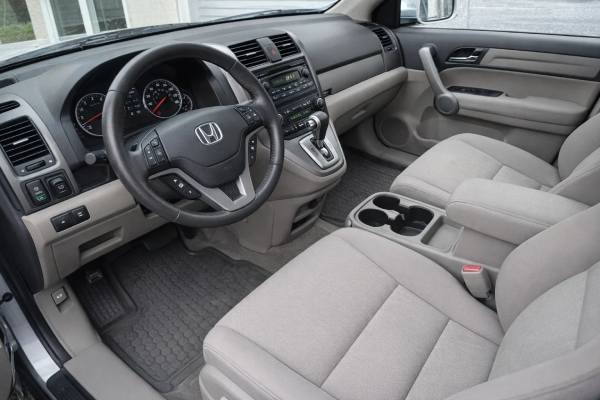
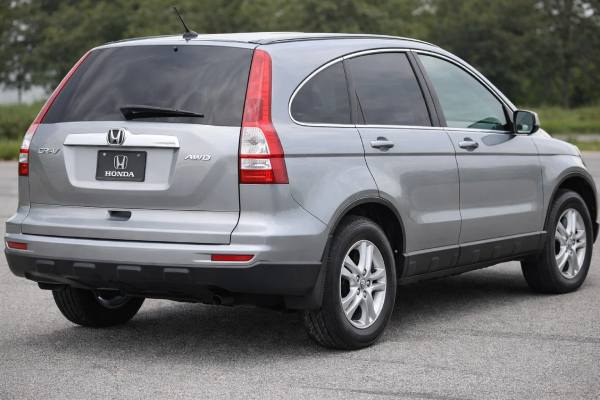
The 2007–2012 Honda CR-V (RE5) in front-wheel drive with the R20A2 2.0 i-VTEC is one of those “quietly competent” family SUVs that ages well when it’s kept on schedule. The engine is a long-stroke, naturally aspirated four-cylinder that favors smoothness and predictable response over headline numbers, and it’s paired with a simple FWD layout that avoids some of the extra driveline wear points found on AWD versions. The result is a practical, easy-to-drive CR-V that is typically inexpensive to run, provided you stay ahead of fluids, rubber parts, and a few known age-related faults.
This guide focuses on real ownership: what the R20A2 is like to live with, which problems show up most often, what to check before buying, and how to maintain the car so it stays reliable past 200,000 km.
Owner Snapshot
- Smooth, durable 2.0 i-VTEC that rewards regular oil changes and clean intake air.
- Spacious cabin and sensible cargo layout for daily family use and light road trips.
- FWD reduces driveline complexity and usually lowers long-term maintenance versus AWD.
- Watch for age-related suspension bush wear, A/C performance decline, and electrical switch faults.
- Practical baseline: change engine oil and filter about every 10,000–12,000 km or 12 months (adjust shorter for short trips).
Explore the sections
- CR-V RE5 FWD in context
- R20A2 specs and dimensions
- Trims, equipment, and safety
- Reliability and known faults
- Maintenance plan and buying tips
- Road manners and economy
- CR-V 2.0 versus competitors
CR-V RE5 FWD in context
In this generation, Honda leaned into “do everything well” engineering: a stiff body, a comfortable suspension tune, and a cabin that prioritizes visibility and everyday ergonomics. The FWD RE5 is also a good match for the R20A2, because the engine’s character is more about mid-range pull and low stress than outright pace. That pairing matters for long-term ownership: fewer driveline parts, fewer fluids to service, and typically less vibration and wear compared with more complex setups.
The R20A2 itself is a water-cooled, inline four-cylinder, SOHC i-VTEC gasoline engine. In simple terms, i-VTEC is Honda’s system for altering valve timing (and on some applications, lift behavior) to broaden torque and improve efficiency without a turbocharger. On the road, it feels linear: it doesn’t surge, it just builds speed smoothly. For buyers used to modern small turbos, it may feel less punchy at very low rpm, but it also avoids many turbo-era concerns like intercooler leaks, high boost heat load, and direct-injection carbon buildup.
This CR-V is also a “mass-market sweet spot” size: big enough for adult rear passengers, but still easy to place in traffic and park. Its high seating position is a genuine advantage for new drivers and families—just remember the trade-off: any taller SUV has a higher center of gravity than a low sedan, so tire condition and correct pressures matter more for stable emergency maneuvers.
Who is it best for? Owners who want a dependable used SUV with sensible running costs, who don’t need AWD traction every winter, and who prefer predictable, naturally aspirated drivability. The best examples are the boring ones: stock wheels, consistent service history, and no “DIY tuning” experiments. If you buy that kind of CR-V and maintain it like a machine (fluids on time, suspension wear addressed early), it can be a long-lived, low-drama vehicle.
R20A2 specs and dimensions
Below are the key technical details for the 2007–2012 CR-V (RE5) with the 2.0 i-VTEC petrol, focusing on the parts and numbers owners actually use when comparing, servicing, or planning repairs.
Powertrain and efficiency (R20A2-focused)
| Item | Spec |
|---|---|
| Engine code | R20A2 |
| Layout | Inline-4, water-cooled, 4-stroke |
| Valvetrain | SOHC i-VTEC, 4 valves/cyl |
| Bore × stroke | 81.0 × 96.9 mm (3.19 × 3.81 in) |
| Displacement | 2.0 L (1,997 cc) |
| Induction | Naturally aspirated |
| Compression ratio | 10.5:1 |
| Fuel system | PFI/PGM-FI (market dependent naming) |
| Max power | 150 hp (110 kW) @ ~6,200 rpm (varies by market calibration) |
| Max torque | ~190–193 Nm (140–142 lb-ft) @ ~4,200 rpm (typical for this output) |
| Timing drive | Chain |
| Rated efficiency (combined) | Commonly ~7.5–8.5 L/100 km (31–38 mpg US equivalent), depending on transmission and test cycle |
Real-world highway at 120 km/h (75 mph): plan around 7.5–9.0 L/100 km depending on load, tires, wind, and transmission behavior. Short urban trips can push consumption higher than expected because a naturally aspirated engine must rev more to make power.
Transmission and driveline (typical for this variant)
| Item | Spec |
|---|---|
| Drive type | FWD |
| Transmissions | 6-speed manual or 5-speed automatic (market dependent) |
| Differential | Open |
Chassis and dimensions (RE5 body)
| Item | Spec |
|---|---|
| Suspension (front/rear) | Strut / multi-link (market naming varies) |
| Steering | Rack and pinion, electric or hydraulic assist (varies by year/market) |
| Length | 4,570 mm (179.9 in) |
| Width | 1,820 mm (71.7 in) |
| Height | 1,675 mm (65.9 in) |
| Wheelbase | 2,630 mm (103.5 in) |
| Track (front/rear) | 1,585 / 1,570 mm (62.4 / 61.8 in) |
| Kerb weight (range shown in manuals) | ~1,499–1,607 kg (3,305–3,543 lb), varies by equipment |
Capability
| Item | Spec |
|---|---|
| Fuel tank | 58 L (15.3 US gal / 12.8 Imp gal) |
| Towing (typical, check market plate) | Up to ~1,500 kg braked; ~600 kg unbraked (varies by rules and equipment) |
| Vertical towball load | Often around 100 kg (check market limits) |
Fluids and service capacities (owner-manual style figures)
| Fluid | Typical quantity |
|---|---|
| Engine oil (2.0) change incl. filter | ~3.7 L (3.9 US qt / 3.3 Imp qt) |
| Engine oil (2.0) change without filter | ~3.5 L (3.7 US qt / 3.1 Imp qt) |
| Engine oil (2.0) total dry fill (approx.) | ~4.5 L (4.8 US qt / 4.0 Imp qt) |
| ATF drain and fill (if automatic) | ~2.5 L (2.6 US qt / 2.2 Imp qt) per drain |
| ATF total (if automatic) | ~7.0 L (7.4 US qt / 6.2 Imp qt) |
| Manual gearbox (typical) | ~2.2–2.5 L (check gearbox tag/spec) |
| Coolant (varies by trans) | roughly ~5.0–6.8 L range (verify by VIN) |
Electrical (typical)
| Item | Spec |
|---|---|
| 12V battery | Often around 45 Ah (varies by climate package) |
| Spark plugs (2.0 listing) | NGK IZFR6K-11S (manual listings vary by year) |
Safety ratings (high-level)
| Body | Summary (for 2007–2011 applicability) |
|---|---|
| IIHS | Good front and side; roof strength marginal on this generation; Top Safety Pick in 2007 when equipped to criteria |
| ANCAP | 4-star overall evaluation on the tested configuration (protocol and equipment caveats apply) |
Trims, equipment, and safety
Trim names vary by country, but the equipment pattern is consistent: Honda typically offered a base grade with the essentials, a mid-trim with comfort and convenience, and a higher trim that added leather, upgraded audio, and sometimes navigation. For used buyers, the best trim is often the one that matches your climate and maintenance preferences, not the one with the most gadgets.
Trims and options that matter in real ownership
Comfort features that affect long-term satisfaction
- Climate control type: Single-zone systems are simpler; dual-zone adds extra actuators that can age and stick.
- Seat material: Cloth tends to wear better than neglected leather, but leather is easier to clean if cared for.
- Audio and navigation: Factory navigation of this era is usually outdated; prefer good condition over “has nav.”
Functional and mechanical differences to watch
- Wheel and tire sizes: Larger wheels can sharpen steering feel but increase tire cost and make the ride harsher over broken pavement. On an older SUV, smaller wheels with taller sidewalls often make it feel newer.
- Trailer wiring/tow prep: If fitted, check for tidy wiring and correct mounting. Poor aftermarket wiring can create lighting faults and battery drain.
- Headlights: HID or projector-style lamps can be expensive to restore if lenses haze or ballast issues appear. Halogens are simpler and cheaper.
Quick identifiers
- A higher trim usually shows roof rails, more chrome exterior accents, and steering wheel audio controls. Inside, check for heated seats, sunroof controls, and upgraded speakers. Always confirm with the VIN build data when possible because options can be mixed.
Safety systems and what to verify
This generation commonly includes:
- Front airbags and, depending on market/trim, side torso airbags and curtain airbags
- ABS with electronic brake distribution
- Stability control (ESC/VSA) on many configurations, which is significant for rollover avoidance
Key used-car checks:
- Airbag warning light behavior: It should illuminate at key-on and then go out. Any remaining light needs diagnosis, not guesswork.
- Seatbelt retractors and pretensioner history: Belts that don’t retract crisply may indicate wear or previous deployment.
- Child-seat anchors: Confirm ISOFIX/LATCH hardware is intact and not covered by broken trim.
Safety ratings: how to interpret them today
Two things can be true at once: this CR-V can be “well-rated for its era,” and also behind modern SUVs in the newest test types (updated side impacts, small overlap variants, and advanced rear-seat protection). Use the ratings as a baseline, then focus on what you can control:
- Buy the best-condition example you can.
- Keep tires matched and in good shape.
- Ensure stability control and ABS are fault-free.
- Replace aged shocks and bushings before they compromise emergency control.
Also note that safety equipment may differ by country and trim, so treat “as tested” ratings as a guide, not a promise that every used CR-V is identical.
Reliability and known faults
Overall, the RE5 CR-V with the R20A2 has a strong reputation for durability, but it’s still a 10–18-year-old vehicle now. Most problems are age, mileage, and maintenance-history related—not inherently “bad design.” The best way to think about reliability is to separate issues by prevalence and cost tier, then plan around them.
Common (often seen) and usually low-to-medium cost
- Suspension bushings and links (front and rear)
Symptoms: clunks over bumps, vague steering, uneven tire wear.
Cause: rubber aging, torn boots, worn stabilizer links.
Remedy: replace worn links/bushings; align afterward. Address early to avoid chewing tires. - A/C performance decline
Symptoms: weak cooling at idle, intermittent cold air, compressor noise, or rapid cycling.
Cause: leaks, tired compressor/clutch, aging condenser, or pressure sensor issues.
Remedy: proper leak test and repair, then correct refrigerant charge. Avoid “top-up only” habits. - Electrical switch and actuator aging (window switches, door locks)
Symptoms: intermittent window operation, slow locks, key fob inconsistency.
Cause: worn contacts and small motors.
Remedy: replace switch/actuator; verify wiring integrity. - Engine mount wear
Symptoms: vibration at idle in gear (automatic), thump on throttle transitions.
Cause: hydraulic mount aging.
Remedy: replace failed mounts; reassess NVH.
Occasional issues with higher nuisance factor
- Timing-related noise on cold start
Symptoms: brief rattle at startup.
Cause: chain tensioner bleed-down or actuator wear can be a contributor on some Honda i-VTEC applications.
Remedy: confirm oil level and correct viscosity first; investigate if persistent or worsening. - Oil seepage from gaskets and seals
Symptoms: minor wetness around the valve cover, front cover area, or sump.
Cause: aged rubber and sealant.
Remedy: reseal when leakage becomes active (drips) or contaminates belts/mounts. - Cooling system plastic aging
Symptoms: slow coolant loss, crusty residue around joints, occasional overheating in traffic.
Cause: hose ends, radiator tanks, and caps age out.
Remedy: replace weak components preventively; don’t wait for a roadside failure.
Rare but high-severity items (take seriously)
- Corrosion-related rear structure concerns in certain climates
Who is at risk: vehicles used in heavy road-salt regions.
Why it matters: corrosion can affect suspension mounting integrity, which is safety-critical.
Remedy: verify recall completion, inspect thoroughly (including inside boxed sections where possible), and avoid heavily corroded examples. - Automatic transmission neglect
Symptoms: shudder, harsh shifts, delayed engagement.
Cause: old fluid, overheating from towing, or long drain intervals.
Remedy: correct fluid and service approach (often multiple drain-and-fills rather than a harsh flush), plus diagnosis for solenoids if needed.
Recalls, service actions, and how to verify
For this generation, you should assume there may be open campaigns depending on market. The safest approach is simple:
- Run an official VIN check and confirm the repair is recorded.
- Ask for dealer paperwork or service history proving completion.
- If you can’t verify it, price the risk accordingly or walk away.
A careful pre-purchase inspection plus proof of campaign completion is worth more than any seller promise about “never had a problem.”
Maintenance plan and buying tips
A well-maintained R20A2 CR-V is usually forgiving, but it still follows the same rule as any older Honda: fluids and filters are cheaper than parts. The schedule below is a practical baseline—adjust for harsh use (short trips, extreme cold/heat, heavy traffic, towing).
Practical maintenance schedule (distance/time)
Every 10,000–12,000 km or 12 months
- Engine oil and filter (use the correct ACEA/API spec for your market; keep the level near the upper mark without overfilling)
- Tire pressure check; rotate tires if wear shows (typical rotation every ~10,000–12,000 km)
Every 20,000–30,000 km
- Engine air filter (shorten interval in dusty areas)
- Cabin air filter
- Brake inspection: pad thickness, rotor condition, caliper slide movement
Every 40,000–60,000 km
- Brake fluid (time matters too: commonly every 2 years)
- Transmission fluid service:
- Automatic: drain-and-fill with correct Honda-spec ATF (often several services over time is gentler than a single aggressive flush)
- Manual: replace gearbox oil with correct viscosity/spec
Every 80,000–120,000 km
- Spark plugs (confirm exact plug type for your year; replace coils only if failing)
- Coolant replacement (use correct long-life coolant type and proper mix)
Ongoing age-based items (10+ years)
- Serpentine/aux belt and tensioner inspection
- Coolant hoses and clamps
- Suspension bushings, ball joints, and dampers
- Battery testing (many owners see replacement windows around 4–6 years depending on climate)
Fluids and capacities (decision-useful)
- Engine oil (2.0 change incl. filter): ~3.7 L
- ATF total (if automatic): ~7.0 L; drain-and-fill: ~2.5 L per service
- Fuel tank: 58 L
If you do your own work, always verify on the under-hood labels and the correct manual for your VIN and market.
Buyer’s guide: what to check before purchase
Body and structure
- Check wheel arches, sills, and underbody seams for corrosion.
- Inspect rear suspension mounting areas carefully if the car lived in a salt-belt region.
- Look for uneven panel gaps and overspray that suggest accident repair.
Engine and drivability
- Cold start should be clean and stable. Listen for persistent timing-side rattles beyond a brief start-up moment.
- Confirm there’s no oily residue in the coolant reservoir and no coolant smell after a test drive.
- Check for oil leaks around the valve cover area and under the engine.
Transmission
- Automatic: smooth engagement, no flare on shifts, no shudder under light throttle.
- Manual: no crunch into gears, clutch engagement not at the very top, no slipping under load.
Suspension and brakes
- Clunks over bumps suggest links/bushings.
- Brake pedal should feel firm; pulsing suggests warped rotors or uneven pad deposits.
Electronics
- Verify windows, locks, A/C, seat heaters, and dashboard warning lights.
- Scan for codes if possible; hidden ABS/VSA faults can be expensive.
Long-term durability outlook
If you buy a clean example and keep it on fluids, this CR-V tends to remain dependable. Most “big bills” come from neglect (overdue transmission fluid, ignored cooling issues) or from rust exposure. A boring service history beats a low odometer every time.
Road manners and economy
The RE5 CR-V is tuned for calm, confidence-building behavior rather than sporty feedback. In daily use, that’s a strength: you get predictable responses, good visibility, and an SUV that doesn’t feel nervous on imperfect roads.
Ride, handling, and NVH
Ride: The suspension generally filters small impacts well, especially on sensible tire sizes. When the ride feels harsh or “busy,” the usual culprits are worn dampers, tired bushings, or oversized wheels with low-profile tires.
Handling: For a compact SUV of its era, body control is respectable. It leans in corners but stays composed if the suspension is healthy. The biggest handling upgrade on an older CR-V is often simply fresh tires and an alignment.
Steering: Assistance level varies by year/market, but the steering is typically light and easy. If you feel a dead zone on-center or wandering at speed, check tires first, then front suspension wear.
Cabin noise: Wind and tire noise are more noticeable than in modern SUVs. Choosing touring-oriented tires (not aggressive all-seasons) can make the car feel quieter and more refined.
Powertrain character (R20A2)
The R20A2 is smooth and linear. It doesn’t produce a big low-rpm surge, so it prefers steady throttle and sensible downshifts when climbing. In city driving, it feels relaxed; for fast motorway passes, it may need a deliberate kickdown (automatic) or a downshift (manual). Owners who adapt to that rhythm tend to love its predictability.
Real-world efficiency
Fuel use depends heavily on speed and trip length:
- City: often ~9.0–11.0 L/100 km (21–26 mpg US) for short, stop-start commuting
- Highway (100–120 km/h): often ~7.5–9.0 L/100 km (26–31 mpg US)
- Mixed: commonly ~8.0–9.5 L/100 km (25–29 mpg US)
Cold weather and short trips can increase consumption noticeably because the engine runs richer until fully warm and because cabin heating loads rise.
Key performance metrics (practical expectations)
Exact figures vary by gearbox and test method, but typical owner expectations are:
- 0–100 km/h (0–62 mph): roughly in the 10.8–12.0 s range
- Passing power: adequate rather than punchy; plan your overtakes, especially when loaded
This CR-V’s “performance advantage” is not speed—it’s consistency. When maintained, it starts reliably, pulls smoothly, and doesn’t punish you with complicated powertrain surprises.
CR-V 2.0 versus competitors
When you cross-shop a 2007–2012 CR-V 2.0 FWD today, you’re usually comparing overall condition and ownership cost more than brand loyalty. Still, each rival has a distinct personality and a few predictable pros and cons.
Toyota RAV4 (similar years)
Why buyers choose it: strong reliability image and broad parts availability.
Where the CR-V often wins: cabin ergonomics, visibility, and a generally “Honda-smooth” driving feel.
Decision tip: Buy based on service history. A cared-for RAV4 or CR-V is usually better than a neglected example of either.
Nissan X-Trail (T31) and Qashqai+2-era alternatives
Why buyers choose them: often cheaper on the used market, sometimes more “SUV-like” styling.
Where the CR-V often wins: long-term refinement and fewer recurring nuisance faults when properly maintained.
Decision tip: If a Nissan uses a CVT in your market, evaluate it carefully and prioritize documented fluid service.
Mazda CX-7 / early Mazda crossovers
Why buyers choose them: sharper handling feel.
Where the CR-V often wins: efficiency and lower day-to-day running costs; simpler naturally aspirated layout in this specific R20A2 form.
Decision tip: The Mazda can feel more engaging, but the Honda often costs less to keep “fully sorted.”
Hyundai Santa Fe / Kia Sportage of the era
Why buyers choose them: value and equipment per euro, sometimes newer for the same money.
Where the CR-V often wins: a more cohesive long-term feel as rubber, switches, and interior materials age.
Decision tip: Condition dominates. Check for rust, suspension wear, and correct servicing regardless of badge.
Volkswagen Tiguan (early)
Why buyers choose it: premium feel, strong torque on some engines, tight road manners.
Where the CR-V often wins: simpler ownership, fewer high-cost “system” repairs as it ages (depending on engine).
Decision tip: If you prefer the Tiguan’s driving feel, budget more for maintenance discipline. If you prefer predictability, the CR-V is often the calmer choice.
The bottom line
The CR-V 2.0 FWD (RE5) is rarely the fastest or the flashiest, but it often becomes the easiest to live with long-term—especially for owners who keep up with fluids and address suspension and A/C issues before they cascade. In this used segment, the best rival is not another model; it’s a better-maintained example of the same model.
References
- honda-crv-2009.pdf 2009 (Owner’s Manual)
- 2007 Honda CR-V 4-door SUV 2007 (Safety Rating)
- 2007 TOP SAFETY PICKs 2007 (Safety Rating)
- Crash Test Report 2007 (Safety Rating)
- Service Bulletin Template 2023 (Recall Bulletin)
Disclaimer
This article is for informational purposes only and is not a substitute for professional diagnosis, inspection, or repair. Specifications, torque values, service intervals, and procedures can vary by VIN, market, model year, and installed equipment. Always verify details against your vehicle’s official owner’s manual and service documentation and follow local safety regulations when performing maintenance.
If this guide helped you, please consider sharing it on Facebook, X (Twitter), or your favorite forum to support our work.