

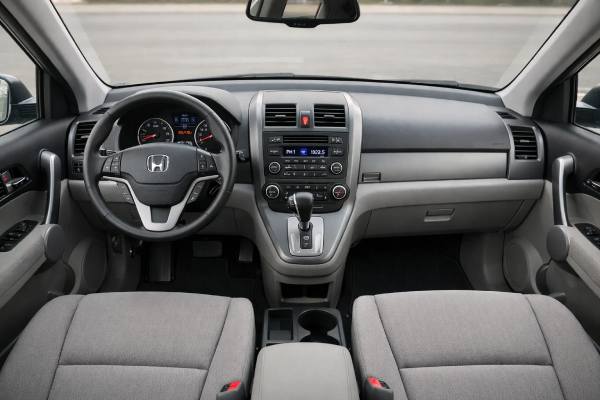
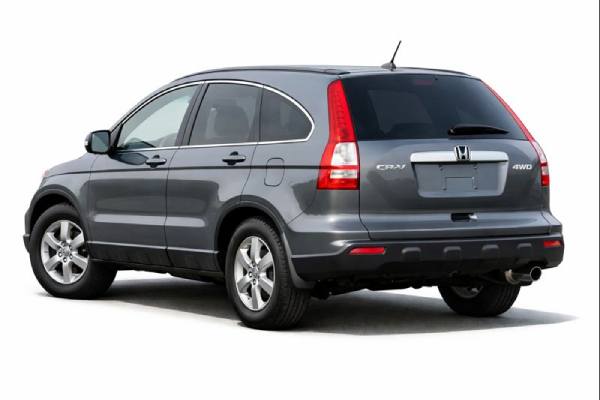
The 2007–2012 Honda CR-V (RE5) with the R20A2 2.0 i-VTEC and Real Time 4WD is built around a simple idea: drive like a front-wheel-drive car most of the time, but add rear traction when conditions demand it. That approach keeps everyday running costs reasonable while improving stability on wet roads, snow, and loose surfaces. The R20A2 is a naturally aspirated engine with a timing chain and a smooth, linear power delivery—more about dependable pace than quick sprints. The “Real Time” system is also not a traditional off-road 4×4; it’s a traction aid that depends on correct tires, fresh fluids, and healthy rear driveline components.
This guide focuses on what owners actually need: the key specs and capacities, how the 4WD system behaves, which faults show up with age, how to spot a tired example before you buy, and how to maintain one so it stays predictable for years.
What to Know
- Real Time 4WD adds valuable grip on wet roads and snow without the constant drag of full-time AWD.
- R20A2 delivers smooth, low-stress performance and typically responds well to routine fluid maintenance.
- Cabin space, visibility, and usability are strong for family and commuting duties.
- Budget for rear differential fluid servicing and watch for tight-turn shudder if it’s been neglected.
- Practical baseline: change engine oil and filter about every 10,000–12,000 km or 12 months (shorten for frequent short trips).
Quick navigation
- How Real Time 4WD fits the RE5
- Specs for R20A2 and AWD system
- RE5 trims, safety, and ADAS
- Common problems in 4WD CR-Vs
- Maintenance routine and buyer checks
- Driving feel, traction, and mpg
- Rival AWD SUV comparisons
How Real Time 4WD fits the RE5
Honda’s Real Time 4WD on the RE5 generation is best understood as a traction system, not a heavy-duty off-road drivetrain. In normal cruising, the CR-V behaves primarily like a front-wheel-drive SUV: the engine sits transversely, the front axle does the steady work, and steering feels light and predictable. When the front tires begin to lose traction, the rear driveline can be engaged through a clutch mechanism in the rear differential assembly, sending useful torque to the rear wheels to stabilize the car and keep it moving.
That design offers two practical ownership advantages. First, it reduces complexity compared with systems that constantly drive both axles through a center differential. Second, because the rear axle isn’t fully loaded all the time, the system can deliver decent efficiency for an AWD vehicle—especially at steady motorway speeds—while still improving winter confidence. The trade-off is that it relies on friction elements and carefully tuned fluid behavior. In other words: it works best when the rear differential fluid is correct and fresh, and when all four tires are closely matched in size and wear.
What Real Time 4WD is good at:
- Pulling away on slick surfaces without the “one wheel spin” feeling common to older FWD SUVs.
- Helping stability in rain, slush, and light gravel.
- Smoothing out traction when the car is lightly loaded and the surface grip changes quickly.
What it is not designed for:
- Serious off-road use with prolonged wheel spin, deep mud, or rocks.
- Situations that require low range gearing, locking differentials, or continuous high torque to the rear axle.
A healthy system typically engages quietly. A neglected system often announces itself with “tight-turn shudder” (a judder or hopping sensation during slow, full-lock turns in a parking lot) because old fluid can’t control clutch friction the way it should. That symptom is common enough that it’s one of the best quick checks during a test drive.
For buyers, the big picture is simple: the Real Time 4WD CR-V is a strong all-season daily driver when maintained like a system—tires, rear diff fluid, and suspension kept in good condition—rather than treated like a rugged 4×4.
Specs for R20A2 and AWD system
These are the most useful specifications for the 2007–2012 CR-V (RE5) with the R20A2 2.0 i-VTEC and Real Time 4WD. Exact figures can vary slightly by market calibration and transmission, so treat numbers as typical and verify against your VIN documentation for service-critical work.
Powertrain and efficiency
| Item | Spec |
|---|---|
| Engine code | R20A2 |
| Engine layout | Front-transverse, inline-4 |
| Valvetrain | SOHC i-VTEC, 4 valves/cyl (16 total) |
| Bore × stroke | 81.0 × 96.9 mm (3.19 × 3.81 in) |
| Displacement | 2.0 L (1,997 cc) |
| Induction | Naturally aspirated |
| Fuel system | PFI/PGM-FI (market naming varies) |
| Compression ratio | 10.5:1 |
| Max power | 150 hp (110 kW) @ ~6,200 rpm |
| Max torque | ~192 Nm (142 lb-ft) @ ~4,200 rpm |
| Timing drive | Chain |
| Rated efficiency (combined) | commonly ~8.0–8.7 L/100 km (27–35 mpg US equivalent) depending on test cycle |
| Real-world highway @ 120 km/h | often ~8.0–9.5 L/100 km if tires and alignment are good |
| Aerodynamics | Cd often quoted around ~0.37–0.39 (varies by market equipment); frontal area varies by mirrors/rails |
Transmission and driveline
| Item | Spec |
|---|---|
| Transmission | 6-speed manual or 5-speed automatic (market dependent) |
| Drive type | Real Time 4WD (on-demand AWD) |
| Differential type | Open front; rear uses clutch-controlled coupling within the rear differential assembly |
Chassis and dimensions
| Item | Spec |
|---|---|
| Suspension (front/rear) | Strut / multi-link |
| Brakes (front/rear) | Disc / disc (sizes vary by market and wheel package) |
| Wheels/tires (typical) | 215/65 R16 or 225/65 R17 (market/trim dependent) |
| Ground clearance | commonly ~185 mm (7.3 in) (check market spec) |
| Length / width / height | ~4,570 / 1,820 / 1,675 mm (179.9 / 71.7 / 65.9 in) |
| Wheelbase | 2,630 mm (103.5 in) |
| Turning circle (kerb-to-kerb) | often around 11.0 m (varies by tire and market spec) |
| Kerb weight | roughly ~1,530–1,650 kg (3,373–3,638 lb) depending on trim/transmission |
Performance and capability (typical expectations)
| Item | Typical figure |
|---|---|
| 0–100 km/h (0–62 mph) | about 11.5–12.5 s (auto often slower than manual) |
| Top speed | around 175–180 km/h (109–112 mph) |
| Towing capacity | market-dependent; often up to ~1,500 kg braked where certified |
| Fuel tank | 58 L (15.3 US gal / 12.8 Imp gal) |
Fluids and service capacities (owner-useful)
| System | Spec and typical capacity |
|---|---|
| Engine oil | 0W-20 or 5W-30 depending on climate/market spec; ~3.7 L (3.9 US qt) per change incl. filter is common for 2.0 variants |
| Coolant | Honda long-life coolant; typical 50/50 mix; total volume varies by market |
| Automatic ATF | Honda-spec ATF; drain-and-fill commonly ~2.5–3.0 L per service (total higher) |
| Rear differential | Honda Dual Pump Fluid (DPSF/DPSF-II spec varies by market); capacity commonly ~1.2–1.3 L |
Electrical (typical)
| Item | Spec |
|---|---|
| Alternator | output varies by market and equipment load |
| 12V battery | commonly ~45 Ah (check CCA rating for your climate) |
| Spark plugs | iridium type; gap and part number depend on model year |
RE5 trims, safety, and ADAS
Trim naming depends on the country (for example, S/SE/EX, Comfort/Elegance/Executive, or similar), but the ownership-relevant differences tend to cluster around wheels, interior equipment, and safety fitment. With the Real Time 4WD version, it’s also important to identify whether the car has stability control and curtain airbags, because those features make a meaningful difference in emergency situations.
Trims and options that change the experience
Wheel and tire packages
Base wheel sizes are often the most comfortable and the least expensive to maintain. Larger wheels can sharpen response, but they also:
- Increase tire cost
- Reduce sidewall cushioning (more impact harshness)
- Make the car more sensitive to alignment and worn suspension bushings
Interior and comfort equipment
Common upgrades on higher trims include dual-zone climate control, heated seats, better audio, and a sunroof. These features are nice, but they also add more actuators, switches, and drains that can age. If you prefer low hassle, a mid-trim with fewer extras can be the sweet spot.
4WD-related identifiers
Badging alone can be unreliable. Confirm via:
- VIN build data or registration information
- A visible rear differential housing and rear driveshaft
- Dashboard indicators and owner manual references
Safety ratings and what they mean for a used RE5
Safety ratings for this era can look strong, but remember that protocols evolved. A CR-V that performed well in the tests of its time may still lack modern crash-avoidance tech and newer small-overlap type evaluations. Use the ratings as a baseline, then focus on the safety systems you can verify on the individual car.
Core safety systems and what to check
Most RE5 CR-Vs include:
- Front airbags
- ABS (anti-lock braking system)
- Electronic brake distribution
- Stability control (often fitted, but not always standard in every market/trim)
- Side airbags and curtain airbags depending on trim/region
Practical inspection points:
- Warning lights at key-on: ABS/VSA/airbag lights should illuminate briefly and then go out. A light that stays on is a real fault, not a “small thing.”
- Seatbelt function: belts should retract crisply; fraying or sluggish retraction can indicate wear or previous incident stress.
- Child-seat anchors: confirm ISOFIX/LATCH hardware is intact and accessible (broken trims are common on family cars).
ADAS reality check
Advanced driver assistance systems (AEB, lane centering, adaptive cruise) are generally not part of this generation. The main “driver assistance” is stability control and traction management. That makes maintenance more important: tired shocks, mismatched tires, or weak brakes remove a lot of the safety margin that newer cars get from electronics.
If you prioritize modern active safety, the best strategy is to buy the cleanest example you can find, keep tires and brakes top quality, and ensure stability control is functioning without fault codes.
Common problems in 4WD CR-Vs
The RE5 CR-V with Real Time 4WD is usually reliable, but AWD adds a few extra wear points compared with FWD. The best way to manage risk is to map issues by prevalence and cost tier, then check symptoms carefully during inspection and test drive.
Common issues (often seen) and usually low-to-medium cost
- Rear differential fluid degradation (tight-turn shudder)
Symptoms: judder, hopping, or binding sensation during slow, full-lock turns after the driveline is warm.
Likely cause: old or incorrect Dual Pump fluid affecting clutch friction characteristics.
Remedy: drain and refill with correct Honda Dual Pump fluid; if badly neglected, multiple services may be needed. Confirm tires are matched before blaming the diff. - Mismatched tires stressing the AWD system
Symptoms: driveline vibration, unusual noises, or recurring shudder even after fluid service.
Likely cause: different rolling diameters front-to-rear (uneven wear or mixed brands/sizes).
Remedy: run four matching tires with similar tread depth; rotate regularly. - Suspension wear (links, bushings, dampers)
Symptoms: clunks over bumps, wandering, uneven tire wear, brake “nervousness” on rough surfaces.
Likely cause: rubber aging and joint wear over time.
Remedy: replace worn components and align. Fresh dampers can transform the CR-V’s stability. - A/C performance decline
Symptoms: weak cooling at idle, intermittent cold air, compressor noise.
Likely cause: leaks, tired compressor, condenser corrosion, or pressure sensor faults.
Remedy: proper leak test and repair, then correct refrigerant charge—avoid repeated “top-ups.”
Occasional issues (nuisance-to-moderate cost)
- Engine mount wear
Symptoms: vibration at idle (especially in gear on automatics), thump on throttle changes.
Remedy: replace failed mounts; re-check alignment and idle condition. - Oil seepage from gaskets/seals
Symptoms: wetness around valve cover or lower engine edges.
Remedy: reseal when it becomes active leakage or contaminates components. - Automatic transmission fluid neglect
Symptoms: shudder, harsh shifts, delayed engagement.
Remedy: correct ATF servicing approach; avoid aggressive flushing on neglected units and diagnose solenoids if behavior persists.
Rare but high-severity (don’t ignore)
- Corrosion affecting rear structure in salt environments
Symptoms: heavy underbody rust near rear suspension mounts, unusual rear alignment, creaking or instability.
Risk: safety-critical if structural mounting is compromised.
Remedy: verify recall/campaign completion and inspect thoroughly; avoid severely corroded vehicles.
Software and calibration notes
This generation is not defined by OTA updates, but you may still encounter dealer service updates for drivability or warning light issues. If the car has persistent fault codes or unusual shifting behavior, ask for documented dealer diagnostics rather than guessing with parts swaps.
Pre-purchase, prioritize proof: service history, rear diff fluid changes, and evidence that safety recalls were addressed.
Maintenance routine and buyer checks
The Real Time 4WD CR-V rewards a “systems” approach: keep fluids fresh, keep tires matched, and replace wear parts before they chew up expensive components. The schedule below is practical for most owners, with shorter intervals for harsh duty (short trips, heavy city use, frequent snow driving, or towing).
Practical maintenance schedule (distance/time)
Every 10,000–12,000 km or 12 months
- Engine oil and filter (use the correct Honda-approved viscosity and quality spec for your market)
- Tire pressure check and visual tire inspection
- Basic underbody look for leaks and corrosion progression
Every 20,000–30,000 km
- Engine air filter (shorten in dusty areas)
- Cabin air filter
- Brake inspection: pads, rotors, caliper slide movement, parking brake function
Every 40,000–60,000 km
- Brake fluid (often every 2 years regardless of km is a smart rule)
- Automatic ATF drain-and-fill (or manual gearbox oil replacement)
- Rear differential Dual Pump fluid service (sooner if you feel shudder or do lots of tight, low-speed turns in winter conditions)
Every 80,000–120,000 km
- Spark plugs (confirm correct part and gap by year)
- Coolant replacement with the correct long-life type and mix ratio
- Serpentine/aux belt inspection and replacement if cracked or noisy
Age-based essentials (10+ years)
- Coolant hoses, radiator cap, and clamps as needed
- Suspension dampers and bushings if ride control has softened
- Battery testing (replacement windows often 4–6 years depending on climate and usage)
Key fluid specifications and capacities (decision-useful)
| Item | Typical spec |
|---|---|
| Engine oil | Honda-approved 0W-20 or 5W-30 depending on market; capacity varies by engine—verify for R20A2 |
| Automatic ATF | Honda-spec ATF; drain-and-fill is partial by design |
| Rear differential | Honda Dual Pump Fluid (DPSF family); typical fill around ~1.2–1.3 L |
| Brake fluid | DOT 3 or DOT 4 depending on market documentation |
Essential torque values (verify by VIN documentation)
| Fastener | Typical torque range |
|---|---|
| Wheel lug nuts | ~108 Nm (80 lb-ft) is common for Honda passenger vehicles |
| Rear differential fill/drain plugs | commonly around ~45–50 Nm (33–37 lb-ft) on similar Honda units |
| Engine oil drain plug | often around ~39–49 Nm (29–36 lb-ft) depending on sump design |
Treat these as “order-of-magnitude guidance” only; confirm the exact spec for your vehicle.
Buyer’s checklist: what to inspect and test
AWD function checks
- Tight, slow full-lock turns in a parking lot after a 15–20 minute drive: feel for shudder or binding.
- Confirm four matching tires with similar tread depth (a major hidden cost if not).
- Listen for rear-end humming that changes with speed (could indicate bearing or diff wear).
Rust and structure
- Inspect rear suspension mounting zones and the underbody seams.
- Look for flaky rust layers, not just surface discoloration.
Cooling and A/C
- Confirm stable temperature, no coolant smell after driving, and consistent A/C cooling at idle.
Electronics
- Verify ABS/VSA/airbag lights behave correctly at startup.
- Check windows, locks, and heater fan operation across speeds.
A clean inspection plus proof of correct 4WD fluid service is the difference between a confident buy and an ongoing driveline annoyance.
Driving feel, traction, and mpg
In daily use, the Real Time 4WD CR-V feels “normal” in the best way. Most of the time it behaves like a stable, easy FWD crossover with good outward visibility and predictable controls. The extra traction is most noticeable when the surface grip changes suddenly—rain-slick roundabouts, slushy intersections, wet grass at low speeds, or uneven gravel where one front tire would otherwise spin.
Ride, handling, and cabin noise
Ride: Comfort is generally a strong point. The CR-V’s suspension is tuned to absorb everyday impacts without harshness, especially on sensible tire sizes. If the ride feels choppy or noisy, suspect:
- Low-profile tires on oversized wheels
- Worn dampers
- Tired bushings or stabilizer links
Handling: It’s not sporty, but it’s composed. Real Time 4WD can make corner exits feel more secure on slick roads because the rear axle can contribute when the front begins to slip. The biggest handling “upgrade” on an older RE5 is still fresh tires and correct alignment.
NVH: Wind and tire noise are more present than in modern SUVs. A good set of touring tires can reduce drone dramatically. If you hear a persistent hum from the rear, differentiate tire noise (changes with road surface) from bearing/diff noise (more constant and speed-dependent).
Powertrain character (R20A2)
The R20A2 is smooth and linear. It doesn’t have turbo punch at low rpm, so it prefers steady throttle and occasional downshifts for hills or passing. With the automatic, expect deliberate kickdown rather than instant surge. With the manual, it’s easy to keep in the torque band without feeling strained.
Real-world efficiency: what owners typically see
AWD adds some weight and driveline drag, so expect a small fuel penalty compared with FWD—often noticeable in stop-start driving.
Typical ranges:
- City: ~9.5–12.0 L/100 km (20–25 mpg US) depending on traffic and trip length
- Highway (100–120 km/h): ~8.0–9.5 L/100 km (25–29 mpg US)
- Mixed: ~8.7–10.0 L/100 km (23–27 mpg US)
Cold weather can push numbers higher because warm-up takes longer and winter tires add rolling resistance. Keeping tires properly inflated and the rear diff fluid fresh helps the drivetrain behave smoothly, which also supports consistent consumption.
Traction and control notes
Real Time 4WD is a confidence tool, not a license to drive like a rally car in snow. Pair it with:
- Quality all-season or winter tires
- Working stability control
- Healthy brakes and suspension
Do that, and the RE5 becomes a calm, capable year-round SUV that feels secure without demanding constant attention.
Rival AWD SUV comparisons
Cross-shopping a 2007–2012 CR-V Real Time 4WD usually comes down to two questions: which vehicle is in better condition, and which AWD system and ownership profile fits your use. Here’s how the Honda typically stacks up against common alternatives of the era.
Toyota RAV4 AWD (similar years)
Strengths: strong durability reputation, wide parts availability, often good resale.
CR-V advantage: a more “Honda-smooth” driving feel and a Real Time system that’s easy to live with when serviced.
Watch-outs: on any older AWD Toyota, verify drivetrain fluids and listen for bearing noise—condition dominates.
Subaru Forester AWD (similar years)
Strengths: full-time AWD feel and strong winter confidence, often excellent outward visibility.
CR-V advantage: generally simpler driveline servicing and, in many markets, fewer AWD-related wear points.
Watch-outs: Subarus can be excellent, but buy based on documented maintenance and a clean underbody.
Nissan X-Trail (T31) / Qashqai-era AWD options
Strengths: often cheaper on the used market and sometimes more “SUV-like” packaging.
CR-V advantage: consistent long-term refinement and typically fewer recurring driveline complaints when maintained.
Watch-outs: if the rival uses a CVT in your market, prioritize proven fluid service and a smooth test drive.
Volkswagen Tiguan 4Motion (early)
Strengths: strong road manners and a premium interior feel, depending on spec.
CR-V advantage: simpler ownership path and usually lower long-term “system” repair exposure, especially for buyers who want predictable running costs.
Watch-outs: older European turbo powertrains can be rewarding, but they demand disciplined maintenance and a bigger contingency budget.
Hyundai Santa Fe / Kia Sportage AWD (era-dependent)
Strengths: value and equipment for the money, sometimes newer for the same price.
CR-V advantage: a cohesive, “ages gracefully” feel when rubber parts, switches, and trim get older—again, depending on maintenance.
Watch-outs: check corrosion, suspension wear, and correct servicing rather than assuming “newer equals better.”
The practical verdict
A well-maintained CR-V Real Time 4WD is rarely the fastest choice, but it’s often the easiest AWD compact SUV to live with long-term. The system’s main requirement—matched tires and regular rear diff fluid service—is straightforward. If you want winter confidence without stepping into complex off-road hardware, this CR-V remains a strong used buy when condition and history are right.
References
- 2009 Honda CR-V 2009 (Safety Rating)
- Honda CR-V | Safety Rating & Report | ANCAP 2007 (Safety Rating)
- Check for Recalls: Vehicle, Car Seat, Tire, Equipment | NHTSA 2026 (Recall Database)
- 2007 Honda CR-V Online Reference Owner’s Manual 2007 (Owner’s Manual)
- Service Bulletin 23-032 2023 (Safety Recall)
Disclaimer
This article is for informational purposes only and is not a substitute for professional diagnosis, inspection, or repair. Specifications, torque values, service intervals, and procedures can vary by VIN, market, model year, and installed equipment. Always verify details against your vehicle’s official owner’s manual and service documentation, and follow local safety requirements when performing maintenance.
If you found this guide useful, please consider sharing it on Facebook, X (Twitter), or your preferred community to support our work.