

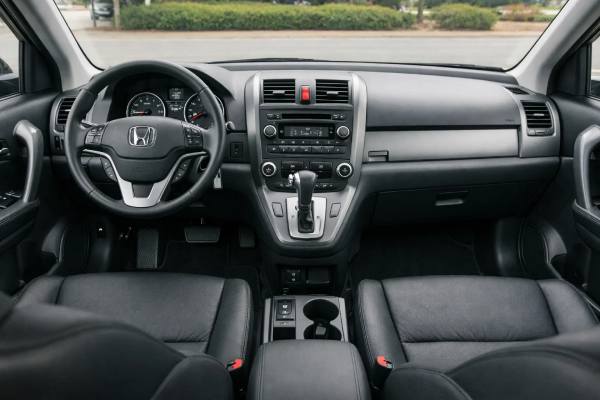

The facelifted 2010–2012 Honda CR-V RE6 with the 2.2 i-DTEC (N22B4) is a practical SUV built around one idea: deliver diesel torque and everyday comfort without turning ownership into a hobby. The 150 hp output looks modest on paper, but the engine’s low-rpm pull is the real story—especially in mixed driving and when the vehicle is loaded. Honda’s Real Time 4WD system is not a rock-crawler setup; it is a traction helper that stays unobtrusive until the front tires slip, which suits wet roads, light snow, and dirt tracks.
For buyers today, the smart questions are about diesel-specific upkeep (DPF and EGR health), service history quality, and whether the AWD fluids have been maintained. Get those right and this CR-V can be a long-lasting, calm companion that still feels modern in how it drives.
Fast Facts for the 2.2 i-DTEC AWD
- Strong midrange torque makes relaxed overtakes and easier hill driving, even with passengers and cargo.
- Real Time 4WD improves traction in rain and snow without the weight and complexity of full-time AWD.
- The cabin and cargo layout are ownership-friendly: easy visibility, flexible load space, and simple controls.
- Plan for diesel essentials: DPF-friendly driving habits and periodic EGR/intake cleaning as mileage rises.
- Change engine oil and filter every 10,000–15,000 km (6,000–9,000 mi) or 12 months, depending on duty cycle.
Guide contents
- RE6 diesel AWD ownership picture
- N22B4 technical specifications
- Facelift trims and safety tech
- Diesel reliability and service actions
- Maintenance schedule and buying advice
- Performance, towing, and fuel use
- Compared with diesel rivals
RE6 diesel AWD ownership picture
The 2010–2012 facelift CR-V in RE6 form (diesel with Real Time 4WD) is best understood as an on-road SUV that is unusually competent when conditions turn bad. Honda tuned the facelift to feel more “premium” in daily use: calmer ride control, improved refinement, and a generally more settled highway character. The diesel i-DTEC also changes the personality compared with the petrol models. You drive it on torque, not revs—short shifting is natural, and the engine feels most efficient when you keep it in the midrange.
Real Time 4WD is the second pillar of the RE6 package. In normal driving it behaves like a front-driver, which helps fuel use and reduces driveline wear. When slip appears, it routes torque rearward through a rear differential that is sensitive to fluid condition. That detail matters: buyers often judge the AWD system by whether it makes noise on tight turns or shudders on low-speed maneuvers. In many cases, that’s old or incorrect rear differential fluid rather than a failing unit.
Ownership satisfaction usually comes down to three things:
- Diesel health management: DPF (diesel particulate filter) loading, EGR soot buildup, and the quality of past oil.
- Driveline maintenance: rear differential service, prop shaft support bearing condition, and tire matching.
- Body and interior aging: door seals, suspension bushings, and electrical “comfort” items (window regulators, parking sensors, HVAC controls).
If your driving is mostly short city trips, this CR-V demands discipline—regular hot runs to complete DPF regeneration and strict oil-change timing. If you drive mixed routes or highway regularly, the i-DTEC can be a very durable long-distance engine, and the CR-V’s comfort makes that mileage easy.
N22B4 technical specifications
Below are practical, ownership-relevant specs for the facelift CR-V Real Time 4WD with the 2.2 i-DTEC (N22B4). Figures can vary by market, gearbox (manual vs automatic where offered), wheel package, and homologation cycle. Use these as a baseline and verify by VIN when ordering parts.
Powertrain and efficiency
| Item | Specification |
|---|---|
| Code | N22B4 |
| Engine layout and cylinders | Inline-4 (I-4), DOHC, 16-valve |
| Displacement | 2.2 L (≈ 2,199 cc) |
| Bore × stroke | ≈ 85.0 × 96.9 mm (3.35 × 3.81 in) |
| Induction | Turbocharged (single turbo) |
| Fuel system | Common-rail direct injection (diesel) |
| Compression ratio | ≈ 16.7:1 (market-dependent) |
| Max power | 150 hp (110 kW) @ rpm (market calibration varies) |
| Max torque | 350 Nm (258 lb-ft) @ rpm (typically ~2,000 rpm) |
| Timing drive | Chain |
| Rated efficiency (typical EU combined) | ≈ 6.0–6.8 L/100 km (39–47 mpg US / 42–56 mpg UK) |
| Real-world highway @ 120 km/h (75 mph) | ≈ 7.0–7.8 L/100 km (30–34 mpg US / 36–40 mpg UK) |
| Aerodynamics | Cd ≈ 0.37 (estimate); frontal area ≈ 2.5 m² (estimate) |
Transmission and driveline
| Item | Specification |
|---|---|
| Transmission | 6-speed manual (common); diesel automatic availability depends on market/year |
| Drive type | Real Time 4WD (on-demand AWD) |
| Differentials | Front: open; Rear: clutch-based torque transfer in rear differential assembly |
Chassis and dimensions
| Item | Specification |
|---|---|
| Suspension (front/rear) | MacPherson strut / multi-link |
| Steering | Electric power steering (EPS) |
| Brakes | 4-wheel discs (vented front); sizes vary by trim |
| Wheels and tires | Common: 225/65 R17; some trims 225/60 R18 |
| Ground clearance | ≈ 185 mm (7.3 in) |
| Length / width / height | ≈ 4,574 / 1,820 / 1,685 mm (180.1 / 71.7 / 66.3 in) |
| Wheelbase | ≈ 2,620 mm (103.1 in) |
| Turning circle (kerb-to-kerb) | ≈ 11.4 m (37.4 ft) |
| Kerb weight | ≈ 1,650–1,750 kg (3,640–3,860 lb), trim-dependent |
| Fuel tank | ≈ 58 L (15.3 US gal / 12.8 UK gal) |
| Cargo volume | Typically ≈ 550–560 L seats up; ≈ 1,500+ L seats down (method varies) |
Performance and capability
| Item | Specification |
|---|---|
| Acceleration | 0–100 km/h (0–62 mph): ≈ 9.5–10.5 s |
| Top speed | ≈ 190 km/h (118 mph) |
| Braking distance | 100–0 km/h: ≈ 38–41 m (range depends on tires) |
| Towing capacity | Often up to ≈ 2,000 kg (4,409 lb) braked; ≈ 600–750 kg unbraked (market-dependent) |
| Roof load | Commonly 75 kg (165 lb) (verify by market) |
Fluids and service capacities (decision-useful)
| Item | Typical specification |
|---|---|
| Engine oil | Low-SAPS ACEA C2/C3 (market); common grades 0W-30 or 5W-30; capacity often ≈ 5.5–6.0 L (5.8–6.3 US qt) |
| Coolant | Long-life OAT coolant; capacity often ≈ 6–7.5 L (6.3–7.9 US qt) |
| Manual transmission | Honda MTF-type; often ≈ 2.1–2.3 L (2.2–2.4 US qt) |
| Rear differential | Honda Dual Pump Fluid (DPSF) type; often ≈ 1.1–1.3 L (1.2–1.4 US qt) |
| A/C refrigerant | Typically R134a; charge varies by market and system label |
Electrical
| Item | Typical specification |
|---|---|
| Alternator output | Often ~100–130 A (market-dependent) |
| 12 V battery | Commonly ~60–70 Ah (CCA varies) |
| Glow plugs | Diesel-type; replace by condition (fault codes, hard starts) |
Safety and driver assistance (period-correct)
| Item | Notes |
|---|---|
| Crash ratings | This generation received strong results in period testing; see safety section for body-specific ratings and notes |
| Headlights (IIHS) | Ratings vary by exact lamp type; halogen vs HID differences matter |
| ADAS suite | Pre-modern ADAS era: stability control, ABS/EBD, airbags, seatbelt reminders; typically no AEB/ACC/LKA on these years |
Facelift trims and safety tech
Trim structure varies by market, but most facelift RE6 diesels follow a familiar ladder: a base grade with the essentials, a mid-trim that adds comfort and convenience, and a top trim that adds leather, upgraded audio/navigation, and more exterior detailing. When shopping, focus less on the badge and more on equipment that changes ownership cost: wheel size (tire replacement price), headlight type, parking sensor count, and whether the vehicle has a tow package.
Trims and options: what usually changes in real life
- Wheels and tires: 17-inch wheels ride more softly and cost less to re-tire than 18-inch packages. If you value quietness and pothole tolerance, 17s are often the sweet spot.
- Lighting: Some trims add HID/Xenon headlights, washers, and fog lamps. Better lighting is a real safety and fatigue advantage, but replacement parts cost more.
- Interior durability: Leather can age well if cared for; neglected leather cracks at bolsters. Cloth can be more forgiving and often looks better at 200,000+ km.
- Infotainment and camera: Navigation units can feel dated; a reversing camera and parking sensors, however, still pay off daily—especially given rear visibility with a loaded cargo area.
- Towing hardware: Factory wiring and cooling provisions (where applicable) reduce headaches compared with aftermarket wiring splices.
Year-to-year changes that matter
The 2010 facelift brought styling updates (bumpers, grille), and in many markets it also aligned emissions compliance and powertrain offerings for Euro 5 diesel applications. If you can choose, prioritize vehicles with clear service documentation after 2010 because diesel maintenance practices improved as DPF-equipped cars became common.
Safety ratings and what they mean today
For this generation, period crash tests show a strong occupant cell and good side impact performance when equipped with side curtains. One key nuance: safety equipment was not always standard across all trims in all markets. Some base variants historically lacked head-protecting side curtains, while higher trims had them. When in doubt, physically confirm:
- Side curtain airbag tags at the roof rail/headliner area
- Stability control (often a dash light check at key-on)
- Seatbelt reminder presence and rear center belt type (3-point preferred)
Safety systems and driver assistance (what you actually get)
Expect “foundational safety” rather than modern driver assistance:
- Airbags: typically front, front side, and (trim-dependent) curtain airbags
- ABS/EBD and stability control: generally standard in most markets by these years
- ISOFIX/LATCH: usually present; check rear seat anchor covers and owner manual diagrams
- No modern ADAS: AEB, adaptive cruise, and lane centering are generally not part of this generation
If the car has been in a front-end repair, insist on a post-repair scan and confirm airbag and ABS modules show no stored crash events.
Diesel reliability and service actions
The N22B4 i-DTEC is capable of high mileage, but like most modern-ish diesels it rewards the right usage pattern and punishes neglect. Below are the most useful issues to map by prevalence and cost.
Common (plan for it)
- EGR valve and intake soot buildup (medium cost):
- Symptoms: hesitation, flat spots, uneven idle, reduced fuel economy, soot smell, sometimes a check-engine light.
- Likely cause: exhaust gas recirculation (EGR) mixes soot with oil vapor over time, restricting airflow.
- Remedy: EGR cleaning/replacement and intake cleaning; address oil vapor sources (PCV function) and use quality oil.
- DPF loading and forced regenerations (medium cost, sometimes high):
- Symptoms: frequent regen behavior (rising idle, fans running), warning lights, limp mode, rising oil level (diesel dilution).
- Likely cause: repeated short trips or interrupted regenerations; sensor faults can contribute.
- Remedy: confirm sensors (DPF differential pressure, exhaust temp), evaluate soot/ash load, and change oil if dilution is suspected. Long, steady drives help prevention.
- Rear differential “groan” on tight turns (low to medium cost):
- Symptoms: humming, binding, or chattering at low speed in parking maneuvers.
- Likely cause: old or incorrect rear diff fluid in the Real Time 4WD unit.
- Remedy: drain/fill with the correct Honda Dual Pump Fluid type, sometimes more than once.
Occasional (inspect carefully)
- Clutch and dual-mass flywheel wear (medium to high cost):
- Symptoms: rattling at idle, vibration on takeoff, clutch slip under load, shudder.
- Likely cause: torque + urban driving + towing accelerates wear.
- Remedy: clutch and DMF replacement as a set if symptoms are present.
- Turbo control issues (medium cost):
- Symptoms: underboost/overboost codes, weak acceleration, intermittent limp mode.
- Likely cause: vacuum leaks, actuator problems, or variable geometry sticking (if equipped in your calibration).
- Remedy: smoke/vacuum testing, actuator checks, and cleaning where appropriate.
- Injector sealing and combustion noise changes (medium cost):
- Symptoms: ticking, diesel smell, hard starts, rough running.
- Likely cause: injector seal leakage or injector wear.
- Remedy: proper diagnosis with correction values; replace seals/injectors as needed.
Rare (but expensive if ignored)
- Cooling system faults leading to overheating (high risk if driven hot):
- Symptoms: temperature rise under load, coolant loss, heater performance changes.
- Likely cause: thermostat, radiator aging, water pump issues, or hose failures.
- Remedy: pressure test, correct parts replacement, and proper bleeding.
- Timing chain stretch (rare but serious):
- Symptoms: cold-start rattle, correlation codes, worsening noise with mileage.
- Likely cause: extended oil intervals or poor oil quality.
- Remedy: measure/confirm with service procedures; replace chain components when out of spec.
Recalls, TSBs, and how to verify completion
Recalls and service campaigns vary by market. Your best practice is consistent everywhere:
- Run an official VIN recall check (government database where available, plus dealer record).
- Ask for documentation showing the remedy was completed.
- Confirm the car has no warning lights and that module scans are clean.
If you see evidence of underbody corrosion in regions that salt roads, take it seriously: rust near subframe mounts, trailing arm mounts, and rear structural areas can change the economics of ownership quickly.
Maintenance schedule and buying advice
A well-maintained RE6 diesel is usually obvious: clean cold starts, stable idle, consistent boost, and a drivetrain that stays quiet in tight turns. Use the schedule below as a practical baseline for long service life.
Maintenance schedule (distance and time)
- Engine oil and filter: every 10,000–15,000 km (6,000–9,000 mi) or 12 months. If you do short trips, reduce the interval and monitor for oil level rise (diesel dilution).
- Air filter: inspect every service; replace about 30,000 km (18,000 mi) or sooner in dusty regions.
- Cabin filter: 15,000–30,000 km (9,000–18,000 mi) depending on environment.
- Fuel filter (diesel): commonly 40,000–60,000 km (25,000–37,000 mi); follow market guidance.
- Coolant: often 5 years / 100,000 km then periodic; verify the coolant type and service history.
- Brake fluid: every 2–3 years regardless of mileage.
- Brake pads and rotors: inspect at every tire rotation; expect wide variation by driving style.
- Manual transmission fluid: 60,000–100,000 km (37,000–62,000 mi); earlier if towing or heavy city use.
- Rear differential fluid (Real Time 4WD): every 30,000–50,000 km (18,000–31,000 mi), especially if you hear any groan or do frequent low-speed turning and slippery-road use.
- Serpentine belt and hoses: inspect annually; replace by condition or around 100,000–160,000 km depending on climate.
- 12 V battery: test yearly after year 4; replacement often 4–6 years.
- DPF health: not a fixed “replace interval,” but treat it as a system—keep sensors healthy, don’t ignore warnings, and plan periodic long drives.
Fluids: practical selection notes
- Choose the correct low-ash oil spec for DPF-equipped diesels (ACEA C-category is common in Europe). The wrong oil increases ash accumulation and shortens DPF life.
- Use the correct rear diff fluid (Honda Dual Pump Fluid type) to prevent AWD chatter.
- Avoid “universal” fluids unless you have clear compatibility documentation.
Essential torque values (verify by VIN/service manual)
These are typical Honda ranges that help you sanity-check shop work, not a substitute for model-specific service data:
- Wheel lug nuts: ~108 Nm (80 lb-ft)
- Engine oil drain plug: often ~35–45 Nm (26–33 lb-ft)
- Brake caliper bracket bolts: commonly ~90–110 Nm (66–81 lb-ft)
Buyer’s guide: what to inspect before you commit
Paperwork and history
- Evidence of short oil intervals and correct oil specification
- Proof of rear differential servicing
- Any record of DPF/EGR work (not necessarily bad—often a sign the owner addressed it)
Mechanical checks
- Cold start: should fire quickly without excessive smoke or hunting idle
- Boost behavior: smooth, consistent pull; no whistling, surging, or limp mode
- Parking lot test: tight circles both directions—listen for rear diff groan
- Suspension: clunks over sharp bumps suggest worn links or bushings
Body and corrosion
- Check rear subframe areas, seam edges, and underbody shields for trapped moisture damage
- Inspect tailgate edges and door bottoms for early bubbling (market-dependent)
Best “sweet spot” configurations
- 17-inch wheels for comfort and cost control
- Proven maintenance history over any single luxury feature
- If you do mostly city miles: consider whether a diesel DPF vehicle truly fits your routine
Long-term durability outlook: strong if serviced on time and driven in a way that keeps the DPF system healthy; costly if neglected or used exclusively for short hops.
Performance, towing, and fuel use
The facelift CR-V diesel is not a fast SUV in the modern sense, but it is satisfyingly effective in real driving. The torque peak arrives early, so the car feels “awake” at everyday speeds. On a motorway incline, it typically needs fewer downshifts than petrol models, and that reduces cabin noise and driver effort.
Real-world impressions: ride, handling, and NVH
- Ride: The CR-V leans toward comfort. It absorbs broken pavement well, especially on 17-inch tires. On 18s, impacts are sharper and cabin noise can rise.
- Handling: Neutral and predictable. It will roll if pushed, but it tracks cleanly and feels stable in long corners.
- Steering: Light-to-medium effort; more about accuracy than feedback. Good for commuting, less “talkative” for enthusiasts.
- Braking feel: Generally consistent with good pedal stability, but older brake hoses, tired pads, or cheap rotors can make the pedal feel less confidence-inspiring.
- Cabin noise: Diesel sound is present at idle and low rpm, but at highway speed the CR-V is usually calm if engine mounts and exhaust are healthy.
Powertrain character and gearbox behavior
- Throttle response: Strong once boost is established; below that, it feels deliberate rather than sharp.
- Manual gearbox: Typically the preferred setup for control and durability; clutch condition matters a lot due to diesel torque.
- Automatic (where fitted): Smooth when healthy, but it adds heat and complexity. If towing, prioritize flawless fluid history and clean shift behavior.
Real-world efficiency (what owners often see)
Expect fuel use to be dominated by speed, temperature, and trip length:
- City: ~7.5–9.0 L/100 km (26–31 mpg US / 31–38 mpg UK) depending on traffic and DPF regeneration frequency
- Highway (100–120 km/h): ~6.5–7.8 L/100 km (30–36 mpg US / 36–43 mpg UK)
- Mixed: ~6.8–8.0 L/100 km (29–35 mpg US / 35–42 mpg UK)
Cold weather can add a noticeable penalty because warm-up takes longer and regenerations become more frequent.
Traction and control in poor conditions
Real Time 4WD works best when you treat it as traction insurance:
- Use matched tires (same brand/model and similar wear) to reduce driveline stress.
- In snow, choose a winter tire with a sensible sidewall (often 17-inch setups shine here).
- If stability control feels overly intrusive, it is usually reacting to tire grip differences rather than a system fault.
Load and towing notes
When properly equipped and within rated limits, the CR-V can tow confidently thanks to diesel torque. Practical cautions:
- Expect a 15–30% fuel consumption increase when towing moderate loads.
- Watch for coolant temperature stability on grades; a weak cooling system shows itself under tow.
- Re-check rear differential fluid intervals if towing or launching boats, since low-speed, high-load situations work the AWD unit harder.
Compared with diesel rivals
In the 2010–2012 used market, the CR-V diesel AWD typically cross-shops with vehicles that offer similar size and torque, but with different ownership tradeoffs.
Versus Toyota RAV4 2.2 D-4D AWD (similar era)
- CR-V advantages: often quieter ride quality, very user-friendly cabin layout, and an AWD system that feels seamless on wet roads.
- RAV4 advantages: strong reputation for durability and, in some markets, simpler diesel ownership depending on exact engine/DPF configuration.
- Decision tip: choose based on service history and underbody condition more than brand—both can be excellent or expensive depending on care.
Versus Volkswagen Tiguan 2.0 TDI 4Motion
- CR-V advantages: typically simpler long-term ownership and fewer “system stack” complexities.
- Tiguan advantages: more “European” steering feel and, depending on spec, stronger highway passing performance.
- Decision tip: if you want lower surprise costs, the CR-V often wins—especially if you confirm DPF health and AWD fluid maintenance.
Versus Nissan X-Trail 2.0 dCi AWD
- CR-V advantages: refined road behavior and strong ergonomics; the i-DTEC torque suits relaxed driving.
- X-Trail advantages: some trims feel more utility-focused; AWD behavior can feel more “SUV-like” depending on system.
- Decision tip: compare rust risk and suspension wear carefully; both are sensitive to neglected underbody upkeep.
Versus Hyundai Santa Fe 2.2 CRDi (larger class overlap)
- CR-V advantages: typically better fuel economy and easier parking; less weight means less brake and tire cost.
- Santa Fe advantages: more space and sometimes higher tow ratings, depending on model and market.
- Decision tip: if you truly need space and tow margin, go larger; if you want the most balanced daily vehicle, the CR-V is usually the calmer choice.
Why the CR-V RE6 still makes sense
Choose this CR-V when you want a diesel SUV that feels “normal” every day: comfortable, easy to see out of, predictable in bad weather, and not overloaded with aging tech. Its biggest advantages are not headline features—they are the small, repeatable wins: good visibility, usable cargo space, torque that reduces effort, and an AWD system that helps without demanding attention. The key is buying one that has been driven and serviced like a diesel should be.
References
- HONDA CR-V 2010 – DOSSIER DE PRESSE 2010 (Manufacturer Press Kit)
- Crash Test Report 2007 (Safety Rating)
- 2011 Honda CR-V 4-door SUV 2011 (Safety Rating)
- 2011 CR-V Owner’s Manual (Unlinked) 2010 (Owner’s Manual)
- Check for Recalls: Vehicle, Car Seat, Tire, Equipment | NHTSA 2026 (Recall Database)
Disclaimer
This article is for informational purposes only and is not a substitute for professional diagnosis, inspection, or repair. Specifications, torque values, service intervals, and procedures can vary by VIN, market, production date, and equipment, so always verify details using official Honda service documentation and vehicle labeling before ordering parts or performing work.
If you found this guide useful, please consider sharing it on Facebook, X (Twitter), or your favorite forum to help others and support our work.