

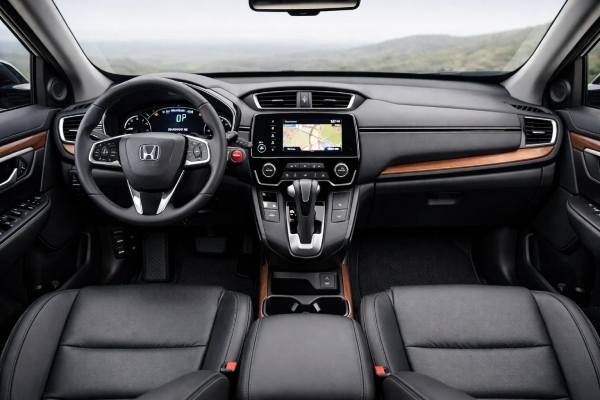

The 2017–2019 Honda CR-V RW7 with the 1.6 i-DTEC (N16A5) is the “long-distance CR-V” in the fifth-generation lineup: a roomy, family-first SUV tuned for steady highway work and low fuel use, not quick sprints. In FWD form, it pairs a torque-focused turbo-diesel with a practical chassis that prioritizes comfort, predictability, and everyday usability. It also avoids some AWD-specific service items, which can simplify ownership.
Where this variant shines is in real-world efficiency at speed, relaxed cruising manners, and a cabin that remains easy to live with even when the vehicle is loaded. The trade-off is that modern diesel emissions hardware demands the right driving pattern—lots of short trips can raise maintenance costs. If your routine includes frequent motorway runs, the RW7 diesel can be a calm, economical, and durable pick when maintained with care.
Quick Specs and Notes
- Strong low-rpm pull suits motorway merges and loaded driving more than stop-light launches.
- FWD layout keeps running gear simpler and usually lighter than AWD equivalents.
- Diesel emissions systems dislike repeated short trips; plan periodic longer runs to keep them healthy.
- Change engine oil and filter every 12 months or 15,000 km (whichever comes first) for predictable wear control.
- Expect best economy on steady routes; city-only driving typically adds 1–2 L/100 km versus highway use.
What’s inside
- RW7 diesel CR-V in use
- N16A5 specs and capacities
- Trims, infotainment, and safety tech
- Diesel reliability watchlist
- Service schedule and buyer tips
- Road feel and economy
- RW7 diesel vs alternatives
RW7 diesel CR-V in use
Think of the RW7 1.6 i-DTEC as the CR-V for people who measure days in kilometers. It’s engineered around steady-state efficiency and low-stress travel: a tall seating position, a roomy second row, and a boot that remains genuinely usable with the seats up. The FWD layout also gives it a clean, simple drivetrain path—fewer rotating components than AWD—often translating to slightly better economy and fewer fluid services over the long term.
The N16A5 diesel’s personality is defined by torque delivery rather than top-end power. In normal driving, you tend to short-shift and ride the midrange. That makes the CR-V feel composed when it’s carrying passengers, luggage, or a roof box. It also means it rewards smoother inputs: feed in throttle gently and the engine stays quiet and efficient; rush it and you’ll hear more diesel clatter and turbo work without a dramatic increase in pace.
This generation’s strengths are easy to feel in daily use:
- Space efficiency: The cabin packaging is a highlight. Adults fit comfortably front and rear, and the driving position suits long hours.
- Highway comfort: Suspension tuning is oriented toward stability and compliance, with safe, predictable responses to crosswinds and road camber.
- Visibility and ease: The CR-V is easy to place in traffic, and most trims offer helpful camera and sensor coverage.
Ownership comes down to matching the vehicle to the right duty cycle. Modern diesels rely on emissions aftertreatment (notably the diesel particulate filter, or DPF) to stay clean. If the car spends most of its time on short, cold runs, soot loading increases, regeneration happens more often, and the system becomes more sensitive to neglected maintenance. If the car regularly sees longer motorway trips, it’s typically happier and cheaper to keep happy.
For many buyers, the RW7 diesel hits a sweet spot: it’s not a sporty SUV, but it’s one of the more relaxing ways to cover distance in this class, especially if you value calm cruising, sensible fuel use, and a practical interior over outright acceleration.
N16A5 specs and capacities
Below are practical, ownership-oriented specifications for the RW7 FWD diesel. Exact numbers can vary by market, wheel size, and trim, so use these as a decision-making baseline and verify against your VIN-specific documentation.
Powertrain and efficiency (RW7 1.6 i-DTEC 120)
| Item | Specification |
|---|---|
| Engine code | N16A5 (1.6 i-DTEC turbo-diesel) |
| Layout | Inline-4, DOHC, 16-valve |
| Displacement | 1.6 L (≈1597 cc) |
| Induction | Turbocharged (intercooled) |
| Fuel system | Common-rail diesel direct injection |
| Compression ratio | Typically ~16:1 (market dependent) |
| Max power | 120 hp (88 kW) @ ~4,000 rpm |
| Max torque | Typically ~300 Nm @ ~2,000 rpm |
| Timing drive | Chain (no routine replacement interval; inspect if noisy/out of spec) |
| Rated economy | Often mid-4 to low-5 L/100 km range depending on test cycle and trim |
| Real-world highway @ 120 km/h | Commonly ~5.5–6.5 L/100 km depending on load, tyres, and weather |
Transmission and driveline
| Item | Specification |
|---|---|
| Transmission | Typically 6-speed manual (market dependent) |
| Drive type | FWD |
| Differential | Open |
| Traction aids | ABS, stability control, brake-based traction control |
Chassis and dimensions (typical CR-V RW, EU-market baseline)
| Item | Specification |
|---|---|
| Front suspension | MacPherson strut |
| Rear suspension | Multi-link |
| Steering | Electric power steering |
| Wheels/tyres | Commonly 17–18 in packages (varies by trim) |
| Ground clearance | Typically ~190–210 mm (market/trim dependent) |
| Length / width / height | ~4600 mm / ~1855 mm / ~1685–1690 mm |
| Wheelbase | ~2660 mm |
| Turning circle | ~11.0 m (kerb-to-kerb, typical) |
| Kerb weight | Often ~1,550–1,650 kg depending on trim and equipment |
| Fuel tank | Often ~55–57 L |
| Cargo volume | Typically ~560 L seats up; ~1,700+ L seats down (method dependent) |
Performance and capability (what to expect)
| Item | Typical range |
|---|---|
| 0–100 km/h | Often ~11–13 s depending on gearing and test conditions |
| Top speed | Commonly ~185–200 km/h |
| Towing (braked) | Often ~1,500 kg (market/trim dependent) |
| Roof load | Commonly ~75 kg (check rails and handbook limits) |
Fluids, service capacities, and key torques (ownership-focused)
Rather than list a single number that can be wrong by variant, the most useful approach is a “what matters” checklist:
- Engine oil: Low-SAPS oil required for DPF health; viscosity commonly 0W-30 or 5W-30 depending on market. Capacity varies by sump and filter; confirm before filling.
- Coolant: Long-life coolant, typically pre-mixed or 50/50; confirm spec and capacity.
- Manual gearbox oil: Service interval varies by duty cycle; many owners treat it as a longevity service around 80,000–120,000 km.
- Brake fluid: Typically every 3 years, regardless of mileage.
- Key torque (common critical): Wheel nuts are commonly around 108 Nm on many Hondas, but always confirm for your wheel type.
If you want one rule that protects this drivetrain: use the correct low-ash oil, keep service intervals consistent, and don’t ignore small drivability changes—diesel systems often give early warning signs before they become expensive.
Trims, infotainment, and safety tech
Trim naming varies by country, but the ownership questions are consistent: “What safety tech is included?”, “Which infotainment version is fitted?”, and “Are there mechanical differences I should care about?” For the RW CR-V, mechanical differences between trims are usually modest—wheel size, comfort equipment, and driver assistance are the big separators.
Trims and options (what actually changes)
Common equipment themes you’ll see across markets:
- Wheel and tyre packages: Larger wheels can sharpen steering response but often add road noise and reduce ride compliance on broken surfaces. For a diesel used as a motorway tool, mid-size wheels can be the quieter, more economical choice.
- Cabin equipment: Heated seats, dual-zone climate control, powered tailgate, panoramic roof (market dependent), and upgraded audio are typical step-ups.
- Convenience tech: Keyless entry, parking sensors, reversing camera, and in some markets a 360° view system on higher trims.
What to look for when identifying trims quickly:
- Badging and wheel design: Higher trims often have distinct wheel styles and exterior trim details.
- Interior tells: Seat material, presence of heated steering wheel (where offered), and infotainment screen size/layout.
- Driver assistance buttons: Steering-wheel and dash controls can indicate the presence of adaptive cruise and lane support.
Safety ratings (how to interpret them)
Safety scores can depend on the test year and protocol version, so the most useful approach is to treat ratings as a “system summary,” then confirm what your specific car includes:
- Crash structure: This generation of CR-V is generally considered a strong performer in mainstream crash evaluations for its era.
- Trim-dependent headlights and AEB: Some safety organizations rate headlights and automatic emergency braking (AEB) by configuration. A top overall score often assumes certain options or higher-trim lighting.
Safety systems and ADAS (what matters in real ownership)
On many RW CR-Vs, you’ll find a suite that may include:
- AEB: Automatic emergency braking (sometimes with pedestrian detection), typically camera/radar-based depending on market.
- ACC: Adaptive cruise control, valuable for long-distance driving.
- Lane support: Lane keeping assist or lane departure mitigation, plus road departure mitigation in many packages.
- Traffic sign recognition: Common in European-market ADAS suites.
Calibration implications after service:
- Windshield camera alignment: Any windshield replacement, suspension geometry changes, or front-end repairs may require recalibration.
- Radar alignment: Minor bumper or grille impacts can shift radar aim and trigger faults.
- Battery disconnect behavior: Some systems need relearning procedures after 12V battery replacement (window auto functions, steering angle sensor initialization, etc.).
For buyers, the key is to verify ADAS function on a test drive: confirm adaptive cruise tracks smoothly, lane support doesn’t throw warnings, and the car doesn’t show persistent camera/radar fault messages.
Diesel reliability watchlist
The RW7 1.6 i-DTEC can be a dependable long-term vehicle, but it’s still a modern diesel: reliability depends heavily on service quality and how the car is used. Below is a practical watchlist organized by prevalence and cost risk.
Common (likely to encounter)
- DPF loading and frequent regenerations (medium cost):
Symptoms: Cooling fans running after shutdown, rising idle speed, harsher engine note, more frequent fuel consumption spikes, warning lights in advanced cases.
Root cause: Short trips, low exhaust temperatures, and interrupted regens increase soot load.
Remedy: Adjust usage (regular longer drives), confirm correct low-SAPS oil, check for underlying faults (EGR, sensors) that prevent clean regen. - EGR and intake contamination (medium cost):
Symptoms: Hesitation, uneven low-rpm response, occasional smoke, fault codes, reduced economy.
Root cause: Exhaust gas recirculation (EGR) deposits and oily soot buildup in the intake path.
Remedy: Diagnosis-first approach; clean or replace components as required and address the driving pattern that accelerates deposits. - Clutch and dual-mass flywheel wear (medium to high cost):
Symptoms: Rattle at idle with clutch engaged, vibration, harsh engagement, slipping under load.
Root cause: High torque at low rpm, repeated stop-start driving, towing, or poor driving technique.
Remedy: Replace clutch and flywheel together when worn; avoid lugging the engine in high gears.
Occasional (depends on mileage and conditions)
- Turbo control issues (medium to high cost):
Symptoms: Inconsistent boost, limp mode, whistling changes, fault codes.
Root cause: Actuator wear, sticking vanes, vacuum/boost leaks, sensor issues.
Remedy: Pressure-test intake plumbing, verify actuator control, then repair the actual failed component. - Injector sealing or fueling faults (medium cost):
Symptoms: Diesel smell, rough start, ticking noises, smoke, increased consumption.
Root cause: Seal leakage, injector wear, or contamination.
Remedy: Proper diagnostic testing (leak-back, pressure checks) before replacing parts.
Rare (but important)
- Timing chain stretch or tensioner issues (high cost if ignored):
Symptoms: Rattle at start-up, persistent mechanical noise, timing correlation faults.
Root cause: Wear over high mileage, extended oil intervals, incorrect oil spec.
Remedy: Measure and confirm; replace components when out of spec rather than “waiting it out.”
Service actions, updates, and verification
For any used RW7 diesel, treat software updates and service campaigns as part of the reliability picture:
- ECU updates can refine regeneration strategy, drivability, and sensor logic.
- Dealer service history matters more than “low mileage” on diesels; a low-mile car that only did short trips can be harder on DPF/EGR than a higher-mile motorway car.
- Recalls and campaigns: Verify completion through official VIN checks and dealer records, especially for safety systems and airbag-related campaigns common across the industry.
A good rule: if the test drive shows smooth low-rpm response, no drivetrain shudder, no persistent warning lights, and service records show consistent oil changes with correct spec, you’re starting from a strong place.
Service schedule and buyer tips
This is a practical schedule for keeping the RW7 diesel dependable. Always reconcile with your market’s official maintenance program, but these intervals work as a conservative ownership plan.
Core maintenance schedule (distance/time)
- Engine oil and filter: Every 12 months or 15,000 km. If the car does frequent short trips, consider shorter intervals for added protection. Use the correct low-SAPS specification to protect the DPF.
- Air filter: Inspect every service; typically replace around 30,000 km (more often in dusty areas).
- Cabin filter: Every 15,000–30,000 km depending on environment and HVAC use.
- Fuel filter (diesel): Commonly 60,000 km (or sooner if contaminated fuel is suspected).
- Brake fluid: Every 3 years regardless of mileage.
- Coolant: Often first change around 5 years, then at shorter intervals (commonly every 3 years) depending on coolant type and official guidance.
- Manual gearbox oil: Not always listed as a frequent service item, but a longevity-minded change around 80,000–120,000 km can improve shift feel and bearing life.
- Brakes: Inspect pads/rotors at every service; clean and lubricate sliding pins as needed, especially in wet/salty climates.
- Tyres: Rotate every 10,000–12,000 km (if tyre type allows) and check alignment yearly or after pothole impacts.
- 12V battery: Test annually once the vehicle is past 4–5 years; replace proactively if cranking becomes slow or start-stop (if fitted) behaves oddly.
Diesel-specific health habits (high value, low effort)
- Give it a weekly “temperature run”: A steady 20–30 minute drive at road speed helps the exhaust system reach stable operating temperatures.
- Don’t interrupt regenerations repeatedly: If you notice fan run-on or higher idle, finishing the drive cycle can prevent soot accumulation.
- Use quality fuel: Consistent fuel quality reduces injector and EGR stress over time.
- Watch oil level and condition: Any unusual rise in oil level or strong diesel smell in oil warrants prompt inspection.
Buyer’s guide: what to check before purchase
- Service history depth: Look for consistent oil services and evidence of correct oil spec. Missing records are a bigger risk on diesels than on many petrol engines.
- DPF behavior clues: Ask about driving pattern; test drive long enough to observe stable idle, smooth throttle, and no warning lights.
- Clutch feel: A high bite point, shudder, or rattle suggests clutch/DMF wear.
- Cooling system: Check for stable temperatures, clean coolant, and no sweet smell in the cabin.
- Electronics and ADAS: Verify camera/radar warnings are absent; test adaptive cruise and lane support where safe.
- Undercarriage and corrosion hotspots: Inspect brake lines, subframe areas, and mounting points—especially in salted winter regions.
Long-term durability outlook: the RW7 diesel tends to age well when it’s driven regularly at operating temperature and serviced consistently. The most expensive problems usually come from mismatch (short-trip life) rather than inherent mechanical weakness.
Road feel and economy
On the road, the RW7 diesel feels “grown up” rather than exciting. The chassis is tuned to keep the car stable, comfortable, and easy to drive for hours. Steering is typically light at parking speeds and becomes more weighted as speed rises, though it favors smoothness over sharp feedback. The reward is low fatigue: small corrections, calm lane tracking, and a ride that absorbs most everyday imperfections without crashing into the cabin.
Ride, handling, and NVH (noise, vibration, harshness)
- Ride comfort: The suspension deals well with long-wave bumps and motorway expansion joints. On larger wheels, sharp-edged potholes can feel firmer, so wheel choice matters.
- Cornering balance: Safe and predictable. The CR-V leans before it loads up, with stability control calibrated to prioritize control over playful rotation.
- Braking feel: Generally consistent for family use. If the car has sat or done mostly city driving, you may feel some initial grab or noise from surface corrosion; a proper inspection and pad/rotor condition check matters.
Diesel NVH is most noticeable at cold start and under heavy acceleration. At a steady cruise, the engine typically fades into the background, which is exactly what long-distance owners want.
Powertrain character: how the 120 hp diesel behaves
The 1.6 i-DTEC’s “sweet spot” is the midrange. It prefers:
- Early upshifts and moderate throttle
- Keeping revs in the torque band rather than chasing redline
- Smooth, progressive acceleration for best noise control and economy
If you lug the engine (high gear, low rpm, heavy throttle), it can feel strained and may increase soot load. A downshift is often the kinder choice for both drivability and emissions-system health.
Real-world economy expectations
Real fuel use depends on tyre size, traffic, temperature, and load, but typical patterns look like this:
- City-heavy use: Often 6.5–8.0 L/100 km (stop-start driving and short trips are hard on diesels).
- Highway 100–120 km/h: Often 5.5–6.5 L/100 km, sometimes better in mild weather with conservative driving.
- Mixed driving: Commonly 6.0–7.0 L/100 km.
Cold weather matters: longer warm-up time, winter fuel blends, and cabin heating can push consumption up, and the DPF may regenerate more often. If your climate is cold and trips are short, plan maintenance more conservatively and prioritize occasional longer drives.
Load and towing notes
If equipped and rated for towing in your market, the diesel’s torque helps with moderate trailers, but keep expectations realistic:
- Stability: The CR-V is composed, but correct hitch setup and trailer balance are essential.
- Consumption penalty: Towing can add 20–40% fuel use depending on speed, weight, and terrain.
- Heat management: Long grades at low speed can increase thermal load; downshift early and avoid full-throttle lugging.
Overall, the RW7 diesel is a comfort-and-efficiency tool. Driven as intended, it feels solid, relaxed, and economical.
RW7 diesel vs alternatives
The best rival depends on what you value: driving feel, emissions-system simplicity, towing strength, or long-term running costs. Here’s how the RW7 1.6 i-DTEC FWD typically stacks up in the real world.
If you want sharper driving dynamics
- Mazda CX-5 diesel (where available): Often feels more engaging through steering and body control. Trade-offs can include a firmer ride and, depending on engine version, its own diesel-specific maintenance sensitivities.
- Volkswagen Tiguan 2.0 TDI: Usually more “Germanic” in road feel and control layout. Running costs can vary widely depending on transmission and option complexity.
The Honda’s advantage here is not sporty response—it’s ease, visibility, and calmness over long distance with strong practicality.
If you want maximum diesel towing and punch
- 2.0-liter diesel rivals (various brands): Often tow more and accelerate harder, especially at motorway speeds. The cost can be higher purchase price, higher tax in some markets, and more expensive consumables (tyres, brakes).
- The RW7 1.6 diesel is better framed as “sufficient torque for normal use” rather than a heavy-haul champion.
If you want the simplest ownership pattern
- Petrol and hybrid rivals: For mostly short trips, a petrol or hybrid SUV can be easier to live with because it avoids diesel DPF/EGR stress.
- If your driving pattern is urban-first, the Honda diesel’s main drawback is that it demands the right usage to stay clean and reliable.
If you care most about space and family usability
This is where the CR-V has long been strong:
- Cabin packaging: Rear seat comfort and boot usability are competitive.
- Driver confidence: The “easy to drive” feel is a real advantage in crowded cities and long family trips.
- Safety tech availability: Many examples offer a robust driver-assistance suite for their era, but trim verification is crucial.
Which buyers should choose the RW7 1.6 diesel?
Pick it if:
- You drive frequent longer trips (commuting at speed, motorway travel, regular out-of-town driving).
- You value comfort, visibility, and practicality over sporty handling.
- You want diesel efficiency without stepping up to a larger-displacement engine.
Consider a petrol/hybrid alternative if:
- Your use is mostly short, cold starts and low-speed urban traffic.
- You can’t reliably give the car periodic longer runs to keep emissions hardware healthy.
In short, the RW7 diesel wins when it’s used like a diesel: warmed up, driven steadily, and serviced on time. Matched to that job, it remains one of the more sensible long-distance family SUVs of its generation.
References
- Honda Owners Manuals | Honda CR-V| Owners | Honda UK 2026 (Owner’s Manual)
- Official Honda CR-V 2019 safety rating 2019 (Safety Rating)
- Honda CR-V 2017 (Safety Rating)
- Vehicle Detail Search – 2017 HONDA CR-V SUV AWD | NHTSA 2017 (Recall Database)
Disclaimer
This article is for informational purposes only and is not a substitute for professional inspection, diagnosis, or repair. Specifications, torque values, service intervals, and procedures can vary by VIN, market, model year, and installed equipment. Always verify details using official Honda documentation for your exact vehicle and follow qualified technician guidance when servicing safety-critical systems.
If you found this guide useful, please consider sharing it on Facebook, X (Twitter), or your favorite forum—your support helps us keep publishing detailed, ownership-focused resources.