

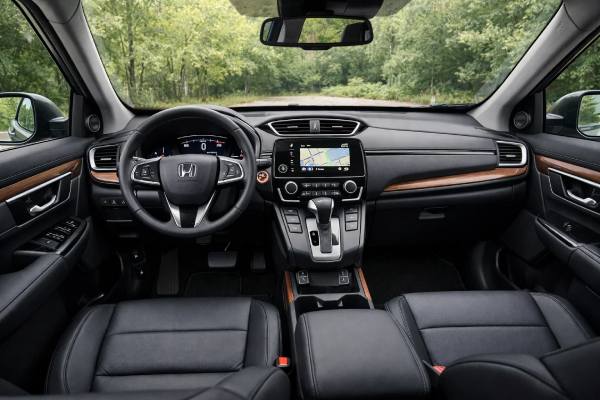

The 2018–2023 Honda CR-V FWD (RW1) with the L15BE 1.5-liter turbo is a study in practical engineering: a compact, efficient powertrain paired with a roomy body and an everyday-friendly chassis. In FWD form, it stays lighter and simpler than AWD models, which helps both running costs and efficiency. The L15BE’s direct injection and turbocharging deliver strong low-to-midrange pull for city and highway use, but they also place a premium on oil quality, warm-up habits, and correct service intervals.
For owners, the CR-V’s strengths are its packaging (real cargo and rear-seat space), predictable handling, and broad availability of safety tech depending on trim and market. If you shop carefully and maintain it proactively—especially around fluids, filters, and software updates—this RW1 configuration can be a long-life family SUV.
Owner Snapshot
- Smooth, efficient turbo power with strong midrange response for daily driving.
- Spacious rear seat and cargo area make it easy to live with year-round.
- Best ownership results come from shorter oil intervals than the dashboard reminder in heavy city use.
- Plan CVT fluid service about every 40,000–60,000 km (25,000–37,000 mi) for longevity if you keep the vehicle long term.
- Use high-quality fuel and avoid repeated cold short trips when possible to reduce deposits and dilution risk.
Navigate this guide
- Honda CR-V RW1 in detail
- L15BE specs and capacities
- RW1 trims options and ADAS
- Reliability patterns and known faults
- Maintenance plan and buying checks
- On-road performance and efficiency
- CR-V 1.5T FWD vs rivals
Honda CR-V RW1 in detail
RW1 is the front-wheel-drive configuration of the fifth-generation CR-V architecture in many markets, and it’s arguably the “sweet spot” for owners who prioritize simplicity. The chassis is a unibody SUV with a long wheelbase for the class, which is why the CR-V feels stable on the highway and generous in rear legroom. The suspension layout—MacPherson strut front and multi-link rear—also matters: it’s a more capable rear design than a torsion beam, and it contributes to the CR-V’s calm ride over broken pavement.
The L15BE 1.5-liter turbo is the defining feature here. In 173 hp tune, it’s not trying to be sporty; it’s tuned for usable torque and quiet operation. You feel that in how easily it merges onto highways and how little throttle it needs on mild grades. In FWD, the drivetrain has fewer components than AWD, so there’s less rotating mass and fewer fluids to service—two small advantages that add up over years of ownership.
Honda’s approach on this generation also leans heavily on refinement: sound-deadening, active noise cancellation on some trims, and a chassis that avoids “busy” motion. What you trade for that comfort is that the CR-V is not a back-road athlete—steering feedback is light and filtered, and most trims run comfort-oriented tire sizes.
For long-term ownership, the key engineering reality is heat and contamination management. A small turbo engine makes power by pushing more air and fuel through a compact package. That’s efficient, but it raises the stakes on clean oil, good filters, proper warm-up, and timely fluid changes. Treated that way, the RW1 CR-V rewards you with the traits people buy it for: easy visibility, flexible cabin space, and low day-to-day stress.
L15BE specs and capacities
Below are widely published specifications for the 1.5-liter VTEC TURBO CR-V in FWD form. Exact figures can vary by year, market, emissions standard, wheel/tire package, and seating configuration, so treat these as a correct baseline and verify for your VIN.
Powertrain and efficiency (L15BE, FWD)
| Item | Specification |
|---|---|
| Engine code | L15BE |
| Layout | Inline-4, turbocharged, direct injection |
| Valvetrain | DOHC, 4 valves/cyl |
| Bore × stroke | 73.0 × 89.5 mm (2.87 × 3.52 in) |
| Displacement | 1.498 L (1498 cc) |
| Compression ratio | 10.3:1 |
| Induction | Turbocharged |
| Max power (FWD tune) | 127 kW / 173 PS (≈173 hp) @ 5600 rpm |
| Max torque (FWD tune) | 220 Nm (162 lb-ft) @ ~1900–5000 rpm |
| Rated fuel economy (test-cycle example) | 6.3 L/100 km (≈37.3 mpg US / 44.8 mpg UK) combined (varies by cycle/market) |
| Real-world highway @ 120 km/h | Commonly ~7.2–8.0 L/100 km (≈29–33 mpg US), depending on wind/tires/load |
Transmission and driveline
| Item | Specification |
|---|---|
| Transmission | CVT in many markets (some also offered 6-MT) |
| Drive type | FWD (RW1) |
| Differential | Open front differential (traction control manages slip) |
Chassis and dimensions (common 5-seat body)
| Item | Specification |
|---|---|
| Suspension (front/rear) | MacPherson strut / Multi-link |
| Steering | Electric power steering (dual-pinion design on some specs) |
| Turning circle (kerb-to-kerb) | ~11.0 m (36.1 ft) |
| Length / width / height | ~4635 / 1855 / 1679 mm (182.5 / 73.0 / 66.1 in) (market-dependent) |
| Wheelbase | ~2660 mm (104.7 in) |
| Ground clearance | ~191–198 mm (7.5–7.8 in) (market/tire dependent) |
| Kerb weight (FWD) | ~1501–1523 kg (3309–3357 lb) |
| Fuel tank | ~57 L (15.1 US gal / 12.5 UK gal) |
| Cargo volume (VDA examples) | ~561 L seats up; up to ~1756 L seats folded (method and roofline affect results) |
Performance and capability (typical)
| Item | Specification |
|---|---|
| 0–100 km/h (0–62 mph) | ~9.2–9.3 s (varies by tires, test method, and transmission) |
| Top speed | ~210 km/h (≈130 mph) |
| Towing capacity | Up to ~2000 kg braked / ~600 kg unbraked (market rules apply; always check your VIN label and handbook) |
Fluids and service capacities (decision-useful ranges)
These are typical for the 1.5T CR-V family, but confirm for your exact engine/transmission code and market.
| System | Spec (typical) | Capacity (typical) |
|---|---|---|
| Engine oil | Honda-approved spec; common grades 0W-20 or 5W-30 depending on climate/market | ~3.5–4.0 L (3.7–4.2 US qt) with filter |
| Coolant | Honda Type 2 or equivalent long-life coolant | ~4–6 L depending on radiator/heater layout |
| CVT fluid | Honda HCF-2 (where applicable) | Service fill varies; total capacity higher than drain/fill |
| Brake fluid | DOT 3 or DOT 4 (market dependent) | Fill as needed; flush interval-based |
Safety and driver assistance (high level)
The CR-V range is commonly available with multi-airbag layouts, stability/traction control, and—on many trims—camera/radar driver assistance (often branded as Honda Sensing). The exact standard-vs-optional split depends heavily on model year and region, which is why the trims section matters.
RW1 trims options and ADAS
Trim naming changes by country, but the CR-V’s equipment strategy is consistent: the mechanical core is similar, while comfort and safety tech scale up with grade and option packs. For the RW1 FWD buyer, it’s smart to choose trim based on what you can’t easily retrofit later—headlights, safety sensors, and factory-installed convenience systems—rather than surface features like wheels.
Common trims and quick identifiers
- Entry grades: usually cloth interior, smaller wheels (often 17–18 in), halogen headlights in many markets, and simpler infotainment. These can be excellent “value long-term” picks if you’re happy with basic lighting and fewer sensors.
- Mid grades: add the most important daily upgrades—heated seats in colder regions, better infotainment, smarter key access, and often more of the safety suite.
- High grades: tend to bring LED lighting, premium audio, power tailgate, panoramic roof in some markets, and the most complete driver assistance. If you drive a lot at night, the headlight upgrade alone can justify the step up.
Safety systems and ADAS essentials
Honda’s driver assistance typically combines:
- AEB (automatic emergency braking) with forward collision warning
- Adaptive cruise control (often with low-speed follow)
- Lane keep assist and road-departure mitigation
- Traffic sign recognition in some markets
- Blind-spot monitoring and rear cross-traffic alert on certain grades
A practical ownership note: ADAS calibration can become a hidden cost after windshield replacement, bumper work, or alignment changes. If the vehicle has a camera behind the windshield and radar in the grille, ask for proof that the shop performed (or the dealer confirmed) the calibration procedure afterward.
Safety ratings reality check (why year matters)
Crash-test results often apply to a vehicle “family,” but details like headlights, active safety, and structural updates can shift ratings over time. For example, IIHS headlight scores can vary by trim because the lamp design (halogen vs LED, reflector vs projector) changes performance. If safety is a top priority, shop for the trim that carries the better headlight rating and the full driver-assistance suite, not just the model name.
Options that change the ownership experience
- Headlights (LED preferred): visibility, reduced glare, and better longevity.
- Wheel/tire package: larger wheels can look better but often ride harsher and cost more in tire replacement.
- Power tailgate: convenience, but check smooth operation and listen for strain or uneven motion.
- Panoramic roof (where offered): pleasant, but check drains and seals on used examples.
Reliability patterns and known faults
Overall, the RW1 CR-V 1.5T holds up well when maintained, but it’s not a “neglect-proof” turbo SUV. The best way to think about reliability is to separate issues by frequency and cost, then match them to your driving pattern.
Common (watch closely)
- Oil dilution in cold/short-trip use (cost tier: medium if ignored)
- Symptoms: rising oil level, fuel smell on dipstick, rough cold idle.
- Likely cause: repeated cold starts and short runs that don’t fully warm the oil; direct-injected turbo engines are more susceptible.
- Remedy: shorten oil intervals, use the correct viscosity for your climate, and prioritize longer drives periodically. If updates exist for your VIN, ensure the latest engine calibration is installed.
- Infotainment glitches and camera quirks (low to medium)
- Symptoms: freezes, reboots, lag, intermittent Bluetooth.
- Cause: software stability, aging 12 V battery, or connector issues.
- Remedy: firmware updates where available; load-test the battery before chasing deeper faults.
- CVT behavior under heat or old fluid (medium)
- Symptoms: shudder on light throttle, “rubber band” flare more than usual, delayed engagement when cold.
- Cause: fluid degradation or adaptation logic reacting to wear.
- Remedy: proactive CVT fluid changes with the correct fluid, and confirm no outstanding TSB-style updates for shift logic.
Occasional (inspect on a used example)
- Turbo-related noises (medium): wastegate rattle or heat-shield buzz. Often annoying rather than catastrophic, but it should be diagnosed so it doesn’t mask a real boost leak.
- A/C performance drift (medium): weak cooling at idle or intermittent compressor cycling can be refrigerant or sensor-related. Confirm correct charge and check condenser condition.
- Door lock actuators and window switch wear (low to medium): common on many modern vehicles; test every door and window repeatedly.
Rare but costly (don’t ignore)
- Cooling system neglect (high)
Overheating events are expensive on any aluminum turbo engine. Look for clean coolant, stable temperature behavior, and no evidence of repeated top-ups. - Fuel system/injector issues (high)
Direct injection parts are precise and can be expensive. Misfires under load, hard starting, or persistent lean codes warrant proper diagnostics—not parts swapping.
Recalls, service actions, and verification
The CR-V has had recall activity in various markets (for components ranging from steering sensors to seat-belt mechanisms). The smart approach is simple:
- Run a VIN recall check in the official database for your region.
- Ask the seller for dealer invoices proving completion.
- If you’re buying privately, factor “one dealer visit” into your plan after purchase to confirm all campaigns are closed.
Maintenance plan and buying checks
A modern turbo CR-V thrives on two habits: consistent fluid service and avoiding long stretches of “mostly short trips” without a longer warm run. Use the factory schedule as a baseline, then tailor it to your use.
Practical maintenance schedule (street-focused)
- Engine oil and filter: every 8,000–10,000 km (5,000–6,000 mi) or 12 months if you do frequent short trips, cold starts, or heavy city traffic. If your driving is mostly long-distance highway, you can extend toward the factory reminder, but oil is cheaper than turbo wear.
- Engine air filter: inspect every 15,000 km (9,000 mi); replace around 30,000–45,000 km (19,000–28,000 mi) or sooner in dusty regions.
- Cabin filter: every 15,000–30,000 km (9,000–19,000 mi), and sooner if you notice reduced airflow or odors.
- CVT fluid: every 40,000–60,000 km (25,000–37,000 mi) for long-term ownership. If you tow, drive mountainous routes, or see high heat, lean shorter.
- Brake fluid: every 2–3 years regardless of mileage.
- Coolant: follow the long-life interval in your market, but treat any sign of contamination or frequent top-ups as a diagnostic trigger.
- Spark plugs: often 100,000–160,000 km (60,000–100,000 mi) depending on plug spec and market; replace earlier if misfire counters rise or if tuning/boost changes exist.
- Serpentine/aux belt and hoses: inspect annually after 5 years; replace based on cracking, glazing, or noise.
- 12 V battery: test annually after year 3; many last 4–6 years depending on climate and stop-start behavior.
Buyer’s guide: what to check before purchase
- Cold start behavior: listen for abnormal rattles, unstable idle, or exhaust smoke.
- Oil level and smell: too high or fuel-smelling oil suggests dilution or poor service habits.
- CVT test drive: steady 50–80 km/h cruise, then light throttle tip-in; watch for shudder or flare.
- Cooling and A/C: verify strong cooling at idle and in traffic; check for damaged condenser fins.
- Electronics sweep: every window, lock, camera view, steering wheel controls, and driver assistance warnings.
- Tire wear pattern: uneven wear hints at alignment issues or worn bushings; it’s also a negotiation point.
- Recall and update status: run a VIN check and request dealer campaign proof.
Long-term durability outlook
If you keep oil and CVT fluid fresh and treat cold-short-trip use as “severe service,” the RW1 CR-V can age gracefully. The chassis and interior generally hold up well, and the biggest ownership wins come from preventing heat- and contamination-related wear rather than reacting to failures later.
On-road performance and efficiency
In real driving, the RW1 CR-V 1.5T is tuned to feel effortless rather than fast. The turbo’s job is to make a small engine behave like a larger one at low rpm, and it succeeds: around-town acceleration is confident, and it doesn’t require high revs to keep pace with traffic. That also helps refinement—less engine noise, fewer dramatic gear changes, and a calmer feel when you’re carrying passengers.
Ride, handling, and NVH
- Ride: The CR-V’s suspension is biased toward comfort. It absorbs broken pavement well, especially on smaller wheels with taller tire sidewalls. Larger wheel packages can sharpen steering response slightly but often add impact harshness over potholes.
- Handling: It’s stable and predictable. Body roll is present, but well controlled. The multi-link rear helps it track cleanly through mid-corner bumps compared with simpler rear suspensions.
- Steering and brakes: Steering is light with moderate on-center stability—great for parking and commuting, less engaging on twisty roads. Brake feel is typically consistent, but any pulsing or vibration should prompt a rotor inspection and a check for seized slide pins.
Powertrain character and transmission behavior
With the CVT, acceleration is smooth and linear. Under gentle throttle it keeps revs low; under hard throttle it may hold higher rpm for longer than a stepped automatic would. That’s normal, but it should not feel like slipping. Drive modes (like ECON where fitted) often soften throttle mapping; they don’t change the engine’s fundamentals, but they can reduce “jumpiness” in stop-and-go traffic.
Real-world efficiency
Expect efficiency to swing meaningfully with speed and temperature:
- City-heavy use: frequent stops and short warm-ups can push consumption noticeably higher than ratings.
- Highway 100–120 km/h: this is where the CR-V often lands in a steady, realistic band, but roof racks, winter tires, or strong headwinds can add a surprising penalty.
- Cold weather: turbo engines can run richer during warm-up, so winter commuting can be the “worst case” scenario for both fuel economy and oil condition.
A simple habit that pays off: if your routine is short trips, add one longer drive weekly to fully heat-soak the oil and evaporate moisture and fuel vapors. It’s not magic, but it’s a practical way to reduce the operating conditions that are hardest on a small turbo engine.
CR-V 1.5T FWD vs rivals
The CR-V RW1 FWD sits in the most competitive part of the SUV market, so the best comparison is not “which is best,” but “which matches how you drive and maintain.”
Versus Toyota RAV4 (gas and hybrid)
- CR-V advantage: smoother ride comfort and a very usable cabin layout. The turbo offers strong midrange pull without needing a larger engine.
- RAV4 advantage: hybrid options (in many markets) can deliver better city efficiency and a different long-term ownership profile.
- Decision tip: if your driving is mostly urban with lots of stops, a hybrid competitor can be compelling. If your driving is mixed and you value refinement and space, the CR-V remains a strong pick.
Versus Mazda CX-5
- CR-V advantage: more rear-seat and cargo friendliness; a more relaxed, family-first packaging approach.
- CX-5 advantage: sharper steering feel and a more “premium” driving character in many trims.
- Decision tip: choose the Mazda if you care most about steering and interior ambience; choose the Honda if you care most about space and easy day-to-day comfort.
Versus Nissan X-Trail / Rogue (market dependent)
- CR-V advantage: a reputation for balanced chassis tuning and a powertrain that responds well when maintained carefully.
- Rogue advantage: can offer strong comfort and tech value, depending on generation and powertrain.
- Decision tip: compare service history quality. In this segment, the best-maintained example often beats the “better on paper” option.
Versus Volkswagen Tiguan and other turbo competitors
- CR-V advantage: usually lower complexity and less sensitivity to specialized service procedures.
- Tiguan advantage: European driving feel and sometimes more flexible seating configurations depending on market.
- Decision tip: if you want a turbo SUV but prefer mainstream parts availability and straightforward ownership, the CR-V is often the calmer long-term bet.
Bottom line
If you want a roomy compact SUV with smooth performance, sensible efficiency, and broad safety-tech availability, the CR-V RW1 FWD is one of the most complete packages of its era. The main “cost” is that you should maintain it like a modern turbo engine—clean oil, clean filters, and timely CVT service—rather than treating it like an older, lower-stress naturally aspirated setup.
References
- 2018 Honda CR-V VTEC TURBO Petrol 2018 (Manufacturer Specifications)
- 2018 Honda CR-V 2018 (Safety Rating)
- Official Honda CR-V 2019 safety rating 2019 (Safety Rating)
- Vehicle Detail Search – 2018 HONDA CR-V | NHTSA 2018 (Recall Database)
- Honda Owners Manuals | Honda CR-V| Owners | Honda UK 2018 (Owner’s Manual)
Disclaimer
This article is for informational purposes only and is not a substitute for professional diagnosis, inspection, or repair. Specifications, torque values, fluid types, capacities, service intervals, and procedures vary by VIN, market, model year, and equipment. Always verify details against your official owner’s manual, factory service information, and dealer/service records for your exact vehicle.
If you found this guide useful, please consider sharing it on Facebook, X (Twitter), or your favorite forum to help others and support our work.