

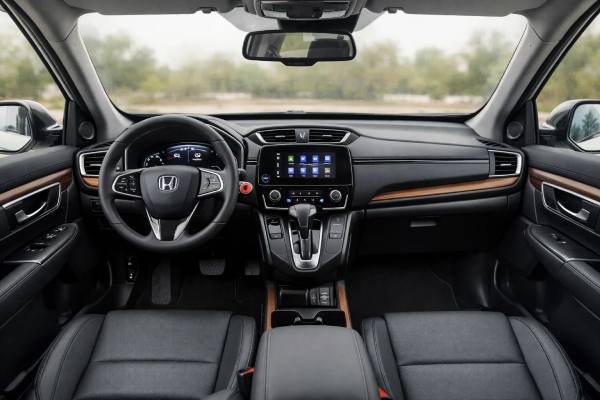
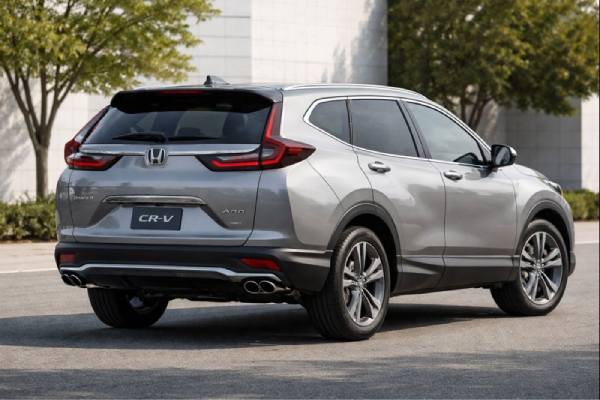
The 2020–2022 Honda CR-V Hybrid (RT5) pairs Honda’s LFA1 2.0-liter Atkinson-cycle engine with the brand’s two-motor hybrid system. The result is a compact SUV that prioritizes smooth, low-stress torque in everyday driving while keeping fuel use consistent across mixed trips. Instead of a traditional stepped automatic, the hybrid uses an e-CVT style drive unit that blends electric drive and engine power in different modes, which is why it can feel quiet and “single-speed” around town.
For owners, the appeal is usually a combination of practical cabin space, predictable winter warm-up behavior compared with small turbo engines, and a hybrid system that is simple to live with—no plug, no charging routine. The main tradeoffs are higher parts complexity than a non-hybrid CR-V and the need to stay disciplined with fluids, 12V battery health, and software updates.
Owner Snapshot
- Strong low-speed response and calm stop-and-go behavior thanks to electric drive torque.
- Efficient on mixed commutes, especially with steady regen-braking habits and correct tyre pressures.
- Spacious rear seating and cargo packaging for a compact SUV footprint.
- Plan for a proactive 12V battery test every 12 months; hybrid systems are sensitive to low auxiliary voltage.
- Typical service rhythm: engine oil and inspection about every 10,000–15,000 km (6,000–9,000 mi) or 12 months (market and usage dependent).
What’s inside
- CR-V RT5 hybrid architecture
- RT5 specs and measurements
- Grades, options, and driver assist
- Reliability faults and service actions
- Maintenance plan and buyer checks
- Driving feel and real economy
- How RT5 stacks up to rivals
CR-V RT5 hybrid architecture
Honda’s two-motor hybrid layout is the defining trait of the RT5 CR-V Hybrid. In normal city and suburban driving, the wheels are often driven primarily by the traction motor, with the gasoline engine working behind the scenes when needed. Conceptually, think of it as an electric car that carries its own generator: the 2.0-liter Atkinson-cycle engine can spin a motor/generator to make electricity, which then feeds the drive motor and (when needed) tops up the battery. At higher road speeds, a clutch can connect the engine more directly to the wheels for efficiency.
That design explains three ownership “feel” points:
- Immediate response at low speed. Maximum electric torque is available from very low rpm, so creeping in traffic, merging into gaps, and short uphill pulls often feel more effortless than a small turbo engine working through a conventional automatic.
- A different sound profile under load. When the engine runs primarily to generate power, engine speed can rise without a matching step-change in road speed. This is normal behavior for this type of hybrid, but it can surprise drivers coming from a stepped gearbox.
- Brake and tyre choices matter more than you expect. Regenerative braking does a lot of the everyday slowing. If the friction brakes are used lightly for long periods (common in mild climates), surface rust and uneven pad transfer can become a real-world maintenance nuisance unless you occasionally perform firm stops.
The “212 hp” figure commonly refers to system output (combined performance potential), not a simple sum of engine and motor peak numbers. Depending on market and rating standard, published outputs can vary, but the driving impression stays consistent: the RT5 hybrid is tuned for smooth, repeatable thrust rather than sharp, sporty spikes.
From an engineering perspective, the reliability advantages are subtle but real: the Atkinson-cycle engine is typically under lower thermal and boost stress than a small turbo, and the hybrid drive unit eliminates many shift-related wear patterns you see in traditional automatics. The tradeoff is that you must care for a wider set of components—cooling circuits, high-voltage cabling, DC–DC charging for the 12V system, and software calibration—because the car is an integrated powertrain, not just an engine plus gearbox.
RT5 specs and measurements
Specifications vary by market, trim, wheel size, and test standard, but the tables below capture the core technical profile of the 2020–2022 CR-V Hybrid (RT5) with the LFA1-based hybrid system.
Powertrain and efficiency (typical ranges)
| Item | Spec (typical) |
|---|---|
| Code | LFA1 (2.0 l Atkinson-cycle hybrid engine family) |
| Engine layout and cylinders | Inline-4, DOHC, 4 valves/cyl (typical for this application) |
| Bore × stroke | ~81.0 × 96.7 mm (3.19 × 3.81 in) |
| Displacement | 2.0 l (≈1993 cc) |
| Induction | Naturally aspirated (Atkinson-cycle) |
| Fuel system | Direct injection (market dependent) |
| Compression ratio | ~13:1 to 14:1 (varies by calibration/market) |
| Max system power | ~212 hp (≈158 kW) (rating standard dependent) |
| Drive motor output | Often quoted around 135 kW (≈181 hp), single front traction motor |
| Max torque (motor) | Often quoted around 315 Nm (≈232 lb-ft) from very low rpm |
| Timing drive | Chain |
| Rated efficiency | Typically ~5.3–6.8 L/100 km (44–35 mpg US / 52–42 mpg UK), trim and test-cycle dependent |
| Real-world highway @ 120 km/h (75 mph) | Commonly ~6.5–7.8 L/100 km (36–30 mpg US / 43–36 mpg UK), speed, wind, tyres, and temperature dependent |
| Aerodynamics | Cd typically in the low 0.3s (varies by trim); frontal area market dependent |
Transmission and driveline
| Item | Spec |
|---|---|
| Transmission | Honda two-motor hybrid drive unit (e-CVT style operation with clutch engagement at cruise) |
| Drive type | FWD (RT5) |
| Differential | Open (front) |
Chassis and dimensions (class-typical values)
| Item | Spec (typical) |
|---|---|
| Suspension (front/rear) | MacPherson strut / multi-link |
| Steering | Electric power steering (EPS) |
| Brakes (front/rear) | Ventilated discs / discs (diameters vary by market and wheel package) |
| Wheels/tyres | Commonly 17–19 in; examples include 235/65 R17 or 235/60 R18 (market dependent) |
| Ground clearance | ~190–210 mm (7.5–8.3 in), trim dependent |
| Length / width / height | ~4620–4630 / 1855–1860 / 1675–1690 mm (≈182 / 73 / 66 in) |
| Wheelbase | ~2660 mm (≈104.7 in) |
| Turning circle | ~11.0–11.4 m (≈36–37 ft), wheels/tyres dependent |
| Kerb (curb) weight | Often ~1650–1750 kg (≈3640–3860 lb), equipment dependent |
| Fuel tank | Often ~57 L (≈15.1 US gal / 12.5 UK gal) |
| Cargo volume | Method dependent; roughly ~560 L (≈19.8 ft³) seats up (VDA-style) and up to ~1750 L (≈61.8 ft³) seats down in some market measurements |
Performance and capability (realistic expectations)
| Item | Spec (typical) |
|---|---|
| 0–100 km/h (0–62 mph) | ~8.0–9.2 s (tyres, load, temperature dependent) |
| Top speed | Commonly ~180–190 km/h (112–118 mph), market dependent |
| Braking 100–0 km/h | Typically mid- to high-30 m range (tyres and surface dependent) |
| Towing capacity | Often limited vs non-hybrid; commonly ~750 kg (≈1650 lb) braked in some markets (verify for your VIN) |
| Roof load | Often ~75 kg (≈165 lb), market dependent |
Fluids and service capacities (verify for your VIN)
| Item | Typical guidance |
|---|---|
| Engine oil | 0W-20 (spec varies by market); capacity often ~3.5–4.0 L (3.7–4.2 US qt) with filter |
| Coolant | Honda long-life coolant, usually 50/50 premix; capacity varies (engine and power electronics may have separate loops) |
| Hybrid drive unit fluid | Honda-specified fluid for the hybrid transaxle (often serviced by drain-and-fill); quantity depends on procedure |
| Brake fluid | DOT 3 or DOT 4 (market dependent); replace on time even if mileage is low |
| A/C refrigerant | R-1234yf in many later builds; confirm under-hood label before service |
Electrical
| Item | Typical guidance |
|---|---|
| Alternator output | Not applicable in the traditional sense; 12V system is supported by a DC–DC converter |
| 12V battery | Size and spec vary; plan periodic load testing because hybrids can mask a weakening battery until it fails |
| Spark plugs | Iridium-type; replacement interval commonly long (often around 160,000 km / 100,000 mi in many Honda schedules, but confirm for your market) |
Safety and driver assistance (common content)
| Item | Notes |
|---|---|
| ADAS suite | Honda Sensing-type features are commonly available: AEB, ACC, lane support, road departure mitigation, and traffic sign recognition (availability varies) |
| Crash ratings | Ratings vary by region and year/test protocol; always check the rating body that matches your market |
Grades, options, and driver assist
Trim strategy for the 2020–2022 CR-V Hybrid differs by region, but the shopping logic stays consistent: focus less on cosmetic badges and more on the equipment that changes long-term satisfaction—headlights, tyres, driver assistance hardware, and cabin electronics.
How to identify what you’re looking at
Practical ways to confirm a CR-V Hybrid RT5’s “true spec” without relying on seller claims:
- Instrument cluster and drive info screens. Hybrids usually show power flow, regen, and EV operation indicators that non-hybrids do not.
- Under-hood and under-floor packaging. The hybrid system layout and orange high-voltage cabling are telltales; the cargo floor and spare/repair kit arrangement may differ from non-hybrid models.
- Wheel and tyre package. Many markets bundle advanced driver aids and better headlights with larger wheels. That can raise tyre costs and road noise, so decide what matters most.
Options that change the driving and ownership experience
- Headlights: Better LED projector units tend to improve night driving confidence and can influence safety-rating outcomes in some markets. If you do a lot of rural driving, prioritize the best headlight package you can get.
- Adaptive cruise and lane support: These systems reduce fatigue on long commutes, but they also add calibration considerations. After windshield replacement, front-end repairs, or alignment work, proper sensor calibration matters.
- Blind spot monitoring and rear cross traffic alert: Often optional or bundled. These are high-value in dense traffic and tight parking environments.
Safety hardware and child-seat practicality
On most CR-Vs of this generation, the fundamentals are strong: multiple airbags, stability control, traction control, and solid child-seat anchor access compared with some competitors. The real-world differences come down to:
- Rear-seat anchor accessibility (some trims have easier-to-use lower anchors),
- Rear door opening angle (important for installing larger child seats),
- Second-row climate vents and USB ports, which matter more than many buyers expect on family duty.
Safety ratings: what to interpret carefully
Crash-test results are only directly comparable if you’re looking at the same testing body and protocol year. A “5-star” label in one region may not map to a top award elsewhere. The most useful approach is:
- Confirm the rating body relevant to your registration market.
- Verify whether your exact trim’s headlights and ADAS equipment match the tested configuration.
- Treat ratings as a baseline, then evaluate tyres, headlights, and driver-assist functionality for your own use case.
If you plan to keep the vehicle long-term, remember that ADAS hardware is only as good as its calibration and sensor health. A slightly higher-trim model with better headlights and factory-installed driver assists can be the “cheap” choice over five years because it reduces fatigue and improves visibility without aftermarket compromises.
Reliability faults and service actions
The CR-V Hybrid system is generally durable when maintained, but it has predictable weak spots. The most helpful way to think about reliability is to separate high-frequency nuisances from low-frequency but expensive failures.
Common (higher frequency, usually low-to-medium cost)
- 12V battery weakness
Symptoms: intermittent warnings, slow booting infotainment, random sensor faults, no-start events that feel “sudden.”
Likely cause: aging battery, short-trip usage, or parasitic draw from accessories.
Remedy: load test annually; replace proactively if marginal; ensure software updates are applied. - Brake noise or uneven feel after long light-braking periods
Symptoms: squeal, light vibration, or a “grabby” first stop.
Likely cause: corrosion or uneven pad transfer because regen does much of the slowing.
Remedy: periodic firm stops, correct pad bedding after service, and routine brake inspections even if pads “look fine.” - Infotainment glitches
Symptoms: Bluetooth dropouts, slow response, camera lag.
Likely cause: software bugs, phone compatibility, or low 12V voltage episodes.
Remedy: update firmware where available, confirm battery health, and reset/re-pair devices.
Occasional (medium cost, more dependent on environment)
- Wheel bearing and suspension bushing wear
Symptoms: droning that changes with speed, clunks over bumps, vague steering on-center.
Likely cause: road conditions, wheel size, tyre pressures, alignment.
Remedy: diagnose early—bearing noise can be mistaken for tyre roar; keep alignments in spec. - A/C performance decline
Symptoms: weak cooling, noisy compressor cycling, refrigerant loss.
Likely cause: component leaks or damage from road debris (market dependent).
Remedy: correct refrigerant type and oil, leak test, and avoid “top-up only” servicing.
Rare (lower frequency, higher cost if neglected)
- Hybrid cooling or power electronics faults
Symptoms: reduced power, warning lights, overheating messages, intermittent limp behavior.
Likely cause: coolant issues, sensor faults, or electrical connector problems.
Remedy: treat warnings seriously; ensure cooling systems are serviced correctly; avoid generic fluids. - High-voltage battery performance concerns
Symptoms: noticeable reduction in EV operation time, frequent engine starts, reduced regen acceptance.
Likely cause: mostly usage and temperature patterns; true battery failures are uncommon but possible.
Remedy: confirm with proper diagnostics; ensure cabin air paths and battery cooling intake areas are clean.
Recalls, TSBs, and software updates: how to handle them
Even when no mechanical repair is required, software updates can materially improve drivability, warning-light logic, and sensor behavior. The best practice is simple:
- Check recall status using official tools.
- Ask for dealer documentation showing completion.
- If you buy used, budget time for a baseline scan and calibration check—especially if the vehicle has had windshield replacement, front-end paintwork, or alignment work.
For pre-purchase, prioritize evidence of consistent servicing and clean electrical behavior over “perfect” cosmetics. A hybrid that has lived on short trips without battery testing can be more troublesome than one with higher mileage but cleaner service records.
Maintenance plan and buyer checks
Honda often uses a condition-based maintenance minder, but you can still follow a practical schedule that protects the hybrid system and avoids the most common ownership surprises.
Practical maintenance schedule (distance or time, whichever comes first)
- Every 10,000–15,000 km (6,000–9,000 mi) or 12 months
- Engine oil and filter (correct 0W-20 spec for your market)
- Full inspection: leaks, coolant levels, brake condition, tyre wear, suspension play
- Check for software updates and stored fault codes
- Every 20,000–30,000 km (12,000–18,000 mi) or 24 months
- Cabin air filter
- Brake service inspection with slider pin lubrication if needed
- Alignment check (especially with uneven tyre wear)
- Every 30,000–45,000 km (18,000–28,000 mi)
- Engine air filter (earlier in dusty climates)
- Hybrid drive unit fluid drain-and-fill if your usage includes heavy city driving, hills, or hot climates (verify official interval for your VIN)
- Every 3 years (regardless of mileage)
- Brake fluid replacement (time matters because brake fluid absorbs moisture)
- Every 5 years (or per official schedule)
- Coolant service (verify whether the engine and power electronics share coolant or have separate loops in your market)
- Around 160,000 km (100,000 mi) (market dependent)
- Spark plugs (iridium), plus related inspections
Key fluids and decision-making notes
- Use the exact hybrid drive unit fluid specified for your model. Generic CVT or ATF substitutions are false economy.
- Confirm A/C refrigerant type before any service. Mixing refrigerants or oils can cause expensive compressor damage.
- Treat 12V battery health as a “service item,” not a surprise. If the battery tests marginal, replace it before winter.
Essential torque values (high-level, verify for your VIN)
- Wheel nuts: typically ~108 Nm (≈80 lb-ft)
- Engine oil drain bolt: commonly in the ~30–40 Nm (22–30 lb-ft) range
- Spark plugs: commonly ~18–25 Nm (13–18 lb-ft) depending on plug and head design
Buyer’s guide: what to inspect on a used RT5
Paperwork and diagnostics
- Confirm recall completion and ask for service invoices, not just a stamped book.
- Request a battery and charging-system test report for the 12V battery.
- Scan for stored or pending hybrid and ADAS codes.
Road test checklist
- Smooth power delivery with no harsh transitions or repeated warning messages.
- Consistent braking feel from 80 km/h down to a stop; no pulsing or grinding.
- Listen for wheel-bearing hum that changes with gentle left/right steering inputs at steady speed.
Physical inspection
- Tyre wear pattern: uneven inner-edge wear often signals alignment or bushing issues.
- Brake rotor surfaces: heavy rust ridges can mean the friction brakes have been underused.
- Check that all ADAS features work cleanly (lane support, AEB warnings, camera clarity).
Long-term durability outlook
If maintained with correct fluids and reasonable battery care, the CR-V Hybrid’s core hardware is set up for long service life. Most “bad ownership stories” trace back to neglected fluid services, weak 12V batteries, or unresolved warning lights rather than fundamental hybrid design flaws.
Driving feel and real economy
The RT5 CR-V Hybrid’s character is best described as calm, consistent, and torque-forward. It is not a sporty SUV, but it is very effective at the job most CR-Vs do: commuting, family transport, and long-distance cruising with minimal drama.
Ride, handling, and noise (NVH)
- Ride quality: The suspension usually feels composed at urban speeds, with the multi-link rear helping it stay settled over broken pavement. Larger wheel packages can add sharpness over potholes, so avoid oversizing wheels if comfort matters.
- Steering: EPS tuning is light to moderate. On-center stability is generally good, but tyre choice and alignment have an outsized influence on how “tight” the car feels.
- Highway noise: Tyres are the biggest variable. A more aggressive tread or a worn set can make the CR-V sound louder than it should.
Powertrain behavior and “e-CVT feel”
Expect smoothness more than conventional shift sensations. In gentle driving, the vehicle can feel almost single-speed, with the engine cycling on and off as the system decides the most efficient mode. Under heavy acceleration, engine rpm may rise quickly and hold, which can sound unusual even though performance is normal.
To get the best daily experience:
- Use normal throttle rather than stabbing the pedal; the system rewards smooth inputs.
- Learn regen timing so you can lift earlier and brake less abruptly.
- If you frequently descend long hills, use the vehicle’s regen/drive-mode features (where available) to reduce brake heat and wear.
Real-world efficiency: what owners typically see
Fuel consumption depends heavily on speed and temperature:
- City and mixed commuting: Hybrids shine here. Frequent stops let regen work, and the engine can run in efficient zones.
- Highway at 100–120 km/h (60–75 mph): Still efficient for an SUV, but the advantage shrinks as speed rises and wind resistance dominates.
- Cold weather: Expect higher consumption because the engine must supply cabin heat and maintain catalyst efficiency. Short trips magnify this effect.
A realistic expectation for many drivers is that the RT5 hybrid can be meaningfully more efficient than a comparable non-hybrid CR-V in stop-and-go use, while remaining “good, not magical” on high-speed motorway runs.
Performance metrics that matter day to day
- Passing and merging: The electric motor’s instant torque makes short gaps easier to exploit, especially from 30–80 km/h (20–50 mph).
- Braking confidence: With healthy brakes, stopping power is strong. The key is consistent feel: if the pedal feel changes abruptly, get the system checked rather than assuming it is “just hybrid behavior.”
- Turning circle: Class-typical and easy to place in parking lots; wheel size can change the subjective feel more than the raw number.
Overall, the CR-V Hybrid’s driving advantage is not raw acceleration. It is the absence of strain—less drivetrain busyness in traffic, fewer awkward downshifts on small hills, and a refined “always ready” response that suits daily use.
How RT5 stacks up to rivals
Against key rivals, the RT5 CR-V Hybrid competes on refinement, interior practicality, and a hybrid system tuned for smoothness rather than maximum headline numbers.
Versus Toyota RAV4 Hybrid
- Where the CR-V Hybrid often wins: Smoother low-speed feel, spacious rear-seat comfort, and a refined everyday power delivery.
- Where the RAV4 Hybrid often wins: A very mature hybrid reputation and, depending on market, stronger towing and a more “mechanical” drivetrain feel some drivers prefer.
If your driving is mostly urban and you value quiet response, the CR-V’s two-motor layout can feel more natural. If you want a hybrid that feels more like a traditional drivetrain under load, Toyota’s approach may suit you.
Versus Ford Kuga / Escape Hybrid (market dependent)
- CR-V advantages: Consistent cabin packaging and often stronger perceived durability in interior materials over long mileage.
- Ford advantages: In some markets, competitive pricing and a different infotainment ecosystem that some buyers prefer.
The deciding factor is usually trim-by-trim equipment. Compare headlights, ADAS, and wheel packages carefully.
Versus Hyundai Tucson Hybrid / Kia Sportage Hybrid
- CR-V advantages: A proven platform feel and easy-to-drive hybrid behavior with minimal “gearbox drama.”
- Korean rivals’ advantages: Often newer cabin tech, larger screens, and strong warranty positioning in many regions.
If you keep cars a long time and value straightforward service routines, the Honda can be a comfortable choice. If you prioritize the newest cabin tech and strong warranty terms, the newer competitors can be compelling.
Who should choose the RT5 CR-V Hybrid?
Pick this CR-V Hybrid if you want:
- A practical family SUV that feels relaxed in traffic,
- Predictable, repeatable efficiency on mixed routes,
- A hybrid system that does not require plug-in habits,
- Strong day-to-day usability with a clear maintenance path.
Consider a rival if you need:
- Higher verified towing limits for your exact market,
- A specific ADAS or infotainment feature that Honda bundles only on expensive trims,
- A different driving feel under full load (some prefer a stepped transmission).
The best “value” RT5 is usually the one with the best headlights, the safest tyre package for your climate, complete recall documentation, and evidence of careful 12V battery and fluid maintenance—those items matter more than a badge.
References
- Two-Motor Hybrid System – 2022 Honda CR-V Hybrid | Honda Info Center 2022 (Technical Guide)
- My Honda | Owner’s Manual | Honda Auto 2025 (Owner’s Manual Portal)
- Check for Recalls: Vehicle, Car Seat, Tire, Equipment | NHTSA 2026 (Recall Database)
- 2021 Honda CR-V 2021 (Safety Rating)
- Official Honda CR-V 2019 safety rating 2019 (Safety Rating)
Disclaimer
This article is for informational purposes only and is not a substitute for professional diagnosis, inspection, or repair. Specifications, torque values, service intervals, and procedures vary by VIN, market, model year, and equipment; always verify details using your official Honda service documentation and the labels on your vehicle before servicing.
If this guide helped, please consider sharing it on Facebook, X (Twitter), or your favorite forum to support our work.