

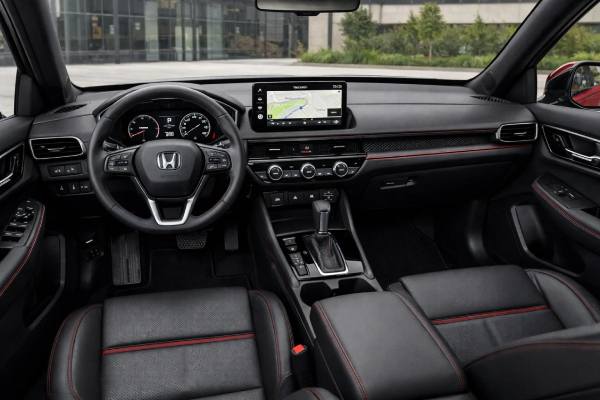
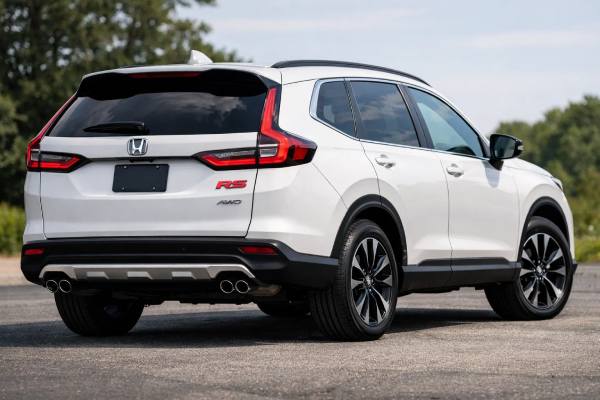
The 2023–present Honda CR-V FWD (RS3) with the 1.5-liter L15BE turbo is built around a simple promise: family-friendly space with a powertrain that stays efficient and easy to live with. The L15BE’s direct injection and small turbo deliver strong low-rpm torque for city driving, while Honda’s CVT prioritizes smoothness and relaxed cruising. In front-wheel-drive form, this version also keeps mass and complexity down compared with AWD, which can help long-term running costs when maintenance is done on time.
Ownership satisfaction tends to hinge on the basics: regular oil services with the correct 0W-20 spec, careful CVT fluid changes, and keeping the cooling and PCV systems healthy—especially for drivers who do frequent short trips. If you want a modern CR-V that feels refined, sips fuel on the highway, and remains straightforward to maintain, this is a strong core configuration.
Quick Specs and Notes
- Smooth, predictable daily power delivery with strong mid-range pull for urban merges and short highway passes.
- FWD layout reduces driveline complexity versus AWD, often lowering long-term service exposure.
- Practical packaging: wide rear door opening, usable cargo shape, and low lift-over height.
- Short-trip use can stress turbo DI engines; watch oil condition and don’t stretch intervals.
- Typical oil service cadence: every 12 months or ~12,000 km (7,500 mi), sooner under severe use.
Navigate this guide
- RS3 CR-V 1.5T explained
- Tech specs and capacities
- Trims, packages, and Honda Sensing
- Known issues and recalls watchlist
- Maintenance plan and buying tips
- How it drives day to day
- RS3 CR-V versus key rivals
RS3 CR-V 1.5T explained
Think of this CR-V as the “cleanest” way into the current generation: the lighter, simpler front-drive chassis paired with Honda’s small-turbo 1.5. The L15BE is a 1,498 cc inline-four with direct injection (DI) and a single turbocharger. In everyday terms, that means it relies on boost (compressed intake air) to make 190 hp from a compact engine, while the DI system precisely meters fuel straight into the combustion chamber for efficiency and emissions control.
The driving character is shaped just as much by the transmission as the engine. Honda’s CVT (continuously variable transmission) doesn’t shift like a traditional automatic; it varies its ratio smoothly to keep the engine in an efficient rpm zone. Under light throttle the result is calm and quiet. Under heavy throttle, the CVT may hold higher rpm to build boost, which can feel “different” if you’re used to stepped gears. The benefit is steady acceleration with minimal gear hunting.
FWD matters here. Compared with an AWD CR-V, the FWD model usually weighs less and has fewer wear points (no rear differential fluid, no rear driveshaft joints, fewer seals). That’s not a guarantee of lower costs, but it reduces the number of systems that can age out over 8–12 years.
This configuration suits:
- High-mileage commuters who value highway efficiency and stable straight-line behavior
- Families who prioritize cargo volume and rear-seat comfort over off-pavement traction
- Buyers who want modern safety tech without the added AWD service list
Where it’s less ideal:
- Snowbelt regions where winter tires still matter, but AWD can reduce low-speed slip
- Owners who tow often or drive mountain grades at high load (you’ll want to be strict with fluids and cooling health)
The “best” ownership version of this CR-V is the one that matches your use. If your driving is mostly short hops, treat maintenance as a durability tool: more frequent oil changes, good fuel quality, and letting the engine reach full temperature regularly do more for long-term health than any single aftermarket add-on.
Tech specs and capacities
Below are the core specifications you’ll see most often for the 2023–present CR-V 1.5T FWD. Treat them as a well-grounded baseline; small differences can occur by model year, trim, wheel size, and market.
Powertrain and efficiency
| Item | Specification |
|---|---|
| Engine code | L15BE |
| Layout | Inline-4, DOHC, 16-valve |
| Displacement | 1.5 L (1,498 cc) |
| Induction | Single turbocharger |
| Fuel system | Direct injection (DI) |
| Max power | 190 hp (142 kW) @ ~6,000 rpm |
| Max torque | 243 Nm (179 lb-ft) @ ~1,700–5,000 rpm |
| Timing drive | Chain |
| Rated efficiency (typical FWD) | ~7.8 L/100 km (30 mpg US / 36 mpg UK) combined* |
| City / Highway (typical FWD) | ~8.4 / 6.9 L/100 km (28 / 34 mpg US) |
*Official ratings depend on model year and certification cycle. Use the rating that matches your exact model year and wheel/tyre package.
Transmission and driveline
| Item | Specification |
|---|---|
| Transmission | CVT (Honda Earth Dreams CVT family, market-dependent code) |
| Drive type | FWD |
| Differential | Open (front) |
| Drive modes | Typically Normal / Econ / Snow (availability varies by market) |
Chassis, dimensions, and capacity
| Item | Specification |
|---|---|
| Front suspension | MacPherson strut |
| Rear suspension | Multi-link |
| Steering | Electric power steering (EPS) |
| Brakes (typical) | 4-wheel disc (diameters vary by trim) |
| Ground clearance (typical) | ~208 mm (8.2 in) |
| Wheelbase (typical) | ~2,701 mm (106.3 in) |
| Length (typical) | ~4,694 mm (184.8 in) |
| Width (typical) | ~1,864 mm (73.4 in) |
| Height (typical) | ~1,689 mm (66.5 in) |
| Turning circle (typical) | ~11.8 m (38.7 ft) |
| Fuel tank (typical) | ~53 L (14.0 US gal / 11.7 UK gal) |
| Cargo volume (typical, SAE) | ~1,113 L (39.3 ft³) seats up / ~2,167 L (76.5 ft³) seats down |
Performance and capability
| Metric | Typical real-world range (stock vehicle) |
|---|---|
| 0–100 km/h (0–62 mph) | ~8.8–10.0 s (trim/tyres/load dependent) |
| Top speed | Typically limited ~190–200 km/h (118–124 mph), market dependent |
| Towing capacity | Often ~680 kg (1,500 lb) in many markets; verify for your VIN/region |
| Payload / roof load | Varies widely by market and tyre rating; confirm on the door placard |
Service fluids and key decision specs
These values are commonly seen for Honda 1.5T applications, but always verify for your exact VIN and market.
| Item | Specification (verify for your VIN) |
|---|---|
| Engine oil | 0W-20 (Honda/ACEA/API equivalent); capacity typically ~3.5–4.0 L (3.7–4.2 US qt) |
| Coolant | Honda Type 2 / premix 50:50; capacity varies by radiator package |
| CVT fluid | Honda HCF-2 (or market equivalent); service-fill quantity varies |
| Brake fluid | DOT 3 (Honda spec), replace by time interval |
| A/C refrigerant | R-1234yf (many markets), charge varies by equipment |
| 12V battery | Capacity/CCA varies by trim and climate package |
| Lug nut torque (common Honda spec) | ~108 Nm (80 lb-ft) |
If you only remember one thing from this section: the CVT and turbo DI engine both reward clean fluids. Fresh CVT fluid is cheap insurance, and correct oil spec plus consistent intervals reduces the odds of the nagging issues small-turbo engines can develop as mileage rises.
Trims, packages, and Honda Sensing
Trim names vary by region, but the structure is consistent: a base trim focused on value, one or two mid-trims that add comfort and tech, and a higher trim that leans into premium convenience. For the 1.5T FWD, the mechanical package is usually similar across trims—same engine and CVT—so your choice is less about performance and more about equipment, lighting, and cabin features.
Quick trim identifiers
Look for these easy tells when shopping used:
- Wheels and tyre size: higher trims often run larger rims, which can increase road noise and tyre cost.
- Headlights: LED projector designs and adaptive features (where offered) tend to appear on mid/high trims.
- Interior controls: dual-zone climate, heated seats, and larger infotainment screens usually mark a step-up trim.
- Roof rails / tailgate: power tailgate and factory rails often correlate with option packages.
Year-to-year updates in the “2023–present” window can include infotainment revisions, port changes (USB-C adoption), wheel designs, and availability shifts for driver assists. When equipment matters, confirm by VIN build sheet or a dealer parts catalog lookup—two CR-Vs that look similar can have different sensor sets.
Safety structure and child-seat usability
Modern CR-Vs are designed around strong passenger-cell integrity and predictable crash energy paths. For families, the day-to-day win is usability:
- ISOFIX/LATCH anchors are straightforward to access, and the rear door opening is generous.
- Rear seat belt geometry typically works well with boosters, but always test with your exact child seat.
- Cargo area height and opening width make strollers and bulky bags easier than in many compact SUVs.
Honda Sensing and ADAS coverage
Honda Sensing (name varies slightly by region) generally bundles:
- Automatic emergency braking (AEB) with vehicle detection and often pedestrian detection
- Adaptive cruise control (ACC)
- Lane-keeping assist / lane departure mitigation
- Road sign recognition (market dependent) and driver attention prompts
Two practical notes for owners:
- Windshield and bumper repairs can affect calibration. After glass replacement or front-end work, cameras/radar (where equipped) may require recalibration to prevent false alerts or degraded AEB/ACC performance.
- Tyre size consistency matters. Mixing tyre sizes or using non-standard diameters can confuse stability control and speed estimation, indirectly affecting how ADAS feels.
When shopping, prioritize trims with better headlights if you drive often at night. Lighting quality influences real-world safety every single day, and it’s expensive to retrofit correctly later.
Known issues and recalls watchlist
The 1.5T CR-V is generally dependable when serviced well, but it has predictable “themes” owners should understand. Below is a practical map by prevalence and cost tier. Consider it a checklist for ownership planning and pre-purchase inspection.
Common: oil condition sensitivity (low to medium cost)
Symptoms: rising oil level, fuel smell on dipstick, rougher cold start, increased engine noise.
Likely root causes: short trips that never fully warm the engine, blow-by dilution in cold weather, or a tired PCV (positive crankcase ventilation) system that can’t manage vapor effectively.
Best remedy: shorten oil intervals for severe use, verify correct oil spec, keep the PCV system healthy, and prioritize longer drives that reach full operating temperature.
Common to occasional: CVT behavior when fluid is neglected (medium cost)
Symptoms: shudder on light acceleration, delayed engagement, “rubber band” flare that feels worse than normal CVT response.
Likely root cause: aged CVT fluid losing friction characteristics.
Best remedy: drain-and-fill CVT fluid at sensible intervals; avoid “universal” fluids unless they explicitly meet Honda’s spec for your region.
Occasional: direct-injection deposits and injector sensitivity (medium cost)
Symptoms: uneven idle, hesitation, reduced economy, occasional misfire codes.
Likely root cause: DI engines can build intake-valve deposits over time because fuel no longer washes the valve backs. Poor fuel quality can accelerate injector fouling.
Best remedy: consistent top-tier fuel, periodic long highway runs, and professional intake cleaning only when symptoms or diagnostics justify it (avoid unnecessary chemical “miracle” treatments).
Occasional: turbo hardware and charge-air leaks (medium to high cost)
Symptoms: loss of boost, whistle/woosh sounds, underboost codes, lower power at higher load.
Likely root cause: aging clamps, charge-pipe seals, or wastegate actuator wear.
Best remedy: pressure test the charge system, replace degraded seals/clamps, and address wastegate issues early before they become drivability problems.
Rare: cooling-system weak points (medium to high cost)
Symptoms: slow coolant loss, sweet smell, temperature creep under load.
Likely root cause: hose aging, clamp seepage, or radiator end-tank issues over time.
Best remedy: pressure test and fix small leaks early; turbo engines are less forgiving of chronic low coolant.
Recalls, TSBs, and software updates
For a “present” model range, recall and service campaign status changes over time. Your process should be consistent:
- Run the VIN through an official recall database.
- Ask the seller for proof of completion (dealer invoice or service record line items).
- During a test drive, check for warning lights, steering feel changes, ADAS alerts, and drivability quirks that may indicate missing updates.
If you want one high-leverage buying habit: insist on a clean service history and confirmation that campaigns were completed. It’s the difference between a modern CR-V that feels tight and one that slowly becomes “fussy” as mileage climbs.
Maintenance plan and buying tips
Honda uses condition-based servicing (often called Maintenance Minder), but you still need a clear plan—especially for turbo and CVT longevity. Below is a practical schedule that balances factory intent with long-term durability.
Core maintenance schedule (distance/time)
- Engine oil and filter: every 12 months or ~12,000 km (7,500 mi); use ~8,000–10,000 km (5,000–6,000 mi) for mostly short trips, cold climates, or heavy city use.
- Tyre rotation and brake inspection: every 8,000–12,000 km (5,000–7,500 mi); align if you see uneven wear.
- Cabin air filter: every 24,000 km (15,000 mi) or annually in dusty cities.
- Engine air filter: every 30,000–45,000 km (19,000–28,000 mi) depending on dust and pollen.
- Brake fluid: every 3 years regardless of mileage (moisture absorption is time-based).
- CVT fluid: every 45,000–60,000 km (28,000–37,000 mi) for severe use; up to ~90,000 km (56,000 mi) for gentle highway use if the fluid remains healthy.
- Coolant: often first change around 10 years / 200,000 km, then every 5 years / 100,000 km (confirm for your market).
- Spark plugs: commonly around 160,000 km (100,000 mi), but earlier if you see misfire symptoms.
- 12V battery test: annually after year 3; many batteries last 4–6 years depending on climate.
Fluid specs and “don’t guess” items
For modern Hondas, use the exact fluid spec—especially for CVT. The cost difference is small compared with the cost of drivability problems. If you do your own service, keep receipts and note the product codes. For resale value, a well-documented fluid history matters.
Pre-purchase inspection checklist
- Cold start: listen for rough idle or extended crank; check for fuel smell in oil.
- Boost check: accelerate uphill at moderate throttle; power should build cleanly without surging.
- CVT feel: low-speed creep should be smooth; no shudder or delayed engagement.
- Cooling system: inspect the reservoir level and look for dried residue around hoses and the radiator.
- Underbody and seams: check for impact damage and corrosion around fasteners and rear suspension mounts.
- ADAS sanity check: ensure no persistent camera/radar errors; verify lane and cruise features behave predictably.
- Tyres: mismatched brands/sizes can hide alignment issues and can affect stability control behavior.
Buyer guidance: which versions to target
- If you want the lowest long-run complexity: FWD with smaller wheels is often the sweet spot.
- If comfort matters most: mid trims with better seats and quieter tyres are worth it.
- If you drive at night: prioritize the best factory headlights available in your market.
Durability outlook is strong when the CR-V is treated like a turbo DI car, not like an old naturally aspirated runabout. Clean oil, correct CVT fluid, and attention to short-trip use are the “big three.”
How it drives day to day
In normal use, this CR-V feels refined and easy. The chassis tuning leans toward stability and comfort rather than sharp cornering, which matches its mission. On broken pavement, the suspension tends to absorb impacts without harsh rebound, and the body stays controlled over longer highway undulations. That calm ride is part of why the CR-V works for long family trips.
Powertrain character and NVH
The 1.5T’s best trait is torque at everyday rpm. Around town, it doesn’t need to rev hard to move the vehicle confidently, and the turbo helps maintain pace when the cabin is full. The CVT keeps the engine steady in the background when you drive smoothly. Push harder and you’ll notice the CVT’s tendency to hold rpm—normal behavior—but the response remains predictable.
Noise, vibration, and harshness (NVH) are generally well managed:
- City speeds: quiet enough that tyre choice becomes noticeable; aggressive tread patterns add cabin roar.
- Highway speeds: wind noise is usually more prominent than engine noise; larger wheels can amplify road noise.
- Full-throttle pulls: engine sound rises and stays there (a CVT trait), but it’s not usually coarse.
Real-world efficiency
For many owners, the FWD 1.5T is a “highway-friendly” SUV:
- Steady 100–120 km/h (60–75 mph): often lands near the rated highway number when tyres are properly inflated and speeds are reasonable.
- Mixed commuting: economy depends heavily on traffic and trip length; short cold runs cost the most.
- Winter delta: expect a noticeable drop in cold weather due to enrichment during warm-up and higher rolling resistance.
Two habits improve real-world results without obsessing:
- Keep tyres at the placard pressure and rotate on schedule.
- Avoid repeated short trips without full warm-up—combine errands when possible.
Traction and control (FWD-specific reality)
FWD CR-Vs handle rain and normal winter conditions confidently with good all-season tyres, but snow traction is tyre-limited. If you live in a snowbelt, winter tyres do more than AWD alone. Stability control is well tuned; it typically intervenes smoothly rather than abruptly cutting power.
Load and light towing
This CR-V is happy with passengers and luggage. Under sustained load (mountain grades, summer heat, or light towing), focus on cooling health and fluid condition. If you tow, treat CVT fluid service as a priority item rather than an afterthought.
RS3 CR-V versus key rivals
The compact SUV class is crowded, but the CR-V’s strengths are consistent: packaging, refinement, and a broad “comfort competence” that suits many households. Here’s how the 1.5T FWD version typically stacks up against common alternatives.
Versus Toyota RAV4 (gas)
The RAV4 often feels a bit more rugged and, depending on configuration, can deliver strong resale. The CR-V usually counters with a smoother ride and a cabin that feels more open in real use. If you prioritize relaxed driving and rear-seat comfort, the CR-V tends to win. If you prioritize a slightly tougher vibe and broad aftermarket support, the RAV4 appeals.
Versus Mazda CX-5
The CX-5 often delivers sharper steering feel and a more “driver-first” interior vibe. The tradeoff is packaging: the CR-V usually offers more usable rear space and a more accommodating cargo area. If you do lots of family hauling, the CR-V’s shape is hard to beat. If you drive solo and want the most engaging feel, the CX-5 is compelling.
Versus Hyundai Tucson and Kia Sportage
These rivals can offer high feature content and strong value. The CR-V’s edge is often how cohesive it feels: controls, ride quality, and driver assists tend to integrate smoothly. If you prefer a vehicle that “disappears” into your routine, the Honda is a safe bet. If you want maximum tech per dollar, the Korean twins deserve a close look—just compare long-term service expectations carefully.
Versus Nissan Rogue
The Rogue competes strongly on comfort and available driver assistance features. The CR-V’s advantage is typically drivetrain predictability and a long-standing reputation for straightforward ownership when serviced properly. If you’re shopping used, the CR-V’s “known pattern” of maintenance and durability can be reassuring.
So, who should choose this CR-V?
Pick the 1.5T FWD CR-V if you want:
- A refined family SUV with efficient highway manners
- Practical packaging that makes daily life easier
- A maintenance story that is clear: oil quality, CVT fluid discipline, and sensible intervals
Choose a hybrid rival (or CR-V hybrid) if your driving is mostly stop-and-go city miles and you want the best possible urban economy. Choose an AWD version if you regularly face low-grip conditions and you’re willing to add driveline fluid service to your schedule.
References
- 2025 Fuel Economy Guide 2025 (Official Fuel Economy Data)
- 2024 Top Safety Pick s 2024 (Safety Rating)
- Honda CR-V 2024 (Safety Rating)
- Recall Search – MyGarage – Honda 2026 (Recall Database)
- Car Safety Ratings | Vehicles, Car Seats, Tires 2026 (Safety Rating Database)
Disclaimer
This article is for informational purposes only and is not a substitute for professional diagnosis, inspection, or repair. Specifications, torque values, service intervals, and procedures can vary by VIN, market, model year, and equipment. Always verify details using your official owner’s manual and service documentation for your exact vehicle.
If this guide helped, please consider sharing it on Facebook, X (Twitter), or your favorite forum to support our work.