
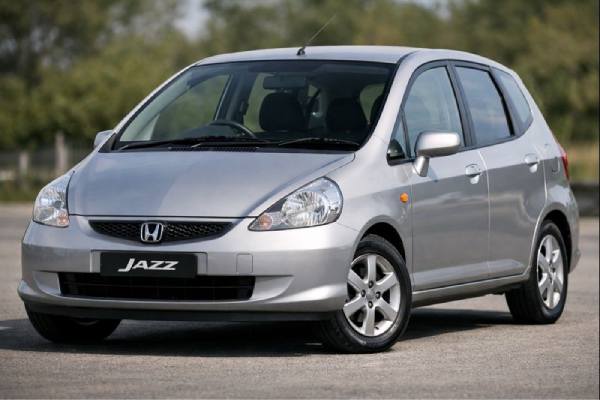
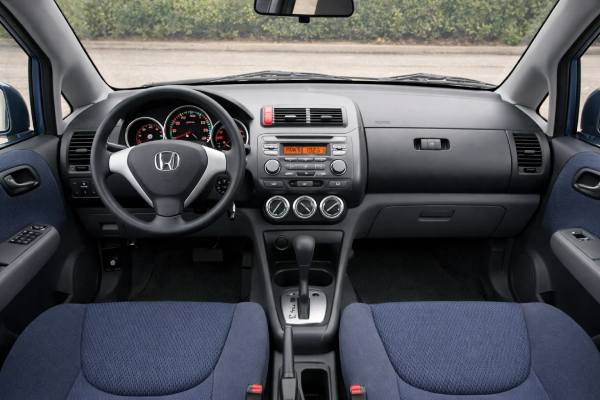
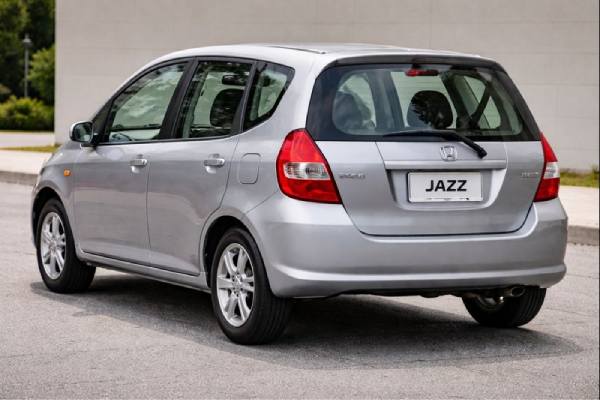
The 2002–2004 Honda Jazz (GD) with the 1.2-litre L12A1 i-DSI engine is one of those small cars that feels “over-engineered” in the best way. It was designed around clever packaging first, then made durable enough to survive years of short trips and city use. The centrally mounted fuel tank helps free up cabin and cargo space, and the tall roofline creates a roomy, easy-access interior without making the car feel bulky on tight streets.
The L12A1’s i-DSI setup uses twin spark plugs per cylinder to burn leaner mixtures more efficiently at light loads. That approach favors smoothness and fuel economy over high-rpm power, which suits the Jazz’s everyday mission. If you’re shopping one now, the big story is simple: these cars can be very reliable, but age-related wear (rubber, fluids, corrosion, and suspension joints) matters more than mileage.
What to Know
- Expect excellent cabin and cargo flexibility for the footprint, especially with the rear seat folding system.
- The 1.2 i-DSI is tuned for economy and low-speed response, not fast overtakes at highway speeds.
- Rust checks are crucial on older GD bodies (arches, sills, rear underbody), especially in salted climates.
- Plan on proactive suspension refreshes (links, bushes, alignment) if the ride feels loose or noisy.
- Engine oil and filter: typically every 10,000 km (6,200 mi) or 12 months (short-trip use often benefits from shorter intervals).
Guide contents
- Jazz GD 1.2 ownership overview
- L12A1 specs and measurements
- Trims, options, and safety equipment
- Reliability, common faults, and recalls
- Maintenance plan and buyer’s checklist
- Real-world driving and efficiency
- Jazz GD versus key rivals
Jazz GD 1.2 ownership overview
The early Honda Jazz (known as Fit in some markets) earned its reputation by being more practical than its size suggests. The “tall mini-MPV” shape is not about style points; it is about visibility, easy entry, and a seating position that makes the car feel larger from behind the wheel. Honda’s packaging trick on the GD platform is the centrally mounted fuel tank under the front area, which helps free space for a low, flat rear floor and a versatile cargo bay. For owners, that translates into a car that is easy to live with: school runs, city parking, weekend hauling, and daily commuting all fit naturally.
The L12A1 1.2 i-DSI engine is also a deliberate choice. Instead of chasing top-end horsepower, Honda tuned it for efficient combustion and smooth torque delivery in normal driving. The i-DSI concept (Dual and Sequential Ignition) uses two spark plugs per cylinder to speed up burn and support leaner operation at light loads. In practice, it tends to feel calm and consistent, with a “diesel-like” willingness to pull gently from low rpm, but without the punch you would expect from sportier small hatchbacks.
Where this model shines today is total cost of ownership. Parts availability is generally good, the mechanical layout is straightforward, and the drivetrain is usually tolerant of daily use when basic service is kept up. Where owners get caught out is age: rubber bushings harden, brake lines and fasteners corrode, air-conditioning systems leak, and old fluids cause sticky calipers or notchy shifting. In other words, a well-kept 2002–2004 Jazz can feel tight and cheerful, while a neglected one can feel noisy and “tired” even if it still starts every morning.
Advantages to keep in mind:
- Class-leading interior space for the footprint, plus a genuinely useful cargo bay.
- Easy visibility and a small turning circle that suits dense cities.
- A drivetrain that prioritizes fuel economy and long-term durability.
Trade-offs:
- Modest performance at motorway speeds, especially with a full load.
- Safety equipment depends heavily on market and trim, so you must verify what your specific car has.
L12A1 specs and measurements
This section focuses on the 2002–2004 Honda Jazz (GD) with the 1.2-litre L12A1 i-DSI engine rated around 78 hp. Exact figures can vary slightly by market, gearbox, emissions calibration, and documentation standard (PS vs hp, DIN vs EEC). Use the tables as a strong baseline, then confirm details by VIN and local spec sheet.
Powertrain and efficiency
| Item | Specification |
|---|---|
| Code | L12A1 |
| Engine layout and cylinders | Inline-4 (I-4), SOHC, 2 valves per cylinder (8 valves total) |
| Displacement | 1.2 L (approx. 1,243 cc) |
| Bore × stroke | 73.0 × 74.3 mm (2.87 × 2.93 in) |
| Induction | Naturally aspirated |
| Fuel system | Multi-point fuel injection (PFI) |
| Compression ratio | 10.8:1 |
| Max power | 78 hp (57 kW) @ ~5,700 rpm |
| Max torque | ~110 Nm (81 lb-ft) @ ~2,800 rpm |
| Timing drive | Chain (verify by engine variant and market) |
| Rated efficiency | ~5.3 L/100 km (44.4 mpg US / 53.3 mpg UK) combined-cycle type figure |
Real-world highway @ 120 km/h (75 mph): In good tune, many owners see roughly 6.0–7.0 L/100 km (39–47 mpg US) depending on tires, wind, load, and gearing. Short trips and cold weather can push consumption noticeably higher because the engine spends more time warming up.
Transmission and driveline
| Item | Specification |
|---|---|
| Drive type | FWD |
| Transmission | 5-speed manual (common); CVT available in some markets (verify) |
| Differential | Open |
Chassis, dimensions, and capacities
| Item | Specification |
|---|---|
| Suspension (front / rear) | MacPherson strut / torsion beam |
| Steering | Electric power steering (EPS), rack-and-pinion |
| Brakes | Front disc / rear drum (many trims); rear disc on some versions (verify) |
| Length / width / height | 3,830 / 1,675 / 1,525 mm (150.8 / 65.9 / 60.0 in) |
| Wheelbase | 2,450 mm (96.5 in) |
| Turning circle (kerb-to-kerb) | approx. 9.4 m (30.8 ft) diameter (verify by wheel and tire package) |
| Kerb weight | typically ~1,000–1,080 kg (2,205–2,381 lb), depending on trim and gearbox |
| Fuel tank | ~42 L (11.1 US gal / 9.2 UK gal) |
| Cargo volume | about 380 L (13.4 ft³) seats up, VDA-style; much more with seats folded |
Fluids and service capacities (decision-useful)
Capacities can vary by sump design, cooler fitment, and market documentation. Treat these as planning numbers, then confirm against the correct service manual for your VIN.
| Item | Typical specification |
|---|---|
| Engine oil | 0W-20 to 5W-30 depending on climate; capacity typically ~3.4–3.6 L (3.6–3.8 US qt) with filter |
| Coolant | Long-life type; 50/50 mix common; capacity typically ~4 L (4.2 US qt) |
| Manual transmission fluid | MTF-type fluid; capacity typically ~1.5–1.7 L (1.6–1.8 US qt) |
| Brake fluid | DOT 4 common in Europe (verify cap and manual) |
Trims, options, and safety equipment
For 2002–2004 Jazz GD models, trim naming depends heavily on country. You will see different combinations of entry and mid-grade trims (often with simple letter names) and option packs that bundle air conditioning, alloy wheels, audio upgrades, or side airbags. Rather than trying to memorize every badge, it is smarter to identify what matters mechanically and for safety, then confirm it on the specific car.
Trims and options that change ownership
Common functional differences you should verify:
- Transmission: 5-speed manual vs CVT. Manuals are simple and typically cheaper to keep long term. CVTs can be smooth and efficient, but neglected fluid service can lead to shuddering, judder on take-off, or belt and pulley wear.
- Brake hardware: Many 1.2 cars use rear drums, which are fine for normal use but need occasional cleaning and correct adjustment. Some higher trims or other engine variants may have rear discs.
- Wheels and tires: Base wheels often improve ride comfort and pothole tolerance. Larger alloys can look better but may increase tire cost and road noise.
- Comfort equipment: Air conditioning, heated mirrors, and electric windows are convenience items, but they also add potential repair points (compressor, condenser, window regulators).
Quick identifiers when viewing a car:
- Look for an airbag label or SRS marking on the seat or B-pillar for side airbags.
- Check the ABS lamp behavior at key-on. It should illuminate briefly and then go out.
- Confirm ISOFIX/LATCH points in the rear seats (usually clearly marked).
- Use the VIN and build plate for exact market specification when possible.
Safety ratings and what they mean here
Euro NCAP testing in this era is not directly comparable to modern protocols, but it still provides useful context. The Jazz was recognized for strong overall performance in its class at the time, including occupant protection and pedestrian results. For an early-2000s supermini, that matters: structure and restraint design were major differentiators, and the Jazz was engineered to perform well.
Safety systems and driver assistance
Do not expect modern ADAS on a 2002–2004 supermini. Typically, you are looking at:
- Front airbags (driver and passenger) as standard in many markets.
- Side airbags (torso, and sometimes head protection) often optional or trim-dependent.
- Seatbelt pretensioners and load limiters on front belts in many versions.
- ABS commonly available, sometimes standard on higher trims.
- Stability control (ESC/VSA): not universal in this period; verify by VIN and dash indicators.
Child-seat practicality is a strong point. The upright cabin, wide-opening doors, and ISOFIX anchors (where fitted) make daily use easier than many lower-roof rivals. The main caution is age-related: old seatbelt retractors, worn latch hardware, and missing warning labels should be corrected so the system works as intended.
Reliability, common faults, and recalls
A well-maintained Jazz GD can cover high mileage with surprisingly few major failures. Most “reliability” complaints today trace back to deferred maintenance or simple wear items that have aged out. Use the checklist below as a map: start with common and low-cost items, then confirm you are not buying a car with hidden corrosion or cooling issues.
Common and low-cost issues (high prevalence, low cost tier)
- Drop links and suspension bushes
Symptoms: front-end clunks over bumps, vague steering on broken roads.
Root cause: worn anti-roll bar links, tired control arm bushes.
Remedy: replace links or bushes; follow with alignment. - Sticking brake calipers or uneven rear braking
Symptoms: pulling under braking, hot wheel smell, poor fuel economy.
Root cause: seized slide pins, old brake fluid, corrosion.
Remedy: rebuild or replace calipers as needed; refresh fluid; clean and lubricate pins correctly. - Battery and charging sensitivity
Symptoms: slow cranking, random warning lamps, intermittent electrical quirks.
Root cause: weak 12 V battery, corroded terminals, poor ground points.
Remedy: test battery under load, clean terminals, confirm alternator output.
Occasional issues (medium prevalence, medium cost tier)
- Air conditioning weak performance
Symptoms: cools poorly at idle, needs frequent re-gas, compressor noise.
Root cause: condenser corrosion, seal leaks, compressor clutch wear.
Remedy: leak test before recharging; fix leaks first to avoid repeat costs. - Engine mount wear
Symptoms: vibration at idle, thump on gear changes.
Root cause: rubber mount deterioration with age.
Remedy: replace the worst mount first (often noticeable improvement), then reassess. - Exhaust corrosion
Symptoms: blowing noise, rattles, failed inspections.
Root cause: age and short-trip condensation.
Remedy: replace sections; ensure hangers are sound.
Rare but expensive risks (lower prevalence, high cost tier)
- Severe rust in structural areas
Symptoms: soft jacking points, visible perforation, poor panel alignment.
Root cause: trapped moisture, winter salt exposure, poor past repairs.
Remedy: walk away unless you can verify high-quality structural repair. - Overheating history
Symptoms: coolant smell, uneven heater performance, bubbling in expansion tank.
Root cause: neglected coolant, radiator aging, thermostat issues, prior overheating.
Remedy: pressure test and inspect thoroughly; overheating can shorten engine life.
Service actions, recalls, and how to verify
Recall scope varies by market and production month, and many older cars have moved between countries. The correct approach is simple:
- Run an official VIN check with Honda in your region.
- Ask for dealer printouts or stamped documentation showing completion.
- Cross-check with your country’s recall database if available.
Avoid relying on hearsay about “all Jazz models” having a specific campaign. Even when a recall is common across a generation, the VIN ranges can be narrow. If the seller cannot show proof, assume you need to verify and potentially complete outstanding actions after purchase.
Maintenance plan and buyer’s checklist
Think of the Jazz GD as a durable small car that rewards routine service and punishes neglect slowly, not dramatically. That is good news for owners: you usually get warning signs before a breakdown. The goal is to stabilize the baseline first (fluids, filters, brakes, tires), then address aging rubber and corrosion prevention.
Practical maintenance schedule (distance and time)
Use this as a sensible plan for a 2002–2004 L12A1 car; always confirm against the correct documentation for your VIN and local climate.
- Engine oil and filter: every 10,000 km (6,200 mi) or 12 months.
Severe use (short trips, cold starts, heavy city traffic): consider 5,000–7,500 km intervals. - Air filter: inspect every service; replace about every 30,000 km (19,000 mi) or sooner in dusty areas.
- Cabin filter (if fitted): yearly or every 15,000–20,000 km depending on conditions.
- Spark plugs: i-DSI uses more plugs than typical engines, so replacement cost is higher. Many owners plan plugs around 60,000–100,000 km (37,000–62,000 mi) depending on plug type and running quality.
- Coolant: every 3–5 years (or per coolant type). Replace sooner if the history is unknown.
- Brake fluid: every 2 years regardless of mileage.
- Manual transmission fluid: about every 60,000–100,000 km; earlier if shifting feels notchy or the history is unknown.
- Brake inspection: pads, discs, drums, and handbrake function at every service. Clean and lubricate sliding hardware as needed.
- Tire rotation and alignment: rotate every 10,000–12,000 km; align if tires show uneven wear or after suspension work.
- 12 V battery testing: test annually once the battery is 4–5 years old; replace proactively if winter starting weakens.
Fluids, specs, and a few torque values (decision-making only)
Because documentation differs, do not treat these as “final numbers.” Use them to understand what the car needs and what a shop should quote.
- Engine oil: quality oil that matches your climate and spec (commonly 5W-30 in many European climates; lighter oils may be listed for some markets).
- Brake fluid: commonly DOT 4 in Europe (verify cap and manual).
- Coolant: long-life type; avoid mixing unknown types.
- Manual gearbox: Honda MTF-type fluid is often recommended for shift quality.
If you DIY, the most important “torque spec” is the one you can control without a manual: wheel nuts should be tightened to the correct value for your wheel type, using a torque wrench, and rechecked after wheel work. For internal fasteners (brakes, suspension, mounts), use the correct service manual for your VIN because the wrong torque can create noise, wear, or safety issues.
Buyer’s guide: what to inspect before you pay
Body and corrosion hotspots
- Rear wheel arches and inner lips
- Sills and jacking points
- Rear underbody, fuel and brake lines
- Tailgate and lower door seams
Mechanical checks
- Cold start: listen for rattles, watch idle stability
- Clutch bite point and smooth engagement (manual)
- Steering feel: no heavy spots, no loud EPS noises
- Braking: straight stops, no pulsing, no dragging smell after a test drive
- Cooling: stable temperature, no sweet coolant smell, heater works consistently
Electronics and cabin
- Window regulators, central locking, HVAC fan speeds
- Air conditioning performance (if fitted)
- Dashboard warning lamps should self-test and then go out
Service history requests
- Proof of regular oil service
- Brake fluid changes
- Gearbox fluid service (especially if CVT)
- Any recall verification paperwork
A good Jazz is usually obvious: tight steering, quiet suspension, clean underbody, and a seller who can explain what has been done recently. If the car needs “just a few small things,” assume it needs more until proven otherwise.
Real-world driving and efficiency
The Jazz GD with the 1.2 i-DSI is best understood as an urban and suburban all-rounder. It feels light on its feet, easy to place, and more spacious than most superminis of its era. On a daily commute, that matters more than headline performance figures.
Ride, handling, and NVH
Ride: The suspension is tuned for real roads. Over broken pavement, a healthy Jazz absorbs bumps without harshness, though worn drop links and bushes can add clunks. Smaller wheel packages typically ride better and cost less to keep in tires.
Handling: The car’s tall shape does not turn it into a corner carver, but the chassis is predictable. Front grip is respectable, body roll is present but controlled, and the rear torsion beam keeps behavior simple and stable. Good tires make a noticeable difference.
NVH (noise, vibration, harshness): Expect more road and wind noise than modern hatchbacks. If the cabin booms or drones, check tires (cupping), wheel bearings, and exhaust leaks. If it vibrates at idle, suspect engine mounts.
Powertrain character
Around town, the i-DSI engine’s smooth combustion and low-rpm manners are the highlight. Throttle response is gentle rather than sharp. The manual gearbox is typically easy to use, with a clutch that suits stop-and-go traffic. At higher speeds, overtakes require planning: you will often downshift and use the upper midrange rather than waiting for a surge that never arrives. That is normal for this configuration.
Real-world efficiency
In mixed use, many owners see fuel consumption in the 5.5–7.0 L/100 km range depending on traffic, temperature, and driving style. The Jazz rewards steady throttle and anticipation. Cold weather and short trips can push numbers higher because the engine spends more time warming up, and the cabin heater load increases idle and enrichment time.
Key performance metrics (what actually matters)
Published acceleration and top-speed figures vary by market and test method, but the practical takeaway is consistent:
- City performance: responsive enough, easy to merge and keep pace.
- Motorway performance: adequate, but you plan overtakes and avoid expecting quick passing at high speed.
- Braking and stability: confident when maintained, but brake condition (fluid, calipers, tires) matters more than the model itself at this age.
For many owners, the “performance win” is not speed; it is the ability to do daily tasks efficiently, park anywhere, carry more than expected, and keep running without drama.
Jazz GD versus key rivals
The early-2000s supermini class was strong: Toyota Yaris, Ford Fiesta, Volkswagen Polo, Renault Clio, and Nissan Micra all offered credible alternatives. The Jazz still stands out today, but it does so in specific ways.
Where the Jazz wins
Packaging and usability: This is the Jazz’s signature advantage. The upright cabin, flexible rear seating, and square cargo area make it feel like a class larger in daily use. If you regularly carry bulky items, child seats, or tall loads, the Jazz often beats rivals that are longer but less space-efficient.
Visibility and maneuverability: The tall seating position and smart sightlines reduce stress in cities. Parking and tight turns are typically easy, helped by compact dimensions and a small turning circle.
Long-term durability mindset: Honda engineered the platform to handle real-world use. When serviced, the drivetrain and chassis can remain dependable well past the age where many rivals start to feel worn out.
Where rivals may suit you better
Highway refinement: Some competitors offer quieter cabins and a more settled high-speed feel, especially in higher trims or larger-engine versions. If your driving is mostly motorway, the Jazz’s noise and modest power may wear on you.
Performance per horsepower: A Fiesta or Polo with a stronger engine can feel more relaxed at speed, even if it is less spacious inside. If you care more about passing power than cabin flexibility, rivals may fit better.
Safety equipment availability: While the Jazz was strong for its era, safety equipment on older cars is highly trim- and market-dependent. Some rivals may have more common availability of certain features in your local used market. The only safe approach is to verify on the exact car.
The simplest decision rule
Choose the Jazz GD 1.2 if you value space efficiency, ease of use, and a calm, economical drivetrain. Choose a rival if you want stronger motorway performance, a quieter cabin, or a specific safety and trim package that is easier to find locally. In today’s market, condition matters more than brand: the best buy is the car with the cleanest body, best maintenance records, and the fewest warning signs of neglect.
References
- Jazz 02 2002 (Press Release)
- Honda Jazz Achieves Highest Overall Rating in EuroNCAP Supermini Crash Tests 2004 (News Release)
- Honda Owners | Recalls and Updates | Honda UK 2026 (Recall Lookup)
- Check if a vehicle, part or accessory has been recalled – GOV.UK 2026 (Recall Database)
- Adult occupant protection Child restraints Pedestrian protection 2004 (Safety Rating)
Disclaimer
This article is for informational purposes only and is not a substitute for professional diagnosis, inspection, or repair. Specifications, torque values, service intervals, and procedures can vary by VIN, market, model year, and equipment. Always verify details using official owner and service documentation for your exact vehicle, and consult a qualified technician when needed.
If you found this guide useful, consider sharing it on Facebook, X (Twitter), or your favorite forum to help others keep these cars in great shape.