
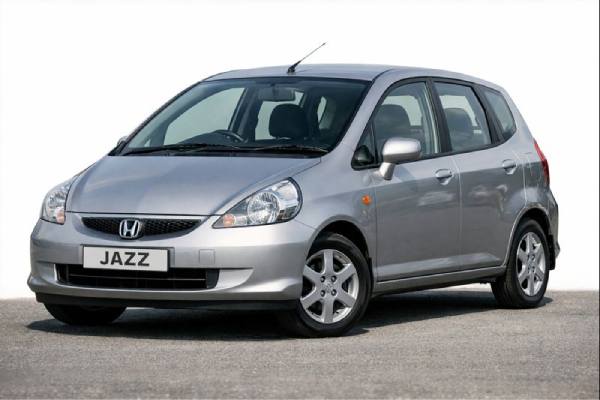
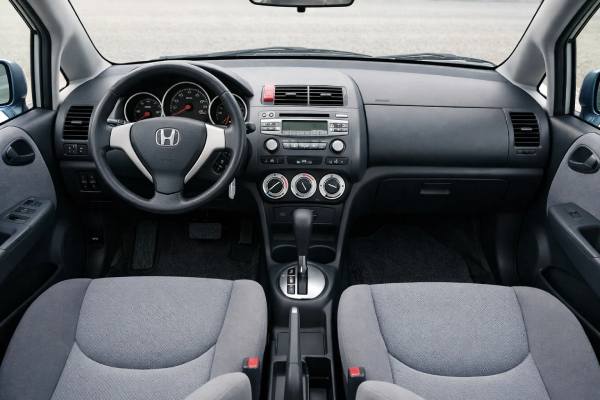
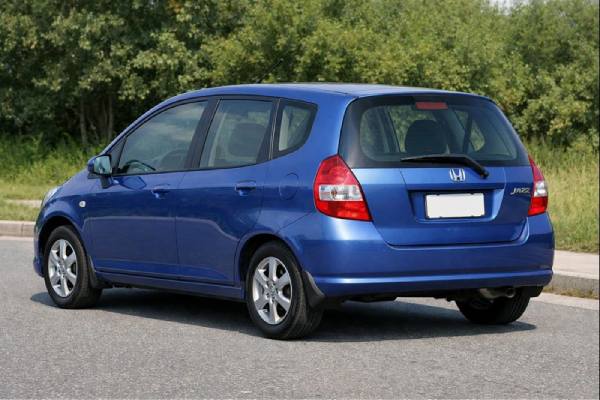
The 2002–2004 Honda Jazz (GD) with the L13A1 1.3 i-DSI engine is the “sweet spot” of the early range for many owners: it keeps the Jazz’s famous packaging and day-to-day toughness, but adds a little more usable pull than the 1.2 without changing the car’s simple, efficient character. Honda’s engineering priorities show everywhere—an upright body for visibility, a clever fuel-tank position to free cabin space, and a drivetrain tuned for smooth, economical commuting rather than high-speed thrills.
The L13A1 i-DSI uses twin spark plugs per cylinder (eight total) to create a faster, cleaner burn at light loads. In normal driving it feels calm, flexible, and easy to modulate, especially in city traffic. Today, condition and maintenance history matter more than mileage. A cared-for Jazz can feel surprisingly tight; a neglected one often needs suspension, brake, and corrosion work before it feels like a Honda again.
Quick Specs and Notes
- Excellent interior space and cargo flexibility for a small hatch, with a tall seating position and easy access.
- The 1.3 i-DSI’s low-speed torque suits city and suburban driving better than headline horsepower suggests.
- Verify rust carefully (arches, sills, rear underbody); corrosion is the biggest value-killer on older GD cars.
- Budget for wear items on age alone (bushes, drop links, brake hardware), even at low mileage.
- Brake fluid: typically every 2 years, regardless of distance, to protect calipers and ABS components.
Jump to sections
- Why the GD Jazz 1.3 works
- L13A1 technical specifications
- Grades, options, and safety tech
- Known issues and service bulletins
- Maintenance schedule and buying tips
- Performance feel and real mpg
- Comparing the Jazz to rivals
Why the GD Jazz 1.3 works
The first-generation Jazz (GD) is often described as a small car that behaves like a practical family car. That is not marketing—it is the result of packaging decisions that prioritize space efficiency and easy use. The tall roofline and upright glass area improve visibility and make entry simple for drivers of all ages. Inside, the seating position is higher than many superminis of the era, so the car feels “grown up” on daily errands. It is also a strong platform for city driving: compact outside, roomy inside, and easy to place in traffic.
A major reason the cabin works so well is the fuel tank location, which helps create a flat, usable rear floor and allows the rear seat area to be more flexible than typical small hatchbacks. For owners, this shows up in the way the car adapts: groceries one day, bulky boxes the next, then a back seat that can handle adults without the usual supermini compromises. If you are buying a used example today, interior condition can also be a proxy for care—worn steering wheels, sagging seat bolsters, and sticky controls often track with neglected servicing.
The L13A1 1.3 i-DSI engine matches the Jazz’s mission. It is designed to deliver dependable, economical power at everyday engine speeds, not exciting acceleration at the top end. The i-DSI system (Dual and Sequential Ignition) uses two spark plugs per cylinder to speed up combustion and support efficient running at light loads. In real use, the engine feels smooth and un-fussy. It tends to cope well with stop-start driving, short trips, and the kind of gentle throttle inputs that dominate commuting.
The main “ownership truth” for 2002–2004 cars is that age-related maintenance matters more than the model itself. Rubber hardens, fluids degrade, and corrosion grows quietly underneath. The Jazz is usually forgiving, so problems can hide behind a still-reliable start-up routine. A good car is one that feels tight: quiet over bumps, straight under braking, stable on the motorway, and supported by a believable service record. When you find that, the GD Jazz 1.3 can still be one of the most sensible used cars in its size class.
L13A1 technical specifications
This section focuses on the 2002–2004 Honda Jazz (GD) with the 1.3-litre L13A1 i-DSI engine rated at about 83 hp. Small differences occur by market (PS vs hp), emissions calibration, gearbox, and documentation standards, so treat the tables as a strong baseline and verify by VIN where possible.
Powertrain and efficiency
| Item | Specification |
|---|---|
| Code | L13A1 |
| Engine layout and cylinders | Inline-4 (I-4), SOHC, 2 valves per cylinder (8 valves total), i-DSI (twin spark plugs per cylinder) |
| Displacement | 1.3 L (1,339 cc) |
| Bore × stroke | 73.0 × 80.0 mm (2.87 × 3.15 in) (commonly listed for 1,339 cc i-DSI) |
| Induction | Naturally aspirated |
| Fuel system | PFI / MPFI (market dependent naming) |
| Compression ratio | 10.8:1 |
| Max power | 83 hp (61 kW) @ 5,700 rpm |
| Max torque | 119 Nm (88 lb-ft) @ 2,800 rpm |
| Timing drive | Chain |
| Rated efficiency | Around 5.5 L/100 km (42.8 mpg US / 51.4 mpg UK) combined-cycle type figure |
Real-world highway @ 120 km/h (75 mph): Many owners see roughly 6.2–7.2 L/100 km (33–38 mpg UK / 33–45 mpg US) depending on wind, tires, load, and roof racks. Short trips and cold weather can raise consumption noticeably because the engine spends more time warming up.
Aerodynamics: The Jazz’s tall shape favors space over ultra-low drag. In practice, that means motorway economy depends heavily on speed discipline and tire choice.
Transmission and driveline
| Item | Specification |
|---|---|
| Drive type | FWD |
| Transmission | 5-speed manual (common); CVT available in many markets (verify by VIN and trim) |
| Differential | Open |
Chassis, dimensions, and capacities
| Item | Specification |
|---|---|
| Suspension (front / rear) | MacPherson strut / torsion beam |
| Steering | Electric power steering (EPS) |
| Brakes | Front ventilated discs / rear drums (common); rear discs on some versions (verify) |
| Length / width / height | ~3,830 / 1,675 / 1,525 mm (150.8 / 65.9 / 60.0 in) |
| Wheelbase | ~2,450 mm (96.5 in) |
| Turning circle (kerb-to-kerb) | Often quoted around 9.4 m (30.8 ft) diameter (verify by wheel/tire) |
| Kerb weight | Typically ~1,020–1,100 kg (2,249–2,425 lb), trim and gearbox dependent |
| Fuel tank | ~42 L (11.1 US gal / 9.2 UK gal) |
| Cargo volume | About 380 L (13.4 ft³) seats up (VDA-style), significantly more seats folded |
Fluids and service capacities (planning figures)
| Item | Typical specification |
|---|---|
| Engine oil | 0W-20 to 5W-30 by market/climate; capacity often ~3.6 L (3.8 US qt) with filter |
| Coolant | Long-life type; 50/50 mix common; capacity often ~4.0 L (4.2 US qt) |
| Manual transmission fluid | Honda MTF-type; often ~1.6 L (1.7 US qt) |
| A/C refrigerant | Varies by market/year; check under-hood label before servicing |
Grades, options, and safety tech
Because the Jazz was sold across many markets, trim names can be misleading. Two cars with different badges may be equipped almost identically, while two cars with the same badge can differ by year or country. For a 2002–2004 1.3 i-DSI, it helps to focus on the features that change ownership cost, safety, and day-to-day usability.
Trims and options that matter most
Gearbox choice (manual vs CVT):
- A manual Jazz is usually the simplest long-term bet. It tolerates age well when the clutch, mounts, and gearbox fluid are kept in good shape.
- A CVT can be smooth and efficient, but it is less forgiving of neglected fluid service. If the car shudders on gentle take-off, feels “rubbery” under acceleration, or flares rpm without matching road speed, treat it as a negotiation point and plan for specialist inspection.
Brake and wheel packages:
Most 1.3 cars run front discs and rear drums, which work well for the car’s weight and typical use. Drums need correct adjustment and occasional cleaning, especially if the car sits unused. Wheel size affects ride quality more than many buyers expect: smaller wheels often mean better comfort and less risk of pothole damage.
Comfort equipment that can become repair work:
Air conditioning, heated mirrors, electric windows, and factory audio upgrades improve daily life, but older systems can need attention. A weak A/C system is not always “just a regas”—condensers and seals commonly leak with age. Window regulators can also slow down or jam, especially if the car has lived outdoors.
Quick identifiers when viewing a used car
- Look for SRS markings on seat sides or the B-pillar to confirm side airbags (where fitted).
- Check that the ABS lamp illuminates at key-on and then goes out after starting.
- Confirm ISOFIX points and plastic guides (often visible between seat base and backrest).
- Verify tire size matches the door-jamb label or sensible equivalents; odd sizes can hint at budget ownership.
Safety ratings and equipment reality
Expect early-2000s safety: strong basics if the car is correctly equipped, but little to no modern driver assistance. Typically you are looking at front airbags, pretensioners, and ABS availability depending on market and trim. Some versions add side airbags and EBD. Electronic stability control is not guaranteed in this period, so do not assume it is present without a clear dash indicator and documentation.
A practical tip: on a car this age, safety is also maintenance. Old tires, uneven brakes, worn dampers, and tired bushes can degrade stopping distance and stability far more than the original brochure suggests. A “high-spec” car that is mechanically worn is often less safe than a simpler one that is tight and properly maintained.
Known issues and service bulletins
The Jazz GD has a reputation for durability, but used examples today sit in an age bracket where small problems stack up. The key is to separate “common wear” from “expensive surprises,” then inspect the car with that in mind. The lists below reflect typical prevalence patterns for older GD cars and the kinds of fixes that bring them back to a tight, confidence-inspiring feel.
Common issues (high prevalence, usually low cost)
- Front suspension clunks (drop links, bushes)
Symptoms: knocking over small bumps, loose feel on broken roads.
Likely cause: worn anti-roll-bar links, tired compliance bushes.
Remedy: replace worn links/bushes; align the car afterward. - Rear drum brake imbalance or weak handbrake
Symptoms: long handbrake travel, uneven braking on inspections, squeaks after rain.
Likely cause: contaminated shoes, corroded hardware, poor adjustment.
Remedy: clean/service drums, renew hardware if rusty, adjust correctly. - Age-related electrical niggles
Symptoms: slow cranking, intermittent warning lights, central locking oddities.
Likely cause: weak 12 V battery, corroded terminals or grounds.
Remedy: load-test battery, clean terminals and grounds, verify charging output.
Occasional issues (medium prevalence, medium cost)
- Air conditioning leaks and weak cooling
Symptoms: cools briefly then fades, needs frequent regas, compressor noise.
Likely cause: condenser corrosion, O-ring leaks, aging compressor clutch.
Remedy: leak test before recharging; repair leaks first to avoid repeat costs. - Engine mount wear
Symptoms: vibration at idle, thump on take-up, extra vibration with A/C on.
Likely cause: rubber mounts harden and crack with age.
Remedy: replace the worst mount first; reassess NVH before replacing all. - Exhaust corrosion
Symptoms: blowing noise, rattles, failed emissions or inspection.
Likely cause: condensation from short trips, rusted joints and hangers.
Remedy: replace affected sections; check heat shields and mounts.
Rare but expensive (lower prevalence, high cost or “walk away”)
- Structural rust
Symptoms: soft sills/jacking points, bubbling seams, patched underseal hiding holes.
Likely cause: salt exposure, poor past repairs, trapped moisture.
Remedy: avoid unless you can verify high-quality structural repair. - Cooling-system neglect with overheating history
Symptoms: inconsistent heater output, coolant smell, evidence of stop-leak, fan issues.
Likely cause: old coolant, radiator aging, thermostat or cap failure, past overheating.
Remedy: pressure test, inspect for leaks and correct fan operation; treat any overheating history as a serious risk.
Recalls, updates, and verification
Recall scope varies by market and production date, and older cars often change countries. The reliable process is: check by VIN through an official Honda channel, then confirm by service paperwork where possible. If the seller cannot prove recall completion, assume you will need to verify after purchase and budget time for dealer confirmation.
Maintenance schedule and buying tips
A 2002–2004 Jazz 1.3 can be very economical to run, but only if you treat maintenance as “routine prevention,” not “repair when it breaks.” On older cars, the most expensive problems often start as cheap neglect: old brake fluid seizes hardware, tired coolant stresses the radiator and thermostat, and worn bushes chew tires. The schedule below is designed for real ownership, not ideal showroom conditions.
Practical maintenance schedule (distance and time)
- Engine oil and filter: every 10,000 km (6,200 mi) or 12 months.
If the car does short trips or winter city use, many owners choose 7,500 km intervals for cleaner internals and smoother running. - Engine air filter: inspect at each oil service; replace about every 30,000 km (19,000 mi) or sooner in dusty areas.
- Cabin filter (if fitted): every 12 months or 15,000–20,000 km for good airflow and A/C performance.
- Spark plugs (i-DSI uses 8 plugs): plan service by running quality and interval guidance; a sensible planning window is 60,000–100,000 km (37,000–62,000 mi). Misfires, hard starting, or poor economy often justify earlier replacement.
- Coolant: every 3–5 years, sooner if history is unknown. Use the correct type and avoid mixing unknown coolants.
- Brake fluid: every 2 years (critical for ABS longevity and caliper health).
- Manual gearbox fluid: roughly every 60,000–100,000 km, or sooner if shifting feels notchy.
CVT fluid (if equipped): prioritize correct fluid and more conservative intervals; neglect is a common source of drivability issues. - Brakes and tires: inspect pads/shoes, hardware condition, and slide-pin movement at every service; rotate tires every 10,000–12,000 km and align if wear looks uneven.
- 12 V battery: test annually once it is 4–5 years old; replace proactively if winter cranking weakens.
Buyer’s checklist (what to look for on inspection)
Underbody and corrosion
- Check rear arches inside the lip, sills at jacking points, and rear underbody seams.
- Be cautious of fresh underseal without photos or invoices—good rust prevention is documented, not hidden.
Test-drive behaviors
- Straight braking with no steering pull and no burning smell after the drive.
- Quiet suspension over small bumps (clunks usually mean links or bushes).
- Stable temperature gauge and consistent cabin heat.
- Smooth take-up from a stop (especially important on CVT cars).
Service proof worth paying for
- Regular oil changes, brake-fluid changes, and coolant history.
- Evidence of recent tires from a reputable brand and a clean alignment report.
- Any paperwork showing recall checks or dealer servicing.
A helpful rule: if the car needs multiple basics at once—tires, brakes, suspension, battery—you are not buying a “cheap Jazz,” you are buying a refurbishment project. Price it that way, or keep looking.
Performance feel and real mpg
The 1.3 i-DSI Jazz is not a fast car, but it is often a satisfying one. Its performance makes sense in normal traffic: light controls, predictable responses, and enough torque to keep you from constantly chasing rpm. If your driving is mostly urban and suburban, the Jazz feels cooperative; if your driving is mostly motorway overtakes and steep grades, you will notice its limits.
Ride, handling, and noise
Ride: With healthy suspension, the Jazz rides with a rounded, mature feel for its class. It absorbs city imperfections well, especially on smaller wheels. When it feels harsh or noisy, suspect worn drop links, tired dampers, or incorrect tire pressures. These cars respond well to “bringing the basics back.”
Handling: The chassis is stable and predictable. There is body roll, but it is well controlled for a tall hatch. Steering is light (EPS), which helps in parking and tight streets. On faster roads, the car tracks straight when alignment and tires are correct; when it wanders, look for worn bushes and mismatched tires.
NVH: Expect more road noise than a modern supermini. Tire choice makes a big difference, and uneven wear can create a booming drone. Wheel bearings can also add a steady hum that changes with speed.
Powertrain character
The i-DSI combustion strategy favors smoothness and efficiency. In practice:
- Low and mid-range response is the strong point—easy to meter in traffic, calm away from lights.
- For overtakes, you plan ahead and use the gearbox. Downshifts matter more than “waiting for power.”
- With a full load, the car will still do the job, but it rewards patient driving rather than urgency.
Real-world fuel economy
Owners often report mixed driving in the 5.8–7.2 L/100 km range depending on route, temperature, and driving style. Steady suburban runs can sit near the lower end; repeated cold starts and short trips push it higher. Motorway economy is very speed-sensitive: keeping a steady pace and avoiding roof loads can be worth more than any “eco driving” tricks.
What performance numbers should you actually care about?
On a used Jazz, the most meaningful “performance” signals are:
- Braking confidence and consistency (pads, fluid, calipers, tires)
- Stability at 100–120 km/h (alignment, bushes, tire quality)
- Cooling system behavior (no overheating, strong heater, stable temperature)
If those are right, the Jazz feels faster because it feels safer and smoother. If they are wrong, even a higher-horsepower rival can feel worse in daily use.
Comparing the Jazz to rivals
The early-2000s supermini market offered strong choices: Toyota Yaris, Ford Fiesta, Volkswagen Polo, Renault Clio, Opel Corsa, and Nissan Micra all have loyal followings. The Jazz still stands out today, but it wins on a specific set of priorities—space efficiency, ease of use, and long-term practicality—rather than outright refinement or speed.
Where the Jazz 1.3 typically wins
Interior and cargo flexibility: The Jazz’s cabin packaging is its defining advantage. Even when rivals match its exterior footprint, many do not match its sense of usable space, upright seating, and easy loading. If your life includes bulky shopping, child seats, or occasional “small van” tasks, the Jazz often feels uniquely capable.
City friendliness: Light steering, good visibility, and compact dimensions make it easy to live with. In dense streets, this matters more than a small difference in horsepower.
Ownership logic: Parts availability is generally good and the car is mechanically straightforward. When maintained, it tends to avoid the high-drama failures that make older cars financially unpredictable.
Where a rival may suit you better
Motorway refinement: Some competitors feel quieter and more planted at higher speeds, especially in higher trims or with larger engines. If you regularly drive long motorway distances, you may prefer a Polo- or Fiesta-type feel.
Driving “spark”: A well-sorted Fiesta can feel more playful, with sharper steering and a more eager engine in some versions. If you enjoy back-road driving, the Jazz’s calm personality may feel less engaging.
Safety equipment availability in your local market: Equipment is trim- and market-dependent for all cars of this era, but the Jazz’s used market can be uneven. In some regions, rivals may more commonly include ABS or side airbags. The only reliable approach is to verify equipment on the exact car.
The best decision rule for 2026 buyers
Choose the Jazz GD 1.3 i-DSI if you want a practical, space-efficient hatch that is easy to drive and economical when serviced. Choose a rival if you prioritize motorway power, quieter cabins, or a very specific trim and safety package that is easier to find locally. Above all, buy condition: the cleanest underbody and the most believable maintenance history usually beat a “better” model with hidden rust and deferred servicing.
References
- Jazz 02 2002 (Press Release)
- Honda Jazz Achieves Highest Overall Rating in EuroNCAP Supermini Crash Tests 2004 (News Release)
- Honda Owners | Recalls and Updates | Honda UK 2026 (Recall Lookup)
- Check if a vehicle, part or accessory has been recalled – GOV.UK 2026 (Recall Database)
Disclaimer
This article is for informational purposes only and is not a substitute for professional inspection, diagnosis, or repair. Specifications, torque values, service intervals, and procedures vary by VIN, market, model year, and equipment, so always verify details using official owner and service documentation for your exact vehicle.
If this guide helped you, please consider sharing it on Facebook, X (Twitter), or your preferred community to support our work.