
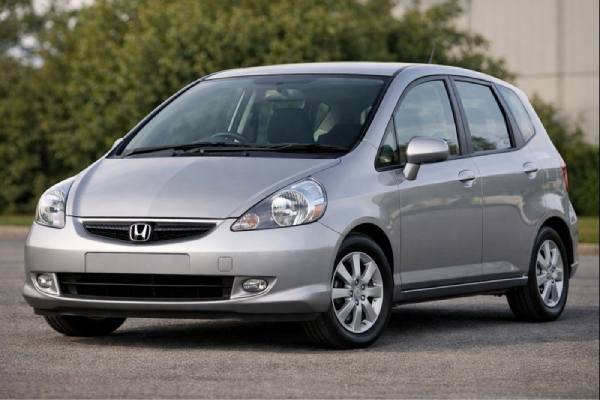
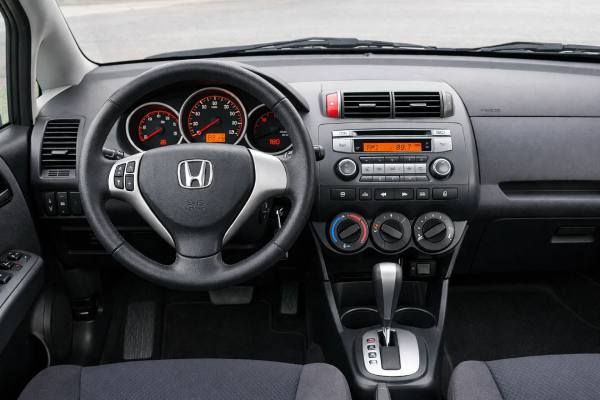
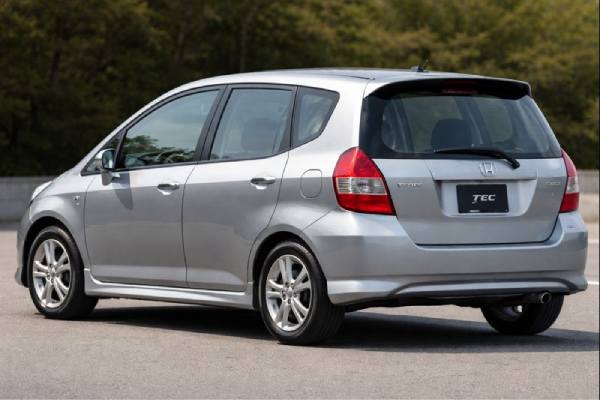
If you’re shopping for a first-generation Honda Fit (GD3) facelift with the L15A1 1.5-liter engine, you’re looking at one of the most space-efficient small cars of its era. The engineering story is simple but smart: a compact SOHC i-VTEC inline-four, light weight, and a cabin layout that prioritizes usable volume over styling drama. In daily ownership, the big differentiators are packaging (the “Magic Seat” versatility), easy service access, and low running costs—provided you stay ahead of fluids and rust prevention in harsh climates.
This guide focuses on the 109 hp L15A1 variant commonly sold in the facelift years, with practical specs, what the numbers mean on the road, and the reliability patterns that show up as these cars age into high mileage.
Quick Specs and Notes
- Excellent interior flexibility for its footprint; the rear seat system makes bulky-cargo trips surprisingly easy.
- Simple, durable i-VTEC drivetrain with good parts availability in most markets.
- Light curb weight helps both efficiency and brake/tire life when the suspension is kept tight.
- Automatics in salt-belt regions deserve extra underbody inspection due to known driveshaft-corrosion concerns.
- Plan on brake fluid replacement about every 3 years, and keep transmission fluid fresh (especially under heavy city use).
Contents and shortcuts
- GD3 facelift owner picture
- L15A1 specs and measurements
- Trims, safety, and equipment notes
- Known problems, recalls, and fixes
- Maintenance plan and buying tips
- Real-world driving and economy
- Rivals: how the GD3 Fit stacks up
GD3 facelift owner picture
The facelift-era GD3 Fit is at its best when you approach it as a “tool” that happens to be pleasant to drive. It’s short, easy to place in traffic, and engineered around efficiency of space. The seating position is upright, visibility is strong, and the cabin is shaped to be used—cupholders and storage bins are where you actually want them, and the rear seat layout is the signature feature.
The L15A1 1.5-liter engine is the key upgrade over smaller-displacement variants in some markets. On paper, 109 hp doesn’t sound dramatic, but in a light hatchback it translates into confident merging and relaxed 80–120 km/h cruising. More importantly for long-term owners, the drivetrain is straightforward: port fuel injection, a conventional cooling system, and service items that don’t require exotic tools.
Where these cars diverge in ownership experience is condition. A well-maintained Fit feels tight and eager; a neglected one can feel noisy and imprecise because small suspension bushings, dampers, and engine mounts matter more in a light chassis. The second theme is corrosion: many examples have lived through winters, and the underside condition can be the difference between “great buy” and “walk away.”
Think of the GD3 Fit as a high-utility compact: it’s not a luxury car, but it can be a low-drama daily driver for years if you buy carefully and follow a sensible maintenance routine.
L15A1 specs and measurements
Below are baseline specs that commonly apply to facelift GD3 Fit models with the L15A1. Exact figures can vary by market (Fit/Jazz naming, equipment, bumpers, wheels, and emissions calibrations), so use these as a reliable starting point and then confirm by VIN and trim.
Powertrain and efficiency
| Item | Spec |
|---|---|
| Code | L15A1 |
| Engine layout and cylinders | Inline-4, SOHC i-VTEC, 4 valves/cyl |
| Bore × stroke | 73.0 × 89.4 mm (2.87 × 3.52 in) |
| Displacement | 1.5 L (1,497 cc) |
| Induction | Naturally aspirated |
| Fuel system | Port fuel injection (PFI) |
| Compression ratio | 10.4:1 |
| Max power | 109 hp (81 kW) (market-dependent rating standard) |
| Max torque | Typically ~143 Nm (105 lb-ft) (varies slightly by calibration) |
| Timing drive | Chain |
| Rated efficiency | Common EPA-style results: ~7.8–8.7 L/100 km combined (27–30 mpg US) depending on transmission |
| Real-world highway @ 120 km/h | Often ~6.5–7.5 L/100 km (31–36 mpg US) in good tune |
| Aerodynamics | Cd/frontal area not consistently published for all markets |
Transmission and driveline
| Item | Spec |
|---|---|
| Transmission | 5-speed manual or 5-speed automatic (market dependent) |
| Drive type | FWD |
| Differential | Open |
Chassis and dimensions (typical baseline)
| Item | Spec |
|---|---|
| Suspension (front/rear) | MacPherson strut / torsion beam |
| Steering | Electric power steering |
| Length / width / height | ~3,999 / 1,682 / 1,524 mm (157.4 / 66.2 / 60.0 in) |
| Wheelbase | 2,450 mm (96.5 in) |
| Track (front/rear) | 1,456 / 1,451 mm (57.3 / 57.1 in) |
| Turning circle (kerb-to-kerb) | ~10.5 m (34.4 ft) |
| Ground clearance | Market/trim dependent; verify locally |
| Wheels/tyres (common) | 185/60R14 or 195/55R15 depending on trim |
Weights, capacities, and cargo (typical)
| Item | Spec |
|---|---|
| Kerb (curb) weight | Roughly 1,130–1,190 kg (2,490–2,622 lb) depending on transmission and equipment |
| GVWR | On door-jamb certification label (varies by market) |
| Fuel tank | 41 L (10.8 US gal) |
| Cargo volume | About 525 L (18.5 cu ft) seats up; about 1,677 L (59.2 cu ft) seats down (method varies by region) |
Fluids and service capacities (commonly cited)
| Item | Spec |
|---|---|
| Engine oil | 5W-20 common for many markets; ~3.6 L (3.8 US qt) |
| Coolant | ~5.4 L (5.7 US qt) |
| Manual transmission fluid | ~1.5–1.6 L (1.6–1.7 US qt) |
| Automatic transmission fluid | ~3.7–3.8 L (0.98–1.00 US gal) for drain/refill varies by procedure |
| Brake fluid | DOT 3 (DOT 4 acceptable as temporary if DOT 3 not available) |
| A/C refrigerant | HFC-134a (R-134a), ~400–450 g (14.1–15.9 oz) |
Electrical and ignition (common)
| Item | Spec |
|---|---|
| 12V battery | Group/size varies by market |
| Spark plug type | NGK IZFR6K-13 or DENSO SKJ20DR-M13 (typical listings) |
Safety and driver assistance
| Item | Spec |
|---|---|
| Crash ratings | Depends on market and test year; consult local agency results |
| ADAS | Pre-modern ADAS era; no factory AEB/ACC/LKA on most trims |
Trims, safety, and equipment notes
Trim strategy for the facelift GD3 Fit varies more than many buyers expect because the nameplate was sold globally, and equipment was heavily market-driven. Even within the same year, you may see meaningful differences in wheels, braking hardware, airbags, and interior utility features. Treat trim identification as part of the buying process, not a detail you’ll “figure out later.”
Trims and options: what usually changes
- Wheels and tires: Base trims often run 14-inch wheels (lower replacement cost, slightly softer ride). Higher trims commonly use 15-inch wheels, which can sharpen steering response but increase tire cost.
- Transmission pairing: Many markets offered both 5MT and 5AT. The manual typically feels more lively and can be cheaper to keep smooth over the long term. The automatic is convenient, but it’s more sensitive to fluid condition and prior service habits.
- Interior features: Look for differences like steering-wheel audio controls, upgraded audio, fog lights, and sport seats. These are comfort items, but they can also signal a higher equipment line that may include additional airbags.
- Seat hardware: The “Magic Seat” system is the practical centerpiece. Confirm it operates properly—folding and locking mechanisms should click positively, and the seat bases should sit flat when stowed.
Quick identifiers that help in person
- Airbag labeling: Check for side airbag and curtain airbag tags on seat bolsters and pillars.
- ABS presence: An ABS light at key-on and visible wheel-speed sensor wiring often indicate ABS-equipped cars; confirm it’s functioning and not disabled.
- VIN/build plate clues: Door-jamb labels can confirm GVWR, tire size, and manufacturing origin, which sometimes correlates with option sets.
Safety ratings and what they mean here
This generation sits in a transitional era: it can perform well for its size, but you’re not buying modern crash-avoidance technology. Ratings can also differ because test protocols evolved and because Fit/Jazz variants were built to different regional standards. When you see a safety claim, verify which body performed the test (NHTSA, IIHS, Euro NCAP) and which exact year/variant was assessed.
Safety systems you should expect
- Airbags: Dual front airbags are common; side and curtain airbags are trim/market dependent.
- Child seats: ISOFIX/LATCH presence varies by region; physically check anchor points, especially on imports.
- Braking and stability: ABS is common but not universal; stability control availability is market-specific and can change by year. If stability control is present, confirm there are no warning lights and that wheel-speed sensors read correctly after any suspension work.
The best approach is to shop with a “must-have” list (airbags, ABS, stability control where available) and treat everything else as a bonus.
Known problems, recalls, and fixes
At this age, most Fit problems are less about “bad design” and more about wear, environment, and maintenance history. Below is a practical map of issues by prevalence and cost tier, with symptoms → likely cause → recommended remedy.
Common (low to medium cost)
- Ignition coil misfires → rough idle, flashing MIL under load → aging coils or plugs → replace plugs first if interval is unknown, then coils as needed; confirm no oil in plug wells.
- Valve clearance drift (noise/roughness) → tapping at idle, uneven cold start → tight or loose clearances on adjustable valvetrain → measure and adjust; it often restores smoothness and fuel economy.
- Front suspension wear → clunks over bumps, wandering steering → worn stabilizer links, bushings, ball joints, or tired dampers → refresh as a set; alignment afterward is not optional.
- Brake hardware corrosion → uneven braking or pull → sticky caliper slides or seized hardware (winter cars) → clean/lube slides, replace hardware, and flush fluid.
Occasional (medium cost)
- A/C weak performance → warm air at idle, cycling → low refrigerant, tired condenser fan, or compressor wear → leak test before recharge; fix root cause and verify fan operation.
- Automatic shift quality complaints → shudder or delayed engagement → degraded ATF, neglected service, or mount wear → drain/refill with correct fluid, evaluate mounts, then reassess. Avoid “universal” fluids.
Rare (higher cost)
- ABS module issues → ABS light, odd brake feel → sensor faults, wiring corrosion, or module failure → diagnose with proper scan tool; don’t guess.
- Catalyst efficiency codes → MIL with P0420-type behavior → aging catalyst or exhaust leaks → confirm no upstream misfire/oil burning before replacing parts.
Recalls and service actions: what to verify
For 2007–2008-era cars, pay special attention to corrosion-related campaigns if the vehicle lived in a salt-belt climate. One practical takeaway: even if the recall was completed, you still want an underside inspection because rust is an ongoing condition, not a one-time event.
Pre-purchase checks worth requesting
- Complete service history (especially oil and transmission fluid).
- Proof of recall completion (dealer printout or official database lookup).
- Evidence of recent brake fluid service and cooling system health.
- A scan for stored codes, not just “no warning lights.”
A Fit that passes these checks is usually a dependable daily driver; one that fails them can quickly erase its low purchase price.
Maintenance plan and buying tips
The facelift GD3 Fit is forgiving, but it rewards routine care. Many cars used Honda’s maintenance-minder logic rather than a simple fixed schedule, so service records matter more than “it feels fine.” Use the plan below as a practical baseline if history is unclear.
Core maintenance schedule (distance/time)
- Engine oil and filter: every 8,000–10,000 km (5,000–6,000 mi) or 12 months; shorten for short trips, hot climates, or extended idling. Use the correct viscosity for your market and climate.
- Engine air filter: inspect every 20,000 km (12,000 mi); replace around 30,000–40,000 km (20,000–25,000 mi) depending on dust.
- Cabin air filter (if equipped): every 20,000–30,000 km (12,000–18,000 mi), sooner in cities.
- Spark plugs: commonly around 160,000 km (100,000 mi) on long-life plugs, but sooner if misfires or unknown history.
- Valve clearance: inspect if noisy or if maintenance history is unknown; many owners find inspections around 80,000–120,000 km helpful.
- Brake fluid: about every 3 years regardless of mileage (moisture absorption is the issue).
- Coolant: follow the factory coolant type and interval for your market; a safe rule is to replace at major intervals and always after any overheating event.
- Manual transmission fluid: every 60,000–100,000 km (40,000–60,000 mi) depending on usage; sooner for heavy city driving.
- Automatic transmission fluid: drain/refill around 60,000 miles (100,000 km) under severe use, then about every 30,000 miles (48,000 km) thereafter in harsh conditions.
- Accessory belt and hoses: inspect yearly; replace on cracking, glazing, or seepage rather than waiting for failure.
- Tires: rotate every 8,000–10,000 km and keep alignment in spec; these cars are sensitive to toe settings.
Fluid specs and capacities (decision-useful)
- Fuel tank: ~41 L (10.8 US gal).
- Engine oil: ~3.6 L (3.8 US qt) typical; confirm with dipstick after fill.
- Coolant: ~5.4 L (5.7 US qt).
- Brake fluid: DOT 3 recommended; DOT 4 can be a temporary substitute if DOT 3 isn’t available.
Essential torque values (verify by service manual)
- Wheel lug nuts: commonly ~108 Nm (80 lb-ft) range
- Engine oil drain plug: commonly ~40 Nm (30 lb-ft) range
- Spark plugs: commonly ~18 Nm (13 lb-ft) range
Buyer’s guide: the 15-minute inspection
- Cold start: listen for excessive valve noise or rattles; confirm steady idle.
- Road test: check straight-line tracking, brake feel, and steering return-to-center.
- Transmission behavior: smooth engagement, no flare or harsh banging.
- Underside: look for rust at seams, suspension mounts, and brake/fuel lines.
- Cooling system: no oil in coolant, no sweet smell, fans operate normally.
- Cabin water leaks: check rear hatch area and spare tire well for dampness.
Long-term durability outlook
A good GD3 Fit can be a “keep it forever” commuter. The cars that disappoint are almost always the ones with unknown service, tired suspension, or serious corrosion—issues you can usually detect before purchase if you look closely.
Real-world driving and economy
On the road, the facelift GD3 Fit feels light and direct, which is a big part of its charm. The steering is quick enough for city work and parking, and the chassis communicates clearly when tires and bushings are healthy. It’s not a hot hatch, but it responds well to smooth inputs and rewards drivers who maintain momentum.
Ride, handling, and NVH
- Ride quality: The short wheelbase can make sharp bumps noticeable, especially on 15-inch wheels. Fresh dampers and correct tire pressures make a bigger difference than many owners expect.
- Handling balance: Neutral at normal speeds, with predictable understeer when pushed. A worn rear beam bushing or mismatched tires can make the car feel nervous—easy to fix, but worth checking.
- Braking feel: Generally consistent, but small-car brakes show neglect quickly. If the pedal feels soft, start with fluid condition and hardware corrosion before blaming expensive parts.
- Noise: Wind and road noise are normal for the class. Excessive booming often points to tired engine mounts, worn rear tires, or missing underbody shields.
Powertrain character
The L15A1 likes revs but doesn’t demand them. Around town, it’s flexible enough to short-shift, while highway passing is best done with a downshift (manual) or a firm kickdown (automatic). The engine is typically smooth when plugs, coils, and valve clearances are in good shape.
Efficiency: what owners typically see
- City: Often ~7.5–9.0 L/100 km (26–31 mpg US), depending on traffic and warm-up time.
- Highway (100–120 km/h): Often ~6.5–7.5 L/100 km (31–36 mpg US).
- Mixed: Many drivers land around ~7.0–8.5 L/100 km (28–34 mpg US).
Cold weather and short trips can move these numbers quickly because the Fit warms up slowly and spends more time in enrichment when used for very short runs.
Useful performance metrics (realistic expectations)
- 0–100 km/h (0–62 mph): commonly in the high-8 to low-10 second range depending on transmission and load.
- Passing (80–120 km/h): respectable with a downshift; sluggish if you try to stay in a tall gear.
The takeaway is that the Fit’s performance feels better than its headline power figure because the car is light and geared for everyday response.
Rivals: how the GD3 Fit stacks up
The facelift GD3 Fit competed in a crowded small-car field, and its strongest advantage wasn’t outright speed—it was usability. When comparing, it helps to separate what matters most: cabin flexibility, reliability risk, rust exposure, and how the car behaves at modern highway speeds.
Against Toyota Yaris (same era)
- Fit advantage: interior versatility and cargo solutions; the rear seat design is often more useful for tall items. Steering feel can also be more engaging.
- Yaris advantage: reputation for simplicity and, in many markets, a very straightforward ownership experience with fewer “surprise” repairs.
- Verdict: choose Fit for space and driving feel; choose Yaris if you want the most “appliance-like” ownership.
Against Nissan Versa/Tiida
- Fit advantage: packaging efficiency and typically better perceived durability of interior hardware over long mileage.
- Versa advantage: often more rear-seat legroom in sedan variants and a softer ride.
- Verdict: Fit is the better all-rounder if you want hatch utility; Versa can feel more relaxed but varies widely by condition.
Against Mazda2
- Fit advantage: cargo flexibility and daily usability; generally easier to live with as a small “do everything” car.
- Mazda2 advantage: sharper handling and a more playful chassis in many trims.
- Verdict: Mazda2 for driving purity, Fit for the best blend of practicality and longevity.
Against Suzuki Swift (where sold)
- Fit advantage: interior volume and Honda parts ecosystem.
- Swift advantage: often lighter feel and a more “tossable” character in some trims.
- Verdict: Fit is usually the safer long-term bet for parts and service depth.
Why many owners still pick the Fit
- It carries bulky objects better than most rivals.
- It tolerates high mileage well if maintained.
- It’s efficient without feeling slow in normal use.
Where rivals can win
- If you live in a rust-prone region and find a cleaner competitor, condition can trump model choice.
- If you want modern safety tech, stepping up to a newer generation of any of these cars is the real solution.
For the buyer who values utility, low operating costs, and an honest driving experience, the GD3 Fit remains one of the strongest “small hatch” choices of its era.
References
- 2007 Honda Fit Online Reference Owner’s Manual 2007 (Owner’s Manual)
- FIT_07_fact.indd 2007 (Technical Guide)
- Fuel Economy of the 2007 Honda Fit 2007 (Official Efficiency Data)
- 2007 Honda Fit 2007 (Safety Rating)
- Part 573 Safety Recall Report 20V-770 2020 (Recall Database)
Disclaimer
This article is for informational purposes only and is not a substitute for professional inspection, diagnosis, or repair. Specifications, torque values, service intervals, and procedures can vary by VIN, market, model year, and equipment. Always verify details using official Honda service documentation for your exact vehicle and confirm recall status through official records.
If this guide helped, please consider sharing it on Facebook, X (Twitter), or your favorite forum or group—sharing supports our work and helps other owners buy and maintain their cars with confidence.