
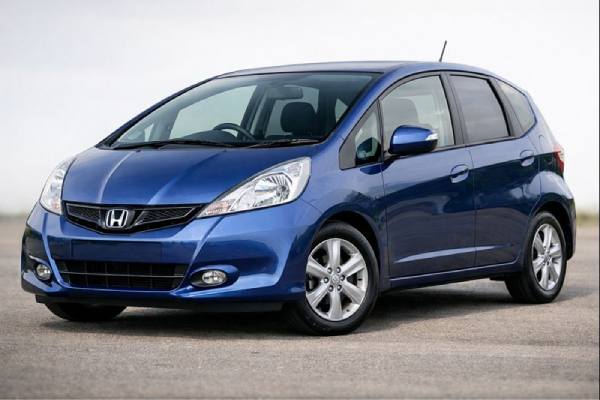
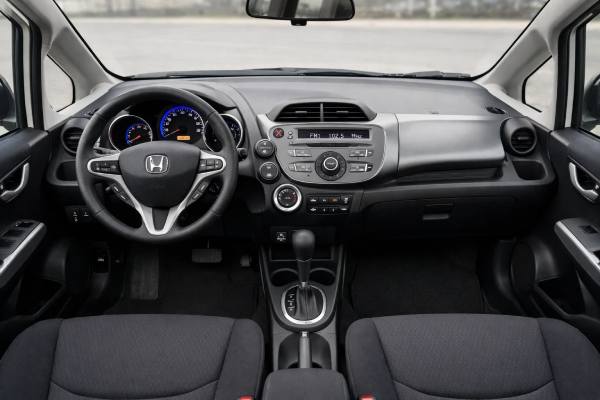
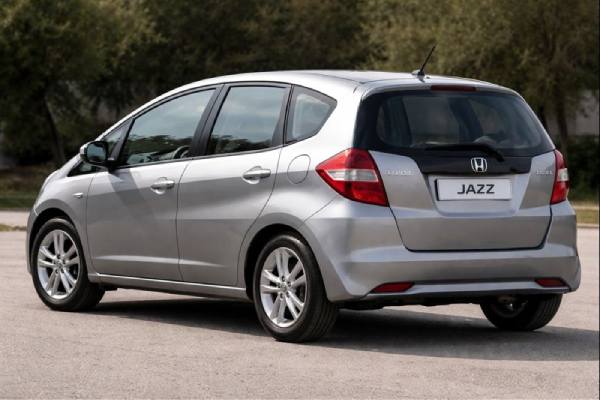
The facelift Honda Jazz (GE) with the 1.2 i-VTEC L12B1 is the “smart simple” choice in the supermini class. It is not quick, but it is engineered to be easy to own: a lightweight body, a rev-friendly naturally aspirated engine, and a cabin layout that punches above its size. In everyday terms, this Jazz is about predictable costs and practical packaging, not headline performance.
The L12B1’s main appeal is how little drama it brings. With a timing chain, straightforward port fuel injection, and a chassis that does not need exotic parts, the car suits owners who want reliability and space without moving up to a larger vehicle. The key today is condition: a well-serviced example feels tight and economical, while a neglected one can feel noisy, vague, and thirsty—usually due to tyres, alignment, and overdue fluids.
What to Know
- Excellent interior versatility for a small hatch, with a tall cabin and flexible rear seating.
- Simple 1.2 i-VTEC drivetrain keeps parts and servicing straightforward in most markets.
- Easy urban visibility and a tight turning circle suit city driving and new drivers.
- Check for uneven tyre wear and front suspension knocks; they change the car’s feel quickly.
- Plan engine oil and filter service about every 12 months or 10,000–12,000 km (whichever comes first).
Contents and shortcuts
- L12B Jazz facelift basics
- L12B1 specs and capacities
- Trims, options, and safety tech
- Known faults and recalls
- Service schedule and buying tips
- On-road feel and economy
- Rivals: what to cross-shop
L12B Jazz facelift basics
Honda’s facelift GE Jazz kept the same core idea—maximum usefulness in a small footprint—then refined the details that owners notice every day: noise control, ride comfort, and efficiency. With the 1.2 i-VTEC (L12B1), the formula is intentionally conservative: a naturally aspirated engine that prefers clean revs over turbo torque, paired with either a 5-speed manual or (in some markets) a CVT tuned for economy. The best way to understand this car is to look at how its engineering supports ownership.
A small engine that stays uncomplicated
The L12B1 is built around reliability-first choices:
- Port fuel injection (PFI): less sensitive to fuel quality and far less prone to intake-valve carbon build-up than early direct-injection small engines.
- Timing chain: avoids scheduled belt replacement, but still needs clean oil to protect the chain, guides, and tensioner.
- Modest output (90 hp): the engine is rarely stressed in normal use, which helps longevity—provided servicing stays consistent.
This engine rewards smooth driving. Short-shifting works fine around town, but on hills and motorway merges it performs best when you let it rev into the mid-range. Owners who expect diesel-like pull at low rpm sometimes describe it as “slow,” but that is simply the character of a small naturally aspirated petrol.
Why the Jazz feels roomier than rivals
The Jazz’s packaging is the real story. The upright cabin, wide-opening doors, and rear seat design give it the “small outside, big inside” feel that keeps resale values strong. The famous rear seat arrangement (often called “Magic Seats” in many markets) lets you carry tall items behind the front seats or create a long, flat load floor. For buyers who use their car like a tool—shopping, kids, luggage, hobbies—this matters more than 0–100 km/h times.
Facelift ownership: what changed in practice
Facelift updates vary by market, but typical improvements include:
- Better sound insulation and small interior updates that reduce “cheap-car” impressions.
- Minor aerodynamic and efficiency tweaks that help steady-speed consumption.
- Updated trim structures and option availability (especially infotainment and convenience features).
The ownership sweet spot
A well-kept 1.2 facelift Jazz suits drivers who value:
- Low and predictable running costs
- Easy parking and visibility
- Practical space without buying a bigger car
The main caveat is that condition shows quickly on these cars. Tyres, alignment, and worn suspension links can turn a tidy Jazz into something that feels noisy and unsettled. Buy on maintenance and test-drive feel, not just mileage.
L12B1 specs and capacities
This section focuses on the facelift Honda Jazz (GE) with the L12B1 1.2 i-VTEC (90 hp). Exact figures can differ by market, wheel and tyre package, and test standard, so treat these as practical baseline values and verify against VIN-specific documentation when needed.
Powertrain and efficiency
| Item | Specification (typical for L12B1 1.2 i-VTEC) |
|---|---|
| Engine code | L12B1 |
| Engine layout and cylinders | Inline-4, 4 cylinders; SOHC i-VTEC; 4 valves/cyl |
| Bore × stroke | ~73.0 × 71.6 mm (2.87 × 2.82 in) |
| Displacement | 1.2 L (1,198 cc) |
| Induction | Naturally aspirated |
| Fuel system | Port fuel injection (PFI / MPFI) |
| Compression ratio | ~10.5:1 (market dependent) |
| Max power | 90 hp (66 kW) @ ~6,000 rpm |
| Max torque | ~114 Nm (84 lb-ft) @ ~4,900 rpm |
| Timing drive | Chain |
| Rated efficiency | commonly around 5.3 L/100 km (44.4 mpg US / 53.3 mpg UK) combined (cycle dependent) |
| Real-world highway @ 120 km/h | often 5.8–6.8 L/100 km (35–41 mpg US / 42–49 mpg UK) depending on wind, tyres, and load |
| Aerodynamics | Cd varies by trim; small changes with wheels and body details |
Transmission and driveline
| Item | Specification |
|---|---|
| Transmission | 5-speed manual (common); CVT optional in some markets |
| Drive type | FWD |
| Differential | Open |
Chassis and dimensions
| Item | Specification (typical) |
|---|---|
| Suspension (front/rear) | MacPherson strut / torsion beam |
| Steering | Electric power steering (EPS) |
| Brakes | Front discs; rear drums (most 1.2 trims) |
| Wheels and tyres | Often 175/65 R15 or similar (varies by trim) |
| Ground clearance | market dependent; typically around ~150 mm (5.9 in) |
| Length / width / height | ~3,900 / 1,695 / 1,525 mm (153.5 / 66.7 / 60.0 in) |
| Wheelbase | ~2,500 mm (98.4 in) |
| Turning circle (kerb-to-kerb) | ~10.4 m (34.1 ft) |
| Kerb weight | often ~1,050–1,120 kg (2,315–2,470 lb), depending on equipment |
| Fuel tank | ~40 L (10.6 US gal / 8.8 UK gal) |
Cargo volume (practical reference)
| Item | Typical figure (market dependent) |
|---|---|
| Cargo volume | often quoted around 400 L seats up and up to ~880 L seats down, depending on measurement method |
Performance and capability
| Item | Typical figure |
|---|---|
| 0–100 km/h (0–62 mph) | ~12.5–13.5 s (gearbox and market dependent) |
| Top speed | ~175–180 km/h (109–112 mph) |
| Braking distance | depends heavily on tyres and brake condition; focus on consistency and straight tracking |
| Towing | frequently not rated or very limited; verify for your market |
| Roof load | often 50–75 kg (110–165 lb), depending on roof system |
Fluids, service capacities, and key torques
These are decision-making figures to help planning; always confirm your market’s official specifications.
| Item | Typical specification |
|---|---|
| Engine oil | commonly 0W-20 or 5W-30; capacity about 3.4–3.6 L (3.6–3.8 US qt) with filter |
| Coolant | Honda long-life coolant; capacity varies by radiator version |
| Manual transmission oil | Honda MTF (spec varies by market); service quantity varies |
| CVT fluid (if equipped) | Honda CVT fluid (model-specific); do not substitute universal ATF |
| Brake fluid | DOT 3 or DOT 4 (market dependent) |
| A/C refrigerant | R134a (typical for this era); charge varies by system |
| Critical torque (typical) | Value |
|---|---|
| Wheel lug nuts | ~108 Nm (80 lb-ft) |
| Engine oil drain plug | ~39 Nm (29 lb-ft) |
Trims, options, and safety tech
The facelift Jazz 1.2 was usually sold in a wide spread of trims, from simple commuter spec to surprisingly well-equipped versions with alloy wheels, upgraded audio, and comfort features. Because names vary by country, it helps to think in “equipment tiers” rather than chasing a specific badge.
Trims and options: what changes the experience
Key differences you’ll commonly see across markets include:
- Wheels and tyres: moving from 14-inch to 15- or 16-inch packages can sharpen steering but also increases road noise and makes potholes feel harsher. On a 1.2, heavier wheel packages can also blunt acceleration slightly.
- Climate control: manual A/C versus automatic climate control is a daily-quality upgrade, especially in humid climates.
- Infotainment and controls: steering wheel controls, Bluetooth integration, and better speakers make the car feel newer than it is.
- Visibility and parking aids: rear sensors and heated mirrors are small features that reduce stress in tight urban use.
Quick identifiers when viewing a used car
Because trims can be mixed and matched through owner changes, confirm equipment on the car you are physically inspecting:
- Gearbox: the 5-speed manual has a traditional shift pattern; a CVT will have a PRND-style selector.
- Brake hardware: many 1.2 cars use rear drums; this is normal, but check for even braking and fresh brake fluid.
- Interior cues: seat fabric patterns, steering wheel control layouts, and cluster features often indicate trim level more reliably than badges.
Safety ratings: understand the context
This Jazz generation is widely associated with a strong Euro NCAP result for its time. The most important point for a buyer today is that crash testing evolves. A five-star rating from the late 2000s reflects excellent structural performance and restraint design for that era, but it is not directly comparable to a modern five-star result that includes automatic emergency braking and advanced lane support as scoring items.
Safety systems you should expect
Depending on year and market, common safety equipment includes:
- Front airbags and side airbags (curtain airbags may depend on trim)
- ABS (anti-lock braking system)
- Stability and traction control (often standard in later years, but verify)
- ISOFIX child-seat anchor points (common)
Driver assistance: keep expectations realistic
The 2011–2015 Jazz 1.2 sits in the “pre-ADAS” era for mainstream superminis. Most examples will not have:
- Automatic emergency braking (AEB)
- Adaptive cruise control (ACC)
- Lane-keeping assist or lane centering
That is not necessarily a disadvantage—there are fewer sensors to calibrate after repairs—but it does put more responsibility on tyres, brakes, and driver attention. If you are buying for a new driver, prioritize a car with stable handling, strong brakes, and good lighting, and budget for premium tyres. A well-sorted Jazz on quality tyres can feel safer than a poorly maintained newer car with more electronics.
Known faults and recalls
The facelift GE Jazz is generally durable, but age and usage expose predictable weak spots. Below, issues are grouped by prevalence and typical cost tier, with practical symptoms and fixes.
Common (low to medium cost)
- Front suspension knocks (common; low to medium cost)
- Symptoms: clunks over bumps, vague steering, uneven tyre wear.
- Likely causes: worn drop links, front bushings, or top mounts.
- Remedy: replace worn links/bushings, then align the car. Alignment is not optional—without it, new tyres can wear quickly.
- Brake drag or uneven braking feel (common; low to medium cost)
- Symptoms: car pulls slightly, hot wheel smell, poor economy, or steering shake under braking.
- Likely causes: sticking caliper pins (front), old brake fluid, or rear drum hardware out of adjustment.
- Remedy: service caliper slide pins, refresh brake fluid, inspect rear drums, and replace worn parts.
- 12 V battery and charging health (common; low to medium cost)
- Symptoms: slow cranking, random warning lights, intermittent electrical glitches.
- Likely causes: weak battery, corroded terminals, or tired alternator (less common).
- Remedy: proper battery load test, clean terminals, confirm charging voltage.
Occasional (medium cost)
- CVT judder or flare (occasional; medium cost, CVT cars only)
- Symptoms: shudder on gentle pull-away, inconsistent rpm behavior.
- Likely causes: overdue or incorrect CVT fluid, or wear accelerated by neglected servicing.
- Remedy: correct Honda-spec CVT fluid service (often more than one drain-and-fill depending on condition), then re-check. If symptoms persist, seek specialist diagnosis before committing to the car.
- A/C performance decline (occasional; low to medium cost)
- Symptoms: weak cooling, noisy compressor cycling, misting issues.
- Likely causes: age-related leaks (condenser, seals) or low refrigerant.
- Remedy: leak test and proper recharge—avoid “quick top-ups” without diagnosis.
Rare but expensive (medium to high cost)
- Timing chain noise from poor maintenance (rare; medium to high cost)
- Symptoms: rattling at cold start or persistent chain noise.
- Likely causes: extended oil intervals, incorrect oil viscosity, or sludge.
- Remedy: diagnose promptly; in severe cases, chain, guides, and tensioner replacement.
Recalls and service campaigns: how to handle them
For many Hondas of this era, the most important campaign category globally has involved airbag inflators. The right approach is simple and non-negotiable:
- Check recall status through the official Honda portal for your region using the VIN.
- Confirm completion via dealer records where possible.
- Treat “it was probably done” as the same as “not done.”
Pre-purchase checks that prevent expensive surprises
- Full scan for stored codes (even if the dash is clean).
- Test drive from cold: listen for chain rattle, confirm smooth idle, and check gearbox behavior.
- Inspect tyre wear patterns and ask for alignment history if the inside edges are worn.
- Check for water ingress (damp carpets, musty smell), which can create long-term electrical annoyances.
A clean, honest Jazz with minor wear items is usually a good buy. A Jazz with warning lights, gearbox issues, and poor service history at the same time is best avoided—there are plenty of better examples out there.
Service schedule and buying tips
A facelift Jazz 1.2 lasts best when you keep the basics boring and consistent. Use this schedule as a practical baseline for mixed driving, then align it with the official service literature for your market.
Practical maintenance schedule (distance and time)
- Engine oil and filter: every 10,000–12,000 km (6,000–7,500 mi) or 12 months
Short trips, cold climates, and heavy city use justify the shorter interval. Clean oil protects the timing chain system and keeps the valve control hardware happy. - Cabin air filter: every 15,000–30,000 km or 12–24 months
Replace sooner if airflow drops or you drive in dusty areas. - Engine air filter: inspect every 15,000–20,000 km, replace every 30,000–45,000 km depending on conditions.
- Brake fluid: every 3 years
This is one of the best-value safety services you can do on an older car. - Coolant: typically 5 years initially, then every 3–5 years (confirm spec and interval for your market).
- Spark plugs: commonly 90,000–120,000 km
If idle quality degrades or consumption worsens, plugs are a sensible early check. - Manual gearbox oil: consider every 80,000–120,000 km if the car sees hard city use.
- CVT fluid (if equipped): every 40,000–60,000 km, sooner for heavy city use.
- Tyre rotation and alignment check: rotate every 10,000–12,000 km, align as needed.
The Jazz is sensitive to alignment, and tyre costs add up faster than the alignment fee.
Fluids and parts: what matters most
- Use the correct oil viscosity for your climate and official guidance.
- Do not compromise on CVT fluid type—incorrect fluid can create symptoms that feel like a failing gearbox.
- Quality tyres transform the car more than most “mods.” They reduce noise, improve braking, and stabilize motorway tracking.
Buyer’s guide: what to check in 30 minutes
Bring a flashlight and take notes. You want pattern recognition, not perfection.
- Service evidence: receipts beat stamps. Look for regular oil services and brake fluid history.
- Tyres: match brand and size across an axle, check for inside-edge wear.
- Suspension: listen for clunks and feel for steering wobble over rough patches.
- Brakes: straight stops, no vibration, firm pedal.
- Cooling system: stable temperature, no sweet smell, no oily residue in the coolant area.
- Rust and corrosion: check wheel arches, underbody seams, and brake lines (especially in salted-road regions).
- Interior damp: lift mats, check for moisture around the spare wheel well.
Recommended ownership approach
If you plan to keep the car several years, it is worth doing a “baseline service” after purchase:
- Fresh oil and filters
- Brake fluid
- Alignment
- Gearbox fluid (manual or CVT) if history is unclear
This resets the maintenance clock and turns the Jazz into the predictable, low-cost car it was meant to be.
On-road feel and economy
The facelift Jazz 1.2 drives like a well-designed small car: light controls, excellent visibility, and predictable responses. It is not sporty, but it is easy to place and forgiving—traits that matter more in daily driving than a quick 0–100 time.
Ride, handling, and noise
- Ride: generally comfortable for the class, especially on the smaller wheel packages. Larger wheels can make the car feel busier over broken city streets.
- Handling balance: safe and neutral. The car resists surprises, but it will lean if pushed because of its tall roofline and comfort-focused suspension.
- Steering: light at parking speeds and stable on-centre when alignment and tyres are correct. If it feels nervous at motorway speeds, suspect tyres, uneven wear, or worn suspension links.
- NVH (noise, vibration, harshness): tyre roar is usually the biggest contributor. A change to quieter tyres can make the car feel a generation newer.
Powertrain character: how to drive it well
A 1.2 naturally aspirated petrol engine delivers performance differently from modern small turbos:
- Throttle response: clean and predictable, especially at low load.
- Low-rpm torque: adequate, but not strong. The engine likes to rev when you need acceleration.
- Manual gearbox feel: typically light and easy. A high clutch bite point may indicate wear, but confirm with a proper inspection.
- CVT behavior (if fitted): smooth in gentle driving, but can hold higher rpm under heavy throttle. That is normal; the goal is efficiency, not the “gear change feel” people expect from a conventional automatic.
Real-world efficiency expectations
Official combined figures for the 1.2 are often quoted in the mid-5 L/100 km range under older test cycles, but your results will vary by speed, traffic, tyres, and temperature.
Typical owner-style outcomes:
- City driving: about 5.5–7.0 L/100 km (34–43 mpg US / 40–51 mpg UK) depending on congestion and warm-up time.
- Mixed driving: around 5.3–6.2 L/100 km (38–44 mpg US / 46–53 mpg UK) with sensible speeds.
- Motorway (120 km/h): about 5.8–6.8 L/100 km (35–41 mpg US / 42–49 mpg UK), strongly influenced by wind and tyre choice.
If fuel economy suddenly worsens, start with basics before blaming the engine:
- Tyre pressures and tyre type
- Brake drag
- Air filter and spark plugs
- Alignment and worn suspension parts
Performance metrics that matter more than numbers
On paper, the car’s acceleration is modest, but in real traffic the Jazz’s strengths are:
- Easy lane placement and visibility
- Confident braking when maintained
- A tight turning circle that reduces stress in cities
For most owners, the “best performance upgrade” is maintenance: fresh tyres, correct fluids, and a proper alignment.
Rivals: what to cross-shop
The best rival comparisons for the facelift Jazz 1.2 are other superminis that prioritized low costs and practical packaging. Your final decision usually comes down to cabin usefulness, reliability patterns, and how the car feels at the speeds you actually drive.
Toyota Yaris 1.0/1.33 (same era)
- Why people choose it: strong reliability reputation and simple ownership.
- Where the Jazz wins: interior flexibility and “small van” practicality; visibility is often better too.
- What decides it: if you prioritize compact exterior size over interior versatility, the Yaris can fit better; if you carry bulky items, the Jazz often wins.
Ford Fiesta 1.25/1.4 petrol
- Why people choose it: steering feel and handling, plus a wide parts and service ecosystem.
- Where the Jazz wins: cabin space, seat versatility, and generally strong long-term durability when maintained.
- What decides it: if you enjoy driving and accept a firmer ride, Fiesta is appealing; if you want a calm tool-like car, Jazz fits.
Volkswagen Polo 1.2 petrol (non-turbo)
- Why people choose it: solid interior feel and a “grown-up” ride impression.
- Where the Jazz wins: packaging and often lower fuss with basic maintenance.
- What decides it: Polo can feel more refined; Jazz can feel more useful.
Hyundai i20 and Kia Rio 1.2
- Why people choose them: value, equipment, and often comfortable ride.
- Where the Jazz wins: seating versatility and a long track record for the platform.
- What decides it: equipment-per-money may favor the Korean options; practicality often favors the Jazz.
Which Jazz 1.2 is the best buy today?
For most used buyers, the “best” facelift Jazz is not defined by a badge. It is defined by:
- Clean service history (especially regular oil changes)
- Good tyres and straight tracking (alignment proof is a bonus)
- Quiet suspension with no knocks
- Confirmed recall status
If two cars cost the same, choose the one that feels tighter and has evidence of maintenance, even if it has slightly higher mileage. A well-kept Jazz is usually cheaper to own than a lower-mileage example that needs tyres, brakes, suspension work, and overdue fluids immediately.
References
- Honda Jazz Press Kit 2011 (Press Kit)
- My Honda | Owner’s Manual | Honda Auto 2026 (Owner’s Manual)
- Honda Owners | Recalls and Updates | Honda UK 2026 (Recall Database)
- Honda_Jazz – Euro NCAP Results 2009 2009 (Safety Rating)
Disclaimer
This article is for informational purposes only and is not a substitute for professional diagnosis, inspection, or repair. Specifications, torque values, service intervals, and procedures vary by VIN, market, model year, and installed equipment. Always verify details against official Honda service documentation and follow the correct safety procedures when working on any vehicle.
If you found this guide helpful, please consider sharing it on Facebook, X (Twitter), or your preferred community to support our work.