
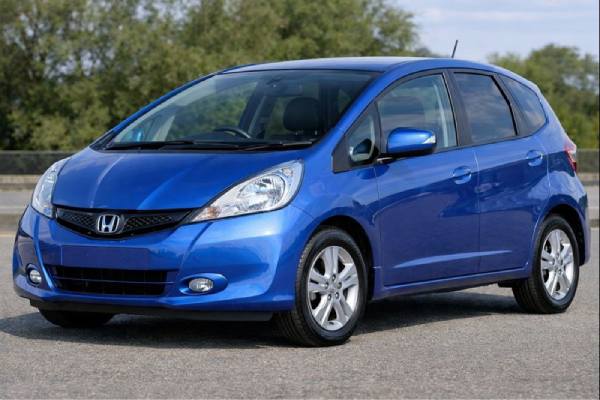
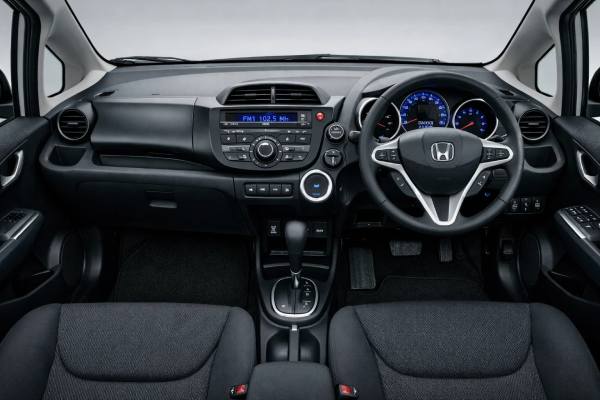
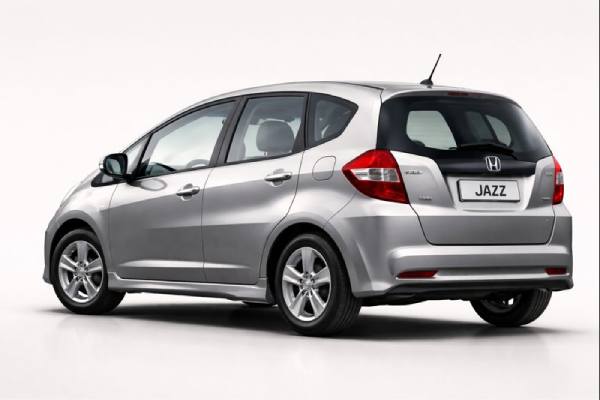
The facelifted Honda Jazz (GE) with the L13Z1 1.3-liter i-VTEC is the version many owners recommend for “small car, big life” duties. You get Honda’s clever packaging (the fuel tank sits under the front seats), which enables the Magic Seat system and a surprisingly tall, useful cabin. The L13Z1 is tuned for everyday response and low running costs rather than speed, and it pairs well with the Jazz’s light weight and tight turning circle for city driving.
For buyers today, the key is matching expectations: this Jazz is built to be dependable, easy to service, and practical, but it still needs the same basics—clean fluids, brakes that are kept free, and suspension wear checked before it becomes expensive. If you pick a well-kept example, it remains one of the most rational small-car choices.
Essential Insights
- Spacious cabin and cargo flexibility are class-leading for the footprint, especially with Magic Seats.
- Efficient, low-stress L13Z1 i-VTEC suits urban and mixed driving more than high-speed motorway work.
- Most costs come from age items (bushings, wheel bearings, brakes), not the engine itself.
- Budget for gearbox fluid service—especially on automatics/CVT—every 40,000–60,000 km (25,000–37,000 mi).
- Plan engine oil and filter at 10,000–12,000 km (6,000–7,500 mi) or 12 months, depending on use.
Navigate this guide
- Honda Jazz GE facelift basics
- L13Z1 specs and capacities
- Trims, options, and safety tech
- Reliability patterns and fixes
- Maintenance plan and buying tips
- On-road performance and economy
- Rivals: what to cross-shop
Honda Jazz GE facelift basics
In facelift form (roughly 2011–2015 in many markets), the GE Jazz keeps the same core engineering that made the pre-facelift model popular: compact outer dimensions, a tall roofline, and a packaging layout that prioritizes usable space over styling drama. The L13Z1 1.3-liter i-VTEC is the “middle ground” engine in ownership terms—stronger and more relaxed than the smallest unit, but still focused on economy and longevity rather than performance.
What the facelift typically changes (and why it matters):
- Updated exterior and lighting details: mostly cosmetic, but newer lamps and trim can reduce parts-hunting hassles.
- Cabin revisions and equipment tweaks: small changes add up—better materials in high-touch areas, different audio units, and more common availability of features like steering-wheel controls.
- Transmission availability evolution: depending on market, some facelift cars move away from older automated-manual solutions toward conventional automatics or CVT-style gearboxes. This affects how you shop: gearbox type changes service needs and long-term feel.
Engineering traits that shape the driving and ownership experience:
- Fuel tank under the front seats: this frees space behind the front row for the rear seat to fold in creative ways. It’s the reason the Jazz can swallow tall items that other superminis simply can’t.
- Tall seating position: it improves visibility and reduces the “small car fatigue” some drivers get in lower-roof rivals.
- Simple, robust front-drive layout: fewer complex driveline parts means fewer big-ticket failures, assuming rust and accident repairs are not issues.
Who this model fits best:
- City and suburban drivers who value easy parking, clear visibility, and low running costs.
- Owners who keep cars for a long time and prefer predictable maintenance over flashy tech.
- Anyone who regularly carries bulky items (strollers, flat-pack furniture, sports gear) but does not want a larger vehicle.
Where expectations should be realistic:
- At motorway speeds, the Jazz is competent but not “quiet-luxury.” Wind and tyre noise depend heavily on tyre choice and door seal condition.
- The light chassis means suspension wear (bushings, drop links) shows up as knocks sooner than on heavier cars with softer tuning.
- Many cars are now older, so condition matters more than badge—service history, corrosion checks, and gearbox behavior should decide the purchase.
L13Z1 specs and capacities
The table values below reflect common specifications for the facelift-era GE Jazz with the L13Z1 family 1.3-liter i-VTEC. Markets and trims can vary, so treat numbers as a practical baseline and verify using your VIN-specific documentation.
Powertrain and efficiency (L13Z1)
| Item | Specification |
|---|---|
| Engine code | L13Z1 (i-VTEC) |
| Layout | Inline-4, naturally aspirated |
| Displacement | 1.3 L (approx. 1,339 cc) |
| Fuel system | PGM-FI (port fuel injection) |
| Timing drive | Chain (typical for L-series) |
| Max power | 99 hp (74 kW) @ ~6,000 rpm (market dependent) |
| Max torque | ~127 Nm (94 lb-ft) @ ~4,800 rpm (market dependent) |
| Rated efficiency (typical EU combined) | ~4.9–5.5 L/100 km (48–43 mpg US / 58–51 mpg UK) |
| Real-world highway @ 120 km/h (75 mph) | ~6.0–6.8 L/100 km (39–35 mpg US / 47–42 mpg UK) |
Transmission and driveline
| Item | Specification |
|---|---|
| Drive type | FWD |
| Manuals | Commonly 5-speed manual (market dependent) |
| Automatics | Conventional automatic or CVT-style depending on year/market |
| Differential | Open |
Chassis and dimensions (typical GE)
| Item | Specification |
|---|---|
| Front suspension | MacPherson strut |
| Rear suspension | Torsion beam |
| Steering | Electric power steering (EPS) |
| Brakes | Front discs, rear drums or discs (trim dependent) |
| Length | ~3,900 mm (153.5 in) |
| Width | ~1,695 mm (66.7 in) |
| Height | ~1,525 mm (60.0 in) |
| Wheelbase | ~2,500 mm (98.4 in) |
| Turning circle (kerb-to-kerb) | ~10.4 m (34.1 ft) |
| Kerb weight | ~1,050–1,150 kg (2,315–2,535 lb) |
Practicality
| Item | Specification |
|---|---|
| Fuel tank | ~42 L (11.1 US gal / 9.2 UK gal) |
| Cargo volume (seats up) | ~379 L (~13.4 ft³), method varies by market |
| Cargo volume (seats down) | up to ~883 L (~31.2 ft³), method varies by market |
Performance and capability (realistic expectations)
| Item | Typical value |
|---|---|
| 0–100 km/h (0–62 mph) | ~11.5–13.0 s (gearbox and load dependent) |
| Top speed | ~170–180 km/h (106–112 mph) |
| Towing capacity | Often limited; commonly not rated or low (market dependent) |
| Roof load | Commonly ~50–75 kg (110–165 lb), check handbook |
Fluids and service capacities (check VIN-specific data)
| System | Specification (typical) |
|---|---|
| Engine oil | 0W-20 or 5W-30 (market/climate dependent); ~3.6 L (3.8 US qt) with filter |
| Coolant | Honda Type 2 / long-life OAT; ~4–5 L (4.2–5.3 US qt) total system (varies) |
| Manual gearbox oil | MTF (Honda MTF-3 or equivalent); ~1.5–1.8 L (1.6–1.9 US qt) |
| Automatic/CVT fluid | Honda ATF/CVT fluid (exact spec matters); capacity varies by unit |
| A/C refrigerant | R134a; charge varies (label under bonnet) |
Key torque specs (common Honda ranges; verify exact spec)
| Fastener | Torque |
|---|---|
| Wheel lug nuts | ~108 Nm (80 lb-ft) |
| Engine oil drain bolt | ~39 Nm (29 lb-ft) |
| Spark plugs | ~18 Nm (13 lb-ft) |
Safety and driver assistance (typical equipment set)
| Item | Notes |
|---|---|
| Airbags | Front and side/curtain often fitted; count varies by trim/market |
| Stability control | ESC/VSA availability varies by year/trim; verify on the car |
| ISOFIX/LATCH | ISOFIX commonly present on outboard rear seats (market dependent) |
| ADAS | Generally minimal on this generation (no modern AEB/ACC in most markets) |
Trims, options, and safety tech
Because the Jazz is sold globally as both Jazz and Fit, trims and packages differ widely. The most useful way to shop is to focus on functional equipment rather than trim names alone. Two cars with the same badge can be very different in safety features and comfort depending on market.
Trims and options that change real ownership
Look for these high-value items:
- Magic Seats (rear seat versatility): usually standard on many Jazz trims, but verify that the seat bases flip up and the backrests fold flat smoothly. Torn hinge covers and sticky latches suggest heavy use.
- ESC/VSA (stability control): one of the biggest safety differentiators on used small cars. If fitted, you’ll usually see a stability icon on the instrument cluster at key-on and a dash button for traction/stability functions.
- Cruise control: helpful if you do long motorway trips; not universal on base trims.
- Alloy wheels vs steel wheels: alloys look nicer but can hide pothole impacts. On steels, inspect for bends and vibration at speed.
- Panoramic glass roof (where offered): great light and airy feel, but inspect seals and drains. Water stains on the headliner are a red flag.
Audio and infotainment differences:
- Some facelift cars get updated head units, Bluetooth handsfree, and steering-wheel controls. Check that all buttons work and that the display has no missing segments.
- If a prior owner fitted aftermarket audio, inspect wiring quality—poor splices can cause parasitic battery drain.
Safety ratings and how to interpret them
The Jazz platform earned strong crash-test results for its era, but test protocols changed over time. The safest approach is:
- Use the published rating as a baseline for structure and restraint performance, and
- Judge the specific used car by what it actually has fitted (airbags, ESC, tyre condition, brake health).
For many European-market GE Jazz cars, Euro NCAP results are associated with the model’s main production run and apply broadly. Remember that:
- A 5-star rating from that period is not directly comparable with a modern 5-star car.
- Safety systems like ESC became more widespread during the run; older or lower trims may not match later equipment levels.
Safety systems you should confirm on the vehicle
- Airbags: check steering wheel and passenger dash markings, plus side/curtain tags on seat sides or A-pillars.
- Seatbelt pretensioners: typically standard; confirm belts retract smoothly and lock under a sharp tug.
- Child-seat provisions: verify ISOFIX points are present and not damaged by prior misuse.
- ABS and brake assist: confirm the ABS light comes on at ignition and goes off after start. A permanently lit ABS lamp can mean expensive diagnosis.
- Headlights: lens haze and weak bulbs hurt night safety. If headlights look cloudy, budget for restoration or replacement.
Because this generation rarely has modern ADAS (like automatic emergency braking), safe braking distances and stability rely heavily on tyres, brakes, and suspension condition—areas you can directly inspect and improve.
Reliability patterns and fixes
The facelift GE Jazz is generally durable, but age and usage patterns now dominate reliability. The most helpful way to think about issues is by prevalence and cost tier, because many “problems” are really predictable wear.
Common (expect to see; usually low to medium cost)
- Front suspension knocks (low/medium):
Symptoms: clunks over small bumps, vague steering feel.
Likely causes: drop links, strut top mounts, control arm bushings.
Remedy: replace worn links/bushings; align afterwards. - Rear axle bush wear (medium):
Symptoms: rear-end steer sensation, uneven rear tyre wear, knocking on rough roads.
Likely cause: torsion-beam bush deterioration with age.
Remedy: replace bushings; consider new dampers if original. - Wheel bearing noise (medium):
Symptoms: humming that increases with speed, sometimes changes when loading left/right.
Likely cause: bearing wear, often accelerated by potholes.
Remedy: replace affected hub/bearing assembly. - Brake corrosion and sticking (low/medium):
Symptoms: uneven pad wear, hot wheel smell, poor fuel economy.
Likely cause: slide pin corrosion, infrequent servicing.
Remedy: clean and lubricate slide pins; replace pads/rotors if tapered.
Occasional (depends on maintenance and climate)
- A/C performance loss (medium):
Symptoms: weak cooling, intermittent operation.
Likely causes: slow leaks, condenser damage, compressor wear.
Remedy: proper leak test and recharge; avoid “top-up only” guessing. - Ignition coil or plug wear (low/medium):
Symptoms: misfire under load, check engine light, rough idle.
Likely causes: coils aging, plugs overdue.
Remedy: replace plugs at interval; coils as needed (avoid cheap copies). - Oil seepage (low/medium):
Symptoms: dampness around rocker cover or timing cover area.
Likely causes: gasket aging, PCV system issues increasing crankcase pressure.
Remedy: reseal; check PCV operation and oil level habits.
Rare but higher impact (inspect carefully)
- Gearbox issues (automatic/CVT variants) (medium/high):
Symptoms: judder on take-off, delayed engagement, flare in revs, shudder at steady speed.
Likely causes: old fluid, wrong fluid, internal wear.
Remedy: correct fluid service first (multiple drain-and-fills on some units); if symptoms persist, specialist diagnosis. - Water ingress and electrical oddities (medium):
Symptoms: damp carpets, intermittent central locking, fogging, musty smell.
Likely causes: door membrane leaks, hatch seals, clogged drains.
Remedy: locate and fix leak source, dry thoroughly, protect connectors.
Recalls, service actions, and how to verify
Across many Honda vehicles of this era, airbag inflator recalls and other safety campaigns can apply. Don’t guess—run the VIN through Honda’s official recall tools and request proof of completion. A dealer printout or recall completion record is worth more than verbal reassurance.
Pre-purchase checks to request:
- Evidence of gearbox fluid service (especially if not manual).
- Proof of recall completion and any campaign work.
- A cold start test to listen for abnormal noises and to verify stable idle.
- A road test that includes tight turns, braking, and a steady 100–120 km/h cruise to check vibration and gearbox behavior.
Maintenance plan and buying tips
A Jazz that feels “like new” at this age is almost always the result of boring, consistent maintenance. The L13Z1 doesn’t demand exotic care, but it does reward owners who stay ahead of fluids and wear items.
Practical maintenance schedule (distance/time)
Use this as a conservative plan if you don’t have a maintenance-minder history.
- Engine oil and filter: every 10,000–12,000 km (6,000–7,500 mi) or 12 months.
Short trips, cold starts, or heavy city use push you toward the shorter interval. - Air filter (engine): inspect every 20,000 km (12,000 mi); replace as needed (often 30,000–40,000 km / 18,000–25,000 mi).
- Cabin filter: every 15,000–30,000 km (9,000–18,000 mi) or annually if you have allergies.
- Spark plugs: commonly 80,000–120,000 km (50,000–75,000 mi) depending on plug type. Replace sooner if misfire appears.
- Coolant: follow Honda long-life guidance where applicable; many long-life coolants are up to 10 years initial, then 5 years. If history is unknown, refresh now and reset the clock.
- Brake fluid: every 2 years regardless of mileage.
- Manual gearbox oil: every 60,000–100,000 km (37,000–62,000 mi) depending on use; sooner if shifting feels notchy.
- Automatic/CVT fluid: every 40,000–60,000 km (25,000–37,000 mi). Use the correct Honda-specified fluid—this is not a place to improvise.
- Serpentine/aux belt and hoses: inspect annually; replace at signs of cracking, glazing, swelling, or coolant staining.
- Tyre rotation and alignment: rotate every 10,000–12,000 km (6,000–7,500 mi). Align if tyre wear is uneven or steering is off-center.
- 12 V battery: test annually; many last 4–6 years, less in cold climates or with short-trip use.
Fluids, specs, and decision-making notes
- If the oil cap and dipstick show heavy varnish or sludge, assume missed oil changes. Walk away unless priced for an engine clean-up risk.
- If the gearbox fluid is dark or smells burnt, negotiate for immediate service and understand that damage may already exist.
- A/C work is often deferred; verify it blows cold and does not cycle rapidly.
Buyer’s guide: what to inspect on a used GE Jazz
Body and corrosion hotspots
- Check rear arches, sills, and underbody seams.
- Inspect subframe areas and suspension mounting points for heavy flaking rust.
- Look for uneven panel gaps or overspray indicating accident repair.
Engine bay
- Look for coolant crust near hose joints and radiator edges.
- Inspect for oil seepage around the rocker cover and timing area.
- Confirm smooth idle and no hesitation under light throttle.
Chassis
- Drive over rough pavement at low speed with windows down to listen for knocks.
- Test braking from 60–0 km/h (37–0 mph) for vibration or pulling.
- Check tyre age (DOT date) as well as tread; old tyres ruin ride and safety.
Which versions to seek or avoid
- Seek: cars with documented fluid services, working A/C, and intact interior plastics (they tell you how the car was treated).
- Be cautious: unknown-service automatics/CVT, cars with multiple warning lights, and heavily modified audio wiring.
- If you do motorway miles: prioritize cruise control, quieter tyres, and a car that tracks straight with minimal steering correction.
Long-term durability is excellent when serviced, but the best purchase is the one with proof: receipts, stamped history, and a road test that feels tight and consistent.
On-road performance and economy
The L13Z1 Jazz isn’t quick, but it is well-calibrated for the real world: smooth low-load response, light controls, and a chassis that feels predictable in normal driving. If you treat it like a practical tool, it delivers exactly what it promises.
Real-world driving impressions: ride, handling, and noise
- Ride: Generally composed at urban speeds, with a firm edge over sharp potholes. Worn dampers or rear beam bushings make the car feel “busy” and louder over rough surfaces.
- Handling: Neutral and confidence-inspiring. The Jazz responds quickly to steering input and feels easy to place in traffic. It won’t entertain like a hot hatch, but it stays stable and honest.
- Steering (EPS): Light at parking speeds, firmer as speed rises. If the wheel feels vague on-center, suspect alignment or front suspension wear.
- Brakes: Good pedal consistency when maintained. A soft pedal often points to old brake fluid, while vibration under braking suggests warped rotors or uneven pad deposits.
- NVH: Tyre choice dominates cabin noise. A premium touring tyre can make the Jazz feel a class up, while cheap tyres make it loud and harsh.
Powertrain character and gearbox behavior
- Throttle response: Best in the midrange for everyday merging and roundabouts. It likes to rev when pushed, but you’ll feel that it’s tuned for efficiency.
- Manual: Typically the most satisfying match—direct, predictable, and efficient. Crunchy shifts can be old gearbox oil or clutch wear.
- Automatic/CVT-style units (where fitted): Smooth in traffic when healthy, but very sensitive to fluid quality. A “rubber-band” feel under hard acceleration is normal for CVT behavior; harsh shudder is not.
Efficiency: what owners usually see
Official figures can look excellent, but your result depends on speed, tyres, and trip length.
- City: ~6.2–7.5 L/100 km (38–31 mpg US / 46–38 mpg UK).
- Mixed: ~5.6–6.6 L/100 km (42–36 mpg US / 50–43 mpg UK).
- Highway at 120 km/h: ~6.0–6.8 L/100 km (39–35 mpg US / 47–42 mpg UK).
- Cold-weather penalty: short winter trips can increase consumption by 10–25% due to warm-up time and heater use.
Key performance metrics that matter in daily use
- 0–100 km/h: typically in the 11.5–13.0 s range depending on gearbox and load.
- Passing power: more about planning than punch; downshift early on hills.
- Turning circle: a genuine advantage in cities—u-turns and tight parking are easy.
If you want a small car that feels effortless at 140 km/h all day, you may prefer a larger engine or a different class. If your priority is low-stress commuting and flexible carrying ability, the Jazz plays to its strengths.
Rivals: what to cross-shop
The smartest way to evaluate a used Jazz is to compare it with rivals that target the same buyer: practical small cars with low running costs. Here’s how the facelift GE Jazz with the L13Z1 typically stacks up.
Toyota Yaris (XP90/XP130 era, small petrol)
Why consider it: strong reliability reputation, efficient engines, simple ownership.
Where the Jazz wins: cabin space, seat flexibility, and “tall item” carrying.
Where the Yaris can win: refinement on rough roads and sometimes stronger resale in certain regions.
Mazda2 (DE)
Why consider it: sharper steering feel and a more “driver’s car” character.
Where the Jazz wins: practicality, rear seat space, and cargo versatility.
Where the Mazda2 wins: more engaging handling and often a quieter feel at speed with good tyres.
Ford Fiesta (Mk7)
Why consider it: excellent chassis tuning and broad parts availability.
Where the Jazz wins: interior packaging, visibility, and typically simpler long-term ownership.
Where the Fiesta wins: driving enjoyment and, in some trims, better high-speed stability.
Hyundai i20 and Kia Rio (early 2010s)
Why consider them: good value, often generous equipment for the money.
Where the Jazz wins: packaging genius and a long track record of proven durability.
Where the Korean rivals can win: newer-feeling interiors on equivalent-year cars and sometimes better warranty history if serviced within dealer networks.
VW Polo (6R)
Why consider it: mature feel, solid highway manners.
Where the Jazz wins: practicality and typically lower surprise costs when maintained properly.
Where the Polo can win: cabin refinement and perceived “heft,” especially on motorways.
The deciding factors that usually settle it
If you prioritize:
- Maximum usable space in minimum footprint: Jazz is hard to beat.
- Best driving feel: Fiesta or Mazda2 often lead.
- Most “grown-up” motorway manners: Polo can feel calmer.
- Lowest risk used buy: a well-documented Jazz or Yaris usually tops the list.
In practice, condition matters more than the badge. A Jazz with clean fluid history and tight suspension will be a better car than a neglected rival with nicer trim.
References
- 2011 Honda Jazz Receives New Look and Improved Features for 2011 2011 (Press Release)
- Honda Owners | Recalls and Updates | Honda UK 2026 (Recall Database)
- My Honda | Owner’s Manual | Honda Auto 2026 (Owner’s Manual)
- Honda_Jazz – Euro NCAP Results 2009 2009 (Safety Rating)
Disclaimer
This article is for informational purposes only and is not a substitute for professional inspection, diagnosis, or repair. Specifications, torque values, service intervals, and procedures vary by VIN, market, model year, and equipment. Always confirm details using your vehicle’s official service documentation and labels, and consult a qualified technician for safety-critical work.
If you found this guide useful, consider sharing it on Facebook, X/Twitter, or your favorite forum—your support helps us keep publishing detailed, practical ownership resources.