
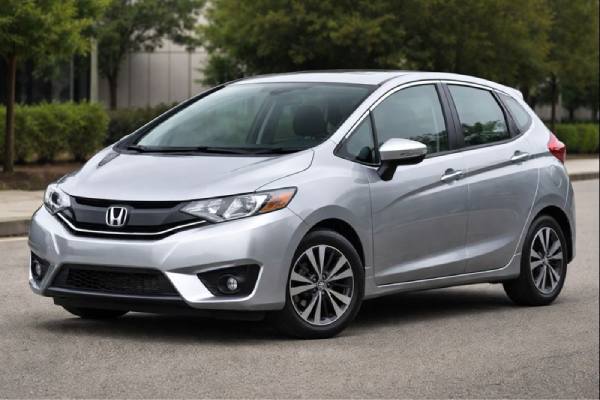
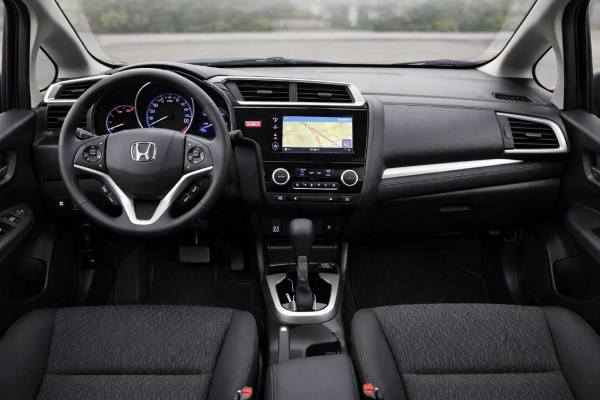
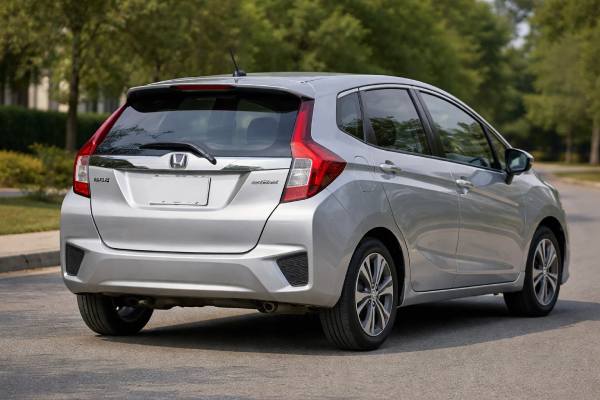
The 2014–2017 Honda Fit (GK5) is one of those rare small cars engineered like a bigger one. Under the short hood sits Honda’s L15B1 1.5-liter i-VTEC four-cylinder, tuned for clean response and strong real-world pace rather than headline power. Paired with either a 6-speed manual or a well-calibrated CVT, the Fit’s strength is how it uses its power: quick transitions, low mass, and predictable control.
For owners, the story is practical engineering. The “Magic Seat” layout turns a subcompact footprint into genuinely usable cargo space, and the cabin packaging makes daily driving easier than the size suggests. Reliability is generally solid when fluids are kept fresh (especially CVT fluid), and the platform has strong crash-test credentials in many markets. Buy smart, service consistently, and a GK5 Fit can be an unusually durable, low-cost long-term car.
At a Glance
- Big-cabin packaging in a small footprint, with cargo flexibility that still surprises owners.
- Light weight and quick steering make it feel more “grown up” than most subcompacts.
- L15B1 is usually durable when oil level and cooling system health are kept in check.
- CVT cars reward strict fluid service; neglected fluid increases shudder and wear risk.
- Rotate tires every 8,000–10,000 km (5,000–6,000 mi) to keep the rear stable and tire noise down.
Navigate this guide
- Honda Fit GK5 deep dive
- L15B1 specs and dimensions
- Trims, options, and safety tech
- Reliability patterns and common faults
- Maintenance schedule and buying tips
- Real-world driving and efficiency
- Fit GK5 vs key rivals
Honda Fit GK5 deep dive
Think of the GK5 Fit as a packaging exercise first and a powertrain choice second. Honda built it around a tall cabin, long roofline, and compact mechanical layout to maximize usable space without creating a “tippy” feel. The fuel tank placement under the front seats enables the signature rear “Magic Seat” system: the seat base can flip up for tall cargo, fold flat for long items, or carry two people with a normal seatback angle. In daily use, that flexibility is the Fit’s defining advantage.
The L15B1 1.5-liter i-VTEC engine fits the car’s mission. It’s a naturally aspirated inline-four with a broad, usable midrange and a willingness to rev when asked. In many non-U.S. markets, output is quoted around 130 hp (about 97 kW); in the U.S. it’s commonly listed slightly lower. In practice, the car feels eager because it’s light, and the drivetrain calibration favors responsiveness. With the 6-speed manual, the Fit is genuinely fun at sane speeds. With the CVT, it is smoother and often more efficient, but more sensitive to maintenance and driving style.
Chassis tuning is another quiet win. The Fit’s wheelbase and seating position make it stable on the highway for a subcompact, and its steering is quick enough to feel precise without being twitchy. Brakes and tires are modest by sports-car standards, but the car communicates grip limits clearly, which makes it easy to drive cleanly.
Where this generation can frustrate owners is not usually catastrophic failures, but “small-car realities”: road noise on coarse pavement, a ride that can feel busy on larger wheels, and trim and interior wear if it lived a hard city life. As a used buy, the Fit rewards careful inspection because a neglected one may still run fine while quietly accumulating deferred services (CVT fluid, spark plugs, coolant, brakes, alignment). A well-kept GK5, however, often delivers exactly what its best reputation promises: low running costs, high usefulness, and a driving feel that outclasses many rivals.
L15B1 specs and dimensions
Specs vary slightly by market, trim, and transmission, so the most useful approach is to treat the figures below as a tight “GK5 Fit / Jazz 1.5” envelope. If you need exact capacities and torque values, confirm by VIN and market documentation.
Powertrain and efficiency (L15B1)
| Item | Specification |
|---|---|
| Engine code | L15B1 |
| Layout | Inline-4, DOHC, i-VTEC |
| Valvetrain | 4 valves/cylinder |
| Displacement | 1.5 L (1,497 cc) |
| Bore × stroke | 73.0 × 89.4 mm (2.87 × 3.52 in) |
| Induction | Naturally aspirated |
| Fuel system | PFI (port fuel injection) in most markets |
| Compression ratio | ~11.5:1 (varies by calibration) |
| Max power | ~130 hp (97 kW) @ ~6,600 rpm (market-dependent) |
| Max torque | ~155 Nm (114 lb-ft) @ ~4,600 rpm (market-dependent) |
| Timing drive | Chain |
| Rated efficiency (examples) | CVT: up to ~6.5–7.1 L/100 km (36–43 mpg US) depending on test cycle; Manual: typically slightly higher fuel use |
| Real-world highway @ 120 km/h | ~6.5–7.5 L/100 km (31–36 mpg US), wind and tires matter |
| Aerodynamics | Cd typically in the low-0.3 range (market-dependent) |
Transmission and driveline
| Item | Specification |
|---|---|
| Drive type | FWD |
| Manual | 6-speed manual (market availability varies) |
| Automatic | CVT (market availability varies) |
| Differential | Open (traction control and brake-based stability systems manage slip) |
Chassis and dimensions (typical GK5)
| Item | Specification |
|---|---|
| Suspension (front/rear) | MacPherson strut / torsion beam |
| Steering | Electric power steering |
| Brakes | Front ventilated discs; rear drums on many trims (rear discs in some markets) |
| Wheels and tires (common) | 185/60 R15 or 185/55 R16 (trim-dependent) |
| Length | ~4,064 mm (160.0 in) |
| Width | ~1,694 mm (66.7 in) |
| Height | ~1,525 mm (60.0 in) |
| Wheelbase | ~2,530 mm (99.6 in) |
| Turning circle | ~10.6 m (34.8 ft), trim-dependent |
| Curb weight | ~1,060–1,150 kg (2,337–2,535 lb), trim-dependent |
| Fuel tank | ~40 L (10.6 US gal / 8.8 UK gal) |
| Cargo volume | ~470 L (16.6 ft³) seats up; ~1,490 L (52.6 ft³) seats down (method and market vary) |
Performance and capability (real-world expectations)
| Item | Typical range |
|---|---|
| 0–100 km/h (0–62 mph) | ~8.5–10.5 s (manual often quicker feel; CVT depends on calibration) |
| Top speed | ~190 km/h (118 mph), market-dependent |
| Towing | Often not rated or very limited (check local homologation) |
| Payload | Typically modest; confirm on door-jamb label |
Fluids and service capacities (common service targets)
| Item | Typical service guidance |
|---|---|
| Engine oil | 0W-20 full synthetic is common; capacity often ~3.5–3.8 L (3.7–4.0 US qt) with filter |
| Coolant | Long-life Honda-type coolant; capacity varies, commonly ~4–5 L (4.2–5.3 US qt) |
| CVT fluid | Honda CVT fluid spec required; capacity varies by procedure (drain-and-fill vs full service) |
| Manual trans fluid | Honda MTF spec; capacity varies by market gearbox |
| A/C refrigerant | R-134a on many years/markets; charge varies by equipment |
Key torque specs (common reference points)
| Fastener | Typical torque (verify by manual) |
|---|---|
| Wheel lug nuts | ~108 Nm (80 lb-ft) |
| Spark plugs | ~18 Nm (13 lb-ft) |
| Engine oil drain bolt | commonly ~39 Nm (29 lb-ft), verify by pan/bolt type |
Safety and driver assistance (high-level)
| Rating body | Typical result for this generation |
|---|---|
| IIHS (U.S.) | Strong structure performance on many tests; award status varies by year/equipment |
| NHTSA (U.S.) | Many configurations achieved high overall ratings; verify by exact model year and body configuration |
| Euro NCAP (Europe, “Jazz”) | 5-star outcome reported in the 2015 period; protocol and equipment level matter |
If you want one takeaway from the spec sheet, it’s this: the Fit is not “fast on paper,” but it’s efficient with mass and space. That’s why it feels quick enough in real driving while hauling more than most cars in its size class.
Trims, options, and safety tech
Trim names differ by region, but the equipment pattern is consistent: entry trims prioritize value and low running costs, mid trims add comfort and connectivity, and top trims add convenience features (and, in some markets, more safety tech). For used buyers, the Fit’s trick is that “small” option differences can meaningfully change day-to-day satisfaction.
Trims and functional differences that matter
Common trim families include base (often LX or equivalent), mid (often Sport or EX), and top (often EX-L or similar). What changes beyond cosmetics:
- Wheels and tires: Moving from 15-inch to 16-inch wheels can sharpen turn-in but often increases impact harshness and road noise. If your roads are rough, smaller wheels can be the better real-world setup.
- Brakes (market-dependent): Many Fits use rear drums, which are cost-effective and durable, but some markets or trims can have rear discs. Either system is fine when maintained; what matters more is fluid condition and caliper health up front.
- Infotainment and camera: A backup camera may be standard in some regions/years and optional in others. Head-unit reliability and screen response are worth checking on a test drive because replacement can be expensive relative to the car’s value.
- Keyless access and push-button start: Usually tied to higher trims. Convenient, but it also introduces a known failure mode on some years where the system can intermittently fail to recognize the start request.
Quick identifiers when shopping used
- Wheels: 15-inch steel wheels often indicate base trims; factory 16-inch alloys often indicate higher trims.
- Interior materials: Leather (or leather-trimmed) seating generally points to top trims.
- Camera and screen: Larger center screens and integrated cameras typically indicate mid-to-high trims.
- Badging: “Sport” badges may be appearance-focused, but often correlate with wheel and interior upgrades.
Safety ratings and what they mean
Safety ratings depend on market, test protocol year, and equipment. In the U.S., IIHS testing for the redesigned Fit showed strong performance in several major crash modes, and the Fit has a reputation for a solid safety cage for its class. In Europe, the “Jazz” equivalent achieved top-star outcomes around the mid-2010s, reflecting both structure and the availability of active safety systems.
When reading ratings, focus on two practical details:
- Which exact body style and year was tested. Small changes (airbag calibrations, seat design, headlight performance) can shift results.
- Whether active safety was standard or optional. A car that can earn a better award “when equipped” may not have that equipment in the used market.
Safety systems and ADAS availability
Most GK5 Fits include the fundamentals:
- Front airbags, side airbags, and side curtain airbags (counts vary by market)
- ABS, stability control, traction control
- Tire pressure monitoring (direct or indirect depending on market)
Driver assistance features vary more. Depending on year/market/trim, you may find:
- Forward collision warning and automatic emergency braking (AEB)
- Lane departure warning and lane support features
- Adaptive cruise control (less common on early years, market-dependent)
A practical ownership note: if your Fit has camera- or radar-based ADAS, windshield replacement, alignment, and front-end repairs can require calibration. That’s not a reason to avoid the tech, but it is a reason to budget correctly and to confirm that any accident repair was done to standard.
Reliability patterns and common faults
Overall reliability for the GK5 Fit is good, but the ownership experience is shaped by a handful of recurring issues. The best way to think about it is “robust core systems with a few sensitive supporting parts.” Below is a prevalence and severity map that reflects typical owner and service patterns.
Common (low to medium cost)
- CVT behavior on neglected fluid (CVT cars)
Symptoms: Shudder on takeoff, flare-like rpm behavior, delayed engagement, or harshness under load.
Likely cause: Old fluid loses friction characteristics and heat stability; software updates and fresh fluid often improve behavior.
Remedy: Correct-spec fluid service (often multiple drain-and-fills), then reassess. Avoid “universal” CVT fluids. - Rear hatch and door seal noise or leaks
Symptoms: Water in cargo area, musty smell, or wind noise.
Cause: Seal wear, misadjusted hatch, or past body repair.
Remedy: Inspect seals, adjust latch alignment, and check for evidence of previous rear impact. - Front suspension wear items
Symptoms: Clunks over bumps, vague steering on-center, uneven tire wear.
Cause: Typical bushing and link wear accelerated by potholes and heavy city use.
Remedy: Replace worn links/bushings, then align. The Fit is sensitive to toe settings, so alignment quality matters.
Occasional (medium cost)
- A/C performance issues
Symptoms: Weak cooling, intermittent compressor cycling, or noisy compressor.
Cause: Refrigerant leaks, compressor wear, or condenser damage from road debris.
Remedy: Leak test, repair, recharge to correct mass, and confirm fan operation. - Brake vibration and pedal feel
Symptoms: Pulsation during braking, noise, or uneven pad wear.
Cause: Pad deposits, rotor wear, or slide pin sticking.
Remedy: Proper brake service with attention to caliper hardware, torque sequence, and bed-in procedure.
Known items tied to service actions (severity varies)
- CVT-related recall and software actions (certain years/configurations)
Some Fits were subject to safety-related actions involving CVT programming and hardware stress.
What you do: Verify recall completion by VIN via official channels and dealer records, especially if the car is a CVT. - Keyless start system error / start button concerns (certain trims and years)
Symptoms: No-start on first button press, warning messages, intermittent behavior.
Cause: Switch and system tolerance issues addressed by warranty extensions or updated parts in some markets.
Remedy: Confirm eligibility and repair history; test the start cycle repeatedly during inspection.
Mileage and use patterns that change outcomes
- Short trips and cold climates: Increase moisture and fuel dilution risk. The Fit tolerates this well when oil changes are not stretched.
- High-speed commuting: Often easy on the engine, but hard on tires and wheel bearings; listen for humming and check tire wear patterns.
- Heavy stop-and-go: More heat cycling for CVT fluid and more brake wear; fluid service intervals matter more here.
The bottom line: the L15B1 engine itself is usually not the problem. The ownership “make or break” points are fluid discipline (especially CVT) and making sure known service actions were completed.
Maintenance schedule and buying tips
Honda’s official approach in many markets is a maintenance minder system that adjusts service timing based on conditions. For long-term durability, it helps to follow a clear baseline schedule and tighten it for severe use (short trips, hot climates, heavy city traffic).
Practical maintenance schedule (distance or time, whichever comes first)
- Engine oil and filter: every 8,000–12,000 km (5,000–7,500 mi) or 12 months; shorten for repeated short trips. Use the correct viscosity and spec for your market.
- Tire rotation: every 8,000–10,000 km (5,000–6,000 mi); the Fit is light but sensitive to rear tire wear patterns.
- Cabin air filter: every 15,000–25,000 km (9,000–15,000 mi) or annually in dusty cities.
- Engine air filter: inspect every 20,000 km (12,000 mi); replace as needed.
- Brake fluid: every 3 years (time matters more than mileage).
- Coolant: commonly 10 years / ~200,000 km (124,000 mi) initial, then every 5 years / ~100,000 km (62,000 mi) (verify by market coolant type).
- Spark plugs: often around 160,000 km (100,000 mi), but inspect earlier if you have misfires or rough idle.
- Manual transmission fluid: every 60,000–100,000 km (37,000–62,000 mi) depending on use.
- CVT fluid: every 40,000–60,000 km (25,000–37,000 mi) is a conservative interval for mixed city driving; some owners go longer, but durability improves when you do not.
Fluids, parts, and “do not compromise” items
- Oil: Use the specified grade (commonly 0W-20) and a quality filter. The Fit is not oil-hungry by design, but low oil level is always a durability risk on any modern engine.
- CVT fluid: Only use the exact fluid spec recommended for the unit. This is one of the most important cost-control decisions on a CVT Fit.
- Coolant: Use compatible long-life coolant; mixed chemistries can reduce corrosion protection.
Buyer’s guide: what to check in 30 minutes
- Cold start and idle: Listen for abnormal rattles and confirm idle stability with A/C on and off.
- Transmission behavior:
- CVT: smooth takeoff, no shudder, no delayed engagement.
- Manual: clean engagement, no notchiness, no clutch slip under load.
- Steering and alignment: Straight tracking, centered wheel, no pull, and even tire wear.
- Hatch area: Lift the cargo floor and check for water traces, rust staining, or a musty odor.
- Electronics: Test screen, camera, window switches, locks, and (if equipped) keyless start repeatedly.
- Brake feel: Consistent pedal with no pulsing; check for uneven pad wear indicators.
Which years and trims to seek
- If you value simplicity and lower long-term risk, a 6-speed manual model can be the most straightforward ownership path.
- If you prefer a CVT, prioritize cars with documented CVT fluid services and proof of recall completion where applicable.
- Higher trims are often nicer daily drivers (better infotainment, convenience features), but they also add electronics. Buy higher trim when condition and service history are excellent.
Long-term outlook: a well-kept GK5 Fit is a strong “100,000–200,000 km (62,000–124,000 mi)” car without drama, and many go beyond that when maintenance is consistent. The key is to avoid buying someone else’s deferred fluid and recall work.
Real-world driving and efficiency
The GK5 Fit’s driving character is defined by lightness and visibility. You sit upright, you can see the car’s corners, and the controls are easy to place accurately. Around town, that makes it feel smaller than it is. On the highway, the Fit is stable for its class, though wind and road texture can raise noise levels more than in larger compacts.
Ride, handling, and NVH
- Ride: On 15-inch wheels, the Fit generally rides with a firm but controlled feel. On 16-inch wheels, impacts are sharper and tire noise can increase.
- Handling: Neutral and predictable. The rear torsion beam keeps costs down but is tuned well; lift-throttle responses are usually mild and easy to manage.
- Steering: Quick and light, with enough precision to place the car confidently.
- Braking: Strong for the class when pads and rotors are healthy; pedal feel is best when slide pins and hardware are serviced correctly.
Powertrain character
- Manual: The 6-speed manual suits the L15B1’s rev-happy nature. It’s the setup that makes the Fit feel genuinely playful, and it tends to be forgiving in long-term running costs.
- CVT: Smooth and efficient when healthy. Under hard throttle it may hold rpm high, which some drivers interpret as noise rather than speed. In normal driving it’s easy and relaxed.
Real-world efficiency (what owners typically see)
Your results depend heavily on speed, tires, and climate, but the Fit’s efficiency is usually consistent:
- City driving: commonly 6.8–8.0 L/100 km (29–35 mpg US; 35–42 mpg UK).
- Highway at 100–120 km/h (60–75 mph): commonly 6.0–7.5 L/100 km (31–39 mpg US; 37–47 mpg UK).
- Mixed use: commonly 6.5–7.5 L/100 km (31–36 mpg US; 37–43 mpg UK).
Cold weather typically increases consumption by 10–20% on short trips due to longer warm-up time and higher HVAC load.
Performance metrics that matter day-to-day
The Fit is not about top speed;a runs; it’s about usable pace. Passing performance is adequate because the car is light, and the gearing (or CVT ratio spread) keeps the engine in its efficient band. If you regularly carry adults and cargo on highways, the Fit will do it, but you will work the throttle more than in a turbocharged rival.
Traction and control
All models are FWD, so tires define winter competence. With good all-season tires it behaves predictably; with proper winter tires it becomes impressively capable in snow for a small hatchback. Stability control calibration is generally helpful rather than intrusive.
If you want the Fit at its best, prioritize condition and tires. A well-aligned Fit on good tires feels tight, quiet enough, and remarkably “complete” for the class.
Fit GK5 vs key rivals
The Fit’s competitive set depends on market, but the comparison logic stays the same: most rivals offer either more power, a quieter cabin, or a lower purchase price. The Fit fights back with packaging and an unusually cohesive driving feel.
Versus Toyota Yaris (similar years)
- Fit advantage: Interior space efficiency and cargo flexibility. The Magic Seat system often makes the Fit feel like the more versatile tool.
- Yaris advantage: Often simpler ownership depending on drivetrain, and in some markets a softer ride.
- Who wins: If you regularly haul odd-shaped items or want a “one-car solution,” the Fit tends to be the better daily utility play.
Versus Mazda2
- Fit advantage: Space and visibility; more practical cabin and cargo options.
- Mazda2 advantage: Often sharper steering feel and a more premium interior for the size.
- Who wins: Mazda2 for “driver feel,” Fit for “driver plus real life.”
Versus Ford Fiesta (non-ST)
- Fit advantage: Packaging, long-term usability, and generally fewer high-cost surprises when maintained.
- Fiesta advantage: Often more entertaining chassis tuning and, in some markets, stronger engine options.
- Who wins: Fit for long-term ownership confidence and practicality; Fiesta if you prioritize steering and chassis playfulness and you are comfortable managing drivetrain-specific risks by year.
Versus Hyundai Accent and Kia Rio
- Fit advantage: Cargo and seating flexibility, and a chassis that feels carefully engineered rather than merely adequate.
- Rio and Accent advantage: Often quieter cabins and strong value on the used market, sometimes with longer warranty coverage history depending on region.
- Who wins: If purchase price is the priority, Rio and Accent can be compelling. If you want the car to “do more things” without stepping up a segment, the Fit usually comes out ahead.
The Fit’s true rival: moving up a class
The biggest threat to a used Fit isn’t another subcompact, it’s a used compact (like a Civic, Corolla, or Mazda3) at a similar price. A compact will often be quieter and more relaxed at highway speeds. The Fit counters with lower running costs, easier parking, and unmatched interior flexibility for the footprint. If your driving is mostly urban and you value cargo tricks, the Fit makes more sense than many larger cars.
Practical verdict: Choose the Fit when you want maximum usefulness per meter of length, predictable handling, and a drivetrain that lasts when serviced correctly. Choose a rival when you want a quieter cabin, more power at low rpm, or you are prioritizing purchase price over flexibility.
References
- 2015 Honda Fit 4-door wagon 2015 (Safety Rating)
- Gas Mileage of 2015 Honda Fit 2015 (Official Efficiency Data)
- This owner’s manual should be considered a permanent part of the vehicle. 2015 (Owner’s Manual)
- Euro NCAP | Press Release Nov. 2015 – Top Marks for Audi and Honda 2015 (Safety Rating)
- Part 573 Safety Recall Report 15V-574 2015 (Recall Database)
Disclaimer
This article is for informational purposes only and is not a substitute for professional inspection, diagnosis, or repair. Specifications, torque values, service intervals, and procedures can vary by VIN, market, model year, and equipment. Always verify details against official Honda documentation and the correct service information for your exact vehicle.
If you found this guide useful, please consider sharing it on Facebook, X (Twitter), or your favorite forum or group to support our work.