
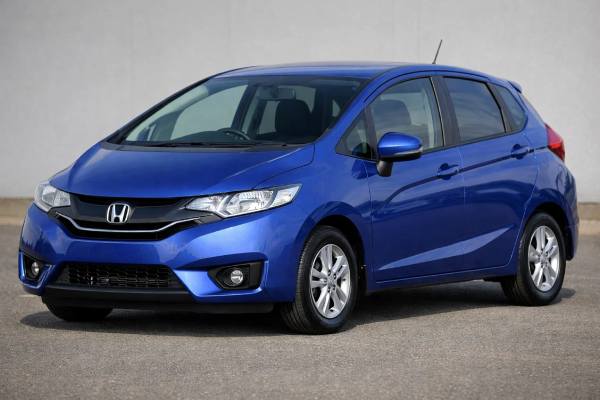
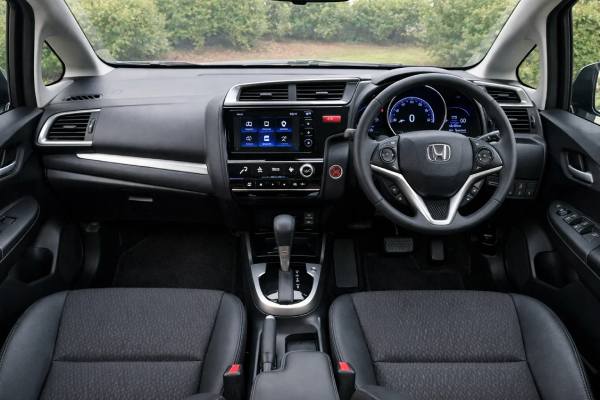
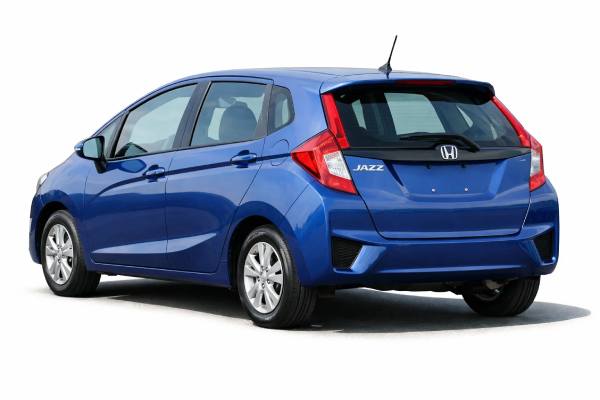
The 2015–2017 Honda Jazz (GK) with the L13B2 1.3 i-VTEC is the “engineering efficiency” version of the supermini idea: modest power, very low friction, and a packaging layout that prioritizes usable space over showroom drama. The highlight isn’t a headline number—it’s how well the car uses what it has. The center-mounted fuel tank and Honda’s “Magic Seats” create cargo flexibility that rivals larger hatchbacks, while the 1.3 i-VTEC’s high compression and light rotating parts aim for real-world economy without feeling strained in normal driving.
For owners, the GK Jazz tends to reward consistent maintenance more than heroic repairs. Keep fluids fresh (especially if you have the CVT), stay ahead of brake and suspension wear, and it’s typically a long-lived daily car that remains easy to park, easy to see out of, and inexpensive to run.
Key Takeaways
- Big cabin and cargo for a 4.0 m hatch, with flexible “Magic Seats” that genuinely change how you use the car.
- Efficient 1.3 i-VTEC drivetrain feels happiest at moderate speeds and steady throttle; it’s built for economy and smoothness.
- CVT models benefit from proactive fluid servicing to prevent shudder and keep take-off smooth.
- Typical oil service interval is 10,000–15,000 km (6,000–9,000 mi) or 12 months, depending on usage and the car’s maintenance minder.
- Check outstanding recalls by VIN before buying, and confirm safety-tech fitment by trim and options.
What’s inside
- GK Jazz ownership picture
- L13B2 specs and measurements
- Equipment lines and safety tech
- Known problems and service actions
- Maintenance plan and used-buy tips
- Road manners and real economy
- Jazz GK vs main competitors
GK Jazz ownership picture
Think of the 2015–2017 Jazz (GK) 1.3 as a “smart-space” commuter that happens to be a hatchback. Honda’s packaging is the story: the fuel tank sits centrally under the front seats, which frees up the rear floor area and enables the rear seat base to fold and flip in multiple ways. In daily use, that matters more than a small horsepower difference versus rivals. You can carry tall items behind the front seats, load long objects through the cabin, or create a flat cargo floor for bulky boxes—without stepping up to a larger car.
The L13B2 1.3 i-VTEC is tuned for efficiency and clean response, not torque-heavy punch. Around town it feels light and predictable, helped by the GK’s relatively low curb weight and tidy dimensions. On the motorway, it remains stable and refined for the class, but expectations should match the engine: overtakes are easiest when you plan a downshift (manual) or let the CVT hold higher rpm briefly.
Ownership strengths usually cluster around low running costs, strong parts availability, and simple mechanical layout. The caveat is that “simple” doesn’t mean “ignore it.” This generation benefits from preventive fluid servicing, keeping brakes clean (especially rear), and addressing small issues—like weak batteries, worn drop links, or noisy wheel bearings—before they cascade into tire wear or NVH annoyances.
What most buyers should focus on when shopping:
- Service history quality, not just mileage. Short-trip cars need more frequent oil and brake service.
- Transmission type (6MT vs CVT) and evidence of correct fluid use for the CVT.
- Trim safety equipment, because the Jazz range can vary widely by market and grade.
- Rust-prone areas for your climate (rear brake hardware, underbody seams, exhaust fixings).
If you want a small car that behaves like a practical tool—easy to live with, easy to maneuver, and unusually versatile inside—the GK Jazz 1.3 is one of the clearest expressions of that idea.
L13B2 specs and measurements
Below are key specifications for the European-market 2015 Jazz with the 1.3 i-VTEC (L13B2 family) and its two common transmissions (6-speed manual and CVT). Always verify against your VIN and market brochure, because wheel sizes and equipment affect curb weight and certified economy.
Powertrain and efficiency (1.3 i-VTEC)
| Item | Specification |
|---|---|
| Engine code | L13B2 (L-series family) |
| Layout | Inline-4, i-VTEC valvetrain |
| Valves | 4 valves/cylinder |
| Displacement | 1.3 L (1,318 cc) |
| Bore × stroke | 73.0 × 78.7 mm (2.87 × 3.10 in) |
| Compression ratio | 13.5:1 |
| Induction | Naturally aspirated |
| Fuel system | Port injection (market-dependent wording), gasoline |
| Max power | 102 PS (≈ 101 hp / 75 kW) @ 6,000 rpm |
| Max torque | 123 Nm (91 lb-ft) @ 5,000 rpm |
| Timing drive | Chain (typical for Honda L-series; verify by engine label/service data) |
Transmission and driveline
| Item | 6-speed manual | CVT |
|---|---|---|
| Drive type | FWD | FWD |
| Gear count | 6 | Variable (with simulated “steps” under load) |
| Final drive | 4.625 | 4.992 |
Chassis, brakes, wheels, and turning
| Item | Specification |
|---|---|
| Front suspension | MacPherson strut |
| Rear suspension | H-type torsion beam |
| Steering | Rack and pinion, electric assist |
| Steering turns lock-to-lock | 2.67 (15 in) / 2.52 (16 in) |
| Turning circle (kerb-to-kerb) | 4.9 m (16.1 ft) on 15 in / 5.2 m (17.1 ft) on 16 in |
| Turning circle (body) | 10.8 m (35.4 ft) |
| Brakes (front/rear) | Ventilated disc / disc |
| Disc diameters | 262 mm (10.3 in) front / 239 mm (9.4 in) rear |
| Common tyre sizes | 185/60 R15 (84H) or 185/55 R16 (83H/V) |
Dimensions, weights, and capacities
| Item | Specification |
|---|---|
| Length | 3,995 mm (157.3 in) |
| Width (incl. mirrors) | 1,694 mm (66.7 in) |
| Height (unladen) | 1,550 mm (61.0 in) |
| Wheelbase | 2,530 mm (99.6 in) |
| Curb weight | 1,066 kg (2,350 lb) manual / 1,092 kg (2,407 lb) CVT |
| Fuel tank | 40 L (10.6 US gal / 8.8 UK gal) |
| Cargo volume (VDA) | 354 L (12.5 ft³) seats up / 1,314 L (46.4 ft³) seats folded |
Performance and certified economy (typical EU figures)
| Metric | 6-speed manual | CVT |
|---|---|---|
| 0–100 km/h (0–62 mph) | 11.2 s | 12.0 s |
| Top speed | 190 km/h (118 mph) | 183 km/h (114 mph) |
| Combined fuel use (15–16 in wheels) | 5.0–5.1 L/100 km (≈ 47–46 mpg US / 56–55 mpg UK) | 4.6–4.9 L/100 km (≈ 51–48 mpg US / 61–58 mpg UK) |
| CO₂ (combined) | 116–120 g/km | 106–114 g/km |
Fluids and service capacities (practical guide)
Because exact fills vary with sump shape, cooler lines, and service method, use these as planning ranges, then confirm in your official service documentation:
- Engine oil: typically 0W-20 (or approved equivalent), roughly 3.3–3.8 L (3.5–4.0 US qt) with filter.
- Coolant: Honda Type 2 or equivalent long-life coolant, commonly a 50/50 mix; total system fill varies by market.
- CVT fluid (if fitted): Honda CVT fluid specified for the unit; partial drain-and-fill is common service practice.
- Brake fluid: DOT 3/4 class per cap/handbook, typically serviced by time rather than mileage.
Key takeaway from the numbers: the Jazz is not “fast,” but it is light, space-efficient, and consistently economical, especially in CVT form when driven smoothly.
Equipment lines and safety tech
For the 2015–2017 Jazz range, equipment strategy matters because the same mechanical base can feel like two different cars depending on trim. The simplest way to shop is to separate “comfort features” (nice-to-have) from “functional features” (things that change safety, visibility, and daily workload).
Common trims and how to spot them (market-dependent)
Most European markets offered roughly three tiers. Names vary, but you’ll often see a pattern like entry, mid, and high grade.
Quick identifiers that usually help:
- Wheel size: 15-inch wheels typically show up on lower/mid trims; 16-inch wheels are more common on higher trims or sport-styled packages.
- Infotainment screen: higher trims often use a larger center touchscreen with app-style layout; base cars may have a simpler audio unit.
- Parking aids: rear camera and parking sensors are more likely on mid/high trims; base cars may rely on mirrors only.
- Climate control: manual A/C on lower trims; automatic climate control on higher trims.
Year-to-year changes for 2015–2017 are usually subtle—more “package reshuffles” than mechanical revisions—so you should verify the equipment list by VIN or by the car’s original order sheet when possible.
Safety structure and passive protection
The GK Jazz uses Honda’s ACE body-structure approach and typically includes a strong baseline of passive safety for the class. Many European cars were equipped with six airbags (front, side, and curtain), plus ISOFIX child-seat anchor points. Confirm airbag count from the B-pillar/door-jamb label and the steering wheel/dash markings, because some markets and early builds can differ.
Euro NCAP ratings and what they mean
Euro NCAP awarded the Honda Jazz a 5-star safety rating under the newer, tougher 2015-era protocols, which is meaningful for a supermini because the test emphasizes not just crash survival but also safety-assist availability. In practical terms:
- The structure and restraint systems are competent for the segment.
- The rating benefits from active safety (like autonomous emergency braking) being available, and in some cases standard.
Percent scores vary by test version and equipment assumptions, but the 5-star outcome supports the Jazz’s reputation as a safety-forward small car—especially when the tested safety-assist systems are present on the specific trim you’re buying.
Driver assistance and calibration considerations
Depending on grade and options, you may find systems such as:
- City AEB (autonomous emergency braking): typically designed for lower-speed urban scenarios.
- Traffic sign recognition and intelligent speed limiting: helpful on mixed roads, but relies on a camera and clean windshield area.
- Lane departure warning: warns rather than steers; camera alignment and windshield replacement quality matter.
- High beam support: convenience and safety benefit on unlit roads.
Ownership note: any camera-based system depends on correct windshield specification and proper aiming. After windshield replacement or front-end repairs, ask for proof of calibration checks if the car is equipped with forward camera features.
Known problems and service actions
The GK Jazz 1.3 is generally a “small problems, small money” car—provided you don’t let little issues compound. Below is a practical way to think about reliability: by prevalence, then by cost tier, and finally by what you can do to prevent repeat failures.
Common (usually low–medium cost)
1) Rear brake drag and uneven wear
- Symptoms: hot rear wheels after a drive, squeal, reduced economy, uneven pad wear.
- Likely causes: corrosion on slider pins, tired rubber boots, sticking caliper mechanism after winter salt use.
- Remedy: clean and lubricate slide pins with correct brake grease, replace boots/pins if pitted, refresh pads and discs as a set when needed. Prevent with yearly brake inspection in wet/salty climates.
2) Battery weakness and stop-start sensitivity (if fitted)
- Symptoms: slow cranking, stop-start disabled messages, odd infotainment resets.
- Likely causes: short-trip use, aging 12V battery, marginal charging due to many small journeys.
- Remedy: battery test with a proper conductance tester; replace with correct capacity/CCA; ensure terminals are clean and tight.
3) Suspension “knocks” on rough roads
- Symptoms: clunks over small bumps, vague steering on poor surfaces.
- Likely causes: drop links, top mounts, or front lower-arm bushes wearing earlier on harsh roads.
- Remedy: replace worn links/bushes, then align. The Jazz responds well to correct alignment—tire wear stays even and the car feels more precise.
Occasional (cost varies)
4) CVT judder or flare on pull-away (CVT models)
- Symptoms: shudder when moving off, inconsistent rpm rise, hesitation when warm.
- Likely causes: aged or incorrect CVT fluid, adaptation drift, or wear patterns that show up first in city driving.
- Remedy: drain-and-fill with the correct Honda CVT fluid at sensible intervals; if symptoms persist, a dealer-level diagnostic and adaptation reset may help. Avoid universal fluids.
5) Air conditioning performance drop
- Symptoms: weak cooling, cycling, or compressor noise.
- Likely causes: gradual refrigerant loss, condenser damage from road debris, or system contamination after improper service.
- Remedy: leak check, proper evacuation and recharge by weight, and condenser inspection. Don’t top-up blindly.
Rare (higher cost if ignored)
6) Wheel bearing noise
- Symptoms: humming that rises with speed, changes when loading left vs right.
- Likely causes: bearing wear accelerated by potholes or high curb impacts.
- Remedy: replace the bearing/hub assembly as required; address alignment and tire condition afterward.
Software, calibrations, and “small electronics”
Most Jazz owners won’t face major ECU drama, but driveability complaints can sometimes be solved with correct software versions—especially when paired with transmission behavior complaints on CVT cars. If a car has erratic warning lights, insist on a full diagnostic scan rather than parts guessing.
Recalls, TSBs, and how to verify
This era of Honda ownership overlaps with industry-wide recall activity (most notably airbag inflator campaigns on various models/markets). Rather than relying on seller claims, do this:
- Run the car’s VIN through an official recall checker.
- Ask for dealer printouts or invoices showing recall completion.
- Confirm open campaigns before negotiating price.
For a used buyer, “all recalls completed” is not a bonus—it’s the baseline. If the seller can’t prove it, assume the time and hassle will be yours.
Maintenance plan and used-buy tips
The Jazz rewards simple, consistent servicing. The goal is not to over-maintain—it’s to service the right items at the right time so the car stays smooth, quiet, and economical.
Practical maintenance schedule (distance or time, whichever comes first)
Use the car’s maintenance minder where fitted, but these intervals work well as a planning baseline:
- Engine oil and filter: every 10,000–15,000 km (6,000–9,000 mi) or 12 months. Short trips, cold starts, and heavy city use push you to the shorter end.
- Cabin filter: every 15,000–30,000 km or yearly if you drive dusty/urban routes.
- Engine air filter: every 30,000–45,000 km, sooner in dusty conditions.
- Brake fluid: every 3 years (time-based is key; moisture lowers boiling point).
- Coolant: commonly 5 years then every 3 years (verify exact spec for your market).
- Spark plugs: often ~100,000 km (60,000 mi) on modern iridium plugs, but verify plug type and interval on your engine label/handbook.
- Manual gearbox oil (6MT): consider 60,000–90,000 km if you want best shift feel long-term, especially in hot/cold extremes.
- CVT fluid (CVT models): consider 40,000–60,000 km for smoother take-off and longer CVT life, using only the specified fluid.
- Brake service (pads, sliders, cleaning): inspect yearly; in salty climates, treat as a must-do.
- Tire rotation and alignment: rotate every 10,000–12,000 km; align if you see uneven wear or after suspension work.
- 12V battery test: yearly after year 4; replacement window often 5–7 years depending on climate and usage.
Fluids, specs, and “decision-grade” numbers
Even if you don’t DIY, having a few specs helps you evaluate invoices:
- Oil grade: 0W-20 is common for economy; an approved equivalent may be listed for your climate.
- Brake fluid: DOT class per cap/handbook; replace by time.
- CVT fluid: must match the CVT family spec; insist on the correct part number on receipts.
Torque values and exact capacities vary by VIN and service method, so use official documentation for any mechanical work.
Used-buyer inspection checklist (fast but meaningful)
Body and chassis
- Look underneath for crushed jacking points, bent pinch welds, and poorly repaired accident damage.
- Check for underbody corrosion in seam areas if the car lived in salted regions.
- Ensure doors and tailgate close cleanly; misalignment can signal past impact.
Engine bay
- Listen for consistent idle and smooth rev pick-up (no hunting or misfire).
- Check for oil seepage around common gasket areas; minor sweating is normal, wet leaks are not.
- Verify coolant looks clean and correct color (not rusty, not oily).
Transmission
- Manual: shifts should be light and consistent; clutch take-up should be progressive.
- CVT: pull away gently from a stop when warm—any repeated shudder deserves attention and a fluid-history check.
Brakes and tires
- Feel for pulsing (warped discs) and check rear disc condition; rear hardware suffers most in winter climates.
- Uneven tire wear often points to alignment or bushing wear.
Electronics
- Confirm all keys work, infotainment behaves normally, and warning lights illuminate at startup then go out.
Best picks (typical guidance)
- If you prioritize simplicity and long-term ownership, the 6-speed manual is the straightforward choice.
- If you prefer comfort and city ease, the CVT can be excellent, but only when its fluid history is correct.
Overall durability outlook: with routine fluids and brake care, the GK Jazz 1.3 is well-positioned to deliver high mileage with low drama—exactly what most supermini buyers want.
Road manners and real economy
The Jazz feels engineered around calm competence. Visibility is typically strong for the class, controls are light, and the chassis is tuned to stay composed on real roads rather than chasing “hot hatch” sharpness.
Ride, handling, and NVH
- Ride: The suspension does a good job rounding off small bumps, especially on 15-inch wheels. On 16s, you gain steering response but feel more edge over sharp inputs.
- Handling balance: The torsion-beam rear keeps the car stable and predictable. It won’t rotate like a sporty Fiesta, but it’s secure and easy to place.
- Steering: The GK generation moved to a faster steering response than earlier Jazz models, which helps in city maneuvers and gives a more modern feel on twisty roads.
- Noise: At steady speeds it’s refined for a supermini, but coarse surfaces and high rpm climbs will remind you it’s a small, light car.
Powertrain character (manual vs CVT)
6-speed manual:
The gearing supports relaxed cruising, and the engine’s smoothness encourages early upshifts. For overtakes, it responds best when you downshift and keep it in the mid-to-upper rev range. It feels honest: what you ask for is what you get.
CVT:
The CVT is built for smoothness and efficiency. Under gentle throttle it holds low rpm and can feel almost “electric” in how it glides through town. Under hard acceleration it will hold higher rpm longer, which some drivers interpret as noise rather than speed. The simulated steps help it feel more conventional, but it’s still a CVT at heart.
Real-world economy (what owners typically see)
Certified figures are one thing; real-world use is shaped by speed, temperature, tires, and trip length.
- City: Often around 5.5–7.0 L/100 km (34–43 mpg US / 40–51 mpg UK) depending on traffic and warm-up time.
- Highway (100–120 km/h / 60–75 mph): often 5.0–6.2 L/100 km (38–47 mpg US / 46–57 mpg UK), with the CVT usually favoring the low end when driven smoothly.
- Mixed: many drivers land near 5.2–6.3 L/100 km (37–45 mpg US / 45–54 mpg UK).
Cold weather and short trips can add a noticeable penalty because the engine spends more time warming up and the cabin heater demand is higher.
Load, stability, and light-duty towing
Despite its size, the Jazz can be surprisingly capable for errands because the cabin layout makes carrying awkward items easy. With moderate cargo, stability remains good. If you tow (where permitted and rated for your market), stay conservative: plan longer braking distances, keep tire pressures correct, and recognize that any towing will increase consumption and heat load.
The bottom line: the Jazz isn’t trying to be exciting—it’s trying to be easy, and in daily driving that usually translates to less fatigue and fewer compromises.
Jazz GK vs main competitors
The Jazz’s strongest argument against rivals is that it behaves like a class-above car in interior usefulness. Most competitors can match it on paper specs in one area, but fewer match the complete “space + flexibility + efficiency + visibility” package.
Versus Toyota Yaris 1.33 (similar era)
- Jazz advantages: more versatile rear seating/cargo solutions; often feels more spacious in the rear.
- Yaris advantages: simple, proven ownership experience; some buyers prefer Toyota’s control layout and cabin durability feel.
- Pick the Jazz if: you value carrying capacity and flexible seating more than anything.
Versus Mazda2 (DJ)
- Jazz advantages: cabin packaging and rear space; practicality-first layout.
- Mazda2 advantages: sharper steering feel and a more “driver-focused” chassis; often feels sportier at the limit.
- Pick the Jazz if: you want an everyday tool; pick the Mazda2 if driving enjoyment is a top priority.
Versus Ford Fiesta (Mk7)
- Jazz advantages: interior space, seat versatility, and typically calmer ownership costs when kept stock and serviced well.
- Fiesta advantages: best-in-class steering and handling engagement; wide trim variety.
- Pick the Jazz if: you want comfort and versatility; pick the Fiesta if you want the fun option.
Versus Hyundai i20 / Kia Rio (similar years)
- Jazz advantages: clever packaging, excellent visibility, and strong long-term usability.
- i20/Rio advantages: often strong value equipment for money and straightforward infotainment.
- Pick the Jazz if: you want the “small car that lives like a bigger car” experience.
The real decision points
If you’re cross-shopping, the most useful questions are:
- Do you routinely carry bulky items or adults in the rear? If yes, the Jazz tends to win.
- Do you want a traditional driving feel? If yes, lean manual; if no, a well-maintained CVT is smooth and easy.
- Is active safety equipment important to you? If yes, shop trims carefully and confirm what’s fitted.
- Do you value sportiness over practicality? If yes, the Fiesta or Mazda2 may fit better.
Verdict: the 2015–2017 Jazz 1.3 is rarely the “emotional” pick, but it’s often the most rationally satisfying one—especially for owners who keep cars a long time and want flexibility without stepping up in size.
References
- 2015 Honda Jazz 2015 (Press Release)
- Euro NCAP | Press Release Nov. 2015 – Top Marks for Audi and Honda 2015 (Safety Rating)
- The New Honda Jazz Awarded Best in Class Supermini 2015 by Euro NCAP | Honda Global Corporate Website 2016 (News Release)
- Check if a vehicle, part or accessory has been recalled – GOV.UK 2026 (Recall Database)
- Honda Jazz (2015 to 2019) | Expert Rating | The Car Expert 2025 (Safety Rating)
Disclaimer
This article is for informational purposes only and is not a substitute for professional diagnosis, inspection, or repair. Specifications, torque values, fluid capacities, service intervals, and procedures vary by VIN, market, model year, and equipment. Always verify details using your official Honda owner’s literature and service documentation, and consult a qualified technician when needed.
If this guide helped, please consider sharing it on Facebook, X (Twitter), or your favorite forum to support our work.