
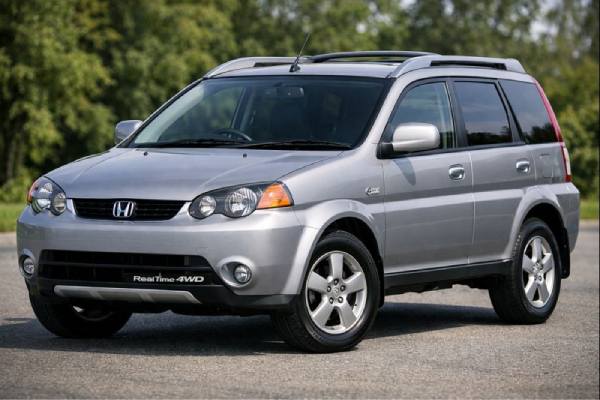
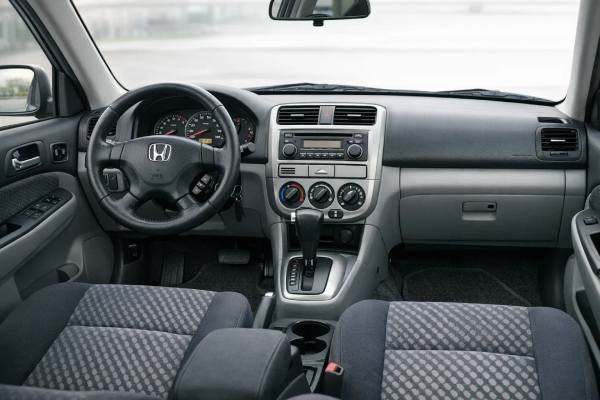
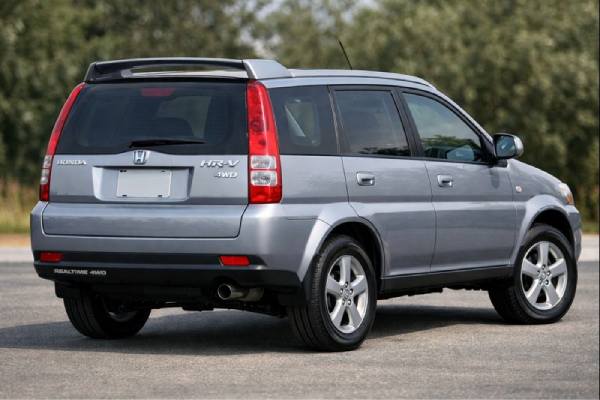
The facelift GH2 Honda HR-V with Real Time 4WD and the D16W5 1.6-liter engine is one of those early crossovers that still makes engineering sense today. It’s compact, light by modern standards, and built around simple, durable Honda hardware: a belt-driven SOHC VTEC four-cylinder and a reactive on-demand 4WD system designed for wet roads, snow, and gravel rather than rock crawling. The result is a vehicle that feels easy to place in traffic, easy to service, and generally forgiving if it has been maintained on schedule.
Where ownership gets interesting is age and use-case. Many HR-Vs now live on short trips, uneven roads, or winter salt—exactly the conditions that stress suspension joints, brake lines, and underbody seams. Buy a good one and keep up with fluids (especially the rear diff), and it’s a practical, low-drama daily.
Owner Snapshot
- Light weight and simple drivetrain keep running costs predictable for a 4WD crossover.
- Real Time 4WD adds confidence on slick roads without the complexity of a full-time AWD system.
- D16W5’s extra power suits highway merging better than the non-VTEC 1.6 variants.
- Neglecting rear differential fluid is a common reason for shudder or chatter in tight turns.
- Plan timing-belt service about every 100,000 km (60,000 mi) or 5–7 years, depending on climate and use.
Guide contents
- GH2 HR-V 4WD facelift explained
- D16W5 specs and dimensions
- Equipment, safety, and trim clues
- Common issues and service actions
- Maintenance plan and buyer checklist
- Driving feel and real-world economy
- Rivals and realistic alternatives
GH2 HR-V 4WD facelift explained
Think of the facelift GH2 HR-V Real Time 4WD as a civic-grade drivetrain packaged into a taller, more versatile body. Underneath, the priorities are clear: low mass, modest tire sizes, straightforward suspension, and easy access to service items. That combination is why these cars often feel more “honest” than many newer crossovers—there’s less weight to hide problems and fewer systems that can fail expensively.
Real Time 4WD in plain terms: it’s primarily a front-wheel-drive car. When the front wheels slip, the rear axle is engaged automatically through the rear differential coupling. In normal dry driving, it stays calm and efficient. In rain, slush, or on a steep gravel driveway, it can add traction without you doing anything. The tradeoff is that it’s not intended for heavy off-road work: there’s limited wheel travel, modest ground clearance, and no low range. Treat it as “smart traction support,” not a mountain truck.
The facelift years typically bring small but meaningful ownership changes: updated bumpers/lights, trim reshuffles, and sometimes minor tuning and equipment changes (depending on market). The big ownership variables usually come down to transmission choice (manual vs CVT where offered), maintenance history, and rust exposure.
Where this version shines
- Urban and suburban use: compact footprint, good visibility, predictable controls.
- Bad weather commuting: traction benefit without AWD complexity or constant driveline drag.
- Light duty utility: fold-flat seating and a practical tailgate height make it more useful than its size suggests.
Where it’s less ideal
- High-speed, heavy-load touring: it will do it, but noise and power reserves aren’t modern.
- Neglected examples: the drivetrain is forgiving, but old fluids, worn bushings, and corrosion can turn a “cheap” HR-V into a long reconditioning list.
If you want one as a dependable daily, the best approach is to buy the cleanest, most complete service-history car you can find—and then baseline the fluids so you’re not guessing.
D16W5 specs and dimensions
The table below focuses on the facelift GH2 HR-V Real Time 4WD with D16W5 (124 hp). Some figures vary by market, wheel package, and transmission, so use these as a practical spec baseline and confirm against your VIN plate and owner documentation.
Powertrain and efficiency
| Item | Specification |
|---|---|
| Engine code | D16W5 |
| Layout | Inline-4, SOHC VTEC |
| Displacement | 1.6 L (1,590 cc) |
| Induction | Naturally aspirated |
| Fuel system | Multi-point injection (PFI/MPFI) |
| Max power | 124 hp (91 kW) @ ~6,500 rpm (market-dependent) |
| Max torque | ~145 Nm (107 lb-ft) @ ~5,000 rpm (market-dependent) |
| Timing drive | Belt |
| Rated efficiency | Typical mixed: ~7.5–9.0 L/100 km (31–26 mpg US / 38–31 mpg UK) |
Transmission and driveline
| Item | Specification |
|---|---|
| Transmission | 5-speed manual or CVT (market/trim-dependent) |
| Drive type | Real Time 4WD (on-demand) |
| Differential | Open front; rear coupling integrated into rear diff assembly |
Chassis and dimensions
| Item | Specification |
|---|---|
| Front suspension | MacPherson strut |
| Rear suspension | De Dion (torsion beam-style) with trailing arms (market-dependent descriptions vary) |
| Steering | Rack-and-pinion, hydraulic assist (most markets) |
| Brakes | Front discs / rear drums or discs (trim-dependent) |
| Wheels/tires | Common: 195/70 R15 or 205/60 R16 (package-dependent) |
| Length / width / height | ~4,000 / 1,695 / 1,575 mm (157.5 / 66.7 / 62.0 in) |
| Wheelbase | ~2,360 mm (92.9 in) |
| Turning circle | ~10.0–10.6 m (32.8–34.8 ft) |
| Curb weight | ~1,250–1,350 kg (2,756–2,976 lb) |
| Fuel tank | Typically ~55 L (14.5 US gal / 12.1 UK gal) |
| Cargo volume | Market-method dependent; typically ~280–320 L seats up, ~1,000+ L seats down |
Performance and capability
| Item | Typical value (real-world) |
|---|---|
| 0–100 km/h (0–62 mph) | ~10.5–12.5 s (manual often quicker than CVT) |
| Top speed | ~170–180 km/h (106–112 mph) |
| Towing | Often limited; many markets rate low or “not recommended”—verify local rating |
Fluids and service capacities (common service baselines)
| Fluid | Typical spec to use | Typical capacity (approx.) |
|---|---|---|
| Engine oil | API SL/SJ era equivalent; many owners use 5W-30 (climate-dependent) | ~3.5 L (3.7 US qt) |
| Coolant | Honda-type long-life coolant (50/50 mix typical) | ~5–6 L (5.3–6.3 US qt) |
| Manual trans | Honda MTF (or equivalent) | ~1.7–2.0 L (1.8–2.1 US qt) |
| CVT | Honda CVT fluid (correct generation only) | service-fill varies; confirm procedure |
| Rear differential | Dual Pump Fluid (DPSF) | small capacity; service by drain/fill level |
Key torque specs (common Honda small-car baselines)
| Fastener | Typical torque |
|---|---|
| Wheel lug nuts | ~108 Nm (80 lb-ft) |
| Engine oil drain bolt | ~39 Nm (29 lb-ft) |
| Spark plugs | ~18 Nm (13 lb-ft), unless plug maker specifies otherwise |
Safety and driver assistance (era-appropriate)
| Item | What to expect |
|---|---|
| Airbags | Typically dual front; side airbags optional in some markets/years |
| ABS | Common, often standard on higher trims |
| Stability control | Often not present on early-2000s compact crossovers; verify by trim |
| Crash ratings | Ratings and protocols vary by region and year; check the test body for the exact vehicle/version tested |
Equipment, safety, and trim clues
Because this HR-V is now older, trim identification matters less for “luxury” and more for mechanical and safety differences—especially brake type, wheel size, and whether certain airbags or ABS were standard in your market.
Trims and options: what actually changes
Most facelift GH2 HR-Vs cluster into a few common equipment themes rather than radically different trims:
- Wheel and tire packages: moving from 15-inch to 16-inch setups can sharpen steering response but usually increases road noise and tire cost. Also check for uneven wear—bigger wheels sometimes hide tired dampers.
- Brake hardware: some versions keep rear drums; others use rear discs. Drums can be reliable and cheap, but they dislike long storage and can seize if neglected. Rear discs give better service feel and can be easier to inspect quickly.
- Transmission pairing: manual and CVT versions can feel like two different cars. Manuals tend to feel simpler and more predictable long-term; CVTs reward gentle driving and strict fluid care.
- Interior and convenience: sunroof, heated seats, and upgraded audio are the usual “nice-to-have” options, but they also add failure points (drains, switches, and aging speakers).
Quick identifiers to look for
- A “Real Time 4WD” badge (where fitted) is helpful, but don’t rely on it alone.
- Look underneath: a rear differential housing and driveshaft confirm the 4WD system.
- Check the tire placard and VIN plate for axle weights and tire sizes—these often correlate with trim and brake package.
Safety ratings: how to interpret them on a 2002–2005 vehicle
Even when you find a crash-test result for “Honda HR-V,” it may not match your exact configuration. Ratings can differ because of:
- Test protocol updates (older tests may not include modern injury measures).
- Trim differences (airbag availability, seatbelt pretensioners).
- Body variants (some markets had different reinforcements).
A practical way to use ratings is to treat them as context, not a promise. More important for your specific car is condition: seatbelts that retract properly, airbags that pass self-check, no crash repairs in structural areas, and correct tires.
Safety systems and “ADAS” reality
This era is mostly pre-ADAS (advanced driver assistance systems). Expect:
- ABS (often) and EBD (electronic brakeforce distribution) in many markets.
- No AEB (automatic emergency braking), no radar cruise, no lane-keep assist.
- Basic child-seat provisions, typically ISOFIX/LATCH depending on market.
Ownership implication: the biggest safety upgrades you can control are tires, brakes, and headlights. A fresh set of quality all-season or winter tires and properly aimed headlights often deliver more real safety benefit than chasing a rare trim feature.
Common issues and service actions
For a facelift HR-V this old, “reliability” is mostly the sum of three things: how it was maintained, how it was stored, and whether corrosion has started to win. Below is a practical map of issues by prevalence and cost tier, followed by symptom-to-fix guidance.
Issue map: prevalence and severity
Common (low to medium cost)
- Rear differential shudder/chatter on tight turns (often fluid-related).
- Suspension wear: drop links, bushings, ball joints (age + rough roads).
- Brake binding from rusted slider pins or seized rear hardware.
- Window regulators and door locks slowing or failing with age.
Occasional (medium cost)
- CVT judder, flare, or hesitation if fluid was neglected or wrong fluid used.
- Cooling system aging: radiator end tanks, hoses, thermostat issues.
- Exhaust leaks at flanges or flex sections.
Rare but expensive (high cost)
- Severe rust in structural areas (sills/rockers, rear substructure mounts).
- Chronic overheating damage (warped head, gasket issues) after neglect.
- 4WD driveline noise from damaged mounts or long-term fluid neglect.
Symptoms → likely cause → recommended remedy
- Shudder when parking or doing tight circles → rear diff fluid degraded or contaminated → drain and refill with the correct Dual Pump Fluid; repeat if badly neglected, and inspect tires for mismatched sizes (mismatch can stress the rear coupling).
- Clunk over bumps → worn anti-roll bar links or control-arm bushings → replace links/bushings as a set per axle side; follow with alignment if control-arm work was done.
- Steering feels vague or wanders → tired dampers, worn bushings, or uneven tire wear → inspect tires first, then front suspension joints and dampers; alignment after repairs.
- CVT “rubber band” flare, delayed engagement, or shudder → old fluid, incorrect fluid, or internal belt/pulley wear → verify the correct Honda CVT fluid spec, service fluid per procedure, and road-test; if symptoms persist, plan for specialist diagnosis.
- Coolant smell or slow overheating → small leaks, weak radiator cap, thermostat aging → pressure test, replace suspect hoses/clamps, and refresh thermostat/cap as needed.
Recalls, TSBs, and “service actions”
Recall and service bulletin coverage depends heavily on market. What matters is the process:
- Run a VIN-based recall check through the official channels used in your country.
- Ask for dealer printouts or service invoices confirming completion.
- If paperwork is missing, treat it as incomplete until proven otherwise.
Even when no open recalls exist, a good “service action” mindset helps: baseline fluids, fix leaks early, and replace aging rubber parts before they fail on the road.
Maintenance plan and buyer checklist
Below is a practical schedule that suits most D16W5 HR-Vs in mixed use. Adjust for harsh conditions: short trips, dusty roads, deep winter, or frequent steep climbs.
Maintenance schedule (distance and time)
- Engine oil and filter: every 8,000–10,000 km (5,000–6,200 mi) or 12 months. Short trips and cold climates justify the shorter interval.
- Air filter (engine): inspect every oil change; replace about 20,000–30,000 km (12,000–18,000 mi), sooner in dust.
- Cabin filter (if fitted): 15,000–20,000 km or yearly.
- Coolant: every 3–5 years (use the correct long-life coolant type; do not mix random chemistries).
- Brake fluid: every 2 years, regardless of mileage.
- Spark plugs: often 80,000–100,000 km (50,000–62,000 mi), depending on plug type; inspect coils/leads during service.
- Valve clearance (adjustable valvetrain): inspect/adjust about every 40,000 km (25,000 mi) or if you hear a persistent tick when warm.
- Timing belt, tensioner, and water pump: about 100,000 km (60,000 mi) or 5–7 years. Replace as a set; age matters as much as mileage.
- Manual transmission fluid: about every 60,000–80,000 km (37,000–50,000 mi).
- CVT fluid (if equipped): shorter intervals are safer—often 40,000–60,000 km (25,000–37,000 mi), and always use the correct Honda-spec fluid.
- Rear differential fluid (Real Time 4WD): every 30,000–50,000 km (18,000–31,000 mi) or sooner if you drive in snow/mud or notice any shudder.
Baseline “decision-making” fluids and torques
For ownership planning, you mainly need:
- The correct engine oil viscosity for your climate (commonly 5W-30).
- The correct CVT fluid generation if applicable (this matters more than people think).
- The correct Dual Pump Fluid for the rear differential.
- Common fastener torques: lug nuts (~108 Nm), drain bolt (~39 Nm), plugs (~18 Nm).
Buyer’s guide: inspection checklist
Body and corrosion
- Check sills/rockers, rear arches, floor seams, and suspension mounting points.
- Look for uneven panel gaps or overspray that suggests crash repair.
Engine and cooling
- Cold start: listen for belt noise and check for coolant smell.
- Confirm stable temperature on a test drive; inspect radiator and hoses for crusting or swelling.
Driveline
- In an empty lot, do slow tight circles: any rear shudder suggests rear diff fluid needs immediate attention.
- Check for mismatched tire sizes or brands across axles.
Suspension and steering
- Listen for clunks on broken pavement.
- Inspect inner tire wear (alignment and bushing health clue).
CVT-specific checks
- Smooth takeoff, no delayed engagement.
- No shudder at light throttle or when creeping uphill.
Durability outlook
A well-kept HR-V can be a long-term car because the fundamentals are simple. The “make or break” factor is usually rust plus neglected fluids—not the core engine design.
Driving feel and real-world economy
The facelift HR-V’s driving character is defined by lightness. You feel it in parking lots, on narrow streets, and when the road gets broken. Compared with modern crossovers, it’s less isolated—but also easier to read.
Ride, handling, and NVH
- Ride: compliant at city speeds, especially on taller 15-inch tire setups. Larger wheels tend to add sharpness over potholes.
- Handling: tidy and predictable rather than sporty. The higher seating position helps visibility, but it will lean if pushed.
- Steering: usually light-to-medium effort with a clear “Honda” center feel when the front end is healthy. If it feels vague, suspect tired bushings or an alignment issue.
- Noise: wind and tire noise rise notably above ~100 km/h (62 mph). Fresh door seals and correct tire choice help, but it won’t feel like a modern touring SUV.
Powertrain character (D16W5 + manual or CVT)
The D16W5’s extra output over the lower-power 1.6 variants is most noticeable when merging or climbing grades. It prefers revs; it won’t deliver modern turbo-style low-end shove.
- Manual: more direct response, better engine braking, and usually a more “mechanical” feel that suits the car.
- CVT: smooth when healthy, but it can feel hesitant if the fluid is tired or if you demand sudden acceleration. A healthy CVT should not shudder when warm.
Real-world efficiency
Actual fuel use depends heavily on tires, alignment, and trip length:
- City: typically ~8.5–10.5 L/100 km (28–22 mpg US / 33–27 mpg UK).
- Highway at 100–120 km/h: typically ~7.0–8.5 L/100 km (34–28 mpg US / 40–33 mpg UK).
- Mixed: often lands around ~7.5–9.0 L/100 km (31–26 mpg US / 38–31 mpg UK).
Cold weather can add a meaningful penalty, especially on short trips. Expect higher consumption until the engine reaches full temperature, and keep tires properly inflated—underinflation costs fuel and stresses the 4WD system.
Traction and control in the real world
Real Time 4WD is most valuable on:
- wet roundabouts and painted road markings,
- icy intersections,
- gravel inclines and muddy parking areas.
It’s less helpful on deep, rutted terrain where ground clearance and articulation matter more than coupling behavior. The smartest “traction upgrade” remains tires: a proper winter tire set transforms the car more than any drivetrain feature.
Rivals and realistic alternatives
Crossovers from the early 2000s occupy a strange market space: many are cheap to buy, but only the best-maintained examples are cheap to own. Here’s how the HR-V Real Time 4WD compares in the ways that matter day to day.
Versus Toyota RAV4 (early 2000s)
- RAV4 advantages: often more power and a more robust “SUV” feel; some versions tolerate rough use better.
- HR-V advantages: typically lighter and more car-like in town, often easier on fuel, and simpler to service in basic areas.
- Ownership takeaway: choose the RAV4 if you truly need the extra space and robustness; choose the HR-V if you value compact agility and lower routine costs.
Versus Suzuki Vitara / Grand Vitara
- Vitara advantages: more traditional SUV hardware in some trims (and sometimes better off-road geometry).
- HR-V advantages: smoother road manners, usually better refinement for commuting, and often fewer drivetrain harshness complaints when maintained.
- Ownership takeaway: if you want real off-road ability, the Suzuki may fit better; if you want a city-friendly 4WD for weather, the Honda is the calmer tool.
Versus Subaru Forester (early 2000s)
- Forester advantages: full-time AWD traction feel and strong winter confidence; often more stable at speed.
- HR-V advantages: typically simpler underhood access and fewer AWD-related driveline parts to service; compact dimensions.
- Ownership takeaway: Subaru can be excellent, but it can also bring higher parts and repair exposure depending on engine generation and condition. The HR-V is often the lower-risk “keep it maintained and it keeps going” choice.
Versus a same-era compact hatchback + winter tires
This is the most honest comparison. A good front-drive hatchback with excellent winter tires can outperform a worn-out 4WD crossover on bad roads. The HR-V earns its place when you want:
- the seating height and visibility,
- the flexible cargo space,
- and traction help without committing to a larger vehicle.
Bottom line: the GH2 HR-V Real Time 4WD with D16W5 is best when you buy condition over features. A clean, rust-minimized example with documented fluid services will usually beat a “higher-spec” rival that has been neglected.
References
- Safety Assist 2024 (Assessment Protocol)
- Ministry of Land, Infrastructure, Transport and Tourism 2018 (Recall Oversight)
- Ratings 2025 (Safety Rating)
Disclaimer
This article is for informational purposes only and is not a substitute for professional inspection, diagnosis, or repair. Specifications, torque values, service intervals, and procedures can vary by VIN, market, and equipment, so always verify details using official documentation for your exact vehicle.
If you found this guide helpful, please consider sharing it on Facebook, X/Twitter, or your favorite forum to support our work.