
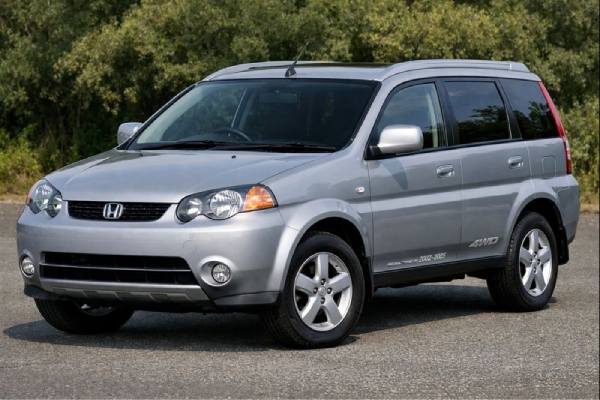
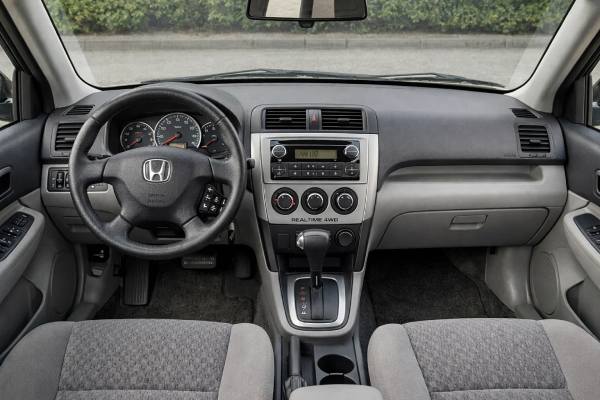

The facelift-era 2002–2005 Honda HR-V GH4 with Real Time 4WD and the D16W5 1.6 VTEC is the “sharper” take on Honda’s first small crossover. The body and AWD system still focus on everyday traction rather than heavy off-roading, but the D16W5 changes how the car feels: it’s happier to rev, delivers stronger top-end pull, and makes motorway merging less of a planning exercise. That extra performance comes with a slightly narrower maintenance margin—correct oil level, clean ignition parts, and timely valve and timing-belt service matter more on a higher-rev VTEC setup.
For owners today, this model is a smart choice when you want compact size, winter confidence, and a more engaging engine without stepping into complex modern AWD hardware. Condition still decides everything: a rust-free shell and a properly serviced rear differential are worth far more than low mileage alone.
Quick Specs and Notes
- D16W5 VTEC gives noticeably better passing power than the non-VTEC 1.6, especially above midrange revs.
- Real Time 4WD adds confident traction on wet roads and light snow with minimal driver input.
- Rear diff shudder on tight turns usually means overdue Dual Pump Fluid, not a failed AWD system.
- Rust inspection is non-negotiable in salt regions—focus on sills, rear arches, and rear subframe mounts.
- Replace the timing belt about every 90,000–100,000 km or 6–7 years if history is unclear.
Contents and shortcuts
- GH4 D16W5 facelift explained
- 124 hp D16W5 full specifications
- Facelift trims and safety equipment
- Known problems, recalls, and fixes
- Service schedule and purchase checklist
- How it drives in daily use
- D16W5 HR-V versus alternatives
GH4 D16W5 facelift explained
Honda’s first-generation HR-V is often described as “a tall Civic,” and that’s close to the truth in how it behaves on real roads. The GH4 Real Time 4WD version keeps the light, car-like feel while adding a traction safety net that works in the background. For the 2002–2005 facelift years, most changes were evolutionary—trim, lighting, and equipment details—while the fundamentals stayed consistent: compact dimensions, a practical cabin, and a drivetrain designed for mixed weather rather than mud bogs.
The key differentiator here is the D16W5. Compared with the non-VTEC 1.6, the D16W5 VTEC setup is tuned to breathe better at higher rpm. In everyday terms, that means the HR-V feels less “out of breath” as speed climbs. You still won’t mistake it for a modern turbo crossover, but it’s easier to keep pace on faster roads, and it rewards a driver who uses the upper half of the tachometer.
Real Time 4WD is best understood as on-demand AWD. Under steady cruising the HR-V behaves like a front-wheel-drive car. When front-wheel slip occurs, the rear axle is engaged progressively through the rear differential’s dual-pump mechanism. The payoff is extra stability in rain, slush, and gravel without the constant drag of full-time AWD. The limitation is equally important: there’s no low-range gearing, and the system isn’t designed for sustained wheelspin, heavy sand use, or repeated “rocking” out of ruts.
What owners often notice is that this HR-V is sensitive to being “set up correctly.” A healthy example with matched tyres, fresh rear differential fluid, tight suspension bushes, and a clean alignment feels composed and confident. A neglected one can feel noisy, vague, and jerky in low-speed turns—problems that are usually maintenance-related rather than “bad design.”
Why this version is attractive today
- Stronger engine character without modern AWD complexity
- Compact footprint and excellent visibility for daily driving
- AWD traction that helps in real winter commuting scenarios
Where expectations should stay realistic
- Not a true off-roader: traction aid, not a low-range 4×4
- Safety design is early-2000s in structure and restraint strategy
- Age-related rubber wear and corrosion determine long-term value
124 hp D16W5 full specifications
Exact specs vary by market, body style (3-door vs 5-door), and transmission choice, so the tables below reflect common published figures for the facelift 2002–2005 HR-V GH4 Real Time 4WD with the 1.6 VTEC D16W5 (124 hp). Treat them as a practical baseline and confirm details by VIN when ordering parts, fluids, or sensors.
Powertrain and efficiency
| Item | Typical spec (GH4 D16W5) |
|---|---|
| Engine code | D16W5 |
| Engine layout | Inline-4, naturally aspirated |
| Valvetrain | SOHC VTEC, 16 valves (4 valves/cyl) |
| Bore × stroke | ~75.0 × 90.0 mm (2.95 × 3.54 in) |
| Displacement | 1.6 L (1,590 cc) |
| Fuel system | PGM-FI (port injection) |
| Compression ratio | typically ~9.6:1 (market dependent) |
| Max power | 124 hp (91 kW) @ ~6,600–6,800 rpm |
| Max torque | ~140–145 Nm (103–107 lb-ft) @ ~4,800–5,000 rpm |
| Timing drive | Belt |
| Rated economy (combined) | ~8.3–8.9 L/100 km (typical published range) |
| Real-world highway @ 120 km/h | ~8.8–9.7 L/100 km (tyres and wind matter) |
| Aerodynamics | Cd/frontal area vary; rarely published consistently for this model |
Transmission and driveline
| Item | Typical spec |
|---|---|
| Transmission | 5-speed manual (common); some markets also had CVT earlier |
| Drive type | Real Time 4WD (on-demand AWD) |
| Rear differential | Dual-pump unit; requires Honda Dual Pump Fluid |
| Differential type | Functionally open; rear engagement managed by the dual-pump mechanism |
Chassis and dimensions
| Item | Typical spec (5-door GH4) |
|---|---|
| Suspension (front) | MacPherson strut |
| Suspension (rear) | Compact trailing-arm/multi-link-style layout (market dependent) |
| Steering | Power-assisted rack-and-pinion |
| Brakes | Front discs; rear drums or discs depending on trim/market |
| Wheels/tyres | Commonly 195/70 R15 or 205/60 R16 depending on package |
| Ground clearance | typically ~170–190 mm (6.7–7.5 in), tyre dependent |
| Length / width / height | ~4,110 / 1,695 / 1,570–1,670 mm (market dependent) |
| Wheelbase | ~2,450 mm (96.5 in) |
| Turning circle | ~10.2–10.6 m (33–35 ft), variant dependent |
| Kerb weight | ~1,250–1,330 kg (2,756–2,932 lb), equipment dependent |
| GVWR | often around ~1,640 kg (3,616 lb), variant dependent |
| Fuel tank | ~55 L (14.5 US gal / 12.1 UK gal) |
| Cargo volume | often quoted ~285 L seats up (method varies by source) |
Performance and capability
| Metric | Typical value (manual, healthy example) |
|---|---|
| 0–100 km/h (0–62 mph) | ~10.8–11.5 s |
| Top speed | ~170 km/h (106 mph) |
| Braking (100–0 km/h) | Highly tyre-dependent; prioritize brake condition over numbers |
| Towing | Often limited or not rated in some markets—verify locally |
| Roof load | Market dependent; check owner literature for your roof rail setup |
Fluids and service capacities
These are the “ownership-critical” specs—especially the rear differential fluid type.
| System | Typical spec (verify by VIN) |
|---|---|
| Engine oil | 5W-30 common; 5W-40 often used in hotter/high-mileage cases; ~3.3–3.7 L with filter |
| Coolant | Honda-compatible long-life coolant; mix per label; total fill often ~4–5 L |
| Manual transmission | Honda MTF or equivalent friction-matched fluid; typically ~1.6–1.9 L |
| Rear differential | Honda Dual Pump Fluid (DPSF/Dual Pump II by region); typically ~1.0–1.2 L |
| Brake fluid | DOT 3/4; flush schedule matters more than brand |
| A/C refrigerant | Type and charge vary by market and compressor—confirm under-hood label |
Electrical
| Item | Typical spec |
|---|---|
| Charging system | Conventional alternator (output varies by market) |
| 12V battery | Small JIS size common; confirm tray and terminal orientation |
| Spark plugs | Correct heat range and gap are important for smooth VTEC operation |
Safety and driver assistance
| Category | What to expect (2002–2005) |
|---|---|
| Crash ratings | May be limited or not directly comparable by region/test year |
| Airbags | Usually front airbags; side airbags vary widely by market/trim |
| ABS | Common, but confirm by warning lamp and hardware |
| ADAS | Generally none (no AEB, ACC, lane assist) on this generation |
Facelift trims and safety equipment
HR-V trims from this era can be misleading because names and option bundles differ by country. For a buyer or owner, the practical approach is to identify (1) engine and driveline, (2) brake type, and (3) comfort equipment—then verify with what you can physically inspect.
Trims and options that change the experience
For the GH4 D16W5, the meaningful differences usually come from:
- Brake configuration (rear drums vs rear discs): discs generally give more consistent feel under repeated stops and make inspection easier. Drums can work well when maintained, but neglected drum hardware is common on older cars.
- Wheel and tyre package: tyre size influences steering, noise, and wet traction more than many owners expect. Narrower, quality tyres often perform better in slush and standing water; wider tyres can improve dry grip but add noise and may follow road grooves.
- Climate and winter features: heated mirrors, A/C performance, and cabin filter presence (varies by market) matter for daily comfort.
Quick ways to identify what you’re looking at:
- Rear driveshaft and rear differential housing confirm the Real Time 4WD layout.
- A rear disc caliper is easy to spot through the wheel; a drum backing plate looks different.
- ABS should show a warning lamp at key-on that goes out after startup; if it stays on, diagnose before you buy.
- Airbag markings on the steering wheel and passenger dash are a first clue, but not proof of side airbags.
Safety systems: what’s typical for 2002–2005
This HR-V predates modern driver assistance. Expect basic passive safety and limited electronic aids:
- Front airbags are common; side airbags depend on trim/market.
- ABS is often present; confirm operation and warning lights.
- Electronic Stability Control (ESC) is typically not fitted on this generation.
- Child-seat anchoring (ISOFIX/LATCH) can vary; check rear-seat anchor points and the car’s original documentation.
A useful way to think about safety is that, for early-2000s designs, your best “upgrades” are maintenance and tyres:
- matched, high-quality tyres with correct pressures,
- healthy dampers and bushes for stable emergency maneuvers,
- fresh brake fluid and freely moving calipers for consistent braking.
Safety ratings: how to interpret what you find
If you locate crash-test or used-car safety data for the first-gen HR-V, confirm:
- the exact body style tested,
- the year and test protocol, and
- the equipment level assumed (airbags and ABS were not uniform globally).
Even when a rating exists, it reflects the standards of its time. The honest takeaway is that this HR-V can be a safe, predictable car in real traffic when it’s well maintained and driven with appropriate margins—but it will not match modern small SUVs in structural design, airbag coverage, or crash-avoidance tech.
Known problems, recalls, and fixes
The GH4 D16W5 can be a durable vehicle, but age creates patterns. Below is a practical map of issues by how often they occur and how costly they tend to be. Where possible, use symptoms to guide diagnosis instead of guessing parts.
Common: low to medium cost
- Rear differential shudder during tight, slow turns
- Symptoms: judder, hopping, or vibration while parking or doing a full-lock turn.
- Likely cause: old or incorrect Dual Pump Fluid; friction properties no longer suit the dual-pump system.
- Fix: drain and refill with the correct Honda Dual Pump Fluid; severe neglect may need a second change after short driving.
- Front suspension knocks and vague steering
- Symptoms: clunks over bumps, wandering at speed, uneven tyre wear.
- Likely cause: worn drop links, control-arm bushes, ball joints, or tired dampers.
- Fix: inspect systematically; replace worn components in pairs; align after repairs.
- Brake drag and uneven braking
- Symptoms: pull to one side, hot wheel smell, reduced fuel economy.
- Likely cause: sticking caliper slide pins, corrosion on rear drum hardware, old brake fluid.
- Fix: service hardware, flush fluid, and confirm parking brake adjustment.
- Age-related electrical niggles
- Symptoms: intermittent window/lock behavior, weak blower speeds, sporadic warning lamps.
- Likely cause: tired switches, grounds, and connectors; moisture ingress.
- Fix: clean grounds, check charging voltage, inspect connectors before replacing modules.
Occasional: medium to high cost
- Timing belt service overdue (critical)
- Symptoms: often none—until failure.
- Likely cause: age, tensioner wear, water pump bearing fatigue.
- Fix: replace belt, tensioner/idlers, and water pump as a set if history is unknown.
- Cooling system aging
- Symptoms: slow coolant loss, overheating in traffic, heater output fluctuates.
- Likely cause: radiator end-tank aging, tired hoses, thermostat weakness.
- Fix: pressure test, replace weak components, bleed air properly.
- VTEC-related driveability complaints (usually maintenance-driven)
- Symptoms: flat top-end, hesitation, poor fuel economy.
- Likely cause: incorrect plugs, old ignition parts, oil level issues, neglected valve adjustment.
- Fix: baseline service (correct plugs, filters, oil), check valve clearances if applicable, and scan for stored faults.
Rust: the true deal-breaker
Rust severity varies by climate, but the inspection areas are consistent:
- sills/rockers and jacking points,
- rear arches and inner lips,
- floor edges and seam lines,
- rear subframe and suspension mounting points.
Cosmetic rust is manageable. Structural corrosion near mounts is where you walk away.
Recalls and service actions
Because these cars are often imported and old enough to have patchy records, use a simple verification method:
- Run an official VIN recall check for your region.
- Ask a Honda dealer to confirm campaign completion in their system if records exist.
- Treat airbag-related campaigns as urgent if applicable.
For driveline concerns, remember: many “AWD failures” are really maintenance failures—especially incorrect rear differential fluid or mismatched tyre sizes front-to-rear.
Service schedule and purchase checklist
Owning a D16W5 HR-V well is mostly about staying ahead of age. The goal isn’t constant repairs; it’s baseline maintenance that prevents the common cascade: old fluids → driveline chatter → neglected suspension → uneven tyres → worse handling and economy.
Practical maintenance schedule (distance or time)
- Engine oil and filter: every 8,000–10,000 km or 12 months. If you do short trips or cold starts daily, use the shorter interval and check the oil level regularly.
- Engine air filter: inspect every 15,000 km; replace around 30,000 km (dusty environments sooner).
- Cabin filter (if equipped): every 15,000–30,000 km or yearly if you notice fogging/odors.
- Coolant: every 4–5 years (or per coolant type). After service, confirm stable temperature and consistent cabin heat.
- Brake fluid: every 2 years regardless of mileage.
- Manual transmission fluid: every 60,000–80,000 km; sooner if shifting is notchy or the car sees heavy city use.
- Rear differential Dual Pump fluid: every 40,000–60,000 km, and immediately if you feel shudder in tight turns.
- Spark plugs: follow the plug type installed; many owners choose conservative replacement around 40,000–60,000 km to keep ignition strong.
- Valve clearances (if adjustable): check roughly every 40,000–60,000 km or if idle quality changes. On a VTEC engine, correct clearances help maintain smooth high-rpm breathing.
- Timing belt and water pump: if history is unknown, assume it’s due. A conservative planning interval is ~90,000–100,000 km or 6–7 years.
- Aux belt and hoses: inspect yearly; replace at cracking, glazing, or persistent squeal.
- Tyre rotation and alignment: rotate about every 10,000 km; align after suspension work or uneven wear.
- 12V battery: test yearly after year 3; typical replacement 4–6 years.
Fluid choices that protect the car
- Use a Honda-compatible coolant and avoid mixing unknown coolant types.
- Use Honda MTF (or a proven equivalent) to keep shift quality consistent.
- Use Honda Dual Pump Fluid in the rear differential—this is essential for proper AWD behavior.
- Use the correct spark plug specification and gap; small errors can show up as hesitation under load.
Buyer’s guide: what to inspect first
- Body and underside rust (priority): sills, rear arches, floor seams, rear subframe mounts. Structure beats cosmetics every time.
- AWD function check: do slow full-lock figure-eights. Any binding/shudder suggests overdue rear diff fluid; budget a fluid service and reassess.
- Tyre matching: all four tyres should be the same size, similar wear, and similar brand/model if possible. Mismatched rolling radius can confuse AWD engagement and accelerate wear.
- Cooling system health: stable gauge, no sweet smell, no crusty residue, and consistent heater output.
- Service history proof: timing belt documentation is the single most valuable record on these cars.
- Suspension and brakes: listen for knocks, feel for brake pull, and inspect tyre wear pattern.
Long-term durability outlook
A rust-controlled GH4 with verified timing belt service and regular rear diff fluid changes can remain a dependable daily driver. The cars that turn expensive are typically neglected examples with corrosion, mismatched tyres, and years of skipped fluids. Buy the best structure you can, then baseline it aggressively.
How it drives in daily use
The D16W5 HR-V is still a compact, light crossover, so its strengths show up in normal driving rather than extreme conditions. It feels easy to place on narrow streets, offers a higher seating position than a hatchback, and stays predictable when the road turns wet or patchy.
Ride, handling, and cabin noise
- Ride quality: generally firm but not harsh when suspension is healthy. Worn dampers and bushes are the difference between “controlled” and “busy,” so condition matters more than model-year.
- Handling balance: neutral and confidence-inspiring for a small SUV of its era. It doesn’t feel top-heavy in normal cornering, but worn rear bushes can make it feel loose mid-corner.
- Steering feel: typically light-to-medium effort with decent accuracy. Alignment and tyre choice strongly affect steering weight and straight-line stability.
- NVH (noise, vibration, harshness): expect audible wind and tyre noise at motorway speeds. Quiet tyres and intact door seals help more than people expect.
Powertrain character: what the D16W5 changes
The D16W5’s VTEC tuning makes the HR-V feel more “awake” when you ask for speed:
- Around town: it’s smooth and flexible, but it still prefers a downshift for brisk acceleration.
- Midrange to top-end: noticeably stronger than the non-VTEC 1.6. For overtakes, the best results come from keeping revs in the engine’s stronger band rather than flooring it in a tall gear.
- High-rpm behavior: the engine feels willing, but only if maintenance is current—weak ignition parts or low oil level can blunt performance quickly.
- Transmission feel (manual): usually positive when fluid is fresh; old fluid often shows up as stiff cold shifts.
Real-world fuel economy
Most owners land in a realistic range rather than a single number:
- City: roughly 9.3–11.0 L/100 km depending on traffic and warm-up time.
- Highway (100–120 km/h): roughly 8.8–9.7 L/100 km depending on wind, roof racks, and tyre choice.
- Mixed driving: roughly 9.0–10.2 L/100 km.
Common reasons economy worsens:
- dragging brakes,
- underinflated tyres or aggressive all-terrains,
- overdue filters and plugs,
- short trips in cold weather,
- and neglected oxygen sensors on high-mileage cars.
Traction and control: how Real Time 4WD behaves
When everything is healthy, the system is mostly invisible. In slippery conditions you’ll notice:
- less front-wheel spin pulling away on wet inclines,
- calmer behavior on slushy roundabouts,
- more confidence on gravel access roads.
What it won’t do is replace winter tyres or turn the HR-V into a true off-road vehicle. The “best setup” is simple: matched tyres, correct pressures, and fresh rear differential fluid. Get those right and the AWD advantage is very real.
D16W5 HR-V versus alternatives
Cross-shopping a 2002–2005 HR-V GH4 usually means comparing it with other early-2000s compact SUVs that promise winter traction and practical packaging. The trick is to match the vehicle to your real use: commuting, rough roads, towing, or occasional trails.
Toyota RAV4 (early 2000s)
Best for: broad practicality and strong resale in many markets.
Where the HR-V wins: smaller footprint, lighter feel, and an AWD system that’s very well suited to wet-road traction without demanding driver attention.
What decides it: condition and rust. A clean RAV4 is excellent, but the HR-V can feel more “car-like” and nimble.
Subaru Forester (early 2000s)
Best for: full-time AWD confidence and roomy greenhouse visibility.
Where the HR-V wins: typically lower fuel consumption and often simpler day-to-day servicing depending on local parts costs.
What decides it: maintenance history. A well-maintained Forester can be superb; a neglected one can be expensive.
Suzuki Vitara / Grand Vitara
Best for: more traditional SUV hardware in some versions and better tolerance for rough tracks.
Where the HR-V wins: ride refinement, steering precision, and daily efficiency.
What decides it: how often you truly leave the pavement. If you rarely do, the HR-V is usually the better daily tool.
Nissan X-Trail (early 2000s)
Best for: interior space and a more “SUV-sized” cabin feel.
Where the HR-V wins: easier city use, lower bulk, and a more compact ownership footprint.
What decides it: whether you need space more than nimbleness.
Buying logic: a simple rule set
Choose the HR-V GH4 D16W5 if you want:
- compact size with genuine winter traction advantages,
- a higher-revving, more capable engine than the base 1.6,
- mechanical simplicity and predictable handling.
Choose a rival if you need:
- more towing capability (where properly rated),
- more ground clearance and off-road angles,
- more modern safety structure and electronics (newer vehicles, not same-era rivals).
In practice, the best purchase is the cleanest, least-rust example with proof of timing belt service and correct rear diff maintenance—even if it costs more upfront. That’s the version that stays inexpensive to own.
References
- My Honda | Owner’s Manual | Honda Auto 2026 (Owner’s Manual Portal)
- Check for Recalls: Vehicle, Car Seat, Tire, Equipment | NHTSA 2026 (Recall Database)
- Service Bulletin 15-016 2015 (TSB)
- How safe is the 2001 Honda HR-V | How Safe is Your Car? 2026 (Safety Resource)
Disclaimer
This article is for informational purposes only and is not a substitute for professional diagnosis, inspection, or repair. Specifications, torque values, service intervals, and procedures can vary by VIN, market, equipment, and prior repairs, so always verify details against your official service documentation for your exact vehicle.
If this guide helped you, please consider sharing it on Facebook, X (Twitter), or your preferred community channel to support our work.