
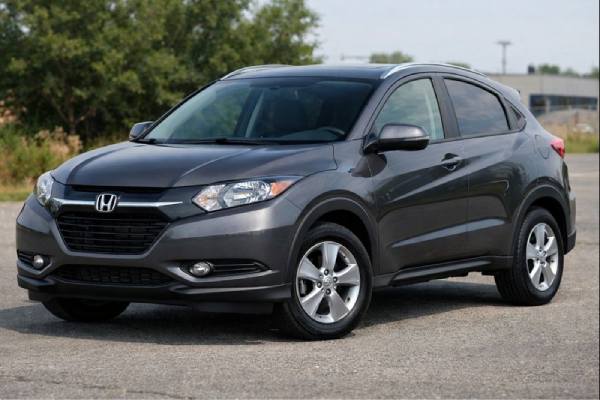
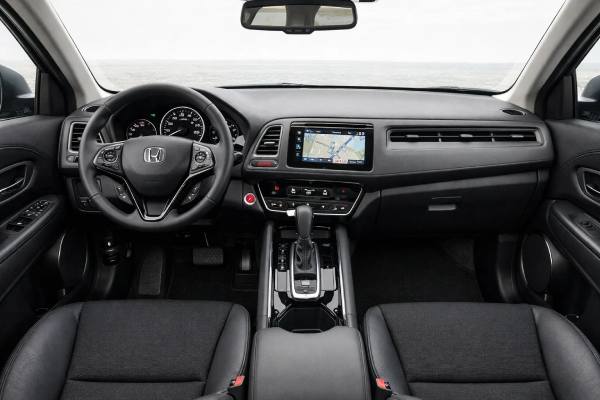
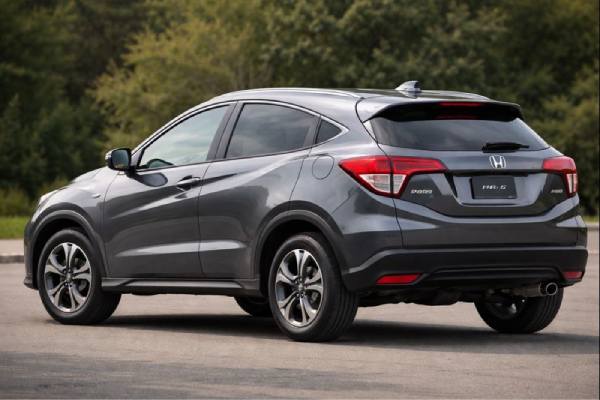
The 2015–2018 Honda HR-V RU6 with the 1.8-litre R18Z9 and Real Time AWD is best understood as a practical, efficiency-first crossover with a clever traction safety net. It keeps the familiar Honda strengths—simple naturally aspirated power, good packaging, and predictable running costs—while adding an on-demand rear drive system that helps most in wet weather, gravel, and light snow. The trade-off is mild: more weight, more driveline fluids to service, and slightly higher fuel use than an equivalent front-wheel-drive model.
If you want a compact car footprint with a taller seating position, a flexible cargo area, and “set-and-forget” mechanicals, this version can be a strong long-term pick. The key is buying one that has been maintained on schedule—especially CVT and rear differential fluids—and verifying recalls by VIN.
Owner Snapshot
- Real Time AWD adds confidence on slick roads without the complexity of a full-time 4×4 system.
- The R18Z9 is a straightforward, low-stress engine that rewards consistent oil changes and clean air filtration.
- Practical cabin packaging and a boxy cargo area make it easy to live with in cities and on weekends.
- Budget for extra driveline servicing (CVT fluid and rear diff fluid) compared with FWD versions.
- Plan on engine oil and filter service about every 10,000–15,000 km (6,000–9,000 mi) or 12 months, depending on use.
Section overview
- RU6 AWD ownership profile
- R18Z9 specs and capacities
- Equipment, trims, and safety tech
- Known issues and fixes
- Maintenance plan and buying tips
- Road feel and real economy
- RU6 AWD versus rivals
RU6 AWD ownership profile
This HR-V variant pairs Honda’s familiar 1.8-litre R-series engine with a reactive all-wheel-drive system designed for everyday traction, not rock crawling. Think of it as a front-wheel-drive car most of the time. When the front tyres slip, a clutch pack sends some torque rearward to stabilize the car and help it pull away cleanly. That makes it especially useful for steep, wet driveways; cold, slushy city streets; muddy campsites; and gravel roads where a FWD crossover can feel nervous.
The R18Z9 itself is a naturally aspirated (non-turbo) engine, which matters for ownership. There’s no turbo heat management, no intercooler plumbing, and typically fewer high-cost “boost” repairs. The upside is steady reliability and predictable maintenance. The downside is that performance is adequate rather than punchy—especially with the added AWD weight and a CVT that prioritizes smoothness over drama.
Where owners tend to be happiest is day-to-day livability. The HR-V’s tall roofline and smart interior packaging make it easy to carry bulky items, load child seats, or travel with pets. Visibility is generally good for the class, and the driving position suits long commutes.
The make-or-break factor is condition and service history. This model relies on clean fluids for the CVT and rear driveline. If those services were skipped, you can inherit judder, noise, or expensive wear. If they were done on time, the drivetrain usually feels quiet, smooth, and consistent. Before purchase, prioritize a car with invoices for CVT fluid changes, rear differential services (AWD only), and evidence that recall work was completed.
R18Z9 specs and capacities
Below are practical specs for the RU6 AWD with the 1.8-litre R18Z9. Exact figures can vary by market, tyre size, and trim, so treat the tables as a best-fit technical snapshot and verify against your VIN-specific documentation.
Powertrain and efficiency
| Item | Spec |
|---|---|
| Engine code | R18Z9 |
| Layout | Inline-4 (I-4), naturally aspirated |
| Valvetrain | SOHC, i-VTEC |
| Displacement | 1.8 L (1,799 cc) |
| Bore × stroke | 81.0 × 87.3 mm (3.19 × 3.44 in) |
| Fuel system | PFI/MPFI (market dependent wording) |
| Compression ratio | ~10.6:1 (varies by calibration) |
| Max power | 141 hp (105 kW) @ ~6,500 rpm |
| Max torque | ~172 Nm (127 lb-ft) @ ~4,300 rpm |
| Timing drive | Chain |
| Rated efficiency (typical) | ~7.0–7.8 L/100 km (33–29 mpg US / 40–36 mpg UK) |
| Real-world highway @ 120 km/h (75 mph) | ~7.2–8.2 L/100 km (33–29 mpg US / 39–34 mpg UK) |
Transmission and driveline
| Item | Spec |
|---|---|
| Transmission | CVT (market-dependent programming; often with “step” logic) |
| Drive type | Real Time AWD (on-demand rear engagement) |
| Differential | Open front; clutch-coupled rear drive unit (no low-range) |
Chassis and dimensions (typical RU platform)
| Item | Spec |
|---|---|
| Suspension (front / rear) | MacPherson strut / torsion beam (AWD packaging can vary by market) |
| Brakes (front / rear) | Disc / disc (diameters vary by trim) |
| Wheels/tyres (common) | 215/55 R17 or 205/60 R16 (market dependent) |
| Ground clearance | ~170 mm (6.7 in) (varies with tyres and market) |
| Length / width / height | ~4,294 / 1,772 / 1,605 mm (169.1 / 69.8 / 63.2 in) |
| Wheelbase | ~2,610 mm (102.8 in) |
| Turning circle | ~11.4 m (37.4 ft) |
| Curb weight | ~1,350–1,450 kg (2,980–3,200 lb) depending on trim |
Performance and capability (realistic expectations)
| Item | Spec |
|---|---|
| 0–100 km/h (0–62 mph) | ~10.0–11.5 s (AWD usually toward slower end) |
| Top speed | ~180–195 km/h (112–121 mph) (market dependent) |
| Roof load | Commonly 50–75 kg (110–165 lb), depending on rails and market |
Fluids and service capacities (decision-useful values)
| System | Spec and typical capacity |
|---|---|
| Engine oil | 0W-20 (API/ILSAC as specified); ~3.7 L (3.9 US qt) with filter |
| Coolant | Honda-type long-life coolant; ~5.0–5.5 L (5.3–5.8 US qt) total system |
| CVT fluid | Honda CVT fluid; drain-and-fill quantity often ~3.5–4.0 L (3.7–4.2 US qt) |
| Rear differential (AWD) | Honda AWD/DPSF-type fluid; typically ~1.1–1.3 L (1.2–1.4 US qt) |
| Brake fluid | DOT 3 or DOT 4 as specified; flush by time, not mileage |
| A/C refrigerant | R-134a on most markets/years; charge varies by label |
Electrical (common service items)
| Item | Spec |
|---|---|
| 12V battery | Typically 45–60 Ah class (size varies by market) |
| Spark plugs | Iridium-type plugs are common; confirm part number by VIN |
| Plug gap | Usually preset for iridium; verify in service data |
Safety baseline (what to look for)
| Item | Notes |
|---|---|
| Core systems | ABS, stability control, traction control (standard in most markets) |
| Airbags | Front, side, and curtain coverage common; count varies by market |
| Crash ratings | Check by year, test protocol, and equipment package |
Equipment, trims, and safety tech
Trim naming varies widely by market, but the RU6 AWD generally follows a familiar ladder: a base grade focused on value, a mid grade with comfort and infotainment upgrades, and a top grade with appearance and convenience features. What matters most for buyers is not the badge on the tailgate, but the mechanical and safety differences that change ownership.
What typically changes by trim (practical view):
- Wheels and tyres: Larger wheels can sharpen steering response but increase tyre cost and road noise. If you prioritize comfort and winter traction, a smaller wheel with a taller tyre sidewall often rides better.
- Lighting: Upgraded headlights can be a real safety improvement on unlit roads. Check beam pattern and lens condition; haze on older lenses can cut usable light dramatically.
- Cabin features: Heated seats, climate control type, keyless entry, and parking sensors often cluster in the middle and upper trims. These affect day-to-day satisfaction more than resale “spec-sheet wins.”
- Infotainment: Screen size, navigation, and audio upgrades vary. Make sure all inputs (USB, Bluetooth, camera) work correctly; retrofitting can be expensive.
Quick identifiers when you’re shopping:
- Wheel design and tyre size can reveal trim level at a glance.
- Headlight housings (projector-style vs reflector) often signal higher grades.
- Interior controls (manual HVAC knobs vs automatic climate panel) are another easy tell.
- VIN and build plate are the final authority—use them to confirm drive type, engine code, and original equipment.
Safety ratings and what they mean here
The RU-generation HR-V earned strong safety reputations in many regions, but ratings are only comparable when you match the year and the test protocol. A five-star result under one system or year isn’t identical to a later-year five-star result with tougher requirements.
What you should do as an owner or buyer:
- Look up ratings for the exact year and body style tested in your region.
- Confirm whether optional safety packs were fitted (some tests assume or require certain systems).
- Check tyre condition and alignment—real-world stopping and stability can suffer more from poor tyres than from the absence of a single feature.
Driver assistance and calibration realities
Many 2015–2018 HR-Vs rely mainly on “foundational” safety systems—ABS and stability control—rather than modern radar-and-camera suites. If your vehicle does have camera-based lane support or collision mitigation (market dependent), keep two things in mind:
- Windshield replacement and front-end repairs may require recalibration.
- Sensor cleanliness and correct tyre sizing matter; mismatched tyres can confuse stability control and AWD engagement logic.
For RU6 AWD models, stability control and the AWD system work together. When grip is low, the AWD can help you move forward, but stability control is what helps you stay pointed in the right direction. Treat good tyres as your primary safety upgrade.
Known issues and fixes
No used car is perfect, but the RU6 AWD has a fairly predictable set of aging patterns. The best way to think about problems is by prevalence and cost tier, then match them to mileage and usage.
Common (low to medium cost)
- CVT fluid wear (common, medium cost if ignored)
Symptoms: judder on takeoff, “rubber band” flare that feels worse over time, shudder at low speed.
Likely cause: old or overheated CVT fluid; sometimes learned shift behavior that benefits from a reset after service.
Remedy: drain-and-fill with the correct CVT fluid at sensible intervals; avoid universal fluids. If symptoms persist, ask for a diagnostic scan and confirm there are no belt/pulley pressure control issues. - Rear differential / AWD fluid neglect (AWD-only, common, low to medium cost)
Symptoms: groan, chatter, or binding sensation during tight parking-lot turns; intermittent rear “thump” on engagement.
Likely cause: degraded rear drive unit fluid; friction modifiers depleted.
Remedy: service the rear differential with the correct Honda-specified fluid. Many “mystery noises” disappear after proper fluid replacement. - Front suspension wear (common, low to medium cost)
Symptoms: clunks over bumps, vague steering, uneven tyre wear.
Likely cause: worn stabilizer links, control arm bushings, or strut mounts (age and rough roads accelerate wear).
Remedy: replace worn components, then align. Don’t skip alignment—fresh parts won’t help if toe is off.
Occasional (medium cost)
- Wheel bearing noise
Symptoms: humming that rises with speed and changes slightly with steering load.
Remedy: replace the affected hub/bearing assembly. Catching it early prevents collateral tyre wear. - A/C performance drop
Symptoms: weak cooling at idle, intermittent temperature control.
Likely cause: refrigerant loss, condenser damage, or compressor wear.
Remedy: leak test first; avoid “top-off” guesses.
Rare but expensive (high cost)
- CVT internal wear
Symptoms: persistent slip codes, harsh engagement, metallic noise, refusal to accelerate normally.
Likely cause: long-term fluid neglect, overheating, or high-load use on old fluid.
Remedy: professional diagnosis; repair vs replacement depends on local support and parts availability.
Service actions, recalls, and how to verify
Because recall campaigns can affect safety-critical items (including airbags on many vehicles of this era), treat recall verification as mandatory:
- Run a VIN check through official recall databases and keep proof of completion.
- Ask the seller for dealer invoices or a printout of campaign completion.
- If the car recently changed regions, verify recalls in both the original and current market databases when possible.
A clean recall history does not guarantee perfection, but it reduces the risk of inheriting a known safety defect.
Maintenance plan and buying tips
A simple maintenance plan is the difference between an HR-V that feels “tight” at 200,000 km and one that becomes noisy, inefficient, and expensive. The RU6 AWD adds one key rule: service the AWD driveline fluids on time.
Practical maintenance schedule (distance or time, whichever comes first)
| Item | Interval (typical) | Notes |
|---|---|---|
| Engine oil and filter | 10,000–15,000 km (6,000–9,000 mi) or 12 months | Short trips and cold climates justify shorter intervals |
| Engine air filter | Inspect every 15,000–20,000 km; replace as needed | Dusty regions need more frequent service |
| Cabin air filter | 15,000–20,000 km or 12 months | Helps HVAC performance and reduces fogging |
| CVT fluid | 40,000–60,000 km (25,000–37,000 mi) | Earlier if heavy city use, hills, or heat |
| Rear differential fluid (AWD) | 30,000–50,000 km (19,000–31,000 mi) | Especially important if you hear tight-turn groan |
| Brake fluid | Every 2–3 years | Moisture buildup reduces braking consistency |
| Coolant | Follow the long-life interval in your manual | Don’t mix coolant types |
| Spark plugs | 100,000–160,000 km (60,000–100,000 mi) | Confirm exact interval by market |
| Tyre rotation | 8,000–12,000 km (5,000–7,500 mi) | AWD benefits from even tyre wear |
| Alignment check | Yearly or after suspension work | Prevents expensive tyre wear |
| 12V battery test | Annually after year 4 | Replace proactively if weak before winter |
Fluids, specs, and “don’t guess” rules
- Use the correct CVT fluid specified for the transmission. CVTs are sensitive to friction characteristics; the wrong fluid can create judder and wear.
- Use the correct rear differential/AWD fluid. If you’re not sure, confirm by VIN at a dealer parts counter.
- Stick to the oil viscosity grade shown on the oil cap/label. Modern engines are built around specific viscosity for timing chain lubrication and fuel economy.
Essential torque values (common decision-useful fasteners)
These are typical values used on many Honda applications; confirm for your exact VIN:
- Wheel lug nuts: ~108 Nm (80 lb-ft)
- Engine oil drain plug: ~40 Nm (30 lb-ft)
- Spark plugs (iridium): commonly ~18–25 Nm (13–18 lb-ft), depending on plug type and seat design
Buyer’s guide: what to inspect in 20 minutes
- Cold start: listen for abnormal rattles, then watch idle stability.
- CVT behavior: smooth takeoff, no shudder, no delayed engagement selecting Drive/Reverse.
- Tight-turn test (AWD check): slow full-lock circles in a car park; note any groan or binding.
- Undercarriage: look for oil seepage, torn CV boots, and corrosion at seams and subframes.
- Tyres: match brand/model and similar tread depth on all corners; mismatched tyres can stress AWD systems.
- Service proof: CVT and rear diff invoices matter more than “regular oil changes.”
Long-term durability outlook is strong when you buy a maintained example. Neglect tends to show up first as driveline noise, CVT feel changes, and accelerated tyre wear.
Road feel and real economy
On the road, the RU6 AWD drives like a tall hatchback rather than a heavy SUV. Steering is tuned for ease, the suspension is designed to handle broken city pavement without feeling busy, and the chassis is stable at motorway speeds. It won’t feel sporty in the way a hot hatch does, but it generally feels secure and predictable—exactly what many owners want.
Ride, handling, and NVH
- Ride: Most trims strike a sensible balance. Larger wheels can add sharp impacts over potholes, so choose wheel size based on your roads.
- Handling: Body roll is present but controlled. In quick lane changes, stability control is well matched to the chassis.
- Noise: Expect moderate road and wind noise at highway speeds. Tyre choice makes a bigger difference than most owners expect—aggressive tread patterns can noticeably increase cabin hum.
Powertrain character
The 1.8-litre engine is smooth and happiest when driven with a light foot. With a CVT, acceleration feels linear rather than stepped. Under full throttle, the engine may hold higher rpm to maintain power—normal behavior for a CVT, but not always pleasant if you’re sensitive to sound.
The AWD system is usually invisible until you need it. In rain or on gravel, you may feel the car “hook up” more cleanly instead of spinning the front tyres. What it will not do is behave like a full-time off-road system: there is no low-range gearing, and sustained wheelspin can trigger thermal protection that reduces rear assist until things cool down.
Real-world fuel economy
Compared with FWD, AWD versions typically use a bit more fuel due to added mass and driveline drag. Realistic expectations for a healthy vehicle on quality tyres:
- City: ~8.0–9.5 L/100 km (29–25 mpg US / 35–30 mpg UK)
- Highway (100–120 km/h): ~7.0–8.2 L/100 km (34–29 mpg US / 40–34 mpg UK)
- Mixed: ~7.6–8.8 L/100 km (31–27 mpg US / 37–32 mpg UK)
Cold weather can add a meaningful penalty because the engine runs richer during warm-up and winter tyres increase rolling resistance. If you want the best real-world economy, keep tyres properly inflated, service the air filter and spark plugs on time, and avoid carrying unnecessary cargo weight.
RU6 AWD versus rivals
The RU6 AWD HR-V sits in a crowded field of small crossovers. Its strongest angle is balanced ownership: low drama, good packaging, and a traction system that improves daily confidence without pushing you into a heavier, more complex SUV.
Versus Subaru Crosstrek (full-time AWD emphasis)
A Crosstrek-style rival usually offers a more AWD-centric identity—often with greater ground clearance and a drivetrain designed to send power rearward more consistently. The Honda’s advantage is typically efficiency and a lighter, city-friendly feel. If you regularly drive unpaved roads or deep snow, the Subaru-type approach can be worth it. If you mostly want “extra help when it’s slippery,” the Honda system is usually enough.
Versus Mazda CX-3 / similar sporty subcompact crossovers
Mazda-like rivals tend to feel sharper in steering and body control. The HR-V usually counters with a more spacious cabin and cargo flexibility. For drivers who prioritize responsive handling over interior versatility, the Mazda approach can win. For owners who carry bikes, strollers, or bulky loads, the HR-V’s packaging is often the deciding factor.
Versus Jeep Renegade / style-forward, heavier-duty options
Rivals with a tougher image can offer genuine off-road features in certain trims, but they often bring higher fuel use, more weight, and sometimes more variable long-term reliability depending on engine and gearbox. The Honda’s selling point is consistency: fewer surprises, easier maintenance planning, and generally strong day-to-day refinement.
Versus Toyota C-HR (efficiency and simplicity, often FWD)
Some competitors focus on efficiency and styling but may not offer AWD in the same way (or at all, depending on year/market). If AWD is important for your climate, the RU6 becomes more attractive. If AWD is not important, a FWD rival might deliver similar running costs with fewer driveline services.
The quick verdict
Choose the RU6 AWD HR-V if you want:
- A compact crossover that’s easy to park and easy to own
- A naturally aspirated engine that rewards routine maintenance
- AWD that helps on bad-weather days, not an off-road mission profile
Consider a different rival if you need:
- Consistent torque to all wheels for frequent rough-road driving
- More power for high-speed passing with a full load
- A modern, fully featured ADAS suite as standard (depending on your market)
References
- Honda Owners Manuals | Honda HR-V | Owners | Honda UK 2026 (Owner’s Manual)
- Vehicle Detail Search – 2016 HONDA HR-V SUV FWD#recalls | NHTSA 2016 (Recall Database)
- 2016 Honda HR-V 4-door SUV 2016 (Safety Rating)
- All-Wheel Drive System Real Time AWD|Honda Technology|Honda 2026 (Technical Guide)
- Euro NCAP | Press Release Nov. 2015 – Top Marks for Audi and Honda 2015 (Safety Rating)
Disclaimer
This article is for informational purposes only and is not a substitute for professional inspection, diagnosis, or repair. Specifications, torque values, service intervals, and procedures vary by VIN, market, and equipment. Always verify details using your vehicle’s official service and owner documentation before purchasing parts or performing work.
If this guide helped, please consider sharing it on Facebook, X (Twitter), or your favorite forum to support our work.