

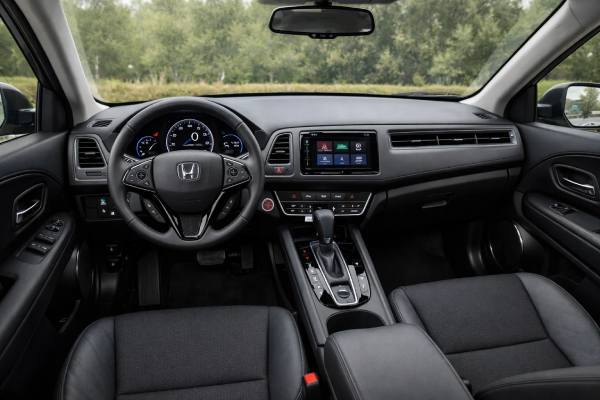

The 2015–2018 Honda HR-V (RU8) with the 1.6 i-DTEC (engine code N16A) is a very specific take on the compact crossover: built for long-distance efficiency and relaxed torque rather than quick acceleration. In the real world, this HR-V works best for owners who do steady motorway miles, want fewer fuel stops, and value Honda’s practical cabin packaging. It is also a car that rewards the “right use case” more than most—because modern diesel emissions hardware can suffer if the vehicle lives on short trips or never reaches full operating temperature.
Get the basics right—correct oil specification, on-time fuel and air filtration, and a sensible driving pattern that allows proper diesel particulate filter (DPF) regeneration—and the RU8 i-DTEC can be a durable, economical daily. Ignore those fundamentals, and it becomes an expensive lesson in aftertreatment maintenance.
What to Know
- Strong mid-range pull makes it easy to merge and overtake without revving hard.
- Excellent rated economy for its era; best results come on steady-speed motorway driving.
- Cabin packaging is a real advantage: useful boot space and flexible rear-seat layout for the class.
- Short-trip use can trigger DPF and EGR issues; plan regular longer runs to keep the system healthy.
- Change engine oil and filter about every 12 months or 10,000–15,000 km (6,000–9,000 mi) for conservative long-term wear control.
Guide contents
- RU8 diesel ownership profile
- N16A specs and capacities
- Equipment, trims, and safety tech
- Common diesel issues and campaigns
- Maintenance plan and buyer checks
- Road feel and real economy
- RU8 diesel versus compact rivals
RU8 diesel ownership profile
Think of the RU8 1.6 i-DTEC HR-V as a “high-efficiency commuter crossover.” You buy it for torque, range, and everyday practicality, not because you want hot-hatch responses. The diesel fits the HR-V’s design brief surprisingly well: it makes the car feel calm and capable at 80–120 km/h (50–75 mph), where you spend less time shifting and more time letting the engine pull.
The big engineering story is that this model blends Honda’s smart packaging with a modern small-displacement turbo diesel. In practice, that means:
- Easy long-distance pace: the engine’s torque arrives low, so the car doesn’t need big revs to maintain speed on grades.
- Economy that depends on use: motorway and mixed driving can be excellent, while repeated cold starts and stop-start errands are the hardest pattern for the emissions system.
- Chassis tuned for stability: the HR-V rides with a firm-but-controlled feel on typical European wheels and tyres. It is more “secure” than “playful,” which most owners prefer in poor weather.
Where this HR-V can catch buyers out is not the basic engine block—Honda diesels can be robust—but the aftertreatment and airflow systems around it. The diesel particulate filter (DPF), exhaust gas recirculation (EGR), sensors, and turbo control hardware do real work and need the right conditions to stay healthy. If you rarely do sustained drives, soot loading rises and the car may attempt more frequent regeneration cycles. That can mean elevated idle, cooling fans running, and in some cases warning lights or limp mode if a regeneration cannot complete.
If you shop for one today, treat it like a system: engine, turbo, EGR, DPF, clutch/dual-mass flywheel, and cooling all matter. A well-driven, well-serviced RU8 diesel can be a very satisfying “grown-up” compact crossover. A neglected one can quickly become a chain of expensive fixes.
N16A specs and capacities
Below are model-relevant specs for the 2015–2018 HR-V (RU8) 1.6 i-DTEC (N16A). Exact values can vary slightly by market, wheel/tyre package, and emissions calibration. Treat the tables as decision-grade guidance and verify anything critical (fluids, torque values, procedures) against official documentation for your VIN.
Powertrain and efficiency
| Item | Specification |
|---|---|
| Engine code | N16A (1.6 i-DTEC) |
| Layout | Inline-4 turbo diesel |
| Valvetrain | DOHC, 16 valves |
| Displacement | 1.6 L (1,597 cc) |
| Induction | Turbocharged |
| Fuel system | Common-rail direct injection |
| Max power | 120 hp (88 kW) @ rpm (varies by market calibration) |
| Max torque | ~300 Nm (221 lb-ft) (typical for 1.6 i-DTEC tune) |
| Timing drive | Typically timing chain (verify by VIN/engine variant) |
| Rated efficiency (era rating) | ~4.0–4.4 L/100 km (64–74 mpg UK equivalent), depending on wheels/tyres and rating cycle |
| Real-world highway @ 120 km/h (75 mph) | Often ~5.0–5.8 L/100 km (49–57 mpg US / 41–47 mpg UK), weather and load dependent |
| Aerodynamics | Cd / frontal area not consistently published across markets |
Transmission and driveline
| Item | Specification |
|---|---|
| Transmission | Commonly 6-speed manual (market dependent) |
| Drive type | FWD |
| Differential | Open (traction managed by brake-based stability/traction control) |
Chassis and dimensions
| Item | Specification |
|---|---|
| Suspension (front/rear) | Strut / torsion beam (typical for class and packaging) |
| Brakes | Ventilated front discs / rear discs or drums (varies by market and trim; verify) |
| Wheels/tyres | Often 215/60 R16 or 215/55 R17 (market/trim dependent) |
| Length | ~4,295 mm (169.1 in) |
| Width (mirrors) | ~2,019 mm (79.5 in) |
| Height | ~1,605 mm (63.2 in) |
| Wheelbase | ~2,610 mm (102.8 in) |
| Turning circle | ~10.6–11.4 m (34.8–37.4 ft), depending on wheel/tyre |
| Kerb weight | ~1,324–1,404 kg (2,919–3,095 lb) |
| Fuel tank | ~50 L (13.2 US gal / 11.0 UK gal) |
| Cargo volume | ~470 L (16.6 ft³) seats up; ~1,533 L (54.1 ft³) seats down (method varies by market) |
Performance and capability
| Item | Specification |
|---|---|
| 0–100 km/h (0–62 mph) | ~10.1 s (typical published figure for 1.6 i-DTEC) |
| Top speed | ~192 km/h (119 mph) |
| Towing | Market dependent; check the VIN plate and handbook (diesel models often have useful towing ratings, but it varies a lot by approval spec) |
| Roof load | Check owner documentation; varies with roof system and market approval |
Fluids and service capacities (verify for your VIN)
| Item | Specification (typical guidance) |
|---|---|
| Engine oil | Low-ash diesel spec oil (commonly ACEA C2/C3 depending on market); viscosity often 0W-30 or 5W-30 |
| Oil capacity | Commonly ~3.5–4.0 L with filter (verify) |
| Coolant | Long-life OAT coolant (Honda Type 2 in many markets), pre-mixed or specified mix ratio |
| Manual gearbox oil | Honda MTF equivalent; capacity often ~1.6–2.0 L (verify) |
| Brake fluid | DOT 4 (typical) |
| A/C refrigerant | R-134a on many vehicles of this era; charge varies by system label |
| Key torque specs | Wheel nuts commonly ~108 Nm (80 lb-ft) on many Hondas; verify for your specific wheels/hubs |
Electrical
| Item | Specification |
|---|---|
| 12 V battery | Typically ~60 Ah class (varies by climate package) |
| Starting system | Diesel glow plugs (no spark plugs) |
| Alternator | Output varies by equipment and climate package |
Safety and driver assistance
| Item | Specification |
|---|---|
| Crash ratings | Euro NCAP: 5 stars for HR-V in this generation’s test era (see safety section for details) |
| ADAS suite | Trim dependent; many markets offered forward-collision warning and braking support, lane-departure warning, and traffic sign recognition (availability varies by year and grade) |
Equipment, trims, and safety tech
The RU8 diesel HR-V was usually sold in familiar Honda “grade ladder” form: a practical base trim, a comfort-focused mid trim, and a high trim with the bulk of the convenience and safety technology. Names differ by country (for example, S/SE/SR/EX style naming in some markets), so your best approach is to decode the vehicle by features, not just badge.
Trims and options that matter for ownership
The most meaningful differences for a used buyer are often not cosmetic:
- Wheel and tyre package (16 vs 17 inch): affects ride comfort, steering effort, turning circle, and real-world economy. Smaller wheels typically ride better and can be slightly more efficient.
- Infotainment generation: early systems can feel dated and may be sensitive to battery condition and software stability. Confirm Bluetooth pairing, microphone quality, and screen responsiveness on a cold start.
- Climate equipment: dual-zone climate and heated seats (if fitted) change alternator load and winter comfort. Check that the heater output is strong once warm; weak heat can hint at thermostat issues.
- Parking sensors and camera: helpful because the HR-V’s rear visibility can be “crossover-average.” Verify sensor consistency and that the camera image is clear and stable.
Quick identifiers are often more reliable than trim names:
- Steering wheel buttons and cluster menus: higher grades often have more driver-assist toggles and display pages.
- Windscreen camera or radar area: some safety systems require a camera module behind the mirror or a sensor zone in the grille.
- Headlamp type: projector or LED upgrades can be tied to higher trims; confirm both beams work and aim correctly.
Safety ratings and what they mean
In the relevant Euro NCAP period, the HR-V achieved a five-star overall rating, reflecting good occupant protection and a structure designed to manage crash forces effectively for the class. Keep in mind that:
- Ratings are tied to test protocols of the year, so you should compare a 2015-era five-star result to other vehicles from the same time window, not to today’s stricter criteria.
- Equipment level can influence safety assist scoring if advanced braking or warning systems are standard on the tested configuration.
Safety systems and ADAS reality check
Most RU8 diesels include the core safety fundamentals:
- Front, side, and curtain airbags (exact count varies by market)
- ABS and electronic stability control (ESC)
- ISOFIX/LATCH child-seat anchors (positions depend on market configuration)
Optional or trim-linked systems often include:
- Forward-collision warning and autonomous braking support: helpful in urban traffic, but sensor alignment and windscreen condition matter. After a windscreen replacement, calibration may be required.
- Lane-departure warning: a driver aid, not lane centering. It typically alerts rather than steering.
- Traffic sign recognition and intelligent speed limiter functions: useful but can be confused by poor signage, weather, or faded road infrastructure.
When evaluating a used car, treat ADAS like any other system: check for warning lights, confirm functions can be enabled, and look for evidence of proper calibration after accident repair or glass replacement.
Common diesel issues and campaigns
No used diesel should be judged only by mileage. Age, driving pattern, and service quality matter as much. Below is a practical map of the issues that tend to define ownership cost on small modern diesels, grouped by prevalence and cost tier. (Exact frequency varies by market and maintenance habits.)
Common: emissions and airflow side-effects (medium cost if early, high if ignored)
- DPF loading and incomplete regeneration
Symptoms: DPF warning, rising idle speed, cooling fan running after shutdown, reduced power, frequent “regen smell,” poorer economy.
Likely cause: short trips, low-speed driving, incorrect oil spec (too much ash), failed temperature/pressure sensor.
Remedy: confirm forced regeneration capability with a proper scan tool, fix underlying sensor issues, and correct driving pattern. Avoid repeated interrupted regenerations. - EGR valve and intake contamination
Symptoms: hesitation, uneven idle, flat response, smoke under load, fault codes.
Likely cause: soot and oil mist buildup, especially in stop-start urban duty.
Remedy: cleaning or replacement depending on severity; check for software updates that improve EGR strategy.
Occasional: turbo control and boost leaks (medium to high cost)
- Turbo actuator or boost control faults
Symptoms: limp mode, underboost/overboost codes, whistle changes, inconsistent power.
Likely cause: actuator wear, sticky vanes (duty-cycle dependent), vacuum/boost hose leaks.
Remedy: smoke test for leaks, confirm actuator operation and requested vs actual boost, address mechanical issues early to protect the turbocharger.
Occasional: fuel system sensitivity (medium cost)
- Injector balance or leak-off issues
Symptoms: hard starting, rough cold idle, diesel knock, smoke, poor economy.
Likely cause: injector wear, contaminated fuel, poor filtration discipline.
Remedy: proper diagnostic balance testing; address filtration and fuel quality; replace affected injectors if confirmed.
Occasional: clutch and dual-mass flywheel wear (high cost)
- Clutch slip or DMF rattle
Symptoms: vibration at idle, chatter when shutting off, slipping under torque in higher gears, noisy engagement.
Likely cause: high torque at low rpm, towing, aggressive launches, city driving.
Remedy: clutch and DMF replacement as a set is common; evaluate gearbox input shaft and mounts at the same time.
Rare but important: cooling and sensor issues (medium cost, can become high)
- Thermostat stuck open
Symptoms: slow warm-up, weak cabin heat, higher fuel use, frequent regeneration attempts in winter.
Likely cause: thermostat wear.
Remedy: replace thermostat; verify coolant condition and bleeding procedure. - NOx/temperature/pressure sensor faults
Symptoms: warning lights, emissions-related codes, forced limp strategies.
Remedy: diagnose with OEM-level scanning where possible; avoid guessing—sensor replacement without confirmation can get expensive quickly.
Recalls, TSBs, and extended coverage
Campaigns vary by country and VIN range. The correct workflow is:
- Run an official VIN check (manufacturer or national recall database where available).
- Confirm completion with dealer history or paperwork, not just dashboard status.
- Ask specifically about emissions-related software updates if you see drivability complaints or repeated warning lights.
If you buy privately, budget for a full diagnostic scan and a “baseline service” unless the seller can prove recent, correct maintenance with receipts.
Maintenance plan and buyer checks
A used RU8 diesel is easiest to keep healthy if you maintain it like a diesel—not like a simple petrol runabout. The goal is clean oil, clean air, clean fuel, stable cooling, and an aftertreatment system that actually gets the heat it needs.
Practical maintenance schedule (conservative, owner-friendly)
Use the vehicle’s maintenance minder where fitted, but the schedule below is a strong baseline for long-term ownership:
- Engine oil and filter: every 10,000–15,000 km (6,000–9,000 mi) or 12 months. Short-trip use and cold climates justify the shorter end. Always use the correct low-ash diesel oil specification for DPF protection.
- Air filter: inspect every service; replace typically 20,000–30,000 km (more often in dusty areas).
- Cabin filter: every 12 months for HVAC performance and demisting.
- Fuel filter: commonly 40,000–60,000 km (or per handbook). This is cheap insurance for injectors and high-pressure components.
- Coolant: usually long-life; replace by 5 years then per interval. Inspect hoses and radiator condition annually.
- Brake fluid: every 2 years regardless of mileage.
- Manual gearbox oil: refresh around 80,000–120,000 km if you want smoother shifting and long synchronizer life, especially with city use.
- DPF health: no “replace interval,” but do a monthly sustained drive if your routine is mostly urban—around 20–30 minutes at steady speed once fully warm is a simple habit that helps regeneration complete.
- 12 V battery test: annually from year 5 onward; weak batteries cause strange infotainment and sensor behavior.
Buyer’s guide: what to inspect before purchase
Bring a scan tool (or pay a specialist) and work through this checklist:
- Cold start behavior: should start cleanly, settle quickly, and not hunt for idle. Excess smoke or heavy knocking deserves investigation.
- DPF and EGR evidence: ask about warning lights, forced regenerations, or repeated sensor replacements. Look for invoices, not stories.
- Cooling performance: the car should reach operating temperature in a reasonable time and hold it steady on the motorway.
- Clutch and DMF: test low-speed take-up in 2nd gear, listen for rattles at idle, and feel for vibration during shutdown.
- Turbo response: full-throttle pull in a high gear should be smooth and consistent, without limp mode or sudden flat spots.
- Underside corrosion and exhaust condition: check flanges, heat shields, and brake/fuel lines, especially in salty winter regions.
- Tyres and alignment: uneven wear can point to neglected suspension bushings or alignment issues.
Which versions to seek (and which to avoid)
- Seek: cars with a clear service history, regular motorway use, and evidence of correct oil specification. Modest mileage with the “right use pattern” is often better than ultra-low mileage used only for short trips.
- Be cautious: “city-only diesel” examples, cars with repeated warning lights, or vehicles with mismatched tyres and questionable accident repairs that could affect ADAS calibration.
Long-term durability is realistic if you keep the emissions system happy and don’t stretch oil changes. The RU8 diesel is not fragile—but it is not tolerant of neglect.
Road feel and real economy
On the road, the RU8 1.6 i-DTEC is defined by torque delivery and composure. The engine doesn’t encourage you to chase the redline; instead, it rewards early upshifts and steady throttle. In daily use, that feels mature—especially if you do lots of motorway driving.
Ride, handling, and NVH
- Ride quality: on 16-inch wheels, the HR-V generally feels more forgiving over broken surfaces. On 17s, impacts can be sharper, but body control tightens slightly.
- Handling balance: predictable and safe. The rear torsion beam layout prioritizes space and stability; it won’t rotate like a sporty hatch, but it also doesn’t feel nervous at speed.
- Steering: light to moderate effort, designed for easy urban maneuvering. Feedback is adequate rather than chatty.
- Noise and refinement: diesel clatter is most noticeable on cold start and under load at low rpm. Once warm and cruising, wind and tyre noise are often more prominent than engine noise.
Powertrain character
The turbo diesel’s strength is the mid-range. It tends to:
- Pull confidently from low-to-mid rpm, reducing the need for frequent downshifts.
- Feel less responsive if you demand sudden acceleration at very low rpm in a high gear—downshifting still matters if you want brisk overtakes.
- Pair best with smooth, deliberate shifting. Avoid lugging the engine at very low rpm under heavy load; it is harder on the clutch/DMF and can increase soot.
Real-world economy expectations
Your results will vary heavily by driving pattern, temperature, and tyre choice, but these are realistic owner-style ranges:
- City-heavy, cold weather: ~6.0–7.2 L/100 km (33–39 mpg US / 39–47 mpg UK)
- Mixed driving: ~5.0–6.2 L/100 km (38–47 mpg US / 46–56 mpg UK)
- Motorway 110–120 km/h steady: often ~5.0–5.8 L/100 km (41–47 mpg US / 49–57 mpg UK)
The “diesel trick” is consistency: steady speed, fully warmed engine, and fewer short cold cycles. If you do mainly short trips, a petrol HR-V often makes more financial sense even if it uses more fuel, because it avoids the most expensive diesel aftertreatment risks.
Traction and control
As a FWD diesel, grip depends mostly on tyres and stability control tuning. In snow or heavy rain, a quality set of tyres matters more than almost anything else. If you routinely face steep, slippery hills, you may prefer an AWD alternative in the same class—but for most climates, good tyres and sensible driving are enough.
RU8 diesel versus compact rivals
The RU8 1.6 i-DTEC HR-V competes in a crowded space: compact crossovers that try to do family duty without full-size running costs. Its strongest argument today is still the same as when new: efficiency plus practicality, with Honda’s user-friendly packaging.
Where the RU8 diesel stands out
- Packaging and usability: the HR-V’s interior flexibility and cargo practicality are often class-leading for the footprint. If you regularly switch between passengers, bulky shopping, and weekend loads, it’s a real advantage.
- Motorway efficiency mindset: compared with many small turbo petrol rivals of the same era, the diesel can feel more relaxed at speed and may deliver better steady-state economy for high-mileage users.
- Predictable driving manners: it’s easy to place, stable at speed, and not overly complex to operate.
Where rivals can be a smarter buy
- If you do short trips: many modern petrol competitors (and some hybrids) will be cheaper to keep healthy in city-only use. They may cost more in fuel, but they often cost less in emissions-related repairs.
- If you want stronger performance: some rivals offer more power with turbo petrol engines, and later hybrids deliver quicker step-off response around town.
- If you prioritize the newest safety tech: newer competitors (even within the same model class) may have more advanced lane centering, adaptive cruise control, and upgraded lighting performance.
The best “rival” depends on your driving pattern
If your week includes frequent long drives, the RU8 diesel still makes a strong case. If your life is mostly school runs and short commutes, the same HR-V in petrol form—or a hybrid rival—often wins on total cost of ownership.
A helpful way to decide is to be honest about your monthly pattern:
- Two or more long motorway drives per month: the diesel’s strengths show and DPF health is easier to maintain.
- Mostly short urban loops: choose petrol or hybrid unless you are committed to regular regeneration-friendly drives.
In short, the RU8 i-DTEC is a “right tool for the job” vehicle. When the job matches the tool, it’s one of the most satisfying used crossovers to live with.
References
- Honda HR-V UK Press Kit 2015 (Press Kit)
- ALL-NEW HONDA HR-V SET TO BE AMONG MOST EFFICIENT IN CLASS 2015 (Press Release)
- New HR-V and Jazz latest Honda models to receive 5-star Euro NCAP Overall Safety Rating 2015 (Safety Rating)
- Euro NCAP | Press Release Nov. 2015 – Top Marks for Audi and Honda 2015 (Safety Rating)
- Honda Owners Manuals | Honda HR-V | Owners | Honda UK 2025 (Owner’s Manual)
Disclaimer
This article is for informational purposes only and is not a substitute for professional diagnosis, inspection, or repair. Specifications, torque values, service intervals, fluid capacities, and procedures can vary by VIN, market, model year, and equipment. Always verify details against official Honda documentation for your vehicle and follow qualified service guidance.
If you found this guide useful, please consider sharing it on Facebook, X (Twitter), or your favorite forum to help others find trustworthy ownership information.