

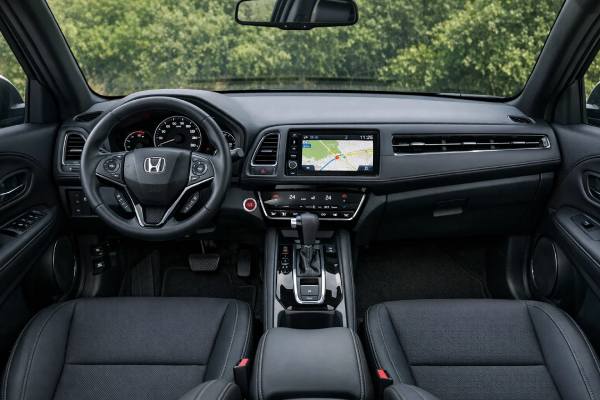
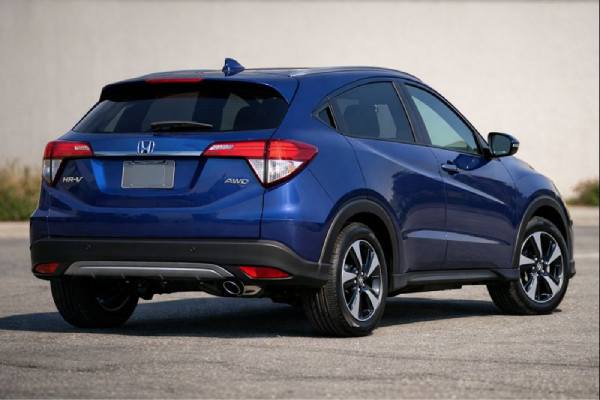
The 2019–2020 facelift Honda HR-V FWD (RU1) with the 1.5-liter L15Z is a “simple, efficient, and easy-to-live-with” compact crossover that still feels thoughtfully engineered. You get a naturally aspirated petrol engine that favors smoothness and low running costs over headline acceleration, plus a chassis tuned for predictable grip and stable braking. In facelift form, the HR-V’s comfort and daily usability stand out: the seating position is upright, visibility is strong, and the cabin layout makes sense if you plan to keep the car for years.
Where this version earns its keep is in ownership consistency. There are fewer high-cost powertrain complications than many turbo rivals, and routine service is straightforward. The trade-off is performance under load—especially with passengers or on long grades—so matching your expectations to the drivetrain is key.
What to Know
- Smooth, reliable-feeling 1.5 NA engine suits city and mixed driving more than fast highway passing.
- Practical interior packaging and flexible rear-seat layout make it easy to use as a small family car.
- FWD is lighter and simpler than AWD, with fewer driveline fluids and parts to maintain.
- Watch for CVT fluid history and rear-brake wear patterns on mainly urban cars.
- Plan engine oil service about every 10,000–15,000 km (6,000–9,000 mi) or 12 months, depending on use.
Navigate this guide
- Facelift RU1 ownership profile
- L15Z specs, dimensions, and capacities
- Equipment grades and safety features
- Reliability patterns and known fixes
- Maintenance plan and smart buying
- Real-world driving and efficiency
- RU1 HR-V versus key rivals
Facelift RU1 ownership profile
Think of the facelift HR-V RU1 1.5 as a “long-term keeper” spec: a naturally aspirated engine, conservative tuning, and a body size that fits modern traffic without feeling cramped. The L15Z’s power delivery is linear and predictable—there’s no turbo surge, no sudden torque spike, and usually less sensitivity to fuel quality than many direct-injection turbo engines. For owners, that often translates to calmer maintenance planning and fewer surprise drivability quirks.
The facelift updates matter most in the parts you touch and see daily. Depending on market and trim, you’ll find improvements in lighting technology, cabin materials, infotainment responsiveness, and convenience equipment. These changes don’t rewrite the vehicle’s fundamentals, but they can make the difference between “fine” and “pleasant” in a car you’ll drive for years. If you’re shopping used, the facelift cars also benefit from being newer in calendar age, which can reduce the risk of aged rubber components, tired dampers, and neglected fluids—assuming prior owners kept up with service.
This RU1 is front-wheel drive only, which is a genuine advantage for many buyers. You avoid the extra rear differential and propshaft hardware of AWD, so there are fewer driveline fluids to replace and fewer bearings and couplings to age. You also tend to get slightly better fuel economy and a lighter nose-to-tail feel in corners. The downside is obvious in winter climates: traction depends heavily on tyres. With quality winter tyres, the HR-V’s stability control and predictable chassis can still inspire confidence, but it will not climb or launch like an AWD crossover on the same rubber.
Who is it for? Drivers who want Honda ergonomics, strong practicality, and predictable costs. Who should look elsewhere? Anyone expecting brisk overtakes at motorway speeds, or who regularly tows or climbs steep grades fully loaded. In those cases, a turbo-petrol competitor (or a larger-displacement option, where available) will feel less strained.
L15Z specs, dimensions, and capacities
Below are the key technical details most owners and buyers actually use—engine fundamentals, drivetrain choices, dimensions, service capacities, and safety equipment context. Exact figures can vary by market, wheel and tyre package, and homologation cycle, so treat these as the “typical RU1 facelift baseline” and verify against the car’s VIN documentation.
Powertrain and efficiency (RU1 1.5 petrol)
| Item | Specification |
|---|---|
| Code | L15Z (1.5 i-VTEC petrol) |
| Engine layout and cylinders | Inline-4, SOHC, 16-valve (4 valves/cyl) |
| Bore × stroke | 73.0 × 89.4 mm (2.87 × 3.52 in) |
| Displacement | 1.5 L (1,498 cc) |
| Induction | Naturally aspirated |
| Fuel system | Multi-point fuel injection (typical for this variant) |
| Compression ratio | ~10.3:1 (market dependent) |
| Max power | 130 hp (96 kW) @ ~6,600 rpm (varies by rating standard) |
| Max torque | ~155 Nm (114 lb-ft) @ ~4,600 rpm |
| Timing drive | Chain (typical Honda L-series layout; verify by engine family/VIN) |
| Rated efficiency | Commonly ~5.7–6.6 L/100 km combined (varies by test cycle and wheels) |
| Real-world highway @ 120 km/h | Often ~6.8–7.6 L/100 km if lightly loaded and tyres are correct |
| Aerodynamics | Cd typically in the mid-0.3 range (varies by equipment) |
Transmission and driveline
| Item | Specification |
|---|---|
| Transmission | 6-speed manual or CVT (market and trim dependent) |
| Drive type | FWD |
| Differential | Open (traction managed by brake-based stability systems) |
Chassis, dimensions, and weights
| Item | Specification |
|---|---|
| Suspension (front/rear) | MacPherson strut / torsion beam (typical for RU1) |
| Steering | Electric power steering (EPS) |
| Brakes | Ventilated front discs / rear discs (diameters vary by market) |
| Wheels and tyres | Commonly 16–18 in wheels; tyre sizes vary by trim |
| Ground clearance | ~170 mm (6.7 in) typical |
| Length / width / height | ~4,334 / 1,772 / 1,605 mm (170.6 / 69.8 / 63.2 in) |
| Wheelbase | ~2,610 mm (102.8 in) |
| Turning circle | ~11.0 m (36.1 ft) |
| Kerb weight | Typically ~1,240–1,330 kg (2,734–2,932 lb), depends on gearbox and wheels |
| Fuel tank | ~50 L (13.2 US gal / 11.0 UK gal) |
| Cargo volume | Practical, boxy space; exact VDA/SAE liters vary by seat position and market |
Performance and capability (typical ranges)
| Metric | Typical figure |
|---|---|
| 0–100 km/h (0–62 mph) | ~10.5–12.0 s (manual often quicker than CVT, depending on calibration) |
| Top speed | ~185–195 km/h (115–121 mph), market dependent |
| Towing capacity | Often limited; many markets rate low or do not recommend heavy towing for this variant |
| Roof load | Commonly ~50–75 kg depending on rails and market |
Fluids, service capacities, and key torque points (decision-level)
| Item | Typical spec (verify by VIN) |
|---|---|
| Engine oil | 0W-20 or 5W-30 depending on climate/market; capacity commonly ~3.6–3.8 L (3.8–4.0 US qt) |
| Coolant | Honda Type 2 / long-life premix; capacity commonly ~4.5–5.5 L (4.8–5.8 US qt) |
| Manual transmission | MTF; capacity varies by gearbox |
| CVT fluid | Honda HCF-2 (or market equivalent); capacity varies by service method |
| Brake fluid | DOT 4 typically |
| A/C refrigerant | R-134a or R-1234yf depending on market and year |
| Key torque specs | Wheel nuts commonly ~108 Nm (80 lb-ft) in many Hondas (verify for your wheels) |
Safety and driver assistance (typical RU1 facelift context)
| Category | Notes |
|---|---|
| Crash ratings | Many regions reference the HR-V’s earlier-generation test results; verify test year and protocol |
| Core safety | ABS, stability control, multiple airbags, ISOFIX/LATCH anchors |
| ADAS | Depending on market/trim: camera-based AEB, lane support, and traffic sign recognition may be available |
Equipment grades and safety features
Trim structure varies by country, but the facelift RU1 generally follows a familiar ladder: a value-oriented base grade, a mid-grade with the comfort “sweet spot,” and a top trim that bundles the lighting and tech upgrades most shoppers notice on a test drive. When buying used, focus less on the badge name and more on what’s physically present—wheel size, headlight type, and the presence of camera/radar modules around the windscreen area often tell you more than a brochure label.
Trims and options that change daily life
Common equipment differences you’ll see across 2019–2020 RU1 cars:
- Lighting: LED headlamps (often with a sharper cutoff and better wet-road visibility) versus halogen. If you drive on unlit roads, this is one of the highest-value upgrades.
- Infotainment and phone integration: Some markets add improved smartphone support or updated head-unit hardware. If you rely on navigation and calls, confirm responsiveness and Bluetooth stability during your test drive.
- Climate and seating: Dual-zone climate control, heated seats, and upgraded upholstery appear higher up the range. Check seat bolster wear—HR-V seats can show creasing early on heavily used urban cars.
- Wheels and tyres: Larger wheels improve steering response but can increase road noise and pothole harshness. They also raise tyre replacement cost.
- Transmission choice: Manual vs CVT is the biggest “option.” The CVT is smooth in traffic and suits relaxed driving, but it demands correct fluid service history and can feel strained if you use full throttle often.
Safety ratings and what they really mean here
The HR-V’s widely cited crash rating is based on the generation’s original testing, and facelift cosmetic updates do not automatically mean “re-tested.” Still, the underlying structure, restraint systems, and baseline stability controls are the foundation, and they tend to be consistent across the generation.
What you should do as an owner or buyer:
- Confirm airbag and anchor layout: Check for front, side, and curtain airbags, plus ISOFIX points in the rear seats.
- Verify ADAS availability: Driver assistance may be standard in one market and optional in another. Look for windscreen-mounted cameras, steering-wheel buttons for lane functions, and forward collision warning indicators in the cluster.
- Test the basics: On a safe road, confirm the car tracks straight, the ABS engages smoothly under firm braking, and the steering doesn’t pull—these matter more for real safety than the presence of a badge.
ADAS service and calibration implications
If your HR-V has camera-based braking or lane support, keep windshield replacement quality in mind. A poorly installed windshield or incorrect camera alignment can trigger warnings and reduce system reliability. After suspension work or a windshield swap, ask the shop whether calibration is required for your exact build.
Reliability patterns and known fixes
The facelift RU1 1.5 is generally a low-drama ownership proposition, but “reliable” is not the same as “maintenance-free.” Most issues fall into a few repeatable buckets: wear items, sensor/electrical nuisances, and transmission-fluid sensitivity on CVT-equipped cars. Below is a practical way to think about problems by prevalence and cost tier, plus what to check before you buy.
Common, lower-cost issues (watch early and often)
- Rear brake wear and corrosion (common, low–medium cost)
Symptoms: squeal, uneven pad wear, vibration under light braking.
Why it happens: frequent short trips and light braking can leave the rear brakes underused, encouraging corrosion.
Remedy: regular brake inspection, cleaning/greasing slide pins, and timely pad replacement. - Battery and charging-system fatigue (common, low–medium cost)
Symptoms: slow cranking, stop-start system complaints (if equipped), random warning lights.
Root causes: short-trip duty and age.
Remedy: test battery health, clean grounds, and confirm alternator output if issues persist. - Cabin squeaks and trim rattles (common, low cost)
Symptoms: buzzing over rough surfaces.
Remedy: usually fixable with clip replacement or felt tape—annoying, not dangerous.
Occasional, medium-cost issues
- CVT judder or “flare” feel (occasional, medium cost)
Symptoms: revs rise without matching acceleration, shudder at low speed, hesitation when hot.
Root causes: old/incorrect CVT fluid, adaptive learning needing reset, or wear from hard use.
Remedy: verify correct fluid type and service history; a proper drain-and-fill regimen helps far more than generic “transmission service.” - A/C performance drop (occasional, medium cost)
Symptoms: weak cooling, cycling compressor, fogging.
Root causes: refrigerant loss, condenser damage, or compressor control issues.
Remedy: leak test and correct refrigerant charge—avoid “top-up only” service without diagnostics.
Rare, higher-cost risks (still worth screening)
- Cooling system leaks or overheating (rare, high cost if ignored)
Symptoms: rising temp, coolant smell, low reservoir.
Remedy: address early; overheating can turn a simple hose/radiator job into head-gasket risk. - Crash-sensor or ADAS warning persistence (rare, medium–high cost)
Symptoms: system disabled messages, camera faults.
Remedy: correct calibration and OEM-grade diagnostics matter here.
Recalls, TSBs, and how to verify completion
Because recall campaigns are VIN- and market-specific, the right approach is procedural rather than anecdotal:
- Run an official VIN recall check for the country where the car is registered.
- Ask for dealer printouts or documented completion in the service history.
- Treat missing documentation as negotiable risk: you may still be fine, but price the uncertainty fairly.
Maintenance plan and smart buying
A simple engine rewards simple discipline. The RU1’s long-term health depends less on heroic repairs and more on consistent fluids, filters, and inspections—especially if the car lives in city traffic or sees many short trips.
Practical maintenance schedule (distance or time, whichever comes first)
- Engine oil and filter: every 10,000–15,000 km (6,000–9,000 mi) or 12 months. Short trips, cold weather, and frequent idling justify the shorter interval.
- Cabin air filter: every 15,000–30,000 km (9,000–18,000 mi) or yearly if you drive in dusty areas.
- Engine air filter: inspect every oil service; replace around 30,000–45,000 km (18,000–28,000 mi) depending on environment.
- Brake fluid: every 2 years is a sensible baseline.
- Coolant: follow the long-life schedule for your market coolant type; many Honda long-life coolants run multiple years, but verify.
- Spark plugs: typically 90,000–120,000 km (56,000–75,000 mi) depending on plug type and service schedule.
- Manual gearbox oil: often 60,000–100,000 km (37,000–62,000 mi) as a “wear protection” interval, especially if you drive hard or in heat.
- CVT fluid (if equipped): treat as critical; many owners choose 40,000–60,000 km (25,000–37,000 mi) drain-and-fill intervals for longevity.
- Tyre rotation and alignment: rotate about every 10,000–12,000 km (6,000–7,500 mi); check alignment if wear looks uneven.
- 12V battery: test annually after year 4; many last 4–6 years depending on use.
Fluids and specs: what matters most
Use the correct oil viscosity for your climate and the correct CVT fluid specification if applicable. On modern Hondas, “close enough” fluids can create drivability complaints long before they create hard failures. If a used HR-V comes with vague invoices like “transmission service,” ask what fluid was used and how it was done.
Buyer’s guide: inspection checklist for used examples
Before you commit, check:
- Cold start behavior: listen for abnormal rattles, confirm stable idle, and watch for warning lights that clear only after driving.
- CVT or clutch feel: CVT should be smooth with no judder; manual clutch engagement should be clean with no slipping under load.
- Brake condition: feel for pulsation; inspect rear pads and discs closely.
- Suspension noises: knocks over small bumps can indicate worn links or bushings.
- Rust hotspots: look at subframe edges, rear suspension mounting points, and underbody seams—especially in salted climates.
- Electronics: confirm infotainment boots quickly, camera systems work, and ADAS warnings are absent.
Long-term durability outlook
If you keep up with fluids and avoid “one-size-fits-all” service, this RU1 facelift configuration can age gracefully. It’s not exotic, and that is a strength: parts availability is generally good, and independent shops can handle most work. The biggest ownership divider is transmission care—CVT cars are fine when maintained correctly, but neglect is expensive.
Real-world driving and efficiency
On the road, the facelift RU1 HR-V feels composed rather than sporty. The steering is light at parking speeds and firms up as speed rises, with predictable front-end grip. You’ll notice the car’s stability on the motorway: it tracks straight, crosswinds are manageable for the class, and the brake pedal usually feels progressive rather than grabby. The ride quality depends heavily on wheel size—smaller wheels typically give you better pothole comfort and lower tyre noise, while larger wheels sharpen turn-in but can feel busier on rough surfaces.
Powertrain character: what 130 hp feels like
The naturally aspirated 1.5 is at its best when you drive it smoothly. Around town it responds cleanly and doesn’t feel laggy, but it does need revs for brisk acceleration. That’s normal for this engine style. With a manual gearbox, you can keep it in the right part of the rev range and it feels more willing. With the CVT, the car prioritizes smoothness; under heavy throttle, the CVT may hold higher rpm to access power, which some drivers interpret as “loud for the speed.” It’s not usually a defect—just the CVT doing its job.
Efficiency: realistic expectations
In mixed driving, many owners land in the 6–8 L/100 km range depending on traffic, tyres, and temperature. Highway cruising at 120 km/h often sits near the upper end of that band because the HR-V’s shape and gearing are tuned for everyday flexibility, not ultra-low-rpm motorway economy. Winter use, short trips, and frequent idling can add a meaningful penalty—sometimes +10–20% consumption—so judge the car on your real route, not a brochure number.
Braking and handling under load
With passengers and luggage, the HR-V remains stable, but acceleration headroom shrinks quickly. Plan overtakes earlier than you would in a turbo competitor, and don’t be afraid to use rpm—this engine is designed to operate there. Braking performance typically remains consistent if the pads and discs are healthy; if the car has rear-brake corrosion, you’ll feel it as uneven response or noise before it becomes dangerous.
Traction in poor weather (FWD realities)
With FWD, tyres are the “hidden drivetrain.” A good all-season tyre can be adequate in mild climates, but real winter tyres transform confidence in snow and slush. Stability control helps maintain direction, but it cannot create traction where the tyre compound is wrong for temperature.
RU1 HR-V versus key rivals
The facelift RU1 HR-V 1.5 sits in a competitive space: compact crossovers that promise car-like running costs with extra practicality. Where the HR-V differentiates itself is not maximum horsepower—it’s the combination of interior packaging, predictable controls, and an ownership profile that tends to reward consistency.
Versus turbo-petrol rivals (more power, more complexity)
Many rivals use small turbo engines that feel quicker at low rpm and require fewer downshifts. If you regularly drive at high speed with passengers, that extra torque is genuinely useful. The trade-off is often complexity: turbo plumbing, higher thermal load, and (on some designs) direct-injection carbon build-up concerns. If you value simplicity and plan long-term ownership, the HR-V’s naturally aspirated approach can be easier to manage—even if it’s slower.
Versus small diesels (efficiency wins, but emissions systems matter)
Diesel competitors can return excellent motorway economy, but modern diesel emissions equipment (DPF, EGR systems, and related sensors) can become expensive if the car lives on short trips. If your driving is mainly urban or low-speed mixed routes, petrol HR-V ownership is often less stressful. If you do long highway runs weekly, a diesel rival can be financially compelling—just be honest about your usage.
Versus hybrids (quiet and efficient, higher purchase cost)
Hybrids typically win in stop-start traffic for smoothness and fuel economy. They may also hold value well. However, purchase price is usually higher, and long-term repair risk shifts toward hybrid-specific components. If you want the newest technology and mostly city driving, a hybrid rival may be the better fit. If you want lower buy-in cost and straightforward mechanical service, the RU1 1.5 remains attractive.
The HR-V’s strongest argument
This model is an easy recommendation for drivers who want a compact crossover that behaves like a well-sorted small car. It’s not the fastest, and it doesn’t chase gimmicks. But as a daily tool—commuting, errands, school runs, and weekend trips—it tends to feel coherent and dependable. Choose it with the right expectations, prioritize tyre quality, and insist on clear service records (especially for CVT cars), and the ownership experience can be very steady.
References
- 2019 Honda HR-V 2019 (Press Kit)
- Recall information 2026 (Recall Information)
- My Honda | Owner’s Manual | Honda Auto 2026 (Owner’s Manual)
Disclaimer
This article is for informational purposes only and is not a substitute for professional diagnosis, inspection, or repair. Specifications, torque values, service intervals, fluids, and procedures can vary by VIN, market, model year, and installed equipment—always verify details using the official documentation for your exact vehicle and consult a qualified technician when needed.
If this guide helped, please consider sharing it on Facebook or X to support our work.