
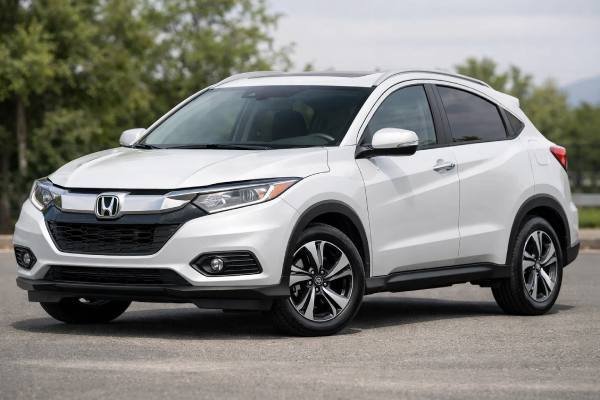
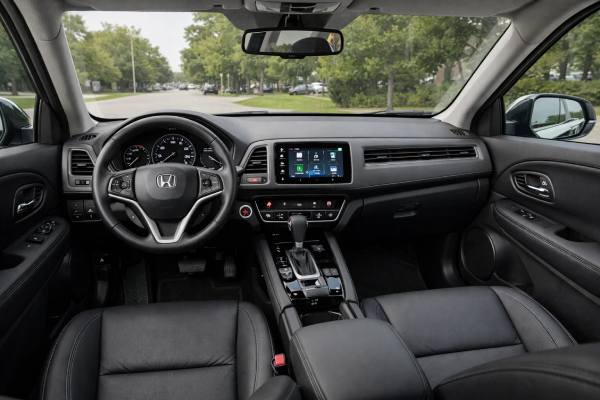
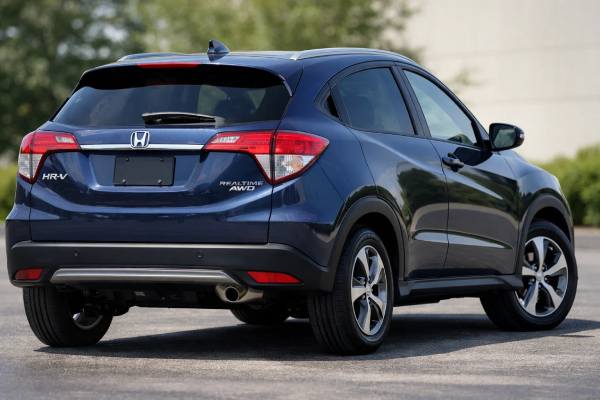
The facelifted Honda HR-V RU6 with Real Time AWD and the 1.8-liter R18Z9 is a practical, low-drama compact SUV built around predictable running costs and smart packaging. This powertrain is simple by modern standards: naturally aspirated, port fuel injection, and a timing chain—choices that tend to reward owners who value longevity over headline performance. The AWD system is designed for grip in rain, slush, and light snow rather than off-roading, and it works best when tyre condition and fluid service are kept consistent.
What makes this HR-V stand out is how “complete” it feels as an all-rounder. You get a tall seating position, flexible cargo solutions, and safety tech that improved through the 2019–2022 period. If you maintain it methodically—especially the CVT and rear differential fluids—it is one of the easier small AWD crossovers to live with long-term.
Top Highlights
- Strong day-to-day usability: excellent visibility, easy cabin access, and a flexible rear seat layout for bulky loads.
- Simple 1.8 NA engine favors durability and smooth response over turbo complexity.
- Real Time AWD helps in wet and winter conditions without the weight and drag of a full-time system.
- Ownership caveat: CVT and rear differential fluids matter—skipping them is the fastest route to noise or drivability issues.
- Practical interval: plan CVT fluid service about every 50,000–60,000 km (30,000–37,000 mi) under mixed city use or severe conditions.
Guide contents
- Honda HR-V RU6 AWD: what it is
- Honda HR-V RU6 specs and capacities
- Honda HR-V RU6 trims and safety tech
- Reliability issues and service fixes
- Maintenance plan and buyer checklist
- Real-world driving and efficiency
- How it stacks up against rivals
Honda HR-V RU6 AWD: what it is
This facelift-era HR-V RU6 pairs Honda’s familiar 1.8-liter i-VTEC engine with a front-biased “Real Time AWD” system. In normal cruising it behaves like a front-wheel-drive crossover, sending most torque to the front wheels for efficiency. When the front tyres lose traction—think wet roundabouts, steep gravel driveways, slushy intersections, or icy starts—the system can feed torque rearward through a compact rear driveline. The goal is stability and confidence, not rock crawling. With standard road tyres and modest ground clearance, it is a winter-commuter AWD rather than a trail SUV.
The R18Z9 is the ownership centerpiece. It is naturally aspirated (no turbo heat management or intercooler plumbing), uses port fuel injection (less intake-valve carbon buildup risk than many direct-injection engines), and runs a timing chain (no routine timing-belt replacement). It rewards consistent oil changes and good cooling system upkeep. In return, owners typically get smooth cold starts, predictable fuel economy, and low sensitivity to driving style compared with small turbos.
The facelift years also matter for day-to-day life: cabin ergonomics and safety tech availability improved, and many markets saw wider adoption of active safety systems on higher trims. The HR-V’s packaging remains a key advantage: a tall roofline, wide rear opening, and a rear seat design that can prioritize cargo height as well as floor length. If you frequently carry bikes, flat-pack furniture, or tall boxes, that interior flexibility can matter more than horsepower.
Who this model fits best:
- Drivers who want an easy small AWD vehicle for mixed urban and highway use
- Owners prioritizing long service life, modest maintenance costs, and predictable behavior
- Families who need compact exterior dimensions but surprisingly useful interior space
Who should look elsewhere:
- Drivers who want quick acceleration at highway speeds
- Regular towing users (capability varies by market and is often limited)
- Anyone expecting off-road durability without tyre, skid plate, and clearance upgrades
Honda HR-V RU6 specs and capacities
Below are practical, owner-relevant specs for the facelift 2019–2022 HR-V RU6 Real Time AWD with the 1.8-liter R18Z9. Exact figures can vary by market, trim, wheel size, and test standard, so treat these as the “most common” reference points for this drivetrain.
Powertrain and efficiency
| Item | Specification (typical for R18Z9 HR-V AWD) |
|---|---|
| Engine code | R18Z9 |
| Layout | Inline-4, SOHC i-VTEC, 16 valves (4/cyl) |
| Displacement | 1.8 L (≈ 1,799 cc) |
| Bore × stroke | ≈ 81.0 × 87.3 mm (3.19 × 3.44 in) |
| Induction | Naturally aspirated |
| Fuel system | Port fuel injection (PGM-FI) |
| Compression ratio | ≈ 10.6:1 (market-dependent) |
| Max power | 141 hp (≈105 kW) @ ~6,500 rpm |
| Max torque | ≈ 172 Nm (127 lb-ft) @ ~4,300 rpm |
| Timing drive | Chain |
| Rated efficiency | commonly ~7.6–8.7 L/100 km (31–27 mpg US) depending on test cycle |
| Real-world highway @ 120 km/h | often ~7.8–9.0 L/100 km (30–26 mpg US), tyres and wind matter |
Transmission and driveline
| Item | Specification |
|---|---|
| Transmission | CVT (most AWD versions) |
| Drive type | Real Time AWD (front-biased, on-demand rear engagement) |
| Differential | Open (typical); traction control manages wheel slip |
Chassis and dimensions (typical)
| Item | Specification |
|---|---|
| Suspension (front/rear) | MacPherson strut / multi-link |
| Steering | Electric power steering |
| Brakes | Front ventilated discs / rear discs or drums (market/trim-dependent) |
| Most common tyre size | Often 215/55 R17 or 225/50 R18 (trim/market dependent) |
| Ground clearance | commonly ~175 mm (6.9 in) for AWD trims |
| Length / width / height | about 4,330 mm / 1,790 mm / 1,615 mm (≈170.4 / 70.5 / 63.6 in) |
| Wheelbase | about 2,610 mm (≈102.8 in) |
| Turning circle | about 11.3 m (≈37.0 ft) |
| Kerb weight | typically ~1,480–1,560 kg (3,260–3,440 lb) |
Performance and capability (typical)
| Metric | What to expect |
|---|---|
| 0–100 km/h (0–62 mph) | ~10.0–11.5 s (AWD CVT varies by trim and test) |
| Top speed | typically ~185–195 km/h (115–121 mph) |
| Braking 100–0 km/h | often ~38–41 m (125–135 ft), tyre-dependent |
| Towing | commonly limited; check market rating and cooling package |
| Payload | varies widely by GVWR and trim; check door jamb placard |
Fluids, service capacities, and key torque specs (common service values)
| Item | Typical spec (verify by VIN) |
|---|---|
| Engine oil | 0W-20; ~3.5–3.8 L (3.7–4.0 US qt) with filter |
| Coolant | Honda Type 2 / long-life; capacity varies (~4–6 L total system) |
| CVT fluid | Honda HCF-2; service fill commonly ~3.5–4.0 L |
| Rear differential (AWD) | Honda DPSF-II (typical); service fill often ~1.0–1.2 L |
| A/C refrigerant | R-134a (many markets); charge varies by condenser setup |
| Wheel lug nuts | typically 108 Nm (80 lb-ft) |
| Engine oil drain plug | often ~39 Nm (29 lb-ft) |
| Spark plugs | often ~18 Nm (13 lb-ft) |
Safety and driver assistance (high-level)
| Item | Typical for 2019–2022 availability |
|---|---|
| Crash ratings | IIHS coverage varies by test; Euro NCAP results often refer to earlier HR-V tests, not facelift validation |
| ADAS | AEB/FCW, lane support, ACC on higher trims in many markets |
| Stability systems | ABS, ESC/VSA, traction control commonly standard |
Honda HR-V RU6 trims and safety tech
Trim structure varies by country, but the facelift-era HR-V typically clusters into three ownership “tiers”: value-focused base trims, comfort trims, and tech-forward trims that add driver assistance and premium features. For an RU6 Real Time AWD buyer, the most meaningful differences are not cosmetic—they are functional items like headlight performance, tyre size, seat configuration, and which safety sensors you will be calibrating after windshield or bumper work.
Trims and options: what usually changes
Common “base-to-mid” differences you will notice:
- Wheels and tyres: stepping up from smaller wheels often sharpens steering response but can increase road noise and replacement tyre cost.
- Cabin features: heated seats, dual-zone climate, keyless entry, better audio, and upgraded infotainment tend to land in the mid trims.
- Lighting: LED headlights (where offered) are a real safety upgrade, especially on unlit roads and in rain.
Common “mid-to-top” differences:
- Active safety suite: forward collision warning and automatic emergency braking (AEB) may be standard only on higher trims, depending on market and year.
- Adaptive cruise and lane support: these change long motorway drives more than most options do.
- Parking aids: rear sensors and cross-traffic alert can be trim-gated.
Quick identifiers when shopping used:
- Look at the windshield area behind the mirror for camera modules (lane and AEB).
- Check front grille or bumper for radar (where ACC is used).
- Confirm wheel size because it influences ride quality, braking feel, and tyre cost.
- Verify AWD via underbody rear driveline presence and the VIN/build data, not only badges.
Safety ratings: how to read them for this model
For 2019–2022, U.S.-market HR-V variants are covered by IIHS evaluations across several years, but results can vary by:
- Headlight type and trim (one trim can score far better than another)
- Front crash prevention equipment (optional vs standard changes scoring)
- Test version and year updates
If you see “good structure but poor headlights” (or the opposite), treat that as a trim-level decision you can act on: better headlights often do more for night safety than many buyers assume.
For Euro NCAP, the HR-V nameplate has results in earlier test cycles. Those are useful as general structure context, but they are not proof that your exact 2019–2022 RU6 configuration was re-validated under the same protocol. Consider them background, not a stamp for your VIN.
Safety systems and ADAS: service implications owners overlook
Modern safety hardware creates two ownership realities:
- Calibration matters after repairs. Windshield replacement, bumper removal, alignment changes, or suspension work can require recalibration of cameras and radar. Skipping that can trigger warning lights—or worse, silently reduce ADAS performance.
- Battery health affects electronics stability. A weak 12 V battery can cause intermittent sensor faults, infotainment resets, and spurious warnings. Testing the battery proactively prevents “ghost problems.”
Child-seat practicality is one of the HR-V’s quiet strengths: the rear bench and anchor access are generally friendly, but always verify tether anchor locations and seatbelt buckle reach in your specific trim, because seat cushions and trim panels can differ.
Reliability issues and service fixes
The 1.8-liter HR-V RU6 is generally a durable package when fluids and tyres are treated as “systems,” not consumables to ignore. Most expensive problems come from deferred maintenance or mismatched tyres that stress the AWD and stability systems.
Below is a practical map of common issues by prevalence and cost tier, with the symptoms that help you identify them early.
Common (most likely) issues
- CVT judder, shudder, or flare (medium cost if early, high if ignored)
- Symptoms: vibration on light acceleration, inconsistent revs, delayed engagement from a stop, or “rubber band” surging beyond normal CVT feel.
- Likely causes: aged CVT fluid, software calibration that needs updating, or wear accelerated by overheating.
- Remedy: drain-and-fill with the correct CVT fluid (often HCF-2), then recheck. If symptoms persist, a dealer-level diagnostic and possible reflash may be needed.
- Rear differential noise or binding in tight turns (medium cost)
- Symptoms: groan, chatter, or a “dragging” feel during low-speed parking-lot turns, especially after cold starts.
- Likely causes: degraded rear differential fluid or incorrect fluid type; sometimes tyre circumference mismatch contributes.
- Remedy: change rear differential fluid with the correct spec (commonly DPSF-II for Honda’s compact AWD units) and confirm equal tyre wear and pressures.
- Front suspension wear items (low to medium cost)
- Symptoms: clunks over bumps, vague steering, uneven tyre wear.
- Likely causes: stabilizer links, bushings, or ball joints aging—more noticeable on rough roads and heavier wheel packages.
- Remedy: targeted replacement and alignment; don’t chase the noise with random parts.
Occasional issues
- A/C performance decline (medium cost)
- Symptoms: weak cooling at idle, cycling compressor, or noisy operation.
- Likely causes: refrigerant loss, condenser damage, or compressor wear.
- Remedy: leak test and proper recovery/recharge—avoid “top-off” kits that hide leaks.
- Electrical quirks from a weak 12 V battery (low cost, high annoyance)
- Symptoms: warning lights that come and go, infotainment resets, camera glitches.
- Remedy: battery test (cold-cranking and reserve capacity), clean terminals, confirm charging voltage.
Rare but expensive
- CVT mechanical failure (high cost)
- Symptoms: persistent slipping, metallic noise, or loss of drive.
- Remedy: rebuild or replacement; this is why routine fluid service is non-negotiable.
Recalls, TSBs, and coverage checks
For 2019–2022 vehicles, recall and service campaign patterns can include fuel system components, airbags, and software-related updates depending on market. The correct approach is always the same:
- Run an official VIN recall check, then confirm completion with dealer records.
- Ask for proof of CVT fluid service and rear differential fluid service—receipts are better than verbal assurances.
Pre-purchase request that saves money:
- A scan for stored codes (including history)
- Evidence of correct tyre matching across all four corners
- A drive test that includes tight turns, a gentle uphill pull from a stop, and steady 100–120 km/h cruising
Maintenance plan and buyer checklist
The HR-V RU6 lasts when you treat maintenance as a schedule, not a reaction. Honda’s Maintenance Minder (or market equivalent) is helpful, but owners get the best outcomes when they add “known-sensitive” services—especially for the CVT and AWD rear differential—before symptoms appear.
Practical maintenance schedule (distance and time)
Use this as a conservative plan for mixed city/highway driving. If you do short trips, steep hills, heavy traffic, or winter service, follow the shorter interval.
- Engine oil and filter: every 10,000–12,000 km (6,000–7,500 mi) or 12 months (0W-20 typical).
- Tyre rotation: every 10,000–12,000 km; check tread depth across all four tyres.
- Air filter (engine): inspect every 20,000 km, replace about 30,000–40,000 km if dusty conditions.
- Cabin filter: every 15,000–30,000 km depending on pollen and urban air.
- Brake fluid: every 3 years (time-based; moisture matters).
- Coolant: often long-life; a common conservative approach is ~160,000–200,000 km first change, then ~80,000–100,000 km (verify by market spec).
- Spark plugs: often ~160,000 km (100,000 mi) for iridium plugs (verify exact plug type).
- CVT fluid: every 50,000–60,000 km (30,000–37,000 mi) for severe use; up to ~80,000 km in light use if shifting behavior stays clean.
- Rear differential fluid (AWD): every 30,000–50,000 km (18,000–31,000 mi), especially if you hear low-speed groan or drive in winter.
- Brake inspection: pads/rotors at every tyre rotation; caliper slide lubrication helps in salty climates.
- Alignment: check annually or whenever you replace tyres—misalignment is the silent tyre killer.
Fluids and specs to insist on
- Use the correct CVT fluid (often Honda HCF-2 for this generation). “Universal CVT fluid” is a gamble.
- Use the correct rear differential fluid spec for Honda’s compact AWD unit (commonly DPSF-II).
- Stick to the correct oil viscosity and spec; the R18 family is designed around modern low-viscosity oil for flow and efficiency.
Buyer’s guide: inspection checklist
Body and underbody:
- Check rear wheel arches, subframe mounting points, and underbody seams for corrosion (especially in salted regions).
- Inspect for mismatched paint or overspray around bumpers and fenders.
Powertrain:
- Cold start: listen for abnormal rattles beyond brief normal start-up noise.
- CVT behavior: smooth takeoff, no shudder under light throttle, consistent rev behavior.
- Tight turns: listen/feel for rear diff chatter or binding.
Chassis:
- Drive over broken pavement to reveal suspension clunks.
- Brake test: firm pedal, no steering shake, consistent stopping.
Electronics:
- Confirm camera clarity and parking sensor operation.
- Check that driver-assistance warnings are not disabled due to sensor faults.
Best “value years/trims” logic:
- Pick the trim with the best headlights and the safety suite you actually want. In real ownership, lighting and ADAS availability tend to matter more than cosmetic upgrades.
- Avoid vehicles with mismatched tyres, unknown CVT fluid history, or persistent warning lights—those three often signal deeper neglect.
Long-term outlook: With disciplined fluid service and matched tyres, the RU6 AWD + 1.8 combination is typically a long-haul ownership choice rather than a fragile, high-strung one.
Real-world driving and efficiency
The HR-V RU6’s driving character is best described as calm and predictable. It does not try to feel sporty, but it is easy to place on the road and rarely surprises the driver—an underrated trait in daily commuting.
Ride, handling, and NVH
Ride quality is generally compliant at city speeds, especially on smaller wheel packages. Larger wheels can sharpen turn-in, but they also transmit more sharp impacts and can increase tyre roar on coarse asphalt. The suspension tuning leans toward stability rather than quick rotation, which suits wet-weather driving and highway cruising.
Steering is light to moderate with an emphasis on ease. Feedback is not sports-car sharp, but it tracks cleanly and feels natural in parking maneuvers. Braking feel is typically consistent and easy to modulate; as always, pad compound and tyre choice can make a bigger difference than many owners expect.
Cabin noise depends heavily on tyres. If you want the vehicle to feel “one class quieter,” choose touring-oriented tyres and keep pressures correct. Roof racks and aggressive tread patterns can add noticeable wind and road noise at motorway speeds.
Powertrain character (1.8 NA + CVT)
The naturally aspirated 1.8 responds smoothly off-idle, but it does not have turbo-style midrange punch. Around town, it feels adequate and linear. On fast merges or uphill highway passing, the CVT will raise rpm and hold it—normal behavior, but some drivers dislike the sound profile. The best technique is steady throttle rather than abrupt pedal inputs; the car rewards smoothness with smoother acceleration.
Real Time AWD is largely invisible until you need it. In wet conditions, it helps reduce wheelspin and can make starts feel more confident. In snow, it is most effective with proper winter tyres; AWD helps you move, but tyres help you stop and steer.
Real-world efficiency
Expect fuel economy to swing with speed and temperature:
- City-heavy use: often around 8.5–10.0 L/100 km (28–24 mpg US) depending on idle time and short trips.
- Highway 100–120 km/h: often 7.8–9.0 L/100 km (30–26 mpg US), with headwinds and winter fuel pushing it higher.
- Mixed driving: commonly 8.0–9.2 L/100 km (29–26 mpg US).
Cold weather notes:
- Short trips can raise consumption sharply because the engine spends more time warming up.
- Winter tyres increase rolling resistance; expect a noticeable but normal economy drop.
Key metrics that matter in real life:
- Passing is “plan-ahead” rather than instant; the HR-V is more comfortable at steady pace than repeated hard accelerations.
- The turning circle and visibility make it feel smaller than its interior suggests—one reason it works well in dense cities.
How it stacks up against rivals
In the 2019–2022 small crossover class, the HR-V RU6 AWD competes less on raw performance and more on usability and low-stress ownership. Here is how it typically compares to common alternatives.
Versus Toyota C-HR
The C-HR often feels tighter and more style-driven, but rear visibility and cargo flexibility can be less practical. The HR-V generally wins on cabin versatility and day-to-day ergonomics. If you prioritize easy loading and an airy cabin, HR-V is the safer bet.
Versus Mazda CX-3
The CX-3 can feel more agile and premium in steering response, but rear-seat space and cargo practicality usually favor the HR-V. If you carry passengers or bulky gear, HR-V’s packaging advantage shows up quickly.
Versus Hyundai Kona (non-turbo vs turbo)
A turbo Kona can feel meaningfully faster, especially for highway passing. The tradeoff is higher powertrain complexity and, in some cases, higher sensitivity to maintenance history. The HR-V’s 1.8 is simpler and often easier to keep happy long-term, even if it is slower.
Versus Nissan Kicks
Kicks is typically FWD-focused. If you do not need AWD and want a straightforward urban crossover, it can be compelling. If winter traction and hill starts matter, the HR-V RU6 AWD has the functional edge—especially with good tyres.
Versus Subaru Crosstrek
Crosstrek often leads in AWD capability and ground clearance, and it can feel more “ready for rough roads.” The HR-V answers with lighter, more city-friendly manners and strong interior flexibility. If you regularly drive poor roads or want more trail confidence, Crosstrek is a stronger fit. If your life is mostly city/highway with occasional winter weather, HR-V can be the more efficient, simpler-feeling choice.
The HR-V RU6 AWD sweet spot
Choose this HR-V if you want:
- A compact footprint with genuinely useful interior flexibility
- Predictable maintenance and a simple, naturally aspirated engine
- AWD that helps in bad weather without demanding constant attention
Choose a rival if you want:
- Faster passing and more enthusiastic acceleration (turbo competitors)
- More rugged AWD and clearance (Crosstrek-style choices)
- A more “sporty” steering feel (CX-3-style tuning)
References
- Specifications – 2020 Honda HR-V 2019 (Specifications)
- Features by Trim – 2022 Honda HR-V 2021 (Features)
- 2020 Honda HR-V 2020 (Safety Rating)
- 2022 Honda HR-V 2022 (Official Fuel Economy)
- Vehicle Detail Search – 2021 HONDA HR-V SUV AWD.Honda | NHTSA 2021 (Recall Database)
Disclaimer
This article is for informational purposes only and is not a substitute for professional diagnosis, inspection, or repair. Specifications, torque values, service intervals, fluids, and procedures can vary by VIN, market, trim, and installed equipment, so always verify details using official owner and service documentation for your exact vehicle.
If you found this guide useful, consider sharing it on Facebook, X (Twitter), or your favorite forum to help others maintain their HR-V and support our work.