
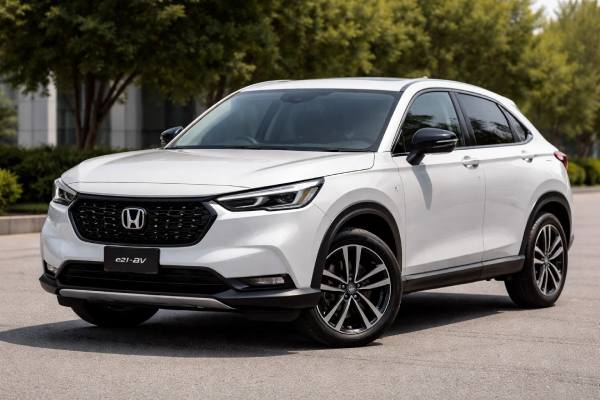
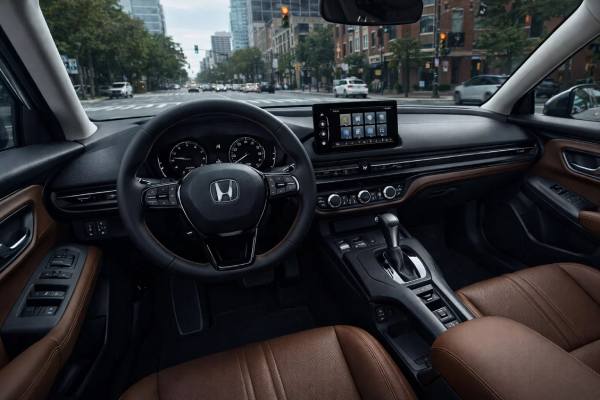
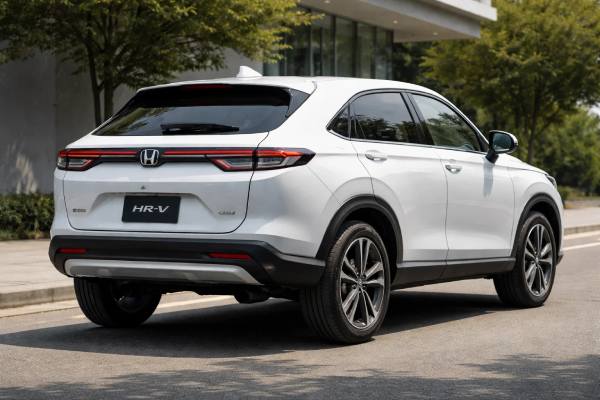
The Honda HR-V (RZ1) with the K20C2 2.0-liter engine is built around a simple idea: deliver small-SUV practicality with low-stress mechanicals. Depending on market timing, this generation arrived around the 2022–2023 window and has stayed focused on durability, predictable running costs, and everyday comfort rather than chasing big horsepower numbers. The 158 hp naturally aspirated 2.0 is tuned for smooth torque delivery and easy fueling (regular gasoline), and it pairs with a CVT that prioritizes efficiency and relaxed cruising.
Where this HR-V stands out is how “normal” it feels to live with: a roomy cabin for its footprint, a useful cargo area, and safety tech that is often standard. If you want a compact SUV that rewards routine maintenance more than constant tinkering, this is one of the cleaner long-term bets in the class.
Owner Snapshot
- Smooth, low-drama 2.0-liter powertrain that prefers regular fuel and steady maintenance.
- Practical dimensions with a square cargo bay that works well for daily hauling.
- Strong crash-test performance when equipped with the right headlights and safety tech.
- CVT fluid quality matters; skipping services can shorten transmission life.
- Plan engine oil changes around 12 months / 10,000–12,000 km (or sooner with short trips).
Section overview
- RZ1 K20C2 ownership profile
- K20C2 specs and service data
- Trims, safety, and driver assist
- Reliability issues and service actions
- Maintenance plan and buyer checks
- Driving feel and real economy
- Rivals and value comparison
RZ1 K20C2 ownership profile
Think of the K20C2 HR-V as a “keep it for years” compact SUV. The 2.0-liter naturally aspirated engine avoids turbocharger heat and complexity, which can simplify long-term ownership. Power (158 hp) is modest on paper, but the output is usable because it is easy to access in normal driving without waiting for boost. For owners who mainly commute, do school runs, and take occasional road trips, that matters more than peak numbers.
The HR-V’s packaging is one of its quiet advantages. The cabin feels adult-sized in front, rear seating is realistic for average-height adults, and the cargo area is shaped in a way that fits boxes, strollers, and weekly shopping without “SUV theatrics.” The roofline and rear opening are also practical, which makes the car feel bigger in use than its exterior footprint suggests.
The trade-off is performance under load. With passengers and luggage, you will notice that the powertrain is tuned for smoothness, not urgency. The CVT keeps the engine in its efficient band, and under hard acceleration it can hold revs in a way that sounds busier than a stepped automatic. That is not a failure—just the intended character. If you drive calmly, it feels refined; if you drive it like a hot hatch, it will remind you that it is an economy-oriented crossover.
Ownership satisfaction usually hinges on three things:
- Maintenance discipline: This HR-V is forgiving, but it still expects timely oil and fluid service.
- Tire choice and alignment: The chassis is sensitive enough that worn tires or a small alignment error can create noise and vibration that owners sometimes misread as “suspension issues.”
- Safety equipment matching: Some safety ratings and ADAS performance depend on the exact headlight and sensor setup, so trim selection matters more than many buyers realize.
If your priority is a simple, safe, modern compact SUV that will not surprise you with exotic repairs, this configuration fits the brief.
K20C2 specs and service data
Below are the key technical specs for the K20C2 2.0-liter HR-V. Exact figures can vary slightly by market, trim, and driveline (FWD vs AWD), so treat these as decision-grade guidance and verify by VIN when ordering parts.
Powertrain and efficiency
| Item | Specification |
|---|---|
| Engine code | K20C2 |
| Layout | Inline-4 (I-4), DOHC, 16-valve |
| Displacement | 2.0 L (1,996 cc) |
| Bore × stroke | 86.0 × 85.9 mm (3.39 × 3.38 in) |
| Induction | Naturally aspirated |
| Fuel system | Direct injection (market-dependent labeling) |
| Compression ratio | 10.8:1 |
| Max power | 158 hp (118 kW) @ 6,500 rpm |
| Max torque | 187 Nm (138 lb-ft) @ 4,200 rpm |
| Timing drive | Chain |
| Fuel | Unleaded gasoline, 87 AKI (RON equivalent varies) |
Rated efficiency (example figures):
| Driveline | City | Highway | Combined |
|---|---|---|---|
| FWD | 9.1 L/100 km (25.8 mpg US / 31.0 mpg UK) | 7.4 L/100 km (31.8 mpg US / 38.2 mpg UK) | 8.3 L/100 km (28.3 mpg US / 34.0 mpg UK) |
| AWD | 9.4 L/100 km (25.0 mpg US / 30.1 mpg UK) | 7.8 L/100 km (30.2 mpg US / 36.2 mpg UK) | 8.7 L/100 km (27.0 mpg US / 32.5 mpg UK) |
Real-world highway at 120 km/h (75 mph): many owners see a small penalty versus rated highway figures, especially with winter tires, roof racks, or cold temperatures. Expect a noticeable improvement if you hold steady speed and avoid repeated high-load passing.
Transmission and driveline
| Item | Specification |
|---|---|
| Transmission | CVT (continuously variable) |
| Drive type | FWD or AWD (market/trim dependent) |
| Differential | Open (AWD adds rear differential assembly) |
Chassis and dimensions
| Item | Specification |
|---|---|
| Suspension (front/rear) | Strut / multi-link (typical for this class) |
| Brakes | 4-wheel disc (sizes vary by trim/market) |
| Wheel and tire examples | 215/60R17 or 225/55R18 |
| Ground clearance | 177.5 mm (7.0 in) |
| Ground clearance (full load) | 122.9 mm (4.8 in) |
| Length / width / height | 4567.8 / 1839.99 / 1620.12 mm (179.8 / 72.4 / 63.8 in) |
| Wheelbase | 2655 mm (104.5 in) |
| Turning circle (approx.) | 5.4 m (17.7 ft) |
| Curb weight (approx.) | FWD 1441 kg (3177 lb) / AWD 1494 kg (3294 lb) |
| Fuel tank | 53 L (14.0 US gal / 11.7 UK gal) |
| Cargo volume | 691 L (24.4 ft³) seats up / 1559 L (55.1 ft³) seats down |
Performance and capability (typical expectations)
| Metric | Typical range (varies by test and trim) |
|---|---|
| 0–100 km/h (0–62 mph) | ~9.5–10.8 s |
| Top speed | ~185–195 km/h (115–121 mph) |
| Braking 100–0 km/h | ~38–41 m (125–135 ft from 62–0 mph equivalent) |
| Towing capacity | Often limited; many markets rate it as not recommended or low—check local certification |
| Roof load | Check owner documentation; crossbars and panoramic roof (if fitted) can change limits |
Fluids, service capacities, and key torque priorities
| System | Specification |
|---|---|
| Engine oil | 0W-20; 4.0 L (4.2 US qt) change, 4.2 L (4.4 US qt) with filter |
| Engine coolant | Honda Type 2; 50/50 mix; ~5.93 L (1.57 US gal) total |
| CVT fluid | Honda HCF-2; change ~2.7 L (2.9 US qt) 2WD or ~3.5 L (3.7 US qt) AWD |
| Rear differential (AWD) | Honda DPSF-II; change ~1.247 L (1.318 US qt) |
| Brake fluid | DOT 3 (Honda Heavy Duty DOT 3 equivalent) |
| A/C refrigerant | HFO-1234yf; 435–485 g (15.3–17.1 oz) |
| A/C compressor oil | ND-OIL14 (POE); 105–120 cm³ |
| Spark plugs | OEM-type iridium (exact part varies; verify by VIN) |
Key torque specs: manufacturers often publish critical fastener torques in service literature rather than owner manuals. For purchase and maintenance decisions, focus on using correct fluids, correct fill procedures, and leak-free sealing—those influence outcomes more than a handful of torque numbers most owners never touch.
Trims, safety, and driver assist
Trim structure varies by region, but most markets split the HR-V into three ideas: a value-oriented base trim, a comfort-focused mid trim, and a feature-led top trim. Where this matters mechanically is not horsepower (the K20C2 output is typically consistent) but tires, headlights, and driver-assistance availability. Those items can change stopping distance, night visibility, cabin noise, and even insurance experience more than many buyers expect.
Trims and options that change the experience
Common functional differences to look for:
- Wheel and tire packages: 17-inch setups usually ride a bit softer and can be quieter on rough roads, while 18-inch tires often sharpen steering feel but can increase impact harshness.
- Headlights: Some trims use different headlight performance levels. This can affect night driving confidence and can also influence third-party safety scoring.
- Blind-spot monitoring (BSD) and rear cross-traffic alert (RCTA): In some markets it is optional or bundled; in others it is standard on higher trims.
- Rear automatic braking / parking sensors: Helpful in tight urban use, but sensors require calibration and correct bumper alignment after repairs.
- Interior equipment: Heated seats, dual-zone climate, and upgraded audio tend to arrive with the mid or top trim, and these are the “daily delight” items that often separate a good long-term purchase from a merely adequate one.
Quick identifiers when shopping used:
- Tire size on the sidewall (215/60R17 vs 225/55R18) often hints at trim.
- Mirror-mounted turn signals and certain wheel designs usually appear on higher grades.
- If the car has a camera module near the rear-view mirror and radar/forward-sensing hardware, it likely has a fuller Honda Sensing suite.
Safety ratings (how to interpret them)
Independent test bodies evaluate vehicles by specific configurations and test updates. This HR-V generation has been rated strongly in key crashworthiness categories, with “Good” results in major crash tests on many versions. However, ratings can be tied to the exact year range and equipment level. Even within a single model year, headlight performance can be graded differently across trims, and that can affect award status.
A smart approach:
- Match the rated model range to the car you’re buying (year and body style).
- Confirm the trim’s headlight type and availability of crash avoidance systems.
- Treat awards as a signal, not a guarantee—the real win is having modern structure plus working ADAS.
Safety systems and ADAS notes
Typical safety and assistance features you may see:
- Airbags: front, side, and curtain airbags are common; some trims add knee airbags depending on market.
- Stability and traction control: standard and well-integrated, especially useful on wet roundabouts and winter roads.
- Automatic emergency braking (AEB): usually part of Honda Sensing; performance depends on camera/radar cleanliness and calibration.
- Lane keeping and lane departure prevention: helpful for highway fatigue, but it needs correct wheel alignment and windshield camera calibration after glass replacement.
- Adaptive cruise control (ACC): a comfort feature that also encourages smoother driving, often improving real-world fuel economy.
Service implication: after windshield replacement, front-end collision repair, or bumper sensor work, insist on proper calibration. Many “my AEB is glitchy” complaints come down to misalignment or a skipped calibration step, not a bad sensor.
Reliability issues and service actions
Overall, the K20C2 HR-V is not known for exotic failure patterns. The most common problems tend to be the predictable ones: fluid neglect, wear items, and sensor calibration issues. Still, it helps to map risks by how often they show up and how expensive they can get if ignored.
Common (higher prevalence)
1) CVT fluid degradation (severity: medium, cost tier: medium)
- Symptoms: shudder on light acceleration, “rubber band” surging, delayed engagement, or louder-than-usual drone.
- Likely cause: old or overheated CVT fluid; frequent stop-and-go; towing or steep hills in hot weather.
- Remedy: drain-and-fill with the correct CVT fluid (HCF-2) at sensible intervals; avoid universal fluids. If symptoms persist, a dealer-level inspection for software updates and adaptation reset can help.
2) Brake corrosion and uneven wear in city use (severity: low–medium, cost tier: low–medium)
- Symptoms: pulsation, squeal, or a “gritty” feel after rain and short trips.
- Likely cause: light brake use plus moisture; surface corrosion that becomes uneven pad transfer.
- Remedy: periodic firm braking to clean rotors, regular inspection, and timely brake fluid service.
3) Battery and charging system complaints (12V) (severity: low, cost tier: low)
- Symptoms: slow start, random warning lights, infotainment resets.
- Likely cause: short trips, accessory use while parked, cold weather.
- Remedy: test the battery, check charging voltage, and replace proactively when it fails load testing—many “electrical gremlins” are weak battery events.
Occasional (market and usage dependent)
1) Suspension bushings and end links (severity: low–medium, cost tier: low–medium)
- Symptoms: clunks over sharp bumps, vague steering on rough roads.
- Likely cause: urban potholes, heavy wheel/tire packages, high mileage.
- Remedy: inspect sway bar links, control arm bushings, and alignment. Fix the loose part; don’t chase noises blindly.
2) ADAS camera/radar alignment issues after repairs (severity: medium, cost tier: medium)
- Symptoms: lane system unavailable, false AEB warnings, ACC not tracking smoothly.
- Likely cause: windshield replacement, bumper removal, minor front impact, incorrect ride height from mismatched tires.
- Remedy: proper calibration with correct procedures and targets; ensure tire sizes match and alignment is within spec.
Rare but worth knowing
1) Cooling system leaks from aging hoses or clamps (severity: medium, cost tier: medium)
- Symptoms: coolant smell, low reservoir level, intermittent overheating warnings.
- Likely cause: age, heat cycling, clamp relaxation.
- Remedy: pressure test, replace the weak component, refill with the correct coolant mix, and bleed properly.
Recalls, TSBs, and extended coverage
Recall and bulletin activity changes over time and differs by country. The best practice is to treat recalls as a normal part of modern ownership, not a reason to panic. When shopping used:
- Run the VIN through the official recall portal for your market.
- Ask for proof of completion (dealer invoice printout is ideal).
- If a car shows warning lights or ADAS faults, don’t assume “it just needs a reset”—verify whether an update or recall procedure exists for that symptom.
Pre-purchase checks to request
- Full service history with oil change timing and any CVT fluid service evidence.
- Tire brand/model match across all four corners (mismatches can upset stability control and AWD systems).
- Scan for stored codes and look at live data for misfire counts and sensor plausibility.
- Test every driver-assistance feature on a controlled drive: ACC engagement, lane support, and AEB warning behavior.
Maintenance plan and buyer checks
A good maintenance plan for this HR-V is more about consistency than complexity. If you keep fluids fresh and fix small problems early, the car usually repays you with predictable costs.
Practical maintenance schedule (distance/time)
Use this as a conservative ownership schedule. If your market uses a maintenance minder system, follow it—but treat the items below as the “don’t skip” foundation.
Every 10,000–12,000 km or 12 months (whichever comes first):
- Engine oil and filter (0W-20).
- Tire rotation; inspect tread depth and inside-edge wear.
- Inspect brakes (pad thickness, rotor condition) and check for corrosion.
- Quick inspection: coolant level, belt condition, leaks, and battery health.
Every 24,000–30,000 km (or 2 years):
- Cabin air filter.
- Engine air filter (sooner in dusty areas).
- Brake fluid (especially in humid climates or heavy city use).
Every 40,000–60,000 km (usage dependent):
- CVT fluid drain-and-fill (more frequent for heavy traffic, hills, heat, or AWD).
- Alignment check (annually if roads are rough).
Every 80,000–100,000 km:
- Spark plugs (verify the exact interval for your market; many modern iridium plugs run long, but replacing on schedule protects coils and catalytic converter).
- Coolant inspection and service as required by manufacturer interval.
AWD-specific:
- Rear differential fluid service at a sensible interval (many owners do this around the same time as CVT service). Skipping it is false economy.
Fluids and capacities (decision-grade)
- Oil: 0W-20; roughly 4.2 L with filter.
- CVT: correct Honda CVT fluid; capacity differs by 2WD vs AWD during a normal service drain-and-fill.
- Coolant: 50/50 mix using the specified long-life coolant; correct bleeding matters.
- Brake fluid: DOT 3 equivalent with correct spec; flush rather than “top up” when it’s time.
Buyer’s guide: what to inspect in person
Body and structure
- Check panel gaps and paint match at the front bumper and fenders (common repair area).
- Look under the rear hatch seal and around the spare tire well for water signs.
- Inspect underbody for bent pinch welds from incorrect jacking.
Powertrain
- Start cold: listen for abnormal rattles (brief injector tick is normal; persistent chain noise is not).
- After warming up, do a gentle uphill pull. The car should accelerate smoothly without shudder.
- Check for seepage around the engine and trans case; minor sweat is not unusual, but active wet leaks deserve attention.
Chassis
- Drive over broken pavement at low speed with the radio off. Clunks often point to links or bushings rather than major parts.
- On a straight road, lightly relax grip: it should track straight. Pulling can be alignment or tire mismatch.
Electronics and ADAS
- Confirm the forward camera area is clean and the windshield looks correctly installed.
- Verify lane support and ACC behavior; intermittent faults can indicate calibration or sensor issues.
- Confirm that all exterior lights work—LED modules are reliable, but replacements can be costly if damaged.
Best trims and years to target
Without naming every regional grade, the general sweet spot is often the mid-trim: it tends to include the most useful safety tech and comfort features without the highest wheel/tire package that can increase tire costs and harshness. If you drive a lot at night, prioritize the best available headlights for your market—even if that means buying a higher trim—because that changes daily safety more than a cosmetic package ever will.
Long-term durability outlook: strong if serviced consistently, with CVT fluid care as the biggest controllable lever.
Driving feel and real economy
This HR-V’s dynamic personality is calm and confidence-oriented. The ride quality is tuned for urban and highway comfort, and the chassis has enough structure that it does not feel flimsy over broken pavement. Steering is typically light at parking speeds and steadier on the motorway, with predictable front-end grip. It is not a sporty crossover, but it does a good job feeling “normal” and safe in everyday use.
Ride, handling, and NVH
- Ride: The suspension absorbs small road texture well, especially on 17-inch tires. With 18-inch tires, you may feel sharper edges more clearly, particularly in cold weather when rubber stiffens.
- Handling: Body roll is present but controlled. The car remains stable through long bends, and stability control is tuned to intervene smoothly rather than abruptly.
- Braking feel: Pedal response is usually linear. If you notice a soft pedal, it is often brake fluid age rather than hardware.
- Noise: Tire choice dominates cabin noise. A quiet touring tire can make the HR-V feel more premium than the segment average; an aggressive all-season can make it feel coarse.
Powertrain character (what it’s like to drive)
The K20C2 engine delivers its best “effortless” feel at low to mid rpm. In daily traffic, that’s exactly where you live, so it feels responsive enough. When you ask for maximum acceleration, the CVT will hold the engine at higher rpm to keep it in the power band. That can sound dronier than a conventional automatic with fixed gears, but it is doing its job: keeping acceleration steady rather than shifting.
Drive modes (if equipped) typically adjust throttle mapping and sometimes simulated “steps” in the CVT. The practical takeaway is simple: Eco can feel calmer, Normal is the best all-around choice, and Sport can reduce the “lazy pedal” feeling when merging.
Real-world efficiency
Your real-world numbers depend most on speed, temperature, and tire choice.
- City: frequent cold starts and short trips can raise consumption noticeably; the engine spends more time warming up and the CVT works harder from stop-and-go.
- Highway (100–120 km/h): steady cruising is where the HR-V is most consistent. Roof racks, crosswinds, and winter tires can easily add a meaningful penalty.
- Mixed driving: the best results come from smooth throttle inputs and letting the CVT “settle” rather than repeatedly stabbing the pedal.
A useful owner rule: if your use is mostly short trips, treat the maintenance schedule as “severe service.” That means more frequent oil changes and closer attention to battery health, because the car spends more time in warm-up mode and less time charging the battery at steady cruise.
Traction and control
If your market offers AWD, it can improve low-speed traction in snow and heavy rain, but it is not a rock-crawling system. The biggest difference for winter confidence often comes from tires, not driveline. A good winter tire can transform braking and steering grip in a way AWD alone cannot.
Rivals and value comparison
The compact crossover class is crowded, so it helps to compare the HR-V K20C2 on the things that actually matter after the honeymoon period: predictability, safety equipment, cabin usefulness, and running costs.
Versus Toyota Corolla Cross
- HR-V strengths: often feels more spacious for passengers and cargo than you expect from the outside; strong crashworthiness results in many evaluations; straightforward naturally aspirated engine.
- Corolla Cross strengths: often competitive efficiency; Toyota’s hybrid availability in some markets can be a deciding factor if you drive a lot in the city.
- Decision tip: choose HR-V if you value cabin packaging and a calm driving feel; choose Corolla Cross if hybrid availability and city economy are your priority.
Versus Mazda CX-30
- HR-V strengths: roomier rear seat and cargo practicality for many families; softer ride for rough streets.
- CX-30 strengths: more premium interior feel and sharper steering response; can feel quicker in real passing maneuvers depending on engine.
- Decision tip: CX-30 is the enthusiast’s choice; HR-V is the practical choice that stays pleasant when life gets busy.
Versus Hyundai Kona and Kia Seltos
- HR-V strengths: conservative mechanical approach; strong long-term reputation for powertrain durability when serviced.
- Korean rivals’ strengths: often higher feature content for the money; some powertrain options offer quicker acceleration.
- Decision tip: if you keep cars a long time and want low drama, the HR-V’s simplicity is compelling. If you change cars more often and want maximum features, the rivals can look like better value.
Versus Subaru Crosstrek
- HR-V strengths: lower fuel use than many full-time AWD setups; more “city-friendly” feel.
- Crosstrek strengths: standard AWD and a more outdoors-focused setup; strong winter confidence.
- Decision tip: choose Crosstrek for consistent traction-first priorities; choose HR-V if you mostly drive on-road and want efficiency with optional AWD (where offered).
The HR-V’s core advantage (and who it’s for)
The K20C2 HR-V is a strong pick for buyers who want:
- Modern safety tech without luxury-car maintenance habits.
- A practical cargo area and usable back seat in a compact footprint.
- A powertrain that rewards routine service rather than constant monitoring.
If you expect hot-hatch acceleration or frequent towing, you can outgrow it. But if you want a compact SUV that stays easy to own year after year, it competes extremely well.
References
- Specifications | HR-V 2024 | Honda Owner’s Manual 2024 (Owner’s Manual)
- Recommended Engine Oil | HR-V 2024 | Honda Owner’s Manual 2024 (Owner’s Manual)
- 2024 Honda HR-V 4-door SUV 2024 (Safety Rating)
- Gas Mileage of 2023 Honda HR-V 2023 (Official Fuel Economy)
- Check for Recalls: Vehicle, Car Seat, Tire, Equipment 2026 (Recall Database)
Disclaimer
This article is for informational purposes only and is not a substitute for professional diagnosis, repair, or safety inspection. Specifications, torque values, fluid capacities, maintenance intervals, and procedures can vary by VIN, market, model year, and installed equipment. Always confirm details using your official owner’s manual and service documentation for your exact vehicle.
If this guide helped, consider sharing it on Facebook, X (Twitter), or your favorite forum to support our work.