
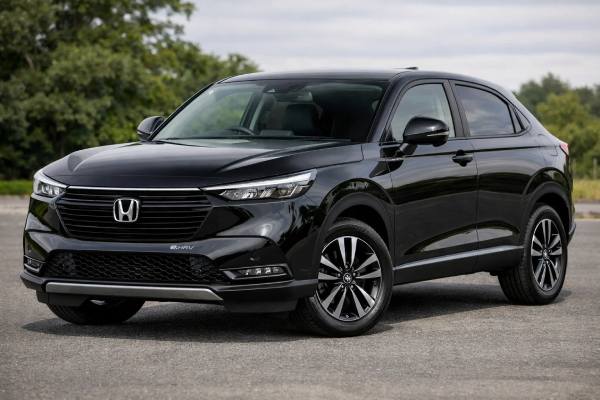

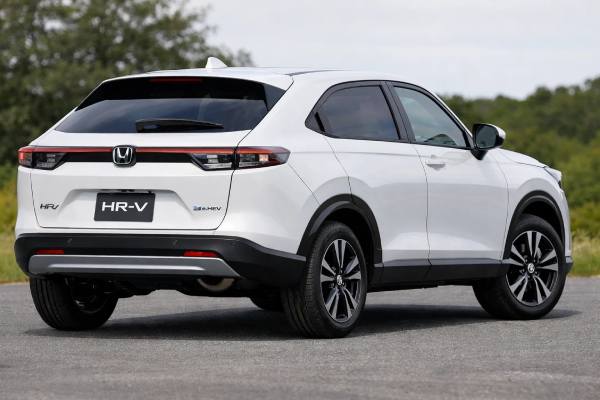
The facelifted 2024–present Honda HR-V e:HEV (RV5) is built around Honda’s “series-parallel” hybrid idea: it behaves like an EV in town more often than you’d expect, yet keeps the packaging and long-range convenience of petrol. The 1.5 i-MMD system uses an efficient Atkinson-cycle engine primarily as a generator at low-to-mid speeds, then couples mechanically at higher cruising speeds when that’s more efficient. For owners, that means smooth step-off, strong low-speed response, and very consistent real-world economy when the car is warmed up and driven predictably.
This guide focuses on the front-wheel-drive e:HEV facelift model: what it is, what it costs you to keep healthy, what commonly ages first, and how to choose the right trim and options so you enjoy the clever packaging without surprises.
Quick Specs and Notes
- Smooth, EV-like urban driving thanks to an electric-first hybrid strategy and a strong 253 Nm e-motor.
- Practical cabin layout with Honda’s flexible rear-seat packaging; cargo varies by measurement method and trim.
- Best efficiency comes from steady throttle and warm-up management; short trips in winter can raise fuel use noticeably.
- Keep on top of brake servicing: even with regen, pins and sliders should be cleaned and checked at least every 12 months.
- Plan oil service around 12 months (or roughly 16,000–20,000 km / 10,000–12,000 miles, depending on your use and the service minder).
Navigate this guide
- RV5 facelift hybrid explained
- Specs and service capacities
- Trims, tech, and driver aids
- Reliability patterns and campaigns
- Maintenance plan and buyer notes
- Driving feel and efficiency
- RV5 e:HEV vs rivals
RV5 facelift hybrid explained
Honda’s e:HEV system in the HR-V is easiest to understand if you stop thinking “hybrid = engine plus motor at the same time.” In many everyday situations, this car prefers to drive electrically and use the petrol engine as a generator. At low-to-mid speeds, the engine can run at an efficient rpm band to make electricity, while the traction motor does the driving. When road speed rises and a direct mechanical link becomes more efficient, the system can couple the engine to the wheels via a fixed gear. The result is a very calm, consistent feel: fewer “gear events,” less hunting, and a strong initial response because the motor is doing the heavy lifting.
For the 2024 facelift period, the most important ownership traits remain the same: predictable efficiency, quiet urban manners, and a cabin designed around practical use rather than flashy shapes. The HR-V’s strengths are how it behaves when you’re not trying—school runs, commuting, and mixed traffic where the hybrid system can constantly choose the most efficient mode.
The trade-offs are also consistent. First, this is not a performance hybrid: the system prioritizes smoothness and economy, so wide-open-throttle response feels linear rather than punchy. Second, because the system uses the engine differently than a conventional petrol car, maintenance success depends on basics: correct oil, clean cooling circuits, and ensuring software updates and sensor calibrations are done properly after relevant repairs.
Packaging is a key part of the HR-V story. The RV5 platform gives you a compact footprint but useful back-seat comfort, and it’s designed to keep the hybrid components out of the way of daily usability. Still, cargo numbers can vary depending on the measurement standard and trim—something to keep in mind when comparing spec sheets.
Who is it best for? Drivers who want compact SUV visibility, easy city driving, and consistent fuel use without plugging in. Who should think twice? Anyone doing constant cold short trips who expects “always great” fuel economy, or buyers who want a sporty transmission feel—this is an efficiency-first car.
Specs and service capacities
Below are practical, model-relevant figures for the Honda HR-V e:HEV (RV5) facelift 2024–present. Some service capacities and torque values can vary by market, VIN, and service bulletin updates—treat them as decision-making guidance and verify against official documentation for your exact car.
Powertrain and efficiency
| Item | Specification |
|---|---|
| Hybrid system | Honda e:HEV (i-MMD) series-parallel full hybrid |
| Petrol engine displacement | 1.5 L (1498 cc) |
| Bore × stroke | 73.0 × 89.5 mm |
| Compression ratio | ~13.5:1 (market dependent tolerance) |
| Induction | Naturally aspirated |
| Engine max power | 79 kW (107 PS) @ 6400 rpm |
| Engine max torque | 131 Nm @ 5000 rpm |
| Traction motor max power | 96 kW (131 PS) |
| Traction motor max torque | 253 Nm |
| Total system output | 96 kW (131 PS) |
| Rated efficiency (typical combined) | ~5.4 L/100 km (varies by trim/tyres and WLTP class) |
| Real-world highway @ 120 km/h | Often ~6.0–7.0 L/100 km in mild conditions; higher in cold weather |
Transmission and driveline
| Item | Specification |
|---|---|
| Transmission type | e-CVT style power-split (fixed-gear coupling under some conditions) |
| Drive type | FWD |
| Differential | Open (torque management handled by brake/traction control logic) |
Chassis and dimensions
| Item | Specification |
|---|---|
| Length | 4355 mm |
| Width (body) | 1790 mm |
| Height | 1582 mm (unladen) |
| Wheelbase | 2610 mm |
| Turning circle (outside tyre) | 11.3 m |
| Ground clearance | ~188 mm (with driver) / ~150 mm (full load) |
| Cargo volume (typical range) | ~319–335 L seats up; ~1289–1305 L seats down (method dependent) |
Performance and capability
| Item | Specification |
|---|---|
| 0–100 km/h (0–62 mph) | ~10.6–10.7 s |
| Top speed | ~170 km/h (105 mph) |
| Towing and payload | Often limited on hybrid compact SUVs; verify by VIN and local homologation |
Fluids and service capacities (verify by VIN)
| Item | Typical spec guidance |
|---|---|
| Engine oil | 0W-20 (or market-approved equivalent); ~3.6–3.9 L with filter (typical range) |
| Coolant | Honda Type 2 or equivalent long-life premix; system capacity commonly ~4–5 L range |
| Hybrid transmission fluid | Honda-approved e-CVT fluid; capacity varies—service by procedure rather than “fill to volume” |
| Brake fluid | DOT 4 class (as specified for your market) |
| A/C refrigerant | R-1234yf in many markets; charge amount varies by equipment |
Key torque specs (common Honda practice; verify)
| Fastener | Typical torque |
|---|---|
| Wheel lug nuts | ~108 Nm |
| Engine oil drain plug | ~39 Nm (range varies by plug design) |
| Spark plugs (if serviced) | ~18 Nm (seat type dependent) |
Safety and driver assistance
| Item | Specification |
|---|---|
| Euro NCAP (HR-V generation test) | 4 stars; Adult 82%, Child 75%, VRU 72%, Safety Assist 78% |
| ADAS suite | AEB, ACC, lane support, traffic sign recognition (availability varies by trim/market) |
If you want one practical takeaway from the tables: the “131 hp” headline is not the full story. The 253 Nm motor torque is what makes the car feel responsive at city speeds, while the engine focuses on efficiency and steady-state cruising rather than punch.
Trims, tech, and driver aids
Facelift-era HR-V e:HEV trims differ less in core mechanical hardware and more in comfort equipment, wheel/tyre packages, lighting, and driver-assistance convenience. For most buyers, the right approach is to choose the trim that locks in the features you’ll use daily, then keep the rest simple—because bigger wheels and heavier equipment can slightly reduce ride comfort and real-world economy.
Trims and options: what usually changes
Common differences you’ll see across markets and grade structures include:
- Wheel size and tyre profile: Larger wheels often look great but can introduce sharper impacts on poor roads and a small economy penalty. If your area has rough surfaces, a smaller wheel with a taller sidewall is often the “quietly best” choice.
- Lighting: Upgraded headlights can improve night comfort substantially. If your market uses matrix/advanced beam features on higher trims, they can be worth paying for if you do frequent rural night driving.
- Infotainment and connectivity: Higher trims may bring larger screens, wireless smartphone integration, better audio, and built-in navigation. Prioritize reliability and usability: responsive UI and stable phone pairing matter more than a longer feature list.
- Seats and cabin comfort: Heated seats, upgraded upholstery, and additional cabin sound-deadening elements tend to deliver the most “every drive” value.
Quick identifiers when shopping used
If you’re looking at early facelift cars or cross-shopping pre-facelift stock, quick cues can help:
- Wheel design and size often reveal grade.
- Headlight signature and fog/DRL layout can separate base from upper trims.
- Inside, look for wireless phone charging, heated steering wheel, and larger infotainment screen as common “upper-trim tells.”
Safety ratings and what they mean for you
Euro NCAP’s results for this HR-V generation show solid adult protection and a strong safety-assist score for the class. The more important practical point is that spec can change safety experience:
- Some markets make certain ADAS features standard; others package them.
- Headlight performance can vary by trim and wheel/ride height combinations.
- After windscreen replacement or front-end repairs, camera and radar calibration matters. A well-calibrated mid-trim can be safer than a top-trim that was repaired cheaply and never aligned.
ADAS and servicing realities
Modern driver aids are not “set and forget.” For best results:
- Ensure any steering or suspension work includes alignment.
- After a bumper repair or windscreen replacement, request proof of ADAS calibration on the invoice.
- Keep sensors clean in winter and avoid heavy wax buildup around radar areas.
If you’re choosing between trims, decide based on what you’ll use weekly: lighting, seat comfort, and stable infotainment usually beat decorative add-ons.
Reliability patterns and campaigns
The HR-V e:HEV platform is generally engineered for longevity, but reliability is never just “engine good or bad.” It’s a set of systems that age at different speeds depending on how and where you drive. Below is a practical map of what tends to show up, how serious it is, and what to do about it.
Common (usually low-to-medium cost)
- 12 V battery sensitivity (Common / Low–Medium): Hybrids depend heavily on a healthy 12 V battery for computers and contactors. Symptoms include random warning messages, intermittent no-start, or infotainment glitches. Remedy: test battery properly (not just voltage), check charging behavior, and replace with the correct spec battery when weak.
- Brake hardware corrosion or sticking (Common / Low–Medium): Regenerative braking reduces pad use, so caliper pins and pad slides can corrode. Symptoms: uneven pad wear, squeal, or a dragging feel. Remedy: clean and lubricate sliders, service annually in wet/salty climates, and use proper brake grease.
- Infotainment bugs and phone pairing issues (Common / Low): Symptoms: slow boot, Bluetooth dropouts, frozen screen. Remedy: software updates, reset procedures, and ensuring the car has the latest module versions after dealer visits.
Occasional (mixed cost)
- Suspension bush wear and minor knocks (Occasional / Medium): Compact SUVs live a hard life over speed bumps and potholes. Symptoms: clunks at low speed, vague steering on rough roads. Remedy: inspect control arm bushes and drop links; align after replacement.
- A/C performance decline (Occasional / Medium): Modern refrigerants and tight systems mean small leaks matter. Symptoms: weak cooling, frequent compressor cycling. Remedy: leak test and correct recharge to spec—avoid “top-up only” habits.
Rare (higher cost, but uncommon)
- Hybrid cooling or high-voltage component faults (Rare / High): Symptoms can include reduced power, repeated warnings, or refusal to enter EV mode. Remedy: proper diagnostic scan, coolant circuit checks, and official repair procedures. Avoid guesswork; hybrid safety and correct isolation procedures are non-negotiable.
Software, calibrations, and why they matter
On modern Hondas, some problems are “fixed with parts,” but others are “fixed with software.” Updates can address:
- Driveability transitions (engine start/stop smoothness)
- Sensor false positives
- Infotainment stability
- ADAS behavior refinements
When you buy used, ask for evidence of service history plus software updates. Even if the car feels fine, updated calibration can prevent nuisance faults later.
Recalls and service actions: how to stay covered
Rather than guessing which campaigns apply, treat this as routine ownership hygiene:
- Check recall status using official portals for your country.
- Ask the dealer to confirm completion status using the VIN.
- Keep paperwork—future buyers value proof.
The “best” reliability strategy for this HR-V is boring: keep the 12 V system strong, service brakes proactively, and insist on correct calibration after any repair that touches cameras, radar, steering, or suspension geometry.
Maintenance plan and buyer notes
The HR-V e:HEV rewards owners who follow a simple rule: don’t wait for problems to announce themselves. A hybrid can feel normal even when a small maintenance miss is building cost in the background—especially with brakes and the 12 V system.
Practical maintenance schedule (distance/time)
Use the service minder as your final authority, but these intervals work well as a planning baseline:
- Engine oil and filter: every 12 months or roughly 16,000–20,000 km (10,000–12,000 miles) depending on use. If you do repeated cold short trips, shorten the interval.
- Cabin air filter: every 12 months (or sooner in dusty cities).
- Engine air filter: inspect annually; typically replace every 2–3 years depending on environment.
- Brake inspection: at every service; in salty/wet climates, request annual slider cleaning.
- Brake fluid: commonly every 3 years, regardless of mileage (hygroscopic fluid ages by time).
- Coolant: often long-life; many Hondas use a multi-year first interval. Verify by market, then stick to time-based changes.
- Hybrid transmission fluid: follow official schedule; if you keep cars long-term, a conservative approach is periodic fluid service under normal maintenance rather than “never touch it.”
- Tyre rotation and alignment: rotate every 10,000–12,000 km; align if you see uneven wear or after any suspension work.
- 12 V battery testing: start annual testing from year 3; replace proactively if test results show weak reserve capacity.
Fluids and parts: what matters most
- Use the correct oil viscosity and quality level for your market. Hybrids run lots of start-stop events; oil quality matters.
- Don’t improvise with non-approved hybrid transmission fluids.
- For brakes, correct grease and proper cleaning matter more than “premium pads” on a street-driven HR-V.
Buyer’s guide: what to inspect before purchase
Bring a checklist and be systematic:
- Service history: look for consistent annual servicing, not just mileage-based.
- Brake condition: check for uneven pad wear, hot wheel smell after a test drive, and rusty discs that never clean up.
- Tyres: mismatched tyres can degrade stability-control behavior and ride quality.
- Front-end alignment signs: uneven tyre wear or steering off-center suggests past impacts or skipped alignment.
- Electronics and ADAS: verify camera-based systems work cleanly; watch for warning lights after start-up.
- HV and 12 V health: ask for a battery test on the 12 V unit; it’s a small cost that prevents many headaches.
What to seek (and what to avoid)
- Seek: trims with the lighting and comfort you’ll use daily, and a full dealer or specialist service record.
- Avoid: cars with repeated warning lights, cheap accident repairs near the front bumper/windscreen area, or neglected brake servicing in winter-salt regions.
Long-term durability outlook is strong if you treat the car like a modern hybrid: clean software history, correct fluids, and proactive brake and battery care.
Driving feel and efficiency
In daily driving, the HR-V e:HEV’s standout trait is how “un-hybrid” it feels. Many hybrids remind you they’re hybrids through engine flare, stepped gear changes, or odd transitions. The Honda approach is calmer: the motor does much of the driving, and the engine comes in when it’s efficient rather than when you ask for noise.
Ride, handling, and NVH
- Ride quality: The HR-V generally feels composed and controlled at city speeds. Wheel size matters: larger wheels tend to sharpen impacts and raise road noise on coarse asphalt.
- Handling balance: It’s confidence-focused rather than sporty. You get predictable grip and stable cornering, with stability control tuned for safety.
- Steering feel: Light-to-medium effort, easy in parking, with a “clean” on-center feel at speed. It’s not a feedback-rich setup, but it’s stable.
- Noise levels: At low speeds, it can be impressively quiet when operating electrically. At higher loads, you’ll hear the engine more, and the sound character can be “steady rpm” rather than rising with speed—normal for this hybrid style.
Powertrain character
- Throttle response: Strong initial response because the e-motor delivers torque immediately.
- Passing and merges: Smooth rather than dramatic. If you floor it, the engine can hold an efficient band and the car accelerates consistently, but it won’t feel like a turbo hot-hatch.
- Drive modes: Econ modes can soften response and encourage more efficient engine use; normal mode is usually the best everyday balance.
Real-world efficiency
Expect your results to depend heavily on temperature and trip length:
- City: Often excellent once warm, because the hybrid can spend more time in EV drive and recapture energy with regen.
- Highway (100–120 km/h): Usually still efficient, but the advantage narrows compared with town. Headwinds, cold weather, and aggressive speeds push consumption up.
- Winter: Short trips can be the worst case; the engine must warm up, and cabin heat demand increases running time.
A useful habit: on cold mornings, drive gently for the first 5–10 minutes. The hybrid system “pays you back” once everything reaches operating temperature.
Braking feel
Regen blends into friction braking in a mostly natural way, but it’s still worth judging on a test drive. If pedal feel is inconsistent, or brakes grab after sitting, it may need a brake service rather than “new pads.”
Overall, the HR-V e:HEV is at its best as an everyday car: calm, efficient, and easy, with a powertrain designed to reduce driver workload rather than add excitement.
RV5 e:HEV vs rivals
The HR-V e:HEV sits in a crowded field of compact crossovers, and most rivals now offer some form of electrification. The right comparison depends on what you value: urban smoothness, highway economy, cabin practicality, or low running costs.
Versus Toyota Yaris Cross Hybrid
Toyota’s hybrid system is famously efficient and proven, and the Yaris Cross can deliver excellent fuel economy with a straightforward ownership story. The Honda often counters with a more “EV-like” drive feel in town and a calmer transition strategy. If you prioritize absolute mpg and a massive ecosystem of hybrid familiarity, Toyota is hard to ignore. If you prioritize smoothness and a grown-up cabin feel, Honda’s approach often wins hearts.
Versus Renault Captur E-Tech Hybrid
Renault’s hybrid can feel energetic and can be strong in mixed driving, but long-term ownership experience can depend more heavily on software and dealer support in your region. The HR-V tends to feel more consistent and less “busy” in how it manages its power sources. If you want a more playful, distinctive character, the Captur can appeal; if you want “it just works,” Honda tends to be the safer bet.
Versus Kia Niro Hybrid and Hyundai Kona Hybrid
These two are often the value and feature plays—strong infotainment, good warranty stories in many markets, and competitive efficiency. The Honda’s advantage is the smooth, electric-first feel and a cabin designed around real-world packaging. The Korean options can offer more tech per money, while Honda sells a cohesive engineering experience and strong perceived quality.
Versus Nissan Juke Hybrid
The Juke leans into style and a different driving position feel. Practicality and rear-seat comfort can be more limited compared with the HR-V. If you need space and usability, Honda usually pulls ahead. If you want a bolder design and smaller footprint feel, Juke can make sense.
The simple verdict
Choose the HR-V e:HEV if you want:
- A refined hybrid that feels natural in city driving
- Strong day-to-day usability in a compact SUV footprint
- An engineering-first experience where the powertrain works quietly in the background
Choose a rival if you want:
- Maximum economy above all else (often Toyota)
- Maximum tech for the price (often Kia/Hyundai)
- A more distinctive style-first package (often Nissan/Renault)
The HR-V’s “win condition” is not a single headline number—it’s how consistently easy it is to live with.
References
- Honda HR-V Specs, Dimensions & Interior | Honda UK 2026 (Specifications)
- The all-new HR-V 2021 (Press Information)
- Honda HR-V – Euro NCAP 2022 (Safety Rating)
- Check if a vehicle, part or accessory has been recalled – GOV.UK 2026 (Recall Database)
Disclaimer
This article is for informational purposes only and is not a substitute for professional diagnosis, inspection, or repair. Specifications, torque values, service intervals, and procedures can vary by VIN, market, and equipment level. Always confirm details using the official owner’s manual and service documentation for your exact vehicle.
If you found this guide useful, please consider sharing it on Facebook, X (Twitter), or your favorite forum to support our work.