
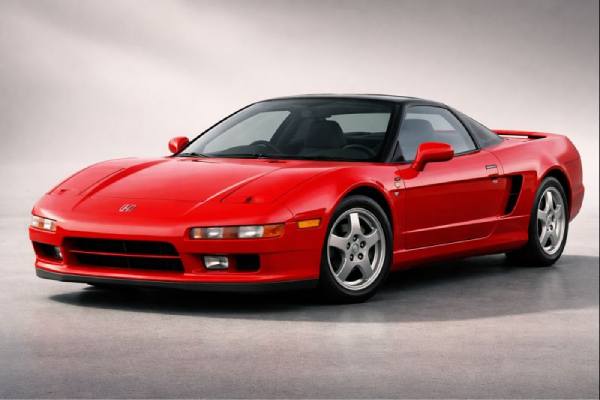

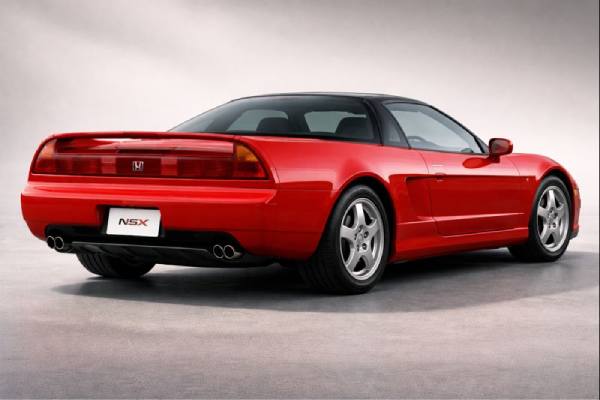
The Honda NSX (NA1) is one of those rare cars that feels “engineered,” not just styled. Its mid-engine layout, all-aluminum body structure, and careful weight control were ambitious for the early 1990s—yet the result is a supercar you can genuinely live with. The C30A 3.0-liter V6 is the centerpiece: naturally aspirated, responsive, and designed to rev with the sort of smoothness that still feels special today. It also introduced exotic ideas to mass production, like lightweight internal components and advanced valve control, without turning the ownership experience into a constant repair project.
That balance is why the NA1 remains so desirable: it offers real precision and feedback at sane road speeds, plus Honda-grade usability—if you stay ahead of age-related maintenance and buy the right example.
Quick Overview
- Aluminum-intensive chassis gives sharp responses and low curb weight for its era.
- C30A V6 is happy at high rpm and rewards clean, consistent maintenance.
- Parts and labor can be premium-priced, especially for timing-belt work and trim pieces.
- Plan engine-oil service about every 7,500 miles (12,000 km) or 6 months under normal use.
- Replace the timing belt on time—commonly 60,000 miles (96,000 km) or 6 years on early schedules.
Navigate this guide
- NA1 NSX engineering profile
- C30A specs and dimensions
- Trims, equipment, and safety tech
- Reliability patterns and known faults
- Maintenance plan and buying tips
- Road feel and real performance
- NSX NA1 vs key rivals
NA1 NSX engineering profile
The NA1 NSX was conceived around a simple but demanding goal: deliver mid-engine balance without the fragile temperament that many supercars carried in the 1990s. The big headline is the aluminum-intensive structure and suspension. Aluminum saves weight, but it also changes how the car reacts to loads and impacts—so Honda engineered stiffness and durability into the whole package rather than relying on brute mass. That design choice is a major reason an NSX can feel precise even at modest speeds: it responds quickly to steering inputs, holds alignment well when healthy, and communicates grip changes clearly through the wheel and seat.
From the driver’s seat, the NA1’s “specialness” isn’t just numbers. It’s the way visibility, pedal placement, and control weighting support accurate driving. The cabin is low and wide, but the cowl is not overly tall, so you place the front corners with confidence—an underrated advantage on narrow roads and during track-day braking zones. The mid-engine layout concentrates mass between the axles, reducing the inertia you feel when transitioning left-right. When the suspension is fresh, the car rotates cleanly without feeling twitchy.
The C30A V6 reinforces that personality. Instead of chasing torque with forced induction, Honda emphasized throttle response and high-rpm breathing. In practice, that means the car feels “awake” when you roll into the throttle, and it builds speed in a smooth, linear sweep. It also means maintenance matters: a naturally aspirated engine that revs freely depends on correct ignition health, consistent oil quality, and cooling system integrity.
Ownership also has a reality check: many NSXs are now old enough that condition matters more than odometer readings. Rubber hoses, engine mounts, suspension bushings, and seals age with time, and deferred work can make a good NSX feel merely “fine” instead of excellent. The best cars tend to be the ones that were used regularly, serviced on schedule, and kept close to stock—because the NA1’s strengths come from factory balance, not a single aftermarket upgrade.
C30A specs and dimensions
This section focuses on the NA1 NSX with the C30A 3.0-liter V6 rated at 252 hp in the commonly referenced automatic configuration. Market and year variations exist (manual ratings and later engines differ), so treat the tables as NA1 3.0 guidance and verify by VIN and region.
Powertrain and efficiency
| Item | Spec |
|---|---|
| Code | C30A |
| Engine layout and cylinders | Mid-mounted longitudinal V6, 24-valve DOHC (4 valves/cyl) |
| Displacement | 3.0 l (2,977 cc) |
| Bore × stroke | 90.0 × 78.0 mm (3.54 × 3.07 in) |
| Induction | Naturally aspirated |
| Fuel system | PGM-FI multipoint injection |
| Compression ratio | 10.2:1 |
| Max power | 252 hp (185 kW) @ ~6,600 rpm (typical 4AT rating) |
| Max torque | ~285 Nm (210 lb-ft) @ ~5,300 rpm (typical 4AT rating) |
| Timing drive | Belt |
| Fuel requirement | Premium unleaded, 91 AKI (US pump octane) or higher |
| Rated efficiency (EPA, typical 4AT) | 16 mpg city / 22 mpg hwy / 18 mpg combined (≈14.7 / 10.7 / 13.1 L/100 km) |
| Fuel tank | 70 l (18.5 US gal / 15.4 UK gal) |
Transmission and driveline
| Item | Spec |
|---|---|
| Transmission | 4-speed automatic (common 252 hp pairing) |
| Drive type | RWD |
| Differential | Typically open on automatics (manual cars more often received LSD, depending on year/market) |
Chassis and dimensions (typical NA1 figures)
| Item | Spec (approximate; varies by year/market) |
|---|---|
| Suspension (front/rear) | Aluminum double wishbone / aluminum double wishbone |
| Brakes | 4-wheel discs (commonly vented); ABS on most cars |
| Wheels and tyres (early OEM) | Front 205/50ZR15, rear 225/50ZR16 |
| Tyre pressures (cold) | Front 33 psi (230 kPa), rear 40 psi (275 kPa) |
| Length / width / height | ~4,425 / 1,810 / 1,170 mm (~174.2 / 71.3 / 46.1 in) |
| Wheelbase | ~2,530 mm (~99.6 in) |
| Ground clearance | ~135 mm (~5.3 in) |
| Curb weight | ~1,370–1,420 kg (~3,020–3,130 lb), depending on transmission and equipment |
Fluids and service capacities (owner-facing values)
| Fluid | Specification and capacity |
|---|---|
| Engine oil | API SG “Energy Conserving” era guidance; SAE 10W-30 typical. Capacity 5.0 l (5.3 US qt) with filter, 4.3 l (4.5 qt) without filter |
| 5-speed transmission oil | SAE 10W-30 or 10W-40; capacity 2.7 l (2.9 qt) (includes differential) |
| Automatic transmission fluid | Honda ATF or Dexron II-type equivalent; capacity 2.9 l (3.1 qt) (includes differential) |
Key torque specs (common owner-service fasteners)
| Fastener | Torque |
|---|---|
| Engine oil drain bolt | 46 N·m (33 lb-ft) |
| Spark plugs | 22 N·m (16 lb-ft) |
Trims, equipment, and safety tech
Because the NA1 NSX ran for many years and across multiple markets, “trim” can mean different things depending on where the car was sold. In North America the car was sold as the Acura NSX, while most other regions used Honda NSX badging. Regardless of badge, you’ll see a few ownership-relevant groupings.
Trims and options that matter mechanically
Coupe vs NSX-T (targa)
Mid-1990s cars introduced a removable roof panel (often called NSX-T). The open-roof experience is great, but it adds weather seals and latches that can age. For buyers, that means you inspect for wind noise, water ingress, and clean roof-panel alignment. The coupe is usually the easiest choice if you prioritize stiffness and simplicity.
Manual vs automatic
This article’s 252 hp focus aligns with the common 4-speed automatic rating. The automatic changes the car’s character: it’s smoother in traffic and less demanding in stop-and-go driving, but it dulls the “always on cam” feel you get from the manual. From a shopping standpoint, automatic cars can be excellent values—provided shifts are clean, fluid is fresh, and there’s no hesitation when hot.
Wheels, tyres, and brake packages
Early cars used staggered 15/16-inch wheels and tyre sizes that preserve the NA1’s progressive breakaway. Many cars have later wheels or modern tyre sizing; that can improve grip, but it can also change steering effort and the breakaway “warning” you feel at the limit. If a car feels nervous or tramlines, don’t assume it’s “just how NSXs are”—alignment and tyre choice are huge.
Quick identifiers and year-to-year tells
- Roof type: fixed-roof coupe vs removable-panel targa.
- Headlights: early pop-ups vs later fixed headlights (facelift varies by market and year).
- Interior electronics: gauge cluster illumination, climate control behavior, and window speed often hint at electrical health.
- Wheels: original staggered setup vs later larger wheels can indicate a period-correct car or a modified one.
Safety ratings and what “safety” means here
For early-1990s specialty cars, you often won’t find modern, directly comparable crash scores across all markets. Instead, treat safety as a combination of:
- Structure: aluminum design and crash management for its era.
- Restraints: airbags and seat belt systems (check condition and recall completion where applicable).
- Brake and stability tech: ABS availability and (on many cars) traction control.
Safety systems and driver assistance
The NA1 predates today’s ADAS (automatic emergency braking, adaptive cruise, lane centering). What you do get, depending on year and market:
- ABS: improves control under threshold braking and on split-grip surfaces when functioning correctly.
- Traction control: helpful in rain and cold tyres; it can also mask poor tyre choice or worn dampers.
- Airbags: later years generally improved supplemental restraint coverage; verify what’s fitted on your VIN.
After any steering, suspension, or brake work, a careful alignment and proper bedding of pads/rotors matter more than “coding” or calibration. This is an analog car: setup quality is the safety feature.
Reliability patterns and known faults
A well-kept NA1 NSX can be remarkably dependable for a mid-engine exotic, but the car is now old enough that age-related failures compete with mileage-related wear. The best way to think about reliability is: the core engine and chassis are strong, while peripherals and deferred maintenance create most expensive surprises.
Common issues (high prevalence)
Timing belt and related cooling components (high severity/cost)
The C30A uses a belt. Owners typically replace the belt on time and often do the water pump and front engine seals at the same visit because labor overlap is significant. If documentation is missing, assume you need the job and budget accordingly. Symptoms of neglect aren’t always obvious until it’s too late, so paperwork matters.
Cooling system hoses and clamps (medium severity, can escalate)
Mid-engine packaging means heat cycles are intense and access is tighter. Old hoses can seep only when hot and pressurized, so a cold inspection can miss problems. Look for sweet smell after a drive, crusty residue at hose ends, and inconsistent warm-up behavior.
Electrical “slowdowns” (medium severity)
Window regulators, climate control operation, cluster lighting, and aging grounds can create annoying intermittent faults. These aren’t usually catastrophic, but chasing them can be labor-heavy if prior owners did poor-quality repairs.
Occasional issues (moderate prevalence)
Oil seepage (low-to-medium severity)
Valve cover seepage, cam seals, and aging gaskets can appear as the car ages. Mild sweating is common; active drips on exhaust components are not. Always inspect after a full heat soak.
Suspension bushings and compliance points (medium severity)
When bushings harden, the NSX loses its magic: it becomes crashy over bumps and less consistent in mid-corner loads. You may also hear clunks or feel steering nibble. Budgeting for a suspension refresh can be the difference between “good” and “exceptional.”
Brake and ABS component aging (medium severity)
ABS is valuable when working correctly. Fault lights, inconsistent pedal feel, or uneven braking should be investigated promptly. Don’t ignore warning lamps—parts availability and specialist knowledge can matter.
Rare but expensive issues (lower prevalence, high severity)
Transmission problems (high severity)
Manual cars have a few known-era concerns in the enthusiast world; automatics can suffer from poor shifting if fluid changes were ignored. For any gearbox, test from cold and fully hot, and perform repeated downshifts under moderate load. Any flare, harsh slam, or delayed engagement is a negotiating point.
Accident repairs and hidden corrosion (high severity)
Aluminum structures demand correct repair methods. A car can look clean but have alignment oddities, uneven panel gaps, or non-factory fasteners underneath. Crash repairs done like a steel car are a long-term reliability risk.
Recalls and service actions
A notable example for early-1990s Hondas and Acuras is the front seat belt buckle recall campaign that affected multiple models, including NSX listings in official documentation. For an NA1 buyer, the practical guidance is simple:
- Run the VIN through an official recall database.
- Keep proof of completion with service records.
- Inspect belts and buckles for proper latching, smooth release, and intact plastic components.
Maintenance plan and buying tips
Owning an NA1 NSX is easiest when you treat maintenance as a calendar plus mileage plan. Many cars are low-mileage now, which can be misleading: fluids age, rubber hardens, and seals take a set. Below is a practical schedule you can use to plan costs and reduce surprises. Always confirm specifics for your VIN and market.
Practical maintenance schedule
| Item | Normal use | Severe/short-trip use |
|---|---|---|
| Engine oil and filter | ~7,500 miles (12,000 km) or 6 months | ~3,750 miles (6,000 km) or 3 months |
| Air filter | Inspect regularly; replace as needed | Clean every 7,500 miles (12,000 km) or 6 months; replace every 30,000 miles (48,000 km) or 24 months |
| Coolant | Refresh on time-based intervals; inspect level often | Short trips: inspect more frequently for seepage/pressure loss |
| Brake fluid | Every 2 years | Every 1–2 years (heat and humidity accelerate aging) |
| Transmission fluid (auto) | Conservative service helps longevity (commonly 25,000–30,000 miles / 40,000–48,000 km) | Short trips/heat: shorten intervals |
| Tyres and alignment | Rotate-inspect frequently; align if wear appears | Align promptly after any suspension work |
| Timing belt | Common early schedule: 60,000 miles (96,000 km) or 6 years | Sooner if heat cycles are extreme or history is unknown |
| 12 V battery | Test annually; replace on condition | Replace proactively if voltage drops or cranking slows |
Fluids and specs you should know
- Fuel: Premium unleaded 91 AKI or higher.
- Engine oil: Common owner guidance: SAE 10W-30, with SAE 5W-30 acceptable for colder conditions.
- Oil capacity: 5.0 l (5.3 US qt) with filter; 4.3 l (4.5 qt) without filter.
- Fuel tank: 70 l.
- Transmission capacity: 2.9 l (3.1 qt) for automatic (including differential).
Essential torque values for common owner work
- Oil drain bolt: 46 N·m (33 lb-ft) with a fresh washer.
- Spark plugs: 22 N·m (16 lb-ft) (tighten carefully; aluminum threads punish mistakes).
Buyer’s guide: what to inspect and what it means
Paperwork that matters
- Timing belt date and mileage, plus water pump if bundled.
- Cooling system work history (hoses, radiator, caps).
- Transmission service records and fluid type used.
- Recall completion evidence (VIN check plus dealer record where possible).
On-car inspection checklist
- Cold start: stable idle, no loud rattles, smooth warm-up.
- Hot restart: no extended cranking, no stumbling idle.
- Cooling behavior: fans cycle correctly, no coolant smell after driving.
- Steering and suspension: no clunks, no wandering, consistent self-centering.
- Brakes: straight stops, firm pedal, no warning lights.
- Electrical: windows move at a healthy pace, HVAC responds correctly, lights and gauges behave consistently.
- Body and underbody: look for uneven panel gaps, mismatched fasteners, and evidence of non-specialist aluminum repair.
Long-term durability outlook
If you buy a car with documented belt service, healthy cooling, and a tight suspension, the NA1 can be a surprisingly low-drama exotic. The cars that become expensive are usually the ones with “unknown history,” repeated short-trip use, or modified setups that hide underlying wear.
Road feel and real performance
The NA1 NSX’s performance story is less about headline numbers and more about how consistently it delivers speed. The mid-engine balance makes the car feel stable under braking and eager to rotate into corners, but it rarely feels snappy or unpredictable when the chassis is healthy. That’s a key ownership advantage: you can drive it briskly without constantly feeling like you’re “managing a problem.”
Ride, handling, and NVH
Ride quality is firm but not punishing—assuming dampers and bushings are in good condition. Over sharp edges, you should feel one clean impact, not a secondary shudder. If the car chatters over small bumps or feels busy on the highway, suspect old dampers, hardened bushings, or tyres that are too stiff for the chassis.
Steering is one of the NSX’s defining traits. It’s light enough for daily use but detailed enough that you can sense front tyre load building as you add lock. When alignment is correct, the car tracks straight at speed and doesn’t require constant correction.
Noise and heat management are typical for a mid-engine sports car: you’ll hear more mechanical sound behind you than in a front-engine coupe, and cabin heat can rise in slow traffic. A healthy cooling system and properly functioning HVAC keep it manageable, but neglected A/C systems are common on cars that sat.
Powertrain character
The C30A feels crisp because it’s naturally aspirated and designed to breathe at higher rpm. Below midrange it’s smooth and predictable; above that it takes on a harder edge and pulls more urgently. The automatic transmission version is easier in traffic but less interactive. In spirited driving, pay attention to:
- Kickdown logic: it should respond promptly without “hunting.”
- Heat behavior: repeated pulls shouldn’t trigger odd shifting or surging.
- Smoothness: any misfire under load suggests ignition service is due.
Real-world efficiency
For the 3.0 automatic configuration, official-style figures are commonly around 16 mpg city / 22 mpg highway / 18 mpg combined (about 14.7 / 10.7 / 13.1 L/100 km). Real-world results vary widely:
- Steady highway cruising can land near the official highway number if tyres and alignment are right.
- Short trips and stop-and-go driving can push consumption noticeably higher because the engine spends more time cold or idling.
- Aggressive driving doesn’t just burn fuel—it also heats brakes and tyres, increasing wear costs.
Useful performance metrics (what actually changes the verdict)
A healthy NA1 automatic typically feels like a mid-6 to low-7 second car to 60 mph, with strong midrange for passing once it downshifts. Braking and cornering confidence are the real differentiators: the NSX is easy to place, easy to balance, and less intimidating near the limit than many period rivals. Tyres make a dramatic difference, so any performance impression should include tyre brand, age, and sizing.
NSX NA1 vs key rivals
Comparisons are tricky because the NA1 NSX sits between categories: it has genuine supercar layout and feel, but it was engineered with daily usability in mind. When you compare it to contemporaries, the trade-offs become clear.
Versus Ferrari 348 / early F355-era thinking
The NSX’s advantage is approachability. It’s easier to see out of, easier to drive smoothly, and typically less temperamental in traffic. The Ferrari experience can be more theatrical—sound, badge cachet, and rawness—but ownership often demands more tolerance for maintenance complexity and heat-management quirks. If you want a mid-engine car you can drive frequently without planning your week around it, the NSX usually wins.
Versus Porsche 964/993-era 911
A 911 delivers a different kind of involvement: rear-engine traction, distinct steering feel, and strong braking stability once you understand weight transfer. The NSX tends to feel more neutral and “logical” at the limit, especially for drivers who are newer to performance driving. Parts and specialist support for air-cooled 911s can be excellent, but prices and originality concerns can be intense in the current market. The NSX often feels like the cleaner, more modern-driving tool.
Versus Toyota Supra Turbo and other Japanese icons
Compared with turbocharged Japanese performance cars, the NA1 NSX is less about straight-line punch and more about balance and precision. Turbo cars can feel quicker in rolling acceleration and respond well to simple power upgrades, but they may not match the NSX’s mid-corner composure and steering clarity. If your priority is tuning headroom, a turbo rival may fit better. If your priority is a cohesive, factory-engineered driving experience, the NSX stands out.
Versus Lotus (Esprit/Elise philosophy)
Lotus models often beat the NSX on pure lightness and immediacy, but the NSX counters with better refinement, easier daily manners, and a broader comfort envelope. If you want maximum feedback and accept compromises, Lotus is compelling. If you want a sports car that still feels “special” after a long drive or an errand run, the NSX is the safer bet.
Bottom line
The NA1 NSX’s enduring advantage is the same one it had when new: it offers mid-engine excellence with fewer ownership penalties than most rivals. The main catch is age. Condition, documentation, and correct maintenance matter more than ever, so the best comparison is not “NSX vs Ferrari,” but “documented NSX vs unknown-history NSX.”
References
- Gas Station Information 1991 (Owner’s Manual)
- Engine Oil 1991 (Owner’s Manual) ([Honda Tech Info][1])
- Maintenance Schedule 1991 (Owner’s Manual)
- 1991 Acura NSX 1991 (Fuel Economy Data) ([Fuel Economy][2])
- Page 1 of 2 2007 (Recall Database) ([NHTSA Static][3])
Disclaimer
This article is for informational purposes only and is not a substitute for professional inspection, diagnosis, or repair. Specifications, torque values, service intervals, and procedures can vary by VIN, market, and equipment; always verify details using official service documentation for your specific vehicle.
If you found this guide useful, please consider sharing it on Facebook, X (Twitter), or your favorite forum to help others find and maintain these cars responsibly.