
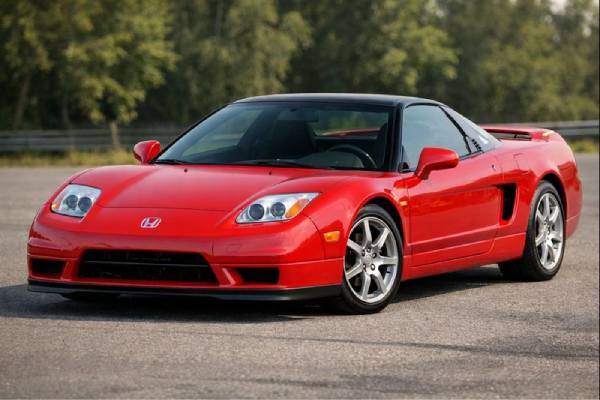

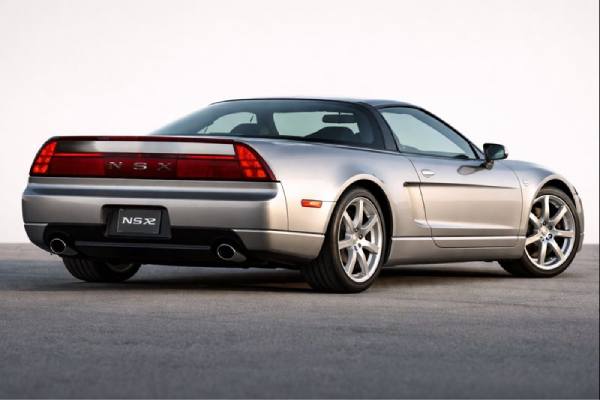
The facelift Honda/Acura NSX NA2 (2002–2005) is the “late, sharp-edged” version of the original aluminum supercar: fixed headlamps, subtle aero revisions, and the 3.2-liter C32B V6 paired with a 6-speed manual. On paper, 290 hp does not sound extreme today, but the NSX’s engineering still feels special—an all-aluminum body and suspension, mid-engine balance, and a drivetrain that rewards careful maintenance more than constant modification.
Ownership is less about chasing peak numbers and more about preserving a tight, precise baseline. When the timing belt service is current, cooling is healthy, and rubber parts are refreshed, these cars age gracefully. Neglect, long storage, or “cheap fixes” tend to show up quickly—often as drivability quirks, heat-related issues, or expensive cosmetic deterioration.
At a Glance
- Strong mid-engine balance with low mass for the class and very predictable breakaway on good tires.
- C32B pulls hardest above ~5,500 rpm, so keeping VTEC and ignition healthy matters.
- Rubber aging (bushings, engine mounts, hoses) is the most common “feel-killer” on older cars.
- Plan a timing belt and water pump service about every 7 years regardless of mileage.
- Brake fluid flush every 24 months helps keep pedal feel consistent and protects ABS components.
On this page
- Facelift NA2 ownership view
- C32B facelift specs tables
- Options, airbags, and ABS
- Common faults and fixes
- Maintenance schedule and buying
- Road performance and economy
- Facelift NA2 vs competitors
Facelift NA2 ownership view
The 2002–2005 facelift is easy to recognize: fixed headlamps replace the pop-ups, the front bumper and underbody airflow were refined, and the chassis tuning leans a touch tighter without losing the NSX’s everyday civility. In NA2 form, the headline is the 3.2-liter C32B V6 and 6-speed manual—a combination that pushes the car toward “driver’s tool” rather than “exotic cruiser.”
What makes it stand out today is how coherently it was engineered. The aluminum structure, aluminum suspension arms, and compact packaging keep weight and inertia low. That matters more than ever because modern performance cars often mask mass with power. In the NSX, you feel the benefits in transitions, braking stability, and the way it rotates at corner entry with very small steering inputs.
The power delivery is also a big part of the appeal. The C32B is naturally aspirated (no turbo lag, no heat-soak drama), and its character is defined by strong top-end breathing. It feels polite below midrange, then comes alive toward the upper rpm band. If the car feels flat, it’s often maintenance-related—aging ignition components, tired O2 sensors, vacuum leaks, or fuel delivery issues can dull the “second half” of the tach.
From an ownership standpoint, the late cars reward preservation. The NSX’s baseline quality is high, but age targets rubber: engine mounts, suspension bushings, and coolant hoses can silently degrade. A 290-hp NSX with fresh mounts and aligned suspension often feels quicker than a neglected example with similar dyno output, because throttle response, shifting, and chassis timing all improve.
One practical note: this guide focuses on the facelift NA2 with the C32B 3.2 and 6-speed manual. Some markets had other combinations, but the ownership priorities here—belt service, cooling health, and chassis rubber—apply broadly. If you buy well and keep services current, the late NSX is one of the few “exotics” that can feel genuinely trustworthy for long trips, not just Sunday runs.
C32B facelift specs tables
Below are the core specifications for the 2002–2005 facelift NSX NA2 with the C32B 3.2 and 6-speed manual. Where real-world figures vary by tire choice, ambient temperature, and surface, the table notes typical ranges so you can set realistic expectations.
Powertrain and efficiency
| Item | Specification |
|---|---|
| Code | C32B |
| Engine layout and cylinders | V6, DOHC, 4 valves/cyl |
| Bore × stroke | 93.0 × 78.0 mm (3.66 × 3.07 in) |
| Displacement | 3.2 L (3,179 cc) |
| Induction | Naturally aspirated |
| Fuel system | Multi-point fuel injection |
| Compression ratio | 10.2:1 |
| Max power | 290 hp (216 kW) @ 7,100 rpm |
| Max torque | 304 Nm (224 lb-ft) @ 5,300 rpm |
| Timing drive | Belt |
| Rated efficiency (typical) | 13–14 L/100 km city, 9–10 L/100 km highway (approx. 17–18 / 23–26 mpg US) |
| Real-world highway @ 120 km/h (75 mph) | ~10.5–12.5 L/100 km (approx. 19–22 mpg US), tires and alignment dependent |
| Aerodynamics | Cd ~0.32 (commonly published); frontal area not consistently published for late cars |
Transmission and driveline
| Item | Specification |
|---|---|
| Transmission | 6-speed manual |
| Drive type | RWD |
| Differential | Helical LSD (typical on 6-speed NA2; verify by VIN/market) |
Chassis and dimensions
| Item | Specification |
|---|---|
| Suspension (front / rear) | Double wishbone / double wishbone (aluminum arms) |
| Steering | Rack-and-pinion, hydraulic assist |
| Brakes | Ventilated discs front/rear (diameters vary by market-year; confirm with VIN) |
| Wheels and tyres | 17 in staggered packages are common on facelift cars; verify sizes fitted on your car |
| Ground clearance | Low sports-car clearance; varies with tire size and ride height |
| Length / width / height | ~4,430 / 1,810 / 1,170 mm (174.4 / 71.3 / 46.1 in) |
| Wheelbase | ~2,530 mm (99.6 in) |
| Turning circle (kerb-to-kerb) | ~11–12 m (varies by measurement method) |
| Kerb weight | Typically ~1,360–1,430 kg (3,000–3,150 lb) depending on equipment/market |
| Fuel tank | 70 L (18.5 US gal / 15.4 UK gal) |
Performance and capability
| Metric | Typical value (well-sorted car on good tires) |
|---|---|
| 0–100 km/h (0–62 mph) | ~4.8–5.2 s |
| 0–60 mph | ~4.6–5.0 s |
| 80–120 km/h (50–75 mph) in 3rd/4th | ~3.5–5.0 s (gear choice matters) |
| Quarter mile | ~13.2–13.7 s @ ~168–175 km/h (104–109 mph) |
| Top speed | ~275–285 km/h (171–177 mph) |
| Braking 100–0 km/h | ~36–41 m (surface/tire dependent) |
| Braking 62–0 mph | ~115–135 ft (surface/tire dependent) |
| Lateral grip | Often ~0.90–0.97 g with modern max-performance street tires |
| Towing / roof load | Not applicable / not recommended |
Fluids and service capacities
| Item | Specification |
|---|---|
| Engine oil | API-quality oil; common choice 5W-30; capacity 5.0 L (5.3 US qt) incl. filter |
| Coolant | Honda/Acura long-life coolant recommended; total system can be large on mid-engine layout (commonly listed around 12–16 L depending on drain method) |
| Manual transmission | Honda/Acura MTF recommended; capacity varies by drain method (commonly ~2.6–2.9 L) |
| Brake fluid | DOT 3/4 quality fluid (verify cap/manual) |
| A/C refrigerant | R-134a; charge approximately 800–850 g (28–30 oz) |
| Key torque specs | Oil drain bolt 45 Nm (33 lb-ft); wheel nuts 108 Nm (80 lb-ft) |
Electrical
| Item | Specification |
|---|---|
| 12V battery | 12V 55 Ah class is typical; confirm group size fitted |
| Spark plugs | OEM-spec plugs recommended; gap and type per service documentation |
Safety and driver assistance
| Item | Specification |
|---|---|
| Crash ratings | Not consistently rated by modern Euro NCAP/IIHS programs for this generation; treat as “unrated by current protocols” |
| Airbags | Dual front airbags; no modern multi-airbag suite |
| ADAS | No AEB/ACC/LKA; this is a pre-ADAS sports car |
Options, airbags, and ABS
The facelift NA2 is relatively simple by modern standards, but there are still meaningful equipment differences that affect buying decisions—especially wheel packages, roof configuration, interior trim, and audio. Most cars are “high spec” from the factory, so you’re often comparing condition and originality rather than hunting for a perfect options list.
Common configuration cues (quick identifiers):
- Fixed headlamps and revised front fascia define the facelift cars.
- Many facelift examples run 17-inch wheels front and rear with a staggered tire setup; check that the wheel widths and offsets match the car’s intended package, because incorrect wheels can introduce tramlining or odd alignment compromises.
- Roof type: Many NSX cars are targa-style with a removable roof panel. Inspect the seals and latches carefully; wind noise and water ingress are usually seal-fit issues rather than “normal.”
- Interior wear points: seat bolsters, shift knob, steering wheel leather, and the driver-side carpet/heel pad tell you how the car lived.
Mechanical or functional differences to watch:
- Suspension state matters more than “sport packages.” A facelift NSX with tired dampers or old bushings can feel nervous over bumps or vague at turn-in. A refreshed, aligned car feels like a different model.
- Brakes and tires: owners sometimes fit track-oriented pads/fluids or nonstandard tire sizes. That can be good—if done thoughtfully—but a mismatch (aggressive front pad with mild rear, or mixed tire models) can make braking feel inconsistent.
- LSD presence: manual NA2 cars commonly have a helical limited-slip differential, but verify by VIN/market and by behavior on a tight, slow turn (a specialist inspection is best).
Safety systems (what you really get):
- Front airbags and seat belts are the main restraint systems. The NSX does not offer the multi-airbag coverage people expect today.
- ABS is a key safety feature for the era. It’s effective when the system is healthy, but old brake fluid and corroded sensors can degrade feel and function.
- Traction control: many NSX variants use a traction control system that can be switched off. It’s not a modern stability-control program; think of it as an extra layer for low-grip situations, not a “save button” at high speed.
Child-seat note: The NSX is a two-seater. In most real-world scenarios, it is not a practical or recommended vehicle for transporting children, even if some tether guidance exists in certain manuals/markets. Treat it as a driver-focused sports car first.
Bottom line: options matter, but maintenance state and originality matter more. A clean, correctly-optioned facelift NA2 that’s been kept stock-ish and serviced on schedule usually delivers the best ownership experience.
Common faults and fixes
The facelift NA2 is fundamentally robust, but it’s old enough that age-related issues can be as important as mileage. The best approach is to think in systems—cooling, ignition/fueling, chassis rubber, and body/interior condition—then map problems by prevalence and cost.
Common (seen often)
- Aging suspension bushings and ball joints (medium–high cost)
Symptoms: vague turn-in, rear steer feeling over bumps, clunks, uneven tire wear.
Likely cause: original rubber hardening and joint wear after decades.
Remedy: targeted refresh (compliance bushings, control arm joints as needed) followed by a precise alignment. Choose alignment specs based on your tire and usage; “generic sports car” settings can make the NSX nervous. - Engine mounts softening (medium cost)
Symptoms: drivetrain lash, shudder on takeoff, sloppy shifting feel, exhaust movement noises.
Likely cause: mount rubber collapse with age/heat cycles.
Remedy: replace mounts with quality OEM-equivalent parts; avoid overly stiff mounts for street cars unless you accept added NVH. - Cooling system aging (medium–high cost if ignored)
Symptoms: temp creep in traffic, coolant smell, slow leaks, brittle hoses.
Likely cause: old hoses, weak clamps, tired radiator, neglected coolant changes.
Remedy: pressure test, replace suspect hoses/clamps, service the radiator/fans as needed, and refill with correct coolant. Mid-engine cars can hide small leaks until they become big ones.
Occasional (depends on use/storage)
- O2 sensors and general “old electronics” drivability (low–medium cost)
Symptoms: inconsistent idle, soft throttle response, poor fuel economy, intermittent CEL.
Cause: aged sensors, vacuum leaks, poor grounds.
Remedy: diagnose systematically; don’t “parts cannon.” A clean baseline—no vacuum leaks, good ignition health, correct plugs—often restores the engine’s character. - A/C performance decline (medium cost)
Symptoms: weak cooling, cycling, oily residue at fittings.
Cause: slow refrigerant leaks, aging compressor seals.
Remedy: leak test, replace seals as needed, recharge to the correct mass.
Rare but expensive (high cost tier)
- Accident repairs and structural corrosion at repair seams
The aluminum structure resists rust, but poor repairs, mixed-metal fasteners, and neglected underbody damage can create long-term issues.
Remedy: specialist inspection; look for consistent panel gaps, correct fasteners, and quality paintwork.
Recalls and service actions (high priority)
- Airbag inflator recalls have affected many Honda/Acura vehicles of this era.
Best practice: verify completion through an official VIN recall check and dealer records. If recall status is unknown, assume it’s open until proven otherwise.
If you want the car to feel “right,” prioritize: cooling health, fresh rubber (mounts/bushings), and a clean ignition/fueling baseline. Those three categories solve most “my NSX doesn’t feel special” complaints.
Maintenance schedule and buying
A facelift NA2 can be a dependable classic if you treat maintenance as preventive, not reactive. Below is a practical schedule you can use when planning ownership. Always verify exact intervals and procedures for your VIN and market.
Practical maintenance schedule (street-driven)
- Engine oil and filter: every 8,000–10,000 km (5,000–6,000 mi) or 12 months. If the car sees short trips or track use, shorten to 5,000 km / 6 months.
- Brake fluid: every 24 months regardless of mileage.
- Coolant: every 3–5 years depending on coolant type used and climate; inspect hoses and clamps at each service.
- Manual transmission fluid: every 30,000–50,000 km (20,000–30,000 mi) or 3–4 years, sooner if shifting feels notchy when warm.
- Spark plugs: typically every 100,000–160,000 km (60,000–100,000 mi) depending on plug type; inspect coils/leads when servicing.
- Engine and cabin air filters: inspect every 12 months, replace as needed (more often in dusty environments).
- Timing belt and water pump: about every 7 years (and include tensioners/idlers). Even low-mileage cars age the belt.
- Accessory belts and hoses: inspect annually; replace at the first signs of cracking, glazing, or seepage.
- Valve clearance: inspect/adjust if the engine is noisy at idle, shows uneven cylinder behavior, or at major service milestones per official guidance.
- Tires: rotate only if sizes allow; otherwise focus on consistent wear via alignment checks every 12 months or after any suspension work.
- 12V battery: test annually; many owners replace proactively every 4–6 years.
Fluids, capacities, and torque values (decision-useful)
- Engine oil capacity: about 5.0 L (5.3 US qt) including filter.
- A/C refrigerant: about 800–850 g (28–30 oz) R-134a.
- Oil drain bolt torque: 45 Nm (33 lb-ft).
- Wheel nuts torque: 108 Nm (80 lb-ft).
Buyer’s guide: inspection checklist
- Service history: proof of timing belt/water pump date, coolant services, and brake fluid intervals.
- Cooling system: pressure test, inspect radiator end tanks, hoses, and fan operation. Any temp creep in traffic is a red flag until diagnosed.
- Chassis feel: clunks, rear steer sensations, or uneven tire wear usually mean bushings or alignment work is due.
- Mounts and drivetrain: check for harsh lash on/off throttle and for clean shifting when hot.
- Body and paint: look for repair signs and mismatched finishes; NSX parts and paint correction can be costly.
- Recall status: confirm airbag-related recall completion through official channels.
Durability outlook: the engine and gearbox can last a very long time when kept stock, warmed properly, and serviced on schedule. The most common long-term cost is not “the engine,” but the collection of rubber, cooling, and age-related items that return the car to its original precision.
Road performance and economy
On the road, the facelift NA2 still feels modern in the ways that matter to a driver. The steering is hydraulic and communicates texture without being busy. The chassis rotates progressively, and the car rarely surprises you—provided tire condition and alignment are correct. A tired setup, however, can misrepresent the platform; vague bushings and old dampers make the car feel smaller than it is in a bad way (nervous), not in a good way (agile).
Ride, handling, and NVH
- Ride quality: firm but controlled on a healthy suspension. Impacts are clean rather than crashy, and the structure feels rigid because the aluminum chassis resists the “shudder” common in older sports cars.
- Handling balance: naturally neutral-to-slight oversteer when pushed, with strong mid-corner stability. Lift-off rotation is real but predictable—good tires and smooth inputs make it friendly.
- Braking feel: strong and consistent when fluid is fresh and pads match the car’s intended use. If the pedal feels long or inconsistent, start with fluid condition and caliper slide health before assuming major hardware issues.
- Cabin noise: you’ll hear tire roar and engine induction more than wind noise on a well-sealed targa. Seal aging is the usual cause of whistling or water ingress.
Powertrain character
The C32B is not a “big torque” engine by modern turbo standards. Below midrange it’s clean and responsive; above that, it builds intensity. The reward is how controllable it is—throttle changes are immediate, and traction is easy to meter. The 6-speed’s spacing lets you keep the engine in its stronger band, and the car feels quickest when you drive it like Honda intended: high revs, precise shifts, and momentum preserved through corners.
Real-world efficiency
Expect economy to be highly sensitive to speed and alignment:
- City driving: typically 13–14 L/100 km (stop-and-go raises it quickly).
- Highway cruising (100–120 km/h): typically 10–12.5 L/100 km depending on tires, toe settings, and headwind.
- Mixed: many owners land around 11–13 L/100 km.
Cold weather usually hurts economy less than in turbo cars, but short trips still do damage—oil never stabilizes, and condensation accumulates. If the car is stored, plan on a careful recommission (fresh fluids, inspection of rubber, and attention to brakes) before you trust it on longer drives.
Key performance metrics (what matters in practice)
The NSX’s real advantage is not just the 0–100 number—it’s repeatability. When cooling is healthy and fluids are fresh, it can deliver consistent laps or mountain-road runs without feeling fragile. Most “slow NSX” stories trace back to maintenance or old tires, not the design itself.
Facelift NA2 vs competitors
Cross-shopping a facelift NA2 usually means comparing it to other early-2000s driver-focused sports cars—some more powerful, some more visceral, and many less “complete” as an ownership package. The key is deciding what you value: speed-per-euro, feel-per-kilometer, or long-term satisfaction.
Versus Porsche 996-era 911 (Carrera)
- NSX advantages: mid-engine balance, unusually friendly limits, and a more “mechanical” connection at sane speeds. The NSX also tends to feel special without needing to be driven aggressively.
- Porsche advantages: broader torque feel, more rear-seat/cargo practicality, and deeper specialist support in many regions.
- Ownership reality: both reward maintenance, but the NSX is often simpler to enjoy once sorted—less sensitivity to small faults, fewer “compounding” issues when a service is missed.
Versus Ferrari 360 / F355
- NSX advantages: lower stress ownership and better day-to-day usability. Heat management and drivability are typically less dramatic, and the car tolerates real road mileage well.
- Ferrari advantages: higher sensory drama, often stronger straight-line urgency, and a more intense “event” factor.
- Ownership reality: if you want the exotic experience every time you open the garage, Ferrari wins. If you want a classic you can drive often with confidence, the NSX is hard to beat.
Versus Corvette C5 / early C6
- NSX advantages: smaller footprint, more delicate steering feel, and a chassis that communicates clearly on tight roads.
- Corvette advantages: torque, parts availability, and usually a much lower purchase price for similar performance.
- Ownership reality: Corvette is the value performance play; NSX is the precision play.
Versus Japanese icons (Supra, RX-7, Skyline in some markets)
- NSX advantages: factory integration and balance. It feels engineered as a whole, not as a platform waiting for upgrades.
- Turbo icon advantages: tuning headroom and often stronger straight-line performance potential.
- Ownership reality: modified cars can be thrilling, but the NSX’s appeal is how “right” it feels stock.
If your priority is ultimate speed, a cheaper or newer car will win. If your priority is a timeless driving tool that mixes reliability-minded engineering with true exotic layout, the facelift NA2 remains one of the smartest enthusiast buys—provided you budget for age-related restoration, not just purchase price.
References
- 2005 NSX Online Reference Owner’s Manual 2005 (Owner’s Manual)
- FEG2005_BODY_Updates.pmd 2005 (Fuel Economy Guide)
- Check for Recalls: Vehicle, Car Seat, Tire, Equipment | NHTSA 2026 (Recall Database)
- Acura 2005-2016 Multi-Model Driver’s Airbag Inflator … 2016 (Recall Bulletin)
- 2005-2012 Multi-model Acura Passenger’s Airbag Inflator 2017 (Recall Bulletin)
Disclaimer
This article is for informational purposes only and is not a substitute for professional diagnosis, inspection, or repair. Specifications, torque values, service intervals, and procedures can vary by VIN, market, model year, and equipment. Always verify details using your official owner’s manual, factory service information, and recall status tools before performing maintenance or making purchase decisions.
If you found this guide useful, please consider sharing it on Facebook, X (Twitter), or your favorite forum to support our work.