


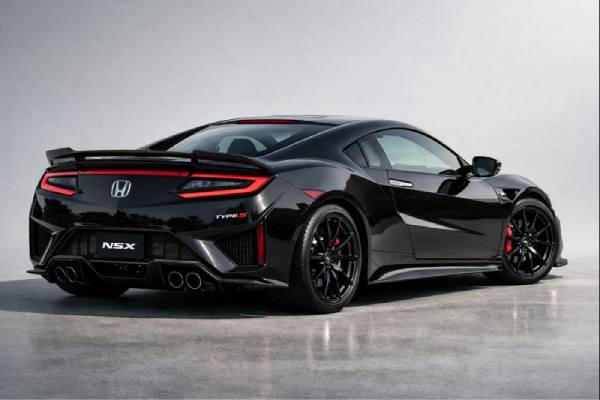
The 2022 NSX Type S is the final and most focused version of the second-generation NSX: a mid-engine twin-turbo V6 paired with a three-motor hybrid system and a 9-speed dual-clutch transmission. Unlike many “last edition” cars, the Type S upgrades hardware and calibration in meaningful ways—stronger boost response, sharper shifts, and a more track-capable brake and aero package—while keeping the NSX’s everyday manners. It also remains unusual among supercars for how approachable it feels at lower speeds, thanks to instant electric torque fill and a drivetrain that can quietly manage traction in poor conditions.
Ownership is less about chasing outright horsepower and more about keeping a complex, high-heat powertrain healthy. The reward is a modern performance car with real engineering depth, excellent drivability, and a level of hybrid torque-vectoring sophistication that still feels distinctive today.
What to Know
- Fast, confidence-building traction from the three-motor hybrid system and torque vectoring.
- Noticeably sharper drivetrain response than the standard NC1, especially in Sport and Track modes.
- Surprisingly usable in normal driving: stable cooling strategy, refined ride, and strong visibility for a supercar.
- Ownership caveat: parts and labor can be specialized, and track use raises heat and brake costs quickly.
- Plan on engine-oil service about every 10,000 km (6,200 mi) or 12 months (sooner with short trips or track time).
Jump to sections
- What makes the 2022 Type S different
- 2022 NSX Type S specs
- Options, safety, and assist tech
- Reliability, weak spots, and recalls
- Maintenance plan and buying checks
- Driving feel and real efficiency
- Type S vs key rivals
What makes the 2022 Type S different
Type S is not a cosmetic badge on the NC1 NSX—it is a “final calibration and hardware” package that targets response, heat management, and track repeatability. The core layout stays the same: a mid-mounted 3.5-liter twin-turbo V6 driving the rear axle through a 9-speed dual-clutch transmission (DCT), plus two electric motors at the front axle and one motor integrated with the rear drivetrain. Together, that system provides all-wheel drive behavior and torque vectoring without the usual mechanical drag of a traditional AWD transfer case.
Where Type S feels different is in how it delivers power and how quickly it reacts to a driver’s request. You get more system output, but the bigger gain is “how” the car builds speed: electric torque smooths the first beat of acceleration, turbos take over with less delay, and the DCT does less second-guessing during hard driving. On a back road, that translates into fewer moments where the car feels like it is catching up to you. Instead, it feels keyed-in, with a cleaner connection between throttle, chassis, and exit speed.
The chassis side matters just as much. Type S cars are commonly equipped with more aggressive aero pieces that increase stability at speed, and many have carbon-ceramic brakes. Those changes are not just for lap-time bragging rights. They help the car repeat braking events without soft pedal feel, and they reduce the “heat stress” that can accumulate in track sessions—one of the main enemies of consistent performance in any turbo-hybrid platform.
From an ownership perspective, Type S is also the best expression of NC1 refinement. The car can behave like a quiet, modern GT when you want it to, then become a sharp, high-grip tool when you switch modes and push. If you are buying one to drive rather than store, this dual personality is one of its biggest advantages—provided you respect warm-up, cooling, and fluid health the way you would with any high-output turbo car.
2022 NSX Type S specs
Below is a focused, practical spec set for the 2022 NSX Type S (NC1). Keep in mind that published numbers can vary slightly by test method and tire fitment. Where measurements differ by source, it usually comes down to rounding, wheel and tire differences, and whether the value is manufacturer-stated or independently measured.
Powertrain and efficiency
| Item | Specification |
|---|---|
| Code | JNC1 |
| Engine layout and cylinders | Mid-mounted V6 (twin-turbo), DOHC |
| Displacement | 3.5 L (3,493 cc) |
| Induction | Twin-turbocharged |
| Hybrid system | 3 motors (2 front axle, 1 rear assist) |
| Max system power | 600 hp (447 kW) |
| Max system torque | 492 lb-ft (667 Nm) |
| Transmission | 9-speed dual-clutch automatic (DCT) |
| Drive type | AWD (hybrid torque vectoring) |
| Rated efficiency (EPA, US) | 21 mpg city / 22 mpg hwy / 21 mpg combined (≈ 11.2 / 10.7 / 11.2 L/100 km) |
| Real-world highway at 120 km/h | Commonly ~10–13 L/100 km depending on temperature, tires, and traffic |
Chassis and dimensions
| Item | Specification |
|---|---|
| Suspension (front/rear) | Double wishbone / multi-link (performance-tuned) |
| Brakes (front/rear) | Performance discs; carbon-ceramic optional on many cars |
| Wheels and tires (typical Type S fitment) | 245/35ZR19 front, 305/30ZR20 rear |
| Length | ~4,496 mm (177.0 in) |
| Width | ~1,930 mm (76.0 in) |
| Height | ~1,214 mm (47.8 in) |
| Wheelbase | ~2,629 mm (103.5 in) |
| Turning circle (kerb-to-kerb) | ~12.1 m (39.7 ft) |
| Kerb weight | ~1,770 kg (3,903 lb) |
| Cargo volume | Small rear compartment; varies by measurement method |
Performance and capability
| Metric | Value (typical published or tested) |
|---|---|
| 0–60 mph (0–97 km/h) | ~3.1 s (independent test) |
| 0–100 km/h (0–62 mph) | ~3.3 s (derived from test range) |
| 1/4 mile | ~11.2 s @ 124.1 mph (199.7 km/h) |
| Top speed | ~307 km/h (191 mph) |
| Braking 60–0 mph | ~103 ft (31.4 m) |
| Braking 100–0 km/h | ~33.5 m (approx.) |
| Lateral grip (skidpad) | ~1.03 g (test-dependent) |
Why the numbers vary
- Hybrid state of charge (SOC): If the battery is not in its sweet spot, torque fill can soften slightly.
- Surface and temperature: AWD traction helps, but cold tires and cold pavement still slow launches.
- Tire choice: Type S cars may wear different compounds; that affects both 0–60 and braking distance.
- Repeatability: Turbo heat and brake heat change how the car feels after multiple hard pulls, which is why cooling discipline matters.
If you want a “real answer” to performance, treat the 0–60 mph and braking distance as ranges rather than a single number. In healthy condition with warm tires and good SOC, the Type S lives in the low-3-second 0–60 world and has braking distances that match many contemporary exotics—especially if equipped with carbon-ceramic brakes.
Options, safety, and assist tech
Because the Type S is a single-year, limited-run model, “trim” structure is simpler than most cars. You are essentially choosing a Type S, then selecting equipment combinations that change cost, appearance, and track readiness. The most meaningful differences are mechanical or functional, not cosmetic.
Common Type S equipment themes
- Aero and cooling details: Many Type S cars carry more aggressive aero pieces than the standard NC1, aimed at high-speed stability and better heat management around the drivetrain and brakes. If you plan occasional track days, this matters more than it looks on paper.
- Brake package: Carbon-ceramic brakes show up frequently on Type S builds. They resist fade and reduce unsprung mass, but they can be expensive to service if damaged or worn from repeated track heat cycles.
- Wheel and tire packages: Wider rear tires are central to the NSX’s traction and balance. Different tire compounds change the car’s personality more than many buyers expect—especially steering feel and cold-weather grip.
- Interior and weight tradeoffs: Some equipment choices improve feel (seating, materials) but do not necessarily improve lap-time. For track use, condition and cooling matter more than cabin spec.
Quick identifiers when shopping
- Brake rotor appearance: Carbon-ceramic rotors typically have a different surface texture and often look “cleaner” than iron rotors after use.
- Wheel sizes and tire codes: Verify the staggered setup and confirm tire age. Supercar performance depends heavily on fresh, correct-spec tires.
- Aero parts: Check for consistent fit and OEM-style fasteners. Poor repairs can create wind noise or cooling inefficiencies.
Safety ratings and real-world safety story
For a low-volume supercar, formal crash-test coverage can be limited. If you do not see a clear, model-specific rating from major agencies for the Type S, that is not unusual. What you can evaluate instead is the car’s safety fundamentals:
- Structural design: The NSX uses a modern performance structure designed for rigidity and predictable energy management, which helps both crash performance and handling.
- Stability control and traction management: The hybrid torque vectoring system supports stability in low grip, and electronic stability control is tuned for high-performance driving.
- Airbags and restraint system: Expect a modern airbag layout for its era, with seatbelts and pretensioners designed for high-speed impact management.
Driver assistance systems
Do not expect a full “modern ADAS suite” like highway lane-centering and traffic-jam automation. Cars like the NSX Type S are typically built around driver engagement first. You may see features such as rear camera systems and parking assistance depending on market and equipment, but the NSX is not defined by AEB, adaptive cruise, or lane-centering technology. The practical takeaway: treat it like a performance car, not a semi-automated commuter, and keep your expectations aligned with its mission.
Reliability, weak spots, and recalls
The NC1 NSX platform is generally well-engineered, but the Type S is still a turbo-hybrid supercar. Reliability depends heavily on heat control, fluid quality, and correct service procedures. Think of it less like a “simple Honda” and more like a complex, tightly packaged performance system that happens to be built with strong manufacturing discipline.
Common issues (prevalence and cost tiers)
Common (low to medium cost):
- Battery and 12V sensitivity: A weak 12V battery can cause odd warnings in modern performance cars. Symptoms often look worse than the root cause (random alerts, slow startups, module communication faults). Remedy: test the 12V battery and charging system before chasing deeper problems.
- Tire wear and alignment drift: Staggered high-performance tires wear quickly, and aggressive alignment settings can accelerate inner shoulder wear. Remedy: frequent inspection and alignment checks, especially after curb impacts.
Occasional (medium to high cost):
- Brake cost shock (especially carbon-ceramic): Carbon-ceramic brakes last a long time in street driving, but track heat and debris can damage rotors. Symptoms: vibration, chipping, or unusual noise. Remedy: inspect carefully before buying; avoid cheap pad compounds that are not compatible.
- Cooling-system stress from track use: Repeated hard laps raise temps across the engine, hybrid components, and DCT. Symptoms: reduced power, warning messages, or less consistent shift behavior. Remedy: follow cooldown laps, keep heat exchangers clean, and use correct fluids.
Rare (high cost):
- Turbo and charge-air system leaks: A small leak can feel like “lost punch” or inconsistent boost. Remedy: smoke test and check clamps, hoses, and intercooler connections with proper access.
- Hybrid component faults: These are uncommon, but diagnosis must be done by technicians familiar with high-voltage systems. Remedy: dealer-level or specialized service support.
Service actions, recalls, and how to verify
Even if you do not find a Type S-specific recall history, you should still verify the car’s status through official channels. The best approach is simple:
- Run a VIN recall check using an official recall lookup tool.
- Request dealer service records showing campaign completion and software updates.
- Inspect for warning lights and stored codes with a scan tool that can read hybrid and chassis modules.
Software and calibration notes
On complex powertrains, software matters. Updates can address drivability, warning logic, sensor thresholds, and charging behavior. A car can feel “off” due to outdated calibration or a low 12V battery long before any real hardware failure occurs. When you test drive, you want clean, consistent transitions between electric assist and engine power, stable idle behavior, and crisp DCT response with no hesitation under full throttle.
The ownership lesson is straightforward: most NSX “problems” become manageable when you treat the car like a heat-managed system and maintain it on condition, not just mileage.
Maintenance plan and buying checks
A strong maintenance plan for the NSX Type S focuses on fluids, heat, and inspection discipline. Because the car uses a turbo engine, a DCT, and high-voltage hybrid components in a tight package, small issues can grow if you ignore them.
Practical maintenance schedule (distance and time)
Use this as a decision-making baseline and always defer to official documentation for your VIN and market:
- Engine oil and filter: every 10,000 km (6,200 mi) or 12 months, sooner with short trips, frequent boost, or track days. Use the correct oil spec and viscosity for your region.
- Engine air filter: inspect every 15,000–20,000 km, replace when dirty or annually in dusty climates.
- Cabin air filter: annually or every 15,000–20,000 km.
- Coolant (engine and hybrid-related loops where applicable): typically every 5 years initially, then on a shorter cycle depending on the fluid type used.
- Brake fluid: every 2 years, and annually if the car sees track heat.
- DCT fluid: inspect and replace on the manufacturer schedule; consider shorter intervals if driven hard in hot climates.
- Tires: inspect tread and date codes often; replace based on wear and age, not just mileage.
- Alignment: at least annually, and after any pothole or curb impact.
- 12V battery: test annually; replace proactively if starting behavior changes or voltage drops quickly.
Track-use add-ons (highly recommended)
- Shorten oil and brake-fluid intervals.
- Inspect brake pads, rotors, and caliper seals more frequently.
- Check coolant condition and radiator/intercooler cleanliness.
- Monitor tire pressures and temperatures; incorrect pressures can ruin handling and wear patterns quickly.
Buyer’s guide checklist (what to inspect)
Documentation
- Full service history with dates and mileage.
- Proof of software updates and campaign completion where applicable.
- Tire purchase and alignment records (these hint at how carefully the car was owned).
Mechanical condition
- Look for coolant staining or residue near heat exchangers and hose junctions.
- Check for consistent boost response and no hesitation at wide-open throttle.
- Inspect underbody panels and aero parts for damage and poor repairs.
- Listen for unusual drivetrain noises at low speed (clicking, clunks), which can indicate worn components or impact damage.
Brakes and wheels
- If carbon-ceramics are fitted, inspect rotor surfaces for chips or cracks.
- Confirm the car wears correct-spec tires and that tire age is reasonable.
Electrical and hybrid health
- Confirm the car starts cleanly without warning lights.
- Verify normal mode changes and smooth torque delivery.
- If possible, scan for stored fault codes even if no lights are on.
Long-term durability outlook
A well-maintained Type S can be dependable, but it rewards owners who think ahead. Budget for premium tires, higher brake costs, and specialized service access. If you do that, you get a rare performance car that can be driven often without feeling fragile.
Driving feel and real efficiency
The Type S driving experience is defined by how seamlessly it blends electric torque with turbo power. Around town, the car can feel smoother than you expect from a 600 hp supercar. Low-speed drivability is one of its quiet strengths: throttle mapping is predictable, the DCT can behave politely when you are not pushing, and the chassis is stable rather than nervous.
Ride, handling, and NVH
- Ride quality: Firm, but not punishing for its class. The car feels tied down without constantly crashing into bumps.
- Steering and balance: The front axle has a “planted” feel that comes from torque vectoring and good front geometry. The rear stays calm under power because the drivetrain actively manages slip rather than letting it build suddenly.
- Braking feel: With iron brakes, expect strong bite and good modulation. With carbon-ceramics, the pedal often feels more consistent under repeated high-load stops, but cold bite can vary by pad compound.
- Cabin noise: You will hear tire roar and powertrain character at speed, but it does not feel crude. As a daily-drivable exotic, the NSX remains one of the more civilized options.
Powertrain character
Type S feels quickest when you drive it like a system:
- The front motors provide instant response off the line and during transient throttle applications.
- The V6 supplies the main sustained power, with turbos delivering big speed once you are moving.
- The DCT is most convincing in sportier modes where it holds gears and reacts decisively.
If you drive aggressively, pay attention to state of charge and temperature. Like most turbo-hybrids, it can feel strongest when the battery is in a good window and the cooling system is not heat-soaked. For spirited road driving, that is rarely a problem. For repeated hard pulls or track sessions, cooldown strategy matters.
Real-world efficiency
EPA numbers for cars like this are less about saving fuel and more about understanding realistic consumption. In mixed driving, it is normal to see consumption shift widely based on how often you access boost:
- Gentle cruising can look surprisingly reasonable for the performance.
- Repeated acceleration and high-speed driving will push consumption sharply higher.
Treat the fuel economy figures as “best-case bookends,” and plan your ownership budget around tires and brakes rather than fuel cost. The bigger efficiency advantage of the hybrid system is responsiveness and traction—not EV range.
Type S vs key rivals
The NSX Type S occupies a unique lane. It is not the lightest, loudest, or most dramatic supercar in the traditional sense. Instead, it competes on usable performance, all-weather traction confidence, and a technical drivetrain that still feels ahead of its time.
Versus Porsche 911 (GTS and Turbo variants)
A 911 often wins on breadth of configurability, everyday practicality, and long-term ecosystem support. The NSX counters with mid-engine balance and a hybrid AWD system that can feel exceptionally secure when the road surface is imperfect. If you prioritize steering feel and a massive aftermarket/track community, Porsche tends to be the easier ownership path. If you want a more “exotic” layout with a different flavor of traction and torque delivery, the NSX stands out.
Versus McLaren (Sports Series-era cars)
McLarens can feel lighter and more razor-edged, especially in steering and chassis communication. The NSX is typically more forgiving and less demanding in mixed driving, and many owners value its calmer behavior in traffic and wet conditions. The tradeoff is that the NSX may not deliver the same airy, featherweight sensation as a carbon-tub McLaren on a perfect road.
Versus Audi R8 V10
The R8 leans into naturally aspirated character and sound, with straightforward, linear response and a reputation for approachability. The NSX is more complex but also more technologically layered. If engine sound and classic V10 drama matter most, the R8 has a strong emotional advantage. If you prefer hybrid torque fill, modern traction management, and a more “systems-engineered” feel, NSX is the more distinctive choice.
Why the Type S still makes sense
- If you drive it often: It behaves like a modern car at low speed without giving up serious pace.
- If you want traction confidence: The hybrid torque vectoring can be a genuine advantage on real roads.
- If you value engineering uniqueness: Few cars blend mid-engine layout, three motors, and DCT behavior this way.
The short verdict: the NSX Type S is best for owners who want supercar speed with fewer supercar “moods,” and who appreciate the engineering story as much as the badge.
References
- Comparison Test: 2022 Acura NSX Type S vs. 2022 Porsche 911 GTS 2021
- 2022 Acura NSX Type S Goes Out on Top 2021
- Check for Recalls: Vehicle, Car Seat, Tire, Equipment | NHTSA 2026 (Recall Database)
- Acura NSX TYPE S specifications and features chart 2022 (Specifications)
Disclaimer
This article is for informational purposes only and is not a substitute for professional diagnosis, repair, or safety inspection. Specifications, torque values, service intervals, and procedures can vary by VIN, market, and equipment. Always verify details using official Acura service information and the documentation specific to your vehicle.
If you found this guide useful, please consider sharing it on Facebook, X (Twitter), or your favorite forum to help others discover it.