

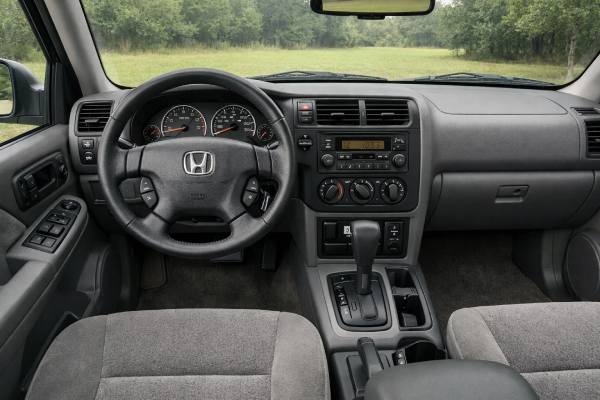

If you’re looking at the 2000–2002 Honda Passport 4WD (DM58), you’re really evaluating a rugged, body-on-frame midsize SUV built around Isuzu hardware, finished and supported through Honda’s dealer network. The 3.2-liter 6VD1-W V6 is a straightforward, naturally aspirated engine that delivers its usable torque low enough for daily driving and light towing, while the part-time 4WD system (with low range) gives the Passport real mechanical capability on snow, mud, and rough tracks. The trade-off is that this generation sits between eras: modern enough to be convenient, but old enough that corrosion, rubber aging, and driveline wear decide the ownership experience. A well-kept example can be durable and simple to maintain; a neglected one can become a “catch-up” project quickly.
What to Know
- Strong low-range 4WD and truck-style chassis make it genuinely useful on bad roads and in winter.
- Simple V6 and conventional drivetrain are serviceable without exotic tools or software.
- Cabin and cargo packaging are practical for five, with upright visibility that still feels “SUV honest.”
- Rust and rear suspension mounting corrosion are the big value-killers—inspect the frame carefully.
- If driven in harsh use, plan on engine oil and filter every 6,000 km (3,750 mi) or 3 months.
Quick navigation
- Honda Passport 4WD DM58 in context
- Honda Passport DM58 specs table
- Honda Passport 4WD trims and safety kit
- Known problems and campaigns
- Maintenance plan and buyer checks
- Road behavior and fuel use
- Rival check in 2000–2002
Honda Passport 4WD DM58 in context
The 2000–2002 Passport 4WD (DM58) sits at the end of the original Passport story: a traditional body-on-frame midsize SUV with a real transfer case, low range, and truck-like durability priorities. It’s also a “bridge” vehicle—newer than the early ’90s SUVs in comfort and power, but older than the unibody crossovers that would soon dominate Honda showrooms. That matters because the Passport’s strengths are mechanical, while its weaknesses are mostly age-related.
From an engineering viewpoint, the core appeal is the powertrain and drivetrain layout. The 3.2-liter 6VD1-W V6 is naturally aspirated (no turbo heat management, no direct-injection carbon issues), and it’s paired with either a 4-speed automatic or 5-speed manual. In 4WD form, you’re getting a part-time system intended for traction-limited conditions, plus low range for controlled crawling. This is not “soft-roader” AWD behavior; it’s the kind of hardware that can actually help you climb a rutted track without burning a clutch or cooking a transmission—assuming the fluids are healthy and the transfer case engages cleanly.
The other big “why” is usability. The Passport’s upright seating and tall glass make it easy to place on the road, and the boxy cargo area works well for real objects. Owners often like that it feels honest: you can hear and feel the truck roots, but you also get a conventional interior layout without the learning curve of newer infotainment.
The deciding factor for today’s buyers is condition, not brochure promise. Any Passport DM58 is now old enough that corrosion, bushings, ball joints, shocks, brake hydraulics, and electrical grounds can dominate reliability. The good news is that most repairs are approachable and don’t require brand-specific diagnostic subscriptions. The bad news is that a cheap example can become expensive if you’re paying labor for everything. If you want the Passport experience at its best, start with structure: a clean frame, clean rear suspension mounting points, and a drivetrain that engages 4WD without drama.
Honda Passport DM58 specs table
Below are practical, ownership-relevant specifications for the 2000–2002 Passport 4WD with the 3.2L 6VD1-W (205 hp). Numbers can vary slightly by trim, tire package, and transmission, so treat them as a spec “envelope” and verify against your VIN-specific documentation.
Powertrain and efficiency
| Item | Spec (2000–2002 Passport 4WD DM58) |
|---|---|
| Code | 6VD1-W |
| Engine layout and cylinders | 75° V6, water-cooled 4-stroke, 6 cylinders |
| Valvetrain | DOHC, 24 valves |
| Displacement | 3.2 L (3,165 cc) |
| Induction | Naturally aspirated |
| Fuel system | Gasoline (port injection; system specifics vary by market calibration) |
| Compression ratio | 9.1:1 |
| Max power | 205 hp (153 kW) @ 5,400 rpm |
| Max torque | 290 Nm (214 lb-ft) @ 3,000 rpm |
| Timing drive | Belt |
| Rated efficiency (EPA, typical) | 4WD Automatic: 15 city / 19 highway / 16 combined mpg (15.7 / 12.4 / 14.7 L/100 km approx.) |
Transmission and driveline
| Item | Spec |
|---|---|
| Transmission | 4-speed automatic (typical for EX 4WD) or 5-speed manual (availability varies by trim/market) |
| Drive type | Part-time 4WD with low range |
| Differentials | Rear limited-slip differential commonly listed on 4WD specs; verify by build/trim |
Chassis and dimensions
| Item | Spec |
|---|---|
| Suspension (front) | Independent wishbone, torsion bars, stabilizer bar |
| Suspension (rear) | 5-link coil spring, stabilizer bar, shock absorbers |
| Wheels and tires (common) | 245/70 R16 on 16×7JJ wheels (trim-dependent) |
| Tire pressure (245/70R16) | 26 psi (180 kPa) |
| Wheelbase | 2,702 mm (106.4 in) |
| Length | 4,678 mm (184.2 in) |
| Width | 1,784 mm (70.4 in) LX/EX; up to 1,806 mm (71.1 in) on some packages |
| Height | ~1,743–1,748 mm (68.6–68.8 in), tire/trim dependent |
| Fuel tank | 75 L (19.5 US gal / 16.5 UK gal) |
| GVWR | 2,245 kg (4,950 lb) |
| Curb weight (typical 4WD) | ~1,850–1,855 kg (≈4,050–4,100 lb), trim dependent |
| Cargo volume (seats up) | ~934 L (33 cu ft), trim dependent |
Performance and capability
| Item | Practical expectation |
|---|---|
| Acceleration | Typically mid-9s seconds 0–60 mph (varies with transmission and condition) |
| Towing capacity (braked) | Up to 2,041 kg (4,500 lb), equipment-dependent |
| Low-range use | Suitable for steep, low-speed control when 4WD and low range engage properly |
Fluids and service capacities
| System | Specification and capacity |
|---|---|
| Engine oil | Use the viscosity recommended for your climate; service refill approx. 4.7 L (5.0 US qt) with filter, 4.0 L (4.2 US qt) without |
| Coolant | Radiator capacity approx. 10.5 L (11.1 US qt) AT / 10.6 L (11.2 US qt) MT |
| Automatic transmission | Fluid capacity approx. 8.6 L (9.1 US qt) |
| Transfer case | Approx. 1.45 L (1.5 US qt) |
| Rear axle (diff) | Approx. 1.77 L (1.87 US qt) |
| Front axle (4WD) | Approx. 1.5 L (1.6 US qt) |
| A/C refrigerant | R-134a, 650 g (22.9 oz) |
| Key torque spec | Wheel nuts: 118 N·m (87 lb-ft) |
Electrical
| Item | Spec |
|---|---|
| Spark plug | PK16PR11; gap 1.05 mm (0.04 in) |
| 12V system | Conventional 12V battery and alternator (ratings vary by equipment) |
Safety and driver assistance
| Item | Notes |
|---|---|
| Crash ratings (IIHS) | Moderate overlap front (original test): overall Marginal; details vary by injury measure |
| ADAS | No modern ADAS suite (no factory AEB/ACC/LKA era-typical) |
Honda Passport 4WD trims and safety kit
For 2000–2002, most shoppers will encounter the Passport in LX and EX form, with 4WD available across the range depending on market. In everyday terms, the trims don’t radically change the underlying vehicle; the important differences are usually equipment level, tire package, and which transmission you’re looking at. That makes buying simpler, but it also means condition and maintenance history matter far more than chasing a particular badge.
Trims and options that actually change ownership
LX tends to be the “workhorse” configuration: simpler interior, fewer luxury items to age badly, and typically fewer electrical gremlins over time. This is the trim many owners prefer for long-term value because it’s easier to keep tight and rattle-free. If you’re buying for rough-road use, fewer gadgets can be a feature.
EX adds comfort and convenience equipment that can be worth it if the vehicle has been cared for—think nicer interior finishes and option packages that may include upgraded wheels or additional comfort features. The catch is that older luxury add-ons increase the number of failure points: window regulators, seat mechanisms, climate-control quirks, and worn interior switches can add up.
Driveline identifiers: On a test drive, confirm the 4WD system operation, not just the presence of a “4WD” badge. You want clean engagement into 4H and 4L (where equipped), no grinding or flashing indicators, and no binding on tight turns when you’re back in 2H. If it’s equipped with a rear limited-slip differential, confirm it’s not chattering due to wrong fluid or neglect.
Towing equipment: Many Passports are rated up to 4,500 lb when properly equipped, but that doesn’t mean every used example is ready to tow today. A buyer should confirm: hitch class, wiring integrity, transmission cooling condition, brake condition, and tire load rating. On older vehicles, towing is less about brochure rating and more about current thermal margin and braking confidence.
Safety equipment and what it means in 2000–2002
The Passport DM58 era predates modern advanced driver assistance systems. Safety is mostly: structure, belts, airbags, brakes, and tires. Dual front airbags are typical for the era, and later-model updates improved frontal protection hardware compared with earlier versions. Still, the real-world takeaway is simple: drive it like a heavy, tall, older SUV. Leave longer following distance, prioritize tire quality, and don’t ignore brake feel changes.
If you’re comparing crash-test outcomes, recognize that testing protocols evolved, and this vehicle is from an earlier safety baseline. That doesn’t make it unusable—it just changes how you manage risk. The most meaningful “upgrade” you can buy today is a well-maintained chassis: good dampers, fresh bushings, quality tires, properly bled brakes, and correctly functioning seatbelts.
Known problems and campaigns
A Passport DM58 can be dependable, but it has a clear pattern: age and environment determine whether it’s a comfortable older truck or a constant project. Below are the issues that most often decide cost and satisfaction, grouped by prevalence and severity.
Common (plan for it)
- Corrosion and frame-area rust (high severity in salt regions)
Symptoms: flaking rust, bubbling undercoating, uneven rear alignment, clunks over bumps, or visible scaling around rear suspension mounting points.
Root cause: road salt exposure plus time; moisture traps around brackets and seams.
Remedy: aggressive inspection before purchase, professional rust assessment, and corrective reinforcement/repair where appropriate. If corrosion is advanced, walk away—structural repair can exceed vehicle value. - Suspension wear: bushings, ball joints, shocks (medium severity)
Symptoms: wandering steering, tire cupping, clunks, brake dive, and a “busy” ride.
Root cause: rubber aging and high unsprung mass; off-road use accelerates it.
Remedy: replace worn joints and bushings in sets where possible, align afterward, and don’t cheap out on shocks if you want stable highway behavior. - 4WD engagement issues (medium severity)
Symptoms: reluctant engagement, flashing 4WD indicator, or binding/odd noises.
Root cause: neglected fluid services, actuator/vacuum issues (system-dependent), or driveline wear.
Remedy: verify correct fluids, confirm transfer case operation, and address engagement faults early before gear damage.
Occasional (depends on maintenance)
- Automatic transmission shift quality degradation (medium to high severity)
Symptoms: delayed engagement into Drive/Reverse, flares, harsh shifts, or overheating when towing.
Root cause: old ATF, heat cycling, towing without adequate cooling margin, or internal wear.
Remedy: baseline service with correct fluid, inspect for leaks, evaluate cooling, and avoid buying an example that already slips under load. - Oil leaks and gasket seepage (medium severity)
Symptoms: oil smell, drips, wet engine block, low oil between services.
Root cause: gasket aging, seal hardening, and crankcase pressure from tired PCV systems.
Remedy: fix leaks methodically, keep PCV service current, and avoid “stop leak” shortcuts.
Rare but expensive (screen carefully)
- Severe corrosion-related suspension bracket failure risk (high severity)
This is the “do not ignore” category. If the rear suspension mounting areas show heavy scaling, cracks, or prior patchwork, treat it as a safety issue, not a cosmetic one. Vehicles in road-salt regions deserve extra scrutiny and documentation showing inspection and any corrective action.
Recalls, service actions, and verification
Some 1998–2002 Passports were covered by a rear suspension corrosion safety recall campaign in salt-belt conditions. The practical advice is: verify completion by paperwork and dealer record, and inspect the repaired area anyway. On older vehicles, paperwork isn’t enough—quality of repair and current condition both matter.
Pre-purchase checks to request (highest ROI)
- Undercarriage inspection on a lift focused on frame rails and rear suspension brackets.
- 4WD function test including low range where equipped (in a safe, low-traction area).
- Fluid condition check: engine oil, ATF, transfer case, front and rear axle oils.
- Cooling system integrity: proper temperature control, no coolant smell, no crusted hoses.
- Tire wear pattern: uneven wear often flags suspension or alignment neglect.
Maintenance plan and buyer checks
A Passport DM58 rewards preventative maintenance. The goal is to keep fluids fresh, heat under control, and wear items caught early—because the expensive failures usually arrive after long neglect. Use the schedule below as a practical baseline, then tighten it if the vehicle tows, idles a lot, or lives in dust, snow, or short-trip use.
Core maintenance schedule (practical baseline)
- Engine oil and filter
Normal use: follow the standard interval in the maintenance schedule.
Severe use: 6,000 km (3,750 mi) or 3 months.
Tip: watch for consumption as mileage climbs; top-ups are normal on older engines, but sudden changes aren’t. - Engine air filter
Inspect regularly; replace sooner in dust. A clogged filter quietly hurts drivability and fuel economy. - Coolant
Replace at the interval shown in the maintenance schedule. On an older truck, also treat hoses and clamps as maintenance items—rubber doesn’t last forever. - Spark plugs
Replace per schedule. Misfires under load can mimic transmission issues, so baseline ignition health is a smart first step. - Timing belt
Replace at the interval shown in the schedule (commonly at the upper-mileage service). If history is unknown, treat it as due. Add tensioners and inspect related seals while you’re there. - Automatic transmission fluid (4-speed automatic)
Don’t “flush” a questionable unit blindly. Instead, evaluate shift quality, scan for overheating evidence (smell/discoloration), and service with the correct fluid strategy for its condition. - Front and rear axle oils and transfer case oil (4WD)
These are frequently neglected and are critical for 4WD longevity. In severe use, rear axle oil changes can be as frequent as 24,000 km (15,000 mi). - Brake fluid
Treat as time-based maintenance. Old brake fluid absorbs moisture and corrodes internal parts—especially on vehicles that sit. - Tires and alignment
Rotate, inspect, and align. Older SUVs eat tires quickly if bushings and toe are off. - 12V battery and charging system
Test annually. Weak voltage creates “ghost” electrical issues that look worse than they are.
Fluid specs and capacities (decision-making shortcuts)
- Engine oil service refill: 4.7 L (5.0 US qt) with filter, 4.0 L (4.2 US qt) without
- Coolant system capacity: approx. 10.5–10.6 L depending on transmission
- ATF capacity (automatic): approx. 8.6 L (9.1 US qt)
- Transfer case: approx. 1.45 L (1.5 US qt)
- Rear axle: approx. 1.77 L (1.87 US qt)
- Front axle (4WD): approx. 1.5 L (1.6 US qt)
- Wheel nuts: 118 N·m (87 lb-ft)
Buyer’s guide: what to seek and what to avoid
Seek:
- Documented maintenance schedule adherence, especially driveline fluids.
- Clean frame and rear suspension mounting points.
- Smooth 4WD engagement and quiet driveline operation.
- Cooling system stability in traffic and on hills.
Be cautious with:
- Unknown timing-belt history.
- Any “new undercoating” applied recently without photos—sometimes it hides rust.
- Shuddering shifts, delayed engagement, or overheating signs after a long drive.
Avoid:
- Structural corrosion around rear suspension brackets or frame perforation.
- Vehicles that cannot demonstrate clean 4WD engagement today.
Long-term durability outlook is best described as “conditionally strong.” The architecture is tough, but it does not tolerate neglect. If you maintain it like a truck—fluids, rust prevention, and wear items—it can deliver years of service. If you maintain it like an appliance, it will eventually demand a lump sum.
Road behavior and fuel use
Driving a Passport DM58 today feels different from modern crossovers, and that’s not a criticism—it’s the personality you’re buying. The chassis communicates weight transfer and road texture clearly, the seating position is upright, and visibility is better than many newer SUVs with high beltlines. But you also get older NVH (noise, vibration, and harshness), and ride quality depends heavily on suspension condition.
Ride, handling, and NVH
On a healthy suspension, the Passport tracks straight and feels planted at moderate highway speeds. Worn shocks and tired bushings turn that into float, wander, and a tendency to “bob” over expansion joints. Steering feel is typically more truck-like than modern Honda crossovers: lighter on-center feedback and less precision if front-end components are worn. Braking feel is usually consistent when the hydraulic system is maintained, but soft pedal travel or pull under braking often points to neglected fluid, sticky calipers, or uneven pad wear.
Cabin noise is part of the era: wind noise around door seals, tire roar from aggressive all-terrains, and drivetrain hum are normal to a point. If you hear clunks on throttle transitions, suspect driveline joints, mounts, or differential backlash beyond normal.
Powertrain character
The 3.2L V6 is best described as “torque-first.” It makes peak torque at a relatively low rpm for the class, so it feels willing in everyday merges and moderate grades. The 4-speed automatic is the limiting factor when you drive briskly: it can feel busy on rolling terrain and may downshift more than modern transmissions. That’s normal behavior, but harshness, flare, or hesitation is not. For owners who tow, temperature management and fluid health are more important than raw horsepower.
Real-world efficiency
Fuel economy is the price of body-on-frame simplicity and part-time 4WD hardware. For a well-maintained 4WD automatic example, a realistic expectation is:
- City: about 15 mpg (US) (≈15.7 L/100 km)
- Highway: about 19 mpg (US) (≈12.4 L/100 km)
- Combined: about 16 mpg (US) (≈14.7 L/100 km)
Cold weather, short trips, roof racks, and aggressive tires can easily add 1–2 L/100 km (or subtract a few mpg). At 120 km/h (75 mph), many owners see consumption rise noticeably versus 100–110 km/h, especially with older tires and roof accessories.
Traction, control, and towing impressions
In snow and mud, the mechanical 4WD system can be a genuine advantage—provided you use it correctly (part-time systems aren’t meant for dry pavement in 4H). Low range helps with controlled descents and steep climbs, and it reduces strain on the transmission. When towing, stability depends on suspension condition and tires as much as hitch setup. Expect a meaningful fuel penalty under load; under moderate towing, a 20–35% increase in consumption is a reasonable planning range.
Rival check in 2000–2002
If you’re shopping a Passport DM58, you’re usually cross-shopping other late-’90s/early-’00s midsize SUVs. The right comparison isn’t about touchscreens or lane centering—it’s about drivetrain design, rust risk, maintenance simplicity, and how the vehicle will be used today.
Versus Toyota 4Runner (3rd gen)
A comparable 4Runner often wins on long-run reputation and resale strength, and many buyers prefer its overall refinement. The Passport counters with a strong value proposition if you find a clean one: straightforward V6 power, usable low range, and generally approachable servicing. Where the Passport loses ground is corrosion sensitivity in certain regions and weaker crash-test outcomes by modern expectations. If you’re paying a premium for condition, the Toyota can still make sense; if you’re buying capability per dollar, the Passport can be compelling.
Versus Ford Explorer and similar domestic SUVs
Many period Explorers deliver a softer ride and broad parts availability. However, the Passport’s part-time 4WD hardware and truck roots can be a plus for buyers who prioritize rough-road use and don’t mind an older-school driving feel. The deciding factor is condition: domestic rivals can be just as sensitive to neglected transmissions and cooling systems. Buy the best-maintained example, not the most familiar badge.
Versus Nissan Pathfinder and Jeep Grand Cherokee
These tend to offer strong engines and, in some configurations, real off-road ability. The trade-off can be higher complexity or more “personality” in how they age—electrical quirks, drivetrain-specific maintenance needs, and sometimes higher variability between owners. The Passport’s advantage is its relatively simple, serviceable formula when kept up. Its disadvantage is that you must be strict about rust screening, especially around rear suspension mounting points.
The Passport DM58 sweet spot
The Passport makes the most sense for buyers who want:
- Real 4WD and low range without shopping full-size SUVs.
- A practical five-seat cabin with boxy cargo usefulness.
- A vehicle they can maintain with disciplined fluid service and regular inspections.
It’s a weaker fit for buyers who want:
- Modern crash performance, modern driver-assist systems, or quiet-cabin refinement.
- A “set-and-forget” ownership experience without preventative maintenance.
If you choose a clean, well-documented example and keep ahead of corrosion and fluids, the Passport 4WD DM58 can still be an honest, capable, and useful SUV—one that feels more like equipment than fashion.
References
- 2002 Passport Online Reference Owner’s Manual 2002 (Owner’s Manual)
- Gas Mileage of 2002 Honda Passport 2002 (Fuel Economy Database)
- 2002 Honda Passport 2002 (Safety Rating)
- Safety Recall: Rear Suspension Corrosion 2010 (Recall Notice)
- Used 2002 Honda Passport – Specs & Features 2002 (Specs)
Disclaimer
This article is for informational purposes only and is not a substitute for professional inspection, diagnosis, or repair. Specifications, torque values, service intervals, and procedures can vary by VIN, market, and equipment, so always verify details using official owner and service documentation for your specific vehicle.
If this guide helped, please consider sharing it on Facebook, X (Twitter), or your favorite forum to support our work.