

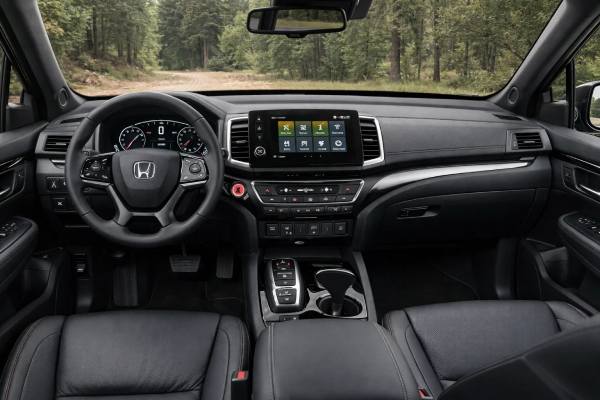

The 2022–2025 facelift Honda Passport AWD (YF8) is built around a simple formula: a naturally aspirated 3.5-liter V6, a 9-speed automatic, and Honda’s torque-vectoring AWD. In day-to-day ownership, this generation tends to feel “engineered for real roads” rather than showroom drama—strong low- and mid-range pull, confident passing power at highway speeds, and predictable handling for a midsize SUV. The facelift sharpened the look and broadened the trim strategy, but the fundamentals stayed consistent: a roomy two-row cabin, a large cargo bay, and a towing-capable platform when properly equipped.
From an ownership angle, this Passport’s best traits are durability and usability—provided you treat it like the V6-and-9AT vehicle it is: keep fluids fresh, don’t ignore driveline services, and budget for age-and-mileage items like brakes, tires, and suspension wear.
Top Highlights
- Strong 3.5 V6 response for merging, passing, and towing duty with less strain than small turbo engines.
- Torque-vectoring AWD adds confident traction in rain and snow, plus better control on loose surfaces.
- Spacious two-row packaging with a “square” cargo area that fits bulky gear easily.
- The 9-speed automatic rewards fresh fluid and correct service procedures; neglect can lead to harsher shifts.
- Plan on engine-oil service at least every 12 months (even with low mileage), or sooner under severe use.
Navigate this guide
- Honda Passport AWD facelift basics
- Honda Passport AWD specs you’ll use
- Honda Passport AWD trims and safety setup
- Reliability patterns and known fixes
- Maintenance plan and buying advice
- How it drives and real efficiency
- How Passport AWD stacks up against rivals
Honda Passport AWD facelift basics
Think of the 2022–2025 Passport AWD (YF8) as Honda’s “two-row Pilot” with a more rugged mission. It shares the same core architecture and V6 philosophy, but the Passport is tuned around fewer compromises: a shorter body than three-row SUVs, fewer seats to package around, and more emphasis on cargo volume and light-duty adventure use. The facelift brought a tougher front fascia and revised trim naming and equipment, but the mechanical heart stayed familiar—an all-aluminum 3.5-liter V6 (J35 family), a 9-speed automatic, and an AWD system designed to do more than just shuffle torque when a wheel slips.
The AWD system is the defining feature for this article’s configuration. It’s not a truck-style 4×4 with low range, but it is more capable than basic “on-demand” systems. Under steady cruising, it behaves efficiently and predictably; under throttle, it can route more torque rearward and side-to-side to stabilize the vehicle and improve traction. In practice, that means cleaner launches on wet pavement, more confidence on packed snow, and better control on gravel roads—especially with appropriate tires.
Where this Passport fits best:
- Daily driver with real utility: It’s easy to live with, rides like a unibody SUV, and carries large gear without drama.
- Towing and hauling (within limits): A V6 plus a strong cooling package can be a good match for moderate towing, as long as you respect payload and service intervals.
- Long-term ownership: The fundamentals are proven, but the ownership experience depends heavily on fluid quality (engine, transmission, rear drive unit) and correct service practices.
Where you should set expectations:
- It’s not a rock crawler, and ground clearance/angles favor forest roads over boulder fields.
- Fuel economy is typical for a midsize V6 AWD—reasonable on highway cruises, less impressive in stop-and-go.
- The 9-speed automatic can feel “busy” if the software calibration, fluid condition, or driving style isn’t in harmony.
Honda Passport AWD specs you’ll use
Below are the most ownership-relevant specifications for the 2022–2025 facelift Passport AWD. Exact numbers can vary slightly by market, wheel/tire package, and certification method, so treat these as configuration-level guidance—then verify your VIN-specific details in official documentation.
Powertrain and efficiency
| Item | Spec (typical for 2022–2025 AWD) |
|---|---|
| Engine code / family | J35Y6 (J35-series V6) |
| Layout | Transverse V6, front-mounted |
| Valvetrain | SOHC, i-VTEC (24-valve typical for this family) |
| Displacement | 3.5 L (3,471 cc) |
| Induction | Naturally aspirated |
| Fuel system | Gasoline direct injection (varies by market documentation) |
| Max power | 280 hp (≈209 kW) |
| Max torque | ~355 Nm (≈262 lb-ft) |
| Timing drive | Timing belt (service interval matters) |
| Rated fuel economy (typical) | about 11.2 L/100 km combined (≈21 mpg US) for AWD |
| Real-world highway @ 120 km/h | often ~10.0–11.5 L/100 km depending on tires, wind, load, and temperature |
| Aerodynamics | SUV profile; Cd not commonly published for this trim |
Transmission and driveline
| Item | Spec |
|---|---|
| Transmission | 9-speed automatic (9AT) |
| Drive type | AWD (torque-vectoring type, Honda i-VTM4 strategy) |
| Differential behavior | Electronically controlled rear drive unit; torque distribution varies by grip and demand |
Chassis, dimensions, and practicality
| Item | Typical value / note |
|---|---|
| Platform type | Unibody midsize SUV |
| Suspension (front / rear) | Independent front and rear (layout varies by documentation) |
| Steering | Electric power steering |
| Ground clearance | ~206 mm (8.1 in) typical |
| Length | ~4,838 mm (190.5 in) |
| Width | ~1,996 mm (78.6 in) (mirrors excluded) |
| Height | ~1,834 mm (72.2 in) |
| Wheelbase | ~2,819 mm (110.9 in) |
| Turning circle | ~12.1 m (39.6 ft) typical |
| Fuel tank | ~74 L (19.5 US gal) typical |
| Cargo volume | ~1,430 L (50.5 ft³) seats up; ~2,850 L (100.7 ft³) seats down (method varies) |
Performance and capability
| Item | Typical value / note |
|---|---|
| 0–100 km/h (0–62 mph) | roughly mid-6 to low-7 seconds (setup-dependent) |
| Braking 100–0 km/h | varies mainly with tires; expect meaningful differences between all-seasons and aggressive A/T tires |
| Towing capacity | commonly up to ~2,268 kg (5,000 lb) when properly equipped |
| Payload | trim-dependent; check door-jamb label for your vehicle |
Fluids and service capacities (ownership-focused)
These are practical “decision-making” references. Always confirm the exact spec and capacity for your VIN and market.
| System | What to use (typical) |
|---|---|
| Engine oil | Full synthetic 0W-20; change by Maintenance Minder or at least annually |
| Coolant | Honda-type long-life coolant (pre-mix style common); replace by schedule/time |
| Transmission | Honda-specified ATF for the 9AT; use correct fill and level-check procedure |
| Rear drive unit (AWD) | Honda rear differential/drive unit fluid; service interval is critical for smooth operation |
| Brake fluid | DOT 3/4 as specified; time-based replacement matters |
| Spark plugs | Iridium-type; replace at the scheduled interval |
| Key torque specs | Wheel lug torque and drain/fill plug torques should be taken from official documentation for your VIN |
Safety and driver assistance (high-level)
| Area | What to expect |
|---|---|
| Crash-test programs | Rated by US bodies depending on model year/configuration |
| Airbags | Multi-airbag system (front/side/curtain typical) |
| Core stability tech | ABS, stability control, traction control |
| ADAS availability | Trim- and year-dependent; confirm which Honda Sensing features are included on your exact vehicle |
Honda Passport AWD trims and safety setup
The facelift years broadened the Passport’s identity: some trims lean toward everyday comfort, while others emphasize tougher styling and trail-ready details. Even when power and core mechanicals stay similar, trims matter because they change the vehicle’s “real” behavior—mainly through tires, wheel size, cooling/tow equipment, and driver-assistance availability.
Trims and options that actually change ownership
Look for differences in these areas, because they affect cost and capability more than cosmetic add-ons:
- Wheel and tire package: Larger wheels can sharpen steering response but often cost more in tires and can transmit more impact harshness. More aggressive all-terrain-style tires can reduce highway efficiency and increase road noise, but they help on gravel, mud, and snow.
- Tow equipment and cooling strategy: Factory tow wiring, hitch integration, and any additional cooling provisions matter for repeat towing. If you plan to tow regularly, prioritize a trim and option set that is tow-ready from day one.
- Interior durability details: If you haul tools, pets, or outdoor gear, seat material and cargo-area protection are not “luxury”—they reduce wear and cleaning effort.
- Infotainment and audio tiers: Higher trims may add speakers/features, but the ownership question is whether you want the complexity (and replacement cost) later.
Quick identifiers when shopping used
- Tires and ride height cues: A more rugged tire sidewall and chunkier tread often indicates an off-road-oriented package or owner changes.
- Buttons and menus: ADAS presence is usually visible through steering wheel controls and cluster menus.
- Build label and door-jamb data: The tire size, GVWR, and payload information are the fastest way to confirm the vehicle’s “working limits.”
Safety ratings and what they mean here
For this generation, safety performance is typically less about one headline number and more about which test version, which headlights, and which trim equipment was evaluated. Two practical guidelines:
- Headlights and forward visibility are trim-sensitive. If a trim uses different headlamp hardware, the real night-driving experience can vary more than you’d expect.
- ADAS calibration matters after repairs. If the vehicle has camera- or radar-based features (lane support, collision mitigation, adaptive cruise), windshield replacement, front-end repairs, alignment changes, and bumper work can require proper calibration. A vehicle that “drives fine” can still have partially disabled or miscalibrated assistance systems.
Child-seat and family usability
Even as a two-row SUV, the Passport can be family-friendly. Check:
- LATCH/ISOFIX accessibility with the seat you actually use
- Rear door opening and step-in height
- Cargo floor height if you lift strollers, crates, or mobility gear frequently
Reliability patterns and known fixes
The facelift Passport AWD tends to reward owners who treat maintenance as prevention, not a reaction. The base engine architecture is well-proven, but modern supporting systems—direct injection hardware, emissions controls, complex transmissions, and AWD drive units—shift the reliability equation toward fluid condition, correct service procedures, and usage severity (short trips, towing, heavy city driving).
Below is a practical way to think about issues by prevalence and cost.
Common (watch closely)
- 9-speed shift quality changes (medium cost if ignored):
Symptoms: shudder, harsh 2–3 or 3–4, delayed engagement, “gear hunting.”
Likely causes: aged ATF, incorrect fluid level, adaptation not reset after service, or software calibration differences.
Remedy: correct-spec fluid service using the right procedure; in some cases, a dealer-level update/adaptation reset. - AWD rear drive unit fluid sensitivity (low-to-medium cost):
Symptoms: groan or chatter on tight turns, vibration under load, inconsistent rear engagement feel.
Likely causes: overdue rear drive unit service, wrong fluid, or mismatched tires (diameter differences strain the system).
Remedy: service with correct fluid; keep tire sizes and wear matched across axles. - Brake wear and heat management (low-to-medium cost):
Symptoms: steering shake under braking, squeal, soft pedal after repeated downhill braking.
Likely causes: heavy curb weight plus city use, towing, or aggressive tires.
Remedy: quality pads/rotors, correct torque practices, and brake fluid changes on time.
Occasional (depends on climate and use)
- Battery and start/stop-related complaints:
Symptoms: slow crank, warning messages, intermittent electrical oddities.
Likely causes: weak 12 V battery, many short trips, cold-weather stress.
Remedy: battery testing with proper load test; verify charging health. - Suspension and alignment wear (especially with rough roads):
Symptoms: uneven tire wear, clunks over bumps, steering drift.
Likely causes: alignment out of spec, bushing wear, pothole damage.
Remedy: alignment checks, replace worn links/bushings as needed.
Rare but expensive (verify history)
- Cooling system neglect leading to overheating events:
Modern engines tolerate less neglect. A single severe overheat can create long-term problems.
Prevention: correct coolant, correct interval, and immediate attention to leaks.
Recalls, service actions, and how to verify
For 2022–2025 vehicles, always run a VIN check through official recall databases and confirm completion through dealer records. Don’t rely on “it was probably done.” A recall remedy that was never applied can turn into an ownership surprise later—especially for safety- or fuel-system-related campaigns.
Pre-purchase checks worth requesting
- Proof of ATF service (or at least evidence of correct, recent maintenance)
- Proof of rear drive unit fluid service
- Tire brand/model and tread depth across all four corners (mismatch is a red flag on AWD)
- A road test that includes tight, low-speed turns (listen for AWD chatter) and gentle-to-moderate acceleration (feel for transmission shudder)
Maintenance plan and buying advice
A Passport AWD can be a low-drama long-term SUV if you maintain it like a modern V6 AWD vehicle. The key is to treat three areas as “non-negotiable”: engine oil quality, 9-speed transmission fluid condition, and AWD rear drive unit service.
Practical maintenance schedule (distance/time)
Use your Maintenance Minder as the primary guide, then apply these guardrails:
- Engine oil and filter:
- Follow the Minder, but at least every 12 months even with low mileage.
- Severe service (short trips, extreme heat/cold, towing): shorten the interval.
- Engine air filter and cabin air filter:
- Inspect every 15,000–20,000 km; replace as needed (dusty areas often require more).
- Transmission (9AT) fluid:
- If you tow, drive mountains, or do heavy city use, plan earlier service than a light-duty commuter.
- Correct fluid and procedure matter more than brand loyalty.
- AWD rear drive unit fluid:
- Treat as a routine service item, not “lifetime.”
- If you feel tight-turn chatter, service and tire matching are the first steps.
- Brake fluid:
- Time-based replacement is smart even if mileage is low (moisture absorption affects braking feel and corrosion).
- Coolant:
- Replace by schedule/time; don’t mix incompatible coolants.
- Spark plugs:
- Replace at the scheduled interval; worn plugs can stress coils and reduce efficiency.
- Timing components:
- This V6 family typically uses a timing belt. Replace at the manufacturer interval or earlier with severe use.
- If the belt service is due, budget for related items often done together (tensioners, water pump, seals) according to best practice for your market.
- Tires, rotation, and alignment:
- Rotate regularly and keep pressures correct.
- On AWD, keep all four tires closely matched in wear and size to protect driveline components.
- 12 V battery testing window:
- Expect testing/replacement around the 3–5 year mark depending on climate and driving pattern.
Buyer’s guide: what to seek and what to avoid
Seek:
- Complete service history, especially fluids
- Matching tires with even wear
- Evidence of careful towing use (proper hitch setup, trailer brake controller where needed)
Be cautious with:
- Vehicles with unknown ATF history and noticeable shift harshness
- AWD vehicles with mismatched tires or strong tight-turn groan
- Poor-quality aftermarket lift/oversize tire setups (can harm CV joints, wheel bearings, and AWD load)
Durability outlook:
With clean fluids and matched tires, this Passport’s core mechanicals are usually capable of high mileage. Neglect tends to show up first in driveline feel (AWD chatter, transmission behavior) rather than catastrophic failure—giving attentive owners time to correct course before costs escalate.
How it drives and real efficiency
The facelift Passport AWD feels most at home doing the everyday jobs that midsize SUVs actually face: uneven pavement, fast highway merges, long-distance cruising, and occasional poor-weather commutes. The V6 is the star—smooth, predictable, and strong enough that you rarely need to floor it to make progress. That matters for real-world comfort because the vehicle doesn’t constantly “boost and downshift” the way some smaller turbo SUVs do.
Ride, handling, and NVH (noise, vibration, harshness)
- Ride quality: Generally composed, with a firm “control” edge. Wheel and tire choices can swing the experience from comfortable to busy on rough asphalt.
- Steering and stability: Steering is light-to-moderate in effort. Straight-line stability is strong for the class, and the chassis stays confident at highway speeds.
- Braking feel: Solid initial bite, but repeated heavy braking (mountain descents, towing) benefits from fresh fluid and quality pads.
Powertrain character and transmission behavior
- Throttle response: Linear for a modern V6; easy to meter in traffic.
- 9-speed logic: The transmission can feel highly active—downshifting quickly for torque and upshifting early for efficiency. Fresh fluid and correct adaptation help it feel smoother and less “busy.”
- AWD behavior: In rain and snow, traction feels natural rather than intrusive. On gravel or uneven surfaces, the system can help keep the vehicle tracking straight, especially when one side has less grip.
Real-world efficiency (what most owners see)
For a V6 AWD midsize SUV, think in ranges rather than a single number:
- City-heavy driving: often ~12.0–14.0 L/100 km (17–20 mpg US) depending on temperature and trip length
- Highway cruising (100–120 km/h): often ~9.5–11.5 L/100 km (20–25 mpg US)
- Mixed use: typically lands around ~11–12 L/100 km (19–21 mpg US)
Cold weather and short trips can be a bigger penalty than people expect. If most drives are under 10 km, fuel economy will look worse than the official combined rating, even with careful driving.
Towing and load notes
When towing near the upper range:
- Expect a meaningful fuel economy drop (often 20–40% depending on speed, trailer shape, and hills).
- Watch temperatures, use the correct towing setup, and shorten fluid intervals.
- Stability depends heavily on hitch setup, tongue weight, and trailer brakes—not just the vehicle’s tow rating.
How Passport AWD stacks up against rivals
The Passport AWD’s competitive position is clearest when you compare it to two buckets: two-row midsize crossovers with smaller turbo engines, and more rugged “adventure” SUVs with truck-style hardware.
Versus turbo-four midsize crossovers
Where Passport wins:
- Effortless power delivery: The V6 feels less strained when loaded with people and cargo. Passing at highway speeds is calmer and often quieter.
- Towing confidence (when equipped): A naturally aspirated V6 and a robust AWD system can feel more stable under moderate tow loads.
Where it can lose:
- Fuel economy in city driving: Many turbo-four rivals post better numbers in mixed use.
- Cabin tech “wow factor”: Some competitors prioritize large screens and flashy interfaces, which may matter if tech is your top priority.
Versus more rugged, off-road-leaning SUVs
Where Passport wins:
- On-road refinement: Unibody comfort, smoother steering, and better daily usability.
- Space efficiency: Two-row packaging often yields a very usable cargo bay.
Where it can lose:
- Low-range and hardcore trail features: If you truly need low-range gearing or heavy-duty skid-and-axle hardware, a different category fits better.
The best “rival” depends on your use
Choose the Passport AWD if you want:
- A comfortable daily driver that can handle winter roads and gravel trails with the right tires
- A strong, predictable engine for long trips and moderate towing
- A practical cargo-focused layout without a third row
Consider alternatives if you want:
- Maximum fuel economy above all
- A dedicated off-road drivetrain with low range
- A luxury-focused interior experience at the same price point
References
- 2024 Honda Passport Specifications 2024 (Manufacturer Specifications PDF)
- Honda Passport 4-door SUV 2024 (Safety Rating)
- Part 573 Safety Recall Report 24V-900 2024 (Recall Database)
- Compare Side-by-Side 2023 (Fuel Economy Database)
Disclaimer
This article is for informational purposes only and is not a substitute for professional diagnosis, repair, or technical advice. Specifications, torque values, service intervals, and procedures can vary by VIN, market, and equipment. Always verify details using official manufacturer service information for your specific vehicle.
If you found this guide useful, please consider sharing it on Facebook, X (Twitter), or your favorite forum to help others find it.