

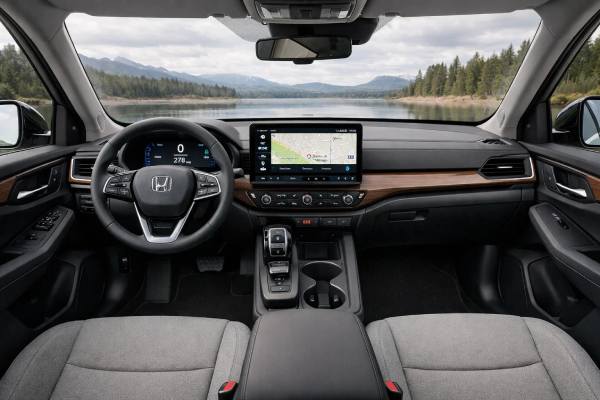
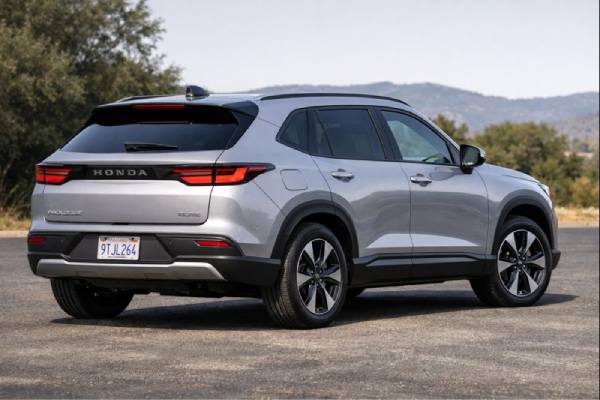
Honda’s 2024 Prologue Single Motor is the “easy on-ramp” EV in the lineup: a roomy midsize crossover with familiar Honda ergonomics, a simple single-speed electric drive unit, and a big-enough battery to make daily charging optional rather than constant. In this configuration, a front-mounted motor delivers 212 hp with smooth, quiet step-off response, while the 400-volt lithium-ion pack supports fast public charging for road trips. The Prologue’s standout ownership trait is how normal it feels—low noise at cruise, predictable regenerative braking, and a practical cabin that doesn’t force a learning curve.
That said, it’s also a first-year model, and early EV ownership is often shaped as much by software updates and charging habits as by hardware. If you want an EV that behaves like a well-sorted family SUV, this Prologue is aimed directly at you.
Owner Snapshot
- Strong daily usability: midsize cabin space with an EPA-rated 296 mi (476 km) range in single-motor form.
- Straightforward charging: DC fast charging up to 150 kW, aimed at quick road-trip top-ups.
- Calm driving character: smooth torque delivery and one-pedal driving for traffic and city work.
- First-year reality: stay current on recalls and dealer software updates for charging, telematics, and drivability fixes.
- Plan a routine: rotate tires about every 12,000 km (7,500 mi) or 12 months to protect range and tread life.
**Quick navigation**
- Honda Prologue ownership overview
- Honda Prologue 212 hp specs
- Honda Prologue trims and safety tech
- Reliability issues and recalls
- Maintenance plan and buying tips
- Real-world driving and range
- Rivals and alternatives
Honda Prologue ownership overview
The 2024 Honda Prologue Single Motor (212 hp) is the range-focused version of the lineup. With one motor driving the front wheels, it prioritizes efficiency and simplicity over outright acceleration. The result is an EV that feels more like a conventional midsize crossover in day-to-day use: stable on the highway, quiet at urban speeds, and easy to place in traffic thanks to immediate torque and a smooth single-speed reduction gear.
From an ownership perspective, three traits matter most:
- Battery size and voltage match real life. The Prologue uses a 400-volt lithium-ion high-voltage battery system. That architecture is common in today’s EV market, which helps compatibility with public DC fast chargers and keeps charging behavior predictable across seasons.
- Charging is practical, not exotic. With DC fast charging capability up to 150 kW, the Prologue is built for “top-up” stops—enough to add meaningful range during a coffee break rather than chasing 10–100% sessions. Home charging is still the cheapest and most convenient way to live with the car, but road trips are realistic.
- Packaging is a core advantage. This is a midsize SUV footprint with a family-friendly cabin and useful cargo space. You’re not buying a tiny “city EV” that only works if you live next to a charger.
Where the Prologue’s ownership story becomes more nuanced is that software and calibration matter. EV drivability, charging behavior, and even HVAC performance can be reshaped by updates—especially on first-year models. The best approach is to treat the car like a modern device: keep it updated, document any warning messages with photos, and make sure recall work is completed promptly.
Who is this version for? It’s ideal for drivers who want maximum rated range in the Prologue lineup, drive mostly on paved roads, and prefer a calm, predictable powertrain over the extra traction (and extra energy use) of dual-motor AWD. If you routinely deal with steep snowed-in hills, tow frequently, or prioritize rapid passing acceleration, the AWD versions may fit better—at a range penalty.
Honda Prologue 212 hp specs
Powertrain, battery, and efficiency
| Spec | Value |
|---|---|
| Powertrain layout | Single-motor, front axle |
| Drive type | FWD |
| Max power | 212 hp (158 kW) |
| Max torque | 320 Nm (236 lb-ft) |
| High-voltage system | 400 V lithium-ion high-voltage battery |
| Traction battery capacity | 85 kWh |
| EPA efficiency (combined) | 21.1 kWh/100 km (340 Wh/mi) |
| EPA range | 476 km (296 mi) |
Charging and connectors
| Spec | Value |
|---|---|
| DC fast charging peak | 150 kW |
| DC fast charge (20–80%) | 35 min |
| Level 2 charge rate (added range) | 34.1 mi/h (55 km/h) |
Dimensions, weights, and space
| Spec | Value |
|---|---|
| Length | 4,877 mm (192.0 in) |
| Width | 1,989 mm (78.3 in) |
| Height | 1,656 mm (65.2 in) |
| Wheelbase | 3,094 mm (121.8 in) |
| Ground clearance | 206 mm (8.1 in) |
| Passenger volume | 3,053 L (107.8 ft³) |
| Cargo volume (behind 2nd row) | 714 L (25.2 ft³) |
| Cargo volume (max) | 1,634 L (57.7 ft³) |
| Curb weight | 2,330 kg (5,136 lb) |
Chassis, wheels, and brakes
| Spec | Value |
|---|---|
| Front suspension | Multi-link |
| Rear suspension | Multi-link |
| Steering | Belt-drive assist electric power steering (EPS) |
| Brakes | Ventilated front discs / solid rear discs |
| Wheels (single-motor trim fitment) | 19-inch alloy wheels |
| Tires (single-motor trim fitment) | P255/60 R19 109H all-season |
Safety ratings and key active-safety results
| Spec | Value |
|---|---|
| IIHS small overlap front (overall) | Acceptable |
| IIHS moderate overlap front: updated test | Good |
| IIHS side: updated test | Good |
| IIHS headlights | Acceptable |
| IIHS front crash prevention (vehicle-to-vehicle 2.0) | Good |
| IIHS front crash prevention (pedestrian) | Acceptable |
Honda Prologue trims and safety tech
For the 2024 model year, Prologue trims are commonly organized around EX, Touring, and Elite. The critical buying point for this article’s configuration is simple: the single-motor 212 hp setup is the front-wheel-drive, range-maximizing Prologue—the one aimed at drivers who value distance per charge and straightforward ownership.
Trims and what changes mechanically
- EX (single motor, FWD) is the most direct route to the 212 hp Prologue. It’s also the trim that typically keeps the hardware simple: fewer weight-adding luxury features, and a wheel-and-tire package oriented toward everyday ride comfort.
- Touring (often available with single motor FWD or dual motor AWD, depending on market) typically adds comfort and convenience equipment—premium audio, upholstery upgrades, and more cabin tech. Mechanically, the key question is whether you’re buying FWD (212 hp) or AWD (higher output).
- Elite (dual motor, AWD) is the feature-heavy flagship with the strongest performance and the most equipment, but it is not the 212 hp single-motor variant.
Quick identifiers when you’re shopping:
- If the vehicle is single-motor FWD, it’s the 212 hp version.
- Wheel size can hint at trim level. Single-motor models often run 19-inch wheels with P255/60 R19 all-season tires, while top trims may use larger wheels that can trade some range for style and cornering grip.
- Don’t rely on “looks” alone. Always verify the drivetrain in the listing and confirm in the vehicle menus or paperwork.
Safety systems and ADAS: what’s standard vs. what matters
The Prologue’s active safety package centers on a modern suite of camera- and radar-based features. In practical terms, the “must-haves” for daily safety are:
- Automatic emergency braking and forward collision alert for urban traffic mistakes
- Lane keep assist and lane departure prevention for long highway drives
- Adaptive cruise control to reduce fatigue and help maintain steady speed (which can also stabilize efficiency)
- Blind spot monitoring and rear cross traffic alert for parking lots and multi-lane roads
Also notable for family use:
- Multiple airbags, including knee airbags up front
- Child-seat anchors and tether points designed for easy installation and secure fit
How to interpret safety ratings
Safety ratings are only useful if you understand what they measure. The Prologue’s published results show a strong pattern: very solid core crash performance in the updated moderate overlap and side tests, with some “acceptable” results that can keep it from topping every award list. In real ownership terms, two practical takeaways follow:
- If you drive a lot at night, pay attention to headlight performance and keep lenses clean and aimed correctly after any front-end work.
- If you’re comparing vehicles, focus on the updated tests (where available) because they reflect current evaluation methods and vehicle design expectations.
Reliability issues and recalls
With a first-model-year EV, reliability is less about “engine wear” and more about software maturity, charging behavior, and supplier quality control. The good news is that EV powertrains remove many traditional failure points (no oil changes, no multi-gear automatic transmission, fewer heat cycles from combustion). The caution is that early production can expose weak links in suspension components, sensors, modules, and firmware logic.
Common, occasional, and rare: what to watch for
Common (low to medium cost, often software-related):
- Connectivity and app/telematics glitches: symptoms include remote commands failing, app features not responding, or intermittent communication errors. Remedy is frequently a module software update rather than parts replacement.
- Infotainment and cluster behavior: unexpected warnings, slow boot, or temporary feature loss can be resolved with dealer programming updates that refresh multiple modules at once.
Occasional (medium cost, mixed hardware/software):
- Charging warnings or “unable to charge” messages: may present as a refusal to initiate AC charging, odd charge session stops, or warnings that clear after a restart. These can be linked to charging equipment compatibility, temperature management logic, or module updates.
- HVAC-related diagnostic codes: some vehicles can log refrigerant pressure or charge-related fault codes; diagnosis typically focuses on valves, line seals, and correct refrigerant charge procedures.
Rare (high severity):
- Suspension component defects that can affect control if a part fractures. These are handled through recalls and inspections, and they are not “wear items.”
Recalls, TSBs, and why they matter
The headline recall for the 2024 Prologue involved a right front lower control link that may contain a manufacturing defect and could fracture. The practical owner guidance is straightforward:
- Verify the recall status using official VIN tools and dealer records.
- If your VIN is affected, complete the inspection/repair promptly—this is a safety-critical suspension part.
Separately, technical service bulletins (TSBs) and dealer programming updates are especially important on EVs because they can improve:
- Charging compatibility and thermal behavior
- Warning-message logic (reducing “phantom” alerts)
- HVAC performance in extreme conditions
- Connectivity reliability for app and telematics features
EV-specific durability: battery health and degradation
Battery aging is usually gradual. The biggest real-world accelerators tend to be:
- Frequent high-power DC fast charging, especially in very hot conditions
- Extended parking at very high state of charge (for example, leaving the car at 100% for long periods)
- Sustained high-speed driving that raises pack temperature and increases consumption
A smart ownership approach is to use DC fast charging when you need it, but base your routine on home AC charging and keep daily charge limits at a moderate level unless a long trip is planned.
Pre-purchase checks to request (used buyers)
- Proof that recalls and applicable service campaigns are completed
- Documentation of software updates (or dealer printout showing current module versions, if available)
- A battery health readout (state-of-health style report where supported)
- A charging test: confirm AC charging starts reliably, and confirm DC fast charging initiates without errors
- Underbody inspection for impact damage to covers, cooling hardware, and the battery area
Maintenance plan and buying tips
Even though EVs reduce routine service, they are not “no maintenance.” The Prologue’s maintenance is mostly about tires, brakes, filters, cooling systems, and the 12-volt battery—plus keeping software current. Below is a practical schedule that works well for a midsize EV and aligns with how tire wear and brake-fluid aging behave in real use.
Practical maintenance schedule (distance or time)
- Tire rotation and pressure check: every 12,000 km (7,500 mi) or 12 months
- Why it matters: EV torque and weight can wear tires quickly, and correct pressure protects range.
- Alignment check: every 24,000 km (15,000 mi) or whenever you see uneven wear, steering pull, or after a curb impact.
- Cabin air filter: every 24,000–32,000 km (15,000–20,000 mi) or 12–24 months, more often in dusty cities or if HVAC airflow drops.
- Brake inspection: at least every 12 months
- EV regen can hide brake wear, but caliper slide pins and rotor surfaces still need attention.
- Brake fluid replacement: typically every 3 years, sooner in humid climates or severe use
- Brake fluid absorbs moisture over time; this is time-based, not mileage-based.
- 12-volt battery test: annually after year 2; plan replacement around 3–5 years depending on climate and usage
- A weak 12-volt battery can cause odd warning messages and unreliable module behavior.
- Cooling system inspection: every 24 months
- Look for correct coolant type, leaks, and proper fan operation. (EVs rely heavily on thermal management for battery, power electronics, and cabin comfort.)
- HV battery health check: annually if you road-trip often, fast charge frequently, or see meaningful range changes
- The goal is trend tracking, not chasing minor seasonal variation.
Severe-use adjustments
Treat any of these as “severe use” and tighten intervals by about 25–30%:
- Frequent DC fast charging (multiple times per week)
- Very hot summers or very cold winters
- Regular high-speed highway driving
- Heavy loads, full passenger use, or mountainous driving
Buyer’s guide: how to shop the Prologue Single Motor smartly
- Confirm it’s the 212 hp FWD version. Listings can be sloppy. Verify drivetrain in official paperwork and in-car menus.
- Check wheel and tire condition. A heavy EV on underinflated tires can chew through tread quickly. Uneven wear may point to alignment issues.
- Test charging in the real world. If possible, do a short AC session and confirm the car initiates and holds charge. If a DC station is nearby, start a DC session and watch for errors or immediate tapering.
- Inspect the underbody. Look for damaged aero shields, missing fasteners, or impact marks near the battery area.
- Review recall and software campaign status. A first-year EV benefits more than most vehicles from being fully up to date.
- Ask about the owner’s charging habits. A car that lived mostly on home charging and wasn’t stored at 100% for long periods is usually the safer bet.
Long-term durability outlook: if recalls are completed and updates are current, the Prologue’s expected long-run costs tend to cluster around tires, brake-fluid service, occasional suspension wear, and the typical EV “module and sensor” repairs that show up as vehicles age. The battery is usually the big unknown, so prioritize a clean charging history and consistent, normal range behavior.
Real-world driving and range
The single-motor Prologue is not trying to be a sport SUV; it’s tuned to be easy to live with. In everyday driving, the key impressions come from the EV fundamentals: instant torque, low noise, and the planted feel that comes from a battery under the floor.
Ride, handling, and NVH
- Ride quality: The Prologue’s mass helps it feel settled on the highway, and the suspension layout is designed for stability rather than sharpness. Over broken pavement, the best setup is usually the one with more sidewall (often the 19-inch package) because it can reduce impact harshness and road noise.
- Handling balance: As a front-drive EV, the single-motor version is tuned for predictable behavior. You’ll feel the weight in quick transitions, but it remains composed for what it is: a midsize family crossover.
- Noise: EV quiet can reveal wind and tire noise. Keeping tires properly inflated and choosing touring-oriented tires can make the cabin noticeably calmer at 100–120 km/h.
Power delivery and regen feel
The 212 hp output is enough for confident city merging and suburban driving, with the smoothness you expect from an electric motor. The more important “performance” feature day to day is regenerative braking modulation:
- In traffic, one-pedal driving reduces fatigue and can improve efficiency when used smoothly.
- On highways, the best range usually comes from gentle inputs, steady speed, and minimal speed swings.
Real range: what owners should expect
The EPA-rated range is 296 miles (476 km) for the single-motor Prologue. Real-world range depends heavily on speed and temperature:
- Urban and mixed driving: often the closest to rated range, especially with moderate temperatures and gentle acceleration.
- Highway at 110–120 km/h (68–75 mph): expect a meaningful drop from EPA. As a practical planning number, many midsize 400-V EVs land somewhere around 75–85% of rated range at sustained high speed in mild weather.
- Cold weather: HVAC heating and battery temperature management can reduce range significantly. A realistic winter plan is to budget 20–40% less range depending on temperature, trip length, and how much cabin heat you use.
A good ownership habit is to plan trips around arrival state of charge, not around the dashboard’s maximum guess. If you arrive at chargers with a comfortable buffer, charging sessions are less stressful and the car’s range estimates become more useful.
Charging in daily life: best practices
- Home AC: This should be your default. It’s gentler on the battery than constant DC fast charging and typically cheaper.
- DC fast charging: Use it for road trips or when time matters. The Prologue is designed around fast “window charging” rather than full refills—arrive low-ish, charge through the strong middle portion, and continue.
- Charging etiquette and station fit: Know where the charge port sits on the body and practice parking alignment at different charger layouts so you’re not forced into awkward cable angles or blocked stalls.
If you want the simplest ownership experience, the single-motor Prologue is the one that rewards steady driving and home charging. Treat the EPA number as a best-case baseline, then learn your personal “highway at my speed” and “winter commute” numbers during the first month.
Rivals and alternatives
Shopping the Prologue Single Motor makes the most sense when you compare it to other midsize and compact electric crossovers that deliver similar space, pricing, and charging reality. The Prologue’s identity is “mainstream, roomy, and familiar,” so the best comparisons are vehicles that balance practicality with EV usability.
Closest rivals by size and mission
- Chevrolet Blazer EV / Equinox EV: Similar platform philosophy and mainstream crossover purpose. These can be strong value plays, especially if you’re price-sensitive and have good dealer support. The ownership difference often comes down to software experience, trim packaging, and incentives in your region.
- Volkswagen ID.4: A comfort-first EV SUV with a calm road manner. If you prefer a softer, less aggressive driving character, it’s often cross-shopped with the Prologue.
Rivals that emphasize charging speed or efficiency
- Hyundai Ioniq 5 / Kia EV6: These are compelling if you prioritize fast charging capability and a more performance-oriented feel. They can be a better fit for frequent road trippers who care about shorter charging stops and a sportier chassis response.
The benchmark many shoppers still consider
- Tesla Model Y: Strong charging ecosystem integration and efficient packaging. If you want the simplest “public charging is always easy” story, it stays on the list—though cabin feel, ride tuning, and interface preferences vary widely by buyer.
How the Prologue 212 hp version stacks up
Choose the Prologue Single Motor if you value:
- Maximum rated range within the Prologue lineup
- A traditional midsize SUV cabin feel with modern EV smoothness
- Predictable road-trip charging without needing the most aggressive charging tech in the segment
- A safety profile with solid crash-test results in key updated tests, plus a comprehensive driver-assistance feature set
Look elsewhere if you need:
- The quickest acceleration and strongest passing performance
- The fastest sustained DC charging behavior in the class
- A smaller, lighter EV that feels nimble on narrow roads
The smartest way to decide is to test-drive with your real routine in mind: your commute speed, your typical parking and charging setup, and your winter heating needs. If the Prologue’s calm, familiar character matches how you actually drive, it can be one of the least “EV-weird” options in the segment.
References
- Fuel Economy of the 2024 Honda Prologue FWD 2024 (EPA Efficiency Data)
- 2024 Honda Prologue 2024 (Safety Rating)
- 2024 Honda Prologue Control Link Recall 2024 (Recall)
- PowerPoint Presentation 2024 (Emergency Response Guide)
- Features By Trim 2024 (Official Feature and Trim Summary)
Disclaimer
This article is for informational purposes only and is not a substitute for professional diagnosis, inspection, or repair. Specifications, torque values, service intervals, and procedures can vary by VIN, market, and equipment. Always verify details using official service information, recall documentation, and the correct documentation for your specific vehicle.
If this guide helped, please consider sharing it on Facebook, X/Twitter, or your favorite forum to support our work.