
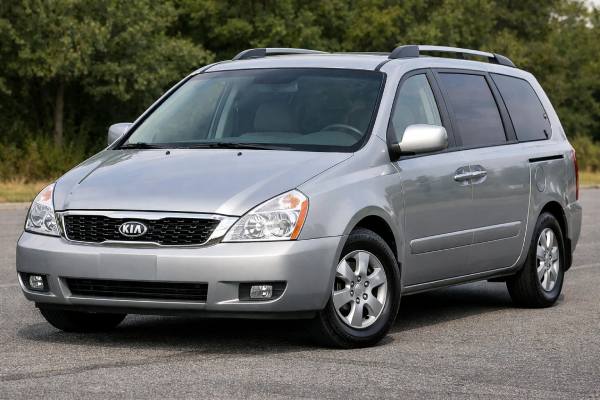
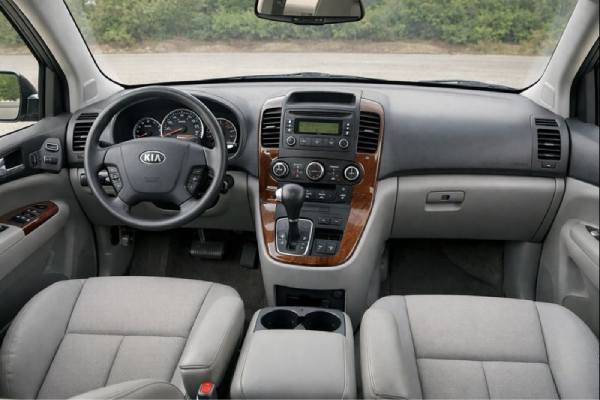
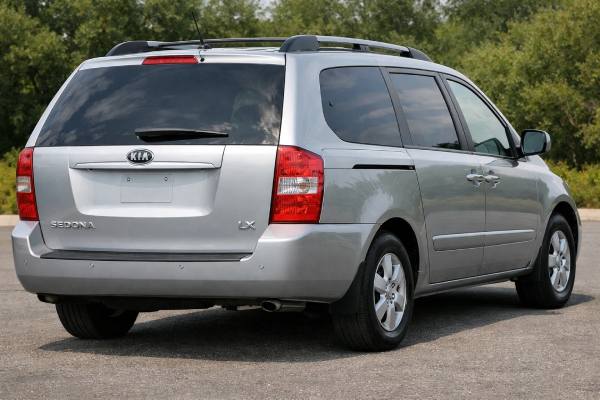
The 2006–2010 Kia Sedona (VQ) with the 3.8-liter G6DA V6 is the “big-engine” version of this generation: built to move people and luggage with less strain than the smaller V6 and far less turbo-diesel clatter. In everyday use, its strengths are smooth torque, a relaxed highway stride, and a simple front-wheel-drive layout that most general repair shops can service. The trade-offs are fuel consumption, age-related wear in suspension and sliding-door hardware, and a few recall-era safety items that matter on any older family van.
If you’re shopping one now, your best outcome comes from choosing a van with documented cooling-system care, clean transmission behavior, and proof that recall work was completed. Treat it as a practical machine: maintain it on schedule, and it can still be a comfortable long-distance people carrier.
Top Highlights
- Strong, smooth V6 torque makes full loads and hills easier than smaller Sedona engines.
- Comfortable highway ride and stable wheelbase suit family trips and airport duty.
- Parts availability is generally good, but suspension and door hardware wear is common with age.
- Confirm recall completion (especially ABS/HECU-related campaigns) before purchase.
- Change engine oil every 10,000 km (6,000 mi) or 12 months (shorter if mostly city/short trips).
Navigate this guide
- Kia Sedona VQ 3.8 story
- Kia Sedona VQ 3.8 specs tables
- Kia Sedona VQ trims and safety kit
- Known faults and recalls
- Maintenance plan and buying tips
- Real-world driving and economy
- Sedona VQ versus minivan rivals
Kia Sedona VQ 3.8 story
Think of the 2006–2010 Sedona VQ 3.8 as a traditional minivan: a long wheelbase, a tall roof, and a drivetrain tuned for steady work rather than sporty response. With 250 hp, the G6DA V6 changes the personality compared with lower-output versions. You do not have to plan merges as carefully, and the van feels calmer with seven or eight occupants because it can maintain speed without living at high rpm.
From an engineering point of view, the “win” is how the powertrain spreads effort. A larger displacement V6 typically makes more torque lower in the rev range, so the transmission can hold taller gears on gentle grades and do fewer downshifts. That matters in a heavy, high-drag vehicle like a minivan. It also matters for durability: less constant hunting can mean less heat in the transmission fluid and less strain on engine mounts over time.
The chassis is tuned for load and comfort: a compliant ride, predictable front-drive handling, and brakes sized for repeated stops with passengers aboard. The Sedona’s long wheelbase also helps straight-line stability, which you feel most on the highway and in crosswinds.
Ownership reality in 2026 comes down to age, usage, and maintenance history. These vans often lived hard lives—school runs, airport shuttles, family road trips—so you must evaluate wear items honestly: suspension bushings, sliding door tracks/rollers, and cooling-system components. If you start with a well-kept example and keep fluids fresh, the 3.8 is generally a pleasant drivetrain to live with. If you start with a neglected one, it can become a “death by a thousand small fixes” vehicle—rarely one catastrophic failure, but many overdue basics.
Kia Sedona VQ 3.8 specs tables
Specifications can vary by market, seating layout, wheel package, and GVWR class. Use the tables below as a practical reference, then confirm exact figures by VIN and your local service documentation.
Powertrain and efficiency (G6DA 3.8 V6)
| Item | Specification |
|---|---|
| Code | G6DA |
| Engine layout and cylinders | V6, 6 cylinders, DOHC, 4 valves/cyl |
| Bore × stroke | 96.0 × 87.0 mm (3.78 × 3.43 in) |
| Displacement | 3.8 L (3778 cc) |
| Induction | NA (naturally aspirated) |
| Fuel system | MPFI (multi-point fuel injection) |
| Compression ratio | ~10.4:1 (varies by calibration) |
| Max power | 250 hp (186 kW) @ ~6000 rpm* |
| Max torque | ~343 Nm (253 lb-ft) @ ~4500 rpm* |
| Timing drive | Chain |
| Rated efficiency | Typically ~12–14 L/100 km (mpg US / mpg UK varies by market testing cycle) |
| Real-world highway @ 120 km/h (75 mph) | Often ~10–12 L/100 km depending on load, tyres, wind, and A/C |
*Peak rpm points vary slightly by market calibration and emissions standard.
Transmission and driveline
| Item | Specification |
|---|---|
| Transmission | 5-speed automatic (market-dependent calibration and code) |
| Drive type | FWD |
| Differential | Open |
Chassis and dimensions
| Item | Specification |
|---|---|
| Suspension (front/rear) | Strut front / multi-link rear (market-dependent details) |
| Steering | Hydraulic power steering (most markets); ratio varies |
| Brakes | 4-wheel disc ABS (typical); rotor sizes vary by trim |
| Wheels and tyres (common) | 225/70 R16 |
| Ground clearance | ~155–170 mm (~6.1–6.7 in), market and load dependent |
| Length / width / height | ~4810 / ~1985 / ~1760–1815 mm (189.4 / 78.1 / 69.3–71.5 in) |
| Wheelbase | ~2890 mm (113.8 in) |
| Turning circle (kerb-to-kerb) | ~11.0–11.6 m (~36–38 ft) |
| Kerb (curb) weight | ~1950–2150 kg (~4300–4740 lb) depending on seating and equipment |
| GVWR | Varies by market and trim (often ~2600–2850 kg / ~5730–6280 lb) |
| Fuel tank | ~80 L (21.1 US gal / 17.6 UK gal) |
Cargo volume (practical ranges)
Cargo figures are heavily dependent on whether your van is 7-seat or 8-seat, and whether it has a deep well behind the third row.
| Condition | Typical usable space |
|---|---|
| Seats up (behind 3rd row) | ~300–450 L (10.6–15.9 ft³) |
| Seats down (max) | ~3000–3600 L (106–127 ft³) |
Performance and capability (real-world oriented)
| Item | Typical figure |
|---|---|
| 0–100 km/h (0–62 mph) | ~10–11.5 s (trim, load, tyres, altitude dependent) |
| Top speed | ~180–195 km/h (~112–121 mph) |
| Braking 100–0 km/h | Varies widely with tyres and brake condition; treat as inspection item rather than a number |
| Towing capacity | Market-dependent; commonly up to ~1500–1600 kg (3300–3500 lb) braked where certified |
| Payload | Often ~500–700 kg (~1100–1540 lb), depends on GVWR and seating |
Fluids and service capacities (typical service values)
Always verify before filling—capacity can change with oil pan design, auxiliary coolers, and HVAC configuration.
| System | Specification (typical) |
|---|---|
| Engine oil | API SM/SN class equivalent; 5W-30 commonly used; ~4.5–5.0 L (4.8–5.3 US qt) with filter |
| Coolant | Ethylene glycol long-life; 50/50 mix; ~8–9 L (8.5–9.5 US qt) |
| Transmission/ATF | SP-III class fluid commonly specified; total fill often ~7–8 L (7.4–8.5 US qt); drain/fill less |
| A/C refrigerant | R-134a; charge often ~650–800 g (23–28 oz) |
| Key torque specs (critical fasteners) | Wheel lugs ~90–110 Nm (66–81 lb-ft); oil drain plug often ~30–40 Nm (22–30 lb-ft) |
Safety and driver assistance
This generation predates modern ADAS. Focus on fundamental safety equipment condition: tyres, brakes, lighting, and restraint systems.
| Item | What to expect |
|---|---|
| Crash ratings | Euro NCAP rating exists for this generation (older test protocol); results are not directly comparable to today’s percentage system |
| Airbags | Typically front + side + curtain (count varies by trim/market) |
| Child-seat provisions | ISOFIX/LATCH availability varies by seating row and market |
| Stability systems | ABS common; ESC may be standard on later trims/markets and optional earlier |
| ADAS | None of today’s AEB/ACC/LKA features on factory spec |
Kia Sedona VQ trims and safety kit
Sedona trim naming varies by country, but most markets offered a simple ladder: an entry family trim, a mid-grade with convenience upgrades, and a top trim with leather, power doors, and upgraded audio. The 3.8 V6 is commonly paired with higher trims because it was positioned as the “premium drivability” choice.
Trims and options you’ll actually feel
Convenience equipment that changes daily use:
- Power sliding doors and power tailgate: great when working, but they add motors, cables, and sensors that age. Manual doors are simpler; power doors are nicer when fully functional.
- Seating configuration: 7-seat (captain’s chairs) is easier for access; 8-seat is better for maximum passengers but can feel tighter in the second row.
- HVAC layout: look for strong rear A/C output and quiet blower operation. Weak rear cooling often points to low charge, blocked condenser, or blend-door issues.
Mechanical or functional differences worth noting:
- Brake and wheel packages: higher trims may have different wheel sizes or tyre brands that affect ride and braking feel.
- ESC (electronic stability control): in some markets/years, ESC became standard later in the run. If you drive in winter conditions, this is one of the most meaningful “safety options” on an older van.
Quick identifiers when shopping
- Door controls: power-door vans typically have B-pillar buttons, overhead console controls, and key-fob buttons.
- Interior wear pattern: a well-kept family van usually shows even wear; a hard commercial life often shows deep floor scratches, heavily worn second-row armrests, and tired door tracks.
- Tyre spec consistency: mismatched tyres across axles can trigger stability-control oddities and worsen torque steer.
Safety ratings and what they mean here
If you see a Euro NCAP star rating for this generation, remember it was tested under an older protocol. Use the rating as a general indicator of structural intent and restraint design for its era—not as a direct comparison to a 2020s minivan. For your real-world safety today, condition matters more:
- Tyres with adequate tread and correct load rating
- Even brake performance with no pulling or vibration
- Functional airbags (no warning light), intact seatbelts, and secure seats
Safety systems and service implications
- ABS/ESC sensors: wheel-speed sensors and tone rings are common age-failure items. After brake work, confirm the ABS light stays off and the pedal feel remains consistent.
- Airbag system: any SRS light should be treated as a “no excuses” repair item. Budget for diagnostic time rather than guessing.
- Child-seat anchoring: confirm that the anchors you intend to use are present, accessible, and not damaged by previous installations.
Known faults and recalls
At this age, it helps to think in three categories: common wear, occasional failures, and rare-but-expensive problems. Your goal is not perfection—it is choosing a van where the expensive risks are already handled.
Common (high prevalence, usually manageable cost)
- Suspension bushings and links (low to medium cost):
Symptoms: clunks over bumps, vague steering, uneven tyre wear.
Likely causes: worn stabilizer links, control-arm bushings, rear trailing-arm bushings.
Remedy: replace worn joints/bushings, then align. On a minivan, fresh suspension often transforms the driving feel. - Sliding door rollers, tracks, and latches (low to medium cost):
Symptoms: grinding noise, door hesitation, door not fully latching, intermittent “door open” warning.
Likely causes: roller wear, dry tracks, tired latch micro-switches, or misalignment after a minor bump.
Remedy: clean and lubricate tracks correctly, replace worn rollers, adjust alignment. For power doors, fix mechanical drag first—motors fail faster when doors bind. - Brake wear and heat aging (low to medium cost):
Symptoms: vibration under braking, long pedal travel, pulling.
Likely causes: warped rotors, sticky caliper pins, old brake fluid.
Remedy: service slide pins, replace rotors/pads as needed, flush brake fluid.
Occasional (moderate prevalence, can be medium to high cost)
- Cooling-system leaks and overheating risk (medium cost if early, high if ignored):
Symptoms: coolant smell, damp radiator corners, fluctuating temperature gauge, weak cabin heat.
Likely causes: radiator end-tank seepage, aging hoses, thermostat sticking, water pump seep.
Remedy: pressure test, replace weak components proactively. Overheating a V6 can turn a small leak into a head-gasket-sized problem. - Ignition coils and spark plug service drift (medium cost):
Symptoms: misfire under load, rough idle, flashing check engine light.
Likely causes: aged coils, worn plugs, oil contamination in plug wells from gasket seepage.
Remedy: replace plugs on schedule, address valve-cover gasket leaks, replace coils as needed.
Rare (lower prevalence, can be high cost)
- Transmission distress from neglected fluid (high cost):
Symptoms: delayed engagement, flare on upshift, shudder, burnt-smelling fluid.
Likely causes: heat, old ATF, towing without adequate cooling, internal clutch wear.
Remedy: if it still shifts well, do gentle service (drain/fill cycles) and add cooling care; if it’s already slipping, plan for rebuild/replace. - Electrical drain or body-control quirks (medium to high diagnostic cost):
Symptoms: dead battery after sitting, random door/lock behavior, intermittent interior lights.
Likely causes: failing door modules, stuck switches, aftermarket wiring.
Remedy: parasitic draw test, remove questionable aftermarket accessories, repair root cause—not just repeated battery replacement.
Recalls, service actions, and how to verify
For this generation, recall completion matters as much as mileage. Do not rely on seller assurances—verify by VIN using official tools and dealer records. Pay special attention to campaigns related to braking electronics (ABS/HECU), because they affect both safety and resale confidence. If recall work is incomplete, treat it as a negotiation point and schedule the remedy before regular family use.
Maintenance plan and buying tips
A 3.8 Sedona rewards routine maintenance. The goal is to control heat, keep fluids clean, and reduce load on aging components.
Practical maintenance schedule (distance/time)
Use the shorter interval if the van does short trips, heavy city driving, extreme temperatures, or frequent full loads.
- Engine oil and filter: every 10,000 km (6,000 mi) or 12 months; consider 7,500 km (4,500 mi) for severe service.
- Engine air filter: inspect every 15,000 km; replace ~30,000 km (or sooner in dusty areas).
- Cabin air filter: every 15,000–30,000 km, especially if HVAC airflow is weak.
- Coolant: replace every 5 years or 100,000 km unless your official spec differs; inspect hoses annually.
- Spark plugs: typically long-life plugs; replace around 160,000 km (100,000 mi) unless misfires or service history suggest earlier.
- Serpentine belt and tensioner: inspect every 30,000 km; replace on cracks/noise or around 100,000–160,000 km depending on condition.
- ATF (automatic transmission fluid): if history is unknown, start with a drain-and-fill and repeat after a short interval; then maintain about every 60,000–80,000 km (40,000–50,000 mi) for longevity.
- Brake fluid: every 2 years regardless of mileage.
- Brake pads and rotors: inspect every 15,000 km; replace as needed—minivans are hard on front brakes.
- Tyre rotation and alignment check: rotate every 10,000–12,000 km; align annually or after suspension work.
- 12 V battery: test yearly; typical replacement window 4–6 years.
Fluid specs and decision-useful notes
- Use the correct ATF class (often SP-III for this era) rather than “universal” fluid if you want consistent shift quality.
- With coolant, consistency matters more than brand. Flush properly if the current coolant type is unknown.
- If the engine has any oil seepage, prioritize valve-cover gaskets early—oil in plug wells can mimic coil failure.
Buyer’s guide: what to inspect in 30 minutes
- Cold start: listen for timing-chain rattle beyond a brief start-up noise; check for rough idle.
- Cooling system: look for crusty residue at radiator seams, damp hose ends, and sweet smell after a drive.
- Transmission behavior: from Park to Drive/Reverse should be prompt; shifts should be consistent without flare.
- Brakes: one firm stop from speed—no steering shake, no pulling, no grinding.
- Sliding doors: open/close multiple times; check track noise and full latch. Power doors should not struggle.
- Electrical health: confirm all windows, locks, mirrors, HVAC modes, and dash lights; scan for codes if possible.
- Underbody and structure: check for corrosion at subframes, suspension mounting points, and brake lines where road salt is used.
Long-term durability outlook
A well-maintained 3.8 Sedona can be a dependable budget family hauler, but it is not a “set and forget” vehicle. Plan on periodic suspension refreshes, proactive cooling maintenance, and careful attention to doors and electrical accessories. If you want the lowest-effort ownership, prioritize simpler trims and the cleanest maintenance history over the lowest purchase price.
Real-world driving and economy
Ride, handling, and NVH
The Sedona’s driving character is comfort-first. The long wheelbase helps it track straight on highways, and the suspension tuning is meant to absorb broken pavement without tossing passengers. In corners, it behaves like a tall, heavy front-drive vehicle: safe, predictable understeer, with modest body roll. Steering feel is typically light, and you will notice more sensitivity to tyre quality and alignment than you would in a smaller car.
Noise, vibration, and harshness (NVH) are usually acceptable for the era, especially compared with diesel variants. Wind noise can increase if door seals are tired or if the van has had minor bodywork. If you hear persistent droning at speed, suspect tyres or wheel bearings before blaming the drivetrain.
Powertrain character (3.8 V6)
The 3.8’s main benefit is how it handles load. Around town, it pulls smoothly from low rpm without feeling strained, and on the highway it has enough reserve to pass without a dramatic kickdown. The automatic transmission is generally tuned for smoothness rather than fast response; a healthy unit shifts cleanly and consistently. If you feel shudder during gentle acceleration, treat it as a fluid/maintenance warning sign.
Real-world efficiency
Fuel consumption is the honest cost of this engine. Expect the widest swing based on load and driving style:
- City-heavy use: often ~14–16 L/100 km (mpg varies), especially with short trips and frequent stops.
- Highway cruising: often ~10–12 L/100 km at 120 km/h depending on wind and tyres.
- Mixed driving: commonly ~12–14 L/100 km.
Cold weather, winter tyres, and constant A/C use can push numbers upward. A clean air filter, correct tyre pressures, and fresh spark plugs help more than many people expect on an older V6.
Load and towing notes
With passengers aboard, the Sedona remains stable, but braking performance depends heavily on brake condition and tyre grip. If your van is certified for towing in your market, treat transmission temperature as the limiting factor: use the correct ATF, consider extra cooling if you tow regularly, and avoid long climbs in a gear that causes repeated hunting. A healthy cooling system is also non-negotiable when towing or climbing in hot weather.
Sedona VQ versus minivan rivals
In its era, the Sedona competed by offering space and features for less money than the Japanese leaders. That value logic still applies today—especially if you’re buying on a tight budget—but the comparison depends on what you care about most.
Versus Honda Odyssey (same era)
- Odyssey strengths: typically more refined handling, strong resale value, and a reputation for well-integrated interiors.
- Sedona strengths: often cheaper to purchase, simpler value proposition, and the 3.8 can feel confidently strong when loaded.
- Decision tip: buy condition first. A neglected Odyssey is still a neglected minivan.
Versus Toyota Sienna (same era)
- Sienna strengths: long-term durability reputation, often smoother drivetrain feel, and strong parts support.
- Sedona strengths: usually lower entry price and a lot of van for the money.
- Decision tip: if you want the lowest drama ownership and can pay more up front, Sienna often wins. If you want maximum space per euro/dollar, Sedona can be the smart buy.
Versus Chrysler Town and Country / Grand Caravan
- Chrysler strengths: interior flexibility, common parts availability, and often more “family feature” variety.
- Sedona strengths: the 3.8’s smoothness and a more straightforward driving feel for some owners.
- Decision tip: both can be good bargains, but both demand careful inspection. Prioritize the van with the best maintenance records and the fewest electrical gremlins.
Versus Hyundai Entourage (twin strategy)
In some markets, Hyundai offered a close relative (depending on year and region). These vehicles can share a lot of mechanical DNA, which can help with parts sourcing and service knowledge. When cross-shopping, compare:
- Maintenance history and recall completion
- Door and interior condition (a proxy for hard usage)
- Evidence of cooling and transmission care
Bottom line: the 2006–2010 Sedona 3.8 is best for buyers who want a comfortable, powerful, old-school minivan and who are willing to maintain it like a working vehicle. If you want modern safety tech and top fuel economy, look newer. If you want space, comfort, and a strong V6 for sensible money, a well-kept Sedona can still do the job.
References
- Vehicle Detail Search – 2006 KIA SEDONA | NHTSA 2026 (Recall Database)
- IMPORTANT SAFETY RECALL 2020 (Recall Notice PDF)
- KMA Draft ver 2011 (Recall Campaign PDF)
- 2009 Kia Sedona 2008 (Manufacturer Press Information)
- euroncap_kia-carnival_2006_4stars.pdf 2006 (Safety Rating PDF)
Disclaimer
This article is for informational purposes only and is not a substitute for professional inspection, diagnosis, or repair. Specifications, torque values, fluid capacities, and maintenance intervals can vary by VIN, market, model year, and equipment; always confirm details using your official owner’s manual and service documentation.
If you found this guide useful, please consider sharing it on Facebook, X (Twitter), or your favorite forum—it helps others find reliable information and supports our work.