
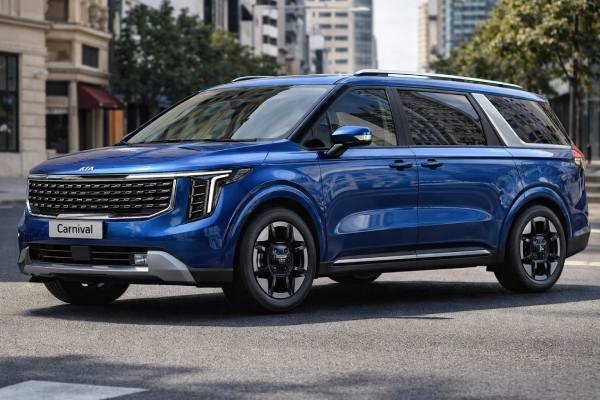
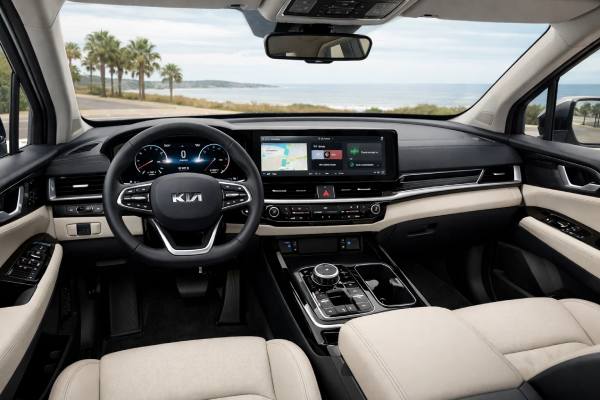
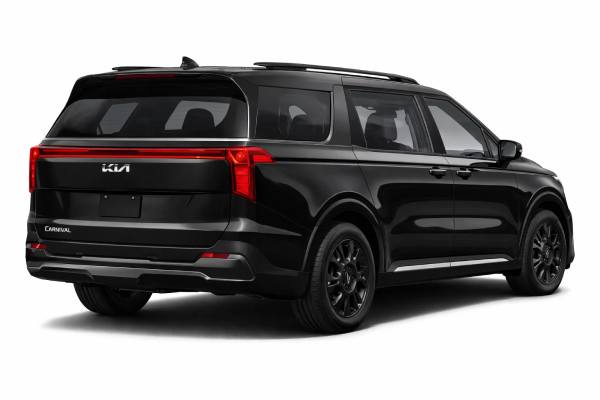
The facelifted Kia Carnival Hybrid (KA4) is built for families and shuttle-duty owners who want minivan space without the fuel bill that usually comes with it. Its 1.6-liter turbo hybrid powertrain focuses on usable midrange torque, smooth low-speed electric assist, and better stop-and-go efficiency than a V6 setup. What matters in real ownership is how the hybrid system behaves under load (full cabin, hills, or towing), how consistent the 6-speed automatic feels, and how well the cooling and braking systems hold up in heavy urban use.
This guide breaks down key specs and dimensions, then moves into trims, safety tech, real-world driving, and the reliability patterns that typically appear in early production years. You will also find a practical maintenance plan tailored to hybrid-specific needs like brake fluid management, battery cooling care, and software updates that can improve drivability.
What to Know
- Strong efficiency for a full-size people mover, with low-speed electric assist that suits city driving and school-run traffic.
- 242 hp system output gives confident merging and passing even with passengers and luggage.
- Keep the hybrid cooling system and software updates current; early issues are often calibration-related rather than mechanical failures.
- Plan oil services by duty cycle: about every 8,000–12,000 km (5,000–7,500 mi) or 12 months, sooner for short trips or towing.
- Expect best results on regular 87 AKI fuel (or local equivalent), but avoid consistently poor-quality fuel in high-heat towing use.
Quick navigation
- Kia Carnival Hybrid KA4 explained
- Kia Carnival Hybrid specs and measures
- Kia Carnival Hybrid trims and ADAS
- Hybrid reliability and weak points
- Service schedule and purchase checks
- Hybrid driving feel and economy
- Competitors and value verdict
Kia Carnival Hybrid KA4 explained
The 2025–present Carnival Hybrid is essentially a “big vehicle, small-engine done right” exercise: use a turbocharged 1.6-liter four-cylinder with an electric motor to deliver the shove people expect from a larger engine, while trimming fuel use in the situations minivans face most often. In traffic and low-speed cruising, the electric motor fills in torque gaps and reduces how hard the gasoline engine must work. Under heavier throttle, the turbo engine carries the load and the motor supports it, rather than trying to drive like a full EV.
A key design choice is the conventional 6-speed automatic transmission instead of an eCVT. For many drivers, that means a more familiar feel: defined gear changes under acceleration and more predictable behavior on grades. The tradeoff is that shift quality depends heavily on software calibration, battery state of charge, and throttle mapping. When the system is well-tuned, it feels natural; when it is not, you may notice low-speed hesitation, a momentary surge, or a “busy” feel as it decides when to add motor torque.
Packaging matters too. The hybrid components add weight, but the Carnival remains a true people mover with three-row seating and meaningful cargo volume behind the third row. The battery is small by EV standards, which keeps mass and cost under control, but it also means the system benefits from steady driving habits: smooth accelerations, anticipating stops, and letting regenerative braking do its job.
For owners, the practical upside is operating cost. A minivan that can return low-7 L/100 km (low-30s mpg US) in mixed use changes the math for high-mileage families, rideshare, and shuttle work. The practical caveat is that hybrids reward correct maintenance: clean cooling paths, fresh fluids, and timely software updates matter more than many buyers expect.
Kia Carnival Hybrid specs and measures
Below are the core specs that most affect ownership, service planning, and real-world usability. Values can vary slightly by market, trim, and test standard.
Powertrain and efficiency
| Item | Specification |
|---|---|
| Hybrid type | HEV (non-plug-in) |
| Engine | 1.6L turbocharged GDI I-4, 1,598 cc |
| Bore × stroke | 75.6 × 89.0 mm (2.98 × 3.50 in) |
| Compression ratio | 10.5:1 |
| Electric motor | PMSM (permanent magnet synchronous motor) |
| System output | 241.7 hp (180.2 kW) combined |
| System torque | 270.5 lb-ft (366.8 Nm) combined |
| Motor output | 74.4 hp (55.5 kW) @ 1,700–2,600 rpm |
| Motor torque | 224.2 lb-ft (304 Nm) @ 0–1,600 rpm |
| Hybrid battery | Lithium-ion, 270 V, 1.49 kWh |
| Fuel | Regular unleaded (87 AKI or higher where specified) |
| Estimated fuel economy (US, combined) | 33 mpg US (about 7.1 L/100 km) |
Transmission and driveline
| Item | Specification |
|---|---|
| Transmission | 6-speed automatic |
| Drive type | FWD |
| Final drive | 3.648:1 |
| Notable note | Conventional automatic feel; calibration quality matters for smoothness |
Chassis, steering, and brakes
| Item | Specification |
|---|---|
| Front suspension | MacPherson strut |
| Rear suspension | Multi-link |
| Steering | Column-mounted electric power steering |
| Steering ratio | 14.23:1 |
| Brakes | Ventilated front disc / solid rear disc |
| Rotor size | 12.8 in / 12.8 in (325 mm / 325 mm) |
| Common tire sizes | P235/65R17 (base) or P235/55R19 (most popular) |
Dimensions, weight, and capacities
| Item | Specification |
|---|---|
| Length | 5,156 mm (203.0 in) |
| Width (no mirrors) | 1,994 mm (78.5 in) |
| Height (no roof rails) | 1,740 mm (68.5 in) |
| Wheelbase | 3,091 mm (121.7 in) |
| Ground clearance | 173 mm (6.8 in) |
| Fuel tank | 72 L (19.0 US gal) |
| Curb weight (min) | 2,201–2,253 kg (4,852–4,967 lb) |
| GVWR | 2,950 kg (6,504 lb) |
| Cargo volume (SAE) | 1,138 L (40.2 ft³) min / 4,109 L (145.1 ft³) max |
| Towing (braked / unbraked) | 1,134 kg / 454 kg (2,500 lb / 1,000 lb) |
Performance (market-dependent)
| Item | Typical figure |
|---|---|
| 0–100 km/h (0–62 mph) | about 9.3 s |
| Top speed | about 190 km/h (118 mph) |
| Minimum turning radius | about 5.9 m |
Kia Carnival Hybrid trims and ADAS
Most markets position the Carnival Hybrid as a higher-value alternative to larger-displacement trims: you get strong standard safety tech and family-focused convenience, then you choose how premium you want the cabin and driver aids to feel. In North America, trims commonly ladder from entry (often branded similarly to LXS) through EX and SX, with a top trim that adds luxury equipment and a fuller driver-assistance suite. Other regions may offer fewer trims but bundle features into packages.
Trims and options that change day-to-day ownership
What to watch for when comparing listings is not only comfort equipment, but also the functional differences that affect cost and long-term satisfaction:
- Wheel and tire package: 17-inch setups can ride slightly softer and may cost less to replace; 19-inch packages tend to sharpen steering response but can increase tire cost and impact harshness on broken pavement.
- Seating configuration: 7-seat layouts may emphasize second-row comfort (captain’s chairs, lounge-style features), while 8-seat layouts maximize flexibility and carpool capacity.
- Power door and tailgate features: frequent loading makes hands-free tailgate and reliable power sliding doors more than a luxury; check their behavior in cold weather and after a battery disconnect.
- Infotainment and camera systems: higher trims often add surround-view cameras and better audio, which matter for a vehicle this size in tight parking structures.
Safety ratings and what they really mean
Safety ratings can apply across multiple model years and trims, but test protocols and equipment assumptions change. In the US, IIHS results for the Carnival line show strengths in some crashworthiness areas, but also results that vary by test type and year applicability. In Australia and New Zealand, ANCAP’s rating explicitly notes that additional tests were conducted to confirm battery integrity and high-voltage safety for hybrid variants, and the rating applies broadly across the Carnival range.
If you are shopping cross-market or importing, treat ratings as guidance, not a guarantee: a facelift can bring structural, restraint, or software changes that alter performance in a given test.
Driver assistance systems (ADAS) and service implications
Depending on trim and market, expect a suite that typically includes:
- AEB (automatic emergency braking): vehicle detection and often pedestrian/cyclist logic; some packages add junction or turning support.
- Lane support: lane keep assist and lane following; calibration can feel sensitive on narrow roads or in construction zones.
- Blind-spot and rear cross-traffic alerts: especially helpful given the Carnival’s size and rear-quarter visibility limits.
- Adaptive cruise control: best on open highways; in dense traffic, comfort depends on how smoothly it re-accelerates.
After windshield replacement, bumper repair, alignment work, or camera/radar removal, insist on proper calibration. Many “ADAS problems” are actually post-repair calibration gaps, not sensor failure.
Hybrid reliability and weak points
Because the 2025–present Carnival Hybrid is still early in its lifecycle, reliability assessment is less about long-term failure statistics and more about known patterns from similar Hyundai-Kia hybrid systems, plus the typical “new model” issues that show up in the first two production years. A useful way to think about risk is to separate problems into calibration annoyances, wear-and-tear, and true hard-part failures.
Common (usually low to medium cost)
- Low-speed hesitation or uneven shifts → often software logic in the engine and transmission control modules → ask a dealer to check for the latest ECU/TCU updates, and confirm adaptive learning has been reset properly after service.
- Brake feel that changes over time (grabby, inconsistent pedal) → regen-to-friction blending plus moisture-contaminated brake fluid → flush brake fluid on time and keep slide pins serviced; hybrids can hide pad wear because regen reduces friction use.
- 12V battery sensitivity → more modules stay awake, and short trips can be harder on the 12V system → test the 12V battery annually and replace early if you see repeated low-voltage warnings.
Occasional (medium cost, mileage dependent)
- Turbo system heat management issues (oil coking risk, boost control complaints) → short-trip driving, poor oil-change discipline, and hot shutdowns → follow severe-service oil intervals if you do short trips, and allow a brief cool-down after towing or long climbs.
- Direct-injection intake deposit buildup → DI engines can accumulate carbon on intake valves over time → symptoms include rough idle and reduced efficiency → use high-quality fuel, keep PCV service in mind, and consider periodic intake cleaning if symptoms appear.
Rare (higher cost, but important)
- Hybrid battery cooling or contactor faults → warning lights, reduced power, or limp mode → root causes can include cooling airflow restriction, wiring faults, or internal battery component issues → keep intake paths clear and address warnings quickly.
- Electric motor/inverter issues → uncommon, but can be expensive → prioritize warranty coverage and service records, and avoid ignoring persistent hybrid-system codes.
Recalls, TSBs, and service actions
For a new hybrid minivan, recall relevance can change quickly. The most practical approach is procedural:
- Run an official VIN recall check before purchase and again once a year.
- Ask for dealer documentation showing campaign completion (not just verbal confirmation).
- Treat drivability complaints as “software-first” until proven otherwise, especially in the first two years of a new powertrain rollout.
In short, the Carnival Hybrid does not look like a high-risk design, but it is more sensitive to correct service and correct calibration than a simple non-hybrid drivetrain.
Service schedule and purchase checks
A hybrid minivan thrives on routine, preventive maintenance. The goal is not only engine longevity, but also keeping the hybrid system efficient and smooth as the vehicle ages. Use the intervals below as a practical baseline, then shorten them if you do short trips, heavy city driving, hot-climate idling with A/C, mountain routes, or regular towing.
Practical maintenance schedule (distance or time, whichever comes first)
- Engine oil and filter: every 8,000–12,000 km (5,000–7,500 mi) or 12 months; use the exact viscosity and specification listed for your market and VIN.
- Cabin air filter: every 15,000–30,000 km (10,000–20,000 mi) or 12 months if you drive in dust/pollen.
- Engine air filter: every 30,000–45,000 km (20,000–30,000 mi), sooner in dusty areas.
- Brake fluid: every 2 years; hybrids benefit from timely fluid changes because friction brakes may be used less often and can corrode internally.
- Coolant (engine and hybrid loops, if equipped separately): typically 5 years / 100,000 km (60,000+ mi) initial, then shorter thereafter; verify the correct coolant standard and whether your VIN has multiple loops.
- Transmission fluid: consider inspection by 60,000–90,000 km (40,000–55,000 mi), and service earlier if towing or if shifts become inconsistent.
- Tires: rotate every 8,000–10,000 km (5,000–6,000 mi); align if you see uneven wear (common on heavy front-drive vehicles).
- 12V battery: test annually from year 3 onward; replace proactively if voltage drops or cold-start behavior changes.
Hybrid-specific habits that reduce long-term cost
- Use regen braking intentionally: long, gentle decelerations keep pads cleaner than “hard then stop.”
- Avoid repeated wide-open throttle from low speed when the engine is cold; let the hybrid warm up before heavy demand.
- Keep cooling intakes (especially for battery cooling, where applicable) free of debris and pet hair.
Buyer’s guide: what to inspect before you commit
- Software status: ask for proof of the latest ECU/TCU and infotainment updates; a “rough” hybrid can become smooth after the right update and relearn.
- Hybrid warning history: scan for stored codes, not only active ones; intermittent faults matter.
- Brake condition: measure pad thickness and rotor condition even if the pedal feels fine.
- Cooling system check: inspect for seepage, dried residue, or frequent top-ups.
- Doors and tailgate: cycle power sliding doors and tailgate multiple times; listen for strain or uneven movement.
- Towing use: if it towed often, insist on earlier fluid service evidence and check for heat-related wear.
The long-term durability outlook is promising if you maintain it like a high-tech family hauler: steady intervals, clean fluids, and no ignored warning lights.
Hybrid driving feel and economy
In daily driving, the Carnival Hybrid’s personality is defined by quiet low-speed operation and strong midrange response. At neighborhood speeds, the motor can smooth out the “big vehicle inertia” feel, making parking lots and stop-and-go traffic less stressful than you might expect from a 2.2-ton minivan. When you step into the throttle to merge, the turbo engine comes in with a more energetic pull than many naturally aspirated four-cylinders, and the motor’s instant torque helps it feel less strained.
Ride, handling, and NVH
- Ride quality: tuned for comfort first. The suspension generally soaks up expansion joints well, but large potholes still remind you of the vehicle’s weight.
- Straight-line stability: strong, especially at highway speeds, with the wheelbase doing real work for calm tracking.
- Steering and braking: steering is light-to-medium with a modern EPS feel. Brake feel can vary depending on how the system blends regeneration and friction braking; it should still be predictable after you adapt.
Powertrain character and transmission behavior
The 6-speed automatic is a plus for drivers who dislike the “rubber-band” sensation of eCVTs. Expect defined gear changes under heavier acceleration. In light throttle, the system may “hunt” less than some multi-speed automatics because the motor can fill gaps, but this depends on calibration and battery state.
Real-world efficiency expectations
Official estimates in many markets cluster around low-7 L/100 km (low-30s mpg US) combined. Real-world results tend to follow a simple pattern:
- City driving: best-case scenario for hybrids; smooth traffic flow and gentle acceleration can beat the rating.
- Highway at 120 km/h (75 mph): efficiency usually drops compared with city because aero drag dominates; plan for a noticeable increase in consumption versus mixed driving.
- Cold weather: expect higher use due to cabin heat demands and reduced battery efficiency; short trips amplify the penalty.
Load and towing
With a braked tow rating around 1,134 kg (2,500 lb), the Carnival Hybrid can handle light trailers, but treat towing as severe service. Plan shorter oil and transmission-fluid intervals, watch temperatures, and expect fuel consumption to rise significantly—often by 20–40% depending on speed, grade, and trailer aero.
Overall, the driving experience is best described as “family-first, efficiency-forward,” with enough power in reserve to keep it from feeling like a compromise.
Competitors and value verdict
The Carnival Hybrid competes in a space where buyers often cross-shop three different ideas: traditional minivans, hybrid SUVs, and three-row crossovers. The right comparison depends on what you value most—sliding doors, third-row usability, or outright towing and AWD capability.
Versus traditional minivans
Compared with conventional gasoline minivans, the Carnival Hybrid’s main advantage is operating cost: if you drive a lot of urban or mixed miles, fuel savings can be meaningful over a few years. The cabin packaging, third-row access, and cargo practicality remain minivan-strong, and the hybrid does not ask you to plug in or change your lifestyle.
The tradeoff is complexity. A non-hybrid drivetrain can be simpler to diagnose and may feel more consistent in extreme heat towing use. If your use is mostly highway at high speeds with a full load, the hybrid advantage narrows.
Versus hybrid three-row SUVs
Hybrid SUVs can match or sometimes beat the Carnival Hybrid’s fuel economy, but most do not match minivan convenience. Sliding doors, lower step-in height, and a truly usable third row matter for child seats, elderly passengers, and tight parking. If you routinely carry people rather than just “have three rows for emergencies,” the Carnival’s body style is still the most efficient use of space.
Versus AWD-focused alternatives
If you need AWD for snow traction, rural roads, or steep unpaved climbs, you may end up in a different category. In that case, compare the Carnival Hybrid not on driveline, but on interior volume, ease of access, and cost per mile. Many AWD three-rows cost more to run and still cannot match the Carnival’s interior flexibility.
Value verdict
The Carnival Hybrid makes the strongest case for families who do frequent city and suburban driving, rideshare or shuttle operators, and long-term owners who want minivan utility with noticeably lower fuel use. The best strategy is to buy the trim that matches your comfort needs, then focus on maintenance discipline: on-time fluids, tire care, and software updates are what turn a good hybrid into a great long-term vehicle.
References
- 2025 Kia Carnival HEV Specifications 2025 (Manufacturer Specifications)
- 2025 Kia Carnival minivan 2025 (Safety Rating)
- Vehicle Detail Search – 2025 KIA CARNIVAL HYBRID | NHTSA 2025 (Recall Database)
- Kia Carnival | Safety Rating & Report | ANCAP 2021 (Safety Rating)
- The new Carnival Hybrid 2024 (Manufacturer Brochure)
Disclaimer
This article is for informational purposes only and is not a substitute for professional inspection, diagnosis, or repair. Specifications, torque values, fluid types, capacities, service intervals, and procedures can vary by VIN, market, model year, and equipment. Always verify details using official owner and service documentation for your exact vehicle and consult a qualified technician when needed.
If you found this guide useful, please consider sharing it on Facebook, X (Twitter), or your favorite forum to help others and support our work.