
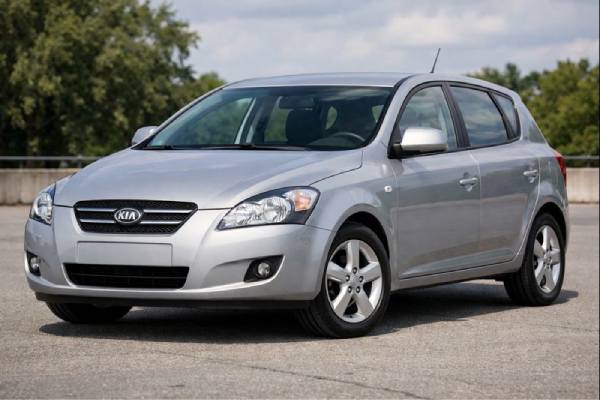


The 2007–2009 Kia Cee’d (ED) with the 2.0-litre G4GC petrol engine is the “bigger naturally aspirated” option in the early Cee’d range—built for smooth everyday torque, simple ownership, and long-distance comfort rather than headline speed. This engine uses multi-point injection (MPI) and a conventional belt-driven valvetrain layout, which keeps diagnostics and routine service straightforward compared with later direct-injection designs. In practice, the car’s strengths come from honest mechanical packaging: predictable handling, strong braking for the class, and a body structure that earned top-era crash-test recognition. Where ownership gets more nuanced is age-related wear—rubber bushings, cooling system plastics, and belt-driven maintenance are what separate a “nice used Cee’d” from a money pit. If you buy one today, condition and maintenance history matter more than mileage alone.
What to Know
- Strong, linear power delivery with simple MPI fueling and generally easy parts availability.
- Spacious C-segment packaging with practical boot volume and sensible cabin ergonomics.
- Euro-era safety focus (structure, airbags, stability control) is a real advantage for its age.
- Budget for timing-belt service and accessory-belt hardware if history is unclear.
- Plan engine oil service about every 10,000–15,000 km (6,000–9,000 miles) or 12 months, depending on use.
Contents and shortcuts
- Kia Cee’d ED 2.0 in context
- Kia Cee’d ED 2.0 specs and figures
- Kia Cee’d ED 2.0 trims and safety
- Reliability and common issues
- Maintenance and buyer’s guide
- Driving feel and real economy
- Rivals and ownership verdict
Kia Cee’d ED 2.0 in context
Think of the 2.0 G4GC Cee’d as the “easy-going all-rounder” of the early ED lineup. It sits above the 1.4 and 1.6 petrols by offering more relaxed cruising and better mid-range response—especially noticeable with passengers, hills, or motorway speeds. The engine is a 2.0-litre inline-four with DOHC and CVVT (variable valve timing), and it delivers its 143 hp in a traditional naturally aspirated way: you get clean throttle response and predictable power rather than turbo surge.
This matters because it shapes the ownership experience. In mixed driving, the car feels less strained than the smaller petrols, and you don’t need to downshift as often to maintain pace. For a used buyer, that “less effort” can translate into a drivetrain that has lived a calmer life—assuming the car was serviced properly. It also helps that the basic layout is conventional: belt timing drive, MPI fueling, and straightforward emissions hardware for the era.
The ED platform was developed to meet European expectations for ride, handling, and crash performance. In day-to-day terms, that shows up as stable motorway manners, consistent braking, and a cabin that was designed around European seat comfort and visibility standards. It’s not a modern tech showcase—driver assistance is minimal by today’s standards—but as a solid mechanical hatchback, it still makes sense if your priorities are reliability, sensible running costs, and a predictable driving feel.
The catch with any 2007–2009 car is that time becomes the dominant variable. Even a “low-mile” example can need refresh work: suspension rubber hardens, coolant components age, and electrical grounds and connectors can corrode. The 2.0 model isn’t automatically more troublesome; it just rewards buyers who judge condition honestly and treat maintenance as a system, not a single event.
Kia Cee’d ED 2.0 specs and figures
Below are the core specifications that match the 2007–2009 Cee’d (ED) with the 2.0-litre DOHC CVVT petrol (G4GC family). Real-world variations happen by body style (5-door, wagon), wheel/tyre package, transmission, and market equipment, so treat values as the typical baseline.
Powertrain and efficiency
| Item | Specification |
|---|---|
| Engine code/family | G4GC (2.0 petrol, DOHC CVVT) |
| Layout | Inline-4, DOHC, CVVT |
| Valvetrain | 4 valves/cyl (typical for this family) |
| Displacement | 2.0 L (1,975 cc) |
| Bore × stroke | 82.0 × 93.5 mm |
| Induction | Naturally aspirated |
| Fuel system | MPI (multi-point injection) |
| Compression ratio | 10.1:1 |
| Max power | 143 hp (≈105 kW) @ ~6,000 rpm (market dependent) |
| Max torque | ~186 Nm @ ~4,600 rpm (market dependent) |
| Timing drive | Belt |
| Emissions class (era) | Euro 4 (typical for 2007 EU spec) |
| Rated combined consumption (typical) | ~7.6 L/100 km (varies by transmission/tyres) |
Transmission and driveline
| Item | Specification |
|---|---|
| Drive type | FWD |
| Gearboxes (common) | 5-speed manual; 4-speed automatic (market dependent) |
| Differential | Open |
Chassis and dimensions
| Item | Specification |
|---|---|
| Front suspension | MacPherson strut (typical ED layout) |
| Rear suspension | Multi-link (typical ED layout) |
| Brakes | Front discs / rear discs (many trims), ABS standard in most markets |
| Common tyre sizes | 195/65 R15, 205/55 R16 (market/trim dependent) |
| Length / width / height (5-door) | ~4,235 / 1,790 / 1,480 mm |
| Wheelbase | ~2,650 mm |
| Fuel tank | commonly ~53 L (market dependent) |
| Cargo volume | ~340 L (VDA, seats up; body style dependent) |
Performance and capability (typical)
| Item | Typical figure |
|---|---|
| 0–100 km/h (0–62 mph) | ~10–11 s (depends on gearbox and body style) |
| Top speed | ~195–205 km/h (market dependent) |
| Towing (braked) | commonly ~1,200–1,400 kg (depends on approval and drivetrain) |
Fluids and service capacities (buyer-useful, verify by VIN)
Because official capacities and torque specs can vary by production date and market, use the below as decision-making guidance, then confirm in the correct service documentation for your exact car.
| Item | Typical guidance |
|---|---|
| Engine oil | 5W-30 or 5W-40 meeting the required ACEA/API spec for your market; capacity often ~4.0 L with filter (verify) |
| Coolant | Ethylene-glycol long-life coolant, typically 50/50 mix; capacity often ~6–7 L (verify) |
| Manual gearbox oil | Usually 75W-85/75W-90 GL-4/GL-4+ depending on box (verify) |
| Automatic ATF | Use the exact ATF spec listed for the transmission (verify) |
| Brake fluid | DOT 3/4 (verify cap marking and manual) |
| A/C refrigerant | R134a (typical for this era; verify under-hood label) |
Key torque specs (typical examples; verify):
- Wheel nuts commonly ~88–110 Nm depending on wheel/hub design
- Spark plugs commonly ~18–25 Nm depending on plug type and head material
If you want maximum accuracy for your specific VIN, match these numbers to the exact engine variant, gearbox code, and production month. That step prevents “close enough” service mistakes.
Kia Cee’d ED 2.0 trims and safety
Trims vary a lot by country, but most 2007–2009 Cee’d (ED) lineups follow a familiar ladder: entry, mid, and higher equipment grades, plus appearance packs. What changes with trim is usually comfort and convenience equipment (climate control type, audio/infotainment, wheel size, interior materials) rather than the fundamentals of the chassis. For the 2.0 petrol specifically, you’ll often see it paired with better equipment levels—partly because it was priced above the smaller engines—so many 2.0 cars come with the more desirable day-to-day features.
Trims and options that matter in the real world
Look for these differences because they change ownership satisfaction and running costs:
- Wheel and tyre package: 15-inch wheels can ride a bit softer and cost less in tyres; 16-inch (and some 17-inch packages) sharpen steering response but can be noisier and more sensitive to alignment.
- Brakes and stability systems: many markets offered ABS and ESC broadly, but not always identically by year/trim. Confirm that stability control is present if it matters to you.
- Climate control: manual A/C vs automatic climate can affect comfort and compressor cycling patterns; neither is inherently “better,” but condition matters.
- Audio and steering-wheel controls: common on higher trims and make the cabin feel less dated.
- Body style: 5-door hatch is most common; wagon adds cargo utility but may have slightly different weights and tyre loads.
Quick identifiers when viewing a car:
- Check the door-jamb VIN label for build month/year and axle weights.
- Wheel size and brake condition are visible immediately; mismatched tyre brands or odd wear can flag alignment or suspension wear.
- Higher trims often have steering-wheel controls, better seat fabrics, and sometimes automatic climate panels.
Safety ratings and what they mean today
In its era, the Cee’d was notable for strong crash performance and safety equipment. It was commonly equipped with six airbags (front, side, and curtain) and a body structure engineered to meet European crash standards. That’s a real advantage versus some older competitors, especially for side-impact protection.
However, be clear about the limit: modern ADAS features (automatic emergency braking, adaptive cruise, lane centering) were not part of the typical 2007–2009 equipment set. So the safety story here is primarily structure + restraints + stability systems, not camera/radar assistance.
Driver assistance and calibration implications
Because ADAS is minimal, service calibration issues are usually simpler than on newer vehicles. The systems that do matter are:
- ABS/ESC sensors: wheel speed sensor faults can trigger warning lights and disable stability control.
- Steering angle sensor: after alignment or steering work, some cars need a relearn procedure.
- Brake system health: fluid condition and caliper slide function have an outsized impact on real stopping performance.
If safety is a top priority, your best upgrade is not a gadget—it’s buying the cleanest example you can and keeping tyres, brakes, and suspension in top condition.
Reliability and common issues
The 2.0 G4GC Cee’d can be a durable car when maintained, but most examples are now old enough that reliability is largely a “condition report.” Below is a practical breakdown by prevalence and cost severity, with the usual age/mileage windows where they show up.
Common and usually low-to-medium cost
- Ignition coil or plug wear (common, low–medium):
Symptoms: misfire under load, rough idle, flashing engine light.
Likely cause: aging coils, worn plugs, moisture in plug wells.
Remedy: replace plugs on schedule; replace coils as needed (often best done as a set if failures repeat). - Vacuum leaks and intake hose cracking (common, low):
Symptoms: unstable idle, lean codes, hesitation.
Cause: aged rubber hoses and intake boots.
Remedy: smoke test, replace hoses/boots, clean throttle body if sticky. - Suspension bushings and drop links (common, low–medium):
Symptoms: clunks over bumps, vague steering, uneven tyre wear.
Cause: rubber hardening and joint wear.
Remedy: replace worn links and control-arm bushings; align the car afterward. - Brake caliper slider sticking (common, low):
Symptoms: uneven pad wear, pulling, heat smell after a drive.
Cause: dried grease, torn boots, corrosion.
Remedy: service sliders, replace boots, flush brake fluid.
Occasional issues that can become costly if ignored
- Cooling system aging (occasional, medium):
Symptoms: coolant smell, slow overheating in traffic, low coolant level.
Cause: radiator end-tank seams, thermostat housing, hoses, or expansion tank aging.
Remedy: pressure test; replace weak components proactively if you see seepage. - Engine oil leaks (occasional, low–medium):
Symptoms: oil smell, wet engine block, drips near the bellhousing.
Cause: valve cover gasket, crank seals, or oil pan sealing.
Remedy: fix early—oil on belts and mounts accelerates other failures. - Automatic transmission shift quality (occasional, medium):
Symptoms: delayed engagement, flare, harsh 2–3 shift.
Cause: old ATF, solenoid wear, adaptation issues.
Remedy: correct-spec ATF service; diagnose before assuming the gearbox is “done.”
High-severity risk if service history is unknown
- Timing belt service neglect (occasional, high):
Symptoms: no warning until failure; sometimes belt noise or visible cracking.
Cause: overdue belt, tensioner/idler wear, coolant/oil contamination on belt.
Remedy: treat as mandatory if records are missing. Do belt, tensioner, idlers, and ideally the water pump as a kit.
Recalls, service actions, and how to verify
At this age, paperwork matters. Some cars will have had recall or service actions over the years, but the only reliable way to confirm is:
- Check recall status by VIN using the official recall lookup for your region.
- Ask for dealer printouts or invoices showing completion dates and mileage.
- Inspect the car for “evidence-based” work: new fasteners, clean coolant, fresh belt stickers, or dated parts tags.
A well-kept 2.0 can be a very satisfying daily. A neglected one tends to fail in clusters—cooling, belts, and suspension—because age-related maintenance was skipped repeatedly.
Maintenance and buyer’s guide
A 2007–2009 Cee’d 2.0 rewards owners who follow a simple rule: service it by time as well as distance. Short urban trips, cold starts, and long oil intervals are what turn “reliable” engines into oil-leakers and misfire machines.
Practical maintenance schedule (distance/time)
Use this as a sensible baseline, then match it to the correct service book for your VIN and market.
- Engine oil and filter: every 10,000–15,000 km or 12 months (short-trip cars should lean to the shorter end).
- Air filter: inspect every oil change; replace about 20,000–30,000 km depending on dust.
- Cabin filter: every 15,000–30,000 km or yearly if you want strong HVAC airflow.
- Spark plugs: typically 60,000–100,000 km depending on plug type; replace sooner if misfires start.
- Coolant: every 4–5 years (don’t just “top up” repeatedly—find leaks).
- Brake fluid: every 2 years (keeps ABS/ESC components healthier).
- Manual gearbox oil: consider every 80,000–120,000 km for shift feel and bearing life.
- Automatic ATF: consider every 50,000–80,000 km if the car does city work or the fluid is dark; use the correct spec only.
- Timing belt kit: replace at the manufacturer interval; if unknown, do it immediately after purchase.
- Accessory belt(s) and pulleys: inspect at every oil change; replace if cracked/noisy.
- Tyre rotation and alignment: rotate every 8,000–10,000 km; align yearly or after suspension work.
- Battery health: test before winter; many 12 V batteries last 4–6 years in real use.
Fluids and decision-making notes
- If you don’t know the exact oil spec required for your market, don’t guess—choose a reputable oil that meets the correct ACEA/API requirement stated in your owner documentation, then stick to consistent intervals.
- Mixing coolant types can create sludge and corrosion. If the coolant history is unclear, a proper drain/refill (or flush if contaminated) is often money well spent.
Buyer’s inspection checklist (high value, low effort)
Bring a flashlight and do these checks—each one can save you real money:
- Timing-belt evidence: invoices, dated stickers, or a clear recent service record. No proof = assume it’s due.
- Cold start behavior: listen for rattles, belt squeal, unstable idle, or visible smoke.
- Cooling system pressure: look for dried coolant residue around hose joints and the radiator end tanks.
- Oil leaks: inspect valve cover perimeter and the lower engine area; check for oil on rubber mounts.
- Transmission behavior: smooth engagement and consistent shifts; no harsh flare or delayed drive.
- Suspension noise: clunks over small bumps point to links/bushings; uneven tyre wear suggests alignment issues.
- Brake feel: no pulsation, pulling, or grinding; check pad thickness and rotor lips.
- Electrical basics: windows, central locking, blower speeds, A/C function, and warning lights.
Best “value configuration” tips
- A manual 2.0 with clean service history is often the sweet spot for durability and predictable running costs.
- Avoid cars with multiple “half fixes” (mixed tyres, overheating history, repeated coil replacements without plug service). Those patterns usually signal broader neglect.
- Prioritize condition over trim: a clean, quieter base car is better than a high-trim example with deferred maintenance.
Driving feel and real economy
The 2.0 petrol Cee’d is defined more by composure than aggression. Around town, it feels flexible: you can short-shift and still move with traffic confidently, and throttle response is generally clean because MPI fueling tends to be forgiving of stop-start use. On the motorway, the extra displacement over the 1.4/1.6 makes a noticeable difference in how “busy” the car feels—especially when loaded.
Ride, handling, and NVH
- Ride: typically well-judged for European roads. On smaller wheels, it’s more compliant; on larger wheels, sharp edges come through more clearly.
- Handling balance: neutral and predictable. The rear multi-link layout helps the car feel stable mid-corner, especially compared with torsion-beam rivals of the era.
- Steering: generally light-to-moderate effort. If it feels vague or knocks, suspect worn bushings or alignment issues before blaming “the design.”
- Braking: strong when maintained. Old fluid, sticking sliders, or cheap tyres can make the car feel far worse than it should.
Powertrain character
- Low-rpm response: better than the smaller petrols, but still naturally aspirated—peak pull comes with revs, not instant turbo torque.
- Manual gearbox: typically the more engaging and consistent choice; clutch condition matters, especially on city-driven cars.
- 4-speed automatic (where fitted): smooth when healthy, but it can feel dated on kickdown. Fluid condition is critical.
Real-world economy (what to expect)
Factory-era combined figures around 7–8 L/100 km are realistic for mixed use if the car is healthy and driven smoothly. In the real world:
- City-heavy driving: often 9–11 L/100 km depending on traffic and short-trip frequency.
- Steady highway cruising (100–120 km/h): often 7–8.5 L/100 km, with wind, tyres, and alignment making a bigger difference than most owners expect.
- Cold weather: expect a noticeable penalty on short trips because the engine spends more time warming up.
If your consumption is far worse than these ranges, don’t assume “that’s normal.” The usual causes are dragging brakes, incorrect tyre pressures, worn plugs, vacuum leaks, and aging oxygen sensors.
Performance metrics that matter day to day
A 0–100 km/h time around 10–11 seconds isn’t sports-hatch territory, but it’s enough for safe merging and overtaking if the car is healthy. More important is how consistently it does that performance: a well-maintained 2.0 tends to feel the same every day, without the variability you sometimes get from aging turbo hardware or high-pressure fuel systems.
Rivals and ownership verdict
In the late-2000s C-segment, the Cee’d fought the class standards: Volkswagen Golf, Ford Focus, Opel/Vauxhall Astra, and similar mainstream hatchbacks. Today, those rivals are also old enough that the contest is less about brand reputation and more about how each model ages—rust resistance, suspension durability, and parts pricing in your local market.
Where the 2.0 Cee’d tends to win
- Straightforward mechanical ownership: naturally aspirated MPI petrol with conventional service needs can be easier to keep running well long-term.
- Practical packaging: the hatchback proportions, usable boot, and rear-seat space still work for modern life.
- Safety fundamentals: strong structure and multi-airbag availability for the era make it a sensible choice among older used cars.
Where rivals can be stronger
- Cabin refinement and “premium feel”: some competitors may feel more upscale in materials and switchgear, depending on trim.
- Gearbox sophistication: competitors with newer-era 5- or 6-speed automatics can feel more relaxed than a 4-speed unit.
- Model-specific weak points: every rival has them—timing chain issues here, DSG/mechatronics there, rust in certain arches elsewhere. The best choice is the car with the best history, not the best badge.
Best-fit buyer profiles
This Cee’d is a good match if you want:
- A dependable daily that’s easy to service,
- A comfortable highway hatch with honest performance,
- A used car where you can “maintenance your way” into reliability.
It’s a poor match if you want:
- Modern driver assistance and infotainment integration,
- Lowest-possible fuel use in city traffic (a smaller engine or diesel may do better),
- A “buy it and do nothing” experience—age makes that unrealistic.
Ownership verdict: A well-maintained 2007–2009 Cee’d 2.0 is one of the more sensible older petrol hatchbacks to live with—provided you verify timing-belt history, keep the cooling system healthy, and refresh suspension and brakes as needed. Treat it like a mechanical system, not an appliance, and it tends to repay you with stable, predictable service.
References
- cee’d product Guide 2007 (Product Guide)
- Kia cee’d wins 5-Star Euro NCAP safety rating – Kia Slovakia s.r.o. 2007 (Safety Rating)
- Kia Recalls | Kia Europe 2026 (Recall Database)
- Kia Ceed instruktionsböcker | Kia Sweden 2026 (Owner’s Manual Portal)
Disclaimer
This article is for informational purposes only and is not a substitute for professional inspection, diagnosis, or repair. Specifications, torque values, fluid types and capacities, and service intervals can vary by VIN, market, production date, and equipment; always verify details using the official owner’s manual and service documentation for your specific vehicle.
If this guide helped, consider sharing it on Facebook or X to support our work.