
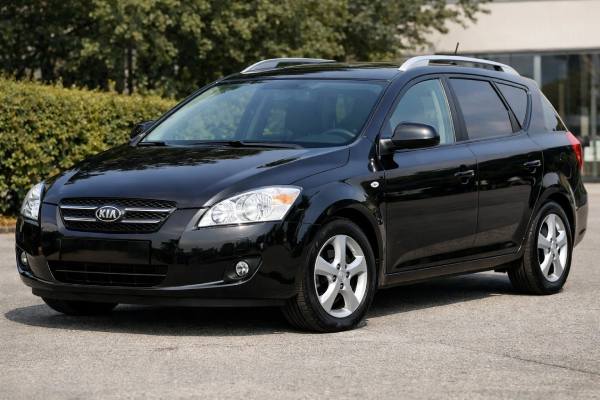
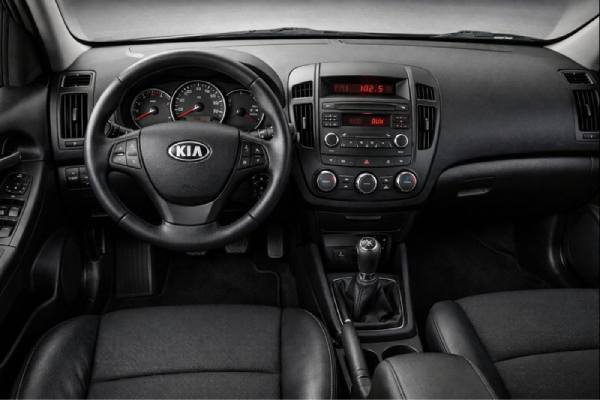
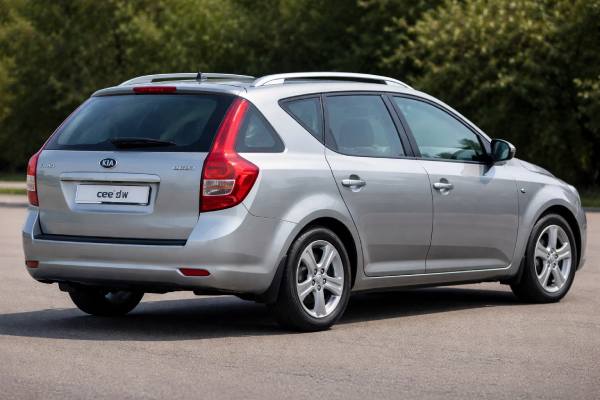
The 2007–2009 Kia Cee’d SW (ED) with the 2.0-litre G4GC petrol is one of the more interesting “grown-up” choices in the compact-wagon class: it pairs a simple, naturally aspirated four-cylinder with a practical estate body that was tuned for European roads. In everyday ownership, this version stands out for predictable throttle response, straightforward servicing, and a chassis that stays composed when you actually use the cargo space. It is not a hot wagon, but it does feel meaningfully stronger than the smaller petrol options, especially when loaded or climbing grades.
The trade-off is typical of mid-2000s cars: you get robust fundamentals, but fewer modern driver-assistance features, and you need to stay disciplined about rubber parts, fluids, and rust prevention as the years add up.
Quick Specs and Notes
- Stronger loaded-drive feel than the smaller petrol engines; power delivery stays linear and easy to modulate.
- Wagon packaging is genuinely useful: long roof, square opening, and a low liftover for bulky items.
- Generally straightforward engine and drivetrain layout, which helps keep independent-shop servicing realistic.
- Budget for age-related items (bushings, cooling hoses, sensors) rather than expecting “maintenance-free” running.
- Plan engine oil service about every 12 months or 10,000–15,000 km (6,000–9,000 miles), depending on your market schedule and usage.
What’s inside
- Kia Cee’d SW (ED) 2.0 ownership snapshot
- Kia Cee’d SW (ED) 2.0 specs and dimensions
- Kia Cee’d SW gear and safety kit
- Reliability patterns and known faults
- Maintenance plan and buying checklist
- Driving feel and real-world economy
- How this wagon stacks up to rivals
Kia Cee’d SW (ED) 2.0 ownership snapshot
If you want a compact estate that behaves like a “normal car” even when it’s doing wagon work, the Cee’d SW with the G4GC is usually the right flavor. The 2.0-litre naturally aspirated engine gives you the kind of usable, repeatable performance that feels calmer than smaller engines at the same road speed. It does not rely on turbo boost, so there’s no “wait… then go” sensation, and it tends to be forgiving of mixed driving styles. For owners who do frequent short trips, school runs, or weekend hauling, that predictability matters more than peak numbers.
The SW body is the other half of the appeal. You get a long load floor, a tailgate opening that stays practical even with a tall cargo cover, and rear seatbacks that fold to create a genuinely flat-ish space for bikes, boxes, and DIY runs. Many compact wagons look roomy on paper but get compromised by wheel-arch intrusions or awkward latch hardware; the Cee’d SW is usually the opposite: simple shapes, easy strapping points, and fewer surprises.
Where this car rewards you is “total cost realism.” Parts availability across Europe is generally decent, and the engineering is conventional: multi-point injection rather than direct injection, belt-driven timing rather than an expensive chain system, and a front-drive layout that most shops know well. Where it can punish you is neglect. A 2007–2009 wagon is old enough that small issues compound: tired suspension rubber will make the car feel sloppy, weak cooling components can create overheating risk, and deferred fluid services show up as shifting quality problems or noisy bearings.
A good way to think about this model is as a solid platform that wants consistent baseline care. If you buy one with documented servicing and you keep up with fluids, belts, and wear items, it can be a comfortable long-haul utility car that still feels tidy on normal roads.
Kia Cee’d SW (ED) 2.0 specs and dimensions
Below is a focused spec set for the 2007–2009 Cee’d SW (ED) with the 2.0-litre G4GC petrol (143 hp). Exact numbers can vary slightly by market, transmission, wheel package, and emissions calibration, so treat these as the “typical” configuration you’ll see in Europe.
Powertrain and efficiency
| Item | Specification |
|---|---|
| Code | G4GC |
| Engine layout and cylinders | Inline-4 (I-4), DOHC, 4 valves/cyl |
| Bore × stroke | 82.0 × 93.5 mm (3.23 × 3.68 in) |
| Displacement | 2.0 L (1,975 cc) |
| Induction | Naturally aspirated |
| Fuel system | Multi-point fuel injection (MPFI) |
| Compression ratio | ~10.1:1 (market-dependent) |
| Max power | 143 hp (105 kW) @ ~6,000 rpm |
| Max torque | 186 Nm (137 lb-ft) @ ~4,500–4,600 rpm |
| Timing drive | Timing belt |
| Rated efficiency (typical) | ~7.4–8.5 L/100 km (32–28 mpg US / 38–33 mpg UK) combined, depending on gearbox and test cycle |
| Real-world highway @ 120 km/h (75 mph) | ~7.5–8.5 L/100 km (31–28 mpg US / 38–33 mpg UK) |
Transmission and driveline
| Item | Specification |
|---|---|
| Transmission | Typically 5-speed manual; some markets offered an automatic (varies by year/trim) |
| Drive type | FWD |
| Differential | Open |
Chassis, brakes, and wheels
| Item | Specification |
|---|---|
| Suspension (front/rear) | Front MacPherson strut; rear multi-link (typical for ED platform) |
| Steering | Rack-and-pinion with power assist (hydraulic or electric depending on build) |
| Brakes | Ventilated front discs; rear discs (some lower trims/markets may differ) |
| Popular tyre sizes | Commonly 195/65 R15, 205/55 R16, or 225/45 R17 depending on trim |
| Ground clearance | Typically around 140–150 mm (5.5–5.9 in) (varies with wheels and load) |
Dimensions and capacity (SW body)
| Item | Specification |
|---|---|
| Length / width / height | ~4,470 / 1,790 / 1,490 mm ( 176.0 / 70.5 / 58.7 in ) |
| Wheelbase | ~2,650 mm (104.3 in) |
| Turning circle (kerb-to-kerb) | ~10.6–10.9 m (34.8–35.8 ft) |
| Kerb (curb) weight | ~1,300–1,420 kg (2,866–3,131 lb) depending on equipment |
| Fuel tank | ~53 L (14.0 US gal / 11.7 UK gal) |
| Cargo volume | ~534 L (18.9 ft³) seats up / 1,664 L (58.8 ft³) seats down (method varies by source/market) |
Performance
| Metric | Typical result |
|---|---|
| 0–100 km/h (0–62 mph) | ~9.5–10.5 s (gearbox and traction dependent) |
| Top speed | ~200–205 km/h (124–127 mph) |
Fluids and service capacities (typical planning numbers)
| Item | Specification (verify by VIN/label/manual) |
|---|---|
| Engine oil | Commonly 5W-30 or 5W-40 meeting the required ACEA/API spec; ~4.0 L (4.2 US qt) with filter (varies) |
| Coolant | Ethylene-glycol long-life coolant; typically 50/50 mix; capacity varies by radiator/heater core |
| Manual gearbox oil | GL-4 spec gear oil; capacity varies by transmission code |
| Brake fluid | DOT 3/4 (market-dependent); flush interval matters more than brand |
| Key torque specs | Wheel nuts commonly ~90–110 Nm (66–81 lb-ft); oil drain plug and spark plugs vary by hardware—confirm before tightening |
The biggest “numbers that matter” for daily use are not the peak outputs; they’re the wagon geometry and the torque curve. The SW’s extra length makes it steadier on motorways than some shorter hatchbacks, and the 2.0’s midrange reduces the need for constant downshifts with passengers and luggage.
Kia Cee’d SW gear and safety kit
Trim structure for the ED-era Cee’d SW varies by country, but the pattern is consistent: the 2.0 petrol typically sits in the mid-to-upper trim ladder, often paired with larger wheels, upgraded interior materials, and better infotainment. When shopping, focus less on the badge name and more on the equipment list and the physical cues inside the cabin.
Trims and options that change ownership
Common equipment “breakpoints” you’ll see across European-market cars:
- Climate control vs manual A/C: automatic climate is convenient, but it adds blend-door actuators and more sensors; confirm all temperature modes work smoothly.
- Wheel size: 17-inch wheels look good, but they can make ride quality sharper and increase the chance of bent rims on rough roads. For comfort and cost, 15–16 inch packages often make the best sense.
- Cruise control: great for long-distance drivers; ensure the stalk/buttons respond correctly and that the brake switch cancels cruise consistently.
- Audio and connectivity upgrades: factory head units can be dated; check for pixel issues, CD loading problems, and speaker distortion.
- Roof rails and tow preparation: wagons get used for towing; look for clean wiring, a correctly mounted towbar, and evidence of regular brake servicing.
Quick identifiers can help:
- Higher trims often have steering-wheel audio controls, upgraded seat fabrics, and sometimes rear disc brakes where lower trims used simpler setups in some markets.
- Look for the VIN build plate, then confirm engine code and equipment against a dealer system if you can.
Safety ratings and what they mean here
The Cee’d platform achieved strong occupant protection results for its era in Euro NCAP testing. Keep in mind that the official test vehicle was typically a hatchback configuration, and test protocols in 2007 differ from modern percent-based ratings. In real ownership terms, the takeaways are practical:
- The structure and restraint systems were designed to perform well in frontal and side impacts for the time.
- Child-seat provisions are generally good, but labeling and clarity of warnings (such as passenger airbag status) can vary by market and year.
Safety systems and driver assistance
This generation is “pre-ADAS” by today’s standards. Expect strong basics rather than automation:
- Airbags: commonly front, side, and curtain airbags on many trims; verify the airbag warning light behavior at startup.
- ABS and stability control: many cars have ABS; stability/traction control availability depends on year/trim/market. If equipped, confirm the system self-checks and there are no stored fault lights.
- ISOFIX/LATCH: typically present on rear outboard seats; check that the plastic guides and seatbacks are not damaged from repeated child-seat use.
- Lighting: halogen headlamps are common; ensure reflectors are not cloudy and aim is correct—good bulbs cannot fix a poor housing.
If you want the safest ownership experience, prioritize a car with fully working warning lights, intact airbags (no “resistor fixes”), good tyres, and fresh brake fluid. On a mid-2000s wagon, those details often matter more than trim names.
Reliability patterns and known faults
The G4GC 2.0 and the Cee’d ED platform tend to age in a predictable way: the “big pieces” often last, while sensors, rubber parts, and maintenance shortcuts create most of the drama. Below is a practical map of what to watch for, grouped by prevalence and cost impact.
Common (expect to see)
- Ignition and misfire issues (low to medium cost):
Symptoms: rough idle, hesitation under load, flashing engine light.
Likely causes: ageing coils, worn spark plugs, tired plug leads (where fitted), or vacuum leaks.
Remedy: baseline tune-up with correct plugs and a careful check for intake leaks before replacing expensive parts. - Oil seepage and sweating (low to medium cost):
Symptoms: oil film around the valve cover, timing cover area, or sump edge; burnt-oil smell after a drive.
Likely causes: hardened gaskets and seals, plus crankcase ventilation hoses that have aged.
Remedy: address leaks early—oil on rubber mounts and belts accelerates wear. - Cooling-system ageing (medium cost if ignored):
Symptoms: slow coolant loss, overheating in traffic, weak cabin heat, or gurgling after shutdown.
Likely causes: tired radiator end tanks, thermostat issues, ageing hoses, or a weak cap.
Remedy: pressure-test the system, replace suspect components as a set, and use the correct coolant mix. - Suspension wear (medium cost):
Symptoms: clunks over bumps, vague steering, uneven tyre wear.
Likely causes: front drop links, control-arm bushings, rear multi-link bushings, and tired dampers.
Remedy: fix the cause, then align the car; otherwise new tyres won’t last.
Occasional (depends on use and maintenance)
- Crank and cam sensor faults (medium cost):
Symptoms: intermittent stalling, long crank, random no-start, or limp-mode behavior.
Likely causes: sensor ageing and heat cycling.
Remedy: confirm with diagnostics; avoid “parts darts” that waste money. - Manual clutch and hydraulics (medium to high cost):
Symptoms: high bite point, slipping in higher gears, difficult gear engagement.
Likely causes: worn clutch disc/pressure plate; ageing slave cylinder in some cases.
Remedy: replace clutch components as a kit; inspect flywheel condition before reassembly. - Automatic shifting complaints (medium cost):
Symptoms: delayed engagement, flare on upshift, harsh downshift.
Likely causes: old fluid, adaptation issues, or solenoid wear (depending on gearbox).
Remedy: verify correct fluid specification and service history; a “flush” is not always the right first step on a high-mile gearbox.
Rare but important (high consequence)
- Timing-belt neglect (high consequence):
Symptoms: chirping noises, visible belt cracking, unknown service history.
Root risk: belt failure can cause major engine damage depending on design and operating conditions.
Remedy: if history is unknown, treat the belt service as immediate—typically belt, tensioner, idlers, and often the water pump.
Recalls, service actions, and how to verify
With an older car, the smartest strategy is not memorizing every campaign; it’s verifying completion. Use the official VIN recall lookup for your region and request dealer history if possible. A wagon that has had recall work completed and has consistent servicing is usually a safer bet than a “cheap” example with missing documentation.
Maintenance plan and buying checklist
A 2007–2009 Cee’d SW 2.0 can be an excellent value if you treat maintenance as a schedule, not a reaction. The aim is simple: keep fluids fresh, protect the engine from overheating and belt failures, and stop small chassis wear from turning into tyre-eating looseness.
Practical maintenance schedule (distance or time, whichever comes first)
- Engine oil and filter: every 10,000–15,000 km (6,000–9,000 miles) or 12 months.
Short-trip driving, heavy city use, or hot climates justify the shorter end. - Air filters:
- Engine air filter: inspect every service; replace about 20,000–30,000 km if dusty.
- Cabin filter: replace about 12 months for HVAC performance.
- Coolant: replace about every 4–5 years (or per coolant type).
Always bleed correctly; air pockets create overheating and poor cabin heat. - Spark plugs: typically 60,000–100,000 km depending on plug type and market spec.
Replace coils only when testing indicates weakness or if misfires persist after plugs. - Timing belt system: follow the official interval for your VIN/market; if unknown, schedule it now.
Best practice is belt + tensioner + idlers, and consider the water pump “while you’re in there.” - Brake fluid: every 2 years.
This is one of the highest value services for pedal feel and corrosion prevention. - Manual gearbox oil: consider every 80,000–120,000 km if the car sees hard use or towing.
“Lifetime” fluids often shorten gearbox life on older vehicles. - Suspension and alignment: inspect annually; align after any major bushing/arm replacement.
- Tyre rotation: every 10,000–12,000 km, and check pressure monthly.
- 12 V battery and charging check: test yearly; many batteries age out around 4–6 years.
Fluids and specs (ownership-ready guidance)
Choose oil viscosity based on climate and manufacturer specification, not guesswork. Many owners do well with a quality 5W-30 or 5W-40 that meets the required ACEA/API standard for the engine and region. For coolant, use the correct long-life type and avoid mixing unknown formulations.
Buyer’s guide: what to inspect in person
Bring a simple checklist and stick to it:
- Cold start: listen for belt noise, tapping, or unstable idle in the first minute.
- Temperature behavior: the car should warm steadily; fans should cycle normally; no coolant smell.
- Transmission feel: manual should shift cleanly without crunching; automatic should engage without long delays.
- Brakes: no pulsing, no pulling, and the pedal should feel firm after a fluid service.
- Suspension knocks: test over small bumps at low speed; clunks usually point to links or bushings.
- Rust hotspots: check wheel arches, rear subframe areas, sills, and the tailgate edge.
- Electrics: windows, locks, HVAC modes, and instrument cluster lights.
- Service proof: receipts beat “stamps.” Look for belt, coolant, brake fluid, and recent oil changes.
Long-term durability outlook
When maintained, this platform typically ages well because it is not overloaded with complex electronics. The best examples are not the lowest mileage; they are the ones with consistent fluids, tidy cooling systems, and suspension work done before tyres and alignment get destroyed.
Driving feel and real-world economy
The Cee’d SW 2.0 drives like a compact car first and a wagon second, which is exactly what many owners want. It has enough wheelbase to feel stable at motorway speeds, and the steering and body control are usually more “European hatchback” than “soft family estate,” especially on the factory wheel sizes.
Ride, handling, and NVH
- Ride: on 15–16 inch wheels the car is typically compliant and quiet enough for long trips. On 17s, sharp bumps can feel more abrupt, and worn dampers show up sooner.
- Handling: the chassis stays tidy through roundabouts and fast lane changes, but it is not sporty. With fresh rear bushings it tracks cleanly; with worn rear links it can feel loose at the back.
- Braking feel: generally confidence-inspiring when the brake fluid is fresh and the slide pins are serviced. Neglect makes these cars feel “wooden” or inconsistent.
- Cabin noise: expect moderate road noise by modern standards; tyre choice makes a big difference. Roof rails and older door seals can add wind noise at motorway speed.
Powertrain character
The 2.0-litre’s biggest advantage is that it makes the wagon feel relaxed. It pulls cleanly without needing high rpm all the time, and it tolerates being driven gently. If you downshift and use the upper rev range, it responds, but the character is more “steady and smooth” than “exciting.” With a manual gearbox, the gearing is usually easy to live with. Passing performance is respectable for the era, especially compared with smaller naturally aspirated petrol engines.
If the car feels sluggish, don’t assume the engine is “tired.” Common causes are simple: old plugs, a sticky thermostat, lazy oxygen sensors, dragging brakes, or low tyre pressures.
Real-world efficiency
For a naturally aspirated 2.0 petrol wagon, real-world fuel use is typically reasonable but not class-leading:
- City: often around 9.0–11.0 L/100 km (26–21 mpg US / 31–26 mpg UK) depending on traffic and warm-up time.
- Highway (100–120 km/h): often 7.0–8.5 L/100 km (34–28 mpg US / 40–33 mpg UK) depending on speed, wind, and tyres.
- Mixed driving: often 7.8–9.5 L/100 km (30–25 mpg US / 36–30 mpg UK).
Cold weather increases consumption more than many owners expect because warm-up losses are significant on short trips. If you do mostly short drives, shortening oil intervals and keeping the cooling system healthy will usually pay you back in reliability.
Load carrying and towing notes
A wagon invites heavy use. When loaded, the Cee’d SW remains stable if the rear suspension is healthy and tyres are properly inflated. If you plan to tow, confirm local tow ratings for your VIN and ensure the cooling system, brakes, and gearbox fluid condition are excellent before you commit to regular towing.
How this wagon stacks up to rivals
In the 2007–2009 compact-wagon landscape, the Cee’d SW 2.0 competes with cars that often feel more premium on the inside but can cost more to keep perfect with age. The Kia’s strongest play is balance: useful space, straightforward mechanicals, and a driving feel that doesn’t collapse when the car is actually used like a wagon.
Against Volkswagen Golf Variant and Skoda Octavia Combi (similar era)
- Where the Kia wins: typically simpler ownership, often lower parts costs, and a “no drama” naturally aspirated engine character.
- Where the Germans win: interior tactility, high-speed refinement, and (in some trims) more sophisticated drivetrains.
- Decision tip: if you prioritize cabin feel and motorway hush, the Golf/Octavia can be compelling. If you prioritize predictable maintenance and value, the Kia makes sense.
Against Ford Focus Wagon and Opel/Vauxhall Astra Caravan
- Where the Kia wins: relaxed 2.0 engine behavior under load and a solid wagon cargo shape.
- Where the rivals win: steering feel and chassis communication can be stronger, especially on the Focus; Astra parts availability can be excellent in some regions.
- Decision tip: choose based on the condition of suspension and steering components—these cars can all feel great when refreshed and terrible when neglected.
Against Renault Mégane Grandtour and Peugeot 307 SW
- Where the Kia wins: simpler powertrain layout on many trims and typically fewer “mystery electrical” complaints as the cars age.
- Where the French cars win: comfort tuning and feature content can be generous.
- Decision tip: if you dislike chasing intermittent electrical issues, a well-kept Cee’d is often the calmer choice.
Against Hyundai i30 CW (closely related era)
- Where the Kia wins: very similar strengths—this is often a “pick the best example” scenario.
- Decision tip: buy on service history and rust condition, not brand preference.
The short verdict
If you want a compact wagon that feels honest, carries real cargo, and can be maintained with normal tools and normal budgets, the 2007–2009 Cee’d SW 2.0 is a strong candidate. It is not the newest, quietest, or most feature-rich option today, but it can be one of the most sensible—especially when you find a car with proof of timing-belt care, cooling-system health, and suspension work.
References
- Kia Recalls 2026 (Recall Database)
- Kia cee’d wins 5-Star Euro NCAP safety rating 2007 (Safety Rating)
- euroncap_kia_ceed_2007_5stars.pdf 2007 (Safety Rating)
- Engine Oil Grades and Capacities 2023 (Service Data)
- cee’d product Guide 2007 (Product Guide)
Disclaimer
This article is for informational purposes only and is not a substitute for professional diagnosis, inspection, or repair. Specifications, torque values, service intervals, and procedures can vary by VIN, market, engine calibration, and installed equipment. Always verify details in the official owner’s manual and service documentation for your exact vehicle.
If you found this guide useful, please consider sharing it on Facebook, X (Twitter), or your favorite forum or group—your support helps us keep producing detailed, practical car guides.