
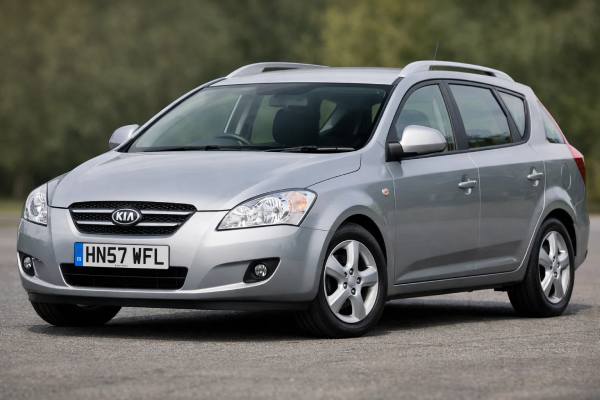
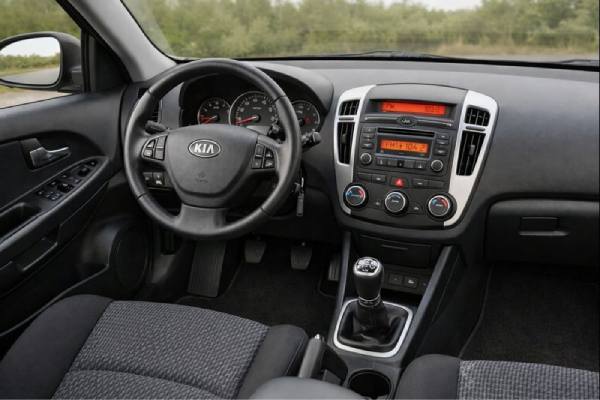
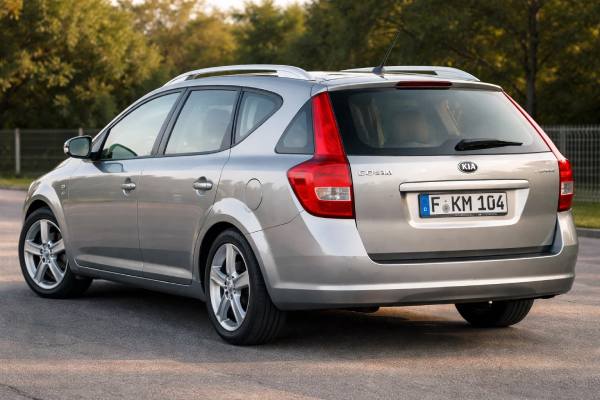
The 2007–2009 Kia Cee’d SW (ED) with the 2.0 CRDi (D4EA) sits in a sweet spot for buyers who want diesel torque, a practical estate body, and straightforward mechanicals. This version is not a performance wagon, but it delivers easy mid-range pull for overtakes and loaded driving—exactly where a family estate spends most of its life. The drivetrain is typically a simple FWD setup with a durable manual gearbox, and the chassis favors stability and predictable handling over sharpness.
Ownership comes down to two themes: keeping the diesel system healthy (clean fuel, correct oil, sensible warm-up habits), and staying ahead of age-related wear in suspension, brakes, and cooling. Get those right, and this Cee’d SW can be a low-drama long-distance tool with honest running costs and excellent cargo usefulness for its size.
Owner Snapshot
- Strong low-rpm torque makes it easy to drive with passengers or cargo, especially on hills.
- Very practical cargo shape for an estate; wide opening and a low-ish load lip help daily use.
- Highway economy can be excellent when the engine is in good tune and tyres are properly inflated.
- Biggest caveat: diesel intake, turbo plumbing, and EGR soot build-up punish short-trip use.
- Plan an engine oil and filter service about every 12 months / 20,000 km (12,500 miles) unless your duty cycle is mostly short trips.
Guide contents
- Kia Cee’d SW ED diesel overview
- Kia Cee’d SW ED D4EA specs
- Kia Cee’d SW ED trims and safety
- Reliability issues and recalls
- Maintenance and buyer tips
- Driving and real-world economy
- Rivals and alternatives
Kia Cee’d SW ED diesel overview
Think of the 2.0 CRDi Cee’d SW as a “torque-first” estate. The D4EA is a common-rail turbo diesel tuned for usable pull rather than top-end excitement. In daily driving, that means fewer downshifts and a calmer feel when merging or climbing—especially compared with the smaller 1.6 diesel when the car is loaded. The SW body adds real utility: the boot is deep, the roofline stays usable toward the tail, and the rear opening is estate-practical rather than hatchback-compromised.
Engineering-wise, the appeal is simplicity. Most examples are front-wheel drive with a manual gearbox and conventional suspension. The chassis does not demand exotic alignment settings or rare parts, and many service items are familiar to independent shops. Where owners get caught out is not complexity—it’s diesel “health.” If a previous owner did mostly short trips, the intake tract, EGR valve, and boost hoses often show the consequences: soot, oily deposits, and small leaks that slowly erode performance and economy. When the system is right, the engine feels strong and smooth for its era; when it is not, it can feel flat, smoky, or hesitant.
On the road, the SW leans toward stability and comfort. It tracks well on motorways, and the longer roof and rear overhang give a planted, wagon-like feel. The trade-off is that it is not as agile as a lighter hatchback variant, especially on smaller wheels with comfort tyres. Still, steering response and braking are predictable, which is a big part of why these cars work as long-term daily drivers.
If you’re shopping today, you’re really buying condition and maintenance history. A clean, well-serviced D4EA car with evidence of correct oil, regular filter changes, and sensible diesel maintenance habits will feel like a different vehicle than a neglected one—even if the mileage is similar.
Kia Cee’d SW ED D4EA specs
Below are the core specifications for the 2007–2009 Cee’d SW (ED) with the 2.0 CRDi D4EA 140 hp diesel. Exact figures can vary by market, gearbox, wheel size, and emissions calibration, so treat ranges as normal for this generation.
Powertrain and efficiency
| Item | Specification |
|---|---|
| Engine code | D4EA (2.0 CRDi) |
| Layout | Inline-4, transverse |
| Valvetrain | DOHC, 16 valves (4 valves/cyl) |
| Displacement | 2.0 l (1,991 cc) |
| Bore × stroke | ~83.0 × 92.0 mm |
| Induction | Turbocharged, intercooled |
| Fuel system | Common-rail diesel injection |
| Compression ratio | ~17.5:1 (market dependent) |
| Max power | 140 hp (103 kW) @ ~4,000 rpm |
| Max torque | ~305 Nm (225 lb-ft) @ ~1,800–2,500 rpm |
| Timing drive | Timing belt (plus auxiliary drives); confirm by VIN |
| Rated economy (combined) | typically ~5.8–6.3 L/100 km (45–41 mpg US / 49–45 mpg UK) |
| Real-world highway @ 120 km/h | commonly ~6.7–7.2 L/100 km (35–33 mpg US / 42–39 mpg UK) |
Transmission and driveline
| Item | Specification |
|---|---|
| Drive type | Front-wheel drive (FWD) |
| Manual gearbox | Usually 6-speed manual (market dependent) |
| Automatic option | Some markets offered an automatic; confirm by trim/VIN |
| Differential | Open |
Chassis and dimensions
| Item | Specification |
|---|---|
| Front suspension | MacPherson strut |
| Rear suspension | Multi-link (typical for ED) |
| Steering | Electric power steering (EPS) on many trims |
| Brakes | Front ventilated discs, rear discs (sizes vary by trim) |
| Common tyre sizes | 205/55 R16, 225/45 R17 (varies by trim/market) |
| Length / width | ~4,470 mm / ~1,790 mm |
| Height | ~1,490–1,525 mm (trim/roof rails dependent) |
| Wheelbase | ~2,650 mm |
| Turning circle | ~10.3–10.8 m |
| Kerb weight | ~1,390–1,480 kg (trim/gearbox dependent) |
| Fuel tank | ~53 L |
| Cargo volume | ~534 L seats up; ~1,664 L seats down (method varies by market) |
Performance and capability
| Item | Typical figure |
|---|---|
| 0–100 km/h (0–62 mph) | ~10.3–10.6 s |
| Top speed | ~200–205 km/h (124–127 mph) |
| Towing capacity | Often ~1,200–1,500 kg braked (market dependent) |
| Payload | Commonly ~450–550 kg (varies by GVWR and trim) |
Fluids, service capacities, and key torque specs
Always verify capacities and torque values for your VIN and engine calibration.
| Item | Specification (typical) |
|---|---|
| Engine oil | ACEA C3 5W-30 (common recommendation) |
| Engine oil capacity | ~5.9 L (with filter; confirm by VIN) |
| Coolant | Ethylene glycol OAT/HOAT type (follow Kia spec); 50:50 mix typical |
| Coolant capacity | often ~6–7 L (system dependent) |
| Manual transmission oil | MTF meeting Kia spec (viscosity varies by gearbox) |
| Brake fluid | DOT 3/4 (follow cap and manual) |
Critical fasteners (typical ranges):
- Wheel nuts: ~88–108 Nm (65–80 lb-ft)
- Engine oil drain plug: ~35–45 Nm (26–33 lb-ft)
- Brake caliper carrier bolts: commonly ~75–110 Nm (varies by brake package)
Safety and driver assistance (era-appropriate)
| Item | Notes |
|---|---|
| Crash ratings | Euro NCAP testing exists for this generation; protocol used points rather than today’s percentage format |
| Stability control | ESC often fitted on higher trims; not universal in early years/markets |
| Airbags | Front and side airbags common; curtain airbags vary by trim/market |
| ADAS | Modern systems (AEB, ACC, lane centering) are generally not present on 2007–2009 cars |
Kia Cee’d SW ED trims and safety
Trim naming varies a lot by country, so it’s more reliable to think in “equipment tiers” and verify using the VIN build sheet, the original service book, and what’s physically on the car. For the 2.0 CRDi SW, you’ll typically see mid-to-high equipment because the larger diesel often sat above entry-level petrol trims in pricing.
Trims and options that matter mechanically
These are the options that change how the car feels and what it costs to maintain:
- Wheel and tyre packages: 16-inch wheels usually ride better and cost less for tyres; 17-inch packages look sharper but can increase road noise and make the car feel firmer over broken pavement. Larger wheels also raise the odds of bent rims if the car lived in pothole-heavy areas.
- Brake packages: Some trims pair larger front discs and different pads. This affects consumable cost and braking feel, especially when the car is loaded.
- Steering system type: Many ED cars use electric power steering (EPS). It is generally fine, but it has a few age-related issues you should screen for (more on that in the reliability section).
- Gearbox choice: Most buyers should prefer the manual for long-term cost control. If you’re looking at an automatic, insist on proof of fluid servicing and a smooth road test.
Easy “quick identifiers” when viewing a car
- Cruise control buttons on the steering wheel: common on higher trims and valuable for diesel motorway use.
- ESP/ESC button presence (and warning light behavior): helps confirm stability control equipment.
- Curtain airbag tags on A/B-pillars: a quick clue for full airbag coverage.
- Headlight type: reflector halogens are common; factory xenons are rarer and costlier to refurbish.
Safety ratings and what they mean today
The Cee’d (ED) earned a strong reputation for crash performance in its era, but it’s important to understand context. Early Euro NCAP results were often reported as stars plus points across adult, child, and pedestrian categories, not the modern percentage breakdown. That makes direct comparison to newer cars misleading. The structure can still be sound, but modern vehicles benefit from later test protocols and, importantly, from active safety systems that prevent crashes rather than only protecting occupants during one.
Safety systems you can realistically expect (and should confirm)
- ABS is typically standard.
- ESC/ESP may be standard or optional depending on year/market/trim. Confirm it works: the warning light should illuminate at key-on and turn off after start.
- Child-seat provisions: Look for ISOFIX points and top tether anchors; check that covers and trims are intact.
- Lighting and tyres: On older cars, the biggest “safety upgrade” is often simply good tyres and fresh, correctly aimed headlights. Cloudy lenses and cheap tyres erase a lot of the car’s built-in safety potential.
Reliability issues and recalls
The D4EA-powered Cee’d SW can be reliable, but it is not tolerant of neglect. The best approach is to think in layers: common low-cost wear, occasional mid-cost diesel issues, and rarer high-cost failures that you want to screen out before purchase.
Common (likely) and usually low-to-medium cost
- Boost hose seepage and intercooler pipe leaks
Symptoms: oily misting on hoses, softer acceleration, occasional whistle, higher fuel use.
Cause: age-hardened rubber, loose clamps, small cracks at joints.
Remedy: replace suspect hoses/clamps; pressure-test the charge-air system after repair. - EGR valve and intake soot build-up (short-trip cars)
Symptoms: hesitation, flat spot, smoke under load, rough idle.
Cause: soot accumulation plus oil vapor from the crankcase ventilation system.
Remedy: cleaning or replacement of EGR components; address boost leaks first so the system isn’t over-fueling. - Suspension wear (front end and rear multi-link bushings)
Symptoms: clunks, uneven tyre wear, vague steering, rear-end “wiggle” over bumps.
Cause: bushings, ball joints, and drop links aging; alignment drift.
Remedy: replace worn joints/bushings, then do a proper alignment. - Brake corrosion and sticky caliper slides
Symptoms: uneven pad wear, hot wheel, vibration, poor fuel economy.
Cause: old grease, torn boots, corrosion.
Remedy: service slide pins and replace boots; swap calipers if bores are corroded.
Occasional (moderate probability) and medium-to-high cost
- Turbo control and vacuum-related issues
Symptoms: intermittent limp mode, underboost codes, inconsistent power.
Cause: vacuum hose leaks, sticky actuator/vanes (depending on turbo type), faulty control solenoids.
Remedy: smoke/vacuum testing, replace brittle lines, verify actuator movement; avoid “parts darts.” - Diesel injector sealing and fuel quality sensitivity
Symptoms: hard starting, diesel knock, smoke, fuel smell, rough idle.
Cause: injector wear, sealing washers, contamination.
Remedy: proper diagnostics (leak-back testing), replace seals/injector as needed; keep fuel filter service current. - Cooling system age issues
Symptoms: slow coolant loss, overheating in traffic, weak cabin heat.
Cause: radiator end tanks, thermostat aging, hose fatigue.
Remedy: pressure test, replace thermostat/radiator as required; refresh coolant with correct spec.
Rare (but expensive) — screen carefully
- Severe turbo failure
Symptoms: sudden smoke, oil consumption spike, loss of power, loud whine.
Risks: intake runaway potential in worst cases; catalyst/DPF damage if equipped.
Pre-purchase screen: look for excessive oil in intake pipes, listen for abnormal whine, and check service history for oil quality/interval discipline. - Clutch and dual-mass flywheel (if fitted)
Symptoms: vibration at idle, rattles when engaging, slipping under torque.
Cause: wear plus torque load over time.
Remedy: clutch kit; flywheel replacement if out of spec.
Recalls, service actions, and how to verify
Because equipment and campaigns vary by market, the practical method is:
- Run the official VIN recall check for your region.
- Ask a dealer to confirm completion history.
- Use the service book and invoices to validate major work.
If you cannot verify campaigns, treat it like deferred maintenance: budget time and money accordingly.
Maintenance and buyer tips
A well-kept D4EA Cee’d SW rewards routine maintenance. A neglected one punishes you with diesel-system troubleshooting that can easily exceed the car’s value. The schedule below is intentionally practical: it focuses on the items that change reliability, drivability, and running cost.
Practical maintenance schedule (distance/time)
Every 10,000–20,000 km (6,000–12,500 miles) or 12 months
- Engine oil and filter (use the correct ACEA/API spec for your market).
- Inspect boost hoses, intercooler pipes, and clamps for oil misting and cracks.
- Check coolant level and look for pink/white staining at joints (slow leaks).
- Tyre rotation (if tyres are non-directional) and pressure check.
Every 20,000–30,000 km (12,000–18,000 miles)
- Engine air filter (more often in dusty regions).
- Cabin filter (often yearly is realistic for comfort).
- Brake inspection: pad thickness, slider movement, and rotor condition.
Every 30,000–60,000 km (18,000–37,000 miles)
- Fuel filter replacement (critical for injector life).
- Brake fluid refresh every 2 years regardless of mileage.
- Alignment check, especially if tyre wear is uneven.
Every 60,000–120,000 km (37,000–75,000 miles)
- Coolant replacement interval depends on coolant type; many owners do 4–5 years as a safe real-world target.
- Manual transmission fluid (if the gearbox feels notchy or if history is unknown).
Timing belt and related components
- The D4EA generally uses a timing belt, but replacement intervals vary by market and handbook. If you cannot prove it has been done, plan a preventive timing belt service (belt, tensioners, idlers, and ideally the water pump) using a conservative interval such as every 5 years or 90,000–120,000 km, depending on your official service documentation.
Fluids and specifications (quick decision guide)
- Engine oil: Use the spec your handbook calls for; many listings recommend ACEA C3 5W-30 for this family.
- Coolant: Use the correct Kia-approved long-life coolant type and avoid mixing unknown chemistries.
- Brake fluid: DOT 3/4 as specified; change on time, not just on mileage.
Buyer’s guide: what to check before money changes hands
Service history must-haves
- Evidence of regular oil services and fuel filter replacements.
- Proof (invoice, not a promise) of timing belt service if mileage/age suggests it is due.
- Cooling system work documentation if the car has ever overheated.
Road test checks
- Cold start: should light off cleanly without long cranking or heavy smoke.
- Boost delivery: should pull smoothly from low rpm; watch for flat spots.
- Clutch feel: no judder under load, no slipping in higher gears at low rpm.
- Brakes: no pulling, no grinding, no hot wheel smell after a test drive.
Corrosion and body
- Check rear arches, tailgate edges, and underbody seams. Estates sometimes see more moisture and cargo-area wear. Surface rust is normal on older cars, but structural corrosion is a deal-breaker.
Best “value” setup
- Many owners prefer 16-inch wheels, manual gearbox, and a trim with ESC and curtain airbags. It tends to ride better, cost less, and still feels properly equipped.
Driving and real-world economy
The 2.0 CRDi’s character is defined by torque and calmness. Around town, it can feel stronger than the headline horsepower suggests because you spend most time between roughly 1,500 and 3,000 rpm. That band is where the turbo and fueling strategy are designed to work. The result is fewer gear changes and less strain when pulling out of junctions or rolling up to motorway speed with a full load.
Ride, handling, and NVH
- Ride: With 16-inch wheels, the SW is generally comfortable on imperfect roads. On 17s, sharp edges come through more clearly, and worn rear bushings make the car feel busy.
- Handling: Neutral and predictable rather than sporty. The rear multi-link layout helps stability, especially when the boot is loaded.
- Steering feel: EPS can be light at parking speeds and somewhat numb at speed. If the steering has clunks or “notches,” assume a mechanical wear issue rather than “normal feel.”
- Cabin noise: Expect diesel clatter at cold idle and a steady hum at highway speed. Excessive wind noise usually points to door seals, mirrors, or past body repairs.
Powertrain behavior
- Throttle response: Best described as progressive rather than snappy. A well-sorted car responds cleanly without surging.
- Turbo behavior: You may feel a mild build of boost rather than a big “kick.” If there is a big delay, suspect vacuum control or boost leaks.
- Gearbox: The manual should shift cleanly without crunching. A notchy feel can improve with correct fluid, but grinding indicates wear.
Real-world efficiency (what owners typically see)
Economy depends heavily on tyre choice, driving pattern, and diesel-system condition:
- City: often 7.0–8.5 L/100 km (34–28 mpg US / 40–33 mpg UK)
- Highway 100–120 km/h: often 6.2–7.2 L/100 km (38–33 mpg US / 46–39 mpg UK)
- Mixed use: often 6.5–7.6 L/100 km (36–31 mpg US / 43–37 mpg UK)
Cold weather and short trips can raise consumption noticeably because diesels take longer to reach efficient operating temperature. If your driving is mostly short runs, this engine is less happy than a petrol alternative.
Load and towing notes
When correctly maintained, the 2.0 diesel is well-suited to carrying weight. The key is to keep the braking system and suspension bushings in good condition, and to avoid overheating on long grades. If you tow, shorten service intervals for oil and inspect intercooler pipes and coolant hoses more often—heat and sustained torque expose weak points fast.
Rivals and alternatives
The Cee’d SW competes in the “compact estate” space where practicality and running cost beat outright speed. Your best rival depends on what you value most: refinement, reliability simplicity, or parts availability.
If you want a similar diesel estate feel
- Ford Focus Estate (diesel): Often more engaging to drive with sharper steering and chassis balance. Diesel components can be more sensitive to maintenance history, so buy on condition.
- Volkswagen Golf Variant / Jetta Variant (diesel): Strong cruising refinement and cabin quality. Ownership can be pricier if prior maintenance was skipped, and some engines have more complex emissions hardware depending on year and market.
- Skoda Octavia Combi (diesel): Excellent space efficiency and often strong highway manners. Check suspension wear and ensure the service record is clean.
If you want simpler long-term ownership
- Petrol compact estates (various brands): If your driving is mostly short trips, a petrol engine often costs less to keep healthy over time than an older diesel. You may pay more at the pump, but you can avoid soot-related maintenance and turbo control headaches.
Where the Cee’d SW 2.0 CRDi stands out
- Pros: Strong torque for the class, straightforward packaging, and a practical cargo bay.
- Cons: Age plus diesel-system sensitivity means condition matters more than mileage alone. A “cheap” neglected example rarely stays cheap.
Quick decision rule
Choose this Cee’d SW if you do regular longer drives, value torque and cargo practicality, and can verify maintenance history. If your use is mostly urban or you cannot confirm timing belt and diesel maintenance, pick a simpler petrol alternative or budget for preventative work immediately.
References
- Engine Oil Grades and Capacities 2023 (Service Information)
- cee’d product Guide 2009 (Product Guide)
- Kia Recalls | Kia Europe 2026 (Recall Database)
- Kia cee’d wins 5-Star Euro NCAP safety rating – Kia Slovakia s.r.o. 2007 (Safety Rating)
Disclaimer
This article is for informational purposes only and is not a substitute for professional diagnosis, inspection, or repair. Specifications, torque values, service intervals, and procedures can vary by VIN, market, model year, and installed equipment—always confirm details using your official owner’s manual and service documentation for the exact vehicle you are working on.
If this guide helped, please consider sharing it on Facebook or X/Twitter to support our work.